Energy has come to define our history over the past few hundred years. The industrial revolution was defined as much by the use of coal and steam power as it was by breakthroughs in technologies.
The industrial age was defined by the spread of electricity, electro-magnetic waves and the use of oil and gas in the energy mix.
Alkaline, dry acid batteries and rechargeable batteries liberated technology. Making it firstly luggable and then truly portable.
Without innovative approach in battery technology you wouldn’t have the ubiquitous smartphone. Nor would you have much demand for three wi-fi in coffee shops, or multi-screening.
Digital photography would still be more of a niche interest and there would be no Instagram or Tinder.
On the other hand you would be less likely to responding to emotional content on Twitter straight away, unless you were glued to your desktop computer or connected TV.
The aspiration for a low carbon economy is another aspect that affects energy and not just oil and gas. 99 percent of materials that we use, even for batteries and capturing renewable energy are not sustainable. Turbine blades are made from composite that eventually end up in a landfill site. Battery technologies rely on rare earth metals, lithium and nickel. They feature a polymer liner in lithium ion battery.
Energy is at the centre of the progress of innovation, design, climate change, consumer behaviour and even culture. Far more so, than people actually realise.
We tend to not pay attention to energy unless there is a problem. A power cut, a price jump at the petrol pump are the times when we notice.
I think my interest in this vintage TV series Special Branch comes from a couple of places:
Sharing Mike Herron’s subversive books, Apple TV adaption and audio books with friends and my Dad
Sharing my love of John LeCarre with friends during lockdown
Special Branch was before my life time. The episodes start very much in the vein of a Le Carre or Len Deighton-type story. Later episodes were more human interest focused including an investigation of a religious cult. However one episode touches on the often overlooked post-war history of the British security services and military combatting Cypriot desire for independence.
You can see more episodes of Special Branch on YouTube here.
Genesis on luxury
This is an interesting event that Genesis took part in for marketing purposes. The tone of voice on the session was more about the ‘business of luxury’ rather than encouraging luxury consumption. It’s trying in a way that Lexus didn’t need to. Lexus let their engineering do the talking, by comparison luxury and fashion is something that Mercedes and BMW have increasingly lent into.
There is also no focus on sport in the way that BMW, Mercedes-Benz, Audi, Infiniti and Lexus have had.
Lights and shadows
A lovely collection of video footage showing light and shadow views in Japan. A good deal of it is the the same locations shot at different times of the day. There is some b-roll, TV and film footage mixed in for good measure.
Mysterious circles in the Sahara
My guess when I first saw this was oil exploration. I had worked in the oil industry before I went to university and heard the upstream and exploration adventures of older colleagues. This documentary is a fascinating journey to find out the truth and the limits of the internet and assumptions about modern industry practices not being a good guide of past practices. Without any further introduction I will leave you to this mystery of the Algerian desert.
Calculus on Pornhub
Taiwanese mathematics tutor puts calculus lessons on Pornhub. Attracts audience with attractive female assistants who clean the board. His rationale of taking his content to a less crowded platform can’t be faulted though.
Bongbong Marcos aka Ferdinand Romualdez Marcos Jr is the son of former Filipino president Ferdinand Marcos. The Asia Society did a really good talk on the election which explains what got Bongbong Marcos elected as president of the Philippines. Yes there was a lot of misinformation and sketchy tactics by the Bongbong Marcos campaign, but there is more going on.
Much of the issue seems to be that Marcos is viewed as standing against local Filipino dynasties that have most of the economic power in the country. I found this particularly interesting as Bongbong Marcos and his running mate Sara Duterte are both from dynasty families.
Marcos’ mother Imelda had a dad who as a lawyer, an uncle who was a supreme court judge, a cousin who was in the lower house of parliament and her brother was a provincial governor. On his father’s side, Bongbong’s grandfather was a lawyer and politician, and the mother was a school teacher. While both of Bongbong’s parents had known poverty, they could rely on a strong powerful network of family ties to help get them good jobs. Ferdinand Marcos even managed to get away with murder in 1939.
Bongbong Marcos is supposed to be stuffing people he can trust through blood ties into key government and political positions such as speaker of the house and ministerial roles.
Opposition party strategy
The Marcos campaign managed to play on nostalgia for older voters and addressed young voters through TikTok. The opposition party strategy failed in online marketing. Misinformation was an aggravating factor.
Corrosion of liberal democracy
The average Filipino voter doesn’t feel invested in democracy in the same way that the middle class would be. 7 out of 10 surveyed by Pew wouldn’t mind an authoritarian leader like Bongbong Marcos – so Marcos was pushing against an open door. The middle classes are looking for ‘order and discipline’ rather than dysfunction. They think that economic success and freedom are mutually exclusive. They look to the United Arab Emirates and Singapore as exemplars. There are similarities with middle income countries like Modi in India, Erdoğan in Turkey, Urban in Hungary and Bolsonaro in Brazil.
From an economic perspective what does Bongbong Marcos mean? Noah Smith made their most optimistic take on the economics of the Philippines Can the Philippines sustain its growth? – by Noah Smith. An authoritarian Bongbong Marcos government might see the departure of foreign companies who have been responsible for powering the past two decades of economic growth in the Philippines. The only reason why you might not see a foreign multi-national company exit would be ‘de-Chinaisation’ of global supply chains.
Siemens to discontinue business in Russia – eeNews Europe – Siemens stopped all new business with and international deliveries to Russia and Belarus. The comprehensive international sanctions and the current and potential countermeasures are affecting the company’s business activities in Russia – especially its railway service and maintenance business. For companies that are mainly active in B2B business, the decision to completely exit a region is more difficult to make than for companies that sell consumer goods. The reason: contracts for the maintenance of industrial plants and trains are concluded for many years, sometimes decades – this is an opportunity for Chinese railway businesses
Firms as Revenue Safety Nets: Political Connections and Returns to the Chinese State | The China Quarterly | Cambridge Core – restructured state-owned enterprises (SOEs) with political connections pay more tax than their assessed amount, independent of profits, in exchange for more preferential access to key inputs and policy opportunities controlled by the state. Examining taxes rather than profits also offers a new interpretation for why China continues to favour its remaining SOEs even when they are less profitable – it also explains why apparently inefficient SOEs get so many bank loans from state owned banks
California’s demography is at odds with the old California Dream | The Economist – The population fell to 39.2m in the year to January 2022, 400,000 lower than in 2020 (see chart). In 1990, the number of Californians had been rising by a robust 2.5% a year. The biggest contribution to the decline came from migration. In 2021, the net change (people moving out of state minus those moving in) was twice as large as the number of covid deaths and four times the population’s natural change (the excess of deaths over births). Big cities have been hit hardest; the population of Los Angeles County has fallen for the past four years. Even if these declines were no worse than average—and national demographic trends are slowing, too—they might seem worse in a state where, as its governor once said, “the future happens here first”. In fact California’s demography is worse than average. The state’s total fertility rate (tfr, an estimate of the number of children women will bear over their lifetimes) fell from 2.2 in 2006 to 1.5 in 2020, more than in America as a whole, where the fall was from 2.1 to 1.6.
Arrest of Cardinal Zen send chills through Hong Kong’s Catholic church | Financial Times – a diocesan administrator tendered their resignation over a posting on the “Catholic Way” Facebook page on April 27. The post, which was quickly deleted, summarised a television interview in which a local priest accused China of attempting to control religion in Hong Kong. The diocese said the administrator had resigned of their own accord. The police investigation of the 612 Humanitarian Relief Fund, of which Zen was a trustee and which supported pro-democracy protesters, could also have implications for Hong Kong’s legal system. Police said on Thursday that they had complained to the Bar Association and Law Society about alleged misconduct by unnamed lawyers who took on the fund’s cases
Talking about white privilege online can backfire – Futurity – The relationship between question language and the content of the responses was mediated by their support or opposition to renaming buildings. This suggests that, rather than causing people to think differently about the world, the term white privilege causes an emotional reaction which then affects their response, Quarles says. Inclusive ways of speaking about race online, such as the term “racial inequality,” are more likely to create a sense of shared purpose, he says. Policymakers who want to promote racial equity should consider how their language can either unite people or alienate potential allies, he says. – but this doesn’t understand that white privilege as a term comes from left-wing thinking and isn’t designed for dialogue. The emotional reaction is elicited by design as part of the narrative of ideological struggle. Either the party is worn down to the ideology or they are part of the enemy, which is then followed to its conclusion in Stalinism
Recovery for Bosch as it warns of slowdown – eeNews Europe – It’s worth taking a closer look at how the war affects climate action. My assessment is nuanced: in the short term, the acute conflict will slow progress in reducing carbon emissions, but in the long term, it will accelerate the technological transformation in Europe – Bosch also particularly keen on green hydrogen
Lex in depth: why the luxury market needs to hedge against China | Financial Times – Customers at the exclusive Shinsegae department store in the Gangnam district of Seoul prefer to display their wealth discreetly. But their high spending was exposed to the wider world when it revealed annual sales had topped $2bn in 2021 — the highest turnover for a single store in the world. It outpaced even Harrods in London, which before the coronavirus pandemic had long held the world’s top spot
EU plans to require backdoor to encrypted messages for child protection | AppleInsider – “When executing the detection order, providers should take all available safeguard measures to ensure that the technologies employed by them cannot be used by them or their employees for purposes other than compliance with this Regulation,” says the proposal, “nor by third parties, and thus to avoid undermining the security and confidentiality of the communications of users.” – congratulations EU you’ve just empowered authoritarian regimes and risked the lives of millions elsewhere
Naked power politics is a challenge to the post cold war consensus. Russia’s invasion in Ukraine, like Ethiopia’s invasion of Tigray are two examples of naked power politics in action. Russia’s naked power politics approach isn’t new and was something that the Financial Times and others had been talking about for at least a decade and certainly since the invasion of Crimea.
In the case of Russia, uniting the west and drawing both Finland and Sweden into NATO shows that naked power politics can be counter-productive. Ethiopia seems to have fought itself to a stalemate after invading Tigray and then getting beaten back to Addis Ababa. Only close air support using drone from gulf states helped stave off a military collapse.
But naked power politics is also playing out in the uneven relationship between China and the European Union; despite the EU’s market power.
Even more so we can see naked power politics in China’s approach to Australia through trade.
Is Marcus Rashford working class? The answer depends on your age – New Statesman – “Younger people appear to identify membership of the upper class with power and social impact,” he said. “This reflects the social media which prioritises celebrity coverage by attention capital, rather than accent, schooling or parental occupation.” The findings also suggest that “class hierarchy is perceived by young people in the present tense, ie, the media and social media time that people have now: the more media time, the higher the class position,” Rojek added. “The historical relationship of class to ancestry may be waning. A ‘now perspective’, based in power, social impact and online recognisability, seems to be growing in importance.” This trend has been a long time in the making, he observed. “For many years, it has been evident to me that for most of my students ‘social media’ is ‘society’, ie, a source of belonging, community, identity and aspiration.” – this might be age related rather than cohort related
When Saying Gay Isn’t Good Enough | Adweek – The Walt Disney Company has been singled out by Florida Gov. Ron DeSantis for its opposition to Florida’s House Bill 1557, the so-called “Don’t Say Gay” bill. Recently signed into law, the measure prohibits discussion of sexual orientation and gender identity from kindergarten through third grade. The governor has vowed to revisit—and possibly rescind—Disney’s privileges and autonomy in the state. But even LGBTQ allies and activists haven’t been happy with how the entertainment giant has handled anti-LGBTQ legislation in Florida. – which brings the question of what is the role of brands in societal norming?
Xi Focus: Xi orders building world-leading spacecraft launch site-Xinhua – “Xi noted that Wenchang is the launch site of China’s new-generation high thrust carrier rockets and the bridgehead of the country’s deep space exploration. The launch site should continue to eye the frontier of global space development and the major strategic needs of China’s space industry, and comprehensively improve its modern space launch capabilities, said Xi. China is scheduled to complete the construction of its space station this year. Tianzhou-4 and Tianzhou-5 cargo crafts, as well as Wentian and Mengtian lab modules will be launched from Wenchang. Xi said the launch site should make meticulous efforts to ensure the missions’ full success.”
Old Enough: Netflix show sparks global debate on parenting and child safety | Sora News – its interesting because it shows how much of a high trust society Japan is versus the rest of the world and how far we have moved away from the ‘latch key‘ generations in the west that allowed women to go out to work. Although my Mum was a homemaker, I was still expected to look after myself if she had to go out or was visiting a friend. As an only child I was very comfortable in this trust being put in me. It was also the same for many of my school friends. The show is unbelievably cute. Read the explanation of Japanese culture on children before watching the hyper judgemental TV segment below.
The Death of Streetwear Culture is a Class Issue | High Sobriety – in its ‘80s and ‘90s heyday, by and large streetwear culture was driven by the kids from low-income neighborhoods in major American cities. The very term “streetwear” bears that notion—it’s a style born in the streets, in schoolyards, on handball and basketball courts, and on brownstone stoops. More often than not, streetwear heroes—athletes and rappers—came from the working class
Warner Bros. censors gay dialogue in Harry Potter movie for China release – CNN – the irony of this is that the Chinese internet is filled with homoerotic and even a lot of graphic homosexual content based around fan fiction from Sherlock to Harry Potter and even adaptions of Chinese literary classics where sword play takes on a vastly different meaning
In honor of Ramadan, meals appear on Tesco billboards after sunset – To mark the month of Ramadan — when Muslims refrain from eating and drinking between dawn and dusk — British supermarket Tesco turned to dynamic billboards. During the day, screens show four hands and a large number of empty plates and platters. Once the sun sets, food appears on the plates, just as Muslims start breaking their fast with an iftar meal. – nice bit of work by BBH that takes advantage of dynamic digital out of home advertising technology
REWE’s unmanned mini-marts bring daily groceries to rural Germany – German retail giant REWE is launching a new concept: nahkauf BOX. Operating under REWE’s nahkauf brand of neighborhood stores, nahkauf BOX is an unmanned, standalone convenience store that’s open 24/7. – this is similar to China’s automated convenience stores, but interesting that its aimed at rural villages lacking stores. I could see this shaking up rural Ireland as well
Security
Pentagon to meet top arms makers to discuss stepping up aid to Ukraine | Financial Times – fascinating detail from this. Ukraine has already had four years production worth of Javelin missiles or about a third of the US stocks. They had sent a quarter of their stock of Stinger missiles or about five years worth of production. The challenge will be scaling component manufacture, supply chain and system assembly
The Electronic Sheep Company was one of the startups that came and went during the last ‘metaverse boom’ or what was then called ‘virtual worlds’ back in the mid-2000s and early 2010s epitomised by Second Life.
China’s Choice for Hong Kong’s Chief Executive Reveals Its Own Insecurity – The Diplomat – I thought that John Lee was likely to be Carrie Lam‘s successor when he was appointed her deputy last June. As others have observed, John Lee looked most likely to be the person in charge during vast parts of Ms Lam’s administration. While others said that CY Leung would want to run again (he probably does as his ambition knows no bounds). I didn’t rate CY’s chances, given how close he was to the Hong Kong business community. The only unknown had how many terms Carrie Lam might sit before John Lee took over. Now we know, despite Ms Lam wanting to spend time with her family since 2019, it wasn’t until Omicron infections increasing in the city that she was definitely a one term chief executive. John Lee’s appointment is a message to the city’s oligarchs as much as it is to the general populace of Hong Kong. Security isn’t balanced with commerce, John Lee will be focusing on a single dimension everything else is noise. John Lee is more likely to have strong connections with the 14K rather than CK Hutchison. There is a widespread concern expressed that the mainland government (with John Lee as its instrument) will take Hong Kong’s oligarchs assets away from them.
China Is Challenging NATO Over Russia’s Ukraine War: Jens Stoltenberg – The NATO chief said the attendance of Asia Pacific partners was important “because the crisis has global ramifications,” not least due to the role of China in giving tacit support for Moscow’s invasion. – this is some of China’s worst scenarios playing out
Jacky Cheung and Nicholas Tse Star in ‘War Customised’ – Variety – After the squashing of the pro-democracy protests that flared up and turned violent in the second half of 2019, a Beijing-imposed National Security Law has changed many aspects of Hong Kong society, ranging from education to elections and entertainment. This has caused cinemas to withdraw certain films from release, the passing of a film censorship law that specifically includes security concerns, and the self-imposed exile of some filmmakers and talent. – interesting footer that I suspect will feature on many future Variety coverage of Hong Kong movies
The Resignation of Britain’s Judges Is the Final Blow to Hong Kong – The Atlantic – The exodus of Hong Kongers and foreign city residents has reached such a level that even the city’s chief executive, who announced this week that she will not seek a second term, admits that Hong Kong is experiencing a brain drain. Her replacement will almost certainly be a former police officer who has been saddled with U.S. sanctions and who helped trigger the 2019 protests. His elevation would cement that, above all else, the authorities in Beijing view the issue of security as paramount, even at the cost of business interests, rapidly decreasing civil liberties, and professional accountability. If Hong Kong is to be thought of as a bridge linking East and West, Steve Tsang, the director of the China Institute at London’s School of Oriental and African Studies, said the infrastructure still exists, but the obstacles erected by Beijing have now rendered it a tough passage. “A bridge can be there, and people can use it and cross and mix and interact and benefit each other,” he told me. “Or a bridge can be there with barricades being put up by one side, and with people on one side not being allowed to use the bridge … I think that is what we are looking at in Hong Kong.”
The Franciscan monk helping the Vatican take on — and tame — AI | Financial Times – “Algorithms make us quantifiable. The idea that if we transform human beings into data, they can be processed or discarded, that is something that really touches the sensibility of the Pope,” – interesting that there is less concern about the effects of automation
How Putin aged into a classic oil state autocrat | Financial Times – On a visit to New York in 2003, Vladimir Putin pitched himself to investors as an economic reformer willing to engage western capitalists, telling us that Russia was more than just another petrostate and shared the values of a “normal European nation”. Those words ring hollow now that Putin is invading Ukraine, but he seemed sincere at the time. Having taken over a nation battered in the late 1990s by financial crisis and default, he was pushing privatisation and deregulation. – what’s really interesting is the degree of change over time. Everything seems to hinge on Putin’s great power internal narrative
JD.com/Richard Liu: another tech boss bites the dust | Financial Times – Antitrust regulators picked market leader Alibaba as their main target, allowing JD to increase market share. JD fully controls its supply chain, warehouses and transport. That means it offers a slicker experience for customers than peers dependent on third-party services. That also makes it a big employer, another plus in Beijing’s eyes. Unfortunately, an asset-heavy business model becomes a weakness when prices and wages are rising. In the fourth quarter, JD posted a quarterly loss. General expenses rose 89 per cent. Fulfilment costs rose more than a tenth. China’s slowdown amid lockdowns in Shanghai and other big cities is a further threat to sales. Alibaba has already reported the slowest quarterly growth since going public in 2014 – the increase in general expenses needs more probing, why is it so high?
The Death of Streetwear Culture is a Class Issue | High Sobriety – in its ‘80s and ‘90s heyday, by and large streetwear culture was driven by the kids from low-income neighborhoods in major American cities. The very term “streetwear” bears that notion—it’s a style born in the streets, in schoolyards, on handball and basketball courts, and on brownstone stoops. More often than not, streetwear heroes—athletes and rappers—came from the working class
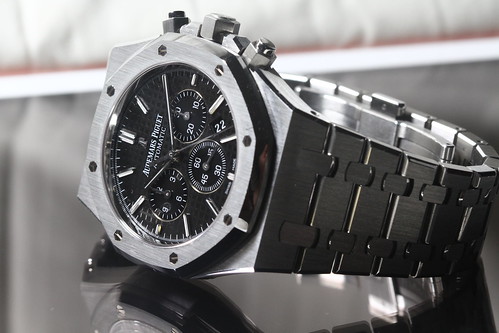
Russia Seized Millions of Dollars of Swiss Luxury Watches in Moscow – Russian customs service agents took millions of dollars of Audemars Piguet watches. Audemars Piguet had closed its boutique in Moscow. The Russians allege that Audemars Piguet was in breach of customs regulations. The reality is that its retaliation for Switzerland joining other countries in levying sanctions on Russia. In this respect its similar to the state-sanctioned theft of aircraft from Irish aircraft leasing companies. There are a few problems with these Audemars Piguet watches. The Russian market for Swiss watches in 2021, accounting for 260m Swiss francs (£212m) of shipments, according to the Federation of the Swiss Watch Industry; which puts the country in the top 20 acquirers of Swiss watches.
Audemars Piguet Offshore models are long sought after by watch collectors. The problem that Russia will have with the watches is the inability of them to be serviced. The company will have a record of the serial numbers involved and won’t service them when they come up for maintenance in a few years time. AP watches have a reputation for being great watches, but aren’t robust like say a Rolex in terms of their need to be serviced.
Russia seems to be pretty determined to have western sanctions on the country for a long time to come yet.
Geely questions future in Russia despite opening for China’s carmakers | Financial Times – Tu Le, managing director of Sino Auto Insights, noted that the Chinese carmakers are relatively inexperienced when it comes to maintaining a brand’s reputation in western markets. “They’ve never had to deal with these kinds of external pressures in how they were perceived by foreign consumers,” he said. “A lot of these companies, they’re going to have to do business in Europe, or they’re going to have to do business in the United States. If they seem too eager to fill that void [in Russia], I will bet you money it is going to have some backlash in those regions.”
Judy Asks: Are Europeans Ready to Pay the Price for Ukraine’s Sovereignty? – Carnegie Europe – Carnegie Endowment for International Peace – The grim truth is that many in the West would be ready to accept compromises over Ukraine’s sovereignty in order to stop the war. In countries neighboring Russia, there is a strong understanding that such compromises would seriously weaken our security, hence they are ready to pay a high price to avoid them. However, among Western experts and policymakers, assessments of the balance between different interests seem to vary. The thinking that some degree of accommodation of Russia’s interests might be needed to reach stability has not disappeared. This is a dangerous and misguided logic
Lanvin Group plans New York IPO in SPAC deal | Vogue Business – Lanvin Group, the fashion arm of Chinese conglomerate Fosun International which includes the French heritage label Lanvin, plans to list in New York in a SPAC deal, the second high-profile fashion firm to make the move since Ermenegildo Zegna late last year. Lanvin Group announced Tuesday it is combining with special-purpose acquisition company Primavera Capital Acquisition Corporation in a deal that values the group at $1.5 billion, according to an emailed statement. Lanvin Group expects to raise up to $544 million from the deal and from existing investors, and will use the funds to expand its portfolio, including future luxury acquisitions
A Chinese Nickel Market Mystery – WSJ – Market ructions amid war aren’t unusual. But the London Metal Exchange’s retroactive cancellation of nickel trades this month appears to be unprecedented. One question is whether the Hong Kong-owned exchange intervened to rescue a Chinese nickel tycoon. – the exchange is owned by the Hong Kong Stock Exchange