Consumer behaviour is central to my role as an account planner and about how I look at the world.
Being from an Irish household growing up in the North West of England, everything was alien. I felt that I was interloping observer who was eternally curious.
The same traits stand today, I just get paid for them. Consumer behaviour and its interactions with the environment and societal structures are fascinating to me.
The hive mind of Wikipedia defines it as
‘the study of individuals, groups, or organizations and all the activities associated with the purchase, use and disposal of goods and services.’
It is considered to consist of how the consumer’s emotions, attitudes and preferences affect buying behaviour. Consumer behaviour emerged in the 1940–1950s as a distinct sub-discipline of marketing, but has become an interdisciplinary social science that blends elements from psychology, sociology, social anthropology, anthropology, ethnography, marketing and economics (especially behavioural economics or nudge theory as its often known).
I tend to store a mix of third party insights and links to research papers here. If you were to read one thing on this blog about consumer behaviour, I would recommend this post I wrote on generations. This points out different ways that consumer behaviour can be misattributed, missed or misinterpreted.
Often the devil is in the context, which goes back to the wide ranging nature of this blog hinted at by the ‘renaissance’ in renaissance chambara. Back then I knew that I needed to have wide interests but hadn’t worked on defining the ‘why’ of having spread such a wide net in terms of subject matter.
You are not safe was a theme that echoed through a period drama on Silicon Valley yet is equally applicable today.
I have been catching up on Halt and Catch Fire. It is a fiction based on various aspects of Silicon Valley lore. I have enjoyed watching it immensely to a point.
I was especially struck by episode eight in the third series. One of the main characters in series three hacks his employer and releases their anti-virus software online for free. But its the mid-1980s through a thoroughly modern lens. It resonates because it speaks to our age, not to the 1980s or even the mid-1990s.
YOU ARE NOT SAFE
I, Ryan Ray, released the MacMillan Utility source code. I acted alone. No one helped me, and no one told me to do it. I did this because ‘security’ is a myth. Contrary to what you might have heard, my friends, you are not safe. Contrary to what you might have heard, my friends, you are not safe. Safety is a story. It’s something we search our children so they can sleep at night, but we know it’s not real.
Yes, there was software piracy, it was a mainstream part of computing culture which had sprung up from the ‘homebrew’ mentality. Prior to founding Apple, Steve Wozniak used to give out the schematics of what then became the Apple I. Punched paper tapes of software used to be exchanged between members when they met up in aMenlo Park garage and later on in an auditorium at Stanford University.
Back then the narrative was overwhelmingly positive in terms of technology. The main problem was whether the Japanese, Microsoft, Intel or IBM was going to crush the rest of the technology eco-system in Silicon Valley. Consumers had a bright new world of technology ahead of them. Video games were still a niche interest compared to VCRs (video cassette recorders). VHS versus Betamax was as important a format war as Windows versus Macintosh.
Here’s the thing. This show (rightly or wrongly) may frame the way a lot of people think about this part of the digital age. For those who aren’t well read about the history of Silicon Valley OR didn’t live through the 1980s – it will colour their view of history. That detail rankled me a bit; I’m not quite sure why. Part of it is knowing where we’re going is understanding where we have been in past.
That’s all very nice, but why does this matter? It provides you with perspective and the ability to critique ideas. Either way you are not safe. More related content here.
Wadds came up with 13 theses about the media of me with more than a nod and a wink to The Cluetrain Manifesto. The main thrust of it is that the media model is broken, technology has a lot of the blame at its door.
Picking through it are some worthy aspirations, but it was diagnosing symptoms rather than causes. I believe that the main problems in the media of me are wetware, not software. People and civil society rather than networks and servers.
Technology has its own momentum
As with many things, the reality and where we are going is much more complex. Kevin Kelly posited that technological progress is a natural force of its own. He called this force the ‘technium’. It is not moral, it doesn’t understand good or bad. It can be slowed down for a time, but never stopped.
Even during the European dark ages, the golden age in Muslim countries saw Arab scholars:
Collate classical knowledge
Translate it into their own language
Build upon the body of knowledge
This knowledge came back into Europe. It helped provide a foundation for the renaissance.
We’re not going to be able to stop bots or algorithms. As they improve; their impact will be harder to discern. There will be a tension in online platforms; shareholder value versus good citizenship.
Digital is a winner takes all world
As with many previous technology markets such as the PC and smartphone operating systems online is an oligopoly of two. Digital media provides a disproportionate amount of benefit to very few platforms.
Facebook and Google count for 85-90% of online advertising growth.
In China, online media is dominated by Tencent and Baidu. We could ‘Balkanise’ the media landscape. But that would mean a poorer experience for users outside the US and China. The technology sector does not have:
Commercial scale in funding
Sufficient talent
Comparable addressable markets
Timms & Heimans hypothesis of ‘new power vs. old power’ rubs up against technology as an uncomfortable vector.
This all means that the tensions in society, civic society and societal discourse is accelerated and amplified.
From the perspective of technology platforms this isn’t their problem. They are only tackling it with reluctance, they don’t have a silver bullet solution. In their eyes:
‘Online’ isn’t a problem, it is the breakdown in social norms, which are then amplified and gamed online
In the real world we’re insulated from views unless we chose to explore alternatives. Algorithms have amplified this process further to create a filter bubble. Algorithms are only mimicing our natural desires. This is mirrored in the lack real-world discourse and polarisation of views
Algorithms are accused of having a reductive effect on an individuals breadth of media consumption. News feed algorithms jobs are to make platforms money. Before their widespread use netizens widely flocked to chatrooms and forums with a similar narrow focus. News readers using RSS which would allow individuals to read widely have proved to be only a niche interest
Reading widely is important to be being well informed, but its a conscious choice that people have to make. But in order to read widely one has to be:
Sufficiently educated to be confident in their reading ability
Confident enough to ignore any scorn that might come from ‘books, learning and being an expert’
Sufficiently curious to have the motivation to read
Having sufficient time to be able to read
These bullets are affected by quality of education, social norms and income. If you are just getting by with a series of side hustle jobs you might too time poor to read widely.
These are not universal traits in society. In the UK the idea of the self-educated literate working-man who goes to classes at the Mechanics Institute is long dead. That wasn’t done by Facebook or Google.
The notion of an easily swayed populus wasn’t an invention of Cambridge Analytica, Google or Facebook. The Roman poet Juvenal famous for the concept of ‘bread and circuses’ would see something similar in populist politics. From Brexit, to Germany’s AfD the focus on diversion, distraction and immediate satisfaction ‘palliative’. A significant amount of common people are selfish in nature and often pay little attention to wider concerns.
A quote from near the end of Jean-Paul Satre’s play No Exit sums it up quite well
“All those eyes intent on me. Devouring me. What? Only two of you? I thought there were more; many more. So this is hell. I’d never have believed it. You remember all we were told about the torture-chambers, the fire and brimstone, the “burning marl.” Old wives’ tales! There’s no need for red-hot pokers. HELL IS OTHER PEOPLE!”
Whilst in a democracy, all opinions should have the opportunity to be voiced; should they have a right to be heard? Should politicians really reflect the will of the people? I think there is a strong argument to be made against it. I am not advocating authoritarian rule, but that we need leaders who reflect on the greater good. Edmund Burke – one of the founding fathers of British conservatism is a widely cited example of a politician who didn’t reflect the will of the people. Burke recognised that democracy can create a tyranny over unpopular minorities. He didn’t consider politicians to be delegates; conduits for votes without moral responsibility.
He is widely cited as being a better man for it:
Burke viewed the British conduct in India under the East India Company immoral
He advocated representation for American colonists
Acknowledgement of wrongdoing by the Crown in America and an appropriate apology
Facts versus Emotion
Facts and emotion have always duelled and facts have frequently come off the worse for it. Western politicians from Adolf Hitler to Barrack Obama have little in common except being successful exponents of rhetoric and emotion in their speeches. Technical skills and knowledge don’t make the cut. A classic example of this is the dissonance between the advice of John Redwood as a strategist with Charles Stanley versus his political stance on Brexit. Mr Redwood knows what works as a politician.
Those that wield emotion now, have a greater understanding of how it works. It is why populist organisations win. It is why experts fail to persuade voters to act in their own interest. That won’t change with technology but with stonger, harsher electoral commission powers.
Fact versus Fiction
Yellow journalism and fiction has been with us for as long as civilisation existed. It’s modern roots are in the American media industry of the late 19th century, as publishers battled for circulation. They work because audiences love ‘good stories’. A good story is one that:
Surprises
Entertains
Reinforces our own beliefs
American journalist Frank Mott listed the following characteristics of :
Scare headlines
Lavish use of images
Faked expertise: misleading headlines pseudo-science and false learnings
All of Mott’s points sound like a thoroughly modern media playbook. Yellow journalism pioneers Hearst & Pulitzer were only stopped by public vilification and shame. The Pullitzer Price, like the Nobel Prize was a penitent act at the end of a successful commercial career in media. Hearst & Pullitzer were owner-proprietors, it is a lot harder (though not impossible) to shame a public company today. The bigger issue is that a century of mass-media practice has lowered the bar in standards for ‘new media’ companies. A brutal legislative machine that would replace compliance through guilt with compliance through fear is a possible solution. However the legislative executive by its nature tends to favour the wealthy.
How Adform discovered HyphBot – one of the largest botnets to ever hit digital advertising. The full HyphBot impact on all Adform’s platforms was extremely limited, costing less than $1,000 USD per month, the impact of HyphBot may have more extensive on other online advertising platforms (PDF)
Consumer behaviour
Have we reached peak smartphone? – Kantar – ‘Younger mobile users aren’t simply listening to less music or reading fewer books; instead, the way in which they are engaging with entertainment and the devices they are choosing is evolving. For example, we have seen a decline in younger mobile users listening to music on their mobiles, but the purchasing of vinyl and streaming music through home virtual assistants is on the rise. Social networking has held steady, with 87.8% of 16-24-year-olds using their phones for this purpose (87% in 2016), so as new (or retro) technologies come onto the market the role of the mobile device for younger users will continue to change.’ – a certain amount of this is BS
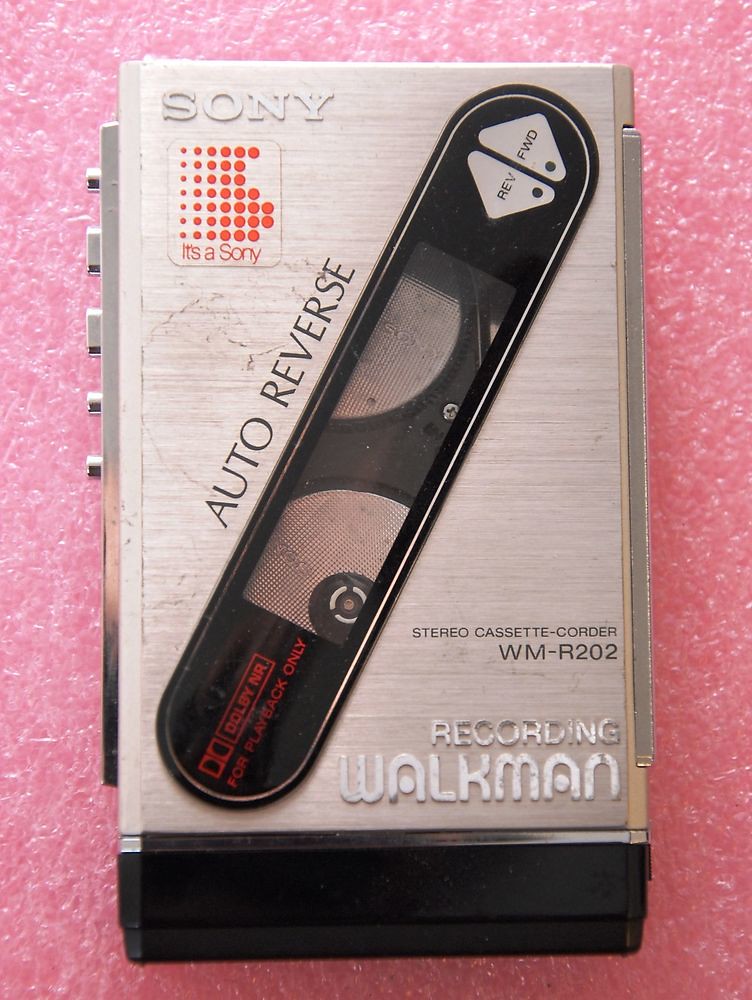
I got a Sony Walkman WM-R202 and loved it, though it was only for a short while. It was delicate and fragile, or I had a lemon; but it was the kind of device that stuck with me and made sense for me to profile as an iconic throwback gadget. Back when I started work I was obliged to do night classes in advanced chemistry. It was tough going (partly because I wasn’t that focused). I had a long commute home in a company minibus and my existing Walkman WM-24 whilst good had given up the ghost. I decided to put what money I had towards a Sony Walkman WM-R202 that would help with my commute boredom and my night classes.
Why that model:
It could record reasonably well which I convinced myself would be handy for lectures. It was not up to a Pro Walkman standard as the Dolby circuit fitted was for playback only. (I couldn’t afford the professional grade WM-D6C at the time and they weren’t the kind of device that you could easily fit in a pocket either. They were big and substantial.)
It had a good reputation for playback. Not only did it have Dolby B noise reduction and auto reverse on cassette playback, but it held the cassette really well due to its metal construction. I learned the benefits of good tape cassette fit in a rigid mechanism the hard way. I had got hold of a WM-36 which on paper looked better than my previous Walkman with Dolby B noise reduction and a graphic equaliser, but had to keep the door closed with a number of elastic bands. It was a sheep dressed up as a wolf and I struggled on with my original dying Walkman
Probably the biggest reason was that it intrigued me. It wasn’t much larger than an early iPod and was crafted with a jeweller’s precision. It was powered by a single AA battery or a NiCd battery about the size of a couple of sticks of chewing gum. It looked sexy as hell in in a brushed silver metal finish.
Whilst the buttons on the device might seem busy in comparison to software driven smartphones it was a surprisingly well designed user experience. None of them caught on clothing, the main controls fell easily to hand and I can’t remember ever having to use the manual.
What soon became apparent is that you needed to handle it very carefully to get cassettes in and out. I used to carefully tease the cassettes in and out. Despite my care, one day it stopped working. Given that mine lasted about two weeks, I am guessing that mine was a lemon and that the build quality must have been generally high as you can still see them on eBay and Yahoo! Auctions in Japan.
Since mine gave out well within a warranty period, I look it back to the shop and put the money towards a Sony D-250 Discman instead.
Here’s a video in Japanese done by someone selling a vintage WM-R202 on Yahoo! Auctions which shows you all the features in more depth.
What does small business really contribute to economic growth? | Aeon Essays – not as much as politicians etc would have you believe. Probably the most emblematic example of ‘small business’ contributing to economic growth was Margaret Thatcher. Small business and financial services were supposed to replace the manufacturing sector which had been devastated.
No, of that I’m innocent. – Scobleizer – I was reading this and had my fingers covering my eyes. I am just thankful not to be counselling Scoble as a PR person or a lawyer
Marketing
Trump Data Guru: I Tried to Team Up With Julian Assange – A Republican digital strategist who worked with Cambridge Analytica during the 2016 campaign told The Daily Beast that Nix should not be viewed as a reliable narrator. “Alexander Nix is not credible at all,” the strategist said. “He is a consummate salesman, and there are numerous instances already out in the public record where he made claims that were not just factually wrong—they were total fabrications.” – we’re still no closer to the truth