哈囉 – here you’ll find posts related to Hong Kong. That includes the territory, the culture, business, creativity and history. I lived and travelled to Hong Kong a number of times, so sometimes the content can be quite random.
In addition, I have long loved Cantonese culture and cuisine, so these might make more appearances on this category. I am saddened by the decline in the film and music production sectors.
I tend to avoid discussing local politics, and the external influence of China’s interference in said politics beyond how it relates to business and consumer behaviour in its broadest context.
Often posts that appear in this category will appear in other categories as well. So if Apple Daily launched a new ad format that I thought was particularly notable that might appear in branding as well as Hong Kong.
If there are subjects that you think would fit with this category of the blog, feel free to let me know by leaving a comment in the ‘Get in touch’ section of this blog here.
The BBC had Darren McGarvey on, reading is own book The Social Distance Between Us. Something is added to the content through McGarvey’s own voice reciting his own book adapted for the ‘book of the week’ slot. His Glaswegian accent and experience recording Scottish tinged rap helps in his delivery. Darren McGarvey is better known in music circles as Loki and his two albums published in the 2010s before he became an author and fronted documentaries (like working-class Londoner Professor Green). This is McGarvey’s second book after Poverty Safari, which was released in 2018. Both of the books deal with the realities for the British working class.
Revlon files for bankruptcy – CNN – one would normally expect a brand like Revlon to be resilient in a recession for being an affordable luxury a la Esteé Lauder. Ron Perelman overburdened Revlon with too much debt and its impressive that it lasted this long
China
Chinese courts flex intellectual property muscle across borders | Financial Times – Chinese courts have issued four key cross-border “anti-suit injunctions” following claims made by the country’s massive telecom equipment and smartphone groups — Huawei, Xiaomi, ZTE and Oppo — in disputes against Germany’s Conversant, US group InterDigital, and Japan’s Sharp. These rulings have essentially sought to block non-Chinese companies from enforcing IP rights in other jurisdictions, meaning Chinese companies cannot be sued for alleged infringements.They are enforced via daily penalties on a foreign company’s local operations in China, if that company insists on pursuing a case. According to Rieko Michishita, a veteran China IP lawyer at Bird & Bird, the rapidly mounting penalties make the injunctions akin to “taking a hostage”. And the cases are an indication, she warns, of how Chinese companies and courts will become more confident in deploying such legal manoeuvres as the country’s technological prowess steams ahead
Fears of data abuse as Chinese health code turns red for financial scandal protesters | South China Morning Post – Victims of what could be one of China’s largest financial scandals found themselves unable to step outside to join planned protests because their health QR codes had turned red, reigniting fears that the large-scale data collected for contact tracing would be abused for other uses. Since late May, hundreds of people have taken to the streets in China’s central Henan province, calling for authorities to ensure the return of their deposits that were frozen in four rural banks in the province.
Transforming logos for Pride has lost brand impact | Marketing Week – When the mass market starts arguing over who gets the specially altered distinctive asset for the month, it’s probably time to retire the whole code-playing business forever. Monkeys cannot run the zoo – especially the zoo’s Special Surprise Tricks Unit, which designs things to influence the monkeys without them knowing anything about it. Pride month clashed with the platinum jubilee. Brands got involved with the platinum jubilee celebrations as planning got under way by local councils and British embassies by mid-May. The platinum jubilee allowed brands to reach a wider swathe of consumers than would otherwise be the case and increase their relevance to consumers lives. Celebration of pride month was seen as brands ‘deprioritising’ the platinum jubilee on one side, while platinum jubilee critics were seen as been prejudiced in nature. What struck me was the quiet of the voices in the middle ground of the Pride – platinum jubilee dispute. Perhaps its better for brands to stay out?
The West’s Struggle for Mental Health – WSJ – American psychiatrists have been studying rates of functional mental illness, such as depressive disorders and schizophrenia, since the 1840s. These studies show that the ratio of those suffering from such diseases to the mentally healthy population has been consistently rising. Ten years ago, based on the annual Healthy Minds study of college students, 1 in 5 college students was dealing with mental illness. – and depression has surged 135 percent over an 18 year period. The finding are that “The more a society is dedicated to the value of equality and the more choices it offers for individual self-determination, the higher its rates of functional mental illness.”
☕️ Candy in your coffee – this seems to be an extension of the ‘sweet flavours’ available historically from the likes of Dunkin Donuts and other coffee outlets
National security law: can Hongkongers still hold June 4 commemorative events marking anniversary of Tiananmen Square crackdown? | South China Morning Post – political scholar Steve Tsang, director of the University of London’s School of Oriental and African Studies, also said the security law was intended to ensure activities that were deemed unpatriotic could not take place in Hong Kong. “It has been enforced in a way to secure an intimidation effect,” he said. “Unless someone or members of a civil society organisation are prepared to be charged and jailed … they will not hold a public event of any sort.” Lau Siu-kai, vice-president of the semi-official Chinese Association of Hong Kong and Macau Studies, said a large vigil commemorating June 4 might be seen as an act that undermined China’s sovereignty and therefore was not worth the risk. Asked what kinds of June 4 events might be allowed in the future, the pro-Beijing scholar said: “Some implicit actions, in private, and in small groups, should be fine under the current political atmosphere.” Simon Young Ngai-man, associate dean of research at HKU’s law faculty, said the question centred on whether such acts signalled “seditious intent”, which might risk violating the Crimes Ordinance – an offence punishable by up to two years in prison for first-time offenders. “Note that intending to promote feelings of ill will and enmity between different classes of the population is also a seditious intent,” he said. “The precise meaning of ‘exciting disaffection’ is unclear. Does it cover any kind of criticism of the Chinese and Hong Kong governments?”
Diabetes drug leads to notable weight loss in people with obesity – study | The Guardian – interesting article that touches on multiple aspects of obesity as a chronic condition. The biggest issue is that government’s aren’t looking to treat it as the chronic condition related to an an endocrine system imbalance that it is. I worked on a rival drug to the one mentioned, which is being promoted in the US and other countries at the moment
An Oxford case study explains why SpaceX is more efficient than NASA — Space Business — Quartz – Planners behind projects that attempt to achieve a massive gain in a single leap, they posit, enmesh themselves in psychological patterns that lead to failure. They delude themselves in thinking the actual costs of the project will be much less than expected, because if the real costs were known, the projects would never be attempted. Platforms, on the other hand, grow incrementally. These aren’t just digital constructions but real world activities that share several characteristics: Repeatability, extendability, the ability to absorb new knowledge and adapt to new situations.
Microsoft Azure cross-tenant cloud security flaws concerning – Protocol – “It’s concerning. And it is a pattern,” said Rich Mogull, CEO at independent security research firm Securosis and a longtime security industry analyst. “And so the question is: Do we believe that that’s because they’re under greater scrutiny? Or is it that they have more problems? It might be a little bit of both.” At cloud security firm Orca Security, whose researchers have found two of the cross-tenant vulnerabilities in Azure services, the issues strongly suggest that Azure is not withstanding the pressure applied by researchers to the same degree as AWS and Google Cloud, according to Orca CTO Yoav Alon. – the more things change, the more they stay the same
Deadly secret: Electronic warfare shapes Russia-Ukraine war | AP News – Russian jamming of GPS receivers on drones that Ukraine uses to locate the enemy and direct artillery fire is particularly intense “on the line of contact,” he said. Ukraine has scored some successes in countering Russia’s electronic warfare efforts. It has captured important pieces of hardware — a significant intelligence coup — and destroyed at least two multi-vehicle mobile electronic warfare units.
A primary metaverse leader is leaving Microsoft at the wrong time — Quartz – Kipman’s exit came as a surprise to some AR industry insiders. Kipman has been the leading evangelist for Microsoft’s immersive computing efforts since the launch of the HoloLens AR headset in 2015, which he helped develop. In addition to the HoloLens, Microsoft offers its bleeding-edge Azure Kinect spatial computing depth camera, which captures and tracks 3D objects. The company has also developed Microsoft Mesh for shared AR interactions, supports a wide array of VR headsets via its Windows Mixed Reality platform, and boasts one of the most popular VR communities in AltspaceVR. Quietly, Microsoft has become the biggest name in the metaverse next to Meta, largely due to its focus on business enterprise users. But now that Microsoft is losing its immersive computing champion, where does the company’s metaverse path lead? And why is Kipman leaving at such a crucial moment?
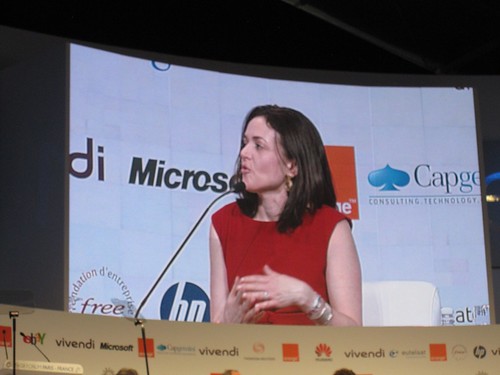
Sheryl Sandberg is leaving Meta. She has roughly 1.6 billion reasons never to work again – that isn’t lives ruined by Facebook, but her net worth on leaving Meta after 21 years at Google and Facebook building advertising sales operations teams.
Sandberg’s resignation has been a long time coming, and was repeatedly predicted since the early 2010s when the toxic nature of Facebook’s ad model became apparent. You had the sense that she viewed herself as a presidential candidate in waiting. Her exhortations to lean in were at odds with the ‘tech bro’ culture that still permeates Meta and other Silicon Valley firms. Sandberg leaves Meta with her reputation in tatters and with less chance of becoming president than More on Sheryl Sandberg leaving Meta here: Sheryl Sandberg calls it quits – by Casey Newton & Axios Login: Sandberg’s ad jackpot
Number of Hongkongers applying for BN(O) scheme rises 25 per cent in first quarter of 2022, likely from families applying before new school year | South China Morning Post – Some 123,400 Hongkongers have applied for pathway to British citizenship since January 31 last year, with 92 per cent of them successful. Canada, Australia have offered alternative routes, but immigration experts say BN(O) and Canadian programmes will remain most popular. – A few observations on this. There has been a strong historic connection between Hong Kong and Vancouver going back to at least the 1967 riots. The South China Morning Post used to have a Vancouver column until April this year. Prominent people like Li Ka-shing had their families there. There is a similar connection with the UK, though I found that I was running into more Canadians than British born Chinese during my time in Hong Kong. Secondly, the dominance of mainland Chinese in creating a threatening atmosphere for Hongkongers in Australia is a big issue
Ideas
Should Cities Disband their Police Departments? – ScienceDirect – the short answer social science data research says no they shouldn’t. The long answer. Unlike the UK, in the US large towns can have their own police forces. There are then county sheriffs departments and state police as well. Closing a ‘city police department just means less responsive policing with less crime solved, less transparent data indicating the quality of policing going on. Crime still happens.
FT’s How To Spend It magazine rebrands as big spenders go out of style | Financial Times | The Guardian – The How To Spend It name was created in 1967, when the FT’s first female employee suggested the wives of its readers might enjoy a section on how to spend their husband’s income. It later became a standalone magazine, riding the luxury goods – and financial services boom – of the 1990s and 2000s. Alice Pickthall, of Enders Analysis, told a 2018 Guardian long read that the magazine was best understood as the “Argos catalogue for rich people” – my issue with HTSI has been less about nice things and more about the lack of quality many of the items have in terms of design, build quality and longevity
Marketing
How the 968CS rebuilt the Porsche powerhouse | Financial Times – ‘You don’t understand: if we don’t get a car at under £29,000 then we’re dead’,” says Gaskell, now 63, a multiple non-executive director, investor and speaker – and a transatlantic rowing record-holder too. He got together with some colleagues to work out how to get a 968 priced at £28,995. “Out went air conditioning, electric windows, rear seat, rear wiper, boot lock – and the big electric driver and passenger seats were replaced with lighter ones.” They got it down to £28,975, then realised they had another problem: “Buyers wouldn’t like saying they’d bought a cheap Porsche.” The solution was to position it as a “lightweight” road-racer. “We lowered the suspension, quietly had a special steering wheel made for us by Italian manufacturer Momo – the factory would have gone nuts if they’d known – and called it the ‘Club Sport’. A couple of professional drivers reported that it was a fantastic driver’s car. We’d accidentally created a game-changer, and in 1993 it was named ‘Performance Car of the Year’.” – interesting tale about innovating in adversity. There are a some bits missing however. Porsche had form making lightweight cars like this, notably the Porsche 911 Club Sport from 1987. So there was a ready use case, concept and language that could be adapted for the cheap 968 rather than a completely new creation as implied by this article.
Media
Amazon to close China Kindle Store after losing out to domestic rivals | Financial Times – Amazon will leave behind a growing customer base of digital book lovers. More than 500mn Chinese listened to or read books on a digital device in 2021, according to research by the China Audio-video and Digital Publishing Association. China’s digital reading market generated more than Rmb40bn ($6bn) of sales last year, an increase of more than 18 per cent from 2020 – back when I started going to China there was a substantial trade in purchasing Kindle tablets from the US and Japan. For regulatory reasons Amazon China has been slow to get into e-books. So local competitors fuelled a parallel trade in Kindles. These tablets were then refreshed and pointed to local e-book stores. It must be galling to Amazon to know that not only did they lose out on e-tailing in China, but the subsidised Kindles from other markets built China’s rivals in e-book sales.
Davis Polk Asia chair withdraws from Hong Kong security law forum | Financial Times – Guessing that Davis Polk Asia didn’t do a thorough opportunity cost analysis before agreeing to participate in the Hong Kong National Security Law Forum. An alternative hypothesis that I have heard about Davis Polk Asia could be due to being really screwed globally and will ANYTHING for some billings. Even if David Polk Asia really desperate, I can’t imagine that there will be that much upside in the greater China market and maybe some backlash in the law firm’s other international and US domestic offices. The backlash happened as soon as the FT published news of their forthcoming participation. I can also imagine that the subsequent Davis Polk Asia withdrawal will cause blowback with mainland clients and government contacts. The smart play for Davis Polk Asia would have been to decline the place in the first instance. It is even more surprising when David Polk Asia could have looked at Mayer Brown pulling away from representing Hong Kong University last year was a case study in likely outcomes. Given that one would want solid wise heads in the senior staff of a law office rather than status seeking sycophants, the Davis Polk Asia chairman Mr Rogers doesn’t look like a credit to his firm. Discretion might have been the better part of valour in this case.
Shanghai lockdown exposes global supply chain strains | Financial Times – the Port of Los Angeles, for example, is monitoring data from China on energy consumption, traffic patterns and pollution, to understand how busy the country’s factories are so it can prepare for the volumes of cargo to come. “I’m on the phone most evenings with friends . . . in Shanghai telling me what’s happening on the ground,” – interesting how they’re having to rely on abstract data
As Q1 results disappoint, should brands look beyond China? | Advertising | Campaign Asia – brands were able to offset these losses thanks to the strength in North America and Europe. Aeffe, the parent company of Mochino, nearly tripled its net income in the three month period, as Europe (which represents almost one-third of its total revenue) jumped 37.5% thanks to Germany and the UK. Tapestry shares even climbed on May 12 after it posted that sales in North America rose 22% year-on-year, fully offsetting mid-teens decline in China. These two regions will be crucial as China slowly recovers from its worst Covid wave since 2020. Although the mainland is on track to become the world’s largest luxury market by 2025, the US is still in top spot, accounting for 31% of the global market (China accounts for 21%). As such, it is important for brands to continue building traction in North America and Europe to cushion against near-term losses in Asia
China Brief: Expanding State Power Still Tops Xi Jinping’s Agenda – The published speech shows how much of Xi’s economic thinking is about control, tied to what he sees as a necessary expansion of government power. The speech frames China’s problems as coming down to the “reckless expansion of capital,” or private industry, which can only be curbed by expanding the CCP’s power. That idea relates to one of Xi’s favorite terms from last year: “common prosperity,” achieved via the redistribution of wealth. Publishing the 2021 speech now may be an attempt to revitalize that language. Other Chinese officials, such as Premier Li Keqiang, are focused primarily on addressing economic issues, but party power still tops Xi’s agenda. One part of the speech may seem incompatible with its profession of socialist values: how conservative it sounds about welfare. Xi explicitly states that “common prosperity” isn’t welfare. His words also suggest a fear of overpromising what the government can deliver, but they also echo an idea I’ve heard from rich and powerful people in China—that people living in democracies never vote to cut welfare benefits because the public is lazy and entitled
Consumer behaviour
“Macho pink” menswear takes over in China | Vogue Business – “Macho pink” can be seen as a kind of “rebellion”, however, this rebellion currently remains limited to product categories considered mainstream for men, such as e-sports, sneakers and electronics. As male consumers in China put more emphasis on self-expression, this is validated to some extent by pink goods. – this reminds me of the bold neon colours of 1980s skiwear brands like Nevica. More on the social impact here: Millennial Pink Begone, Enter the Age of Hot Pink Fury | High Sobriety
Liberals Should Be Worried About the Conservative Comedy Scene – POLITICO – Conservative humorists aren’t merely catching up to their liberal counterparts in terms of reach and popularity. They’ve already caught them — and, in some cases, surpassed them, even as the liberal mainstream has continued to write conservative comedy off as a contradiction in terms. “[Liberals] are ceding ideological territory in the culture wars to the right via comedy,” Marx told me, noting that once-beloved liberal comedians like Stewart are struggling to find their footing in the treacherous landscape of post-Trump humor. “This thing that we thought we have owned for the last 20 years has been leaking, and the borders are slowly getting shifted.”
Company Reviews on Glassdoor: Petty Complaints or Signs of Potential Misconduct? – HBS Working Knowledge – Whether it’s Theranos and its fraudulent blood testing technology, Wells Fargo and its fake financial accounts, or Volkswagen and its bogus emissions data, a whistleblower eventually comes forward to expose the behavior, and executives are held accountable. “But what you start to realize is that the problems that have been uncovered have been going on for a very long time,” says Dennis Campbell, a professor of business administration at Harvard Business School. Far from being just a few bad apples, most business improprieties occur within a widespread culture of bad behavior—or at least, a lot of people looking the other way as misconduct is taking place, he says.
Koreans Think AI Is the Future – The Chosun Ilbo – 1/ artificial intelligence 2/ robotics 3/ future mobility 4/ hydrogen fuel 5/ energy 6/ biotechnology 7/ aerospace 8/ new materials 9/ batteries 10/ semiconductors – skews to Korea’s current strengths in semiconductors, hydrogen fuel cells and robotics
Luxury
LVMH-owned watchmaker Tag Heuer to accept crypto payments | Vogue Business – terrible timing given the bear market in crypto at the moment. Its also part of the odder financial aspects happening in the watch sector. From companies going vertical into the pre-owned marketplace to Breitling adopting a car lease type model for watches
Marketers, investing in market research is not superfluous – there is the big initial deep dive that happens when a new CMO arrives or a new product or market is contemplated. Second, there is the lesser but more common annual research that updates the organisation on the market, its segments and associated behaviour that feeds annual market planning. Finally, there is the more occasional inquiry into a specific micro issue that springs up. A pricing problem, a sudden reduction in market share or some other occasional issue that demands customer insight to guide management action
Hong Kong Considers Blocking Telegram Messaging App, Local Paper Says – Bloomberg – Hong Kong authorities are deliberating whether to curtail public access to the messaging service Telegram, the Sing Tao Daily reported, potentially reviving fears the former British colony is moving closer toward Beijing-style internet controls. The Privacy Commissioner for Personal Data is considering invoking regulations for the first time to restrict access to a platform it found to be rampant with doxxing, the local newspaper reported Tuesday. The widespread doxxing — or online exposure of sensitive and personal data — was aimed at government officials as well as citizens, the newspaper said, citing unidentified people.
Chinese Hackers Tried to Steal Russian Defense Data, Report Says – The New York Times – The emails landed on March 23 in the inboxes of scientists and engineers at several of Russia’s military research and development institutes, purportedly sent by Russia’s Ministry of Health. They carried a subject line that offered seemingly tantalizing information about a “list of persons under U.S. sanctions for invading Ukraine.” But the emails were actually sent by state-sponsored hackers in China seeking to entice their Russian targets to download and open a document with malware, according to a new report to be released Thursday by the Israeli-American cybersecurity firm Check Point… The Chinese campaign targeted Russian institutes that research airborne satellite communications, radar and electronic warfare
Bongbong Marcos aka Ferdinand Romualdez Marcos Jr is the son of former Filipino president Ferdinand Marcos. The Asia Society did a really good talk on the election which explains what got Bongbong Marcos elected as president of the Philippines. Yes there was a lot of misinformation and sketchy tactics by the Bongbong Marcos campaign, but there is more going on.
Much of the issue seems to be that Marcos is viewed as standing against local Filipino dynasties that have most of the economic power in the country. I found this particularly interesting as Bongbong Marcos and his running mate Sara Duterte are both from dynasty families.
Marcos’ mother Imelda had a dad who as a lawyer, an uncle who was a supreme court judge, a cousin who was in the lower house of parliament and her brother was a provincial governor. On his father’s side, Bongbong’s grandfather was a lawyer and politician, and the mother was a school teacher. While both of Bongbong’s parents had known poverty, they could rely on a strong powerful network of family ties to help get them good jobs. Ferdinand Marcos even managed to get away with murder in 1939.
Bongbong Marcos is supposed to be stuffing people he can trust through blood ties into key government and political positions such as speaker of the house and ministerial roles.
Opposition party strategy
The Marcos campaign managed to play on nostalgia for older voters and addressed young voters through TikTok. The opposition party strategy failed in online marketing. Misinformation was an aggravating factor.
Corrosion of liberal democracy
The average Filipino voter doesn’t feel invested in democracy in the same way that the middle class would be. 7 out of 10 surveyed by Pew wouldn’t mind an authoritarian leader like Bongbong Marcos – so Marcos was pushing against an open door. The middle classes are looking for ‘order and discipline’ rather than dysfunction. They think that economic success and freedom are mutually exclusive. They look to the United Arab Emirates and Singapore as exemplars. There are similarities with middle income countries like Modi in India, Erdoğan in Turkey, Urban in Hungary and Bolsonaro in Brazil.
From an economic perspective what does Bongbong Marcos mean? Noah Smith made their most optimistic take on the economics of the Philippines Can the Philippines sustain its growth? – by Noah Smith. An authoritarian Bongbong Marcos government might see the departure of foreign companies who have been responsible for powering the past two decades of economic growth in the Philippines. The only reason why you might not see a foreign multi-national company exit would be ‘de-Chinaisation’ of global supply chains.
Siemens to discontinue business in Russia – eeNews Europe – Siemens stopped all new business with and international deliveries to Russia and Belarus. The comprehensive international sanctions and the current and potential countermeasures are affecting the company’s business activities in Russia – especially its railway service and maintenance business. For companies that are mainly active in B2B business, the decision to completely exit a region is more difficult to make than for companies that sell consumer goods. The reason: contracts for the maintenance of industrial plants and trains are concluded for many years, sometimes decades – this is an opportunity for Chinese railway businesses
Firms as Revenue Safety Nets: Political Connections and Returns to the Chinese State | The China Quarterly | Cambridge Core – restructured state-owned enterprises (SOEs) with political connections pay more tax than their assessed amount, independent of profits, in exchange for more preferential access to key inputs and policy opportunities controlled by the state. Examining taxes rather than profits also offers a new interpretation for why China continues to favour its remaining SOEs even when they are less profitable – it also explains why apparently inefficient SOEs get so many bank loans from state owned banks
California’s demography is at odds with the old California Dream | The Economist – The population fell to 39.2m in the year to January 2022, 400,000 lower than in 2020 (see chart). In 1990, the number of Californians had been rising by a robust 2.5% a year. The biggest contribution to the decline came from migration. In 2021, the net change (people moving out of state minus those moving in) was twice as large as the number of covid deaths and four times the population’s natural change (the excess of deaths over births). Big cities have been hit hardest; the population of Los Angeles County has fallen for the past four years. Even if these declines were no worse than average—and national demographic trends are slowing, too—they might seem worse in a state where, as its governor once said, “the future happens here first”. In fact California’s demography is worse than average. The state’s total fertility rate (tfr, an estimate of the number of children women will bear over their lifetimes) fell from 2.2 in 2006 to 1.5 in 2020, more than in America as a whole, where the fall was from 2.1 to 1.6.
Arrest of Cardinal Zen send chills through Hong Kong’s Catholic church | Financial Times – a diocesan administrator tendered their resignation over a posting on the “Catholic Way” Facebook page on April 27. The post, which was quickly deleted, summarised a television interview in which a local priest accused China of attempting to control religion in Hong Kong. The diocese said the administrator had resigned of their own accord. The police investigation of the 612 Humanitarian Relief Fund, of which Zen was a trustee and which supported pro-democracy protesters, could also have implications for Hong Kong’s legal system. Police said on Thursday that they had complained to the Bar Association and Law Society about alleged misconduct by unnamed lawyers who took on the fund’s cases
Talking about white privilege online can backfire – Futurity – The relationship between question language and the content of the responses was mediated by their support or opposition to renaming buildings. This suggests that, rather than causing people to think differently about the world, the term white privilege causes an emotional reaction which then affects their response, Quarles says. Inclusive ways of speaking about race online, such as the term “racial inequality,” are more likely to create a sense of shared purpose, he says. Policymakers who want to promote racial equity should consider how their language can either unite people or alienate potential allies, he says. – but this doesn’t understand that white privilege as a term comes from left-wing thinking and isn’t designed for dialogue. The emotional reaction is elicited by design as part of the narrative of ideological struggle. Either the party is worn down to the ideology or they are part of the enemy, which is then followed to its conclusion in Stalinism
Recovery for Bosch as it warns of slowdown – eeNews Europe – It’s worth taking a closer look at how the war affects climate action. My assessment is nuanced: in the short term, the acute conflict will slow progress in reducing carbon emissions, but in the long term, it will accelerate the technological transformation in Europe – Bosch also particularly keen on green hydrogen
Lex in depth: why the luxury market needs to hedge against China | Financial Times – Customers at the exclusive Shinsegae department store in the Gangnam district of Seoul prefer to display their wealth discreetly. But their high spending was exposed to the wider world when it revealed annual sales had topped $2bn in 2021 — the highest turnover for a single store in the world. It outpaced even Harrods in London, which before the coronavirus pandemic had long held the world’s top spot
EU plans to require backdoor to encrypted messages for child protection | AppleInsider – “When executing the detection order, providers should take all available safeguard measures to ensure that the technologies employed by them cannot be used by them or their employees for purposes other than compliance with this Regulation,” says the proposal, “nor by third parties, and thus to avoid undermining the security and confidentiality of the communications of users.” – congratulations EU you’ve just empowered authoritarian regimes and risked the lives of millions elsewhere