Materials are as important as technology and innovation. Without access to hydrocarbons you wouldn’t just lose access to the car as transport, but the foundational products of modern life.
Added to the materials list of importance would be the likes of:
Lithium – current battery technology and in some alloys
Helium – inert atmosphere for chemical reactions and lighter than air craft including blimps, airships and weather balloons
Silicon – semiconductors
Cobalt – a key material in batteries
Titanium – similar applications to steel but with a higher weight to strength ratio. Also hypoallergenic in nature
Carbon fibre – high strength light weight materials
Rare earth metals and key materials including:
Dysprosium- magnets, lasers, nuclear control rods
Erbium – lasers, particularly in telecoms fibre optics cables and optronics
Europium – interest in using it to develop memory for quantum computers
Holmium – magnets, lasers and quantum computer memory
Neodymium – high strength magnets
Praseodymium – magnets
Yttrium – catalyst in some chemical processes
Thorium – future safer nuclear fuel source
Thulium – portable x-ray devices, ceramics used in microwave equipment
Scandium – high strength lightweight alloys
Ytterbium – manufacture of stainless steel, atomic clocks
Uranium – nuclear fuel
In addition to innovation in material science and chemistry with these raw materials. There is also the benefit of recycling and reusing existing stuff once it has finished its useful life. The Tokyo olympics of 2020 saw an unprecedented peace time effort to find precious metals in e-waste and junk that could then be processed into the winners medals.
A desire to lower the carbon footprint will require ingenuity in systems, design and materials use for it to be successful
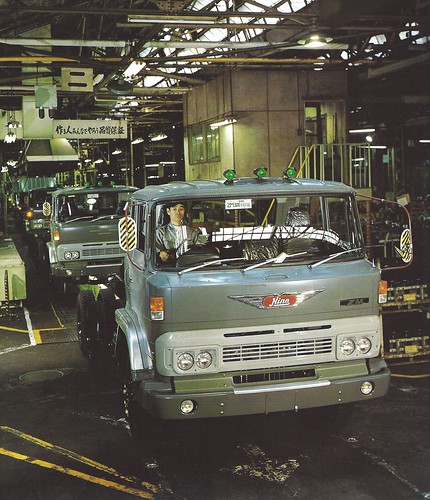
Hino Motors is a car and truck manufacturer best known for its iconic Hino trucks. It started its convoluted origin story spinning out of manufacturing company owned by Tokyo Gas.
Before there was Hino trucks, there were a small amount of half tracks and armoured personnel carriers made for the Imperial Japanese Army. After the war Hino got into the truck business and for a brief while also made cars. The pretty Hino Contessa coupé showed potential, but becoming part of the Toyota group saw Hino focus on commercial vehicles under its own name.
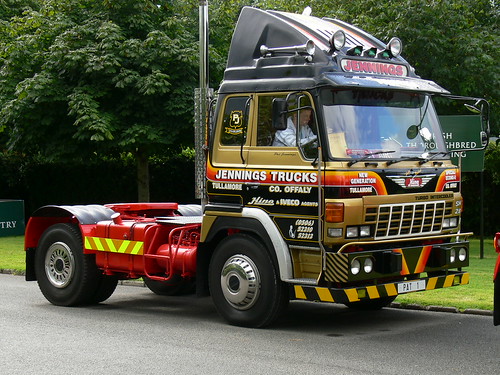
Hino trucks with their winged logo marked my childhood in Ireland. Hino trucks pulled palleted loads on taunt liner trailers, shipping containers and flat bed trailers of hay. The supermarket delivery wagons, the bakers lorry, skip deliveries, ready mix and the dairy picking up milk from my Uncle’s farm were all using Hino trucks. The distinctive unblinking three green lights on the roof of oncoming Hino trucks stood out of the total darkness of rural Irish roads.
I had Robert ‘Pino’ Harris to thank for making Ireland the Hino trucks capital of Europe at the time. And his Hino trucks success story is one of a singular focus on relationships and customer service.
Adidas ousts China chief as sales suffer after consumer boycott over Xinjiang | Financial Times – Allison Malmsten, sportswear analyst at China-focused consultancy Daxue Consulting, said that since the boycott, Nike and Adidas have ceded their top position on ecommerce apps such as Alibaba’s Tmall. In their place, local online retailers have promoted Li-Ning and Anta, making the “competition a lot stiffer”.Jonathan Cummings, Asia-Pacific president of brand consultancy Landor and Fitch, said that after years of market dominance, Adidas and Nike were being challenged by “cheaper domestic brands that have become stronger”.Adidas generated nearly a quarter of its sales in the Greater China region in the first half of last year, the bulk of which came from mainland China. – it will be interesting to see where adidas will try to go in China and whether they feel it is worth riling western customers to arrest their decline in China
The rising costs of China’s friendship with Russia | Financial Times – When the Russian invasion of Ukraine started two weeks ago, Jane Yan, a senior executive at a machine parts maker in eastern China, says she was not too worried about the impact. After all, buyers in Russia and Ukraine accounted for less than 5 per cent of the company’s overseas sales last year. But as the full ferocity of the Russian onslaught started to become apparent, the outlook shifted dramatically. Important clients in countries such as Poland and Germany cancelled orders with the Zhejiang-based company. “A Munich-based client said ‘it feels terribly wrong to send money to a country that is tolerating war in Ukraine — sorry’,” said Yan, who asked that her employer not be identified. She added that inquiries from European buyers have also fallen sharply since the conflict started. “I hope the war ends as soon as possible.” – I wonder how prevalent this consumer boycott actually is of Chinese products?
Culture
Why disco will never truly die — Quartz – interesting, but full of American privilege, but no love for producers like Giorgio Moroder, Luxxury, Dimitri from Paris, Late Night Tuff Guy or The Reflex
Ideas
How factory robots lead to human deaths – Futurity – “For decades, manufacturers in the United States have turned to automation to remain competitive in a global marketplace, but this technological innovation has reduced the number of quality jobs available to adults without a college degree—a group that has faced increased mortality in recent years,” says lead author Rourke O’Brien, assistant professor of sociology at Yale University.
“Our analysis shows that automation exacts a toll on the health of individuals both directly—by reducing employment, wages, and access to healthcare—as well as indirectly, by reducing the economic vitality of the broader community.”
Since 1980, mortality rates in the United States have diverged from those in other high-income countries. Today, Americans on average die three years sooner than their counterparts in other wealthy nations.
EACH NEW ROBOT PER 1,000 WORKERS LED TO ABOUT 8 ADDITIONAL DEATHS PER 100,000 MALES AGED 45 TO 54 AND NEARLY 4 ADDITIONAL DEATHS PER 100,000 FEMALES IN THE SAME AGE GROUP. Automation is a major source of the decline of US manufacturing jobs along with other factors, including competition with manufacturers in countries with lower labor costs, such as China and Mexico.
Previous research has shown that the adoption of industrial robots caused the loss of an estimated 420,000 to 750,000 jobs during the 1990s and 2000s, the majority of which were in manufacturing.
Can Intel out-design Apple in terms of chips? I think that is certainly possible, possibly even extremely likely
Can Intel compete with Apple on process? Possibly soon, if they managed to partner with Samsung or TSMC. Certainly in the longer term if Intel’s process engineers get their mojo back, or they continue to partner with TSMC or Samsung
Roundtable: A Brutally Honest Conversation on the Metaverse – Web 2.0 Is about the individual/the corporation, and Web 3.0 is about the collectivist statement, or the community / collectivist environment, in some ways. – interesting that there is a whole piece missing about web 1.0 being about personal and organisation publishing and communications. Web 2.0 being a web of data and creativity
3G graduation sees DoCoMo celebrating 3G wireless services and how they fitted into consumers lives. While DoCoMo has its service running for another couple of years, rival Au has shut down its 3G network this year. The ‘Graduation’ in 3G graduation is used in a similar way to how US technology companies use ‘sunset’ as a euphemism for shutting down a service.
In sectors outside technology like the 3G graduation film, the term graduation is signify an artist leaving an idol group. Japanese Idol groups like AKB48 and Morning Musume mirror the interchangeable team nature of Puerto Rican boy bandma Menudo. Like Japanese idol groups, Menudo appeared in adverts for big brands like Pepsi and McDonalds across Latin and South America (including Portuguese speaking Brazil). They even appeared in a Pepsi ad that ran in the Philippines. They also did two TV specials. Japanese idol groups contain pop stars with the following characteristics:
a type of entertainer marketed for image, attractiveness, and personality in Japanese pop culture. Idols are primarily singers with training in acting, dancing, and modeling. Idols are commercialized through merchandise and endorsements by talent agencies, while maintaining a parasocial relationship with a financially loyal consumer fan base.
When members leave the group due to contract violations, ageing out, or wanting to build a career of their own, they ‘graduate’. Like the 3G graduation film idols share an association with school imagery.
https://youtu.be/dKxjw3YntBk
Kit-Kat anime advert
Nestlé Kit-Kats are popular in Japan. They are especially popular during exam time. The reason for this is that the Japanese pronunciation of KitKat, “Kitto Katto,” sounds similar to the phrase “Kitto katsu,” which means “I believe you will win/you can do it.” The homophone nature of Kitto Katto meant that Kit-Kats became a good luck charm, with people having them or giving them as gifts for big days such as school entrance exams or even job interviews.
This explains why this anime advert directed by Naoko Yamada is around the theme of “Kikkake wa Kit Kat de,” or “Kit-Kat Creates the Chance,” and has a school related setting.
This is apparently the first of what promises to be a series of adverts being done by Yamada for Kit-Kat.
Modern car mechanical design
For someone who hasn’t bought a car in 25 years, hearing about how unreliable BMWS and Mercedes cars have become is a bit of a shock. I have driven hire cars and am aware that cars are now heavily reliant on computers. What I hadn’t realised was how cheap mechanical parts had become under the hood. The reason why they had been engineered down to a price, was to allow for the price of all the new electronics that make up the car driving experience now.
I started my work life off in a corporate research lab were we were developing a way of making a plastic manifold cover for a small Ford of Europe engine. This engine was destined for the Ford Fiesta and the first Ka if we had managed to get everything to work. The idea was that the engine would be a sealed unit. When it needed to be replaced it would undergo a factory recondition, or would be recycled. This was about reducing environmental impact, without impacting profits. But looking at some of the parts going into these cars now, I am shocked.
More in this video here.
Amazon luxury watch copies
Amazon is a den of iniquity in terms of shoddy products and fakes. German watch YouTuber shows the variety of watches that steal the design language of watches from the likes of:
Nomos
TAG Heuer
Breitling
Rolex
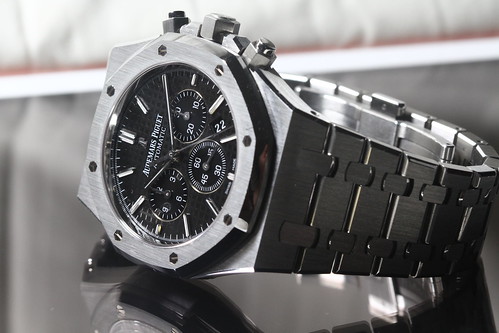
Audemars Piguet
Patek Philippe
All of these come in at about $100 price. It is interesting how the Chinese factories turning these watches out have managed to get their way around the brand police. Finally, I am surprised to see Chinese manufacturers relying on a cheap, but reliable Seiko movement for the most part. Which is probably down to the weird deficiencies in Chinese engineering that means that you don’t see Chinese made rollerball pen refills.
The amazing design of the jerry can
Great video by a Scottish YouTuber who covers why the jerry can was such a clever product design and the history of the fuel container. I did not realise that they were tested in the Spanish civil war. More here.
NFTs and Ralph Bakshi’s animated adaptation of The Lord of The Rings
The problems with NFTs. NFTs sprung out of the move to decentralised finance or cryptocurrency. NFT are smart contract linked artefacts. These were seen as a panacea for creatives to make money during COVID. This video is an interesting discussion on NFTs, and uses the analogy of investors buying real estate that drove the 2008 mortgage crisis. The crypto-economy has many of the same drivers.
The guy who made this video also did a really good exhaustive history of Ralph Bakshi‘s The Lord of The Rings film that preceded Peter Jackson’s The Lord of the Rings trilogy by a couple of decades, and the BBC’s radio adaptation by a few years. I am a fan of all three, but am in no doubt that Peter Jackson’s film in some places is a shot-for-shot copy of Bakshi’s film and borrows dialogue from both Bakshi and the BBC.
Its really hard to get your head around the situation playing out in Ukraine. One of the best set of videos that I have seen to try and make sense of what’s going on in Ukraine is done by Chris Cappy. He admits in the last video that his jocular tone is a way of dealing with the horror of it all and his analysis seems to be on point. I have embedded his Ukraine related videos here:
Beyond the horror playing out with Russia’s invasion of Ukraine; what will be some of the global impact of the Russian invasion of Ukraine?
I have put down some thoughts on the effects of Russia’s invasion of Ukraine into three buckets:
Short term effects
Medium term effects
Long term effects
Short term effects
Bread riots and inflation
The invasion of Ukraine will disrupt the country’s wheat harvest. Ukraine is responsible for 10% of all global wheat production and is a major exporter.
Developing world consumers are already suffering from the rise in food prices. This might be felt especially hard in the Middle East, where the price of bread is often subsidised by the government to help prevent riots. It was one of the factors that drove the ousting of former Egyptian president President Hosni Murbarak as part of the Arab spring series of movements.
There have been past bread riots in other countries like Algeria and Jordan at a time of massive civil disturbances. One of the first impacts of Russian actions in Ukraine may play out with disturbances in the developing world.
Russia is also a wheat exporter, but ironically won’t benefit from the price rise due to long term contracts that it has with China. China previously leased land responsible for 5 percent of wheat production in Ukraine. China had also invested in Ukrainian pork farms.
Oil and gas
The impact on global oil and gas prices has been immediate. Oil prices had been high anyway as the oil industry ramped up and tried to match post-COVID shock supply chains struggle to get back in sync. Sanctions on Russian oil have been implemented by oil traders faster than western governments have implemented them. Taking Russia out as a supplier is likely to drive western customers in a number of directions in the medium and long term. In the short term we may have power and heating shortages. Russia currently doesn’t have pipeline capacity to ship oil and gas to China in the kind of volumes that would compensate for reduced Western demand. So you might see some of that oil being shipped in sanctions busting tankers, again the challenge would be finding ‘ghost boats’ that have capacity.
Western inflation versus China inflation
China has probably worked out the calculus of products that it loses in the short term, versus long term products from Russia as a pariah state at below global prices as Russia won’t have a choice. So we can expect China to benefit from lower inflation inputs than other countries in the short to medium term. It will be inputs from oil and gas to wheat or titanium foam. This gives some Chinese businesses a comparative advantage versus their competitors, particularly western countries.
Western European concerns about energy, particularly running into winter are acute and energy transformation to lower carbon options will take time.
Russian inflation
The rouble has dropped in value by 30 percent as soon as sanctions went in. So one would think that the effect on inflation would be immediate. But you also have multinational companies withdrawing from Russia. In the short term, many products from fast moving consumer goods to clothing and home furnishings will quickly no longer be available. Even smartphone sales of Chinese brand smartphones have plummeted, which gives you and idea of what western sanctions don’t do, the plummeting rouble will do instead.
Many of these multinational companies will no longer be manufacturing in Russia either, which will create a decrease in both supply and demand. So the impact on short term inflation may take a while to become clear. It is likely to impact unemployment as well.
Russian banks and the central bank are extremely capital constrained which will not only affect monetary policy but providing sufficient credit to keep businesses going. What you will see is a brain drain of the educated and the talented as they don’t really have a future at home. Which is why Russian’s have been paying €9,000 for a railway ticket from St Petersburg to Helsinki. Talented Ukrainians are either engaged fighting the Russian army in Ukraine, are internally displaced in western Ukraine or have already left the country.
If Russia goes to martial law then all bets are off in terms of financial damage because that would likely be the least of government’s concerns in terms of maintaining other aspects of control.
Medium term effects
CHIPS Act & strategic capability
The US has looked to promote domestic semiconductor manufacturing through government investment. However inert neon and krypton gas, which is used in the semiconductor manufacturing process is supplied by Ukraine. Russia and the Ukraine were responsible for half of all global production of these gases. This will impact US national security and development of semiconductor manufacturing as a strategic capability.
Neon mirrors shortages of critical materials for western countries that will impact high technologies and engineering using performance materials. Western countries will have to think about how they update their own strategic capacity to make these materials. This covers a wide swathe of materials including:
Lithium – something that Ukraine has large deposits of
Industrial and jewellery grade diamonds.
Uranium
Titanium foam. Titanium foam is the raw material that titanium alloys are made from. Currently two out of the top three producers are China and Russia. Given what has happened with Russia, the risk calculus will change around China.
There has been a steady tempo of voices on the need to have strategic capability in critical areas like lithium and rare earth metals. This will likely be mirrored by China with its five year plans. The degrees of will to achieve strategic independence will dictate the amount of time that it takes to implement.
Innovation
Being cut off from western capability will place two problems on Russian innovation:
Access has been cut off to critical resources. Yandex has already expressed concern on how this will affect their business.
Over time, access will be reestablished through extraordinary means, but will incur additional costs. So Russian innovators might be able to acquire foreign critical materials with enough money. These will have to be funnelled through front companies in third countries in places like China and the Middle East. This is effectively a tax on Russian innovation.
Russia has some semiconductor capability, but it is way behind modern manufacturing, so it relies on foreign manufacture.
This all means Russia will be an ideal market for Chinese vendors. Huawei has already been helping Russia with their networking and information security needs. Other Chinese vendors will end up dominating other aspects of Russian technology from automation to smartphone apps. Over time Russia will fall behind and end up being a supplier of raw materials and source of skilled labour for Chinese enterprises. Having a Russian version of WeChat and Weibo with similar censorship would be attractive to the Russian government.
Russia is already behind in semiconductor manufacture, but it might be helped by China’s similarly sanctioned semiconductor companies. Russia has been trying to get self sufficient in products like computer servers, but Chinese chips will be seriously behind the chips that they’ve already had made in Taiwan.
Russia will probably do everything that it can to shield its defence industry from impact. Not only in support of its policy aims, but its one of the few value add sectors where Russia is a peer with China. Otherwise post-Ukraine, Russia’s negotiating position with China would be more akin to China’s relationship with sub-Saharan African countries or Sri Lanka.
Maintenance
Most of the civilian Russian aircraft fleet is of Boeing and or Airbus aircraft. The only access to maintenance parts will be the ones that they have on the shelves. Over time Russia might be able to reverse engineer and manufacture at least some parts. Electronics may prove harder. However Russian aircraft no longer have the amount of destinations that they can fly to with passengers or air freight, so they can likely cannibalise much of the fleet for spare parts. And since the majority of the aircraft are leased from Irish companies, there will be little blow-back that the Russian government would be bothered about at the moment.
Maintenance will also need to be done on trains and the railway network, oil and gas extraction equipment, manufacturing production lines and even hospital medical equipment. A similar mend and make do approach will likely be needed for all these sectors, which will slow down economic activity and make it harder to climb out of recession.
Rebuilding
If the second Chechen war is anything to go by, rebuilding Ukraine will be a very costly endeavour that will need to be bankrolled by either Russia or the west. As the west found out in Iraq, winning the war is the easiest and cheapest part. Rebuilding and trying to a puppet government in power with an insurgency funded by western citizen direct contributions and government funding could be a real challenge. As would trying to integrate Ukraine into Russia. Even the most draconian of measures have a high financial cost as well as societal and moral related issues.
Footage has also indicated that Russia will need to rebuild its military apparatus. The tyres were rotting off Russian and Belorussian vehicles for the want to proper care and maintenance programmes. In preparation of a future conflict with NATO, or further down the line China, Russia couldn’t afford to take those kind of losses. Wars are a shop window for the defence industries and this won’t be doing any favours for foreign sales of Russian armed vehicles, anti-aircraft systems or aircraft.
The performance of equipment in Ukraine is in sharp contrast to the veneer of professionalism and technical excellence shown by Russian forces operating in support of, and on the ground in Syria.
Russia will need to replenish ammunition supplies, maintain or replace artillery barrels and replenish field rations. Word will get around about the poor state of field rations. It will need to revamp its approach to logistics and supply chain management because everything that I listed was entirely preventable. All of this rebuilding will be challenging if Russia faces a sustained insurgency. China spends more on internal security than it spends on external facing military. NATO estimates that Russia would need to have a minimum 400,000 soldiers to maintain control of Ukraine. If Russia followed the same density of soldiers to population that it had in Chechnya, it would need 4 million soldiers.
There are some terrible options to consider:
Cull a proportion of the population, Russia is already a pariah state after all. Ignoring for morality of this for a moment which would be a huge issue in Russia, we know that this would represent tremendous logistical challenges as it did for Nazi Germany. But former Russian leaders, notably Josef Stalin killed a lot of Ukrainians including starving many of them to death and Mr Putin has proved himself to be a student of history
Internal exile. Stalin exiled the Cossack community of Crimea to Siberia. It decimated social cohesion and the ramifications of this exile is still felt by the Cossacks. Russia could do this to portions of the Ukrainian people. This would present a logistical challenge and an economic burden on Russia. If Russia thinks that sanctions are bad now, either of these two options would make current economic decline sound like paradise.
Paying for rebuilding will be challenging, if Russia manages to hold Ukraine, it might be able to exploit its rich natural resources like lithium deposits. But these will be sold at a considerable discount to the likes of China or India. We are unlikely to see Russia as a serious player in the lithium ion battery market.
Russian recession
When you take jobs, economic activity and capital flow out of an economy a recession will be inevitable. Many of the jobs that Russia will lose will be in middle class sectors including management, banking, the professions and business services. No matter what these companies do to try and mitigate the impact on their former staff, the impact will be felt economically in Russia.
Add to that the obliterated economy in Ukraine that might be dragging Russia down even further.
Over the longer term Russia will be selling their export products at a discount due to fewer customers and a more expensive route to market. So it will be harder for Russia to climb out of recession.
Reshaping of supply chains
Russian oil and gas has previously focused predominantly on selling oil and gas to Europe and Turkey and will be covered with sanctions. It will take a while to make alternative pipeline capacity to go east to China. Previously Russia has made use of foreign LPG terminals. Presumably these will cut access to transport by sea for Russia. Liquified natural gas tankers are expensive and Russia’s largest domestic LPG terminal is on the wrong side of the world, just down from St Petersburg on the Gulf of Finland. This would be the equivalent of drinking a venti mug of coffee with a teaspoon.
Russia has been experimenting with shipping some LPG by train to Northeastern China. In terms of helping finance future projects, China isn’t likely to fund LPG projects that would give Russia to foreign markets other than itself. This would be one of the first areas where we see Russia clearly as the junior geopolitical partner beholden to China. So a gas pipeline to China is likely to be the preferred route to market.
Russia is in a slightly better position with oil. its easier to ship by sea and for the right price, Russia could find customers beyond China.
Consumer sanctions busting
Russia will have already started thinking about sanctions busting, but doing this in a big way will take time, money and planning. At a consumer level, Russians will be looking to safeguard wealth through portable assets that are liquid, or can be easily made liquid. This means foreign currency, crypto-wallets, luxury watches, diamonds and precious stones. There has already been a run on the rouble at Russian banks as citizens look to obtain foreign currency and Russia has implemented capital controls on people leaving the country.
Cybercrime
It’s only a matter of time for Russia to tap its cyber criminal community and state hackers to come up with a source of foreign currency to help the Kremlin. These will be more capable than what North Korean state hackers have historically being doing. Ransomware payments will likely come over cryptocurrency. The problem with cryptocurrency is that the exchanges are becoming increasingly centralised, so criminals will be playing cat and mouse with the likes of Binance. The cryptocurrency sector in Hong Kong may be more fruitful. The COVID quarantine situation and regulatory uncertainty in Hong Kong won’t deter Russians keen to launder crypto into foreign currency and access to the global financial system.
Finance
Russia will try to get around foreign payments through a number of ways. Asianometry have done a really good exploration of this topic and I figure that you could do with a video break in this dystopian discussion of Russia and Ukraine. We have seen Russian banking systems sign up with Union Pay, which has limited acceptance in the west (usually big department stores that rely on the Chinese tourist trade like Selfridges in London and Brown Thomas in Dublin).
Long term effects
At the moment there isn’t a clear off-ramp for sanctions against Russia. One might see softening of sanctions in the developing world, for Russian products at the right price. The longer that sanctions remain, the harder it will be for Russia to regain its global economic standing once they are lifted. Russia hasn’t been a trusted partner at the best of times due to systemic corruption. Systemic corruption will be further fuelled as the country falls under Chinese influence, there won’t be a need to meet ESG driven checks and balances. It will face sustained cynicism in the west with regards its motives and will increasingly become less relevant.
In addition it will be locked into draconian financial deals with China which would make it harder to kick start the Russian economy. Globalisation will have created alternatives for its higher value goods, so will need to rely its commodities. It will be a third line supplier for strategic materials like industrial diamonds, uranium or titanium because of the trust deficit.
Russia declining, China rising
Russia is already struggling for relevance in the Russian Far East. The economic gravity is moving away from Russia towards China. Chinese companies are leasing farm land and forestry. Russian financial distress will encourage this trend much faster. The Russian Far East is part of an ‘unfair treaty’ between Russia and China during the 19th century. While China tries to keep a lid on the discussion about this, it is on the radar of Chinese nationalists. The question of Russian sovereignty will come up at some point and Russia won’t be able to secure any foreign support.
China will be Russia’s banker of last resort and given that the yuan isn’t transferrable, Russia won’t be able too disconnect at a later date. China will use favourable pricing to get hold of Russian resources, Russian expertise and privileged market access. All of this will come at the expense of Russian businesses, entrepreneurs and the Russian taxpayer.
Russia will have been cleared off the map for sporting events, an area that China attaches great importance to for national pride.
The fall against China will transform the China-Russia relationship in a coercive way, similar to what we have seen China do with African countries.
Sanctions busting
Taking apartheid era South Africa as an example. South Africa was able to buy arms from East Germany, despite the communist state’s support of the ANC. Chinese arms were purchased by South Africa and used to equip their allies fighting in Angola. If the price is right, Russian arms will still be sold abroad. We know that North Korea has serviced and refurbished Soviet-era equipment like T-55 tanks for a long time and Iranian arms pop up across the developing world including medium range missiles and drones. So there will be customers there for Russia, at the right price. What we might end up seeing is that Chinese arms are seen as ‘more premium’ due to superior technology. Russian private military contractors will be used to earn foreign currency, wherever there is money on the table.
We can expect Russia to be able to obtain at least some material that it considers to be vital to its needs and there will be some strange bedfellows involved. This might be through convoluted and more expensive means. Countries that fully supported Russia in the UN are pariah states anyway, so they would be of limited use as conduits. But they are likely to be customers for Russian exports. For instance, North Korea could be enjoying more oil at a lower price, if the rail link across the Russian border would be able to handle a long tanker train. Or if Russian ‘ghost tankers’ manage to do transhipment.
So they may use third parties countries that abstained from the UN motion
Algeria, Equatorial Guinea and Iraq. Russia presents an arbitrage opportunity for these countries. If Russia is desperate for foreign currency reserves, these countries could buy Russian oil at less than their own cost of production. Perform an offshore ship-to-ship transfer or fake paperwork for a full tanker and sell Russian oil as their own. Russia would be losing money this way but it offers an opportunity to get hold of foreign currency.
China is going to be Russia’s leading economic and development partner. This is likely the key conduit for foreign products into Russia. However, where China is restricted in key areas such as technology, Russia will need to look further afield.
Bangladesh and Pakistan. Pakistan has a lot of experience in sanctions busting and used to build their nuclear weapons programme over the past number of decades. It also has an ambivalent relationship with western countries, although its tight relationship with China might make its willingness to help Russia have limits.
Bangladesh and Pakistan are the number two and number three countries in ship breaking. When Russia needs ‘ghost tankers’, being able to buy ships that are due to be scrapped will be the easiest way of doing this. Having ships pirated in the straits of Malacca by corrupt Indonesian military or Filipino Islamic terrorist groups would be a higher risk, less reliable source of ‘ghost tankers’. If Russia wants to sell oil or arms, it will need access to shipping. Ghost ships are already estimated to represent about 10 percent of global oil tanker capacity. Prices have already been rising for older ships due to be scrapped prior to the Ukraine invasion as the demand for ‘ghost ships’ had increased.
South Africa and India. India and South Africa are long-time partners of Russia in the diamond trade and would be likely called upon to help Russia get its diamonds on the global market. India is responsible for most of the diamonds cut globally. Its diamond businesses also have a crisis of credit. Both South Africa and India are part of the Kimberley Process. Both of these factors make them ideal countries to launder Russian diamonds through if the price is right.
The United Arab Emirates is in a unique position. It is an established Russian trading partner with an established Russian community and the kind of financial sector infrastructure to help build an offshore shell game to hide Russian sanctions busting. It has many of the benefits of London in terms of expertise, but none of the ESG related problems that ‘Londongrad‘ now has due to the invasion of Ukraine.
Cultural impact
Russia feels that it is linked culturally much more closely to the west in terms of music, literature and even sports. This will be unprecedented, even during the cold war, there were cultural and sports exchanges. Being cut off from these exchanges had a huge impact on apartheid-era South Africa. It is likely to impact how Russia sees itself, the sense of isolation due to its pariah status will be palpable. I can’t see Russia pivoting to China in those areas, they have too little in common from a cultural perspective.
The rich and powerful who enjoy a global cosmopolitan lifestyle will feel this impact in a very acute way, the middle classes will also feel the impact but will be equally concerned with their reduced financial status.
Animoca Brands is the face of a NFT bubble that feels curiously like the dot com era. Will there be a place for NFTs? Possibly. Will Animoca Brands be its Amazon or its Pets.com? I don’t know. But I feel queasy about the Hong Kong NFT wave that Animoca Brands are the poster child for. Particularly when on most other economic and societal metrics Hong Kong is running the other way; with a brain drain and economic decline.
Shedding some light on “dark patterns” and advertising regulation – ASA | CAP – “dark patterns” encompass a range of misleading advertising practices that have long been regulated under the CAP Code, and some of which reflect practices that are banned in all circumstances under consumer protection law. The CAP Code has long applied to online advertising (including companies’ own websites), and many of the common “dark patterns” align with issues that the ASA is well-versed in regulating
Ronn Torossian Admits To “Ethical Lapses” Amid News Site Controversy – PRSA-NY’s board of directors unanimously voted to condemn Torossian and 5WPR in response to the story. “In addition to being a cowardly and blatant violation of PRSA’s Code of Ethics, Ronn’s actions are a stain on our profession and undermine our role as guardians of facts and integrity for those we serve. We strongly condemn his and his firm’s direct role in perpetrating disinformation while pretending to be a legitimate industry news site,” said PRSA-NY’s board said in a statement. Torossian is no stranger to controversy, having been criticized over the years for his aggressive PR tactics, and is taking steps to remain in the public eye amid this one. Doing that has included issuing two press releases since the story broke — one offering Torossian’s list of “PR Rules” and another with marketing podcast recommendations. – so the lesson is basically break the rules while you’re small, apologise with no repercussions when you get larger
Depicting older people in ads – ASA | CAP – Communicating about ageing and older people in a positive way can help to tackle negative perceptions of ageing, and older people, but negative and offensive stereotypes about ageing and older people are still common. Using stereotypes about age in advertising may breach the CAP Code, and our guidance is designed to help advertisers ensure that they do not include offensive depictions of, or references to age in their advertising. – but is this really going to change in the ad industry when ageism is endemic from the top down in the industry – from hiring policies and representation to board level views held by the likes of Mark Read
FMCG
Advertising zero alcohol products – ASA | CAP – Marketers should, however, take care not to mislead consumers by implying that a product contains no alcohol at all if it contains any. For some consumers, whether for health, religious, or other reasons, the presence of a small amount of alcohol may be material information and therefore required to be present with reasonable prominence. Although the ASA has not formally ruled on such a circumstance, marketers are best advised to take a cautious approach when marketing a drink that is usually alcoholic (such as a non-alcoholic beer) but has been adjusted to bring it below the 0.5% ABV threshold. For instance, we would strongly recommend that ads contain a reference to the ABV alongside any ‘alcohol free’ or similar claims. – interesting that the ASA felt the need to put this notice out
Lecturers admit self-censoring classes with Chinese students | The Times – Academics are self-censoring to avoid causing offence to students from authoritarian states such as China, a new report has said. Two thirds said they believed that academic freedom was under threat in higher education and more than two fifths felt the same about their freedom to select teaching content. The survey of 1,500 social science faculty members across a range of British institutions was conducted by academics from Oxford, Exeter and Portsmouth universities.
Toronto bakery is burnt by a cultural appropriation feud | Financial Times – it is interesting to read about how Chinese cultural appropriation of Korean intangible national treasures has spilled over on to the western social networks. Naturally Vancouver seems to be at the centre of this maelstrom
Inside Facebook’s $10 Billion Breakup With Advertisers – WSJ – Apple’s privacy settings have affected e-commerce advertising on Facebook and advertising sales have dropped. It would be interesting to see if there was a geographic breakdown on this. If this is people like the Chinese online direct to consumer commerce and drop shippers, thats a big issue for Facebook. It already has issues with big brands in terms of ad quality, brand safety and skepticism over the reliability of Facebook’s ad metrics that is based on past behaviour
Online
Google Search Is Dying | DKB – interesting discussion on the Google search experience for early adopters. It is the kind of things that I have complained to friends about. It also shows the relative power of Reddit – which brings us back to the Yahoo! ideas around knowledge search circa 2005/6
TikTok Wants to Avoid Facebook’s Mess. Its Corporate Culture Could Complicate That — The Information – Two years ago, a team of TikTok employees in China—where the hit video-sharing app’s parent company, ByteDance, is based—were excited to show their colleagues in the U.S. a preview of some new features they’d been working on. But the Americans were troubled when they saw one of them, which would let TikTok users darken or lighten their skin tone—a feature the U.S. employees feared would spur the creation of culturally insensitive videos featuring blackface, according to three people with direct knowledge of the matter. In another meeting, the China TikTok team showed their American counterparts a different feature that used an algorithm to scan users’ faces and tell them whether they were “beautiful” or not, according to one person who saw the presentation. After some employees raised concerns about the features, TikTok decided against launching them in the U.S.
Ghost ships tankering black market oil to and from sanctioned countries around the world
Tanker companies warn of rise in armada of ghost ships | Financial Times – older ships are being bought and then used for sanctions running as these ghost ships. Ghost ships have safety implications due to their age. Given that these ghost ships are operated on the down low, they won’t have the same maintenance and you don’t know how their sailors are treated. What’s also interesting is the economic data implied by the ghost ships. Looking at this article black market oil (excluding pirate ships stolen in places like the Straits of Malacca) shipped by the ghost ships fleet is running at about 10 percent of all oil consumed worldwide. The fleet of ghost ships must have suddenly increased if the supply of ships being sent to be scrapped has dropped in the way it has. How have the operators of ghost ships managed to short circuit the ship breaking business? How are the ghost ships avoiding the world’s largest navies and surveillance networks? Will the number of ghost ships continue to grow?
Here’s a picture of Chinese tanker vessel, just to give you an appreciation of how big each of the ghost ships must be.
China’s Self-Defeating Economic Statecraft | Foreign Affairs – Observers routinely worry that by throwing around its ever-growing economic weight, the country is managing to buy goodwill and influence. During the COVID-19 pandemic, Beijing has exploited its dominance of manufacturing supply chains to win favor by donating masks and now vaccines to foreign countries. And it has long used unfair state subsidies to tilt the playing field in favor of Chinese companies. – the lesson that China seems to take away is that bullying works. Until China sees that bullying doesn’t work it won’t listen
Enemies of My Enemy | Foreign Affairs – The strongest orders in modern history—from Westphalia in the seventeenth century to the liberal international order in the twentieth—were not inclusive organizations working for the greater good of humanity. Rather, they were alliances built by great powers to wage security competition against their main rivals. Fear and loathing of a shared enemy, not enlightened calls to make the world a better place, brought these orders together. Progress on transnational issues, when achieved, emerged largely as a byproduct of hardheaded security cooperation. That cooperation usually lasted only as long as a common threat remained both present and manageable. When that threat dissipated or grew too large, the orders collapsed. Today, the liberal order is fraying for many reasons, but the underlying cause is that the threat it was originally designed to defeat—Soviet communism—disappeared three decades ago. None of the proposed replacements to the current order have stuck because there hasn’t been a threat scary or vivid enough to compel sustained cooperation among the key players – until now China’s belligerence in East Asia and wider
‘Lying flat’: Why some Chinese are putting work second – BBC News – there are young rural migrants in Beijing or Shanghai, who now realise “how far behind they are, in terms of being able to make enough money to buy a house, or compete with the city kids who grew up speaking English and wearing sophisticated clothing”. Dr Johnston explains some of this group may now be thinking of returning to their home towns and taking lower-paid jobs instead to be with their families. On the other side, there are the children of richer, successful parents who are not “as hungry as the super-achieving kids from poorer families”. Dr Johnston thinks China’s so-called “tiger” culture is an added barrier, where parents feel under intense pressure to help their child achieve, that school on its own is not enough
The Pandemic Changed Youth Culture in the Asia Pacific – What Does that Mean for Brands? – “proactively making fundamental life changes to shape a new future in a post-pandemic world which will never be the same again,” says Vice Media. ‘The Next Chapter – Re-Emergence’ is the latest from VICE Media Group’s ongoing series of youth culture tracking studies which monitors behavioural change to forecast the future of culture. The online quantitative study of 1,740 Gen Z and Millenials was conducted via VICE, Refinery29, i-D websites and social channels in Australia, India, China, Japan, Korea, Singapore, Indonesia, Malaysia, Philippines, Thailand and Vietnam. – it looks like they expect to change how they work. If that means greater balance it might go down badly with Chinese and Vietnamese authorities who would be concerned that this looked like ‘lying down’
Pandemic triggers exodus of older people from UK workforce | Financial Times – interesting that businesses aren’t adapting to these new dynamics in the workforce, much of what is in the article is also echoes in this US IBM case. IBM Execs Call Older Workers ‘Dinobabies’ in Age Bias Lawsuit – Internal emails show IBM executives calling older workers “dinobabies” and discussing plans to make them “an extinct species,” according to a Friday filing in an ongoing age discrimination lawsuit against the company. The documents were submitted as evidence of IBM’s efforts “to oust older employees from its workforce,” and replace them with millennial workers, the plaintiff alleged. It’s the latest development in a legal battle that first began in 2018, when former employees sued IBM after the company fired tens of thousands of workers over 40-years-old. One high-ranking executive, whose name was redacted from the lawsuit, said IBM had a “dated maternal workforce.” “This is what must change,” the email continues, per the filing. “They really don’t understand social or engagement. Not digital natives. A real threat for us.”
Which London-listed Russian firms could be hit by sanctions? | Russia | The Guardian – Under the most extreme scenario, companies operating in the UK, US or EU – including most of the world’s major financial institutions – could be forbidden from any transactions with sanctioned entities. That could mean the indefinite suspension of their shares, and an inability to issue new debt or shares in London. Asked whether the UK was likely to impose sanctions that would damage the interests of big British companies, Bernardine Adkins, a partner at the London law firm Gowling WLG, said: “I’ll believe it when I see it.” “The modern way of sanctions tends to be very focused, and they’re not sweeping to hurt the economy,” she added.
Norton Rose directs Hong Kong office to make China pivot | Financial Times – Norton Rose, whose biggest clients include HSBC and AIG, is the latest international business to reconsider its Hong Kong strategy. Both the Mandarin Oriental hotel group and Pernod Ricard have asked executives to move temporarily out of Hong Kong in response to strict pandemic restrictions. Bank of America is reviewing whether to relocate some of its staff to Singapore. The head of a large recruitment consultancy in Hong Kong said similar changes were happening at other global companies. “As expats retire they are most likely to be replaced by Mandarin-speaking people,” he said. “The old set-up of having a local team who speak Mandarin doing the deal, but the guy at the top is white, that will change across the board.” – Hong Kong refocusing on being just another city in China – Chinese banks’ Hong Kong ranks on track to outnumber global rivals | Financial Times
Next China: Hong Kong Elections Uncertain as Covid Crisis Spirals – Bloomberg – there was little surprise this week when Tam Yiu-chung, Hong Kong’s sole representative member of China’s top legislative body, suggested postponing the election. His logic was simple: Some of those who might run will be too busy dealing with the outbreak to campaign. If more voices begin jumping in with the same line, a delay could very quickly become fait accompli. – way before COVID got out of control there were no candidates putting themselves out there. Even self publicist CY Leung hadn’t throw his hat in the ring
Why Are Luxury Labels Cheaper Online? – The Chosun Ilbo (English Edition): Daily News from Korea – Business > Business – According to Statistics Korea, purchases through overseas online retailers last year surpassed W5 trillion for the first time ever and surged 26.4 percent compared to 2020. Clothing and accessories accounted for W2 trillion of the total. The Korea Consumer Agency said a survey last year showed consumers here believe products are around 25 percent cheaper from foreign online retailers than in Korea. Yet importers insist they have no choice but to slap huge margins on goods due to high operating costs as well as tariffs and delivery fees. One staffer with a major importer said, “Department stores charge 20 to 30 percent in fees to sell our products, plus we have to cover advertising and store overheads.” But industry insiders say big businesses and department stores in Korea compete fiercely for exclusive import deals with foreign luxury brands, which ends up costing them a lot of money. They end up agreeing to unrealistic volumes and expensive advertising to bring in popular luxury brands and pass the cost on to the customer. Another reason is simply that demand seems insatiable, so people will pay whatever is asked. The head of a foreign luxury brand’s Korean branch said, “The market is changing in Korea and China where the more expensive products are, the higher the demand is. For instance, handbags must cost at least W9 million and coats more than W4 million to be considered a ‘luxury’ product. That means lower-tier brand prices are also rising.”
Musicians like Neil Young lack the market power to force Spotify’s hand over Joe Rogan – It’s a simple case of gigantic supply and relatively limited distribution. As the world turns to music streaming, only a handful of global players led by Spotify, Apple and Amazon control the market. Five companies represent 80% of the global streaming opportunity. Now, turn that around and think about it from an artist’s point of view. Spotify currently has 70 million songs and adds an additional 60,000 each and every day. These stupendous numbers have two implications. First, even when an artist like Young pulls his music from the service there are literally millions of potential replacements to fill the gap in a listener’s playlist. Second, artists cannot fuck with any of the big distributors of their music, because losing access to 31% of the market is the difference between success and failure for many of the record companies that run these artists
Foreign money funding ‘extremism’ in Canada, says hacker | Canada | The Guardian – A hacker who leaked the names and locations of more than 90,000 people who donated money to the Canadian trucker convoy protest has said it exposed how money from abroad had funded “extremism” in the country. In an exclusive interview, the hacker told the Guardian that Canada was “not safe from foreign political manipulation”. “You see a huge amount of money that isn’t even coming from Canada – that’s plain as day,” said the hacker, who belongs to the hacktivist group Anonymous. The leaked data showed that more than 90,000 donations were made via GiveSendGo, with most funds appearing to come from Canada and the US. According to the data, individuals in countries including the UK, the Netherlands, Ireland and Denmark also donated. Amarnath Amarasingam, a professor at Canada’s Queens University and an expert in extremism and social movements, tweeted that of the 92,844 donations, “51,666 (56%) came from the US, 36,202 (29%) came from Canada, and 1,831 (2%) came from the UK.” US-based donations totalled US$3.62m, while Canadians donated US$4.31m, he added.
Want to buy an Ineos Grenadier? Here’s how | CAR Magazine – In some very rural parts of the UK, for example, we will partner with companies whose franchises are agricultural franchises – JCB, Massey Ferguson, those kind of franchises. They are next to auction centres and livestock centres. Their neighbours are NFU regional offices, that kind of thing. Because that is where the customers go and they live and they work.