Finance is a really odd section for me to have. I don’t come from a finance background, I have no interest in fin-tech. Yet it makes its appearance here on this blog.
When thinking about this category, I decided to reflect on why its here. It’s usually where curated content sits, rather than my own ideas.
The reality of life in the west is that everything has become financialised. As I write this as people think about web 3.0, they are thinking about payment systems first and working about utility later. This implies that the open web we know won’t be part of the metaverse in terms of ideas or ethos.
Instead of economic growth consumer spending depends on different ways of creating credit. Its no accident that delayed payments finance company Klarna is the biggest thing in European e-commerce at the time of writing this page.
Back when I started writing we were heading into the financial crisis of 2008, the knock on effects of that could still be felt a dozen years later and was a contributing factor to Brexit and Trump victories. The ‘occupy’ movement was catalysed by the financial crisis and then turned into something else. For instance it became a pro-democracy movement in Hong Kong.
We had the implosion of financial brands like Lehman Brothers and the Royal Bank of Scotland. This created a lack of trust in business, the media and the government. We are still seeing that play out today, from cryptocurrency to conspiracy theories and a lack of trust by the public in experts.
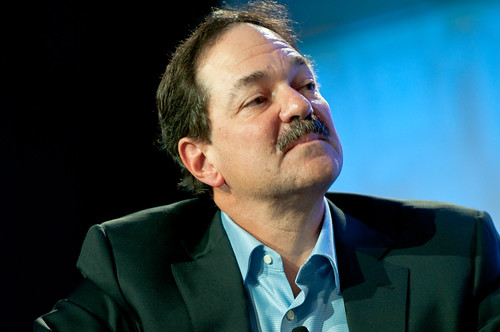
Hong Kong Stock Market filing – the Company (China Renaissance Holdings – *added this for clarity) has been unable to contact Mr. Bao Fan (“Mr. Bao”), Chairman of the Board, Executive Director, Chief Executive Officer and the controlling shareholder of the Company. The Board is not aware of any information that indicates that Mr. Bao’s unavailability is or might be related to the business and/or operations of the Group which is continuing normally (PDF) – Bao Fan has been incommunicado for a number of days. He is not responding to messages. While its unusual and considered bad practice having the same person as chairman and CEO, in China its more common. So Bao’s dual role at China Renaissance Holdings isn’t unusual. But that is the least of the worries that western investors will have about China Renaissance Holdings at the moment.
Meituan delivery workers waiting for the food to be prepared
Some thoughts:
China Renaissance Holdings has been involved in funding some of China’s biggest technology companies including Didi (think of Lyft or Uber as a western analogue) and Meituan (Deliveroo, Doordash or Just Eat equivalent.
Didi in particular seems to have gained the wraith of the Chinese government. Some of this feels to be down to sexism due to the company having a connected female president Jean Liu. The party leans more toward the Andrew Tait school of feminism
Mr Bao Fan’s disappearance evoked memories of Jianhua Xiao and his company Tomorrow Holdings. Xiao was snatched and smuggled out of his apartment in the Four Seasons in Hong Kong back in 2017. Xiao for a few years all that people knew was that he was wheeled out of the hotel asleep in a wheelchair despite having a security team. He then spent a few years ‘helping‘ authorities unwind his business Tomorrow Holdings. Finally, he got sent to prison for 13 years with charges including embezzlement and fraud. If this happens with China Renaissance Holdings, or any of the prominent companies that it has as clients like Meituan there would be a shockwave, even through the most pro-China of foreign investors like Bridgewater Capital or Goldman Sachs
Bao Fan is one of several executives who were disappeared for a while. The most prominent executive who disappeared from the public eye was Jack Ma. Ma then stepped back from his businesses. If Bao steps back from China Renaissance Holdings, the Chinese tech sector will lose an investment rainmaker. China Renaissance Holdings maybe unwound or its assets handed over to state-owned banking institutions
What happens next will likely impact western sentiment towards Chinese investment in the short to medium turn, but financial institutions are still seduced by the ‘Chinese opportunity’. And the smart money this time might be wrong
Patriotic Alternative wasn’t a name familiar to me when I first heard about them instigating a riot in Liverpool on Saturday night. It doesn’t take that much to create a ruckus in some of the poorer areas of Liverpool.
I wasn’t particularly surprised by the burnt out police van; it sounds like a Merseyside Saturday night that went a bit out of control. That’s as Liverpudlian as a fried breakfast served in a ‘bin lid’ – a large white bun or bap large enough to contain bacon, sausage, a fried egg or two and brown sauce.
But there were aspects that did surprise me and all signs point to Patriotic Alternative. It’s a multi-cultural city, everyone has relatives abroad whether its extended Irish family, West Indians or deep connections within the Chinese diaspora. Which is why I was surprised that Patriotic Alternative managed to stir up so much trouble against an asylum hotel in the Knowsley area of Liverpool.
The city does have a certain degree of prejudice; primarily sectarianism. Its one of the few areas in England that has a marching season rather like Northern Ireland with an Orange Order parade held annual in Southport back when I lived up there. But Knowsley was something else. Patriotic Alternative managed to do something that I never thought was possible in cities like Liverpool or Bristol.
So reading about the event and the role of Patriotic Alternative in Dazed was an eye opener. It portrayed a city that I no longer recognised. Patriotic Alternative apparently organised the protest on a Telegram channel. What Dazed claim happened is that mainstream political statements and mainstream media coverage created an environment ripe for trouble makers like Patriotic Alternative.
According to Hope Not Hate, Patriotic Alternative shared members with prescribed far right organisation National Action. For an organisation that has a couple of hundred core members Patriotic Alternative has an outsized footprint. This footprint seems to be driven by the Patriotic Alternative Telegram channel with some 5,000 followers
Consumers in the 1970s on the changing nature of growing old, unfortunately attitudes and biases haven’t improved in the last 50 years.
Economics
US chip packaging firm Amkor closes its Shanghai plant for a week amid global market downturn | South China Morning Post – this is signalling a recession, as was AP shipments to Chinese smartphone brands stay in decline in 1Q23, says DIGITIMES Research – Fourth-quarter 2022 smartphone application processor (AP) shipments to China-based smartphone vendors amounted to 137 million units, plunging 24% from the prior quarter and 20.3% from the prior year, and will continue to experience a double-digit decline in the first quarter of 2023, according to figures from DIGITIMES Research’s latest report covering smartphone AP shipments. Because of shrinking demand and high smartphone inventory at the channel in both China and emerging markets, AP shipments to China-based smartphone vendors had already experienced on-year declines for five consecutive quarters
How China Fell In Love With Cheap Wine | Sixth Tone – reminds me of my time working on the Bordeaux wine marketing board as an account at the agency I worked for in Hong Kong. The work was focused on mainland China and promoted Bordeaux as a lifestyle brand for wine consumption rather than just gift giving
Massachusetts Democratic organ donation proposal sounds like prisoner organ harvesting. | Slate – Democratic state representatives Carlos González and Judith García introduced legislation that would allow incarcerated people to go home early—if they “donated” their organs. Specifically, the bill would “allow eligible incarcerated individuals to gain not less than 60 and not more than 365-day reduction in the length of their committed sentence” if they “donated bone marrow or organ(s).” Gonzalez argued that the bill was a step towards advancing racial equity in health care and making it easier for people of color to obtain transplants.
Hong Kong
The Hong Kong government must break its habit of relying on property developers | South China Morning Post – the article itself isn’t that interesting, but the author is. Regina Ip would be what the conservative party in the UK would call a big beast. She is a former minister level politician in the pro-China camp. Add to this the fact that despite mainland Chinese companies now outnumber local and foreign firms in Hong Kong and the economy is in decline. I expect Ip’s op-ed to be the tip of an iceberg of a shift in economic drivers that will occur sometime after John Lee leaves office. The clock is ticking on the big five families to diversify their wealth out of Hong Kong and China, following Jardines example to go into Indonesia might be a prudent start
Hong Kong reopens with post-Covid charm offensive | Financial Times – Johannes Hack, president of Hong Kong’s German Chamber of Commerce, who sits on a new task force to promote the city, said a “long-haul” effort to change business perceptions would have to go beyond plane ticket giveaways. “If you have relocated corporate functions to another place, half a year later you are probably not going to reverse the whole thing,” he said. “People who have moved to Singapore with their teen kids, there is no way they are going to do that again . . . They are not going to come back.” – feeds into the ‘its just another city in China now’ narrative
UK universities starting to lose allure for Chinese | News | The Times – well that’s screwed the Ponzi scheme that universities have engaged in via over-priced student accommodation real estate investments for reasons that aren’t exactly clear given their ownership structure and charters
Japanese fashion magazine Popteen ends physical version, switches to web installments instead – move to online only and moving away from monthly updates. Popteen ended its physical publishing as of February 1, 2023, with the February 2023 edition (released on December 28, 2022) being its last. web-based articles will be released on the first and the 15th of every month, known as “Popteen media”, and full editions of the fashion magazine will be updated a few times annually. The main reason for switching to the web edition was to make the magazine more accessible to middle and high-school students, who may not receive an allowance or be able to work part-time to afford physical copies of Popteen
Great video on microchip counterfeiting and recycling. The Japanese are doing some of the best work authenticating chips. Also if its bad for US defence contractors, just imagine how bad it will be for the sanctioned Russian defence sector.
Seeing for the Sightless – Luo, 26, suffers from congenital cataracts and is pursuing a degree in acupuncture and massage therapy at a college in Beijing. He needs help on the scales as there is no voice assistant function at the training center. On a mobile app called Be My Eyes (BME), he sends out a video call. Pointing his phone camera at the scales, he asks, “Hello, can you read the number for me, please?” A volunteer on the other end tells him, “91 kg.” Luo says thanks and hangs up. Usually, these exchanges only last a few seconds. Being tech savvy, Luo wrote a program back in high school to help the visually impaired memorize English vocabulary, something he himself struggled with. The app would randomly pick a word from a list he composed and he would spell it out after hearing the word. BME, developed by Hans Jørgen Wiberg, a visually impaired man from Denmark, drew Luo’s attention as soon as the Android version was available in China in 2017. Currently, there are 445,000 visually impaired users from all over the world and more than six million volunteers on BME.
Style
Adidas Tumbles as Losses From Its Kanye West Venture Pile Up – The New York Times – interesting how badly Ivy Park is doing and this on their business in China: Adidas in China: a brand seeking its redemption – In the second half of 2022, Adidas CEO Kasper Rorsted estimated losses of revenue of more than 35% in the Chinese market. He declared that such a violent drop was caused by some mistakes. For instance, the struggle of keeping up with the local brands, the failed recovery after the zero-covid policy, and the scandal of Xinjiang cotton.After the winter Olympics, the trend of Guochao, or the “national trend”, started to develop. More young Chinese consumers prefer buying local brands rather than western sportswear brands. In August 2022, the local firm, Anta, overtook Nike and became the biggest sportswear brand in China with a revenue of more than USD3.79 billion. Li-Ning, another Chinese firm, also registered revenue of USD1.76 billion against Adidas’ USD1.72 billion, pushing the German brand out of the podium. The zero-Covid policy has been a big problem for Adidas. In 2022, the company had to deal with closed shops and rising costs. In particular, the general lockdown which paralyzed China for the last few years resulted in the desegregation of the complex system of supply chains built up by the German brand. The disrupted supply chains cost Adidas a loss of USD427 million in the first quarter of 2022.
SMIC expects 10-12% revenue drop in 1Q23 | DigiTimes – China-based pure-play foundry Semiconductor Manufacturing International (SMIC) expects to post a revenue decline of 10-12% sequentially in the first quarter of 2023, with gross margin falling further to 19-21%.
MotherDuck: Big Data is Dead – Jordan Tigani spent ten years working on Google BigQuery, during which time he was surprised to learn that the median data storage size for regular customers was much less than 100GB. In this piece he argues that genuine Big Data solutions are relevant to a tiny fraction of companies, and there’s way more value in solving problems for everyone else. I’ve been talking about Datasette as a tool for solving “small data” problems for a while
China is no longer a good thing on your CV, part of this is down to ‘Brand China’. You are likely to be viewed negatively by peers and even family members at home. From the Chinese perspective, foreigners are now viewed with more suspicion and distaste as the government has fermented fear of foreign spies and nationalistic populism. I am sure that the Chinese government would see it as advantageous if locals had these jobs instead. A position in China might be a rear-guard action now while the future of the corporation that you work for will now be elsewhere in Southeast Asia
There are better opportunities elsewhere in South East Asia such as Singapore, Vietnam or even Indonesia. A lack of travel to China opened up the eyes of foreign c-suite members who have spent a good deal of time looking elsewhere. Even businesses like Apple are looking at their supply chain options
China is more expensive to live in. Costs had been shooting up in the years running up to COVID-19 and haven’t got any cheaper
Accessing timely, good quality healthcare is an issue
Effective tax has risen a lot. You will have to pay into local pensions that you will never be able to use. So you are paying more tax and living in a much more expensive country
The Chinese visa system is much more hassle filled
China’s preference for hostage diplomacy
International schools have to follow a Chinese curriculum due to changes in regulations. If you value your child’s education, you will no longer want them to go to school there
The businesses that made life more tolerable in China have been disappearing. I won’t list off the range of bars in restaurants, but also access to English language books, formerly through stores like The Book Worm in Beijing. The eco-system of businesses that supported expats living in China is rapidly disappearing even before COVID-19 hit
A progressively stricter and harder to crack version of the ‘Great Firewall’
RUSI put together a great presentation on the nature of illicit finance from the perspective of terrorism and terrorist states including Russia and the People’s Republic of China. The foundations of illicit finance seems to be the offshore financial structures that were build up by the United Kingdom in the post-war period to capture the EuroDollar market.
In some ways this lecture on Illicit finance felt very familiar. It is exactly the same structures that John Le Carre outlined in his post-cold war novel Single and Single. The nature of illicit finance was also covered in Michael Oswald’s documentary The Spider’s Web – Britain’s Second Empire. This linkage was not lost on the audience attending the talk.
The concerns about illicit finance now are because these structures are being used to attack democracies at their core and buy influence for hostile states such as Russia and China. It is like the west is slowly awakening from a slumber as its enemies try to slit their throat.
Riding the slow train in China | The Economist – As Mr Xi enters his second decade as supreme leader, his sternly paternalist version of Communist Party rule seeks to draw ever more legitimacy from the provision of customer-friendly public services, supplied via modern infrastructure. In the case of China’s railways, at least, that promise of order and efficiency has been kept.
Wintershall’s empty bank accounts expose plight of western companies still in Russia | Financial Times – “We helped create a very powerful and dangerous Russia without being cognisant of the risk,” he said, while acknowledging that the country had done its best to remedy this in the past 12 months. And he said BASF risked repeating its Russian mistake in China. “What I’m really surprised about, and almost upsets me, is that while this is all happening . . . BASF decides to invest €10bn in China,” he said, referring to a planned chemicals complex that will be the company’s largest ever foreign investment. “That’s the most upsetting part,” he said. “That we don’t learn from it.” – this quote from Thomas Schweppe of 7Square nails the problem neatly
Finance
Thousands of offshore companies with UK property still not stating real owners | Tax havens | The Guardian – wealthy businessmen, Gulf royalty and states such as China have legally bought up billions of pounds of mostly London property, often via jurisdictions such as the British Virgin Islands (BVI) and the Channel Islands. Stephen Abbott Pugh, head of technology for Open Ownership, a non-governmental organisation focused on beneficial ownership transparency, said the fact that so many of the offshore companies are declared as owned by other companies or trusts means “the public still aren’t able to easily discover the people behind those companies in many cases”. “With access to many European beneficial ownership registers being shut off following a 2022 court ruling, the Register of Overseas Entities shows how useful public data is for tracking how offshore money is used to buy assets,”
Health
The 1964 House Report on how smoking affected the health of Americans went around the world. Sales dropped 30 percent in a week, and then picked up back to normal after existing smokers addiction kicked in.
How Microsoft’s Stumbles Led to Its OpenAI Alliance — The Information – For more than a decade, Microsoft Research, the company’s in-house research group, has touted artificial intelligence breakthroughs such as translating speech to text and software that could understand human language or recognize objects in images. But the company’s effort to commercialize its AI research moved at more of a crawl – this was at the centre of Microsoft’s innovation narrative for the best part of two decades. It’s embarrassing
Inside the secret Facebook groups where women review men | Dazed – then there’s the whole other side of ‘Are We Dating The Same Guy’, which is a lot more ethically ambiguous. Is it ever OK to publicly share someone’s photos and private conversations without their consent? Or in other words, to ‘doxx’? There’s a clear power differential, but if genders were reversed and guys were exposing females to strangers on the internet, it’s unlikely we’d see the group in such a positive light. “If a boy posted me and people were writing ‘red flag’ in the comments, I would genuinely be quite hurt,” says Tara, 20. She notes how, sometimes, users make particularly unfair remarks: for example, they’ll lambast a date for having “shit chat”, or “[talking] like a 60-year-old dad”.
Getting Personal With State Propaganda – China Media Project – Nanchang Aviation University (南昌航空大学), located in China’s southern Jiangxi province, announced that it had launched the “Jiangxi International Communication Research Center” (江西国际传播研究中心) in cooperation with the China Media Group, the state media conglomerate formed in 2018 directly under the CCP’s Central Propaganda Department. According to coverage by China Education Daily, a newspaper directly under the Ministry of Education, the new center is an experiment in combining central CCP media and universities (央媒+高校) to carry out international communication by using the “overseas student resources” (留学生资源) of the university.
The Patagonia vest recession was a phrase that I first heard touted by Scott Galloway to encapsulate the economy in 2022. In most recessions, the first sectors to go under are construction, retailing and manufacturing – blue and pink collar working class people suffer the blunt of lay-offs and site closures due to recession.
The kind of vest thought of when one talks about a Patagonia vest recession. It is called a Better Sweater vest and was popular with media firms, technology companies and investment banks as employee schwag.
recession, in economics, a downward trend in the business cycle characterized by a decline in production and employment, which in turn causes the incomes and spending of households to decline.
A recession generally isn’t felt uniformly across the economy. It doesn’t affect all households. In the past, the middle class might be affected but not as severely affected as working class people. My Dad had managed to move off the shop floor and into an office job in the shipyard as a planner. He was made redundant because he worked in heavy industry and he was in a minority compared to the thousands of other blue collar workers let go.
Not all businesses experience actual declines in income, for instance accountancy firms, business consultancies and change management firms may find a high demand for their services. However, there is a general expectation about the future being less certain during a recession. This causes businesses to delay making large purchases or investments and possibly look to reduce costs to conserve cash.
In recessions, the output decline can be traced to a reduction in purchases of durable household goods such as computers and washing machines by consumers. This drives a corresponding decline in corporate purchases of machinery and other equipment.
If the companies aren’t already running ‘just-in-time’ there reduction in additions of goods to stocks or inventories. Where ‘just-in-time’ is in place, the client reduces their forecast demand to their supply chain driving a similar effect. The greatest effect is likely on inventory; businesses stop adding to their existing inventories and become more willing to draw on them to fill production orders. Inventory declines thus have a double impact on production volume as it filters through the supply chain like a Mexican wave.
So what happened?
But the Patagonia vest recession was different. A number of things happened:
Technology stocks and start-ups had been swept up in a decade of irrational exuberance in terms of business values
Funding suddenly declined for startups. This was partly due to interest rates and a realisation that crypto-currencies weren’t worth what many investors had assumed. This led to a raft of redundancies
Crypto companies started falling one after the other. Prominent exchange FTX and related investment fund Alameda Research go under with allegations of fraud. Their rival Binance is ensnared in legal issues too
Cloud software firms suddenly find that their pay-as-you-go model can result in sharp cash flow declines which affect their profits
Big technology companies had staffed up to meet the COVID-19 related demand, found themselves with an employee overhang. This particularly affected e-tailing and cloud services business. They cut back on staff as they release poor financial results. BUT, the amount of people cut as a percentage was still below the proportion of head count Microsoft would have let go back when it practiced stack ranking. The mainstream media focus on the big numbers rather than the small overall proportion of lay-offs. Secondly those getting made redundant are finding it a reasonable market to get work outside the technology sector
Activist investors object to what they consider to be more indulgent projects like Meta’s deep investment in the future metaverse, which is a very long term bet
Meanwhile, services and manufacturing industry kept ramping up to meet supply-chain related challenges and meet latent demand. But had problems getting staff. You have restaurants that open up limited hours due to their problems hiring. Manufacturing businesses have been hoarding staff, because they know how hard it is for them to recruit
Inflation in the US is starting to come under control as supply chains started to balance out
Of course, all of this doesn’t mean that the Patagonia vest recession won’t bleed on to Main Street, but at the start it looked very different.
The Patagonia vest boom prior to the Patagonia vest recession
To the general public, awareness of the Patagonia vest as an emblematic garment of class came from the press photos taken at the Sun Valley conference hosted by private investment firm Allen & Co. which built up a bit of a reputation in terms of ‘speed dating’ for mergers and acquisitions deals. Media titans like the Murdoch family met Silicon Valley CEOs and Jeff Bezos of Amazon. Telecommunications was represented primarily through the cable TV company executives who attended.
Amazon founder Jeff Bezos decided to buy the Washington Post when he was at Sun Valley. It was also where the Time Warner | AOL merger was cooked up.
Cameras aren’t allowed inside the conference which operates in a Chatham House-style arrangement. So press photographers could only take pictures when people were arriving or leaving the conference centre. Sun Valley sat at the nexus of a media and technology sector boom over almost two decades. The bulk of the media photos showed people walking cropped at the knees or their grotch, which focused readers attention on the tops that they were wearing. And a uniform emerged to the general public. The uniform was the Patagonia vest to deal with the cool early morning and early evenings of Sun Valley. These vests were given out some years by Allen & Co.; but the Patagonia vest has extended itself far beyond Sun Valley.
It became such a cultural touchstone that the Sun Valley conference complete with vests was lampooned in a story arch of Succession.
From working with dot com clients to when I worked at Yahoo!, Silicon Valley fashion was bifurcated in nature. The reality of Silicon Valley couture is that many people wore a t-shirt jeans and layers like hoodies. Footwear would vary somewhere between sneakers and trekking sandals.
But the ‘MBA class’ of professional managers tended to wear collared shirts, ‘smart’ jeans or chinos. They may have worn a sleeveless pullover or fleece vest. Their venture capital counterparts who where probably their MBA class colleagues wore a similar uniform, with a bit more of lean towards Ralph Lauren country club friendly shirts or polo shirts.
Corporate branded wear started with bags. I had my share of corporate branded Timbuk 2 bags. Different engineering projects would have celebratory t-shirts for things like hack days. Eventually we started to see branded corporate wear, from the cringeworthy chambray or scratchy polo shirts issued to booth staff at an exhibition to hoodies and fleeces. I knew engineers who bragged about being dressed almost head to toe (sweatshirt material top, t-shirt, boxers and socks) in schwag that they had picked up for free as an anti-fashion statement.
You can see these dual styles in the TV show Silicon Valley. Coming from a creative agency background, I felt more at home in the hoodie wearing crowd.
Secondly, there was a cargo cult amongst try-hards in the early to mid-2000s there was a move towards turtle necks with Silicon Valley types looking suspiciously like architects as they tried to ape Steve Jobs. There has been a similar buzz has surrounded Allbirds sports shoes
The finance sector had its own transformation. Early dot com era west coast-based tech focused investment bank financiers such as Frank Quattrone mirrored the east coast convention of the tailored business suit, usually in grey with a conservative tie and pocket square. This would be paired with a set of brown shoes, usually loafers. You could buy the look at Armani, Barneys or Brooks Brothers depending on your budget.
The 2008 Great Recession hit the finance centre like a shockwave. There was a need to dress down. A few things drove this:
An Armani suit is an obvious target when you have Occupy Wall Street camped outside your place of work
Wall Street had to modernise and attract new types of talent and competed against tech firms
The need to mirror the look of the hedge funds and technology companies that investment bankers wanted to do business with. They already stood out with their east coast vibe, the outfits communicated that ‘actually we’re just like you’ with varying degrees of success
The look has morphed into a relaxed yet sophisticated uniform that drew on preppyness, or the Ivy League look and the country club vibe evoked by Silicon Valley VCs. This resulted in a grey or navy fleece vest paired with a button-down, chino pants, and maybe even leather sneakers. It fitted in with weekend wear in more high class neighbourhoods and didn’t scream privilege in the same way that traditional Wall Street did.
However this became a power validation all of its own, dubbed the “Midtown Uniform” by many for its popularity throughout Midtown Manhattan as the business casual look rolled across the cultural wallpaper of Wall Street.
Expired?
Patagonia haven’t enjoyed their vests being the punchline of a joke. They are a mission led company that looks to be sustainable and environmentally friendly. They’ve been described as the conscience of the outdoor industry. Patagonia doesn’t want its products sold on Amazon, not because it’s luxurious and exclusive. But because Patagonia believes that Amazon encourages thoughtless consumption and is bad for the environment. Being seen as the uniform of the privileged didn’t go down well. So in April 2019, Patagonia announced that it wouldn’t provided corporate branded clothing to financial institutions or fintech companies, preferring to focus on mission-led environmental businesses instead. Given its iconic status within these sectors, the news was given the kind of coverage that would usually be reserved for an uncharacteristically large drop in the S&P 500 index.
The case against fintech businesses is down to their rapidly expanding energy footprint, which I have covered in depth elsewhere.
While a clear successor to the Patagonia vest hasn’t become apparent yet, there are brands looking to take their crown such as
Cotopaxi – who are environmentally friendly, but also corporate friendly
North Face – have been doing some interesting work in more environmentally friendly materials and already well known in the corporate branding space
SCOTTeVest – famous for being traveller-friendly. It comes with routing for your headphone cables, a plethora of pockets and charging wires. Their CEO called the Patagonia stance PR BS
Grandfathered in
Secondly, Patagonia decided that it wouldn’t leave long term customers in the lurch, which probably means that your favourite investment bank or big tech firm is safe from the customer purge.
According to Corley Kenna, senior director of global communications at Patagonia, customers and the press had inquired as to “whether we’re leaving ‘bros out in the cold.’” Kenna confirmed again that long-term customers would be grandfathered in.
And those left in the economic cold can still enjoy a Patagonia vest recession. I am thankful that it wasn’t called the Carhartt or Chore coat recession signalling a creative class layoff-led recession.