Category: fmcg | 雜貨業務 | 소비재 | 食料品事業

FMCG or fast moving consumer goods sprang out of the mass industrialisation. Brands sprang up originally as a guarantee of quality. Later on as these brands needed to be promoted, we saw the foundation of the what we think of as modern marketing and advertising.

Today media and entertainment takes up an increasing amount of the household spend, as does housing, but FMCGs are a crucial part of their essential and disposable income spend.

They have nostalgia wrapped up in them, distinctive aromas, taste and packaging designs. From the smell of my Granny using so much Pledge on the TV that I was surprised it didn’t burst into flame to the taste of Cidona and texture of Boland’s Fig Roll biscuits in my mouth.

The sound of their advertising jingles was the soundtrack of my childhood. Digital advertising is largely rationale, it lacks the fluent devices that provide the centre to advertising and made FMCG advertising iconic. Fluent devices like the Peperami ‘Animal’, the M&M characters or the Cadbury Smash robots were embedded in deep marketing research. FMCG brands still sponsor the best research in marketing science.

I had the good fortune to work inhouse at Unilever and agency-side for their brands. I also managed to work on Coca-Cola and Colgate during my time in Hong Kong.

  • Brand winter & how to cope

    I started thinking about ‘brand winter’ when I read about TBWA Hong Kong and their ‘Brave Bear Pack’ offering. Campaign Asia describes as a new product focusing on growth hacking and cost efficient tools for surviving the financial winter brought on by Hong Kong’s anti-ELAB protests.

    I thought financial winter was an interesting metaphor to use in Hong Kong. I get the analogue of the ‘bear market’. But the winter in Hong Kong is very dry (rather than humid), cool and exceptionally pleasant for the most part.

    They probably feel that the ‘Brave Bear Pack’ opportunity has been amplified by the late 2019 novel Corona Virus outbreak.

    According to TBWA the services they are bundling in this are:

    • Demand mapping – which seems to be database / CRM / social marketing data. Looking at market size and going after niches or pockets of the market not previously addressed? A B2B analogue would be ABM (account based planning)
    • Acquisition System Architecture – seems to be marketing automation based on the descriptor
    • Efficient Content Production – presumably to provide the content for the Acquisition System Architecture?
    • Affordable Big Format Film Production – crowdsourced film a la Mofilm, with what I presume is a TBWA mark-up. Again I suspect that the primary role of this is to provide content for the Acquisition System Architecture?
    • Chatbot marketing (on Facebook and WeChat respectively) which is so two years ago
    • Crisis management – TBWA seem to be white labelling Ketchum to do planning and execution- pretty standard stuff in the PR world. A quick look at LinkedIn indicates that Ketchum’s Hong Kong office has a very small, junior team to handle any crisis that might come up

    I found it a depressing read. The tactics focus on the bare minimum to harvest sales from existing brand equity and and realised that we’re entering a brand winter. This is down to two factors acting as a catalyst: technology and economic decline.

    What do I mean by a brand winter? It’s a time when marketers focus on performance marketing exclusively. The most obvious influence in terminology was the financial winter analogue used in media coverage. I guess it also resonated past discussions I’d had about the circular funding cycle that artificial intelligence has gone through. Decades like now of massive investment, followed by funding droughts or ‘AI winters’.

    Technology factors for a brand winter

    During the last couple of economic recessions, after the dot com bust and the 2008 bank crisis new performance marketing platforms have come to the fore.

    The dot com bust heralded the rise of Google’s search advertising. The 2008 bank crisis saw Facebook and YouTube shake up online display advertising.

    What all of them had in common is their ability to drive an action (like a sale), but weren’t so good in building distinctive memorable brands.

    The second aspect, was that they could be very targeted using data. The idea is that the more targeted the message and the audience that its shown to; the more effective that it would be. Sounds like common sense doesn’t it? The actual results are counterintuitive. TakeMahabis the slipper brand that tried to build itself just on online media went into administration. Uber has tried to build a brand on price and online growth hacking still hasn’t made a profit.

    But this pivot has resulted in the creative side of the advertising industry being gutted.

    1707 - ad industry

    This presents four problems for marketers:

    • Effective marketing campaigns have found by research to consist of roughly 70 percent brand building and 30 percent performance marketing across both B2B and B2C marketing. Brand building’s full impact can be measured over decades or longer. According to qualitative research by Kings College London on China; Swiss and Japanese watch brands were sought after by post cultural revolution consumers. Brand equity endured despite the worst excesses of Chairman Mao and his red guards.
    • Digital marketing isn’t as effective as one would believe. Digital marketing is only as good as its data and its measures have been defined largely by the media platforms themselves. TV advertising is several orders of magnitude cheaper in terms of reach. Ad fraud is rampant and major brands pushed for better standards led by P&G and Unilever.
    • The plethora of channels has meant that many brands have spread their creative like a thin smear of peanut butter across toast. Again research indicates that this approach is counter-productive. Yet brands have adopted big production capability in-house to feed social channels and online advertising formats. This work is often done at the expense of creativity and ideas
    • Over targeting is counter productive according to research done by the Ehrensberg Bass Institute and captured in Sharp’s How Brands Grow. Instead the authors recommend a ‘smart mass approach’

    Marketers have given digital a greater amount of latitude than it deserves due to C-suite level concerns about digital disruption, stoked by their management consultants. When economic head-winds are met shorttermist thinking fit nicely with this performance marketing bias despite the issues outlined.

    Economic factors for a brand winter

    I won’t go into the background of the 2019 Hong Kong protests as that has been well-documented elsewhere. What I am interested for this post in is the economic impact.

    P1088698
    Studio Incendo: P1088698

    The 2019-2020 Hong Kong protests seemed to impact a number of sectors:

    • The FT talked about the serious downturn in life insurance policy sales. Life insurance policies are used by mainland Chinese to build up assets outside of China in dollar-denominated investments
    • Data released last year indicated that for the month of October 2019, retail sales were down 24%
    • Chow Tai Fook Jewellery Group is looking to close 15 out of 91 stores in Hong Kong
    • Swiss watch sales in Hong Kong declined 4.6%
    • The leisure sector is down on earnings and Ocean Park is in serious financial trouble
    • Occupancy levels in Mandarin Oriental hotels went from 71% to 49%

    Products and services that are aimed at the mainland Chinese market have taken the brunt of the damage.

    Learning from the successes of the past

    I wanted to draw lessons from two events.

    • The first was the Great Depression and how it profoundly affected FMCG brand marketing
    • The second event is the 1967 Hong Kong riots

    The Great Depression

    The Great Depression has slipped from popular consciousness as the silent generation that lived through it have left us. The Wall Street Crash, the New Deal and the Jarrow march are far away from our collective experience.

    Dorothea Lange: Toward Los Angeles, California, 1937
    Dorothea Lange: Toward Los Angeles, California

    You may as well be talking about the Wild West or Victorian child labourers climbing up chimneys to clean them.

    In reality the Great Depression lasted from 1929 until World War 2. Global GDP dropped by 15 percent. Many countries looked to austerity policies to see themselves through. It didn’t work out that well as it depressed demand. And it was a similar case for companies, they cut back on marketing and a demand drop followed.

    By comparison Procter & Gamble (P&G) took a contrarian approach. P&G had been founded almost a century earlier. It hit its stride during the late 1850s as the American civil war raged. By 1911 its Crisco vegetable based shortening was launched. P&G were quick to realise the potential of the nescient radio stations springing up in the US and around the world.

    They were instrumental in coming up with a new brand marketing format of sponsored programming based around a long running drama called soap operas. Consumers may have been struggling to make ends meet; but soap operas allowed them to develop increased brand affinity.

    P&G also used the Great Depression to expand internationally by buying a UK-based soap maker. Because of this contra-cycle investment and spending in brand, P&G became one of the world’s largest companies with operations pretty much everywhere apart from Cuba and North Korea.

    In a mirror of this strategy, P&G are now investing in creating content for streaming television services which have emerged over the past few years, in a similar manner to the way radio grew a century earlier.

    The takeaway from P&G is that contra-cyclical investing for larger brands can pay dividends as the media landscape has less competition in terms of brand building communications. Secondly, adoption of technology makes sense IF the media can aid long term brand building activities.

    1967 Hong Kong riots

    In 1967, Hong Kong was a British colony on the edge of China. China had just entered the cultural revolution and ideological fervour was in full swing.

    Hong Kong was a hodge podge of identities, and that’s not even including ethnic minorities (Nepalis, caucasian people of different nationalities and south Asians who came across the British Empire).

    • Native Hong Kongers
    • Middle class, business owners and entertainers who fled places Shanghai towards the end of the civil war
    • Former nationalist soldiers who settled in Hong Kong (like their compatriots who ended up in Taiwan and Burma)
    • Mainland Chinese who left China during the hardships and famine due to the Great Leap Forwards. They entered the territory illegally, often swimming across the Sham Chun river or even the Hau Hoi Wan estuary.
    Hong Kong - Communists and Police
    Roger W: Communists and Police, Hong Kong 1967.

    Hong Kong was a tinder box. Work was plentiful but life was hard for the blue collar workers who struggled to make ends meet. What happened next depends on who you believe.

    Trouble was brewing, there had been unrest across a number of sectors:

    • Shipping
    • Taxi drivers
    • Textiles
    • Building materials

    The previous year there had been riots protesting a rise in ticket prices on the Star Ferry.

    At the time Hong Kong was a centre of plastics production, textiles and light industry. Much of the light industry started off literally as cottage industries. Plastic flowers were assembled from parts at home and workers were paid by piece work. In the 1950s, the government got rid of these low rise low quality housing. They built high-rise public housing and multi-storey public factories that rented units to light industries.

    The start of the riots was down to an industrial dispute at a plastic flower manufacturer based at the San Po Kong Factory Estate in Kowloon. The factory was owned by a local industrialist called Duncan Tong (唐鼎康). Tong had a number of manufacturing businesses including the Playart die cast car brand which competed with Hot Wheels and is still popular with collectors.

    On May 6, picketing workers clashed with members of the management. It got sufficiently violent that the riot police were called. When the police arrived they were pelted with cans and glass bottles by picketing workers and their peers in other neighbouring factory units. The police arrested 21 demonstrators who were represented by the Hong Kong Federation of Trade Unions (HKFTU). The HKFTU is a Beijing-aligned group of trade unions.

    Many more were injured in the violence. Local union officials went to the police stations to protest the arrests and ended up being arrested themselves.

    Leftist protestors with strong sympathies towards Beijing protested in solidarity with the arrested workers the following day.

    Over 100 protestors were arrested and a curfew was imposed by the authorities. This then sparked a low level insurgency. Over 1,100 bombs were planted, 51 people were killed, over 800 people were injured. Almost 5,000 people were arrested and over 1,900 of them were successfully prosecuted. It was only the intervention of the Chinese premier who finally put an end to the violence in December that year.

    Business leaders like Li Ka-shing and Harilela invested in property when the 1967 riots depressed prices. They then went on to replace British taipans as the main drivers of Hong Kong commerce.

    The takeaway is that chaos has consistently provided opportunities for businesses with enough capital to take advantage of them. But what’s needed more than money is the eye for opportunity.

    What does the solution for a brand winter look like?

    In the case of Hong Kong, if we look at FMCG brands, there has never been a better time to build a local brand. Advertising inventory in out of home spaces or on streaming media are going to be cheaper due to the lack of demand.

    Both ‘yellow and blue’ orientated media offer opportunities if handled in an even handed way. Investing during the contra-cycle in brand offers businesses an opportunity to capture long term profits rather than short term sales.

    More information

    There didn’t seem to be anything on the TBWA Hong Kong website, but they had this post on their Facebook page.

    TBWA HK offers service pack to help brands through the financial winter | Campaign Asia

  • MERICS china forecast 2020 & other things that caught my eye this week

    German think-tank MERICS China Forecast 2020 is interesting watching if you can spare the time. It’s long, but some of the smartest content that I’ve seen recently, from a European perspective. The Americans seem to have done a better job on Sinology; for instance the likes of Bill Bishop or Kuo and Goldstein at Sinica. MERICS China Forecast 2020 was a collaboration between Mercator Institute for China Studies (MERICS) and Handelsblatt. More China-focused content here.

    Global Web Index have done an interesting analysis of Subway’s new product set aimed at tapping into the move towards plant-based diets. Subway – ‘Beyond Meatball Sub’ – GlobalWebIndex – was pitched at flexitarians rather than true vegans.

    Meatless meatball marinara launch feels a bit ‘reality TV’ in tone.

    Iris put together this work Every name’s a story for Starbucks UK. It won the Channel 4 Diversity Award 2019. It taps into the challenge of gender and identity. But also the primeval power of a name. I thought of Ursula Le Guin’s A Wizard of Earthsea which explored the power of names as it was seen by different cultures. Just five or ten years ago this ad would have brought out sufficient protests for the likes of Starbucks to shy away from. It illustrates the complexity of values in modern Britain: conservative nationalism and cosmopolitanism.

    https://youtu.be/pcSP1r9eCWw

    ARTE have got a great interview with Edward Snowden – Meeting Snowden.

    Edward Snowden Wired Magazine
    Iconic Wired cover featuring Edward Snowden.

    Kraft is running a promotional contest for its new Kraft Macaroni & Cheese Big Bowls that targets parents of young children on Valentine’s Day. It’s interesting how Kraft are interpreting their product as what Scott Galloway calls a ‘time machine’. A product or service that allows people to get time from an activity where it otherwise would have been wasted. For instance, the telemedicine aspects of the Babylon Health app.

    https://youtu.be/ZNlrP_mb1CA
  • Sonos problems + more things

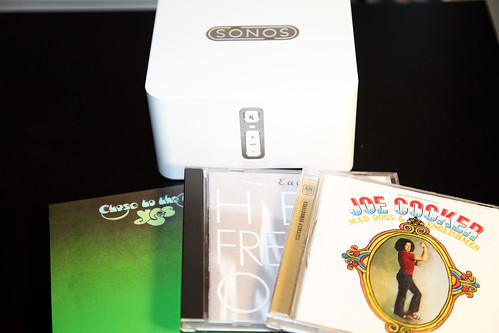
    IoT Trouble: The Sonos Example — And More – Monday Note – the recent Sonos issue is interesting for a number of reasons. Firstly, the basic IoT issue that older equipment on a network can block security updates to newer Sonos gear. The second aspect of this relates to consumer attitudes. Early Sonos sales positioned the equipment against traditional consumer electronics brown goods like Sony, Denon, Yamaha etc. As we can see from recent products, Sonos has moved away from hi-fi to convenience. This is probably why Sonos legal action against Alphabet’s Google Chromecast and Google Home became more important.

    Sonos
    Early model Sonos hub and amplifier

    Angelo Baque, Zainab Jama and Acyde on counterculture – The Face – interesting thoughts on immediate access and value versus gradual access and appreciation

    Here are some terms to mute on Twitter to clean your timeline up a bit. · GitHub – really handy to clean up your Twitter feed

    Jobs, Cook, Ive—Blevins? The Rise of Apple’s Cost Cutter – WSJ – sounds like a sociopathic knob who’d be better off working at Huawei

    Facebook Says Bezos Hack May Highlight Phone Vulnerabilities – Bloomberg – Nicola Mendelsohn over at Facebook is like one of them monkeys that throws its own faeces at bystanders walking past their cage

    Nutella/Ferrero: nut fluster | Financial TimesIn 2012 Ferrero agreed to set aside $3m to settle a class-action lawsuit filed by a California mother. She had been surprised and upset to learn Nutella was not a “healthy, nutritious” food. She was widely mocked – you could not make this up (paywall). More on FMCG as a topic here

    MBS Taunted Jeff Bezos Over Secret Affair Before National Enquirer Expose | Daily Beast – surprised that Bezos didn’t have multiple numbers and and handsets – private and business. Also that the handsets weren’t scrubbed regularly. Some of the infosec experts commenting on the report itself are very interesting and raise more questions than answers

    Mediatel: Newsline: Tess Alps: We can’t confront climate change without advertising – despite the headline this is about advertising requiring an emotional pay off

    Sonos will stop issuing software updates for ‘legacy’ speakers and devices in May | TechHive – another reason why hi-fi makes more sense

    LOEWE Runway Men’s Fall Winter 2020 | Fashion Show – feels curiously low res

  • Laundry category innovation + more

    Laundry without guilt

    A load of laundry without a load of guilt | Trendwatching – white good manufacturer looks to combat micro fibres. Laundry is a major CPG category and this project offers a potential for partnership with manufacturers, beyond the usual ‘X manufacturer recommends X laundry detergent’.

    Anti-solar panel

    Transmission lines and railroad near Salton Sea. District of Los Angeles smog obscures the sun, May 1972

    The Anti-Solar Panel – A Device That Generates Electricity From Darkness – at a very early stage. What’s interesting the potential for energy handover with other alternative sources to provide constant current

    Branding

    Why strategy should embrace execution | WARCThe Nike ‘Nothing Beats a Londoner’ campaign was a really long process – about a year. In the beginning we had a vision to get really local. Then about halfway through the process, the terrorist attacks happened in London. And a picture emerged of a man fleeing the scene with a beer in his hand. Everyone inside London said that’s what it means to be a Londoner: no matter what happens, they hold onto their beer. And off the back of that, I wrote the line ‘nothing beats a Londoner,’ which wasn’t supposed to end up as the final line but it did. It just gave the creative more depth and a place to springboard from. It changed the energy of the work.

    Consumer behaviour

    Baby Boomers click with online shopping – Trend-Monitor – interesting statistics around overall spending versus millennials

    The more voters hear no-deal warnings, the more they support it | The TimesMuch of this is simply because voters have heard it all before. Trust in politicians and the media, also seen as responsible, is at record lows. The legacy of the 2016 referendum campaign runs deep. Promises from both sides, from the infamous £350 million a week to forecasts of a recession, still endure as easy-to-reach examples as to why you should not trust anything a politician says.  For up to about a year after the referendum, a handful of voters would repeat a number long forgotten in Westminster — that the Remain campaign had said leaving would make households £4,300 a year worse off. This was the archetype of nonsense, largely because of its precision. How could anyone know in such detail, to the nearest hundred, with such certainty, what the effect would be? It can only be a lie. But the aversion to anti-no-deal messages is about more than distrust. Where there is support for no deal in the country, it is fused to a deep sense of patriotism. A feeling that we are British, we have endured so much and thrived, of course we will be okay if we leave without a deal

    The last days of the middle-class world citizen | Financial Times – interesting mix of Extinction Rebellion type environmental despair, economic globalisation, populism and dot.com busts (paywall)

    Design

    Hong Kong students invent self-sanitising door handle | Dezeen – interesting, it is said that brass fulfils a similar self-sterilising role as well

    Legal

    WSJ City | Nike CEO was briefed by banned coach on doping effects – this looks damning for Nike

    US blacklists 28 Chinese entities in latest trade war escalation | Financial Times – interesting that all the companies are focused on surveillance or machine learning (paywall)

    Luxury

    Tiffany deletes ad that looks like Hong Kong protest message – Inkstone – China is getting too sensitive la. FFS its huge, powerful, has nuclear weapons. It needs to grow a skin rather than being raw to the touch

    Off-White, Vetements and The Paradigm of Luxury“Disruption is evolution. Defining the word ‘luxury’ might be a start for defining disruption and evolution as the word and the concept of luxury has different meanings following the demographics of peoples and cultures according to age, race, religion, gender, ethnicity, income, and education”

    Extreme micro-living in San Francisco | Financial Times – luxury upwards storage. What about the economics of furniture versus technology? (paywall)

  • Worrying debt + more things

    WSJ City | Young Chinese Spending Creates Worrying Debt – looks like a credit bubble waiting to happen. Worrying debt in terms of personal credit doesn’t create economic value in the same way that government debt on infrastructure does. Chinese corporates also have worrying debt also has shades of bubble era Japan about it. Since consumer spending is driving China’s 6 percent growth, what would happen if the credit bubble burst?

    Farewell to Those Days of Wrestling With Fate
    Busy Chinese city life

    A European Perspective on Boeing’s 737 MAX Debacle: An “Existential Crisis” for a National Champion | naked capitalism – Boeing’s Crashes Expose Systemic Failings – fascinating Spiegel article of which this pulls out the highlights

    BangBros Acquires, Shuts Down PornWikiLeaks Site | AVN – this is about trying to stem the flood of doxxing that has beset performers in the adult entertainment industry and their families

    Big Brands ‘Acting Like Startups’​ – A Potential Red Flag | LinkedIn – one for companies in FMCG space like Unilever to read. It points out the flaws in ‘disruption porn’ pedalled by McKinsey Digital and Accenture

    WSJ City | Trans-Pacific Tensions Threaten US Data Link to China – also likely to affect Hong Kong as a financial centre and base for cloud network hosting

    YouTube to adjust UK algorithm to cut false and extremist content | Technology | The Guardian – censorship. Interesting that there will be concern about China yet we’ve stepped on a slippery slope

    Big brands turn to big data to rekindle growth | Financial Times – this makes me worry about the internal future state of research in large consumer companies

    bellingcat – Amazon’s Online Bezos Brigade Unleashed On Twitter – If you’ve worked on Amazon social you might want to take it off your CV after reading this…

    Nicolas Roope: “A different design language is taking over”The challenge is how brands can adapt their propositions. Architecture demonstrates the formality of this new direction: what is now a series of gestures and actions that may or may not be involved in the surface will be critical to the success of the project. How do these buildings respond to the urgent requirements of energy use reduction and waste reduction? How do they perform as stories in hyperconnected environments where reputations are established in social media? Think Instagrammable hotel rooms…

    The Economist | China’s thin-skinned nationalists want to be loved and fearedZoe hit the jackpot. Over a million netizens responded to her poll, posted on Weibo, the country’s largest microblog platform, asking what followers think of foreign brands that “insult China”. Her timing was impeccable. Her survey surfed waves of patriotic indignation crashing over the Chinese internet, heightened by puffs of windy outrage in the state media. To give you an idea of how ridiculous it can sometimes be:

    Big Blue Open Sources Power Chip Instruction Set – a really interesting opportunity opens up for a fully open source rival to ARM

    Member Research: Away vs. Rimowa – 2PM – I’ve been a long time RIMOWA fan, but the pilot case I like has been discontinued

    Mediatel: Newsline: Millennials finally get to neg someone else – gen-z seen as workshy egotists by gen-y

    Beyond Techno-Orientalism: An Interview with Logic Magazine’s Xiaowei R Wang