Category: innovation | 革新 | 독창성 | 改変

Innovation, alongside disruption are two of the most overused words in business at the moment. Like obscenity, many people have their own idea of what innovation is.

Judy Estrin wrote one of the best books about the subject and describes it in terms of hard and soft innovation.

  • Hard innovation is companies like Intel or Qualcomm at the cutting edge of computer science, materials science and physics
  • Soft innovation would be companies like Facebook or Yahoo!. Companies that might create new software but didn’t really add to the corpus of innovation

Silicon Valley has moved from hard to soft innovation as it moved away from actually making things. Santa Clara country no longer deserves its Silicon Valley appellation any more than it deserved the previous ‘garden of delights’ as the apricot orchards turned into factories, office campus buildings and suburbs. It’s probably no coincidence that that expertise has moved east to Taiwan due to globalisation.

It can also be more process orientated shaking up an industry. Years ago I worked at an agency at the time of writing is now called WE Worldwide. At the time the client base was predominantly in business technology, consumer technology and pharmaceutical clients.

The company was looking to build a dedicated presence in consumer marketing. One of the business executives brings along a new business opportunity. The company made fancy crisps (chips in the American parlance). They did so using a virtual model. Having private label manufacturers make to the snacks to their recipe and specification. This went down badly with one of the agency’s founders saying ‘I don’t see what’s innovative about that’. She’d worked exclusively in the IT space and thought any software widget was an innovation. She couldn’t appreciate how this start-ups approach challenged the likes of P&G or Kraft Foods.

  • Military civil fusion response + more

    Military civil fusion

    How Should the U.S. Respond to China’s Military Civil Fusion Strategy? | ChinaFileOver the past four years, the U.S. government has invoked military civil fusion (MCF) to justify a range of policies. For instance, MCF was among the rationales for the reform and expansion of export controls to include certain “emerging” and “foundational” technologies, as well as for the addition of companies and universities to the “Entity List” and “Unverified List” that the Department of Commerce maintains. The Trump administration partially justified attempts to ban WeChat and TikTok from the United States through initial claims about the companies’ alleged linkage to MCF. Moreover, a presidential proclamation on Chinese students and researchers studying in the United States cited students’ proximity to entities engaged in MCF as grounds for denying or revoking visas – military civil fusion is probably one of the biggest things that will affect innovation over the next couple of decades. It will shape the prioritisation of innovation topics in the west as a reaction to what happens in China.

    Luxury

    The Limits of Luxury Livestreaming | Jing Daily 

    Marketing

    Bitcoin declined substantially in value this week. The inciting incident seems to be Elon Musk waking up to the environmental impact of cryptomining. Papa Johns Pizza put out an offer in the UK which seems to bet a rise in the value of bitcoin.

    Promotional offer from Papa Johns Pizza UK

    This offer could democratise ownership of bitcoin, but it’s unlikely. Instead it feels like a PR driven story that could turn into the Hoover’s free flight debacle of 1992. It is apparently to celebrate Bitcoin pizza day.

    Media

    What the ephemerality of the Web means for your hyperlinks – Columbia Journalism Review – really interesting findings, though I am surprised that the percentage link rot is only 25% – I was expecting it to be much higher given the range of years covered. When you have 72% link rot from 1998, it gives a counterpoint to ‘on the web is forever’. My friend Ian often talks about how he can’t find a video demonstration of Orange’ home of the future from the dot com era. This data supports his empirical experience. The work that the Internet Archive do is immensely important. But it misses the interconnectivity between content; which is an important part of the medium and the context of online.

    These Ex-Journalists Are Using AI to Catch Online Defamation | WIRED – so you’ve spotted it, what next?

    Security

    The Full Story of the Stunning RSA Hack Can Finally Be Told | WIRED – interesting story that foreshadowed the SolarWinds breach a decade later

    Technology

    New 2021 Ford Focus RS hot hatch axed | CAR Magazine – interesting story. It implies that motor companies won’t be able to do niches and halo cars. This will have a knock on for suppliers, forcing consolidation. It also has implications in terms of the need for design houses and design teams, motorsport participation and brand differentiation. And the software aspects of car experience looks even worse for the consumer – ‘The uncomfortable future of in-car upgrades has begun’ | CAR Magazine

    Ford’s Ever-Smarter Robots Are Speeding Up the Assembly Line | WIRED – up to now manufacturing robots have been programmed to do a series of movements, not that dissimilar to a CNC machine. This means that they are intolerant of inconsistency. Ford, Nissan and Toyota are looking to use machine learning to handle inconsistency. The man on the line is fine if his screwdriver, is placed in roughly the same place as it was when he put it down. He or she doesn’t mind what part of a bolt they pick up in the parts bin. Yet that kind of thing requires a lot of machine learning work for robots. It will be incremental gains on tasks like this that moves automation forwards
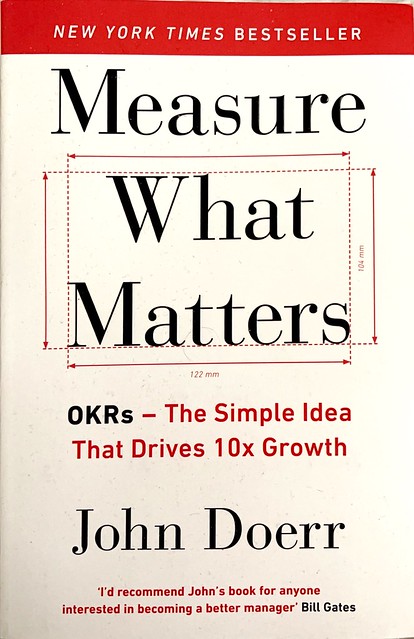
  • Measure What Matters by John Doerr

    I was recommended Measure What Matters by my friend and fellow ex-Yahoo Cathy Ma. Cathy found the book useful in her way through managing teams. In Measure What Matters, John Doerr explains the idea of objectives and key results or OKRs.

    Measure What Matters

    About John Doerr

    If you’ve worked in or around the Silicon Valley technology space from the PC age through to the 2010s Doerr’s name will have a passing familiarity to you. Doerr was a salesman at Intel in the 1970s, realised that there were too many good people ahead of him and took an over in venture capital instead. Doerr was involved in funding:

    • Compaq – Compaq kicked off the market for ‘IBM compatible’ PCs and made the first portable ‘IBM compatible’ PC. Soon after IBM was no longer the dominant player in personal computing leading to the Wintel duopoly. Compaq eventually offered a full range of large servers, workstations and PC when it acquired Digital Equipment Corporation and Tandem Computing. Compaq was in turn bought by H-P
    • Netscape – Netscape Communications mainstreamed the internet browser, email client, web servers and email servers. The server software lives on in Oracle’s product line via the Netscape – Sun Microsystems alliance. The browser indirectly carried on through an open source project Mozilla
    • Symantec – Symantec started off as a natural language processing company in the early 1980s, it became famous for its Mac antivirus software and then went into the DOS and Windows market after merging with Peter Norton Computing. It now has a consumer facing business called NortonLifeLock and the business focused software part of the business was sold to Broadcom
    • Sun Microsystems – Sun Microsystems started off as a UNIX workstation manufacturer. Over time they built up a healthy server and software business that supported much of the infrastructure of the web. They were instrumental in the evolution of several key computing technologies, among them Unix – which influenced parts of the macOS that I am typing this post on, RISC processors in your smartphone, thin client computing like Google Docs, and virtualised computing that is instrumental for cloud computing. Sun Microsystems workstations were popular with investment banks, telecoms companies and internet startups bought their servers. The company’s decline can be marked by the dot com crash. Oracle bought Sun Microsystems and their technology lives on
    • drugstore.com – was a first generation e-tailer in health and beauty products. Walgreens bought the business in 2011, and shut down the website five years later.
    • Amazon.com – needs no introduction
    • Intuit – Intuit sells financial software in the US. TurboTax helps Americans do their tax returns, Mint provides a personal finance dashboard for consumers and QuickBooks is accounting software for small and medium sized businesses
    • Macromedia – Macromedia was a software company that developed tools for creatives and programmers. It was eventually acquired by Adobe. Macromedia products live on in the Adobe product range
    • Google – the search engine.

    About OKRs

    For all of the companies that Doerr has funded he has advocated OKRs. The idea of OKRs came from Doerr’s colleague at Intel Andy Grove. OKRs are a collaborative process. The idea is that it is used with teams and the individuals who make up the teams. Management seeks to set challenging, ambitious goals with measurable results. The key results in OKRs are how you track progress towards the objective, create alignment within the team, and encourage engagement around measurable goals. They are also supposed to flex with circumstance, which is one of the key points of separation from Peter Drucker’s management by objectives (MBO).

    The first part of the book Measure What Matters explains the origin and process behind OKRs.

    You can get everything that you need in the first two chapters covering 35 pages.

    The Cult of OKR

    The rest of the book is a series of self aggrandising endorsements of OK from senior executives who are OKR advocates:

    • Larry Page of Alphabet
    • Bill Davidow of Intel
    • Sheryl Sandberg of Facebook
    • Bill Gates on The Gates Foundation

    It crosses the line for me and almost reads like a high water mark for Silicon Valley hubris; Doerr’s book was published in 2018. Three years later and:

    • Bill Gates is in the most trouble he has been in since the Judge Jackson ruling
    • Alphabet and Facebook are being assailed by regulators around the world
    • Intel looks like a shadow of its former self. Its fabrication process are three years behind competitors. Customers are designing their own chips and AMD is eating their lunch in high performance processors

    Secondly, Doerr’s book, whilst acknowledging Andy Groves role of OKR creator; fails to acknowledge that Andy gave a good descriptor of OKRs in his 1983 book High Output Management.

    I think one of the reasons that I am not that keen on Measure What Matters, is that the book doesn’t work for culturally as a non-American. Instead I would recommend Andy Grove’s own book High Output Management. More books that might be of interest here.

  • The Exponential Era by Espindola & Wright

    The Exponential Era is a business strategy book published by the IEEE Press as part of its series on technology, innovation and leadership. David Espindola and Michael Wright work at Intercepting Horizons and advise at the University of Minnesota.

    The book is a concise 182 pages including its index. It has a satisfying hard cover about the height and width of a paperback book. The book proportions reminded of many of the books that we used to have my secondary school’s library. It felt right in my hand. Its a small thing, but it matters.

    The exponential era

    The secondary school analogy goes further; the book summarises knowledge and makes it relatively easily digestible.

    The Exponential Era includes:

    • The threat of platforms and their ability to disrupt market sectors
    • Why people find it hard to grasp the change brought about by the future
    • Megatrends with the kind of utopian tone that reminded me of Alvin Toffler, George Gilder and John Naisbitt
    • Horizon monitoring
    • Agile approach to development
    • Test and learn
    • Feedback based strategic decisions which relies extensively on the technology sector’s fetishisation of John Boyd’s OODA model
    • The Innovator’s Dilemma
    • Future business ethics

    The book consolidates the kind of reading that people in technology and marketing would likely have read anyway. Chances are if you’ve already read books like Saving Big Blue, Measure What Matters, The Lean Startup and Zero to One, then The Exponential Era isn’t written for you.

    Who should read this book?

    Instead this book seems to be an increasingly diminished audience. A company too small for it’s management to have been lectured on disruption by McKinsey, Bain, BCG or Accenture. But still large enough to be concerned. Like McKinsey et al Espindola and Wright are looking to create disruption fear and sell their SPX methodology to re-engineer their business. I would have thought the c suite in most businesses would have at least done enough reading to have a high level understanding of the content in the book.

    The book’s relentless utopian optimism reminded me a lot of business works from the 1970s to the dot com era. I think that The Exponential Era will be of most use to junior people at the start of their career looking for a primer rather than its intended audience.

  • Bullwhip effect aka Forrester effect

    Bullwhip effect

    I came across the bullwhip effect as a descriptor recently in discussions around the global chip shortage. Bullwhip effect is a concept that is well known in supply chain circles.

    The bullwhip effect is also known as the Forrester effect. Disruption ripples back from the retailer, through the wholesaler, manufacturer, on to their suppliers and so on.

    The usual causes for the effect are:

    • Demand forecast updating – this might be where a company might want to change their product mix to match consumer demand, if a product is very successful or grossly underperforms
    • Order batching – where members of the supply chain round up, or round down the quantity of orders. This happens with the periodic memory gluts or shortages affecting the technology sector
    • Price fluctuations – price discounts can encourage non-linear increases in purchases as it becomes worthwhile for customers to stock up, hedging against increased prices down the line. Oil reserves would be a classic example of this phenomenon
    • Rationing and gaming – buyers and sellers delivering over or under their order quantities. An example of this would be the actions of Enron in US electricity markets. This could be used in a positive way to promote changing the supply chain like renewable sources of electricity generation
    My, what a big holster you have.

    What caused the global chip shortage that is driving the bullwhip effect?

    There were three causes to the global chip shortage

    1. Partial shutdown – The semiconductor industry went through a partial shutdown because of the COVID-19 epidemic. This meant that there was a smaller supply of chips.
    2. Unusual increase in demand – Home working drove an increase in demand: increased sales in PCs, wi-fi routers, external hard drives, mice, keyboards, printers and so on. There was also a corresponding increase in home entertainment as consumers upgraded smart TVs, Apple and Roku set top boxes. This all coincided with the launch of the next generation of gaming consoles by Sony and Microsoft – which can usually drive a squeeze on their own
    3. Supply chain disruption – A fire in Japan at Renesas Electronics. A trade war affecting Chinese semiconductor manufacturers. Freezing winter weather in Texas disrupting employees and their businesses. Now there is a drought in Taiwan affecting TSMC – the world’s largest semiconductor foundries

    More related posts here.

    More information

    Chip shortage is starting to have major real-world consequences 

    Global chip shortage: everything you need to know | CAR Magazine

    The global semiconductor shortage can be explained by the bullwhip effect 

    Chip industry pressures spur Renesas to diversify | Financial Times

    Taiwan’s chip industry under threat as drought turns critical | Financial Times

    Texas winter storm blackouts hit chip production | Financial Times

  • Japanese insights & things that made my day this week

    Japanese insights

    Creative Culture ran a roundtable that provided with Japanese insights across brands and consumers. Well worth a watch.

    Key outtakes

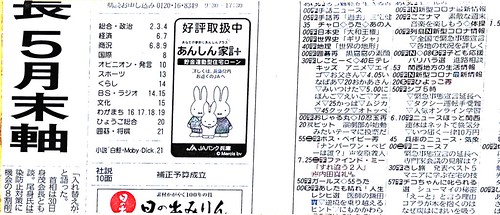
    Kawaii or cute occurs in areas that you wouldn’t expect it. From Hello Kitty airlines and maternity wards to Miffy being used to sell mortgage services.

    Japanese newsprint
    Miffy selling mortgage service on a Japanese print newspaper advertisement

    Imagine 2060, more than 40% of Japan’s population will be 65 and older. This changes what market segments look like; no point chasing the latest generation. It will change what marketing will look like and what products will be sold. It would be an exciting time for product designers, creatives and strategists working with local clients who are willing to embrace the opportunity.

    Couple
    Couple by Norimutsu Nogami

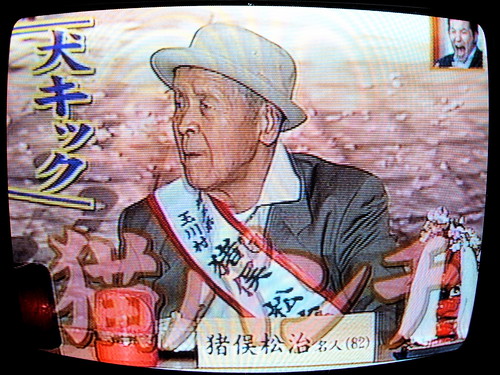
    Newsprint and television are still popular media in Japan (and more popular than marketers are willing to admit outside Japan). These media still have a strong influence on consumers and are represented more strongly in the media mix by Japanese companies. In terms of Japanese insights for brand marketers this means that brand building should be less of a challenge from a media investment point of view than it would be in in some western markets or China.

    Japanese Television
    Japanese television by buck82

    Consumers shop daily or every other day. This is because they don’t have enough space to keep their groceries. So there are convenience stories in every neighbourhood. Retailers want to keep minimum inventory, so they receive frequent, small deliveries almost daily. Since there is a rapid turnover this in turn allows innovation around product innovation. Special edition Kit-Kats are the example most familiar to consumers. But you can see different products in the convenience store at different times of the day.

    Family Mart Convenience Store, Harajuku Tokyo, Japan
    Family Mart Convenience Store, Harajuku, Tokyo by MD111

    More Japanese insights here.

    China

    Moving from Japanese insights to Chinese strategy, the Center for Strategic & International Studies discusses what is needed for the west to have a better China strategy.

    Technology

    The Computer History Museum in Silicon Valley, took the opportunity to interview Mark Markkula. Markkula was an engineer and product marketer involved at Fairchild and Intel during the early days. He put in seed capital into Apple and sat on the board until 1997.

    If you watch nothing else on this post, watch this discussion between Stephen King and Jeremy Bullmore at J Walter Thompson. Bullmore ended up as chairman of J Walter Thompson, eventually retiring in 1987. King established the first account planning department in the advertising industry at J Walter Thompson in 1968.

    May of the problems outlined are similar to problems today.