Yōkoso – welcome to the Japan category of this blog. This blog was inspired by my love of Japanese culture and their consumer trends. I was introduced to chambara films thanks to being a fan of Sergio Leone’s dollars trilogy. A Fistful of Dollars was heavily influenced by Akira Kurosawa’s Yojimbo.
Getting to watch Akira and Ghost In The Shell for the first time were seminal moments in my life. I was fortunate to have lived in Liverpool when the 051 was an arthouse cinema and later on going to the BFI in London on a regular basis.
Today this is where I share anything that relates to Japan, business issues, the Japanese people or culture. Often posts that appear in this category will appear in other categories as well. So if Lawson launched a new brand collaboration with Nissan to sell a special edition Nissan Skyline GT-R. And that I thought was particularly interesting or noteworthy, that might appear in branding as well as Japan.
There is a lot of Japan-related content here. Japanese culture was one of odd the original inspirations for this blog hence my reference to chambara films in the blog name.
I don’t tend to comment on local politics because I don’t understand it that well, but I am interested when it intersects with business. An example of this would be legal issues affecting the media sector for instance.
If there are any Japanese related subjects that you think would fit with this blog, feel free to let me know by leaving a comment in the ‘Get in touch’ section of this blog here.
Japan has had a small but vibrant Chicano culture scene for years. The Japanese have had a community on the west coast of the US for over a century and a love of the detailed sub-cultures of the US. Japan also influences cultures and consumers in Taiwan, Thailand, Hong Kong and even China. Add to that, the fact that Chicano culture is portrayed in shows that are streaming internationally like Mayans MC.
In the west, this would be called cultural appropriation; but I don’t think that really captures what’s going on here.
It is interesting that it is happening now, while Thailand is ruled by a military government; there is a sub-culture flourishing that probably looks rebellious and anti-authoritarian is very interesting.
Korea
Vice News did an episode on the families behind chaebols – Korean business empires called South Korea’s Untouchable Families. None of the content will be of any surprise to anyone who has read this blog or has an appreciation of modern Korean culture. The tale of how the chaebols where largely creations of the Korean government and in time managed to capture the country after the 1997 financial crisis is largely a matter of public record. The extra-legal nature of chaebols are the stuff of Korean dramas.
The ‘chaebol negotiation rule’ of a three year sentence commuted to five years probation is also well known.
What I found curious is how much emphasis they have put on Samsung, who have the most international reach and advertising spend. The Samsung semiconductor experience with workers suffering from cancer mirrors the experience of workers in fabrication facilities when they were based in Silicon Valley. So the risks involved in the chemicals and the need for protection would have been well known.
Asianometry has also recently published a video on the Chaebols that takes a slightly different take on the rise of the companies, linking their rise with weak and financially challenged political parties.
Japan – Tokyo Girl’s Collection
I have written about Tokyo Girl’s Collection in the past. It is interesting to see that it was extended into the metaverse this year. The formula is still largely the same:
A large live event with entertainment
Models and dokusha-models. (These are chosen among actual readers of the magazines as “representatives”. They are more attractive than average readers but not pretty enough to be actual models).
Online shopping and m-commerce of looks that the audience wouldn’t be able to buy locally if they live outside Tokyo
Hong Kong deindustrialisation
By the time I got to Hong Kong, the city’s industrial base had migrated north to the mainland. But I did get to see the massive packaging and printing factory that had been converted to the home furnishing shopping centre now called Horizon Plaza in Ap Lei Chau. As a child many of my clothes and toys had ‘Made in Hong Kong’ written on them.
I got to see the massive buildings that used to have clothing factories in Fo Tan and the Sui Fai Factory Estate – a multi-storey building full of light industrial units. De-manufacturing encouraged the rent-seeking oligarchs that dominate Hong Kong today, for instance Li Ka shing started off manufacturing plastic flowers and other light industrial processes, but pivoted to rent seeking businesses property, telecoms and retailing.
LIHKG forum became famous beyond Hong Kong when it was at the centre of the leaderless protest movement during the 2019 Hong Kong protests. Hong Kong’s local internet has a history of Reddit like forums since the late 1990s.
HKGolden
Prior to 2016, there was the HKGolden Forum named after the Golden Computer shopping centre in Sham Shui Po. Golden Computer shopping centre considered one of the cheapest places in Hong Kong to purchase a computer. Products on sale range from complete PC systems, smartphones and peripherals. Unlike purely consumer-oriented IT shopping centres, Golden features several stores specialising in professional grade networking equipment as well.
The HKGolden forum fell out of a site put up in the late 1990s by stall owners at the Golden Computer centre to show people what were the typical prices for computer parts. The HKGolden Forum served as a creator and distributor of memetic ideas in Hong Kong including new slang terms of the local Cantonese vernacular and promoting discussions of societal topics.
LIHKG
LIHKG forum seemed rise in prominence once it was launched in 2016, quickly eclipsing HKGolden. It is restricted to contributors having an email address from a Hong Kong ISP (like Netvigator) or a local higher education institution. The LIHKG forum pig icon became a familiar motif on 2019 Hong Kong protest posters and artwork.
Since the national security law in Hong Kong it has has been a source of some anti-vaccination / public health programme discussions. Today the LIHKG forum app has been taken down from the Android and iOS app store.
Most Hong Kong political discussions have already moved on to various Telegram channels.
China has a fateful choice to make – by Noah Smith – An angry, chauvinistic nationalism has become a deeply rooted force in China’s society. Even as China’s government has wavered on whether to support Putin, there has been a massive outpouring of support for the invasion on Chinese social media. Of course that nationalistic sentiment isn’t unanimous, and it’s hard to tell what percent holds it, but for now they seem to have the upper hand. In fact, at this point it’s not clear that China’s top leadership could stop the nationalist tide even if they wanted to; like the generals of Imperial Japan, they could end up getting pushed into aggressive action by a populace that had no idea of the risks. – interesting that we’re starting to see this kind of rhetoric beyond reactionary elements
Park Island. (For Peter Moss, May 2018) | by Aidyn F | Medium – my friend Aidyn’s poetry. We were introduced by a former colleague of mine from Yahoo! who had worked in Hong Kong as a TV presenter before the handover. Aidyn introduced me to the Foreign Correspondents Club and gave me a different perspective on Hong Kong
Big Tobacco’s future in Russia goes up in smoke | Financial Times – a classic case of consumer globalisation: they made sophisticated products, marketed them expertly and raised quality standards. It would be fine apart from one problem: the product was cigarettes and the World Health Organization estimates that more than 19m Russian smokers will die prematurely. Hence the global pivot that companies have been trying to make towards vaping and heat-treated tobacco devices, including Philip Morris’s IQOS and BAT’s Glo. Russia has been vital to the “smoke-free future” that Philip Morris now promises and one executive last year hailed its “truly very spectacular progress” there. It is not clear how much safer heat-treating tobacco is to produce a nicotine vapour rather than smoking it in cigarettes. One analysis concluded that users of the devices inhale “substantially fewer” toxicants, but the results were mixed and most studies are done by tobacco companies. Nor is the purpose of heat-treated tobacco devices obvious. Philip Morris says that 72 per cent of IQOS users switched entirely from cigarettes in 2020, but it leaves many who carry on using both. There is an echo of the past transition from Belomorkanals to Marlboro Golds: better, but not good
Gadgets
Sound On Sound Issues (Active) – Amazing archive of the early issues from Sound on Sound magazine including amazing Japanese synthesisers like the Roland D-50
MTR sees Covid tester in action | The Standard – LIHKG forum users shared candid photos of Hong Kong people testing themselves for COVID in public including on the MTR and while out having a meal
Why the Chechen Warlord Wears Designer Boots | GQ – As Russia invades Ukraine, murderous Chechen leader and Putin ally Ramzan Kadyrov is using designer pieces to demonstrate his power. I don’t think Prada really wants Ramzan Kadyrov as a brand ambassador
I went down a rabbit hole when investigating a post that I have in draft at the moment and discovered The Mattei Affair. I got to find out more about Eni – one of Europe’s oil supermajors. Even though I had worked in the oil industry at the start of my carrier I didn’t have a good understanding of the story of Enrico Mattei. Despite the great work done in documenting the industry though Daniel Yergin‘s book The Prize published in 1990. Yergin’s book was recognised as the defacto history of the industry back when I worked in the oil industry.
Francesco Rosi
Who would have thought that a film maker would have been able to make a film about a prosaic story like the life of an oil industry executive? Francesco Rosi managed to create something special with The Mattei Affair. Enrico Mattei was an extraordinary oil industry executive who helped Italy recover economically from the post-war period until his death in 1962 in a mysterious private plane crash. Rosi has a very distinctive story style mixing documentary footage with docu-drama, often performed by non-professional actors. In this respect The Mattei Affair mirrors Rosi’s 1961 film of Sicilian bandit Salvatore Giuliano.
The story line covers different aspects of Mattei’s career and then loops back to the aftermath of the plane crash providing an innovative form of non-linear storytelling.
Rose’s film production became part of the story itself. A journalist that Rosi had used to research The Mattei Affair himself disappeared which added to the mystery surrounding Enrico Mattei and the film. Rose’s search for the missing investigative journalist became part of the film itself.
So The Mattei Affair is a remarkable film for all sorts of reasons.
Mauro De Mauro
Mauro De Mauro was the journalist that Rosi had hired to dig into The Mattei Affair and try to find out what had happened. At the time De Mauro worked for L’Ora newspaper based in Palermo, Sicily. He disappeared in September 1970 and his body was never found.
Hard to find
De Mauro wasn’t the only hard to find aspect of The Mattei Affair. For a film that won the grand prize at the Cannes Film Festival it had been very hard to find, even in the world of YouTube. It had a limited screening in the US with just one screen showing the film in New York back in 1973. It doesn’t appear at film festivals as a retrospective.
The BBC apparently tried to licence it for broadcast in the mid-1990s and failed. Bootleg DVDs of the film occasionally surface, but its never been licensed and released on Blu-Ray or DVD, which is very strange indeed, given the remarkable nature of the film and story behind it.
The New York Times review of the film published on May 21, 1973 described the film as an ‘immensely honorable but unsuccessful film’, rather like the reviewer was trying to bury a film that they themselves were intrigued by and had enjoyed watching.
I found the film to be intriguing, enjoyable and beautifully shot. I was haunted by the story that I had seen on screen and am puzzled by the film’s lack of wider distribution – given the significant nature of the film in its own right.
Subaru Impreza 22B
Nothing brings home the inflationary world of cars at the moment like this review of the Subaru Impreza 22B STi. This was the first Impreza model to do well in rallying after the legacy, though much of this was down to the disqualification of Toyota’s Celica GT-4 cars that had been previously all-conquering. These cars were sold in Japan and made it outside on the grey market import scene over time, there were less than 500 of this particular model made. One of these Subaru cars with just the delivery mileage had been put in storage for over 20 years and sold for £295,000 in 2020.
This Subaru isn’t a bonkers road going version of the Ford RS200 or an Audi Sport Quattro of the mid-1980s. This nicely kept, but worn in version of the Impreza 22B STi is still worth more than £200,000. By comparison you can buy a 1987 vintage Toyota Celica GT-4 from Japan (so it will have been well looked after in comparison to the UK, with just 77,000 kilometres on the clock) for about 4.2 million yen or £26,000 plus import costs. You can find even better bargains if you are prepared to have up to 100,000km on the clock.
For that you are getting a similarly fast Japanese piece of Group A homologation rally history in a smaller package and prettier looking. And its a Toyota, which means the kind of reliability that Mercedes used to be famous for. And with the extra money you can buy yourself a 1980s vintage Porsche 911 SC or even an early 1990s Porsche 911 Carrera 4 coupé.
Open AI takes on e-sports
Open AI built a machine to do for e-sports for DeepMind did for Go. The Open AI team focused on Dota 2. More from a talk by the Computer History Museum here.
All of this is very impressive, but we are still a good distance from having a ‘general purpose AI’ that works across multiple disciplines. Once the system is trained on a particular model, it can’t then learn new skills or areas of expertise and apply the knowledge across areas. The models used in Open AI are deep reinforcement learning (or Deep RL in programmer lingo), all of which goes back to the neural network academic work done from the mid-1980s to the early 1990s. It was first applied to a backgammon game.
Interest in it amongst technologists is due to one book first written in 1998: Reinforcement Learning: An introduction. The point being is that ‘AI’ champions like Google and others, haven’t moved the science of artificial intelligence on any further, but are throwing more processing power at it instead.
Your Hit Parade
I came across this 1955 TV show that was syndicated around NBC TV and radio affiliate stations as black and white film. It was interesting to see the way primary programme sponsor Lucky Strike was integrated into the show. Secondary sponsor ‘Pin Curls’ got a very brief mention at the beginning of the show, in a ‘blink and you’d miss it’ kind of placement.
“readings of radio requests, sheet music sales, dance hall favorites and jukebox tabulations”
Your Hit Parade chart methodology
The use of the word tabulate to indicate how the hit parade chart was compiled, implying mechanical computing in the background. I don’t know whether a juke box could of determined the number of plays of each record at the time. Dance hall favourites sounds particularly nebulous. Finally radio plays wasn’t included in the chart mechanism, instead there was the vague ‘reading out of radio requests’.
By 1949, we know that there were steps taken to try and stamp out paid placement aka Payola, but music publishers didn’t engage with this process in a positive manner. When it eventually became a scandal the big music companies tried to tie payola to rock and roll music. Independent record companies or music publishers frequently used payola to promote rock and roll on American radio. The reason for these payments was to get around DJs own biases regarding ‘black sounding music’. Payola got put under a spotlight after a congressional investigation in 1958 and 59 that killed DJ Alan Freed’s career and saw Dick Clark transition to television.
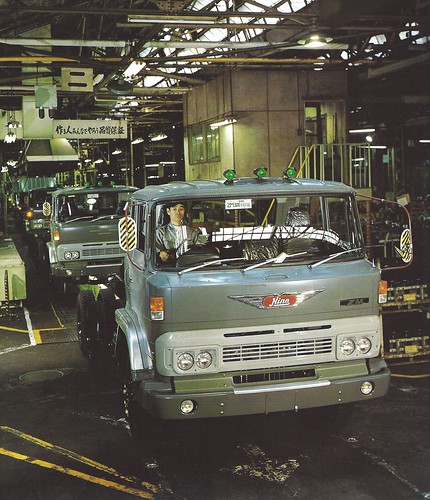
Hino Motors is a car and truck manufacturer best known for its iconic Hino trucks. It started its convoluted origin story spinning out of manufacturing company owned by Tokyo Gas.
Before there was Hino trucks, there were a small amount of half tracks and armoured personnel carriers made for the Imperial Japanese Army. After the war Hino got into the truck business and for a brief while also made cars. The pretty Hino Contessa coupé showed potential, but becoming part of the Toyota group saw Hino focus on commercial vehicles under its own name.
Hino trucks with their winged logo marked my childhood in Ireland. Hino trucks pulled palleted loads on taunt liner trailers, shipping containers and flat bed trailers of hay. The supermarket delivery wagons, the bakers lorry, skip deliveries, ready mix and the dairy picking up milk from my Uncle’s farm were all using Hino trucks. The distinctive unblinking three green lights on the roof of oncoming Hino trucks stood out of the total darkness of rural Irish roads.
I had Robert ‘Pino’ Harris to thank for making Ireland the Hino trucks capital of Europe at the time. And his Hino trucks success story is one of a singular focus on relationships and customer service.
Adidas ousts China chief as sales suffer after consumer boycott over Xinjiang | Financial Times – Allison Malmsten, sportswear analyst at China-focused consultancy Daxue Consulting, said that since the boycott, Nike and Adidas have ceded their top position on ecommerce apps such as Alibaba’s Tmall. In their place, local online retailers have promoted Li-Ning and Anta, making the “competition a lot stiffer”.Jonathan Cummings, Asia-Pacific president of brand consultancy Landor and Fitch, said that after years of market dominance, Adidas and Nike were being challenged by “cheaper domestic brands that have become stronger”.Adidas generated nearly a quarter of its sales in the Greater China region in the first half of last year, the bulk of which came from mainland China. – it will be interesting to see where adidas will try to go in China and whether they feel it is worth riling western customers to arrest their decline in China
The rising costs of China’s friendship with Russia | Financial Times – When the Russian invasion of Ukraine started two weeks ago, Jane Yan, a senior executive at a machine parts maker in eastern China, says she was not too worried about the impact. After all, buyers in Russia and Ukraine accounted for less than 5 per cent of the company’s overseas sales last year. But as the full ferocity of the Russian onslaught started to become apparent, the outlook shifted dramatically. Important clients in countries such as Poland and Germany cancelled orders with the Zhejiang-based company. “A Munich-based client said ‘it feels terribly wrong to send money to a country that is tolerating war in Ukraine — sorry’,” said Yan, who asked that her employer not be identified. She added that inquiries from European buyers have also fallen sharply since the conflict started. “I hope the war ends as soon as possible.” – I wonder how prevalent this consumer boycott actually is of Chinese products?
Culture
Why disco will never truly die — Quartz – interesting, but full of American privilege, but no love for producers like Giorgio Moroder, Luxxury, Dimitri from Paris, Late Night Tuff Guy or The Reflex
Ideas
How factory robots lead to human deaths – Futurity – “For decades, manufacturers in the United States have turned to automation to remain competitive in a global marketplace, but this technological innovation has reduced the number of quality jobs available to adults without a college degree—a group that has faced increased mortality in recent years,” says lead author Rourke O’Brien, assistant professor of sociology at Yale University.
“Our analysis shows that automation exacts a toll on the health of individuals both directly—by reducing employment, wages, and access to healthcare—as well as indirectly, by reducing the economic vitality of the broader community.”
Since 1980, mortality rates in the United States have diverged from those in other high-income countries. Today, Americans on average die three years sooner than their counterparts in other wealthy nations.
EACH NEW ROBOT PER 1,000 WORKERS LED TO ABOUT 8 ADDITIONAL DEATHS PER 100,000 MALES AGED 45 TO 54 AND NEARLY 4 ADDITIONAL DEATHS PER 100,000 FEMALES IN THE SAME AGE GROUP. Automation is a major source of the decline of US manufacturing jobs along with other factors, including competition with manufacturers in countries with lower labor costs, such as China and Mexico.
Previous research has shown that the adoption of industrial robots caused the loss of an estimated 420,000 to 750,000 jobs during the 1990s and 2000s, the majority of which were in manufacturing.
Can Intel out-design Apple in terms of chips? I think that is certainly possible, possibly even extremely likely
Can Intel compete with Apple on process? Possibly soon, if they managed to partner with Samsung or TSMC. Certainly in the longer term if Intel’s process engineers get their mojo back, or they continue to partner with TSMC or Samsung
Roundtable: A Brutally Honest Conversation on the Metaverse – Web 2.0 Is about the individual/the corporation, and Web 3.0 is about the collectivist statement, or the community / collectivist environment, in some ways. – interesting that there is a whole piece missing about web 1.0 being about personal and organisation publishing and communications. Web 2.0 being a web of data and creativity
3G graduation sees DoCoMo celebrating 3G wireless services and how they fitted into consumers lives. While DoCoMo has its service running for another couple of years, rival Au has shut down its 3G network this year. The ‘Graduation’ in 3G graduation is used in a similar way to how US technology companies use ‘sunset’ as a euphemism for shutting down a service.
In sectors outside technology like the 3G graduation film, the term graduation is signify an artist leaving an idol group. Japanese Idol groups like AKB48 and Morning Musume mirror the interchangeable team nature of Puerto Rican boy bandma Menudo. Like Japanese idol groups, Menudo appeared in adverts for big brands like Pepsi and McDonalds across Latin and South America (including Portuguese speaking Brazil). They even appeared in a Pepsi ad that ran in the Philippines. They also did two TV specials. Japanese idol groups contain pop stars with the following characteristics:
a type of entertainer marketed for image, attractiveness, and personality in Japanese pop culture. Idols are primarily singers with training in acting, dancing, and modeling. Idols are commercialized through merchandise and endorsements by talent agencies, while maintaining a parasocial relationship with a financially loyal consumer fan base.
When members leave the group due to contract violations, ageing out, or wanting to build a career of their own, they ‘graduate’. Like the 3G graduation film idols share an association with school imagery.
https://youtu.be/dKxjw3YntBk
Kit-Kat anime advert
Nestlé Kit-Kats are popular in Japan. They are especially popular during exam time. The reason for this is that the Japanese pronunciation of KitKat, “Kitto Katto,” sounds similar to the phrase “Kitto katsu,” which means “I believe you will win/you can do it.” The homophone nature of Kitto Katto meant that Kit-Kats became a good luck charm, with people having them or giving them as gifts for big days such as school entrance exams or even job interviews.
This explains why this anime advert directed by Naoko Yamada is around the theme of “Kikkake wa Kit Kat de,” or “Kit-Kat Creates the Chance,” and has a school related setting.
This is apparently the first of what promises to be a series of adverts being done by Yamada for Kit-Kat.
Modern car mechanical design
For someone who hasn’t bought a car in 25 years, hearing about how unreliable BMWS and Mercedes cars have become is a bit of a shock. I have driven hire cars and am aware that cars are now heavily reliant on computers. What I hadn’t realised was how cheap mechanical parts had become under the hood. The reason why they had been engineered down to a price, was to allow for the price of all the new electronics that make up the car driving experience now.
I started my work life off in a corporate research lab were we were developing a way of making a plastic manifold cover for a small Ford of Europe engine. This engine was destined for the Ford Fiesta and the first Ka if we had managed to get everything to work. The idea was that the engine would be a sealed unit. When it needed to be replaced it would undergo a factory recondition, or would be recycled. This was about reducing environmental impact, without impacting profits. But looking at some of the parts going into these cars now, I am shocked.
More in this video here.
Amazon luxury watch copies
Amazon is a den of iniquity in terms of shoddy products and fakes. German watch YouTuber shows the variety of watches that steal the design language of watches from the likes of:
Nomos
TAG Heuer
Breitling
Rolex
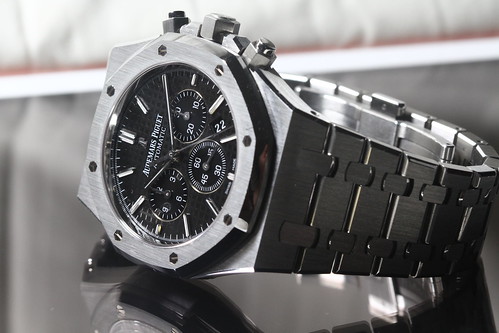
Audemars Piguet
Patek Philippe
All of these come in at about $100 price. It is interesting how the Chinese factories turning these watches out have managed to get their way around the brand police. Finally, I am surprised to see Chinese manufacturers relying on a cheap, but reliable Seiko movement for the most part. Which is probably down to the weird deficiencies in Chinese engineering that means that you don’t see Chinese made rollerball pen refills.
The amazing design of the jerry can
Great video by a Scottish YouTuber who covers why the jerry can was such a clever product design and the history of the fuel container. I did not realise that they were tested in the Spanish civil war. More here.
NFTs and Ralph Bakshi’s animated adaptation of The Lord of The Rings
The problems with NFTs. NFTs sprung out of the move to decentralised finance or cryptocurrency. NFT are smart contract linked artefacts. These were seen as a panacea for creatives to make money during COVID. This video is an interesting discussion on NFTs, and uses the analogy of investors buying real estate that drove the 2008 mortgage crisis. The crypto-economy has many of the same drivers.
The guy who made this video also did a really good exhaustive history of Ralph Bakshi‘s The Lord of The Rings film that preceded Peter Jackson’s The Lord of the Rings trilogy by a couple of decades, and the BBC’s radio adaptation by a few years. I am a fan of all three, but am in no doubt that Peter Jackson’s film in some places is a shot-for-shot copy of Bakshi’s film and borrows dialogue from both Bakshi and the BBC.