Over the space of 20 years, luxury changed enormously. The Japanese had been a set of new consumers for luxury, but in terms of numbers they hadn’t eclipsed the US as the biggest market for luxury.
China’s ascent into the WTO (World Trade Organisation) made a lot of business people and politicians a lot richer. China challenged the US in terms of luxury market size. On their rise, Chinese consumers changed a lot in their sophistication as they educated themselves on luxury consumption.
These new consumers picked up new traits such as wine drinking. This also meant that luxury goods became new asset classes as Chinese money looked to acquire only the best. Chinese culture in turn impacted luxury design. Chinese new year became more important than Christmas.
Then there was the second generation money. Young rather than old consumers. Consumers who were looking for something less formal, either because they didn’t wear anything but streetwear or they worked in the creative classes rather than the traditional professions and high finance.
The industry had traditionally avoided rap artists and R&B singers, now Jay Z and Beyonce are the face of Tiffanys and Fendi had collaborated with Rihanna.
They no longer wanted to have to wear a jacket and tie to have afternoon tea at the Mandarin. They took an eclectic look more attuned to the Buffalo Collective than Vogue Italia.
You had hybridisation with the street to create a new category of luxe streetwear in a way that also owes a debt to football casual terrace wear and the pain.
Now you have Zegna badge engineering approach shoes from alpine brand La Sportiva and Prada has done a similar thing with adidas’ iconic Stan Smith tennis shoes. Balenciaga with their Speed Sock looks like a mix between Nike’s flyknit football boots and the Nike Footscape sole.
Luxury has traditionally reflected status. Goods of a superior nature that the ‘wrong sort’ of people would never be able to afford. Luxury then became a symbol that you’d made it. In Asian markets, particularly China, luxury became a tool. People gifted luxury products to make relationships work better. It also signified that you are the kind of successful business person that partners could trust. You started to see factory managers with Gucci man bags and premium golfwear to signal their success. Then when the scions of these business people and figures in authority were adults, luxury has become about premium self expression.
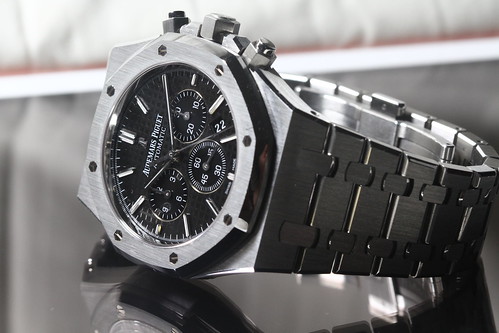
Russia Seized Millions of Dollars of Swiss Luxury Watches in Moscow – Russian customs service agents took millions of dollars of Audemars Piguet watches. Audemars Piguet had closed its boutique in Moscow. The Russians allege that Audemars Piguet was in breach of customs regulations. The reality is that its retaliation for Switzerland joining other countries in levying sanctions on Russia. In this respect its similar to the state-sanctioned theft of aircraft from Irish aircraft leasing companies. There are a few problems with these Audemars Piguet watches. The Russian market for Swiss watches in 2021, accounting for 260m Swiss francs (£212m) of shipments, according to the Federation of the Swiss Watch Industry; which puts the country in the top 20 acquirers of Swiss watches.
Audemars Piguet Offshore models are long sought after by watch collectors. The problem that Russia will have with the watches is the inability of them to be serviced. The company will have a record of the serial numbers involved and won’t service them when they come up for maintenance in a few years time. AP watches have a reputation for being great watches, but aren’t robust like say a Rolex in terms of their need to be serviced.
Russia seems to be pretty determined to have western sanctions on the country for a long time to come yet.
Geely questions future in Russia despite opening for China’s carmakers | Financial Times – Tu Le, managing director of Sino Auto Insights, noted that the Chinese carmakers are relatively inexperienced when it comes to maintaining a brand’s reputation in western markets. “They’ve never had to deal with these kinds of external pressures in how they were perceived by foreign consumers,” he said. “A lot of these companies, they’re going to have to do business in Europe, or they’re going to have to do business in the United States. If they seem too eager to fill that void [in Russia], I will bet you money it is going to have some backlash in those regions.”
Judy Asks: Are Europeans Ready to Pay the Price for Ukraine’s Sovereignty? – Carnegie Europe – Carnegie Endowment for International Peace – The grim truth is that many in the West would be ready to accept compromises over Ukraine’s sovereignty in order to stop the war. In countries neighboring Russia, there is a strong understanding that such compromises would seriously weaken our security, hence they are ready to pay a high price to avoid them. However, among Western experts and policymakers, assessments of the balance between different interests seem to vary. The thinking that some degree of accommodation of Russia’s interests might be needed to reach stability has not disappeared. This is a dangerous and misguided logic
Lanvin Group plans New York IPO in SPAC deal | Vogue Business – Lanvin Group, the fashion arm of Chinese conglomerate Fosun International which includes the French heritage label Lanvin, plans to list in New York in a SPAC deal, the second high-profile fashion firm to make the move since Ermenegildo Zegna late last year. Lanvin Group announced Tuesday it is combining with special-purpose acquisition company Primavera Capital Acquisition Corporation in a deal that values the group at $1.5 billion, according to an emailed statement. Lanvin Group expects to raise up to $544 million from the deal and from existing investors, and will use the funds to expand its portfolio, including future luxury acquisitions
A Chinese Nickel Market Mystery – WSJ – Market ructions amid war aren’t unusual. But the London Metal Exchange’s retroactive cancellation of nickel trades this month appears to be unprecedented. One question is whether the Hong Kong-owned exchange intervened to rescue a Chinese nickel tycoon. – the exchange is owned by the Hong Kong Stock Exchange
LIHKG forum became famous beyond Hong Kong when it was at the centre of the leaderless protest movement during the 2019 Hong Kong protests. Hong Kong’s local internet has a history of Reddit like forums since the late 1990s.
HKGolden
Prior to 2016, there was the HKGolden Forum named after the Golden Computer shopping centre in Sham Shui Po. Golden Computer shopping centre considered one of the cheapest places in Hong Kong to purchase a computer. Products on sale range from complete PC systems, smartphones and peripherals. Unlike purely consumer-oriented IT shopping centres, Golden features several stores specialising in professional grade networking equipment as well.
The HKGolden forum fell out of a site put up in the late 1990s by stall owners at the Golden Computer centre to show people what were the typical prices for computer parts. The HKGolden Forum served as a creator and distributor of memetic ideas in Hong Kong including new slang terms of the local Cantonese vernacular and promoting discussions of societal topics.
LIHKG
LIHKG forum seemed rise in prominence once it was launched in 2016, quickly eclipsing HKGolden. It is restricted to contributors having an email address from a Hong Kong ISP (like Netvigator) or a local higher education institution. The LIHKG forum pig icon became a familiar motif on 2019 Hong Kong protest posters and artwork.
Since the national security law in Hong Kong it has has been a source of some anti-vaccination / public health programme discussions. Today the LIHKG forum app has been taken down from the Android and iOS app store.
Most Hong Kong political discussions have already moved on to various Telegram channels.
China has a fateful choice to make – by Noah Smith – An angry, chauvinistic nationalism has become a deeply rooted force in China’s society. Even as China’s government has wavered on whether to support Putin, there has been a massive outpouring of support for the invasion on Chinese social media. Of course that nationalistic sentiment isn’t unanimous, and it’s hard to tell what percent holds it, but for now they seem to have the upper hand. In fact, at this point it’s not clear that China’s top leadership could stop the nationalist tide even if they wanted to; like the generals of Imperial Japan, they could end up getting pushed into aggressive action by a populace that had no idea of the risks. – interesting that we’re starting to see this kind of rhetoric beyond reactionary elements
Park Island. (For Peter Moss, May 2018) | by Aidyn F | Medium – my friend Aidyn’s poetry. We were introduced by a former colleague of mine from Yahoo! who had worked in Hong Kong as a TV presenter before the handover. Aidyn introduced me to the Foreign Correspondents Club and gave me a different perspective on Hong Kong
Big Tobacco’s future in Russia goes up in smoke | Financial Times – a classic case of consumer globalisation: they made sophisticated products, marketed them expertly and raised quality standards. It would be fine apart from one problem: the product was cigarettes and the World Health Organization estimates that more than 19m Russian smokers will die prematurely. Hence the global pivot that companies have been trying to make towards vaping and heat-treated tobacco devices, including Philip Morris’s IQOS and BAT’s Glo. Russia has been vital to the “smoke-free future” that Philip Morris now promises and one executive last year hailed its “truly very spectacular progress” there. It is not clear how much safer heat-treating tobacco is to produce a nicotine vapour rather than smoking it in cigarettes. One analysis concluded that users of the devices inhale “substantially fewer” toxicants, but the results were mixed and most studies are done by tobacco companies. Nor is the purpose of heat-treated tobacco devices obvious. Philip Morris says that 72 per cent of IQOS users switched entirely from cigarettes in 2020, but it leaves many who carry on using both. There is an echo of the past transition from Belomorkanals to Marlboro Golds: better, but not good
Gadgets
Sound On Sound Issues (Active) – Amazing archive of the early issues from Sound on Sound magazine including amazing Japanese synthesisers like the Roland D-50
MTR sees Covid tester in action | The Standard – LIHKG forum users shared candid photos of Hong Kong people testing themselves for COVID in public including on the MTR and while out having a meal
Why the Chechen Warlord Wears Designer Boots | GQ – As Russia invades Ukraine, murderous Chechen leader and Putin ally Ramzan Kadyrov is using designer pieces to demonstrate his power. I don’t think Prada really wants Ramzan Kadyrov as a brand ambassador
3G graduation sees DoCoMo celebrating 3G wireless services and how they fitted into consumers lives. While DoCoMo has its service running for another couple of years, rival Au has shut down its 3G network this year. The ‘Graduation’ in 3G graduation is used in a similar way to how US technology companies use ‘sunset’ as a euphemism for shutting down a service.
In sectors outside technology like the 3G graduation film, the term graduation is signify an artist leaving an idol group. Japanese Idol groups like AKB48 and Morning Musume mirror the interchangeable team nature of Puerto Rican boy bandma Menudo. Like Japanese idol groups, Menudo appeared in adverts for big brands like Pepsi and McDonalds across Latin and South America (including Portuguese speaking Brazil). They even appeared in a Pepsi ad that ran in the Philippines. They also did two TV specials. Japanese idol groups contain pop stars with the following characteristics:
a type of entertainer marketed for image, attractiveness, and personality in Japanese pop culture. Idols are primarily singers with training in acting, dancing, and modeling. Idols are commercialized through merchandise and endorsements by talent agencies, while maintaining a parasocial relationship with a financially loyal consumer fan base.
When members leave the group due to contract violations, ageing out, or wanting to build a career of their own, they ‘graduate’. Like the 3G graduation film idols share an association with school imagery.
https://youtu.be/dKxjw3YntBk
Kit-Kat anime advert
Nestlé Kit-Kats are popular in Japan. They are especially popular during exam time. The reason for this is that the Japanese pronunciation of KitKat, “Kitto Katto,” sounds similar to the phrase “Kitto katsu,” which means “I believe you will win/you can do it.” The homophone nature of Kitto Katto meant that Kit-Kats became a good luck charm, with people having them or giving them as gifts for big days such as school entrance exams or even job interviews.
This explains why this anime advert directed by Naoko Yamada is around the theme of “Kikkake wa Kit Kat de,” or “Kit-Kat Creates the Chance,” and has a school related setting.
This is apparently the first of what promises to be a series of adverts being done by Yamada for Kit-Kat.
Modern car mechanical design
For someone who hasn’t bought a car in 25 years, hearing about how unreliable BMWS and Mercedes cars have become is a bit of a shock. I have driven hire cars and am aware that cars are now heavily reliant on computers. What I hadn’t realised was how cheap mechanical parts had become under the hood. The reason why they had been engineered down to a price, was to allow for the price of all the new electronics that make up the car driving experience now.
I started my work life off in a corporate research lab were we were developing a way of making a plastic manifold cover for a small Ford of Europe engine. This engine was destined for the Ford Fiesta and the first Ka if we had managed to get everything to work. The idea was that the engine would be a sealed unit. When it needed to be replaced it would undergo a factory recondition, or would be recycled. This was about reducing environmental impact, without impacting profits. But looking at some of the parts going into these cars now, I am shocked.
More in this video here.
Amazon luxury watch copies
Amazon is a den of iniquity in terms of shoddy products and fakes. German watch YouTuber shows the variety of watches that steal the design language of watches from the likes of:
Nomos
TAG Heuer
Breitling
Rolex
Audemars Piguet
Patek Philippe
All of these come in at about $100 price. It is interesting how the Chinese factories turning these watches out have managed to get their way around the brand police. Finally, I am surprised to see Chinese manufacturers relying on a cheap, but reliable Seiko movement for the most part. Which is probably down to the weird deficiencies in Chinese engineering that means that you don’t see Chinese made rollerball pen refills.
The amazing design of the jerry can
Great video by a Scottish YouTuber who covers why the jerry can was such a clever product design and the history of the fuel container. I did not realise that they were tested in the Spanish civil war. More here.
NFTs and Ralph Bakshi’s animated adaptation of The Lord of The Rings
The problems with NFTs. NFTs sprung out of the move to decentralised finance or cryptocurrency. NFT are smart contract linked artefacts. These were seen as a panacea for creatives to make money during COVID. This video is an interesting discussion on NFTs, and uses the analogy of investors buying real estate that drove the 2008 mortgage crisis. The crypto-economy has many of the same drivers.
The guy who made this video also did a really good exhaustive history of Ralph Bakshi‘s The Lord of The Rings film that preceded Peter Jackson’s The Lord of the Rings trilogy by a couple of decades, and the BBC’s radio adaptation by a few years. I am a fan of all three, but am in no doubt that Peter Jackson’s film in some places is a shot-for-shot copy of Bakshi’s film and borrows dialogue from both Bakshi and the BBC.
Animoca Brands is the face of a NFT bubble that feels curiously like the dot com era. Will there be a place for NFTs? Possibly. Will Animoca Brands be its Amazon or its Pets.com? I don’t know. But I feel queasy about the Hong Kong NFT wave that Animoca Brands are the poster child for. Particularly when on most other economic and societal metrics Hong Kong is running the other way; with a brain drain and economic decline.
Shedding some light on “dark patterns” and advertising regulation – ASA | CAP – “dark patterns” encompass a range of misleading advertising practices that have long been regulated under the CAP Code, and some of which reflect practices that are banned in all circumstances under consumer protection law. The CAP Code has long applied to online advertising (including companies’ own websites), and many of the common “dark patterns” align with issues that the ASA is well-versed in regulating
Ronn Torossian Admits To “Ethical Lapses” Amid News Site Controversy – PRSA-NY’s board of directors unanimously voted to condemn Torossian and 5WPR in response to the story. “In addition to being a cowardly and blatant violation of PRSA’s Code of Ethics, Ronn’s actions are a stain on our profession and undermine our role as guardians of facts and integrity for those we serve. We strongly condemn his and his firm’s direct role in perpetrating disinformation while pretending to be a legitimate industry news site,” said PRSA-NY’s board said in a statement. Torossian is no stranger to controversy, having been criticized over the years for his aggressive PR tactics, and is taking steps to remain in the public eye amid this one. Doing that has included issuing two press releases since the story broke — one offering Torossian’s list of “PR Rules” and another with marketing podcast recommendations. – so the lesson is basically break the rules while you’re small, apologise with no repercussions when you get larger
Depicting older people in ads – ASA | CAP – Communicating about ageing and older people in a positive way can help to tackle negative perceptions of ageing, and older people, but negative and offensive stereotypes about ageing and older people are still common. Using stereotypes about age in advertising may breach the CAP Code, and our guidance is designed to help advertisers ensure that they do not include offensive depictions of, or references to age in their advertising. – but is this really going to change in the ad industry when ageism is endemic from the top down in the industry – from hiring policies and representation to board level views held by the likes of Mark Read
FMCG
Advertising zero alcohol products – ASA | CAP – Marketers should, however, take care not to mislead consumers by implying that a product contains no alcohol at all if it contains any. For some consumers, whether for health, religious, or other reasons, the presence of a small amount of alcohol may be material information and therefore required to be present with reasonable prominence. Although the ASA has not formally ruled on such a circumstance, marketers are best advised to take a cautious approach when marketing a drink that is usually alcoholic (such as a non-alcoholic beer) but has been adjusted to bring it below the 0.5% ABV threshold. For instance, we would strongly recommend that ads contain a reference to the ABV alongside any ‘alcohol free’ or similar claims. – interesting that the ASA felt the need to put this notice out
Lecturers admit self-censoring classes with Chinese students | The Times – Academics are self-censoring to avoid causing offence to students from authoritarian states such as China, a new report has said. Two thirds said they believed that academic freedom was under threat in higher education and more than two fifths felt the same about their freedom to select teaching content. The survey of 1,500 social science faculty members across a range of British institutions was conducted by academics from Oxford, Exeter and Portsmouth universities.
Toronto bakery is burnt by a cultural appropriation feud | Financial Times – it is interesting to read about how Chinese cultural appropriation of Korean intangible national treasures has spilled over on to the western social networks. Naturally Vancouver seems to be at the centre of this maelstrom
Inside Facebook’s $10 Billion Breakup With Advertisers – WSJ – Apple’s privacy settings have affected e-commerce advertising on Facebook and advertising sales have dropped. It would be interesting to see if there was a geographic breakdown on this. If this is people like the Chinese online direct to consumer commerce and drop shippers, thats a big issue for Facebook. It already has issues with big brands in terms of ad quality, brand safety and skepticism over the reliability of Facebook’s ad metrics that is based on past behaviour
Online
Google Search Is Dying | DKB – interesting discussion on the Google search experience for early adopters. It is the kind of things that I have complained to friends about. It also shows the relative power of Reddit – which brings us back to the Yahoo! ideas around knowledge search circa 2005/6
TikTok Wants to Avoid Facebook’s Mess. Its Corporate Culture Could Complicate That — The Information – Two years ago, a team of TikTok employees in China—where the hit video-sharing app’s parent company, ByteDance, is based—were excited to show their colleagues in the U.S. a preview of some new features they’d been working on. But the Americans were troubled when they saw one of them, which would let TikTok users darken or lighten their skin tone—a feature the U.S. employees feared would spur the creation of culturally insensitive videos featuring blackface, according to three people with direct knowledge of the matter. In another meeting, the China TikTok team showed their American counterparts a different feature that used an algorithm to scan users’ faces and tell them whether they were “beautiful” or not, according to one person who saw the presentation. After some employees raised concerns about the features, TikTok decided against launching them in the U.S.
Ghost ships tankering black market oil to and from sanctioned countries around the world
Tanker companies warn of rise in armada of ghost ships | Financial Times – older ships are being bought and then used for sanctions running as these ghost ships. Ghost ships have safety implications due to their age. Given that these ghost ships are operated on the down low, they won’t have the same maintenance and you don’t know how their sailors are treated. What’s also interesting is the economic data implied by the ghost ships. Looking at this article black market oil (excluding pirate ships stolen in places like the Straits of Malacca) shipped by the ghost ships fleet is running at about 10 percent of all oil consumed worldwide. The fleet of ghost ships must have suddenly increased if the supply of ships being sent to be scrapped has dropped in the way it has. How have the operators of ghost ships managed to short circuit the ship breaking business? How are the ghost ships avoiding the world’s largest navies and surveillance networks? Will the number of ghost ships continue to grow?
Here’s a picture of Chinese tanker vessel, just to give you an appreciation of how big each of the ghost ships must be.
China’s Self-Defeating Economic Statecraft | Foreign Affairs – Observers routinely worry that by throwing around its ever-growing economic weight, the country is managing to buy goodwill and influence. During the COVID-19 pandemic, Beijing has exploited its dominance of manufacturing supply chains to win favor by donating masks and now vaccines to foreign countries. And it has long used unfair state subsidies to tilt the playing field in favor of Chinese companies. – the lesson that China seems to take away is that bullying works. Until China sees that bullying doesn’t work it won’t listen
Enemies of My Enemy | Foreign Affairs – The strongest orders in modern history—from Westphalia in the seventeenth century to the liberal international order in the twentieth—were not inclusive organizations working for the greater good of humanity. Rather, they were alliances built by great powers to wage security competition against their main rivals. Fear and loathing of a shared enemy, not enlightened calls to make the world a better place, brought these orders together. Progress on transnational issues, when achieved, emerged largely as a byproduct of hardheaded security cooperation. That cooperation usually lasted only as long as a common threat remained both present and manageable. When that threat dissipated or grew too large, the orders collapsed. Today, the liberal order is fraying for many reasons, but the underlying cause is that the threat it was originally designed to defeat—Soviet communism—disappeared three decades ago. None of the proposed replacements to the current order have stuck because there hasn’t been a threat scary or vivid enough to compel sustained cooperation among the key players – until now China’s belligerence in East Asia and wider
‘Lying flat’: Why some Chinese are putting work second – BBC News – there are young rural migrants in Beijing or Shanghai, who now realise “how far behind they are, in terms of being able to make enough money to buy a house, or compete with the city kids who grew up speaking English and wearing sophisticated clothing”. Dr Johnston explains some of this group may now be thinking of returning to their home towns and taking lower-paid jobs instead to be with their families. On the other side, there are the children of richer, successful parents who are not “as hungry as the super-achieving kids from poorer families”. Dr Johnston thinks China’s so-called “tiger” culture is an added barrier, where parents feel under intense pressure to help their child achieve, that school on its own is not enough
The Pandemic Changed Youth Culture in the Asia Pacific – What Does that Mean for Brands? – “proactively making fundamental life changes to shape a new future in a post-pandemic world which will never be the same again,” says Vice Media. ‘The Next Chapter – Re-Emergence’ is the latest from VICE Media Group’s ongoing series of youth culture tracking studies which monitors behavioural change to forecast the future of culture. The online quantitative study of 1,740 Gen Z and Millenials was conducted via VICE, Refinery29, i-D websites and social channels in Australia, India, China, Japan, Korea, Singapore, Indonesia, Malaysia, Philippines, Thailand and Vietnam. – it looks like they expect to change how they work. If that means greater balance it might go down badly with Chinese and Vietnamese authorities who would be concerned that this looked like ‘lying down’
Pandemic triggers exodus of older people from UK workforce | Financial Times – interesting that businesses aren’t adapting to these new dynamics in the workforce, much of what is in the article is also echoes in this US IBM case. IBM Execs Call Older Workers ‘Dinobabies’ in Age Bias Lawsuit – Internal emails show IBM executives calling older workers “dinobabies” and discussing plans to make them “an extinct species,” according to a Friday filing in an ongoing age discrimination lawsuit against the company. The documents were submitted as evidence of IBM’s efforts “to oust older employees from its workforce,” and replace them with millennial workers, the plaintiff alleged. It’s the latest development in a legal battle that first began in 2018, when former employees sued IBM after the company fired tens of thousands of workers over 40-years-old. One high-ranking executive, whose name was redacted from the lawsuit, said IBM had a “dated maternal workforce.” “This is what must change,” the email continues, per the filing. “They really don’t understand social or engagement. Not digital natives. A real threat for us.”
Which London-listed Russian firms could be hit by sanctions? | Russia | The Guardian – Under the most extreme scenario, companies operating in the UK, US or EU – including most of the world’s major financial institutions – could be forbidden from any transactions with sanctioned entities. That could mean the indefinite suspension of their shares, and an inability to issue new debt or shares in London. Asked whether the UK was likely to impose sanctions that would damage the interests of big British companies, Bernardine Adkins, a partner at the London law firm Gowling WLG, said: “I’ll believe it when I see it.” “The modern way of sanctions tends to be very focused, and they’re not sweeping to hurt the economy,” she added.
Norton Rose directs Hong Kong office to make China pivot | Financial Times – Norton Rose, whose biggest clients include HSBC and AIG, is the latest international business to reconsider its Hong Kong strategy. Both the Mandarin Oriental hotel group and Pernod Ricard have asked executives to move temporarily out of Hong Kong in response to strict pandemic restrictions. Bank of America is reviewing whether to relocate some of its staff to Singapore. The head of a large recruitment consultancy in Hong Kong said similar changes were happening at other global companies. “As expats retire they are most likely to be replaced by Mandarin-speaking people,” he said. “The old set-up of having a local team who speak Mandarin doing the deal, but the guy at the top is white, that will change across the board.” – Hong Kong refocusing on being just another city in China – Chinese banks’ Hong Kong ranks on track to outnumber global rivals | Financial Times
Next China: Hong Kong Elections Uncertain as Covid Crisis Spirals – Bloomberg – there was little surprise this week when Tam Yiu-chung, Hong Kong’s sole representative member of China’s top legislative body, suggested postponing the election. His logic was simple: Some of those who might run will be too busy dealing with the outbreak to campaign. If more voices begin jumping in with the same line, a delay could very quickly become fait accompli. – way before COVID got out of control there were no candidates putting themselves out there. Even self publicist CY Leung hadn’t throw his hat in the ring
Why Are Luxury Labels Cheaper Online? – The Chosun Ilbo (English Edition): Daily News from Korea – Business > Business – According to Statistics Korea, purchases through overseas online retailers last year surpassed W5 trillion for the first time ever and surged 26.4 percent compared to 2020. Clothing and accessories accounted for W2 trillion of the total. The Korea Consumer Agency said a survey last year showed consumers here believe products are around 25 percent cheaper from foreign online retailers than in Korea. Yet importers insist they have no choice but to slap huge margins on goods due to high operating costs as well as tariffs and delivery fees. One staffer with a major importer said, “Department stores charge 20 to 30 percent in fees to sell our products, plus we have to cover advertising and store overheads.” But industry insiders say big businesses and department stores in Korea compete fiercely for exclusive import deals with foreign luxury brands, which ends up costing them a lot of money. They end up agreeing to unrealistic volumes and expensive advertising to bring in popular luxury brands and pass the cost on to the customer. Another reason is simply that demand seems insatiable, so people will pay whatever is asked. The head of a foreign luxury brand’s Korean branch said, “The market is changing in Korea and China where the more expensive products are, the higher the demand is. For instance, handbags must cost at least W9 million and coats more than W4 million to be considered a ‘luxury’ product. That means lower-tier brand prices are also rising.”
Musicians like Neil Young lack the market power to force Spotify’s hand over Joe Rogan – It’s a simple case of gigantic supply and relatively limited distribution. As the world turns to music streaming, only a handful of global players led by Spotify, Apple and Amazon control the market. Five companies represent 80% of the global streaming opportunity. Now, turn that around and think about it from an artist’s point of view. Spotify currently has 70 million songs and adds an additional 60,000 each and every day. These stupendous numbers have two implications. First, even when an artist like Young pulls his music from the service there are literally millions of potential replacements to fill the gap in a listener’s playlist. Second, artists cannot fuck with any of the big distributors of their music, because losing access to 31% of the market is the difference between success and failure for many of the record companies that run these artists
Foreign money funding ‘extremism’ in Canada, says hacker | Canada | The Guardian – A hacker who leaked the names and locations of more than 90,000 people who donated money to the Canadian trucker convoy protest has said it exposed how money from abroad had funded “extremism” in the country. In an exclusive interview, the hacker told the Guardian that Canada was “not safe from foreign political manipulation”. “You see a huge amount of money that isn’t even coming from Canada – that’s plain as day,” said the hacker, who belongs to the hacktivist group Anonymous. The leaked data showed that more than 90,000 donations were made via GiveSendGo, with most funds appearing to come from Canada and the US. According to the data, individuals in countries including the UK, the Netherlands, Ireland and Denmark also donated. Amarnath Amarasingam, a professor at Canada’s Queens University and an expert in extremism and social movements, tweeted that of the 92,844 donations, “51,666 (56%) came from the US, 36,202 (29%) came from Canada, and 1,831 (2%) came from the UK.” US-based donations totalled US$3.62m, while Canadians donated US$4.31m, he added.
Want to buy an Ineos Grenadier? Here’s how | CAR Magazine – In some very rural parts of the UK, for example, we will partner with companies whose franchises are agricultural franchises – JCB, Massey Ferguson, those kind of franchises. They are next to auction centres and livestock centres. Their neighbours are NFU regional offices, that kind of thing. Because that is where the customers go and they live and they work.