Why did I chose style over fashion as a term here? Before the internet fashion meant a series of serial clothing trends. Before the second world war, this went across both young people and adults depending on their income.
After the war, you started to see the rise of teenagers as a distinct consumer group with their own fashions and disposable income. Over time youth as a concept began to become attenuated and society started to discriminate against older people.
As I write this some of the luminaries of streetwear are in their late 50s and 60s. Shawn Stüssy will be 68 this year and was designing streetwear for Dior for their fall and winter 2020 collection. I know the Dads of college age kids who still skateboard and working in the creative side of advertising I still wear streetwear myself.
Japan’s style bible Hail Mary features models and style icons who are at least that age or even older.
At the same time, culture and fashion have become massively parallel. On the one hand you have brands selling timeless workwear, on the other you have companies like Shein and Boo.com who have been turning out new fashion ranges in a matter of weeks by carefully scrutinising Google search data and social media content.
All of this has created massive waste, despite the supposedly environmentally concerned high anxiety younger generations who feel that they are facing an existential crisis.
Fashion doesn’t neatly cover all of these tensions that are driving the apparel industry at the moment. And I haven’t even talked about body positive extending sizing that suppliers are now starting to address.
KanDenko is a Japanese construction company that specialises in infrastructure. This advert communicates effectively what they do in a creative manner. KanDenko must have spent a good deal of money to have this film produced. But it is well worth it.
Vintage Singapore
Footage of Singapore‘s North Boat Quay circa 1983. This area has now been redeveloped with the shop houses refurbished and now holding cafés, restaurants and bars. What this video shows is traditional Chinese life that would have been similar to the mainland prior to Mao’s ‘new China’ which culminated in the cultural revolution.
Thankfully overseas Chinese and Taiwan had preserved the culture and beliefs.
Stussy x Nike
Nike and Stüssy have collaborated on bringing an old Nike model back to life.
New Order’s Blue Monday on 1930s instruments
The BBC made a video of Orchestra Obsolete using early electronic instruments (including a Thermin) alongside traditional instruments to reproduce New Order’s Blue Monday
Distorted Kowloon City
When I first saw this footage of Distorted Kowloon City, I was reminded of the locative art discussed in William Gibson’s novel Spook Country. I read this shortly after being switched on to where 2.0 services while working at Yahoo! on search and Flickr offerings. Yahoo! bought Whereonearth, to better understand what ‘local’ meant with its InternetLocality product set. At the time Whereonearth worked with Three on local mobile services and was a data provider to the likes of insurance companies and credit reference agencies. Yahoo! engineers like Dan Catt and Paul Hammond worked on projects like ZoneTag and including location data in the EXIF metadata of photography; something we just accept as normal on smartphones now.
Distorted Kowloon City is a piece of immersive digital abstract art. Or according to The Hong Kong Trade Development Council (HKTDC)
Kowloon City is full of collective memories of Hong Kong people. Spanning the old town with restaurants and specialty shops, Checkered Hill (also known as Radar Hill), tree-lined parks, the historical remains of the Kowloon Walled City and the former Kai Tak Airport, Kowloon City is as diverse as Hong Kong.
To re-interpret how we perceive, how we feel and how we see Kowloon City, moon.moon weaved the sensory data elements of the real world into an 360-degree audio-visual experience with the aid of original music and technologies (e.g. Point Cloud Processing and drone photography), allowing the public to re-discover Kowloon City from abstract art perspective.
Design Inspire | HKTDC
From this explanation, its a mix of history, Hong Kong culture and geography blended into the art work.
The work was done by local digital artist Moon Hung.
Fractured markets
The effect of low interest rates in the aftermath of 2008 on financial investors was to encourage increased risk taking and one of the first casualties of interest rate increases were UK pensions under management. The FT goes into more depth in a video documentary.
The Aesthete is found in the weekend edition of The Financial Times. It features in How To Spend It magazine supplement (recently rebranded HTSI). The Aesthete interview usually features some sort of taste maker or artist rather than the usual celebrity one would expect.
Likely questions to be in the aesthete interview
Personal style signifier
Last thing you bought and owned
No party is complete without…
The best souvenir you’ve brought home
Your drink of choice
The best book that you’ve read in the past year?
The last music I downloaded
In my fridge you’ll always find
The thing I couldn’t do without
An indulgence I would never forgo?
Style icon?
Recent discovery?
Object I would never part with?
Favourite building?
Beauty toiletry staples I’m never without?
Favourite apps?
Work of art that changed everything for me?
Best advice I ever received?
Source of inspiration?
Party playlist?
What would my answers look like for The Aesthete?
My personal style signifier?
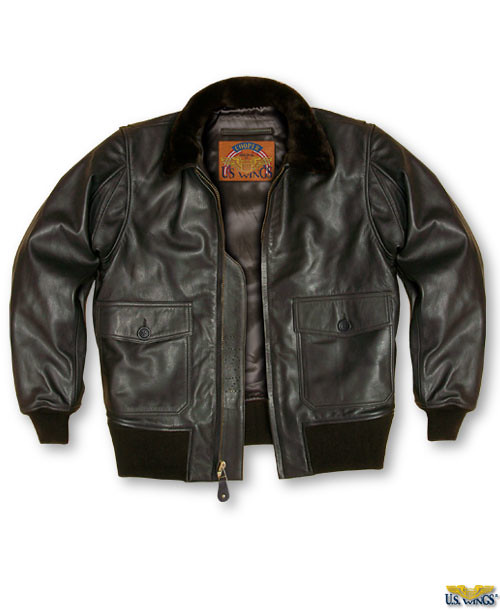
Function versus form has always been a big thing of mine. I like the G1 pilot jacket design and have worn one for over a decade. I love Carhartt workwear and technical clothing from Nike ACG, Arc’teryx and The North Face – particularly vintage TNF. I love alpine approach boots and have sets by Zamberlan and Dolomite.
USWings.com
The last thing I bought and loved?
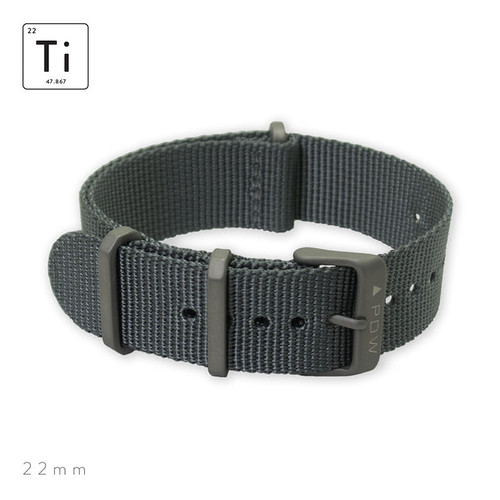
Prometheus Design Were Ti-Ring Strap – its a NATO style watch strap with titanium fittings. I had a watch which I loved but the strap was driving me mad and this cured my constant annoyance with it. They just work and their really well made
Prometheus Design Werx
No party is complete without?
The right mix of people. The kind of people you can chat about the most drivel or profound thing ever (not mutually exclusive categories) until way past sunrise.
The best souvenir I’ve brought home?
Beyond the memories and experiences? Probably not a lot in recent years. I guess I would have to go back to my childhood. As a child I used to go into Salmons a shop in the local market town near the family farm where I spent a good deal of my childhood. It was staffed by Tony Salmon who had opened it in 1968. At the time it was predominantly sold knick-knacks, souvenirs and stationery products for school children. I bought some absolute dross in there and brought it back to England with me. One thing caught my imagination though. A book published by the Irish Government Department of Foreign Affairs called Facts About Ireland. It had the Tara brooch on the front cover and reading it gave me a better sense of myself and culture. It served as a primer for me then to go on and read Robert Kee’s Ireland A History.
It’s a current affairs oriented book called The Dragons and The Snakes by David Kilcullen. You can read moe of my thoughts on it here. The damage that the Russian war in Ukraine has called to Russian armed forces mean that in the medium term, things are likely to slightly less dystopian than Kilcullen would have thought.
Very little to be honest with you, but my freezer is stuffed.
The thing I couldn’t do without
I find myself increasingly reliant on my Mac. It helps me create things like this blog. It’s what I work from and it even keeps me in touch with friends around the world.
An indulgence I would never forgo?
Style icon?
Probably Shawn Stüssy, Nigo, Minoru Onozato and his book My Rugged 211, James Lavelle or Hiroshi Fujiwara.
Recent discovery?
Perun who is providing some thoughtful analysis on the current war in Ukraine.
Object I would never part with?
At the moment it would likely be my work glasses that cut down a lot of glare from using a computer on constant video calls.
Colonia by Acqua di Parma in the summer, Eau Sauvage by Dior Perfums the rest of the year.
Favourite apps?
Newsblur
FT
Yahoo Finance
Apple’s Podcasts app
Apple’s Mail app
Apple Books
Work of art that changed everything for me?
Probably JM Silk’s Music Is The Key – which was the first house music record that I owned.
Best advice I ever received?
It would be two pieces of advice I got at the oil refinery I worked in briefly before college:
Life occasionally kicks you in the balls to let you know you’re still alive
From a lab tech called Tony when redundancies came down the pipe. A short but excellent summary of stoicism
Work the problem. If you can’t deal with it as is, chunk it down until you have things you can deal with
From the head engineer at the refinery Les, who was a no nonsense kind of guy.
Source of inspiration?
Reading. Blogs and books play a big part in this. I am also inspired by everyday life and consumer behaviour in East Asia; Hong Kong and Japan. Numerous people have inspired me though my career and still do. Finally my parents who have been long tolerant of the different directions I have taken over the years.
Party playlist?
It depends on the party, but I would trusty standbys would be my record collection from the late lamented Chicago label Guidance Records, New York’s Shelter Records, Irma Records, Yoruba Records, modern labels Razor n’ Tape, Sound signature, Sacred Rhythm Music, pretty much most things remixed by The Reflex, Dimitri from Paris, Danny Krivit or Joe Claussell.
Acronym Designer Errolson Hugh Sees the Future | GQ – “People often use the word ‘dystopia’ or the phrase ‘cyberpunk’ in relation to us,” Errolson says. “But really, our whole thing is, Acronym is really about agency. It’s about enabling somebody to do something they couldn’t otherwise. It’s inherently optimistic.” – Errolson Hugh and the design team at Acronym cross a number of different areas or disciplines. You could look backwards and see Hugh and Co. as materials innovators with martial influences walking in the footsteps of Massimo Osti who founded C.P. Company and Stone Island.
Errolson Hugh via Bicycle magazine Japan
There is also a clear connective thread in terms of style between Errolson Hugh’s Acronym, Yoon Ahn & Verbal (Ryu Yeong-gi) of Ambush and also Paul Nicholson of Number 3.
How will the world pay to support its aging population? – economic growth will falter, since working-age populations will shrink. In the US, real potential GDP growth is projected to drop from 2.4% currently to 1.5% in 2043. Some of this can be offset. “If inflation starts eating into savings, people will want to come back to work,” Pradhan said—something that’s happening even now in the US. Any official move to raise the retirement age will not go down well with people who have been used to thinking of stopping work at 60 or thereabouts, Pradhan said. “Even in Russia, at a time when Vladimir Putin had a lot of popularity, he found it hard to push the retirement age up,” he said. But even if, de facto, people retire later, Pradhan is unsure of “how much this can be juiced. Already, by reducing pension benefits, we’ve made people aware of this.” In the EU, for instance, the labor force participation rate for people between the ages of 55-64 rose from around 43% in 2005 to around 64% in 2019. “I’m not sure how much higher we can drag that,” Pradhan said. – in some economies this can blunted through women’s increased participation in the workplace.
Criminal records checks of lion dance performers necessary, Hong Kong security chief says – Hong Kong Free Press HKFP – “Given the unique nature of lion dance activities and attendant martial arts displays, it is necessary for the Government to ensure that public order is not disturbed and that public safety is not affected when such sport activities are conducted in public places,” he said. As of last month, the Hong Kong Chinese Martial Arts Dragon and Lion Dance Association had around 190 organisation members. In the year of 2018-2019, the association organised five dragon and lion dance competitions with funding from the Leisure and Cultural Services Department. The competition saw more than 200 participating teams and more than 2,100 participants in total. – National security implications given the lion dance’s close association with kung fu practitioners? There is also the subversive history of the lion dance.
Lion dancing gained its greatest fame during the Ching Dynasty. The Manchu reign at that time was an oppressive, inhumane government. Thousands of Chinese were massacres without any known cause until, it is said, “their blood literally reddened the rivers.” Ming loyalists attempting to foment rebellion against the Manchu warlords, expressed their hatred by inventing the green-faced lion. With brows made of twin steel swords, each measuring 1 foot 6 inches in length, the green lion represented the Manchu Government during the Ching Dynasty. Fighting the lion meant combating the Manchus.
Since lion dancing was performed in villages all over the country for the purpose of celebrations, the rebels would use the opportunity to exchange information and to collect money for the revolution. As part of the dance, the lion would eat lettuce — which is where the money would be hidden. The lead dancer would cry, “Choi ching!” (“get the Ching!”) to signal that he was a fellow revolutionary and, therefore, it was safe to pass information to him. However, informers soon figured out the battlecry. So, since chiang (meaning “green”) sounds very much like ching, the revolutionary passcode was changed to “Choi chiang!” (“get the green”). To this day, this revolutionary cry is used when the lion “eats” the symbolic lettuce and good luck money.
I worked peripherally on And1 early on in my career, but it didn’t catch fire in Europe than it did in the US. I hadn’t known the full extent of the buzz marketing campaign that backed up the brand in the US. Here’s the early versions of their ‘mix tapes’, which did for street football what skate videos did for skateboarding in the 1980s. They blew up street basketball in the US, in a similar way to the X Games blowing up extreme sports. ESPN got on board with a sports related reality TV show with players competing for an And1 team contract.
But all the buzz marketing didn’t get the cut through that Wieden + Kennedy’s Freestyle TV advert did, effectively depositioning And1 from its street ball territory. Then there was a tie-up show on MTV2 that was similar to the And1 | ESPN show of the previous year. The lesson I took away from And1 was that product and reach both matter. Nike could buy reach and And1 didn’t have any product of note after the Tai Chi.
Opinion: Intel’s ‘smart capital’ is a warning from the past | eeNews Europe – the author considers the rise of private equity to fund new silicon fabs as a warning of peak semiconductors. Similar things happened in the 1980s and 1990s when large businesses like Coca-Cola helped fund manufacturing facilities. The key difference this time is how globalisation has been thrown into reverse by ‘Made in China 2025’ and hostile moves against Taiwan
Loss of Chinese tourists forces Europe’s luxury retailers to rethink | Financial Times – A recent surge in Middle Eastern tourists, as well as US visitors buoyed by the strong dollar, has helped fill stores. Eduardo Santander, CEO of the European Travel Commission, said the lack of Chinese tourists left the many luxury retailers that relied heavily on them with “a huge feeling of loss”, but had spurred “a huge effort to diversify”. Retailers have personalised their services. During Europe’s Covid lockdowns, shop assistants contacted customers via WhatsApp with tailor-made recommendations. Berg sees a “possible return to the old idea of service and store management from the 1990s, the little black book with all the customers’ addresses and preferences in it”. “You have to do much more to attract local customers,” Berg said. “They can come back, they have more time to spend, versus an international customer that was determined and straightforward.” – A few thoughts on this: The article asserts that Chinese tourists are straightforward and not picky. I think Chinese tourists are very picky by comparison, although the diagou’s supplying lower tier cities or buying to order might appear to be ‘luxury hoovers’. Secondly, luxury brands have treated non-Chinese customers abysmally (in particular the watch makers like Rolex and their retail partners like the Watches of Switzerland group) and they deserve all the problems that they get. Only focusing on the Chinese market has allowed the Chinese customers to blow up the secondary market. A straw poll of people that I know who have a Rolex from the past 10 years or so:
All of them had to buy their watch on the secondary market
About 80 percent of them had original warranty cards with Chinese family names, which is far higher than the 30 to 40 percent share that Chinese consumers make of the global luxury market
Finally, I don’t see the market coming back in the same way given Xi Jingping’s focus on common prosperity which will make luxury consumption increasingly problematic.
This New Study Reveals How Brand Loyalty is On the Decline / Digital Information World – I see this as more indicative of economic recession rather than any major change. Gallup showed that traits such as preference for green products decline in a recessionary environment, it would make sense if brand loyalty took a similar battering in favour of private label brands and substitute products
NASA’s administrator says cost-plus is a “plague,” just as DoD is giving up on fixed-price development | Acquisition Talk – this reminds me so much of the UK’s ministry of defence. My Dad moved over to the UK to work on the Resolution class of submarines that were designed to carry the Polaris nuclear missile. At the time the Royal Navy paid for these submarines on a cost plus basis which meant that the shipyard advertised for tradesmen in newspapers in Ireland and across the Commonwealth. A lot of people spent a lot of time drinking tea and claiming overtime. One can understand why cost plus could be seen as a plague.
However bad cost plus is, fixed cost doesn’t seem to work either with failed projects and strong disincentives to try innovative solutions. Where NASA is at the moment I can understand why fixed price makes more sense than cost plus. But high innovation programmes like Ares or the Apollo programme would do better under cost plus. One of the current best arguments for cost plus is the likelihood that the Ajax armoured vehicle will never be issued. It is a ‘firm priced’ meaning fixed price contract. Crossrail looks more like a cost plus project, it was a mess, it cost way too much, but it runs. I wonder if the UK ministry of defence will ever consider cost plus again?
Opinion | Boris Johnson Is in Trouble, and So Is Britain’s Conservative Party – The New York Times – First through austerity, then through Brexit and Mr. Johnson, the Conservatives have left Britain in the ruins of their ambition. Each one of their proposed solutions, offered in the name of national renewal, has made the situation worse. No one in the party can escape blame for this baleful legacy. One of the pretenders to Mr. Johnson’s throne — Rishi Sunak, Liz Truss or Jeremy Hunt — may offer a change in style. But a substantial change of course is unlikely to come. An economy predicated on low productivity and low investment, buttressed by a self-defeating lack of seriousness about Britain’s condition, is all the Conservatives seem to be able to offer.– Worthwhile reading in association with this: Grim times lie ahead for UK as inflation combines with low growth | Financial Times
Russian emails appear to show ‘network’ holding $4.5bn assets linked to Putin | Russia | The Guardian – An anti-corruption expert in Russia, who requested anonymity given the political situation in Moscow, said the findings raised questions as to whether there was a level of “common management”. “LLCInvest looks most of all like a cooperative, or an association, in which its members can exchange benefits and property,” they suggested. For nearly two decades, Putin has been accused of secretly accumulating vast wealth through proxies, fuelled by a series of disclosures in leaks such as the Pandora papers about the fortunes of those closest to him. Sergey Kolesnikov, a businessman, claimed 10 years ago that he had been behind a scheme that allowed a group of Russia’s top oligarchs to pool billions of rubles into a type of “investment fund” for the benefit of Putin, who was then serving as prime minister. The claims were denied and Kolesnikov fled from Russia. – Interesting how this has been set up
It’s time for data-first diversity, equity, and inclusion | Fortune – In 2010, using nationally representative data on thousands of individuals in their 40s, I estimated that Black men earn 39.4% less than white men and Black women earn 13.1% less than white women. Yet, accounting for one variable–educational achievement in their teenage years––reduced that difference to 10.9% (a 72% reduction) for men and revealed that Black women earn 12.7 percent more than white women, on average. Derek Neal, an economist at the University of Chicago, and William Johnson were among the first to make this point in 1996: “While our results do provide some evidence for current labor market discrimination, skills gaps play such a large role that we believe future research should focus on the obstacles Black children face in acquiring productive skill.”
Incoming Hong Kong leader John Lee unveils team, while Beijing lays out key expectations | South China Morning Post – John Lee pledges to win people’s trust and make policies that meet demands as State Council approves his governing team. Hong Kong and Macau Affairs Office lays out five expectations for incoming administration, including tackling housing and addressing wealth gap – this explains the big gaps in Lee’s previous policy document. What’s less apparent is how Lee will deliver on these intractable challenges when every previous chief executive haven’t managed to address them
Edelman Launches Global Gen Z Lab | Edelman – Today, Edelman announces the formation of The Gen Z Lab, a global offering comprising 100 Gen Z employees, a roster of internal and external on-call advisors, and data hub dedicated to generational insights. Under the watch of Edelman’s Global Chief Brand Officer, Jackie Cooper, the Gen Z Lab will lend expertise, perspective and counsel clients looking to effectively engage the Gen Z consumer. In a breakthrough move, Edelman is also appointing the world’s first ZEO as a cultural and creative advisor for the Gen Z Lab. Stepping into this inaugural consultative role from July 1st, will be gender fluid fashion designer, Harris Reed. He will be supported by Amanda Edelman as Gen Z COO. The Gen Z Lab will harness their generation’s perspective and ambitions to solve issues such as race and diversity, sustainability, and climate change, and align with brand interests to become catalysts for change. – I’d totally trust them managing my brand reputation…………….. NOT!
Meta’s new digital fashion marketplace will sell Prada, Balenciaga and Thom Browne | Vogue Business – Balenciaga CEO Cédric Charbit in a release. “Web3 and Meta are bringing unprecedented opportunities for Balenciaga, our audience and our products, opening up new territories for luxury.” Balenciaga, along with Prada and Thom Browne, is among the first to sign on to sell digital fashion in a new Meta-created avatar store where people can buy clothing for their avatars to wear on Instagram, Facebook and Messenger. Eventually, other designers will be able to independently offer digital clothing for sale in the marketplace. The items for sale in the avatar store will range from $2.99 to $8.99 to start. A Meta spokesperson said that it did “not have details to share” on if or how it would share revenue with designers. Meta CEO Mark Zuckerberg and Instagram VP of fashion partnerships Eva Chen, who announced the updates via Instagram Live on Friday, said these capabilities will be available next week, starting with the US, Canada, Thailand and Mexico. – Worthwhile reading this piece also: Inside The Metaverse Strategies Of L’Oréal And LVMH | The Drum
What Chinese media reveals about Shein’s secretive operations – Rest of World – There are two main kinds of suppliers: “free on board,” those that make simple designs they haven’t devised themselves, and “original design manufacturers,” those that do both. They all feed into Shein’s sprawling manufacturing execution system (MES). The designer-suppliers will find pictures online and send a selection to Shein’s internal buyers for consideration; the buyer and their manager settle on a final pool. Once samples have been received, there might be two, or even three, rounds of changes before manufacturing can commence. (The entire time, everything needs to be recorded in the MES — materials, pricing, even chat logs — something suppliers balk at, because, if the deal falls through, all the information sits in Shein’s records, and there’s nothing to stop them from producing it elsewhere.) – I could see Amazon acting in a similar way
China’s Expanding Surveillance State: Takeaways From a NYT Investigation – The New York Times – DNA, iris scan samples and voice prints are being collected indiscriminately from people with no connection to crime. The police in China are starting to collect voice prints using sound recorders attached to their facial recognition cameras. In the southeast city of Zhongshan, the police wrote in a bidding document that they wanted devices that could record audio from at least a 300-foot radius around cameras. Software would then analyze the voice prints and add them to a database. Police boasted that when combined with facial analysis, they could help pinpoint suspects faster. In the name of tracking criminals — which are often loosely defined by Chinese authorities and can include political dissidents — the Chinese police are purchasing equipment to build large-scale iris-scan and DNA databases. The first regionwide iris database — which has the capacity to hold iris samples of up to 30 million people — was built around 2017 in Xinjiang, home to the Uyghur ethnic minority. Online news reports show that the same contractor later won other government contracts to build large databases across the country. The company did not respond to The Times’s request for comment. The Chinese police are also widely collecting DNA samples from men. Because the Y chromosome is passed down with few mutations, when the police have the y-DNA profile of one man, they also have that of a few generations along the paternal lines in his family. Experts said that while many other countries use this trait to aid criminal investigations, China’s approach stands out with its singular focus on collecting as many samples as possible. – and more here: Police in China Stalk Citizens With Surveillance That Predicts Future Crime