Category: economics | 經濟學 | 경제학 | 経済

Economics or the dismal science was something I felt that I needed to include as it provides the context for business and consumption.

Prior to the 20th century, economics was the pursuit of gentleman scholars. The foundation of it is considered to be Adam Smith when he published is work An Inquiry into the Nature and Causes of the Wealth of Nations. Smith outlined one of the core tenets of classical economics: each individual is driven by self-interest and can exert only a negligible influence on prices. And it was the start of assumptions that economists model around that don’t mirror real life all the time.

What really is a rational decision maker? Do consumers always make rational decisions? Do they make decisions that maximise their economic benefit?

The problem is that they might do actions that are rational to them:

  • Reducing choice when they are overwhelmed
  • Looking for a little luxury to comfort them over time. Which was the sales of Cadbury chocolate and Revlon lipstick were known to rise in a recession
  • Luxury goods in general make little sense from a ration decision point of view until you realise the value of what they signal
  • Having a smartphone yet buying watches. Japanese consumers were known to still buy watches to show that they care about the time to employers when they could easily check their smartphone screen

All of which makes the subject area of high interest to me as a marketer. It also explains the amount of focus now being done by economists on the behavioural aspect of things.

  • Zara model controversy & things I made last week

    Chinese netizens on Zara model controversy. I love Asian Boss’ qualitative interviews. The Zara model controversy happened only because its in China. Chinese netizens over react to anything they perceive as a slight. Fashion isn’t about ‘beauty’, but that subtlety sailed past Chinese netizens. Freckles indicate age and peasantry in Chinese culture. Beauty is porcelain flawless skin.

    Anand Giridharadas on the modern gilded age and how we should be skeptical of plutocrat philanthropy.

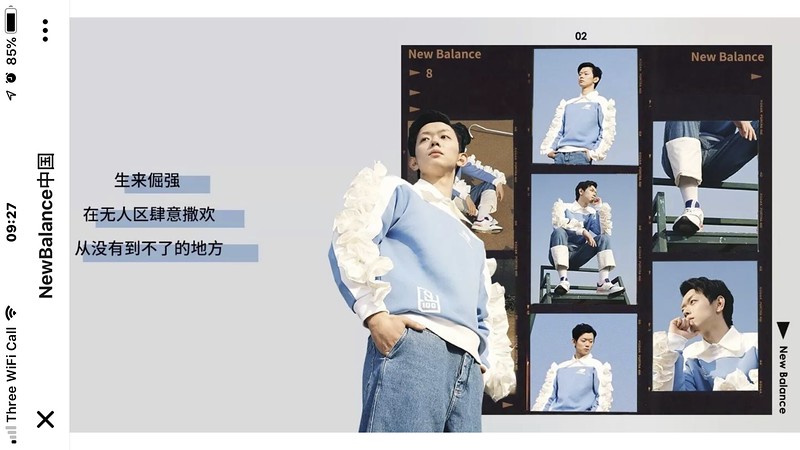
    New Balance China tends to march to the beat of its own drum. But even I was surprised by these sweatshirts with new romantic type detailing. China is unique in terms of its faux Korean aesthetic. I just don’t get the sportswear versus flamenco dancer look, I am just speechless at it.

    New Balance does New Romantic

    Samsung’s facial recognition is surprisingly easy to defeat. This is particularly bad for Samsung. Samsung’s other biometric authentication finger print ID isn’t as good as Apple’s. Samsung isn’t even as good legacy finger print scanners found on the back of Android handsets. Users have no reasonably secure option beyond PINs. I knew of siblings (not twins): a sister unlocking her younger brother’s phone at a glance.

    The moral of this story is that physical security of your phone is required to prevent unauthorised access to your device. Regardless of whether its made by Samsung or any other vendor.

    Goldman Sachs have a great (if terrifying) video on the use of biometrics in public places like airports and stadiums. This is really disturbing, nay, dystopian viewing if you care about your privacy at all. The human factors issue of the laptop loss at Clear affected the brand reputation. What’s impressive is the fact that the Clear brand survived disaster. It is rare for lightning to strike twice, even more so in technology.

  • Stone Island morphing print + more

    Stone Island morphing, evolving print for its new collection | Dazed – why Stone Island isn’t cited more often as innovators is beyond me. It’s more than a football casual brand. Stone Island morphing print is an extension of the approach that the brand has taken in materials development. It changes technical and aesthetic properties, with one eye on tactical garment detailing.

    Elizabeth Warren plan to break up Amazon, Facebook, Google, big tech – Business Insider – this could get interesting. While Elizabeth Warren won’t be president, her views will help shape Democratic party policy. Big tech’s historically cozy relationship with the Democrats will come under pressure.

    How Makimoto’s Wave Explains the Tsunami of Specialized AI Processors Headed for Market – ExtremeTech – great read and analysis on the current trend of specialised processors for machine learning and crypto currency applications. More on Makimoto’s wave here.

    WHY COMPETITION IN THE POLITICS INDUSTRY IS FAILING AMERICA A strategy for reinvigorating our democracy Katherine M. Gehl and Michael E. Porter | Harvard Business Review – it seemed pertinent to read just as the UK spins out of control on Brexit. I can’t work out if it is consumer behaviour or related to the electoral system. In both the UK and US; they have first past the post systems rather than proportional representation. Proportional representation is more popular in many European countries including Ireland and Germany.

    Huawei seen as better value for money than Apple and Samsung by Brits | YouGov – interesting trade off between low trust but good value

    Eight in 10 Britons rely on cash for everyday payments, report finds | Money | The Guardian – there seems to be a discrepancy between cash infrastructure usage and apparent cash usage? I suspect that card usage must be focused in the large cities and cash usage more popular in smaller towns.

  • Shut down digital marketing + more

    Mark Ritson: It’s time to shut down digital marketing teams for good | Marketing Week – return to media neutral and evidence based marketing? It also reminded me of a debate that I had back in 2008 with James Warren about when were we likely to see the end of the digital strategist. It hasn’t happened yet, because there are plenty of businesses selling ‘digital transformation’. Basically the old enterprise IT sales process in a new design thinking bottle. I suspect that the time to shut down digital marketing teams might be a while away yet, though I agree with Ritson’s sentiment.

    Carmakers quitting Britain won’t blame Brexit – it’s not in their interest | The Guardian – classic reputation management; I don’t blame the Japanese for taking this approach. I imagine that Mini, Bentley and Rolls Royce might take this approach too, if the brands survive electrification. Aston Martin and Jaguar Land Rover may go further showcasing India or China as a premium vehicle powerhouse.

    Europe lagging on 5G? Don’t be so sure, says Ericsson | total telecom – Ericsson believe that the move to speed up 5G rollout in Europe will come from Industrial, rather than consumer focused use cases. European government’s and operators are looking to fast track their 5G rollout programmes, dispelling the myth that Europe will be ‘late to the 5G party’, according to an industry expert

    WSJ City | Key investors unhappy with SoftBank Tech-Investment Fund – not terribly surprised

    Gender and box office performance: Applied Economics Letters: Vol 26, No 9having a male star in a film generated a premium in the neighbourhood of 12%, while female star had no statistical impact on a movie’s performance – is this down to the way that they are marketed or the way that male stars are perceived versus female stars? I also tend to follow directors because of the sense of style that they bring to a story. Their name is a mark of quality

  • AngloArabia by David Wearing

    I got sent a copy of AngloArabia and was interested in having a read of it. I grew up at a time when the Gulf states influence grew through OPEC. I started my work life with a brief time in the oil and gas industry. Since then I have moved on through a number of iterations in my career.

    Currently reading

    The Gulf states sit in a peculiar AngloArabia part of British history that isn’t generally understood. Wearing goes through the history of the the area from the Trucial states attached to the British rule of India. And brings up to date regarding the UK’s role in the modern Middle East.

    The modern relationship between the Gulf states and the United Kingdom blurs the hierarchy between client states and their former colonial master. Oil and the OPEC oil crisis was the catalyst as countries got increased financial power and the UK became the number one Euro Dollar market.

    Lots of western countries have seen sovereign funds invest with a view to gaining influence. The UK is unique in terms of the role played by Gulf States who are bailing the country out. Without the support of Middle East money, the country would be overwhelmed by its current account deficit. This money has gone into property, the UK stock market, private equity investments and trophy businesses such as football clubs. The Gulf states are also responsible for a huge amount of consumption in the UK. The UK luxury market revolves around their consumption patterns.

    The implication is that the British economy and the UK government literally can’t afford for any of the Middle East monarchies to fall in an Arab Spring style revolution.

    The author David Wearing is a left of centre leaning journalist with wonkish credentials. As with any author, you need to ask yourself about his agenda. He has managed to write a relatively accessible book. More related content here.

  • Apple and Jaguar Land Rover in China

    Apple and Jaguar Land Rover blamed the Chinese economy for their recent financial results. The truth is probably more complex. What factors are affecting affecting Apple and Jaguar Land Rover that aren’t directly related to the Chinese economy?

    The reality is that Apple and Jaguar Land Rover are being buffeted by very different forces, some of which are their own making.

    Apple

    China is a unique mobile environment and in some ways it mirrors the hopes (and fears) for the internet in the late 1990s. Oracle and Sun Microsystems spent a lot of time during the dot com boom developing technologies that would allow applications to run on the web. Enterprise software sudden had a user experience that could be accessed via a web browser. Java allowed applications to be downloaded and run as needed. Netscape had a vision of the internet replicating the operating system as a layer that would run applications. Microsoft also realised this which was why they developed Internet Explorer, integrated it into Windows and killed off Netscape. The Judge Jackson trial happened and that was the start of the modern tech sector allowing Google and Apple to rise.

    Move forwards two decades and most computing is now done on mobile devices. In China, WeChat have managed to achieve what Netscape envisioned. Their app as a gateway to as many services as a consumer would need including a plethora of mini applications. It doesn’t suffer the problems that native web apps have had in terms of sluggish user experiences. In addition, WeChat has invested in a range of high-performing start-ups to built a keiretsu of businesses from cab services, e-commerce, property companies and even robotics. In the meanwhile Tencent who own WeChat have a range of consumer and business services as well.

    What this means for Apple is that many of its advantages in other markets are negated in China. The OS or even performance of a smartphone doesn’t matter that much, so long as it can run WeChat and a couple of other apps. The look and feel of the app is pretty much the same regardless of the phone OS. Continuity: where the iPhone and a Mac hand-off seamlessly to each other doesn’t matter that much if many consumers use their smartphone for all their personal computing needs.

    This has been the case for a few years now in China – but Apple haven’t found a way around it.

    As for phone industrial design – Apple lifted the game in manufacturing capability by introducing new machines and new ideas. To make the iPhone 5, Apple helped its suppliers buy thousands of CNC machines. This grew the manufacturers capability to supply and the amount of pre-owned machines that eventually came on the marketplace. It meant that other manufacturers have managed to make much better phone designs much faster.

    That meant Chinese consumers can buy phones that are indistinguishable from an iPhone if you ignore the logo and function the same because of China’s app eco-system. Again this has been the same for a few years and has accelerated due to the nature of the dominant smartphone form factor. The second iteration of the iPhone X form factor is what really changed things. The phones were different to what has come before, but they weren’t demonstrably better. They were also more expensive.

    In the mean time Huawei and others have continued to make progress, particularly in product design and camera technology – the two areas where Apple led year-on-year. Huawei devices can be expensive for what they are, but they gave domestic manufacturers ‘brand permission’ in the eyes of many Chinese consumers to be as good as the foreigners.

    This wasn’t helped by Samsung’s missteps in the Chinese market that started with the global recall of the Samsung Galaxy Note7 battery recall. Samsung hasn’t managed to make that gap back up and seems to make marketing missteps regularly such as its recent tie-in with the ‘fake’ Supreme brand holder China. If you’re a Chinese consumer the additional value or status that you used to see in foreign handset brands is now diminished. This seems to be a wider theme as domestic brands are also making similar gains in market share compared to foreign FMCG brands. Although there are also exceptions like baby formula.

    Domestic brands have done a good job marketing themselves. BBK in particular are very interesting. Whilst Huawei makes lots of noise and bluster at how big they are, BBK creeps up. It has a number of brands in China and abroad OnePlus, Oppo, Vivo and RealMe going after particular segments. The brands are focused but run separately like companies in their own right. Apple’s marketing riffs on its global marketing (though it did a great Chinese New Year themed ad last year). This reinforces the perceived common view that foreign businesses are full of hubris and don’t sufficiently localise for China. Apple’s recent pricing strategy in a market where this is so little to show in value provided looks like the epitome of hubris.

    180120 - China smartphone market

    Finally, there has been a massive amount of consolidation of brands in the China smartphone market over the past four years. That provides for scale in terms of logistics, supply chain, design, component sourcing and marketing.

    Jaguar Land Rover

    If we move to the automotive sector and look at Jaguar Land Rover – their problems in China look self inflicted. China’s car market has declined for the first time in 20 years. But it seems to have mostly affected brands like Hyundai rather than prestige brands like Mercedes Benz or BMW. The reasons why aren’t immediately apparent. Yes diesel cars are less popular, but BMW, Audi and Mercedes make diesel cars.

    Jaguar Land Rover aren’t the only foreign brand suffering: Toyota has had problems in China since the last round of strong anti-Japanese sentiment exploded in 2012.

    More information

    Why Does WeChat Block Competitors, While Facebook Doesn’t? | Walk The Chat

    Apple’s China Problem | Stratechery

    Samsung recalls Galaxy Note 7 worldwide due to exploding battery fears | The Verge

    Samsung angers hypebeasts by partnering with fake Supreme brand in China | The Verge

    Fake News: Samsung China’s Deal With Supreme “Knock-off” Spurs Drama | Jing Daily

    Chinese car sales fall for first time in more than 20 years | World news | The Guardian