Finance is a really odd section for me to have. I don’t come from a finance background, I have no interest in fin-tech. Yet it makes its appearance here on this blog.
When thinking about this category, I decided to reflect on why its here. It’s usually where curated content sits, rather than my own ideas.
The reality of life in the west is that everything has become financialised. As I write this as people think about web 3.0, they are thinking about payment systems first and working about utility later. This implies that the open web we know won’t be part of the metaverse in terms of ideas or ethos.
Instead of economic growth consumer spending depends on different ways of creating credit. Its no accident that delayed payments finance company Klarna is the biggest thing in European e-commerce at the time of writing this page.
Back when I started writing we were heading into the financial crisis of 2008, the knock on effects of that could still be felt a dozen years later and was a contributing factor to Brexit and Trump victories. The ‘occupy’ movement was catalysed by the financial crisis and then turned into something else. For instance it became a pro-democracy movement in Hong Kong.
We had the implosion of financial brands like Lehman Brothers and the Royal Bank of Scotland. This created a lack of trust in business, the media and the government. We are still seeing that play out today, from cryptocurrency to conspiracy theories and a lack of trust by the public in experts.
When Nokia Pulled Out of Russia, a Vast Surveillance System Remained – The New York Times – Nokia said this month that it would stop its sales in Russia and denounced the invasion of Ukraine. But the Finnish company didn’t mention what it was leaving behind: equipment and software connecting the government’s most powerful tool for digital surveillance to the nation’s largest telecommunications network. The tool was used to track supporters of the Russian opposition leader Aleksei A. Navalny. Investigators said it had intercepted the phone calls of a Kremlin foe who was later assassinated. Called the System for Operative Investigative Activities, or SORM, it is also most likely being employed at this moment as President Vladimir V. Putin culls and silences antiwar voices inside Russia. For more than five years, Nokia provided equipment and services to link SORM to Russia’s largest telecom service provider, MTS, according to company documents obtained by The New York Times. While Nokia does not make the tech that intercepts communications, the documents lay out how it worked with state-linked Russian companies to plan, streamline and troubleshoot the SORM system’s connection to the MTS network. Russia’s main intelligence service, the F.S.B., uses SORM to listen in on phone conversations, intercept emails and text messages, and track other internet communications. The documents, spanning 2008 to 2017, show in previously unreported detail that Nokia knew it was enabling a Russian surveillance system. The work was essential for Nokia to do business in Russia, where it had become a top supplier of equipment and services to various telecommunications customers to help their networks function. The business yielded hundreds of millions of dollars in annual revenue, even as Mr. Putin became more belligerent abroad and more controlling at home. – SORM has been around in one form or another for almost three decades. It mirrors the surveillance system used by Sweden and GCHQ in the UK. The latest version of SORM is SORM-3 that uses deep packet inspection infrastructure. SORM seems to be based on a mix of Russian made infrastructure and equipment by the likes of Israeli vendor Cellebrite.
Trial of Australian Journalist in China on States-Secrets Charges Ends Without Verdict – WSJ – Cheng Lei’s detention in August 2020 coincided with a sharp downturn in diplomatic relations between Beijing and Canberra – this is likely to be better for Australia’s incumbent prime minister Scott Morrison as is shows progressive realism doesn’t work. That’s not so good for Chinese interests in Australia
Not an April Fool: Dyson announces apocalyptic filter-headphone combo | Ars Technica – if you told me that this was bought in the SEG Plaza in Shenzhen and was a fake Dyson product I would believe you. I don’t know why Dyson went there. Usually its product development is well-gated which is why its electric Range Rover analogue got shelved prior to going into production
Taiwan’s love motels are safe spaces for couples — Quartz India – Marco Hsiao, a private investigator, has frequented hundreds of love motels in an attempt to provide evidence of adultery for divorce cases—80% of his cases pertain to cheating spouses. He said the rooms are also used for drug deals, interviewing new workers entering the sex industry, and money-laundering meetings.
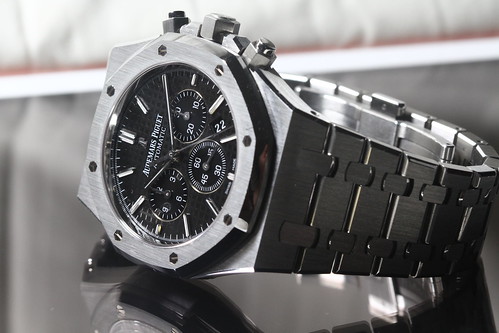
Russia Seized Millions of Dollars of Swiss Luxury Watches in Moscow – Russian customs service agents took millions of dollars of Audemars Piguet watches. Audemars Piguet had closed its boutique in Moscow. The Russians allege that Audemars Piguet was in breach of customs regulations. The reality is that its retaliation for Switzerland joining other countries in levying sanctions on Russia. In this respect its similar to the state-sanctioned theft of aircraft from Irish aircraft leasing companies. There are a few problems with these Audemars Piguet watches. The Russian market for Swiss watches in 2021, accounting for 260m Swiss francs (£212m) of shipments, according to the Federation of the Swiss Watch Industry; which puts the country in the top 20 acquirers of Swiss watches.
Audemars Piguet Offshore models are long sought after by watch collectors. The problem that Russia will have with the watches is the inability of them to be serviced. The company will have a record of the serial numbers involved and won’t service them when they come up for maintenance in a few years time. AP watches have a reputation for being great watches, but aren’t robust like say a Rolex in terms of their need to be serviced.
Russia seems to be pretty determined to have western sanctions on the country for a long time to come yet.
Geely questions future in Russia despite opening for China’s carmakers | Financial Times – Tu Le, managing director of Sino Auto Insights, noted that the Chinese carmakers are relatively inexperienced when it comes to maintaining a brand’s reputation in western markets. “They’ve never had to deal with these kinds of external pressures in how they were perceived by foreign consumers,” he said. “A lot of these companies, they’re going to have to do business in Europe, or they’re going to have to do business in the United States. If they seem too eager to fill that void [in Russia], I will bet you money it is going to have some backlash in those regions.”
Judy Asks: Are Europeans Ready to Pay the Price for Ukraine’s Sovereignty? – Carnegie Europe – Carnegie Endowment for International Peace – The grim truth is that many in the West would be ready to accept compromises over Ukraine’s sovereignty in order to stop the war. In countries neighboring Russia, there is a strong understanding that such compromises would seriously weaken our security, hence they are ready to pay a high price to avoid them. However, among Western experts and policymakers, assessments of the balance between different interests seem to vary. The thinking that some degree of accommodation of Russia’s interests might be needed to reach stability has not disappeared. This is a dangerous and misguided logic
Lanvin Group plans New York IPO in SPAC deal | Vogue Business – Lanvin Group, the fashion arm of Chinese conglomerate Fosun International which includes the French heritage label Lanvin, plans to list in New York in a SPAC deal, the second high-profile fashion firm to make the move since Ermenegildo Zegna late last year. Lanvin Group announced Tuesday it is combining with special-purpose acquisition company Primavera Capital Acquisition Corporation in a deal that values the group at $1.5 billion, according to an emailed statement. Lanvin Group expects to raise up to $544 million from the deal and from existing investors, and will use the funds to expand its portfolio, including future luxury acquisitions
A Chinese Nickel Market Mystery – WSJ – Market ructions amid war aren’t unusual. But the London Metal Exchange’s retroactive cancellation of nickel trades this month appears to be unprecedented. One question is whether the Hong Kong-owned exchange intervened to rescue a Chinese nickel tycoon. – the exchange is owned by the Hong Kong Stock Exchange
LIHKG forum became famous beyond Hong Kong when it was at the centre of the leaderless protest movement during the 2019 Hong Kong protests. Hong Kong’s local internet has a history of Reddit like forums since the late 1990s.
HKGolden
Prior to 2016, there was the HKGolden Forum named after the Golden Computer shopping centre in Sham Shui Po. Golden Computer shopping centre considered one of the cheapest places in Hong Kong to purchase a computer. Products on sale range from complete PC systems, smartphones and peripherals. Unlike purely consumer-oriented IT shopping centres, Golden features several stores specialising in professional grade networking equipment as well.
The HKGolden forum fell out of a site put up in the late 1990s by stall owners at the Golden Computer centre to show people what were the typical prices for computer parts. The HKGolden Forum served as a creator and distributor of memetic ideas in Hong Kong including new slang terms of the local Cantonese vernacular and promoting discussions of societal topics.
LIHKG
LIHKG forum seemed rise in prominence once it was launched in 2016, quickly eclipsing HKGolden. It is restricted to contributors having an email address from a Hong Kong ISP (like Netvigator) or a local higher education institution. The LIHKG forum pig icon became a familiar motif on 2019 Hong Kong protest posters and artwork.
Since the national security law in Hong Kong it has has been a source of some anti-vaccination / public health programme discussions. Today the LIHKG forum app has been taken down from the Android and iOS app store.
Most Hong Kong political discussions have already moved on to various Telegram channels.
China has a fateful choice to make – by Noah Smith – An angry, chauvinistic nationalism has become a deeply rooted force in China’s society. Even as China’s government has wavered on whether to support Putin, there has been a massive outpouring of support for the invasion on Chinese social media. Of course that nationalistic sentiment isn’t unanimous, and it’s hard to tell what percent holds it, but for now they seem to have the upper hand. In fact, at this point it’s not clear that China’s top leadership could stop the nationalist tide even if they wanted to; like the generals of Imperial Japan, they could end up getting pushed into aggressive action by a populace that had no idea of the risks. – interesting that we’re starting to see this kind of rhetoric beyond reactionary elements
Park Island. (For Peter Moss, May 2018) | by Aidyn F | Medium – my friend Aidyn’s poetry. We were introduced by a former colleague of mine from Yahoo! who had worked in Hong Kong as a TV presenter before the handover. Aidyn introduced me to the Foreign Correspondents Club and gave me a different perspective on Hong Kong
Big Tobacco’s future in Russia goes up in smoke | Financial Times – a classic case of consumer globalisation: they made sophisticated products, marketed them expertly and raised quality standards. It would be fine apart from one problem: the product was cigarettes and the World Health Organization estimates that more than 19m Russian smokers will die prematurely. Hence the global pivot that companies have been trying to make towards vaping and heat-treated tobacco devices, including Philip Morris’s IQOS and BAT’s Glo. Russia has been vital to the “smoke-free future” that Philip Morris now promises and one executive last year hailed its “truly very spectacular progress” there. It is not clear how much safer heat-treating tobacco is to produce a nicotine vapour rather than smoking it in cigarettes. One analysis concluded that users of the devices inhale “substantially fewer” toxicants, but the results were mixed and most studies are done by tobacco companies. Nor is the purpose of heat-treated tobacco devices obvious. Philip Morris says that 72 per cent of IQOS users switched entirely from cigarettes in 2020, but it leaves many who carry on using both. There is an echo of the past transition from Belomorkanals to Marlboro Golds: better, but not good
Gadgets
Sound On Sound Issues (Active) – Amazing archive of the early issues from Sound on Sound magazine including amazing Japanese synthesisers like the Roland D-50
MTR sees Covid tester in action | The Standard – LIHKG forum users shared candid photos of Hong Kong people testing themselves for COVID in public including on the MTR and while out having a meal
Why the Chechen Warlord Wears Designer Boots | GQ – As Russia invades Ukraine, murderous Chechen leader and Putin ally Ramzan Kadyrov is using designer pieces to demonstrate his power. I don’t think Prada really wants Ramzan Kadyrov as a brand ambassador
I got a chance to watch the Vintage Tomorrows documentary the other evening. It was interesting that it had a range of practitioners such as William Gibson and Bruce Sterling in it. Cory Doctorow gave some of the explanations of the culture. There were a number of things that Vintage Tomorrows just scratched the surface on:
How can steam punk be decolonised? Steam Punk is based on a new-liberal society that thrived on child exploitation and had colonisation at its centre. Add to that is the fact that steam punk is the very essence of Stuff White People Like.
There is a question about the reductive dismal nature of science fiction, a theme that William Gibson has reflected on at length.
The relationship between our own convergent technology path and gadgets. This also brings in the control that people feel with hardware that they can build. There was aspects around specialisation that wasn’t touched up on, but its into this as well.
I thought that Vintage Tomorrows didn’t reflect more on Victorian originators of science fiction like Jules Verne beyond a name check. I would like to have heard more about William Gibson and Bruce Sterling’s take on things.
I felt that there was a huge opportunity missed in not getting Neal Stephenson on camera to discuss steam punk on Vintage Tomorrows.
With Yoon’s Election, It’s Time for China to Rethink Its Korea Policy – The Diplomat – China remains – at least in the short to medium run – South Korea’s preferred trading partner, with the country being Seoul’s largest export-import partner, over the United States, by a substantial margin. With slowing growth rates, uncertainty over the real estate sector, and declining demographics in China as looming challenges on one hand, and surging inflation and protectionist amplification of domestic industries in the United States, neither China nor the U.S. presents itself as the natural, exclusive economic partner for Seoul in the long run. More promising, perhaps, would be the exploration of expanded options and connections between South Korea and emerging markets such as Vietnam and India, as well as the European Union. Yoon centered his campaign around the allegations that the present regime has been too economically dependent upon China
Xerox PARC spins out predictive maintenance for IIoT – eeNews Europe – The Xerox Palo Alto Research Centre (PARC) has an iconic place in the history of the electronics industry, developing the ideas behind such innovations as the computer mouse, Ethernet and laser printing. But with Xerox waning in influence in the digital age and a focus on software and services, PARC as a subsidiary since 2002 has perhaps struggled in its open innovation role of custom R&D services. One area where it has been innovating is the Industrial Internet of Things (IIoT). It has now launched new venture to commercialize predictive maintenance technology that reduces unplanned downtime in industrial manufacturing operations. – ok this undersells the work that Xerox PARC did in software, operating systems, distributed services, user experience and networking, but the introduction of Navity is very interesting. There are certain limits to this for instance production lines that depend on several machines will still need scheduled maintenance
Sony and Honda reveal plans to jointly make and sell electric vehicles | TechCrunch – this might also explain why Sony’s ‘concept’ car seemed to have a lot of money put into it, to make it look like a finished product a couple of years ago. Sony and Honda’s EV venture is a lesson for corporate Japan | Financial Times – the FT makes a number of good points about the relatively junior role that Honda is taking in the endeavour and that Sony making a decision to go independent indicates that consolidation of vendors in the electrical vehicle space is far off. I expect that the Sony and Honda deal in this respect is partly the pressures driven by the amount of ‘dumb capital’ chasing electric and automotive vehicles.
Sony and Honda likely see their deal as an antidote to that pressure. There were also fair comments made about relative software expertise between Sony and Honda, however I would argue that there is still a need for stable underpinnings of the software from the likes of QNX. But in the critique of the previous motor industry partnerships isn’t fair. For instance, Yamaha has a long history of taking concepts and designs to Toyota for them to build them. The most iconic of which was the Toyota 2000GT. So in many respects Sony and Honda are working on similar heritage to others.
It is interesting that we haven’t seen a similar pairing to Sony and Honda between Samsung and Renault, given their Korean car assembly joint venture. It is also interesting that Apple has failed to secure a similar partnership to Sony and Honda in its car efforts so far.
China’s Two Traps by Keun Lee – Project Syndicate – China’s economic slowdown suggests, the next phase of its development is rife with challenges. The country risks being ensnared by two traps: the “middle-income trap” (the tendency of fast-growing developing economies to lose momentum once they reach middle-income status) and the Thucydides Trap (when tensions between an insecure incumbent hegemon and a rising power lead to conflict)
Why are Chinese students so keen on the UK? – BBC News – The initial attraction of Glasgow – as well as its solid academic reputation – to many was how the Victorian university buildings looked on the brochures, rather like Hogwarts from the Harry Potter films
How China’s Ambitious Belt and Road Plans for East Africa Came Apart – The Diplomat – Chinese actors typically approach BRI deals with two contradictory assumptions: First, the political leadership with whom they are dealing is either too weak or too venal to challenge contract terms that decidedly favor China; and, second, these same leaders will be strong enough to fend off resistance to ambitious infrastructure projects by opposition politicians and civil society groups while also mobilizing the financial resources necessary to sustain expensive, long term projects. – they expect the kind of smooth running process that they would have in China, but not surprisingly don’t get it
Chinese lenders squeeze African borrowers even harder | Financial Times – Chinese lenders are imposing even more stringent collateral requirements on low-income country borrowers than previously known as they seek to hedge risks from their extensive overseas development finance programme. Under a $200mn loan from China Eximbank for the expansion and modernisation of Entebbe airport, the Ugandan government is required to channel all revenue from the country’s only international airport into an escrow account, according to the contract obtained by AidData, a US-based research lab. The document highlights a long-running controversy over the loan to Uganda’s government, which damaged its relationship with the bank. And more here: China cobalt mine deal was ‘injustice’: my country did not get anything, ex-DRC leader says | South China Morning Post
Hong Kong
Chinese fitness app Keep files for Hong Kong IPO · TechNode – interesting that this is going ahead given the kind of data that Keep would have. One only needs to look at the opsec failures that Strava revealed of American forces in the Middle East and Afghanistan
The war in Ukraine is going to change geopolitics profoundly | The Economist – Japan, Singapore, South Korea and Taiwan joined in sanctions against Russia, as did Australia. The change of mood in Japan has been particularly striking. Over the past decades it has tirelessly wooed Russia, in part to counterbalance China but also in the hope of settling the problem of four northern islands seized by the Soviet Union. Abe Shinzo, the former prime minister, met Mr Putin 27 times, including a trip to an onsen bathhouse. Now, under Kishida Fumio, Japan has frozen the share of Russia’s central bank reserves held in the country and is urging fence-sitters to take a clearer stance against its former pal. The end of the cold war was never going to usher in perpetual peace. But the Ukraine crisis is giving new form to the possibilities for future conflict and ways in which it may be averted. It is raising the previously outré possibility of territory being stripped from a developed country by force. By bringing Russia and China closer together, it is putting a new burden on the system of American alliances that partially encircles them. It has started consolidating Europe’s belief in itself and its ideals, and may increase its willingness to fight for them; it may also be seeing Germany and Japan, a lifetime after their defeat in the second world war, taking on new martial roles – the military rise of Japan will be worrying for China
Ukraine conflict risks uncontrollable escalation of cyberwarfare – Nikkei Asia – When and if Russia, or some other advanced-hacking state, pulls these tricks against a better-prepared adversary, resulting in a tit-for-tat escalation that could quickly spin out of control. Given the historical weakness of digital security in much of the U.S.’s civilian infrastructure, notably the electric utilities and grid, we can imagine a situation in which Russia or China, or some other entity causes not just inconvenience but casualties, including deaths. What would the U.S. do then? If Russia took down electricity from Boston to Washington, New York to Chicago, the American people would get very, very angry. What would an American government do next? The U.S. has said, with strategic vagueness, that an attack on critical infrastructure, including digital infrastructure, could ultimately trigger a military response. Then what? In 1962, futurist Herman Kahn published “Thinking the Unthinkable,” pondering nuclear-war scenarios in ways that few of the people who had control over those civilization-killing weapons had ever considered. No one wanted to prevent nuclear war more than Kahn, in part because he understood what it would mean. We do not believe that nearly enough thinking about cyber-unthinkables is taking place today, nor the escalation scenarios that would bring them on.
Chinese telecoms giant Huawei has been helping Putin’s efforts to stabilise Russia’s internet | Daily Mail Online – Huawei, which reportedly has five research centres in Russia, is said to have ‘rushed to Russia’s aid’ to support its internet network in the face of the attacks. A report, which appeared on a Chinese news site but was later deleted, claimed that Huawei would use its research centres to train ‘50,000 technical experts in Russia’. – The Mail on Sunday is now covering the kind of stories that previously only featured on the English language pages of late lamented Apple Daily Online published out of Hong Kong.
Arm China CEO asserts semiconductor joint venture’s right to pursue an IPO independent from its SoftBank-owned British parent | South China Morning Post – “Arm has written to Chinese authorities that Arm China won’t survive without [the British firm’s] support,” Wu said. He indicated, however, that Arm China has already developed the capability to continue its operations separately from Arm in the UK. The stand taken by Wu in Arm China forms part of a larger effort by the country’s semiconductor industry to overcome US trade sanctions and build a world-class chip supply chain. The dispute with Arm has not slowed down its Chinese joint venture’s business under Wu. Last year, Arm China generated US$700 million in total revenue, including intellectual property licensing and royalty fees. Arm’s share in its China venture was about US$500 million last year, according to Wu. “Arm can’t afford to lose its share of revenue from the Chinese market,” Wu said. He indicated that the Chinese joint venture has hit all its goals – including revenue, net profit, and research and development spending – which were set five years ago. Wu said Arm China’s biggest contribution to the Chinese chip design industry was to open the company’s source codes to domestic customers, “giving them freedom to develop their chips and raise their capabilities to a global level”. He also said he was displeased by Arm’s decision in May 2019 to cease business with Huawei Technologies Co, following Washington’s decision to add the Shenzhen-based telecommunications equipment maker to the US trade blacklist. – I suspect Mr Wu is working on behalf of the Chinese government in ‘war by other means’