哈囉 – here you’ll find posts related to Hong Kong. That includes the territory, the culture, business, creativity and history. I lived and travelled to Hong Kong a number of times, so sometimes the content can be quite random.
In addition, I have long loved Cantonese culture and cuisine, so these might make more appearances on this category. I am saddened by the decline in the film and music production sectors.
I tend to avoid discussing local politics, and the external influence of China’s interference in said politics beyond how it relates to business and consumer behaviour in its broadest context.
Often posts that appear in this category will appear in other categories as well. So if Apple Daily launched a new ad format that I thought was particularly notable that might appear in branding as well as Hong Kong.
If there are subjects that you think would fit with this category of the blog, feel free to let me know by leaving a comment in the ‘Get in touch’ section of this blog here.
Hyundai have pushed out a campaign to teach British people how to pronounce the companies name properly. This is a well trodden path for foreign brands like Hyundai. My childhood featured ‘Nestle’s Milky Bars’ as the advertising jingle ignored the é at the end of Nestlé. I can only presume that it would be assumed to be too sophisticated for our palates rather than a playground staple.
More recently, I spent a couple of minutes coaching Arsenal footballing legend Ian Wright on how to say Huawei prior to him shooting some online video content for a smartphone launch. So I can relate to the challenge that Hyundai faces in gaining the correct pronunciation.
Getting the pronunciation right will allow Hyundai to use global English language assets, rather than having to do localisation. A small but important saving as it looks to compete for the UK and Irish electric car markets.
The advertising plays on the common pain-point of Siri and Google Voice failing to pick up on pronunciation in order to use humour to get Hyundai across correctly.
Older women and younger men relationships explored in this documentary. Prior to going to college in the mid-1990s I worked for a company that put coatings on materials to make stickers, stamps and labels. My boss there was a guy called Mark who married the PE teacher from school, once he’d finished his university degree. At that time Mark’s relationship was considered unusual in nature.
Design
Great film compilation of retrofuturist footage
Watching this film on the intersection of military clothing design and fashion reminded me of William Gibson’s Zero History novel.
New China-focused think tank staffed and advised by a number of prominent Hong Kong dissidents: China Strategic Risks Institute
Mainland Chinese visitors start to return to Hong Kong after Covid-19 restrictions lifted, but most tours low-cost and short stay, figures reveal | South China Morning Post – Tourism figures from February to this month show 86 per cent of tour trips from mainland China lasted one to two days and 54 per cent cost less than 500 yuan. Travel Industry Authority confirms it is investigating allegations of cigarette smuggling by mainland Chinese tour groups – it will be only a matter of time before the impact of this behaviour change ripples out to Hong Kong’s retail landlords and the luxury brands who have stores in the city. Hoteliers and the hospitality industry haven’t benefited from opening up the borders
Indonesia
Indonesia is an economic powerhouse in the making, but there are forces ripping away at its society that could leave it as inequitable as its neighbour Malaysia – which has been suffering from a brain drain and political stagnation. Indonesia like Malaysia before it seems to be coming under the sway of Gulf Arab traditions of Islam rather than the indigenous variant of the belief. Singaporean news programme CNA Insider did a good documentary on it all.
Elliott Management wrote this opinion piece on Apple and China: Apple is a Chinese company | Financial Times – interesting assessment of risk exposure with a focus on the Apple share price.
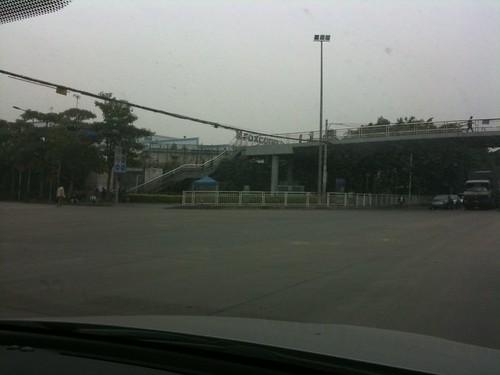
The Apple and China relationship started before China joined the WTO. Taiwanese contract manufacturers had built huge industrial sites in Shenzhen, China and later in other parts of China. The best known of which was the Foxconn plant in Shenzhen. Back in 2010, I was driven around the perimeter of the site, which went on for miles.
The only site that I had seen which would be comparable would be the Mercedes-Benz manufacturing site in Sindelfingen which is part of the Stuttgart metropolitan area. I spent part of my childhood and early adult life living next to a General Motors car plant, a shipyard and a couple of oil refineries, so I am used to scale of industry.
As Apple came back from a near demise in the mid-1990s, it needed manufacturing scale so the combination of Apple and China happened due to that. Over time the Apple and China relationship drove manufacturing expertise and new ways of doing business, such as using CNC machines at scale. Prior to Apple and China, smartphones were plastic mainly due to product engineering influenced by Nokia’s work on its feature phones.
Over time, the Apple and China relationship evolved. Chinese developers make up about half of the programmers making iPad and iPhone applications. Chinese component manufacturers replaced US, Korean, Japanese and European suppliers. Apple and China has become tightly entwined as Chinese manufacturers look to dethrone Apple at the same time.
Apple and China national security focus
China’s state and national security focus has spilled into the economic and social aspects of policy which has a high probability of reaching the Apple and China relationship. Apple already compromises on its privacy tenet in the way it handles China’s data. It actively supported China versus Hong Kong protestors – doing everything it could to disrupt the protestors self-organising tools.
China has shown that its ever expanding security considerations trump business so Apple and China may come to a rapid and disruptive break. Apple is trying to de-risk production outside China but it might be too little, too late. Apple and China are due for a relationship reset.
China’s assessments of Soviet Union’s collapse is very interesting as they offer a playbook of Xi Jinping thought
China’s ‘men in black’ step up scrutiny of foreign corporate sleuths | Financial Times – “It’s hard to attract capital if you can’t get a report from a global due diligence firm,” said one international services executive. That could run counter to the government’s efforts to revive animal spirits in China’s economy, consultants and investors said. “Maybe this is the intention,” said the head of one consultancy in Beijing, “to choke off investment and get the state to step back in, to stop the ability of investors to place bets.”
Xi Jinping Can’t Handle an Aging China | Foreign Affairs – less convinced this assertion is true, when we look at natalistic policies in authoritarian regimes such as what happened in Romania under Nicolae Ceaușescu with Decree 770 which was one of the strictest anti-abortion law at the time, or Nazi Germany’s breeding programmes
US Companies in China Grow More Pessimistic of Ties: AmCham Survey – Bloomberg – Some 87% of respondents to a flash survey taken last week said they were at least slightly pessimistic about US-China ties, according to the survey published Wednesday by the American Chamber of Commerce in China. That was 14 percentage points higher than the chamber’s previous poll. “Bilateral relations between the United States and China have substantially deteriorated,” said Lester Ross, chair of AmCham China’s Policy Committee. “It’s hard to see at this point when they will begin to improve — and this, of course, affects the ability of business to operate across borders.”
China Ratchets Up Pressure on Foreign Companies – WSJ – Business executives who have consulted with Chinese authorities say a central tenet of the effort is the desire to more tightly control the narrative about China’s governance and development, and limit the information collected by foreign companies such as auditors, management consultants and law firms that could influence how the outside world views China… Some foreign business executives say they worry the rewriting of the espionage law means that many topics, ranging from the status of Taiwan to China’s human rights record to technology such as semiconductors, are now becoming off limits in discussions with their Chinese counterparts. The recent trouble for foreign companies in China is drawing criticism in Washington. Rep. Mike Gallagher, a Republican from Wisconsin who chairs a congressional committee on the Chinese Communist Party, said in a statement Thursday, “Our business leaders need to take off their golden blindfolds and recognize that the recent police raids of American companies Bain and Mintz are not one-offs, but part of a long, proud tradition of exploitation.”.. The push is driven by a deepening conviction within China’s leadership that foreign capital, while important to China’s economic rise, isn’t to be fully trusted – if I was a brand planner in China or Hong Kong I would be very wary at the moment as this will spill over into agency life (paywall)
Longitudinal consumer behaviour change around increased empathy in western markets
A lot of this focus on the expertise in the ‘aspiration economy’ sounds like brands back in the early 1990s again. The kind of expertise exemplified by Nick Hornby’s novel High Fidelity or the characters Randall Graves and Dante Hicks in Kevin Smith’s movie Clerks.
The new industrial policy, explained – by Noah Smith – the speed and disruptiveness of China’s entry into the global trading system destroyed the career trajectories of large numbers of American workers and hurt the economies of whole regions. Second, U.S. complacency about the trajectory of Chinese politics, combined with a massive campaign of technological espionage, hastened and encouraged the rise of a new, hostile superpower. By the mid-2010s, only economists thought that free trade was still an unquestioned good, and the country wasn’t listening to economists the way it used to
Too Big to Challenge? | danah boyd | apophenia – the tech industry represents 9% of the U.S. GDP and only five Big Tech companies account for 25% of the S&P 500. Prior to Covid, most of the growth in stock market came from Big Tech. Now, as the U.S. economy is all sorts of wacky, Big Tech is what is keeping the stock market’s chin above water. In the process, Big Tech is accounting for more and more of the stock market – edited for brevity
The gender pay gap is not a myth, it’s math – it’s mostly not a discrimination story, it’s a parenting story. But more flexible employment is likely to be more of a discrimination story
Microsoft-branded mice and keyboards are going away after 40 years – this reminds me of when a new exec joined Bill Gates era Microsoft in the late 1980s/1990s. The company had unintentionally had in warehouses 3 years sales worth of Microsoft mice ready to sell. Their hardware with the exception of an ergonomic keyboard haven’t been great products that were superior to other technology companies
Interesting that even state broadcaster Deutsche Welle is complaining about the poor quality of modern German cars. Back in the early 1970s BMWs had a reputation as being clever fragile rust buckets, but the decline of Mercedes is far more dramatic in terms of quality. The decline seems to be in lock step with the globalisation of these companies and an increased focus on shareholder value.
Compare and contrast with older Mercedes cars across the Middle East and Africa.
Project MUSE – China’s Hong Kong Affairs Bureaucracy: Factional Politics and Policy Consistency – “From the perspective of factional politics, this article sheds light on the functions and operations of the Central Liaison Office and the Hong Kong and Macao Affairs Office (the “two Hong Kong offices”) throughout the history of the Communist Party of China (CPC), focusing on the 2013–22 period. The authors posit that the stronger the factional relationship between the top leader responsible for Hong Kong affairs and the heads of the two Hong Kong offices, the greater the policy consistency between the two offices and the central authorities on Hong Kong issues. This article uses text mining techniques to measure the degree of policy consistency between Chinese President Xi Jinping and the two Hong Kong offices from 2013 to 2022. In 2020, Xi appointed his protégés as directors of the two Hong Kong offices, thus regaining absolute control over Hong Kong affairs. Xi may further tighten his hold on Hong Kong in the future, thereby undermining the region’s autonomous status.” – Interesting aside: The Party and State Institutional Reform Plan (党和国家机构改革方案) unveiled in March established the Hong Kong and Macao Work Office of the Central Committee (中央港澳工作办公室) on the basis of the Hong Kong and Macao Affairs Office of the State Council. The latter has essentially become a Party body instead of a state body, and the arrangement is now “one organisation, two nameplates” (ie., two identities). – expect even further ratcheting of authoritarian measures in all aspects of Hong Kong life and economy
Culture and technology adoption’s effect on Japanese information design online. It reminds me of the early web portal designs were more like print newspapers.
Interesting that the Korean government is allowing these strikes to go ahead given the central role of Samsung in the country.
Luxury
Alibaba, Partners Fight Fraud and Root Out Counterfeits – Over 730,000 IP rights were under Alibaba protection by the end of 2022. 98% of IP takedown requests by rights holders were handled within 24 hours for the third consecutive year – I wonder what Amazon numbers look like for this?
I didn’t realise that Taiwan’s semiconductor expertise went back this far. DigiTimes has unprecedented access to the elder statesmen and experts on the early Taiwanese semiconductor industry
McDonalds CSR activities came up a few times over the past day or so I thought I would visit it. CSR stands for corporate and social responsibility. A few American PR executives that I have come across used not to like the S in the middle, which sounded like socialism. The idea was doing good to enhance brand reputation – generally it was a strategic function.
ESG operates at a higher level. CSR predates ESG as an idea. McDonalds CSR is interesting because of the tactical way it seems to be employed around what a couple of rules that I have noticed.
Children are always a good universal focus of McDonalds CSR, which is the reason why Ronald McDonald House is a common theme throughout the worldwide operations of McDonalds
McDonalds CSR is on the side of authority, hence its support for the Metropolitan Police when dealing with XR protests and Korean national service draftees. There is a risk that this could make its conduct in authoritarian countries more problematic
To be a poem. – from the Web Curios newsletter ‘is a digital poem by Alicia Guo – it’s infinite and self-generating, and I don’t quite know how it works or where it’s pulling the words from, but each time it’s different and each time it’s fragmented and magical and silly and poignant and confusing and beautiful and I would like this to be read forever by a choir of machine voices until the heat death of the universe please thankyou.‘
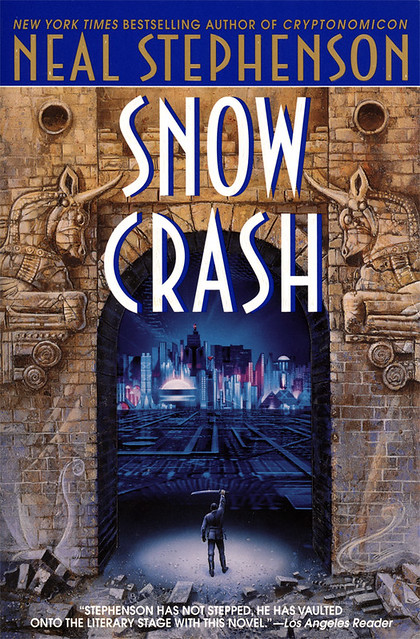
Hiro Protagonist is the main character of Neal Stephenson’s iconic novel Snow Crash. In the novel talks about the rise of the corporation to become a quasi-nation state, a winner takes all economy, a vision of a future metaverse, hacker culture and service hyper-competition with Uber-like employees.
Snow Crash by Neal Stephenson
Hiro Protagonist is a hacker who moonlights as a courier to make ends meet. The story starts with Hiro Protagonist trying to deliver a pizza at high speed. The idea is that the courier would deliver a pizza to any location, not just delivery to a building like getting pizza to work or home. Now we’re starting to see these kind of services being rolled out in real life, by building them into in-car systems and mapping applications. This will add more importance to dark kitchens over store fronts, but store fronts are important as they build brand experiences.
Quiller came out of the cold war. The Quiller series were written under the name Adam Hall by Elleston Trevor who had actually been born Trevor Dudley-Smith. Elleston Trevor like most of the other writers had either served in the second world war or in the national service afterwards. Quiller features in 19 novels written from the mid-1960s to the last one in the mid-1990s.
The books go into a lot of technical detail about spy craft. While he is a man of action, he doesn’t live the high life like James Bond, but has to worry about filing expenses and grim and grey atmosphere of London and Warsaw Pact countries. He has a nervous tick when under stress and has to deal with ‘office politics’ of difficult personalities.
Like Bond Quiller appeared on film, The Berlin Memorandum was re-made as the Quiller Memorandum. Quiller was also made into a TV series by the BBC in 1975 for one season. I knew nothing about it until YouTube.
Spy novel industry
There was a veritable industry of British spy writers. Ian Fleming had James Bond which has been continued like some bizarre literary science zombification experiment long after Fleming himself had died. Post-Fleming’s death there has been 32 new James Bond novels written.
Len Deighton had the unnamed protagonist of his first set of books (though they would be given the name Harry Palmer in the film adaptations):The IPCRESS File, Horse Under Water, Funeral in Berlin, An Expensive Place to Die, Spy Story, Yesterday’s Spy and Twinkle, Twinkle, Little Spy. As this wasn’t enough Deighton wrote ten books about the jaded intelligence protagonist Bernard Samson.
Anthony Price wrote 19 novels featuring Dr David Audley and, or Colonel Jack Butler.
All of these characters had more ‘derring do’ than John LeCarre‘s George Smiley. Deighton’s Bernard Samson’s character has the jaded aspect of Smiley. Anthony Price’s stories are best described as as somewhere between George Smiley and Robert Hannay with the past and ‘present’ woven together.
For the love of books
I picked up the bug of reading these books from my Dad. He used to go and buy these books along with Alistair McLean novels from a florid man in the local market. (Alistair McLean novels were basically the same book and same character with different names and locations).
My Dad left school at 13, he can’t spell but at that time he loved reading novels, engineering books and history. They were around the house at home, so usually after my Dad had read them, I started to read them myself. My childhood reading was a weird mix of ‘children’s books’, fantasy novels which were considered suitable for children (J.R.R. Tolkien and Ursula LeGuinn), spy novels, text books and classic science fiction. My Mum made sure that I had a smattering of Irish folklore books in the mix as well.
One person’s literature is another person’s trash
Nowadays, alongside the weighty tomes of James A. Michener, you would be hard pressed to get an Oxfam shop to take many of these books off your hands.
While Le Carre & Fleming have their dedicated followers, the Quiller books, Len Deighton and Anthony Price will be overlooked.
The war on terror didn’t fire the imagination in quite the same way, yet as we go into a new cold war we might see a renaissance in Quiller-type archetypes in escapist fiction of our current times. Mick Herron’s Slough House series ground us too much in reality sometimes.
Abbott curated this interesting discussion on sports health. In my lifetime we’ve gone from football coaches giving players Guinness to bulk them up to this detailed scientific approach which I previously would have only associated with serious bodybuilders like my college friend Carsten who looking for marginal advantages.
Hong Kong
Brain-drained HK workforce marks historic decline – Asia Times – a few things here. The Chinese visa applicants (less than 15,000) coming in won’t plug the gap: 95% of Hong Kong Talent Visa Approvals Are From China – Bloomberg. Though this might not cover mainland Chinese graduating from Hong Kong universities. Secondly, once growth takes off Hong Kong will lose its relative attractiveness for Chinese from an economic point of view. Secondly, the brain drain of teachers, medical staff, social workers and middle class professionals is starting to become significant from the Hong Kong government’s perspective; but a rounding error from Beijing’s viewpoint.
Japan
Repost: Weebs! – by Noah Smith – Noahpinion – While I was in Japan over the last two weeks, I asked some local startup founders, VCs, consultants, and random friends whether they had ever heard the word “weeb”. Not a single one had. I was pretty stunned, because Japanese cultural products have given rise to a whole worldwide subculture, and people in Japan itself are barely aware that that subculture even exists. It’s not like it’s a fringe thing, either — the latest volume of the anime Spy X Family was the bestselling book in North America this week, and soldiers at the front in Ukraine do Pikachu dances to relieve stress. Japan became a cultural superpower almost by accident – this was a new one on me. I thought otaku was still the label. NHK World on famous ‘Weeb’ Steve Jobs.
pearº – The World’s Biggest Social Experiment – Pear Ring – imagine if Match.com as well as extending into events for singles decided to allow people to have a badge that said ‘I’m single, date me’. That’s the premise of Pear, except that the badge is actually a ring that looks like fake jade…