Halo dan selamat datang – welcome to the Indonesia category of this blog. This is where I share anything that relates to Indonesia, business issues relating to the Indonesia, the various people of Indonesia or its vibrant culture. Often posts that appear in this category will appear in other categories as well. So if instant noodle business Indofoods launched a new advertising campaign. And that I thought was particularly interesting or noteworthy, that might appear in branding as well as Indonesia.
So far, I haven’t had too much Indonesian related content here, though I recognise that it is a fast growing and important market in Asia. I am also aware of the positive impact that Indonesians have had around the world from the worlds of manufacturing to media and travel.
I don’t tend to comment on local politics because I don’t understand it that well, but I am interested when it intersects with business. An example of this would be legal issues affecting smartphone imports, versus local assembly.
The country has changed from being seen as risky to an emerging investment opportunity. The likes of Jardine Matheson have pivoted from Greater China to the worlds most populous Muslim country and home of the Komodo dragon. Its Dutch colonial heritage mixed with local culture has created a country full of dichotomies.
If there are Indonesian subjects that you think would fit with this blog, feel free to let me know by leaving a comment in the ‘Get in touch’ section of this blog here.
Is Open AI the equivalent of Sir Hiram Stevens Maxim? Maxim invented the Maxim gun. A belt fed machine gun that helped colonial powers grab territory in the scramble for Africa. It was reputedly used by one British official to help clear game from land that was soon to be put to farming use in Kenya. Later on it was used by both sides in the Russo-Japanese war and World War 1, due to Maxim’s business associate Sir Basil Zaharoff.
Investors are betting that Open AI will have a similar role in the battle shaping out between tech giants over generative machine learning related processes.
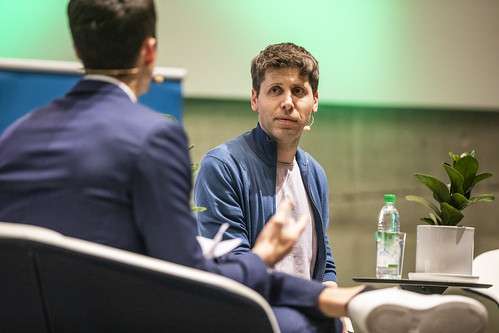
Sam Altman of Open AI
When a company that has issues with making profits can raise money at a valuation of $85bn, it becomes abundantly clear that investors in generative AI have taken leave of their senses
I can understand the argument that Richard Windsor is making with this argument. While others might point out how dominant funding drove Amazon’s present-day monopoly, there are other precedents like Netscape, General Magic, Uber and WeWork that others can point to.
There are bigger questions about whether the LLM approach is in itself a limited model to pursue? If so, Open AI could look more like when IBM bet the farm on Josephson Junctions. The use of synthetic data implies that LLM scaling might already be at its limit. Nvidia looks like a better bet from this angle despite its own extremely high valuation.
Brand purpose has a lot of issues, but it’s worthwhile bearing in mind the kind of marketing Unilever was pushing out prior to buying fully into the concept. These efforts came to light from social sharing about the the British ‘vulgar wave’ that contextualised Russell Brand.
Unilever Heart Brands UK
While China’s ads skewed conservative compared to the UK’s vulgar wave of 1997 – 2012, this Axe (Lynx in the UK and Ireland) ad isn’t exactly on brand purpose. The spokesperson in the advert is Edison Chen. At the time Chen was a star in Hong Kong’s entertainment circles. But getting involved in street fights and a leaked hard drive full of pornographic images of girlfriends he dated meant he withdrew from the industry. Now he is better known for owning streetwear brand CLOT.
Dove Sparks Boycott Calls Over New Partnership—’Never Buy Them Again’ | Newsweek – controversial question, but have Unilever gamed out that conservatives are more likely to use Irish Spring or similar products over Dove? I suspect that there might be something in the semiotics of cleanliness in this. African Americans by contrast might have challenges like ashen skin that would benefit from soap that cleans and moisturises, hence the popularity of shea butter based products.
Hong Kong
Architect Demi Lee on Kowloon’s Walled City. The comparison with the idea of rhizome was very interesting.
Ideas
Demi Lee’s video on how elements of cyberpunk are leaking into our current reality.
A number of things have happened that made me think about the idea of the British discount. A fund manager came out and said that UK equities were cheap compared to their counterparts listed on other stock markets and would likely remain so for a long time.
Genuine sale bargains?
There are a number of reasons why these companies may trade at a British discount:
The London Stock Exchanges doesn’t have a reputation for high growth businesses in the same way that the New York Stock Exchange or NASDAQ does. Instead it has a preponderance of mining companies and similar firms
UK pension funds are discouraged from purchasing stocks
The UK doesn’t foster the kind of businesses that growth investors would want to invest in
British banks don’t particularly want to invest in British businesses beyond property portfolios
Management demonstrate short-termism in their investment approach, as does the banking system
There isn’t a culture of retail share ownership
The UK economy has numerous structural challenges, some of them self inflicted
The British discount goes beyond the stock market, but instead the very nature of the UK itself.
Indebted government
Government debt is ballooning and will continue to do so, yet productivity is stubbornly low meaning the bonds will be ever harder to pay off. Finally as the Liz Truss debacle showed even leadership shows the British discount.
The state Britain has been in
The ideas and concepts the British discount aren’t even new – most of them came from ideas in Will Hutton’s The State We’re In originally published in 1995.
The fund manager can be confident in the British discount to be long-lasting as he knows that neither the Labour Party or their Conservative Party counterparts had managed to address existing structural economic issues. Instead they managed to create new ones.
The Trajectory of China’s Industrial Policies – IGCC – Barry Naughton, Siwen Xiao, and Yaosheng Xu argue that most of the changes in Chinese industrial policy since the mid-2000s can be thought of as being part of a trajectory that seeks to build a policy/planning mechanism, and that shifts the ultimate objective of technology and industry policies from economics to security.
Saudi Arabia’s Barn’s Coffee plans 25 outlets in Malaysia – Malaysia’s Premier Fine Foods plans to establish 25 outlets in Kuala Lumpur as its hub and expand operations to other Southeast Asian countries, including Brunei, Cambodia, Indonesia, Laos, Myanmar, the Philippines, Singapore, Thailand and Vietnam, in its aim to have 300 outlets in the next 10 years – interesting franchise coming out of Saudi Arabia
Street Style in Tokyo: “Harajuku Is Like a Fashion Gallery With a Free Entrance” | Vogue – “In present-day Harajuku, there are probably more foreigners walking around than there are Japanese people. They used to be watchers of Harajuku fashion, but now they are players; it’s a new movement in the neighborhood. In this story, there are many Chinese and Korean individuals who seem to enjoy and carry forward the Harajuku fashion of the 1990s and 2000s, rather than simply copying it
Full article: ChatGPT, AI Advertising, and Advertising Research and Education – leading scholars and industry thinkers in our field and neighboring disciplines are actively examining and engaging in debates on AI technologies and their applications to advertising practices and effects. However, we have not imagined such powerful AI technologies as ChatGPT emerging and spreading in the general public so quickly. According to industry estimates, ChatGPT reached 100 million monthly users in the first two months after launch, which makes it the fastest-growing technology application in history, but web traffic has since peaked. ChatGPT and other generative AI technologies in this new phase of AI advancement are expected to completely transform the advertising business and research. More research is urgently needed to gain an understanding of the short- and long-term impacts of this new generation of transformative AI technologies on advertising across the micro, meso, and macro levels
Influence 100: In-House PR Budgets Slashed | Provoke Media – This year, our Influence 100 cohort control a combined spend of $3.7 billion, a drop of more than $1bn on last year’s figure of $4.8 billion and far below 2020’s dip to $4.2 billion, after being at $4.8 billion in 2019. The drop is largely down to a significant dip in the number of our Influence 100 managing top-end budgets. Last year the number who managed budgets of more than $100m was 25% (compared to 27% in 2021), while this year it is down to 17%. The number of CMOs and CCOs managing between $75 and $100m also dropped, from 12.5% last year to 10% (although this is on a par with 11% in 2021), and the next budget bracket, $50-$75m, also saw a drop from 17.5% to 13%, one percentage point lower than 2021. The proportion of communications leaders managing budgets of between $25m and $50m remained the same as last year, at 10%, and the only budget bracket that saw an increase was at the lower end, $10m-$25m, which shot up from 12.5% to 30% – unsurprising given the dip in advertising spend
Materials
Machine learning based design optimisation was used to create additive manufactured brackets for NASA instruments. They feel organic in nature, presumably because they the result of millions of virtual trials, rather like generations of biological evolution.
I spent part of the bank holiday weekend reading and finally managed to tuck into designer Bruce Mau’s signature book MC24. For those that haven’t heard of him Bruce Mau is a Canadian designer and academic. He founded a brand design agency: Bruce Mau Design which is now part of marketing combine Stagwell. His Massive Change Network (MCN) is in the transformation business similar to Stewart Brand’s Global Business Network (acquired by the Monitor Group now called Monitor Deloitte) and The Long Now Foundation. The philosophy of Bruce Mau and feels like it had been lifted from an amalgam of TED Talks. Bruce Mau believes in a sustainable future with techno-optimist bent to his views.
Bruce Mau, like Robert Greene has principles that seem to contradict each other. Publisher Phaidon have wrapped the hard back cover of the book in an iridescent satin fabric that a photograph doesn’t do justice to. Regardless of whether you think the book is a self-help bible, your creative muse, an objet d’art or something nice to thumb through on a Sunday afternoon Bruce Mau and his book MC24 are ideal.
China
Where China is beating the world – by Noah Smith – interesting article, although it lacks some nuance about Chinese development, consider it a starting point that you can explore in more depth from, rather than the full story
I have alluded to the impact of China’s new espionage law. VisualPolitik has pulled together a good video on how it’s being interpreted by multinationals, policy wonks and politicians. It will have precisely the opposite impact that China would like it to have on its economy.
Consumer behaviour
How many Britons agree with Andrew Tate’s views on women? | YouGov – so much in this. You also need to think about bias in questions, that its done online and the ‘you can think it, but you shouldn’t say it’ aspect of how Tate supporters might think about the questions
Interesting debate on how the ‘evangelical bloc’ has evolved over time from being primarily theological to being primarily political in nature.
How doctors buy their way out of trouble | Reuters – When federal enforcers alleged in 2015 that New York surgeon Feng Qin had performed scores of medically unnecessary cardiac procedures on elderly patients, they decided not to pursue a time-consuming criminal case. Instead, prosecutors chose an easier, swifter legal strategy: a civil suit. Qin agreed to pay $150,000 in a negotiated settlement and walked free to perform more cardiac surgeries at his new solo practice in lower Manhattan. Qin faced no judge or jury. He did not admit to wrongdoing. He maintained his license to practice. What’s more, neither Qin nor government officials were required to notify patients who purportedly were subjected to vascular surgical procedures they didn’t need. Those included fistulagrams to spot issues like narrowed blood vessels or clots, and angioplasties to open clogged coronary arteries. Within months of the settlement, a registered nurse working for Qin at his Manhattan practice alerted authorities that something seemed amiss. The nurse, who ultimately turned whistleblower, alleged to federal prosecutors that the surgeon was performing unnecessary procedures on patients, mostly elderly Asian and Black immigrants whose care was covered by the public programs Medicare or Medicaid. Prosecutors indicted Qin in 2018 on a felony count of fraud, which carried a maximum sentence of 10 years in prison. But in 2021, in a deal brokered behind closed doors, prosecutors dropped that charge in favor of yet another civil settlement, court records detailing that agreement show. Once again, Qin kept his New York license to practice with no restrictions; a restricted license is one of the few ways the public can learn that a doctor has been disciplined for bad behavior. Qin agreed to pay a total of $800,000 in annual installments ending in December 2025, deposited with the U.S. Department of the Treasury. As an added penalty, he was banned from billing public health programs until February 2025
Their inability to live up to the past German reputation for quality
Chinese manufacturers at the low-end
German automobile makers struggles with software
Japanese and Korean car manufacturers challenging the luxury end of the market. I would rather have a Lexus LX than a G-Wagen. At the moment Lexus have had to shut down the list on the LX they are that oversold
Hong Kong
chanhiu design – really nice graphic design. I love their project reflecting on Hong Kong-made knock-off toys familiar to Hong Kong children as well as European children – where these toys turned up in markets during the 1960s through to the early 1980s. More here: Chan Hiu explores Hong Kong’s playful past – The China Project
Cayman Islands fights attempts by Singapore and Hong Kong to lure Asia’s wealthy | Financial Times – the sharp uptake of Singapore vehicles versus Hong Kong vehicles is very interesting – an order of 10x magnitude greater. Interesting implications for Hong Kong’s wealth management business and China’s efforts to prevent capital flight from Greater China. It also implies that Hong Kong hasn’t been as successful at attracting foreign funds for investment in China. So the Hong Kong pivot towards the Middle East investor makes sense.
Apple expanding supplier base in China, Southeast Asia, and India – the number of manufacturing facilities/locations of Apple’s top 200 suppliers grew in 2022 in China, Japan, Thailand, Malaysia, the Philippines, and India. However, manufacturing facilities/locations in the US and South Korea have dropped from 72 to 62 and 42 to 36, respectively. The latest list shows that Apple’s supplier base in South and Southeast Asia is growing amid Apple’s diversification move. Meanwhile, Apple keeps expanding its reliance on China, a sign that Apple is likely to prepare for a decoupled global manufacturing ecosystem. Due to Apple’s change of methodology, disclosing only “locations” instead of “facilities,” the numbers of certain geographies, including Taiwan, cannot be compared historically. For example, Apple said that TSMC had five “facilities” globally in 2021 but had three manufacturing “locations” globally in 2022. The methodology change led to fewer listed manufacturing locations of Apple suppliers in Taiwan, from 72 to 41
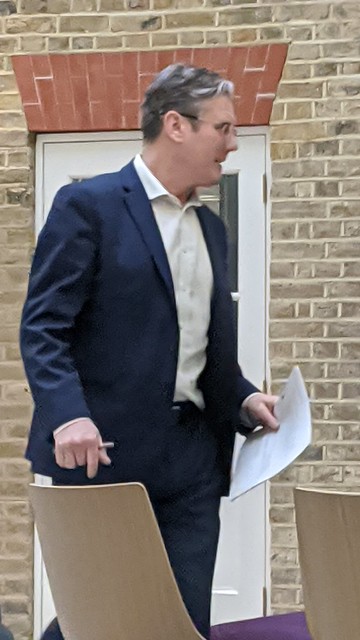
Starmer’s Britain – Portland – Kier Starmer is considered to be the most likely prime minister after Rishi Sunak. In some respects this feels like 1996, all over again. The then Conservative government back then was buffeted by scandals such as the Arms to Iraq affair report, the BSE crisis and the slow drip of sleaze.
Depending when in 2024 the general election happens, we will have had 14 years of Conservative rule and the government has been dogged by scandal.
Rewind to 1996
Unlike Kier Starmer era Labour, back in 1996, Labour looked like a political party chock full of ideas. Will Hutton’s The State We’re In focused minds on what a future Labour government would look like and long term thinking. Tony Blair and the policy wonks around him seeded the media and academia around them with their new ideas. Blair even used a computer system to analyse Conservative parliamentary statements and gain the upper hand in prime minister’s question time.
Back to the present
Kier Starmer and the modern day Labour Party isn’t the Labour of 1996. There isn’t the buzz of modernity about them. There is no vision thing at the moment. They are defined by not being the tories. Public Affairs specialists Portland have tried their hand at kremlinology to paint a picture of what a Kier Starmer-led government is likely to look like, should it get into power.
A number of people who contributed were veterans of the Blair – Brown administration. They recognise that Kier Starmer and colleagues are likely to inherit a country with problems across the economy, public services and infrastructure. The Kier Starmer administration is unlikely to share the globalist viewpoint of Tony Blair, partly due to decoupling and partly due to Brexit.
All of which makes the Kier Starmer five missions for a Better Britain look like a pipe dream without several back-to-back terms in government.
Secure the highest sustained growth in the G7 – with good jobs and productivity growth in every part of the country making everyone, not just a few, better off.
Make Britain a clean energy superpower – to create jobs, cut bills and boost energy security with zero carbon electricity by 2030, accelerating to net zero.
Build an NHS fit for the future – that is there when people need it; with fewer lives lost to the biggest killers; in a fairer Britain, where everyone lives well for longer.
Make Britain’s streets safe – by halving serious violent crime and raise confidence in the police and criminal justice system to its highest levels, within a decade.
Break down the barriers to opportunity at every stage – for every child, by reforming the childcare and education systems, raising standards everywhere, and preparing young people for work and life.
Kier Starmer needs his own version of The State We’re In as just under 70 percent of the British public surveyed are neutral to being in disagreement about whether they understand the current Labour vision for Britain.
Can Chinese Payment Apps Gain Traction Globally? | ChinaFile – Chinese fintech companies and their super-apps will still revolutionize global finance. In this excerpt from his book The Cashless Revolution: China’s Reinvention of Money and the End of America’s Domination of Finance and Technology, Chorzempa explains why Chinese fintech has thus far struggled to gain a foothold in the international market, but will likely inspire other companies to replicate the fintech super-app model in their home countries
People too tired to lead healthier lifestyles, UK survey finds | Health | The Guardian – A survey has found that tiredness is why 35% of people don’t make the changes to their diet and physical activity levels that would help them close the gap between good intentions and concrete action. The results, from a YouGov poll of 2,086 UK adults for the World Cancer Research Fund (WCRF), illustrate the barriers many people face in their desire to adopt and stick to healthy habits. When asked what was stopping them from eating more healthily and exercising more often, 29% of men and 40% of women cited “feeling too tired”
The Lost Planet of Hong Kong | Newsroom – This just in from Hong Kong. Its chief executive has corrected the language of a journalist for asking a question at a press conference about the pro-democracy protests of 2019: “First of all, it is not [called] the 2019 protests. It is the black violence.” And: a 23-year-old has been charged under the Beijing-imposed national security laws for allegedly “intimidating the public in order to pursue political agenda”. He was attempting to stage a protest, otherwise known as a black violence. Also: a satirical cartoonist has been sacked after a government official complained about a drawing that mocked local elections, and his books were removed from libraries. When approached by the last signs of independent journalistic life in Hong Kong, the Hong Kong Free Press, the Leisure and Cultural Services Department commented, “Books that are suspected to potentially violate national security law will be immediately removed for review.”
Young women in South Korea are live-streaming their suicide attempts | The Economist – the South Korean government announced its fifth “Master Plan for Prevention of Suicide”. Mental-health check-ups will now be available every two years, rather than every decade. Beyond that, the plan proposes different approaches for the young and old respectively. (Over-70s have the highest suicide rates in Korea.) For women in their 20s and 30s who live alone, South Korea will make available more counselling and therapy
The Rise of Generative AI Large Language Models (LLMs) like ChatGPT — Information is Beautiful and How Kevin Kelly is using AI in his creative process | Dropbox Blog and Will A.I. Become the New McKinsey? | The New Yorker – as A.I. becomes more powerful and flexible, is there any way to keep it from being another version of McKinsey? The question is worth considering across different meanings of the term “A.I.” If you think of A.I. as a broad set of technologies being marketed to companies to help them cut their costs, the question becomes: how do we keep those technologies from working as “capital’s willing executioners”? Alternatively, if you imagine A.I. as a semi-autonomous software program that solves problems that humans ask it to solve, the question is then: how do we prevent that software from assisting corporations in ways that make people’s lives worse? Suppose you’ve built a semi-autonomous A.I. that’s entirely obedient to humans—one that repeatedly checks to make sure it hasn’t misinterpreted the instructions it has received. This is the dream of many A.I. researchers. Yet such software could easily still cause as much harm as McKinsey has
What actually represents good taste and good style was discussed in this old show from the 1970s, which makes an interesting perspective to reflect on.
Hyundai have pushed out a campaign to teach British people how to pronounce the companies name properly. This is a well trodden path for foreign brands like Hyundai. My childhood featured ‘Nestle’s Milky Bars’ as the advertising jingle ignored the é at the end of Nestlé. I can only presume that it would be assumed to be too sophisticated for our palates rather than a playground staple.
More recently, I spent a couple of minutes coaching Arsenal footballing legend Ian Wright on how to say Huawei prior to him shooting some online video content for a smartphone launch. So I can relate to the challenge that Hyundai faces in gaining the correct pronunciation.
Getting the pronunciation right will allow Hyundai to use global English language assets, rather than having to do localisation. A small but important saving as it looks to compete for the UK and Irish electric car markets.
The advertising plays on the common pain-point of Siri and Google Voice failing to pick up on pronunciation in order to use humour to get Hyundai across correctly.
Older women and younger men relationships explored in this documentary. Prior to going to college in the mid-1990s I worked for a company that put coatings on materials to make stickers, stamps and labels. My boss there was a guy called Mark who married the PE teacher from school, once he’d finished his university degree. At that time Mark’s relationship was considered unusual in nature.
Design
Great film compilation of retrofuturist footage
Watching this film on the intersection of military clothing design and fashion reminded me of William Gibson’s Zero History novel.
New China-focused think tank staffed and advised by a number of prominent Hong Kong dissidents: China Strategic Risks Institute
Mainland Chinese visitors start to return to Hong Kong after Covid-19 restrictions lifted, but most tours low-cost and short stay, figures reveal | South China Morning Post – Tourism figures from February to this month show 86 per cent of tour trips from mainland China lasted one to two days and 54 per cent cost less than 500 yuan. Travel Industry Authority confirms it is investigating allegations of cigarette smuggling by mainland Chinese tour groups – it will be only a matter of time before the impact of this behaviour change ripples out to Hong Kong’s retail landlords and the luxury brands who have stores in the city. Hoteliers and the hospitality industry haven’t benefited from opening up the borders
Indonesia
Indonesia is an economic powerhouse in the making, but there are forces ripping away at its society that could leave it as inequitable as its neighbour Malaysia – which has been suffering from a brain drain and political stagnation. Indonesia like Malaysia before it seems to be coming under the sway of Gulf Arab traditions of Islam rather than the indigenous variant of the belief. Singaporean news programme CNA Insider did a good documentary on it all.