Innovation, alongside disruption are two of the most overused words in business at the moment. Like obscenity, many people have their own idea of what innovation is.
Judy Estrin wrote one of the best books about the subject and describes it in terms of hard and soft innovation.
Hard innovation is companies like Intel or Qualcomm at the cutting edge of computer science, materials science and physics
Soft innovation would be companies like Facebook or Yahoo!. Companies that might create new software but didn’t really add to the corpus of innovation
Silicon Valley has moved from hard to soft innovation as it moved away from actually making things. Santa Clara country no longer deserves its Silicon Valley appellation any more than it deserved the previous ‘garden of delights’ as the apricot orchards turned into factories, office campus buildings and suburbs. It’s probably no coincidence that that expertise has moved east to Taiwan due to globalisation.
It can also be more process orientated shaking up an industry. Years ago I worked at an agency at the time of writing is now called WE Worldwide. At the time the client base was predominantly in business technology, consumer technology and pharmaceutical clients.
The company was looking to build a dedicated presence in consumer marketing. One of the business executives brings along a new business opportunity. The company made fancy crisps (chips in the American parlance). They did so using a virtual model. Having private label manufacturers make to the snacks to their recipe and specification. This went down badly with one of the agency’s founders saying ‘I don’t see what’s innovative about that’. She’d worked exclusively in the IT space and thought any software widget was an innovation. She couldn’t appreciate how this start-ups approach challenged the likes of P&G or Kraft Foods.
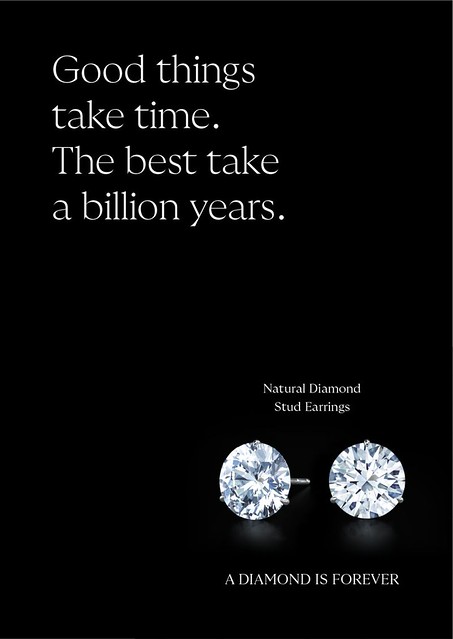
DeBeers have resurrected their tagline A Diamond is Forever. What’s interesting is that DeBeers is focusing the campaign only in China and the United States. Whilst the heritage of A Diamond is Forever may resonate with the American audience. I am less sure about how it might resonate for Chinese consumers.
While diamonds are a good store of value, the move towards guo chao – Chinese things for Chinese people is another dynamic that may affect receptivity.
Beauty
Gen X men prefer gently-scented bodycare products over heavily-scented ones | Mintel – Despite having body odour concerns, Gen X doesn’t go for heavily scented products as they have dry, sensitive and acne-prone body skin. Among Gen X, itchiness, excessive sweat and rashes concerns stood out from those of other consumers. They are also concerned with the odour associated with the result of sweat.
Welcome to the Anti-Woke Economy | The New Republic – A fledgling parallel economy has emerged on the right, hawking everything from coffee to vitamin supplements to anti-abortion protein bars. But can a business movement born of political and cultural grievance be viable over the long term?
An inconvenient truth: Difficult problems rarely have easy solutions | Behavioral and Brain Sciences | Cambridge Core – Individual-level interventions are often interesting and easy to implement, but are unfortunately ill-equipped to solve most major global problems (e.g., climate change, financial insecurity, unhealthy eating). Resources spent developing, pursuing, and touting relatively ineffective i-frame interventions draw resources away from the development and implementation of more effective s-frame solutions. Behavioral scientists who want to develop solutions to the world’s biggest problems should focus their efforts on s-frame (system level) solutions
Ideas
The AI and Leviathan series examining what it means if AI did actually change everything including extreme techopolarity.
Part 1 – institutional economics of an intelligence explosion
Dentsu launches paid search tool that uses AI to speed up creativity and optimization – Digiday – d.Scriptor — a new proprietary offering it’s developed to supercharge paid search, mainly in the area of ad copy development but also as a means to optimize and adapt execution. Dentsu is announcing the tool today, after pilot testing over the last several weeks. It’s meant to help with boosting the volume of creative messaging with an eye toward improved engagement rates, as well as to speed up the process of creative experimentation, and cut down on the time required to perform optimization tasks – the more variants that you cram into a Google Adwords programme the better a job it can do on optimising display based on what works. I spent a lot of time coming up with variants in spreadsheets to do this when I was freelancing
We’re Updating our Community Standards – Linktree – changes on conditions, particularly focused on sex work, presumably to cover themselves from US legislation. There are also restrictions on regulated sectors like vaping and alcohol
The Freshest Kids tells the story of early breakdancing. My own attempts at breakdancing were very poor. My moonwalk was closer to John Hurt’s shuffle as part of his portrayal of John Merrick in The Elephant Man. Because of that I have a real appreciation of those people who can do breakdance properly. You can watch it here.
RAYS Engineering
I have a thing for manufacturing videos that shows how a product is made. RAYS Engineering alloy wheels are famous as providers of high quality after market wheels, particularly among fans of Japanese import vehicles. Their manufacturing process is unique. The forging process provides their wheels with superior properties to normal cast alloy wheels.
Anjihood pop-up book
Anjihood is the 32 square kilometre development (less than 3% the size of Hong Kong, or over 100 times bigger than Canary Wharf in London) outside Shanghai. It looks to blend the benefits of urban living with a more green environment – a 21st century analogue to the Victorian garden city concept. They commissioned Shanghai creative agency The Orangeblowfish to create a pop-up book that would convey the concepts behind Anjihood and the emotions they hope the development will evoke.
Innovation in Japanese hospitals
Japan is using a mix of robotics and machine learning tools to help assist staff in its hospitals cope with its aging population. NHK World goes in-depth in how a mix of commercial off the shelf solutions are being used in concert with each other.
No to obsolescence
Porsche Netherlands did this film to show no matter how old you’re Porsche, if they don’t have the relevant part available. They will go back to the original design drawings and remanufacture it for your vehicle.
I am not too sure how this would hold up for electronics components which might not be able to get the relevant integrated circuits. But it’s an interesting commitment to make. In a low carbon economy, keeping existing vehicles on the road for longer is as important as a world full of Teslas.
The Porsche 111 was first made some time in the early 1950s. Porsche only started building sports cars in 1948, but had been building tractors on and off since 1934 under the Porsche brand.
Enquire Within tends to appear in book collections for people of a certain age, or, where the book collector has inherited part of their collection. Spending time on the family farm in Ireland during my childhood, I used to see a copy of an early 20th century vintage sit next to a dog-eared copy of Old Moore’s Almanac (not to be mistaken for a separate UK publication: Old Moore’s Almanack), Old Moore’s was used for deciding what to plant in the garden besides potatoes.
During the bank holiday weekend, staying with my parents, emergency works on a water main managed to take out the broadband and electricity along their road. I went back though my Dad’s boxes of books and leafed through my parents copy of Enquire Within. My Dad thinks he had received the copy as a gift from a the owner of a second hand book store in Birkenhead market right after he had moved into the first house that my parents had bought. But he can’t be certain. Given that the outer gloss paper wrap around the hardback inner cover uses a font that looks similar to Eurostile and the price is in decimal – I guess it’s from the early to mid-1970s.
Enquire Within could be thought of as a primer for everyday life. Topics included how to play a variety of card games, basic first aid, the basics on taxation and education with the addresses of the UK government departments responsible. There was a travel section with a few paragraphs on every western European country, which had been written by the Financial Times travel correspondent. The gardening section went into much more depth explaining what a hardy annual and hardy perennial were, alongside the correct way to build a compost heap, how to dig drills and prune roses.
At the back there is an exhaustive list of children’s names together with their meanings.
Enquire Within and the origins of the web
What I didn’t find out until later on was that Tim Berners-Lee was partly inspired to create a predecessor to what would become the world wide web by a Victorian vintage copy of Enquire Within that was in his parents house when he was growing up. The system was called ENQUIRE and seemed to be similar conceptually to HyperCard or a Wiki. The World Wide Web came out of Berners-Lee’s efforts to integrate disparate systems including ENQUIRE together to facilitate better collaboration between CERN research projects.
This video on money laundering is as much of interest for the phenomenon of quality documentaries on YouTube as it is for recycling known truths about HSBC.
The Forrester Wave™: Commerce Search And Product Discovery, Q3 2023, Surfaces The Challenges Of AI Unchecked – Don’t let buzzwords distract you from what your customers — and your business — need. Vendors often use their own terminology, especially in a market that hasn’t had a Forrester Wave evaluation in place already. One will talk about how extremely relevant their results are, while another will scoff at “relevancy” as outdated methodology. You’ll hear semantic, vector, hybrid, ML, AI, and all sorts of branded names for products and functions
Security
The Cheap Radio Hack That Disrupted Poland’s Railway System | WIRED – the ability to send the command has been described in Polish radio and train forums and on YouTube for years. “Everybody could do this. Even teenagers trolling. The frequencies are known. The tones are known. The equipment is cheap. – This reminds me of the blue boxes used for phone phreaking decades ago.
Adobe’s AI diversity auditor | Patent Drop – is seeking to patent a system for “diversity auditing” using computer vision. Essentially, this system uses facial detection and image classification to break down photos of employees and slot them into categories based on certain physical traits and characteristics. Adobe’s system looks through several images and detects faces in each one, then classifies each face based on a predicted “sensitive attribute” relating to “protected classes of individuals,” such as race, age or gender. For example, Adobe noted, this system may classify images from a company’s website, then compare its predictions to a “comparison population.”
Technology
Mexico’s Microchip Advantage | Foreign Affairs – there are significant hurdles to making Mexico a bigger player in supply chains for chips and advanced technologies. The country lacks its Asian rivals’ existing networks of high-technology firms. Until now, investments in the sphere have been sparse. To change this situation, Mexican political and business leaders need a clearer strategy for attracting semiconductor investment. The dividends, both for Mexican industry and for U.S. supply chain security, could be significant. Today’s large-scale shift away from China-focused assembly operations offers a once-in-a-generation opportunity to create a more fully integrated North American semiconductor and electronics supply chain. Despite the United States’ major involvement in many segments of the chip industry, there is at present hardly any semiconductor packaging or assembly in the country and very little anywhere else in the Western Hemisphere. The United States maintains a leading role in R&D-intensive segments of the semiconductor industry, including chip design and manufacturing equipment. The CHIPS Act is intended to increase the amount of chip fabrication in the United States. Yet neither the United States nor any country in the Western Hemisphere plays a major role in the final stages of the chip manufacturing process—assembly, testing, and packaging (ATP)—in which semiconductors are tested and assembled into sophisticated packages. The Western Hemisphere also does relatively little assembly of advanced electronic systems that require a lot of chips, such as consumer electronics.
Psychotherapy is using psychological techniques to to help improve:
Happiness
Mental wellbeing
Behaviours, beliefs and compulsions that might be holding someone back from achieving their full potential in life
It can involve sessions that are one on one, or be part of a group experience.
Psychotherapy in culture
American TV brought the emotional and mental anguish of life into its programming, for instance, this segment from from Thirtysomething.
The TV series Frasier put the profession front-and-centre with both Frasier and Niles Crane being psychiatrists by profession. It even brought up the subject of therapy for animals.
Hollywood has often looked to develop characters by showing them undergoing therapy.
Probably the most famous example is the relationship between Robin Williams as the therapist Dr. Sean Maguire and Matt Damon as his court-mandated patient Will Hunting in Good Will Hunting.
Over the past 20 years therapy as an activity has become much more mainstream in the UK. And this has been reflected in the media, such as this plot line from the critically-acclaimed BBC comedy series Fleabag, which shows how mental health and therapy have become part of modern middle-class life.
Age of anxiety
Elizabeth Wurtzel’s Prozac Nation was published in 1994; yet feels very now. At the time of publishing it turned the drug brand Prozac into a household name. The black and white cover photo of a vacant Wurtzel fitted very much into the grunge aesthetic. As did the authors tale of being a young American battling against depression. There was even a counter-movement over the years of writers who looked to provide alternatives to Prozac (and its peers like Paxil and Zoloft). Their solutions ran from potatoes, to Plato or God.
Moving forward some three decades and Wurtzel’s writing resonate with a generation battling anxiety and reshaping society around their angst.
Modern world events from wild fires and climate change seems to have created the conditions for a collective sense of hopelessness and grief. A 10-country survey with a sample size of 10,000 people aged 16 – 25 published in The Lancet found high rates of pessimism. 45 percent of respondents were said worry about climate negatively affected their daily life. Three-quarters of respondents believed “the future is frightening,” and 56 percent said “humanity is doomed.”
Roots of a crisis
Wurtzel’s generation too grew up with climate changes, the ozone layer, economic uncertainty due to globalisation and deindustrialisation. They watched the most dynamic economic power on the planet hit a brick wall with the Japanese economic miracle, the internet bubble and imminent global thermonuclear war.
Over the past half-century we’ve seen wealth flow to the richest while the middle class stagnates or shrinks.
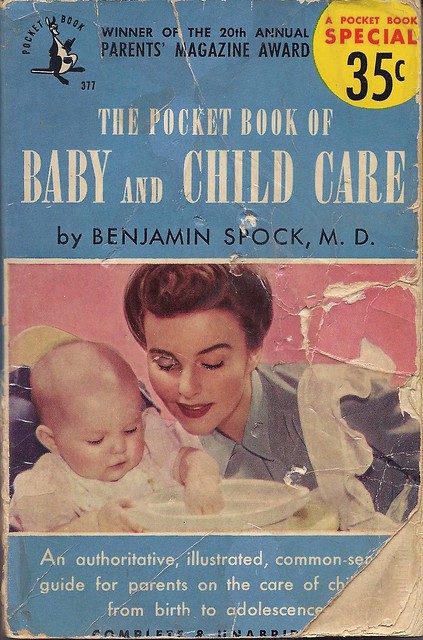
So the stressors for anxiety that needs psychotherapy are neither new, nor are they unique. But they have uniquely manifested themselves creating a mass market for psychotherapy in different forms. Like generations of children before them they were brought up as individuals with an upbringing influenced by Benjamin Spock’s The Common Sense Book of Baby and Child Care which shaped childcare from the post-war era onwards.
Every family home didn’t have a copy of Spock on their shelves, but it shaped advice given out by medics, educators, social workers and the media.
Like previous generations in the late 20th century their upbringing was marked by a new mass medium. (Previous new mediums would be popular radio, teenage culture including rock n’ roll music, television (and its subsequent proliferation of channels) and the web).
The big generational difference is likely to be level of childhood exposure to risk. Children growing up in the 1960s through to the early 1990s would be familiar with the ‘latch key kid’. They would have played outside with friends, maybe held down a part-time job or even had a degree of personal mobility with a bicycle that they used to cycle everywhere. Playgrounds were fun, but didn’t have the safety measures of modern playgrounds, the playgrounds of the mid to late 20th century had rusty swings and hard concrete surfaces. The decline in ‘outdoor play’ in favour of play dates and electronic amusements was cited as a possible factor by authors Greg Lukianoff and Jonathan Haidt in their book The Coddling of The American Mind.
Lukianoff and Haidt’s suggested solution to this age of anxiety was to use a form of psychotherapy known as cognitive behavioural therapy to help boost mental resilience in children and young adults. There is a growing body of work that puts the blame on rising anxiety at the always-on nature of social media through smartphones.
The age of anxiety has mainstreamed a number of niche product categories from gadgets like fidget spinners to weighted blankets.
Rebranding psychotherapy
Going back to the explanation of psychotherapy that I started off with, one of the bulletpoints was ‘behaviours, beliefs and compulsions that might be holding someone back from achieving their full potential in life’.
A number of decades ago psychotherapy was seen to be something that tended to happen in hospital and the general thinking that a pill may provide the solution or at the very least a chemical cosh for the worst affected or most disruptive.
The more well-heeled may have seen a therapist in a consulting office. In other communities the role may have been played by the social worker, (in rural Ireland it might have been the local parish priest) or a marriage guidance counselling service. Developments of different psychotherapy techniques over the 20th and 21st century owe as much to philosophy as they do to our scientific understanding of the mind and neuroscience.
There are now a large amount of therapists and life coaches who have a wide range of certifications and experience addressing the behaviours beliefs and compulsions that might be holding someone back in their personal or professional lives.
The changing nature of psychotherapy
Technology and media are changing our relationships, the way we relate to each other and ourselves. Parasocial relationships are asymmetric in nature. Fans believe in an influencer who may not even know them. They supplement or replace friendships that would otherwise be in the fans life. These new forms of relationships can affect both the fan and the influencer when unrealistic expectations aren’t met. Exemplified by ‘Stans‘ in western culture.
Parasocial relationships
The kind of relationships that we have now are fundamentally changed. This is especially acute in culture. Influencers, and Asian idol culture mean that we’re much more invested in people we don’t actually know.
YouTuber Aini has covered how this relates to East Asian pop artist fan culture. In particular young men or women who are in idol groups. Parakin fans go to extreme lengths to support their idol and guide their career in what they believe is the best direction. Parakin fans in China have the idol fulfil a role in their own lives that would otherwise be unmet.
This is a world away from the model followed by Simon Cowell to Colonel Parker over the past 70 years of popular music.
The Timepiece Gentleman
A great example of parasocial relationship is playing out in the luxury watch collecting community at the moment. American watch dealer Anthony Farrer trading as The Timepiece Gentleman matched luxury watches with people who wanted to own them and took a cut off the top.
Something went horribly wrong and Mr Farrer owes millions of dollars to fellow watch dealers, investors and individuals whose watches he was selling on their behalf. Oisin O’Malley goes into how Farrer’s parasocial relationship with his audience engendered trust.
Farrer told his audience his own personal story, complete with his faults and failings
He brought the audience inside his business and how it operates
He demonstrated a successful lifestyle.
He was in their lives day-in, day-out. This meant that both industry professionals and consumers put more trust in Farrer than they should have. Farrer brought the formula of the Kardashian media empire to a formerly staid and overlooked retail sector.
The manosphere
Much has been shared about the manosphere and the Tate brothers in particular. But in the context of this post, I thought it was worthwhile exploring the role that Andrew Tate’s content fills in the lives of young men.
First Andrew Tate in his own words
You can’t slander me because I will state right now that I am absolutely sexist and I’m absolutely a misogynist, and I have fuck you money and you can’t take that away
Tate and his business partners offer content and services aimed at young men that ‘solve’ similar challenges to therapy (promising guidance on how to fulfil their full potential)
For better or worse, Tate sets an example for his audience. The audience are looking for confidence and certainty. Tate provides the answers to the audience through:
Social media accounts that promoted an “ultra-masculine, ultra-luxurious lifestyle.”
Training courses run by his Hustler’s University business on accumulating wealth and ‘male-female interaction’ to copywriting and cryptocurrency trading.
Virtual relationships through a web cam studio described as a total scam.
The ‘War Room’ private network that sits somewhere between group therapy, a subreddit and a secret society complete with business networking
Tate’s work has had an outsized impact in the media and classrooms of the UK. Something a Guardian journalist labeled the ‘Andrew Tate effect’.
Therapy AI
As machine learning and chat bots have become more prominent we’ve seen algorithm driven psychotherapy.
Telemedicine primed market
The market was primed for the rise of AI driven therapy sessions after platforms like MYNDUP connected people with therapists online or over a mobile app, as part of a wider boom in telemedicine. R/GA talked about telemedicine in terms of it being ‘a more human centred vision of health’ in their Futurevision report series. They saw a clear line of continuity between the kind of service and convenience we’ve received from Amazon and online banking to future telemedicine services.
Looked at from this perspective, why wouldn’t you want to have online, on-demand therapy sessions?
So we saw ChatGPT being used for ‘do-it-yourself’ therapy, alongside dedicated systems.
Dedicated systems like Wysa, Heyy and Woebot use ‘rules based AI’ which is easier to manage from a medical, legal and regulatory point of view.
Wearables are considered to offer an opportunity for more timely interventions.
The Code – Silicon Valley and the Remaking of America by Margaret O’Mara is the second book I have read recently about Silicon Valley, this review follows my review of Chip War by Chris Miller. The Code covers the history of Silicon Valley from the post-war to the present.
Margaret O’Mara
In terms of her background, O’Mara is a Clinton administration era policy wonk. When O’Mara left policy circles, she became an academic and is now a history professor at the University of Washington in Seattle – at the other end of the country. Her area of focus is on the history of the modern technology industry. She spent five years researching the book in the mid-2010s, just as Silicon Valley was going under a technological and social change.
The lens shaping everything else that I have written here
I am a sucker for books on the history of technology and like Chip War, The Code was right in my wheelhouse. It complemented, rather than overlapped some of my existing favourite technology history books like Bob Cringely’s Accidental Empires, John Markoff’s What The Dormouse Said or most of Michael Malone and Steven Levy’s output to date.
Like Miller’s Chip War, O’Mara brought a degree of distance from her material to her writing. She has done a lot of research and surfaced lesser known characters like community computing pioneer Liza Loop in her work, she doesn’t have the inside track.
Bob Cringely with his work on InfoWorld‘s Notes From the Field column got an inside track from the Valley’s engineers before he went on to write is magnus opus Accidental Empires. Like Cringely, Michael Malone was brought up in the Silicon Valley area and then worked the business section beat as a reporter for the local newspapers. Cringely and Malone lived and breathed the valley. If you are are fan of Cringely and Malone’s works, expect something that is interesting but stylistically very different.
On to The Code itself
Other reviewers have used words like ‘masterful’ and ‘majestic history’ to describe the book – which while being a reasonable guide to overall quality aren’t really all that helpful. In contrast to Chip War which took me six months, I managed to storm through The Code in a week. This is partly down my familiarity to the material covered and the airplane view that O’Mara takes when writing about her subject. I enjoyed O’Mara’s writing, but could also see someone coming to it with a good grasp of American political history and current affairs, but no knowledge of Silicon Valley history enjoying it just as much.
Being an academic O’Mara worked hard to source everything in The Code, she also provides a recommended reading list that goes into different aspects of the story that she laid out in more depth including John Markoff’s What the Dormouse Said and Theodore Roszak’s From Satori to Silicon Valley.
H-P’s first product taken by Robert Scoble
The book starts in the post-war period as Stanford and Silicon Valley peaked as an area for military contractors. O’Mara references the political lives of the H-P founders alongside the growth of cold war technologies and the space race.
O’Mara leans hard into Stanford’s defence industry connections that started pre world war II. The book then veers to the decline of the military industrial complex in the area due to a number of factors. The Vietnam war demolished the defence budget. The space programme started to wind down after NASA met Kennedy’s challenge to put man on the moon. Johnson’s social programmes took spend away from scientific developments. Finally the social climate in the US changed.
The next stage of computing was shaped by counter cultural values which O’Mara covered the libertarian instincts of Silicon Valley pioneers alongside the more community orientated views of the counterculture folks. Unlike other writers, O’Mara also covers the Boston area technology corridor that Silicon Valley eventually overshadows.
O’Mara focuses more on the finance of Silicon Valley covering some of the highlights featured in Sebastian Mallaby’s The Power Law. But O’Mara also delves into the public markets and the role of lobbying in the Silicon Valley finance machine.
O’Mara tells how immigration affected the nature of Silicon Valley through the story of Jerry Yang, co-founder of Yahoo!. As is the case with policy wonks she puts a lot of emphasis on Al Gore, the information superhighway and the Clipper chip. The Clipper chip resurrected like Godzilla the libertarian Republican party arm of Silicon Valley elites and paved the way for the likes of Peter Thiel later on.
The Code finishes on the future hopes for autonomous driving by university research teams and Google’s Waymo business.
You can get hold of Chip War here. More book reviews here.