Category: innovation | 革新 | 독창성 | 改変

Innovation, alongside disruption are two of the most overused words in business at the moment. Like obscenity, many people have their own idea of what innovation is.

Judy Estrin wrote one of the best books about the subject and describes it in terms of hard and soft innovation.

  • Hard innovation is companies like Intel or Qualcomm at the cutting edge of computer science, materials science and physics
  • Soft innovation would be companies like Facebook or Yahoo!. Companies that might create new software but didn’t really add to the corpus of innovation

Silicon Valley has moved from hard to soft innovation as it moved away from actually making things. Santa Clara country no longer deserves its Silicon Valley appellation any more than it deserved the previous ‘garden of delights’ as the apricot orchards turned into factories, office campus buildings and suburbs. It’s probably no coincidence that that expertise has moved east to Taiwan due to globalisation.

It can also be more process orientated shaking up an industry. Years ago I worked at an agency at the time of writing is now called WE Worldwide. At the time the client base was predominantly in business technology, consumer technology and pharmaceutical clients.

The company was looking to build a dedicated presence in consumer marketing. One of the business executives brings along a new business opportunity. The company made fancy crisps (chips in the American parlance). They did so using a virtual model. Having private label manufacturers make to the snacks to their recipe and specification. This went down badly with one of the agency’s founders saying ‘I don’t see what’s innovative about that’. She’d worked exclusively in the IT space and thought any software widget was an innovation. She couldn’t appreciate how this start-ups approach challenged the likes of P&G or Kraft Foods.

  • Louis Vuitton, Supreme: streetwear & luxury brands

    The recent collaboration between New York’s Supreme and Louis Vuitton seems like a natural fit.  The reality is that luxury and streetwear have been dancing around each other for a good while.

    Snide started it all

    Snide was slang in the 1980s for fake or counterfeit. Hip Hop and the Caribbean-influenced Buffalo movement in the UK each used counterfeit and real luxury in their own way.

    Daniel Day, better known as Dapper Dan was a was a Harlem-based craftsman and business man who dressed a lot of New York based artists from the golden age of hip hop. Dan’s first hip hop client was LL Cool J back in 1985. Dan’s style was luxe, the finest silks and furs were standard issue – think Puff Daddy before Puff Daddy. They went for customised outfits with their branding on which Dan provided. As the scene took off Dan incorporated suit lining material (which replicated the likes of the Fendi, Bally  or MCM brands) and Gucci or Louis Vuitton branded vinyl to make one-off products.

    He customised trainers, clothing and even car interiors. Dan’s own Jeep Wrangler had an interior retrimmed in MCM branded vinyl.

    Much of the luxury branding Dan used was coming in from Korean factories which at that time supplied the fake trade. Now similar products would have come out of China. I took a trip to the South China City complex in 2010 where fabric suppliers would offer Louis Vuitton labels and Supreme tags side-by-side.  I can only imagine that the Korean suppliers of the 1980s  had similar markets in textile industry centres like Deagu. Outside of hip hop, Dan was the go-to tailor for all the hustlers in Harlem – so you can see how he could have got the hook-up into the counterfeit suppliers.

    At the time hip hop culture was not in a relationship with brands who where concerned about how it might affect them. LL Cool J was the first artist to get a deal with Le Coq Sportif. Run DMC got a long term deal with Adidas after their single ‘My Adidas’ became successful. But these were the exceptions to the rule.  So with Dan’s help they co-opted the brands to try and demonstrate success.

    Over in the UK, the Buffalo collective of stylists, artists and photographers including Ray Petri, Jamie Morgan, Barry Kamen (who modelled for Petri), Mark Lebon and Cameron McVey. Buffalo was known as an attitude, which threw contrasting styles together and filtered into fashion shoots and influenced the collections of major designers including Yohji Yamamoto, Jean Paul Gaultier and Comme des Garçons. Even if you didn’t know what Buffalo was, you would have recognised the aesthetic from the likes of i-D, Blitz, New Musical Express and Arena. 

    Buffalo mixed Armani jackets with Doctor Martens work boots, or a Puma bobble hat. Petri used music to sound track his process and this was pretty similar to the kind of stuff that influenced street wear pioneer Shawn Stussy over in California. Motown and hip-hop to dub reggae was the sound which explains the Feeling Irie t-shirts created by the white surfboard maker.

    If you thought Bros looked cool in their MA-1 bomber jackets and stone washed Levi’s 501 jeans – there was a direct stylistic line back to Buffalo – rehabilitating the items from their link to skinhead culture.

    Buffalo permeated into the street style of the decade; influencing the likes of Soul II Soul. Meanwhile over in Bristol The Wild Bunch were yet to morph into Massive Attack. Two members headed to London; producer Nelle Hooper and Miles Johnson (aka DJ Milo who went on to work in New York and Japan). A shoot was organised by i-D magazine and they turned up wearing their street clothes alongside DJ Dave Dorrell and model / stylist Barnsley. At the time, it was considered to be ‘very Buffalo’ in feel, but Dave Dorrell admitted in an interview that they had just came as they were. Dorrell wore his t-shirt as ‘advertising’ for it.
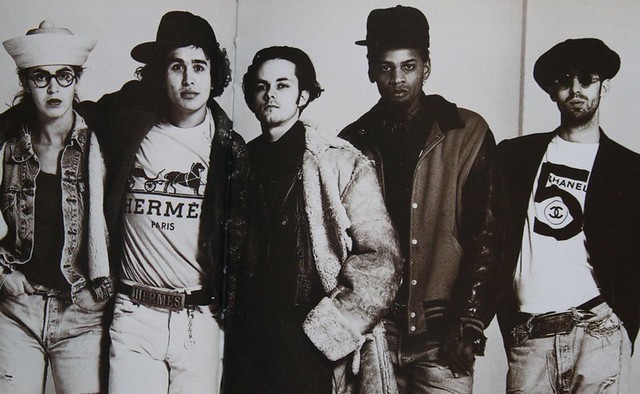
    buffalo

    The Hermes t-shirt and belt were snide, the Chanel Number 5 t-shirt sported by Dave Dorrell were being knocked out by a group of friends. Young people in London co-opted brands just like the hip-hop artists heading to Dapper Dan’s in Harlem.

    Homage

    From 1980, surfer Shawn Stussy had been growing an clothing empire of what we would now recognise as streetwear. Stussy had originally came up with the t-shirts as an adjunct and advertisement of his main business – selling surfboards. But the clothing hit emerging culture: skating, punk, hip-hop and took on a life of its own. It went global through Stussy’s ‘tribe’ of friends that he made along the way.

    Stussy is known for his eclectic influences and mixing media: old photographs alongside his own typography. In a way that was unheard of in brand circles at the time, Stussy manifested his brands in lots of different ways. The back to back SS logo inside a circle was a straight rip from Chanel; the repeating logo motif that appeared in other designs was a nod to MCM and Louis Vuitton.

    All of this went into the cultural melting pot of world cities like Tokyo, New York, London and Los Angeles. Stussy went on to do collaborations from a specially designed party t-shirt for i-D magazine’s birthday party to the cover art of Malcolm Maclaren records. Collaboration with mundane and high-end brands is baked into streetwear’s DNA.
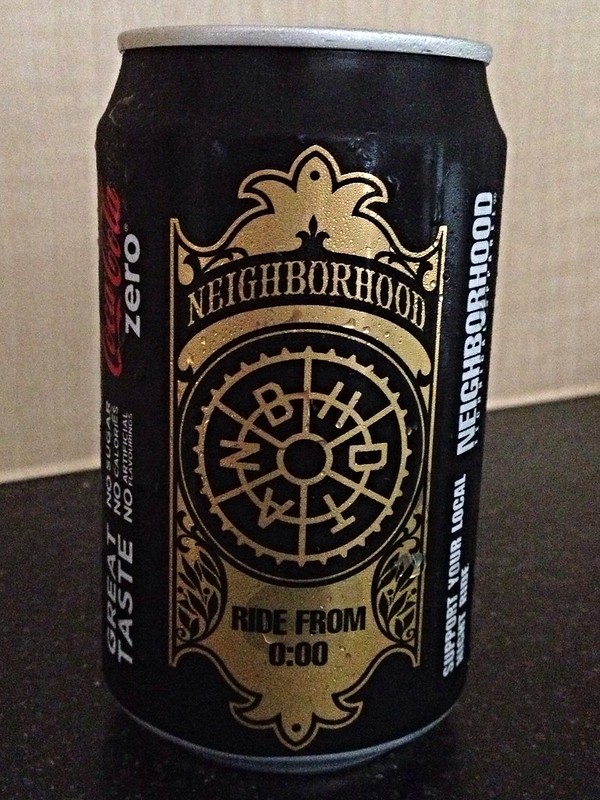
    Coke Zero x Neighborhood limited edition cans

    (Neighborhood x Coke Zero was something I was involved with during my time in Hong Kong.)

    Japan with its engrained sense of quality and wabisabi took the Buffalo mix-and-match approach to the next level. Japan’s own streetwear labels like Visivim, Neighborhood, W-Taps, The Real McCoy and A Bathing Ape (BAPE) took streetwear product quality, exclusivity and price points into luxury brand territory. That didn’t stop BAPE from making a snide versions of various Rolex models under the ‘Bapex’ brand.
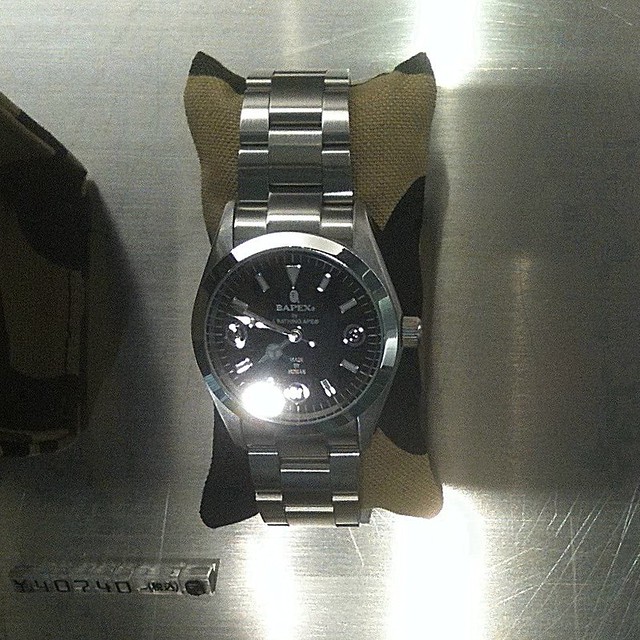
    Bapex

    Some two decades later Supreme came up in New York. The brand takes design appropriation and homage to a new level. Every piece Supreme seems to do is a reference to something else. The famous box logo rips from Barbara Kruger’s piece ‘I shop therefore I am’. From taking a snide swipe at consumerism to ending up in the belly of the beast took Supreme a relatively short time. This heritage of appropriation didn’t stop Supreme from using legal means against people it felt had appropriated its ‘look’.

    In an ironic twist of fate, Supreme was sued by Louis Vuitton in 2000 and yet the 2017 collaboration looks exceptionally similar to the offending items…

    The last time I shared this story the page was just at 2k followers. With the collaboration officially announced today- and the page having 40k more followers since then- I figure it’s time to re-share. The year was 2000, and a 6 year old Supreme took their hands at referencing a high fashion brand as they did early on (Burberry, Gucci,) this time with Louis Vuitton. Box Logo tees (and stickers), beanies, 5 panels, bucket hats, and skateboard decks all featured the Supreme Monogram logo (pictured right). Within two weeks, Vuitton sends in a cease and desist and apparently, ordered Supreme to burn the remaining available stock. Clearly, many of the products from 2000 are still in the resell market, circulating today. Now we arrive at today’s FW Louis Vuitton fashion show. As most everyone is aware by now, Supreme is in fact collaborating with the luxury brand for a July- into fall collection. I’ve seen quite a few pieces from the collaboration (20+, check @supreme__hustle @supreme_access and @supreme_leaks_news for more pics) and it’s panning out to be Supremes largest collaboration to date. It’s interesting to see the references of both brands within the collaboration- from old Dapper Dan bootleg Louis pieces, to authentic ones, to Supremes monogram box logo and skateboard desks (pictured left). 17 years later and @mrkimjones proves that time can mend all wounds (amongst other things). Excited to see what all will release alongside this legendary collaboration. #supremeforsale #supreme4sale

    A photo posted by Supreme (@supreme_copies) on

    The new customers

    North East Asia’s fast growing economies had been borne out of learning from developed market expertise, state directed focus on exports and ruthless weeding out of weaker businesses. Intellectual property was cast aside at various points. Korea, Hong Kong, Japan and China went from making knock-off products to displacing Europe and the US as the leading luxury markets.

    Asian luxury consumers, particularly those second generation rich in China were younger than the typical customer luxury brands cater too. These consumers bought product as they travelled taking in style influences as they went. First from nearby markets like Japan, Hong Kong and Singapore and then Korea. This drew from a melange of hip hop, streetwear, Buffalo styling and contemporary western designers like Vivienne Westwood – as well as the more matronly styles of the traditional European luxury houses.

    The luxury brands had to adapt. They brought in new designers who themselves were drawing from similar influences.  These designers also collaborated with sportswear brands like Alexander McQueen and Puma or Jeremy Scott and Raf Simons for Adidas.

    Luxury brands got seriously into new product categories making luxe versions of training shoes that could be charitably called a homage to the like of Nike’s Air Force 1.

    Bringing things full circle

    As the supreme_copies Instagram account notes the collaboration with Supreme and Louis Vuitton brings things full circle with the pieces having a nod to Dapper Dan’s custom work as well as Supreme’s own ‘homage’.  Luxury brand MCM (Michael Cromer München), which Dan borrowed from extensively in the 1980s was restructured in 1997 with shops and brand being sold separately. The brand was eventually acquired eight years later by the Korean Sungjoo Group. Korea now has its own fast developing luxury fashion and cosmetics brand industry. Textile city Deagu which was the likely source of Dapper Dan’s fabric is now a fashion and luxury business hub in its own right. The Korean entertainment industry is a trend setter throughout Asia. For instance, Hallyu drama My Love From A Star drove breakout sales for the Jimmy Choo ‘Abel’ shoe.

    The only question I still have is why did a move like Louis Vuitton’s collaboration with Supreme take so long? The luxury brands spend a lot on customer insight, they were using social listening far longer than they had been on social media. They know that a customer wearing their jacket could have a Visivim backpack slung over the shoulder and a pair of Adidas Stan Smiths on their feet. Customers mix-and-match Buffalo style for all but the most formal occasions. For streetwear brands, collaboration is in their DNA and they get an additional leg-up in the quality stakes. More luxury related posts here.

    More information

    Ray Petri
    How Buffalo shaped the landscape of 80s fashion – Dazed
    Dave Dorrell interview part one | Test Pressing
    Dapper Dan
    Barbara Kruger Responds to Supreme’s Lawsuit: ‘A Ridiculous Clusterf**k of Totally Uncool Jokers’ | Complex
    Volume and wealth make Chinese millennials a lucrative target market: GfK | Luxury Daily
    Just why are Louis Vuitton and other high-end retailers abandoning China? | South China Morning Post – although Chinese shoppers consumed 46 per cent of luxury goods around the world, their purchases in their home market accounted for only 10 per cent of global sales, falling from 11 per cent in 2012 and 13 per cent in 2013
    How a Jimmy Choo Shoe Became a Global Best Seller – WSJ
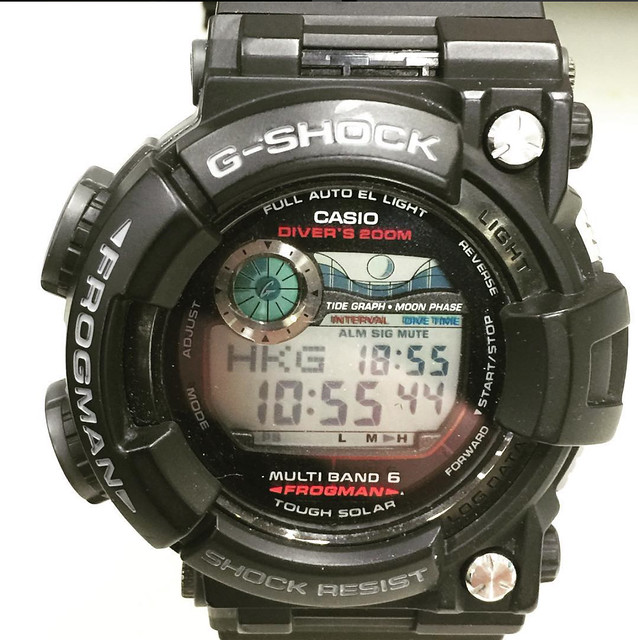
  • Living with the Casio G-Shock GWF-D1000 Frogman

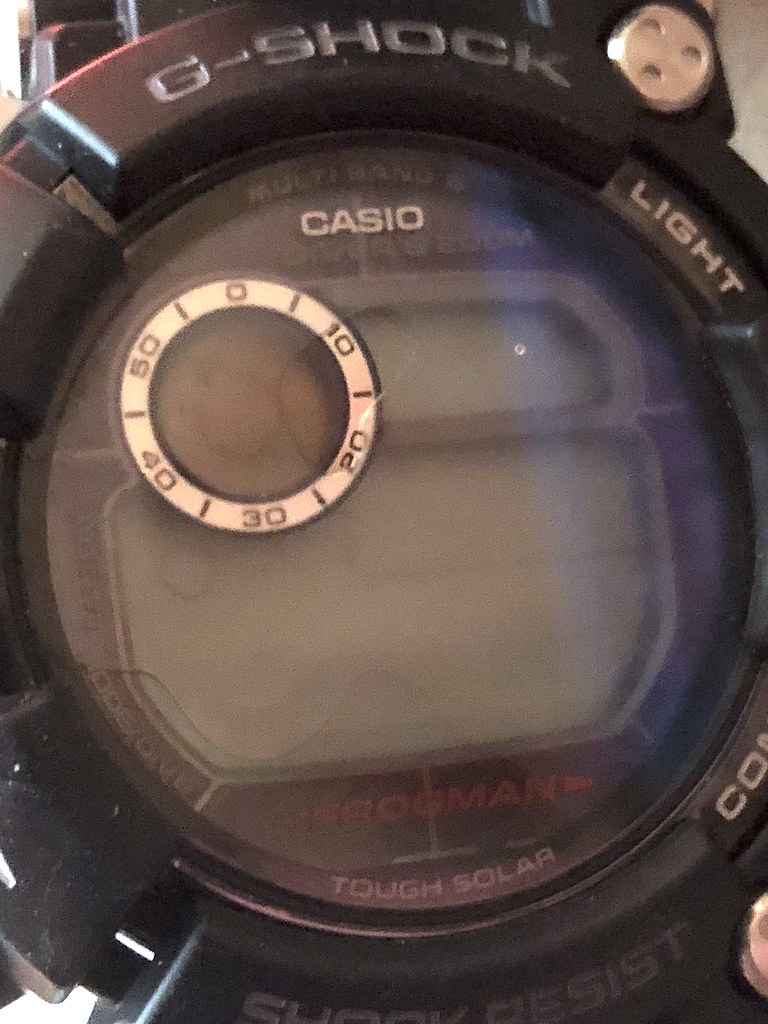
    UPDATE – Casio G-Shock GWF-D1000 sudden stopped working and took on water  when I washed some curtains in a basin. Which is a bit much for such an expensive model that is well-known for its reputed toughness and 200M water resistance. Certainly not what you expect from a watch brand known for its toughness and having a current street price of £800. You can see the water inside the glass on the watch face and no apparent point of ingress. It’s not that long out of warranty as well. Casio have replaced it as it was just within warranty; but think carefully before purchasing one. 

    Casio G-Shock Frogman GWF-D1000 defeated by hand washing clothes in a basin. Redefines toughness and 200M water resistance. Just out of warranty

    When you typically look at reviews of products, there are usually reviewed over a short time when they are new-and-shiny. Often a products features and character come out over time – a symbiotic process between product and user.

    I picked up a Casio G-Shock GWF-D1000 soon after it went on sale for considerably less than the £800 that it is the current street price. Up until I bought the Casio G-Shock GWF-D1000; I had owned its predecessor the GWF-1000 (which I will call the 1000 from here on in).

    So what is the GWF-D1000 anyway?

    The Casio G-Shock GWF-D1000 is the latest in an a series of G-Shock watches aimed at scuba divers. The first Frogman came out in 1993. The overall design has largely been the same with an asymmetric case and a large display to make operation easier. The positioning of the watches and price points changed over time – some of the previous models had titanium cases and came under the Mr-G sub-brand. The last few models have a stainless steel core case with a DLC (diamond like coating) to protect the surface.

    Over time it has picked up features as the technology improved. It became illuminated by a small green bulb, then electro-luminescent material. It moved from relying purely on battery power to having solar cells and a rechargeable battery. The watch became more accurate by picking up time signals via radio from six locations around the world that are calibrated with an atomic clock (precursors to the NTP services around the world that keep your computer and smartphone bang on time.)

    The key technology gains over the 1000 include:

    • A dive computer rather than a dive timer (neither matter to me), it has the same basic functionality that dive computers used to have 20 years ago (minus PC connectivity). No big shakes until you remember that it is doing this all from a solar-powered rechargeable watch battery
    • Digital compass which is surprisingly handy, it is very forgiving of the way you hold it, expect this in other Casio watches soon.
    • Temperature reading (again more for the diver) or when you are running a bath
    • The display has been rearranged and a bit easier to read
    • Much better display light and crisper to read at night

    The real benefits for me were in the build quality:

    • You get a sapphire crystal rather than the usual hardened mineral glass. This isn’t the first time that Casio has used a sapphire crystal on a watch, but they are harder to manufacture and more expensive than the usual mineral glass face
    • The manner in which the strap is secured to the case has been completely revised. There is are new Allen key screws and a carbon fibre rod to secure the strap to the case
    • The strap is made of polyurethane resin reinforced with carbon fibre. The loop that holds the excess strap length is now a section of stainless steel which has been bent around the strap

    How do I use it?

    It makes sense to tell a little bit around why I wear a Frogman. I want an accurate watch (who doesn’t?). I want a reliable watch (again, probably a hygiene factor for most people; but one that hints at why the G-Shock has replaced Rolex as the default watch I have seen on Hong Kongers over the past 10 years or so. G-Shock offers robustness that 20 years ago would have come from fine Swiss engineering – at a much lower price point.

    I love my Swiss dive watches but there is a time and place for everything.  The knockabout case and its water resistance means that you can forget about the watch. You don’t have to coddle it or worry that it will pick up undue attention. You don’t have to worry if you get a bang on an elevator (lift) door, dropped on the bathroom floor or going for a swim.

    The G-Shock is an everyman watch – unless its got a lurid colour scheme it isn’t likely to attract the attention of your average petty criminal. I’ve often taken it off in the office so that I can type in greater comfort and left it there by accident when going home. I’ve never had a G-Shock go missing.

    It is relatively easy to use, despite the modal nature of its interface design. To change settings, use functions or see recorded information you have to cycle through a series of text menus – it has more in common with a 1980s vintage video cassette recorder or a DEC VAX. Quite how this goes down with consumers more used to iPads and SnapChat is interesting. Casio seems to do alright by attracting them with bright plastic cases reminiscent of Lego -based colour schemes.

    I haven’t dived seriously in a long time, I took up scuba diving while working in the oil industry and have never got back into it since moving to London.  PADI diving at resorts is tame compared to British diving club scene I had been used to.

    My work environment is creative which means that my uniform of t-shirts, flannel shirts,  jeans and suede hiking boots make the G-Shock an ideal accessory. I work in the London office of an American digital marketing agency, owned by a French multinational and my clients are scattered in the different offices around the world of pharmaceutical companies. The functions I tend to use most are the world time, date/time and the night light. My iPhone is now my alarm clock.

    The reality is that most of these watches will end up on the wrists of people like me rather than people who dive for a living.

    What’s it like to live to live with the D1000

    The Casio G-Shock GWF-D1000 is only incrementally heavier than the 1000, it felt a bit strange to wear for about 30 minutes after swapping over to the newer model. But in some ways the Casio G-ShockGWF-D1000 doesn’t yet feel like its my watch.

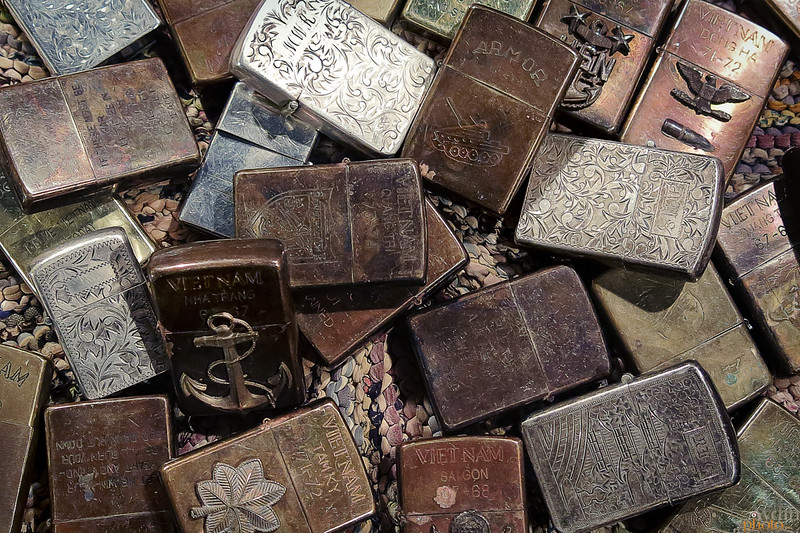
    The 1000 strap became shiny in places over time and more pliable, it felt like it became adjusted to me. Give the Casio G-Shock GWF-D1000 a rub over and it still looks box fresh. The downside is that the strap feels stiff and I still feel its edges on occasion – this isn’t about discomfort, but about the watch not feeling like part of you. There are no shiny parts of wear – it feels less like a ‘personal item”. It lacks what a designer friend calls authenticity; unlike distressed jeans, customised flight jackets or combat Zippos.

    Zippo Lighters

    This sounds great for the resale value, but I feel that it provides a worse experience for the wearer of the watch.

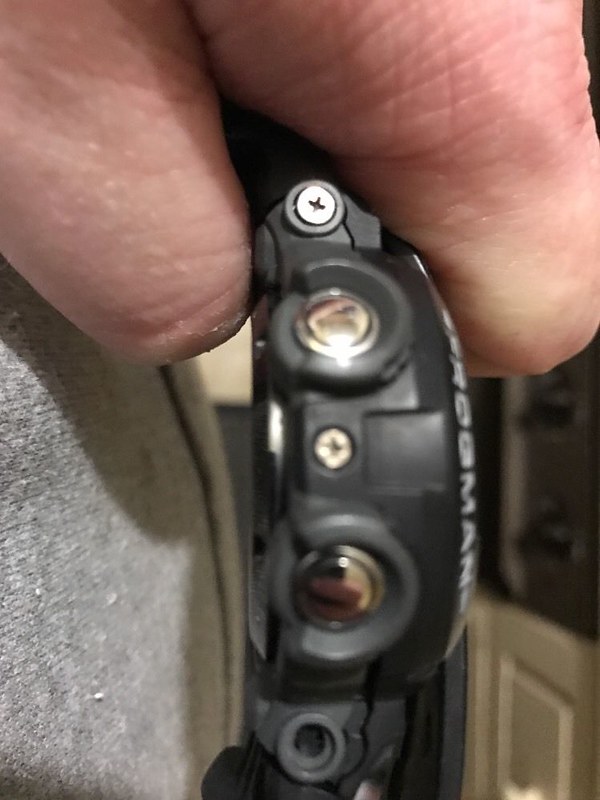
    The reinforced strap does have one bonus, it holds securely to the case. Look at these pictures of my two year old 1000

    Casio GWF 1000 Frogman

    You can see how the retaining screw that held the strap to the case came undone and disappeared over time. You don’t have these kind of problems with the Casio G-Shock GWF-D1000.

    The screen on the Casio G-Shock GWF-D1000 uses its real estate in a different way to the 1000.

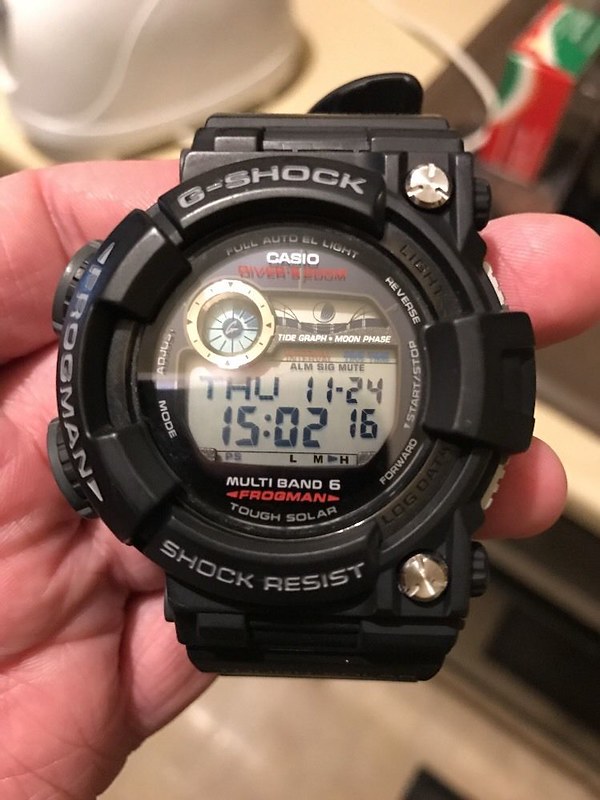
    Here is the 1000

    Casio GWF 1000 Frogman

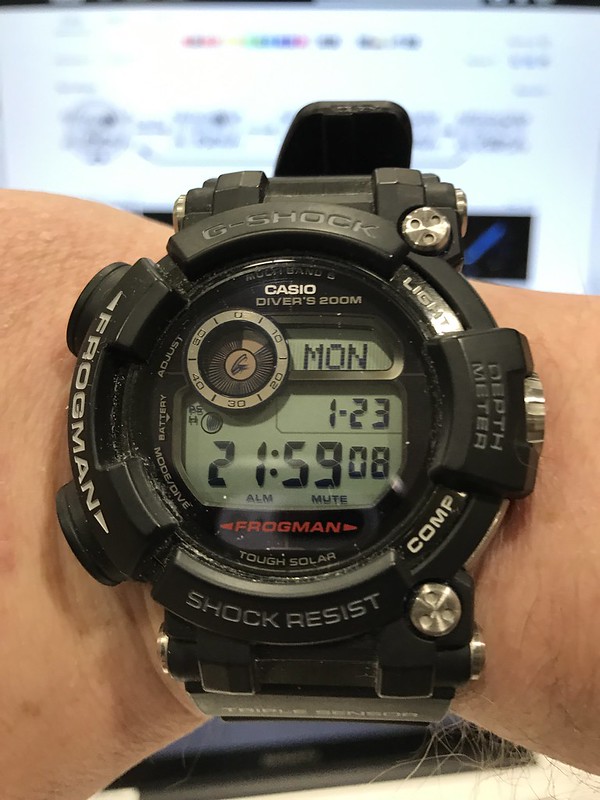
    Here is the Casio G-Shock GWF-D1000

    Casio GWF D1000 Frogman

    At first the differences aren’t obvious. If you look at the top right side of the screen, the tide and moon segments are replaced by a multi-use screen on the Casio G-Shock GWF-D1000. The small icons for alarms and hourly alerts are moved to the bottom and left of the screen on the Casio G-Shock GWF-D1000, the moon icon now moves to the left of the main screen down from the top right. This probably marginally increases the screen real estate and helps make legibility a bit clearer at night.

    GWF 1000

    The biggest 1000 feature that I miss is the ability to toggle with one press of the top left button from showing the date on the screen to showing a second time zone; it was extremely handy for work. And having come from the 1000 to the Casio GWF-D1000 it was a real ‘what the fuck’ moment.

    By comparison I have to press six times to get to the world time screen. Instead, it now toggles between a tide table and the day. Even giving it a two press option would be a better fix than what the Casio GWF-D1000 currently has. It’s a small gripe, but it annoyed the heck out of me.

    My work around has been to keep the watch in world time mode and if I need to know the day or date, I find myself reaching for my iPhone.

    If you are really that worried about tide tables, you will be likely using a specialist service as they vary a good deal over relatively short distances.

    If the Casio G-Shock GWF-D1000 still sounds like the kind of watch you want, you can get it here.

    SaveSave

    SaveSave

    SaveSave

    SaveSave

  • Galaxy Note 7 + more news

    Galaxy Note 7

    Samsung finally explained what caused the Galaxy Note 7 explosions | Quartz – it sounds like a deeper process issue in design and supply chain management. The impact of the Galaxy Note 7 explosions was huge for Samsung’s reputation.

    Consumer behaviour

    It’s Generation X, not millennials, who are obsessed with Facebook, Instagram, Snapchat, and Twitter — Quartz – interesting research

    Economics

    China’s Army of Global Homebuyers Is Suddenly Short on Cash – Bloomberg – pop goes the London housing bubble?

    Why the Trans-Pacific Partnership Failed | Slate – good pointers for Brexit and beyond too

    Can post-Brexit London survive as Europe’s cultural and financial capital? | The Guardian – it will take a right kicking basically, some sectors much worse than others

    Don’t Blame Davos Man for Globalization’s Limits – Bloomberg View – great read

    Brexit Effect Drives Tourist Spending in the UK | Business of Fashion – so its temporary

    The Geopolitics Of 2017 In 4 Maps | Zero Hedge

    Ethics

    Professional pay skewed by snobbery (in UK) | FT – government finds that even if you make it as a working class person in a middle class job, you’ll still be paid less

    Finance

    China warned of risk to banks from One Belt, One Road initiative | FT – no clear commercial imperative

    China’s fintech industry shows where the rest of the world is heading | Techinasia – interesting read, though China’s conditions are unique

    FMCG

    McDonald’s may have a Big Mac ATM, but America has been trying to automate cheeseburgers for more than 50 years — Quartz – robotics disrupting ‘McJobs’

    Formula safety still a prime concern of Chinese mums | Campaign Asia – also since grandparents spend a big part in raising the kids, adverts should acknowledge their contribution (paywall)

    Innovation

    Hitachi Maxell’s LED Lantern Powered by Water, Salt – Nikkei Technology Online – interesting design – Japan has a ‘prepper’ culture due to the earthquakes and tidal waves that happen

    Marketing

    China Marketers Reveal Digital Challenges For Country’s PR Firms: Study | Holmes Report – Interesting reading; that digital is more important is no surprise; agency relationships dropping from 2.9 years to 2.5 years is a surprise though – shorter than advertising etc. PR is more likely a tactical buy

    Three Theories Behind the Global Productivity Slowdown | Naked Capitalism – interesting read, though they are theories only

    Not Just A Crock: The Viral Word-Of-Mouth Success Of Instant Pot : The Salt : NPR – expecting to see this as a case study in PR decks moving forward

    Media

    The Chinese News App with 600 Million Users That You’ve Never Heard Of | MIT Technology Review – Toutiao uses AI to curate headline recommendations

    It’s About Free Speech, Says Tech CEO Cashing In On Breitbart Ads – Medium – when mainstream media aren’t making money from online ad dollars, I can understand why Taboola are hanging on in there

    The State of Journalism in China—Ed Wong’s Exit Interview | ChinaFile – worth a listen

    WeChat Official Account Platform | Grata – great write-up

    Mobile eSports | JWT Intelligence – interesting that it has finally moved to mobile platforms

    How a football publisher repurposed one event’s worth of video for 4 different platforms – Digiday– really nice laymans guide to video platforms

    Republican Lawmakers in Five States Propose Bills to Criminalize Peaceful Protest | The Intercept – Roger Corman’s Death Race 2000 seems eerily prescient

    This Team Runs Mark Zuckerberg’s Facebook Page – Bloomberg – interesting blend of personal and business brand

    Retailing

    Gen Z Likes Shopping In-Store; Seeing Items Encourages Purchases | MarketingCharts – so why are malls dying then?

    Security

    Americans and Cybersecurity | Pew Research Center – trust in institutions to keep their data safe has plummeted

    How WeChat bots are running amok | VentureBeat – black market AI powered bots used on WeChat to build friendship and bilk netizens out of cash

    Vincent Canfield’s Blog – It’s been a while – Chaos Communications Congress hacker meets US customs

    Software

    WeChat’s Hot New Feature Will Be Tricky for Marketers | Digital – AdAge – apps within the app are a new paradigm for marketers

    Technology

    China’s fintech industry shows where the rest of the world is heading | Techinasia – interesting read, though China’s conditions are unique

    Web of no web

    Will voice services like Amazon’s Alexa really rise as fast as predicted? | The Drum – interesting op-ed by Rob Blackie. Not as fast as predicted (paywall)

    Do You Want Smell-O-Vision for Your VR Porn? Neither Do We But Here It Is | Motherboard – interesting technology, ewwww product

    Wireless

    Xiaomi’s Plan to Rule the World: Build Every Gadget Imaginable | WIRED – more the vintage Sony or Panasonic model than the Nokia model

    Apple’s Full lawsuit against Qualcomm Comes to Light Revealing Secret Licensing Agreements and more – Patently Apple – interesting picking apart of Apple’s claims so it makes sense

    Apple Sues Qualcomm for $1 Billion | CNBC – What’s the back story, why now?

  • Shareware: Throwback gadget

    Shareware -back before the internet became ubiquitous, software was distributed by bulletin boards. It was expensive to dial into a board, so magazines uses to have storage media pre-loaded with applications on the front of them.

    For much of the late 1990s and early 2000s my parents used to use MacFormat magazine CDs and floppy disks as coffee coasters. One disk may come with bloatware such as the installation software for AOL, Demon or Claranet. The other disk would be full of free or paid for software.

    The paid for software was often written by a single developer. It was a labour of love / cottage industry hybrid. Often the developers wrote the software to deal with a real need that they had, it was then passed on as they thought others would benefit as well.

    Open source software the way we understand it now was only in its infancy in terms of public awareness. Packaged software was big money. As recent as 2000, Microsoft Office for the Mac would have cost you £235. Quark Xpress – the Adobe Indesign of its day would have cost in the region of £700+ VAT.

    Into the gap sprung two types of software: freeware and shareware.

    Freeware was usually provided as is, there was little expectation of application support. It would become orphaned when the developer moved on to other things

    ChocoFlop Shareware Style

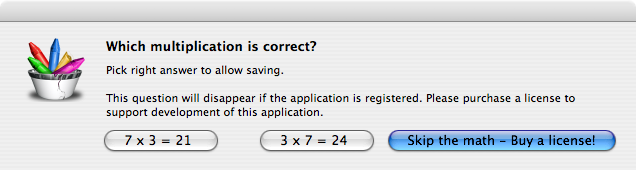
    Shareware usually had different mechanisms to allow you to try it, if you could see the benefit then you paid a fee. This unlocked new features, or got rid of nag screens (like the one from image editing app Chocoflop).

    In return you also got support if there was any problems with the app. Shareware hasn’t died out, but has become less visible in the world of app stores. One that I have been using on and off for over 20 years is GraphicConvertor by Lemke Software. It handles any kind of arcane graphic file you can throw at it and converts it into something useable.

    Kagi Software were one of the first people to provide programmers with a way of handling payments and software activation. Kagi provided an onscreen form to fill out, print, and mail along with their payment. it was pre-internet e-commerce.

    I can’t remember exactly what utility programme I first bought for my college PowerBook, but I do remember that I sent the printed form and cheque to a developer in Glasgow. I got a letter back with an activation code and a postcard (I’ve now lost) from the Kelvingrove Art Gallery and Museum.

    Later on, Kagi were one of the first online payment processors.

    From the late 1990s FTP sites and the likes of download.com began to replace the magazine disk mount covers. Last year Kagi died, making life a little more difficult for the worldwide cottage industry of small software developers. it was inconvenient, but now with PayPal developers have an easy way to process payments and there are various key management options.

  • Lights out production lines

    Lights out production lines reminded me of my childhood. If you are of a certain age, ‘hand made by robots’ brings to mind the Fiat Strada / Ritmo a thirtysomething year old hatchback design that was built in a factory with a high degree of automation for the time.

    Fiat subsidiary Comau created Robogate, a highly automated system that speeds up body assembly. Robogate was eventually replaced in 2000. The reality is that ‘hand made by robots’ had a liberal amount of creative licence. Also it didn’t enable Fiat to shake off its rust bucket image. Beneath the skin, the car was essentially a Fiat 127. Car factories still aren’t fully automated.

    Foxconn is looking to automate its own production lines and create products that truly are ‘hand-built by robots’. Like Fiat it has its own robots firm which is manufacturing 10,000 robots per year.

    Foxconn has so far focused on production lines for larger product final assembly (like televisions) and workflow on automated machine lines: many consumer products use CNC (computer numeric control) machines. That’s how Apple iPhone and Macs chassis’ are made. These totally automated lines are called ‘lights out production lines’ by Foxconn.

    Foxconn is looking to automate production because China is undergoing a labour shortfall as the population getting older. Foxconn uses a lot of manual workers for final assembly of devices Apple’s iPhone because the components are tightly packed together.

    Forty years ago, Japanese manufacturers conquered high end and low end consumer electronics with pick-and-place machines to automate electronics production, Nokia went on to build its phone business on similar automated lines. Globalisation ironically facilitated hand assembly of exceptionally dense electronics devices.

    It will be a while before Foxconn manages to automate this as robotic motor control isn’t fine enough to achieve this yet. In order for that to happen you need a major leap forward in harmonic gearing. This isn’t a problem that software or machine learning can solve easily. More related pieces of jargon can be found here.

    More information
    Foxconn boosting automated production in China | DigiTimes – (paywall)