Category: oprah time | 書評 | 서평 : 文芸批評

Welcome! I guess the first question that you have is why oprah time? Well in my last year of college I used to sit in the house that I shared with my landlord and write my essays whilst watching cable TV.

There I would be sipping tea, writing away and referencing from text books spread around me on the couch and coffee table. One of the programmes on the in the background was Oprah Winfrey. A lot of the show was just background noise. But I was fascinated by Oprah’s book club.

She’d give her take on a book, maybe interview the author. And then it would be blasted up the New York Times bestsellers list. This list appears weekly in the New York Times Book Review. Oprah’s book club was later emulated by other talk show hosts, notably the UK’s Richard Madeley and Judy Finegan.

On the high end you had Melvyn Bragg‘s South Bank Show when they profiled an author of the moment.

When I came to writing my own review of books that I’d read, I was was brought back to that time working on a sofa. Apple laptop in hand. It made sense to go with Oprah time.

You might also notice a link called bookshelf. This is a list of non-fiction books that I have kept. And the reasons why I have kept them.

If you’ve gone through my reviews and think that you’d like to send me a book to review. Feel free to contact me. Click this link, prove that you’re human and you will have my email address.

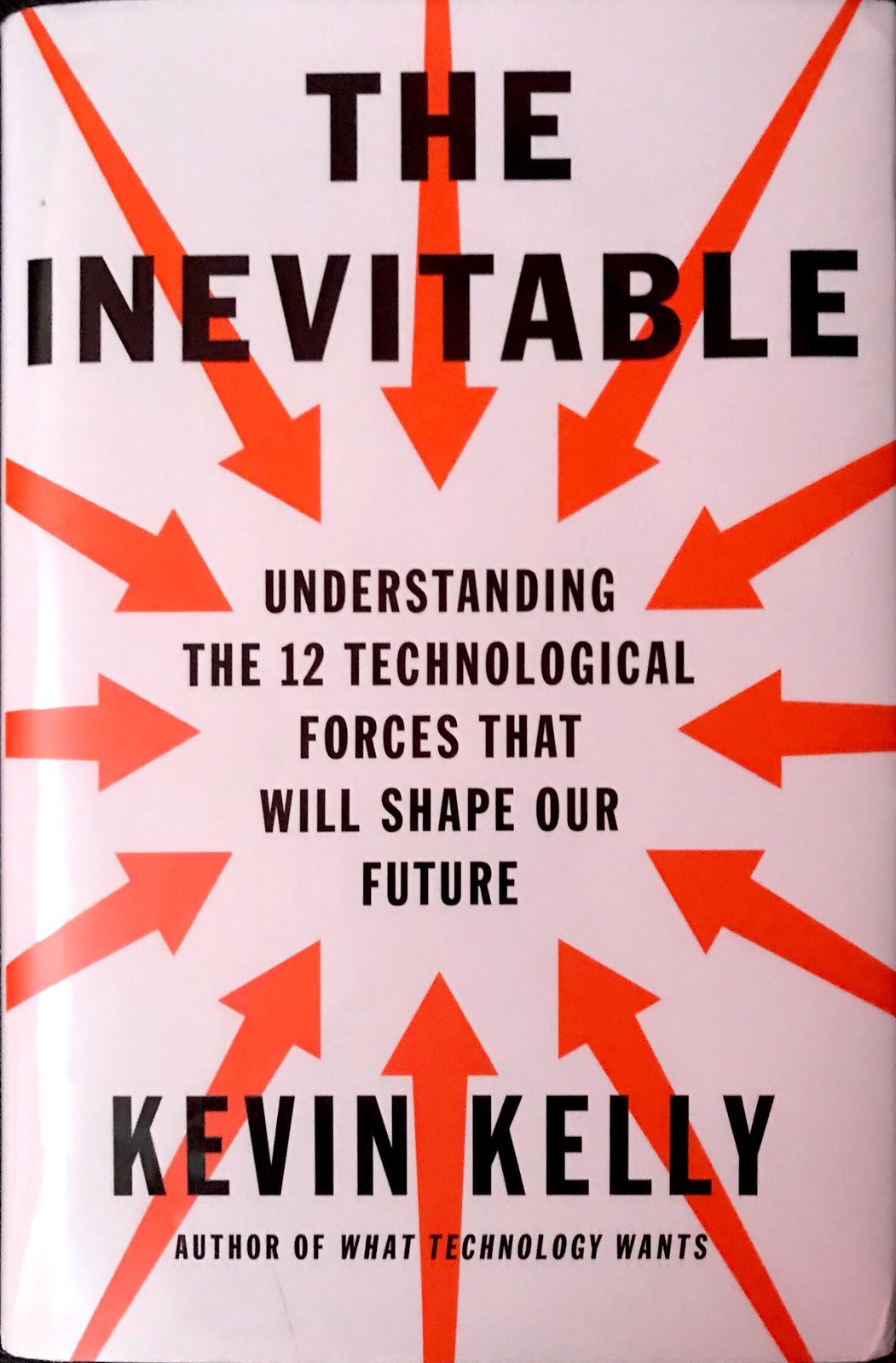
  • The Inevitable by Kevin Kelly

    I re-read Kevin Kelly’s What Technology Wants and then decided to revisit The Inevitable: Understanding the 12 Technological Forces That Will Shape Our Future. The books make sense as ideal companions for each other, despite some overlap in terms of proof points.

    On the face of it The Inevitable is a less ambitious book than What Technology Wants. And when I started reading the book I didn’t get the kind of electrifying feeling that a big idea can bring, like when I read What Technology Wants.

    The inevitable

    In the book Kevin Kelly touches on the kind of areas one would expect in  typical presentation given by an innovation team at an advertising agency. He is an unashamed techno-optimist, but the key difference in his thinking is two-fold:

    • Kelly pulls it together as a coherent idea rather than 12 slivers. He provides in-depth cogent arguments that bind the trends together
    • Kelly argues that transparency in governments will compensate for the erosion of privacy. While I understand where the idea has come from, I don’t agree with this particular viewpoint at least as it would manifest itself in the west. I certainly don’t think that would be the case in the East either. The Nazis use of IBM technology damn near destroyed the world as we know it. The level of trust between the government and the governed is in decline

    There is a clear line of progression in Kevin Kelly’s works from Out of Control written at the start of the modern internet age through to The Inevitable.  If you are interested in how technology is shaping our world buy What Technology Wants; if you are still hungry for more follow it up with The Inevitable: Understanding the 12 Technological Forces That Will Shape Our Future.

    More book reviews here.

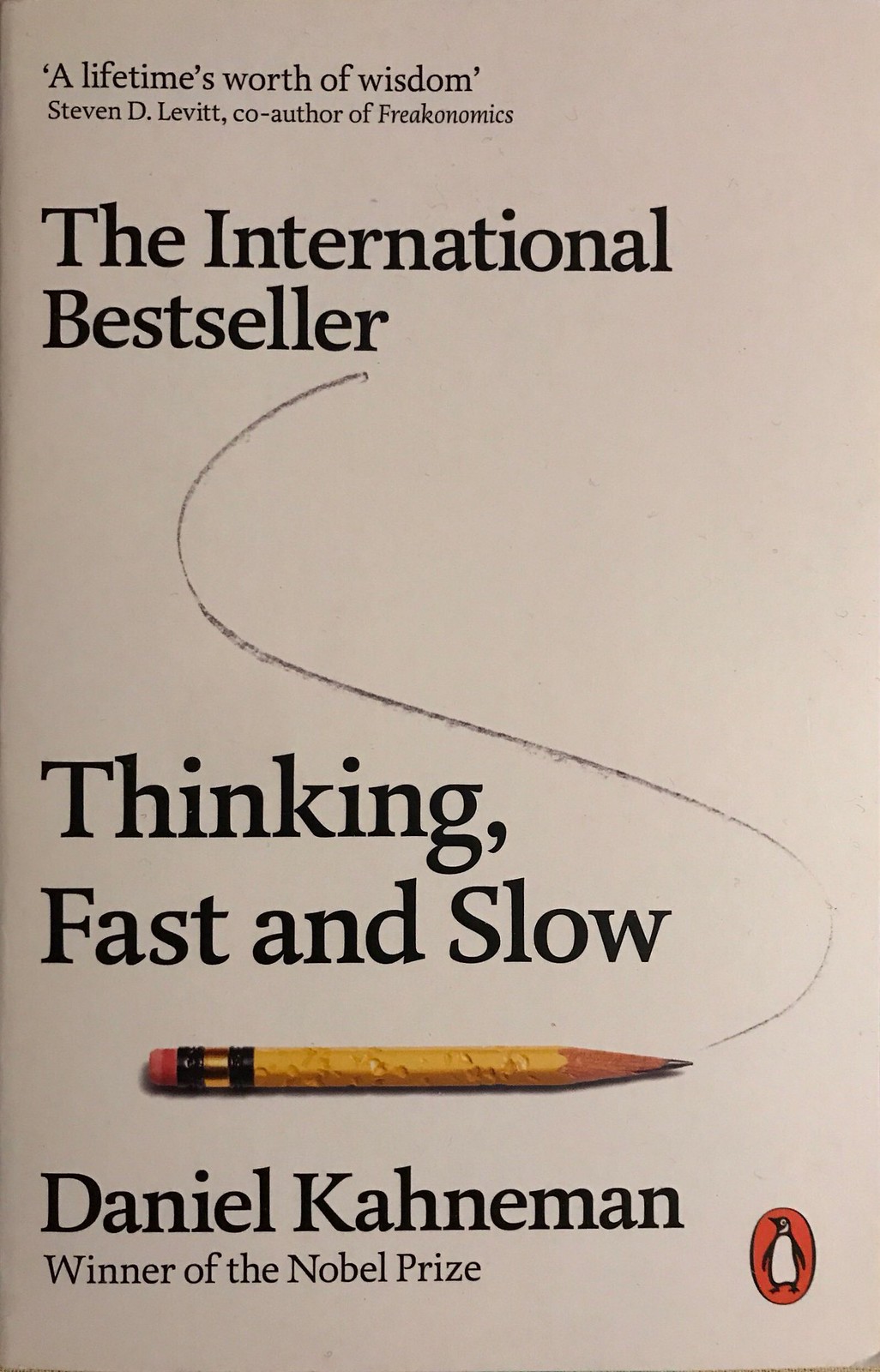
  • Thinking Fast and Slow by Daniel Kahneman

    I took the opportunity in June to re-read Daniel Kahneman’s work Thinking Fast and Slow. Kahneman uses storytelling from key points in his career to take the audience on a journey through biases and better decision-making. From a book that is obviously aimed at a consumer audience it has an outsized impact on marketers.

    After Thinking Fast and Slow presentations now talk about behavioural economics. What this meant in practice was revisiting the interface of psychological cues and marketing communications to encourage a desired behavioural change – like a purchase. It brought a renewed focus on A/B testing of call to action copy and images based around known consumer biases. The concept of system 1 and system 2 thinking is a useful way of understanding our own decision-making processes.

    It also forces us to think about how we market to consumers. Political campaigns often deliberately look to short-circuit deliberative system 2 thinking and tap straight into the raw emotion in system 1 thinking. It is automatic and can be ugly.

    Thinking Fast & Slow

    This isn’t necessarily a marketing handbook however, it is designed to make the average person more aware of their decision making process. It reminded me of Dan Ariel’s Predictably Irrational.

    The key difference is that Kahneman’s work provides more of a learning structure in the book. Ariel is closer to the ‘ain’t it cool’ style of Malcolm Gladwell (though more rigorously researched).

    I’d recommend that marketers start on Thinking Fast and Slow at the back. There is  summary of the book and then some supporting white papers. Once you have them read then go to the front and work your way through. The reason why I suggest this approach is that marketers use case is different to that of the man in the street (who buys his books from the non-fiction section of the New York Times bestseller list). More book reviews here.

    SaveSave

  • True Names by Vernor Vinge

    I was inspired to read True Names by a podcast. New York Times journalist John Markoff was interviewed by Kara Swisher on the Recode podcast in February and talked about reading science fiction to better understand how technology is likely to affect us.
    Untitled
    It’s actually a great piece of advice. Back in the day, large corporates used to employ authors to write stories based on scenarios as part of their research programmes. Many people have attributed the clamshell mobile phone to the Star Trek TV series and the flip communicator devices.

    Markoff outlined his favourite stories.

    “Snow Crash” by Neal Stephenson (1992): “The premise is, America only does two things well. One is write software, and the other is deliver pizzas. [laughs] What’s changed?”
    “The Shockwave Rider” by John Brunner (1975): Markoff said he built his career on an early understanding that the internet would change everything. He said, “[The Shockwave Rider] argued for that kind of impact on society, that networks transformed everything.”
    “True Names” by Vernor Vinge (1981): “The basic premise of that was, you had to basically hide your true name at all costs. It was an insight into the world we’re living in today … We have to figure it out. I think we have to go to pseudonymity or something. You’re gonna participate in this networked existence, you have to be connected to meatspace in some way.”
    “Neuromancer” by William Gibson (1984): Markoff is concerned about the growing gap between elders who need care and the number of caregivers in the world. And he thinks efforts to extend life are “realistically possible,” pointing to Gibson’s “300-year-old billionaires in orbit around the Earth.

    I had read Snow Crash relatively recently and Neuromancer was revisited last year. I had a vague recollection of The Shockwave Rider and True Names, but hadn’t read them in over 20 years.

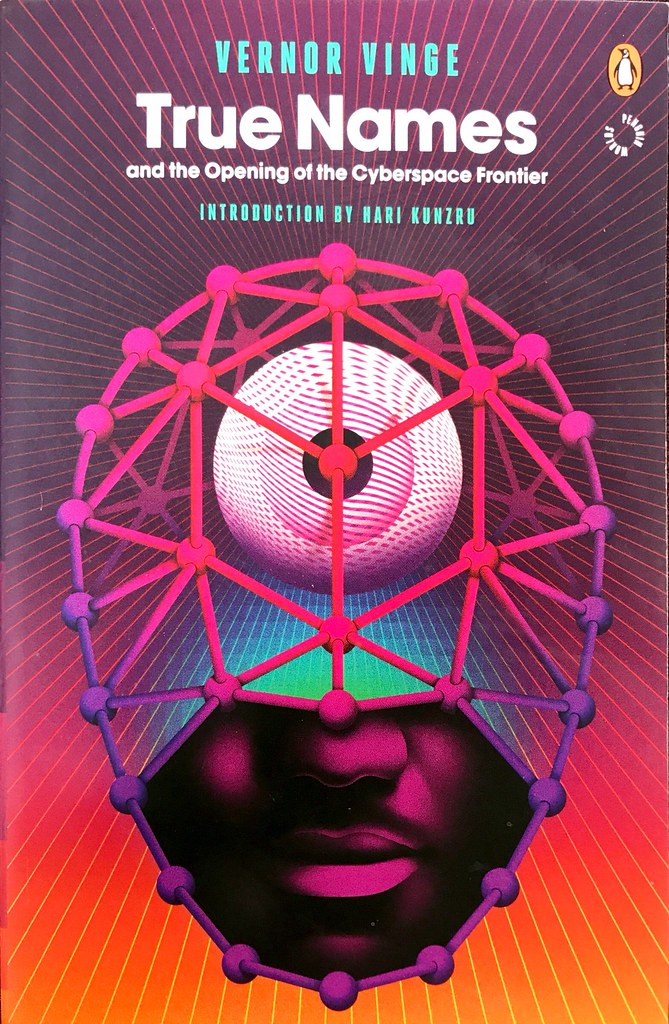
    Vinge’s True Names is published by Penguin with a collection of essays from a range of technology thinkers including

    • Chip Morningstar and Randy Farmer who founded Habitat one of the first massive online multiplayer games, back when dial up bulletin boards were the bleeding edge. Farmer worked at Yahoo! when I was there and was involved in Yahoo! 360 and still consults on community / social platform issues
    • Bruce Schneier wrote about how security products fail us. Bruce is one of the world’s leading commentators on all things hack and cryptography related
    • Mark Pesce is better known now as an Australian-based computer academic, but two decades ago he invented VRML – a way of representing the internet as a 3D thing and prescient in the light of Oculus Rift and others.
    • Marvin Minsky; was a pioneer in AI and machine learning provided an afterward to the story

    That True Names managed to attract essays from these people should be an endorsement in itself.  Re-reading it two decades on, Vinge’s story echoes and riffs on the modern web. Hacking, cyberterrorism, constant government surveillance and the tension between libertarian netizens versus the regulated  real world. The central theme of Mr Slippy; a hacker who is identified by US government officials and co-opted as an unwilling informant and agent provocateur feels reminiscent of LULZSec leader and super grass Sabu. It’s amazing that Vinge wrote this in 1981 – although he envisages the web as being rather like a Second Life / Minecraft metaverse – with NeuroSky style interfaces.

    Penguin’s careful curation of essays riffing on the themes of True Names is where the real value is in my opinion. For someone who cares about technology and consumer behaviour. It is worthwhile keeping this book on the shelf and diving in now and again. More related posts here.

    More information
    Want to understand the future? Read science fiction, John Markoff says. | Recode
    Habitat Chronicles – thoughts on gaming, online products and community building by Chip Morningstar and Randy Farmer
    Schneier on Security
    Mark Pesce’s professional website and his columns for The Register
    Vernor Vinge lecture on long-term scenarios for the future via The Wayback Machine

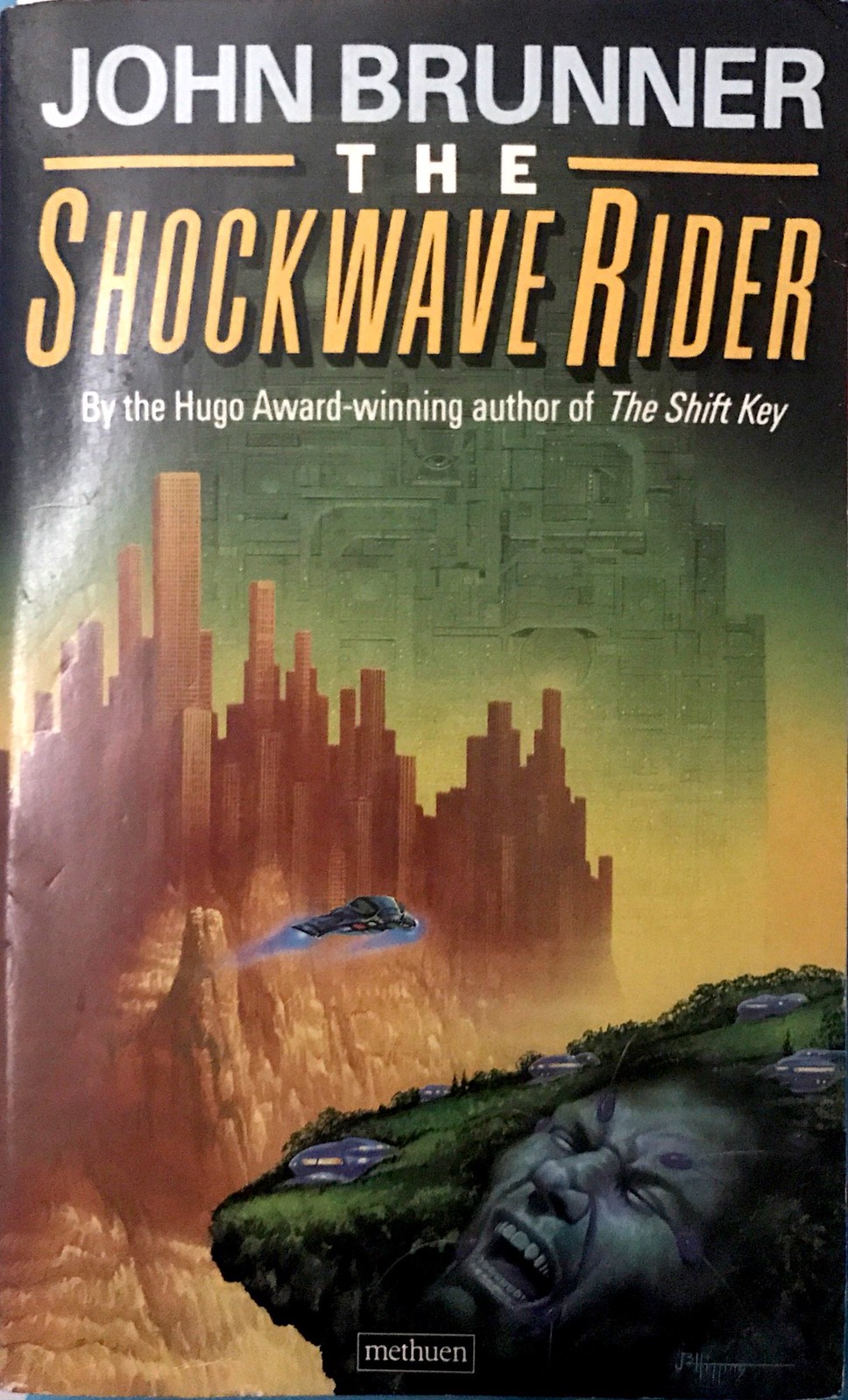
  • The Shockwave Rider by John Brunner

    I had The Shockwave Rider on my list of to read materials as it was a proto-cyberpunk novel, and finally got past my inertia when John Markoff recommended it.

    The Shockwave Rider

    Brunner was a British science fiction writer who did his best work in the 1960s and early 1970s in this book he reflects on a connected world not too far away from the one that we live in. Despite Brunner’s roots he manages to speak with a confident American voice in his writing; something that I don’t think is a bad thing, but caused friction with his contemporaries.

    The Shockwave Rider Plot

    The main protagonist is a hacker who has used his skills to conjure new identities and ends up starting a revolution through the creation of computer viruses and worms. Brunner is credited with introducing the concept of the modern computer worm.

    His work reflects a different society to our own where our identities can be broken (if you have the skill or the money) and a new one forged – a vision 180 degrees away from what governments, advertisers and social networks want. He is on to something with The Ear – a service that audiences can contact and will be listened to in privacy and without judgement. The secular confessional it represents feels like something the world needs as a counterweight to the cognitive dissonance and connectivity-as-social-value of social networks like Facebook and SnapChat.

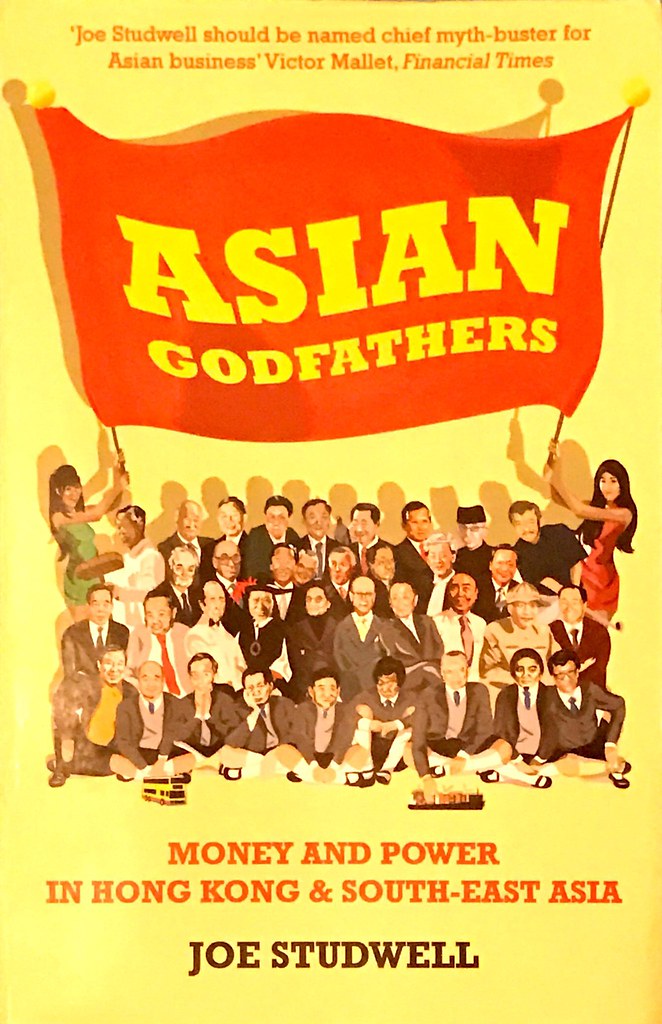
  • Asian Godfathers by Joe Studwell

    I’d read Joe Studwell’s How Asia Works over lunar new year so Asian Godfathers was an obvious follow-on. Studwell dealt directly with the reasons for East Asia’s economic growth and Southeast Asia’s failing to follow them.

    Asian Godfathers

    Studwell attached this same subject through through a different lens. Studwell looks at it through the lens of the business community in these different countries. In Asian Godfathers, he tells the story through Asia’s business tycoons. From the taipans of Hong Kong to Stanley Ho – the Macau gambling tycoon.

    The Asian godfathers were generally cosmopolitan privileged people who where in the right place at the right time. Some of them had colourful origin stories as black marketers selling fake medicines and blockade runners. Mao’s China relied on business tycoons across Asia when the country had closed itself off from the world.

    Studwell tells of an elderly tycoon who goes to sleep in a bedroom with no windows, such was his paranoia about revenge from the families of people who had been ‘treated’ with his black market antibiotics decades earlier.

    This also explains the paranoia that Hong Kong’s tycoons had over politicised youth in Hong Kong  as well. These are the people who are most likely to kick back against their rent seeking businesses.

    But these Asian Godfathers are just a side show in a wider panorama of political greed and incompetence across Southeast Asia. Asian Godfathers is more like Hotel Babylon than an economics analysis like How Asia Works, yet it delivers its message forcefully. More related content here.