Blog

  • The future starts here & other things this week

    I had an amazing opportunity to see the V&A exhibition The Future Starts Here as a preview. The Future Starts Here is a collection of 100 objects that the V&A think might be indicators of the near future. smart appliances to satellites, artificial intelligence to internet culture, this exhibition brought together more than 100 objects as a landscape of possibilities for the near future.

    This includes

    • Smart appliances
    • Autonomous sailing ship
    • Micro-satellites
    • 3D face scanned sculptures
    • Masdar City, the world’s first carbon-neutral, zero-waste city, Foster + Partner
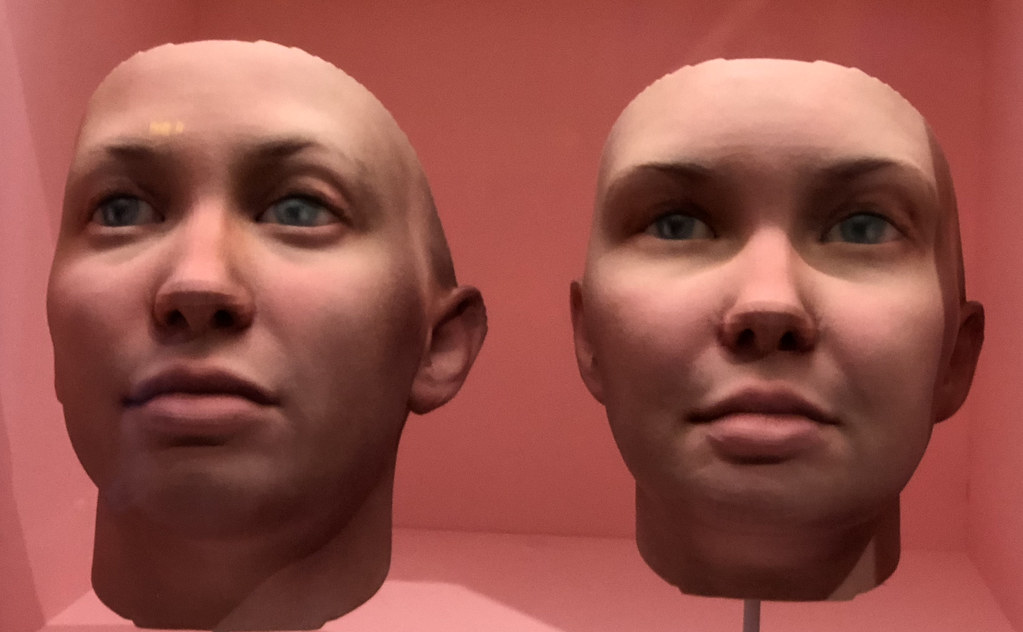
    faces

    The local Unilever business in Hong Kong did their own version of a Dove advertising campaign. What’s interesting is how it differs in tonality from the usual Dove work.

    ‘Appreciate don’t adjudicate’ is very local. Cantonese is laden with puns and symbolism. It is a fluid living language (despite the efforts of the Communist Party of China). Or as Campaign Asia put it:

    The campaign is “by locals, for locals” and because Cantonese is famously colloquial and fond of wordplay, the use of Cantonese lingo is expected to resonate with the audience.

    Over 100 sony aibo robot dogs get their own funeral in japan – so much here on human robot interactions and a meditation on the metaphysics of quality. This contrasts with the horror that greeted demos of Google Duplex.

    I am a big fan of Eno’s Oblique Strategies so this was right up my street: The Quietus | News | WATCH: Brian Eno Installations Talk

    Interview with JJ Connolly, the Author of Layer Cake and Viva La Madness – YouTube – great interview with JJ Connolly of The Layer Cake. I particularly like his description of his creative process. More related content here.

  • Video ads + more news

    Sources say Adidas has paused its video ads on Facebook while it reviews their efficacy – Digiday – From my perspective it really depends what the video ads are supposed to do.  What kind of job that they want Facebook video ads to do in the customer journey? More adidas marketing content here.

    Armed with better perspective, Sir Martin Sorrell vows to ‘start again’ | Marketing Interactive – this is interesting, particularly as a number of clients put WPP on review after he left. I am not sure that he will be able to build another WPP; but he could build a great consultancy for procurement departments at major brands. I hope that he doesn’t go digital only, or go and work for a platform like Google or Facebook; selling Facebook video advertising

    James Murdoch Won’t Move to Disney if Fox Deal Closes – WSJ – makes sense given his time at Rawkus Records, there is probably an itch to scratch getting out and doing his own thing

    Facebook will not be accepting referendum related ads from advertisers based outside of Ireland – issues with international pro-life groups

    The United States of Japan | The New Yorker – interesting analysis

    Microsoft wants serious, non-gaming developers to make more money • The Register – this will put pressure on Apple’s services revenue in particular the Mac store

    Ray Ozzie’s Encryption Backdoor – Schneier on Security – Scheier nails it. The sad thing is that Ozzie has been one of the few universally respected technologists over the years

    The Netflix generation doesn’t do compromise | The Times – a few things about the media consumption in this. There are still shared experiences: landmark shows like Sherlock, McMafia, Game of Thrones, Stranger Things, or Black Mirror. Fragmentation of audiences didn’t start with Netflix but with video cassette recorders, multiplex cinemas, Channel 4 and cable and satellite TV. There was a certain delicious irony reading about how media plurality is ‘bad’ in a paper owned by the Murdoch media empire. I committed a greater sin than the Netflix millennials and opted out of watching TV quite happily for seven years until I was gifted a Sony Trinitron TV set by a friend who was getting a flat screen –  which would probably count as even more ill tempered. The comments on online discussion are natural. Do Times readers invite objectionable opinions around to dinner parties in the name of diverse thinking? I would imagine not that often unless there are other ties (like familial links). (Paywall)

    SenseTime: The billion-dollar, Alibaba-backed AI company that’s quietly watching everyone in China — Quartz

    Report: Chinese government is behind a decade of hacks on software companies | Ars Technica

  • River Elegy & other things this week

    River Elegy

    River Elegy (河殇) is a six-part documentary broadcast on China’s largest TV station CCTV1, in 1988. River Elegy is a landmark documentary, a more innocent naive Chinese viewpoint that emerged as the country opened up. China and its civilisation has existed around the Pearl and Yellow rivers for 1000s of years, rather like the Rhine and the Elba in Germany.

    China had started to open up to the world after the cultural revolution and intellectuals started to learn about how different the west was. River Elegy compares the old ways and Chinese gains in civilisation over thousands of years, with the modern world. In retrospect the River Elegy attacks on traditional culture and Confucianism mirror the rejection of tradition in the cultural revolution. The River Elegy series spurred debate and was seen to be criticism of what the creators perceived to be a slow-moving communist party.

    At the time, intellectuals in China were avidly reading the works of western thinkers like John Naisbitt and Alvin Toffler who provided a vision of a rollercoaster centrist techno-utopian future. I get the attraction to young intellectuals. In the 1980s, the future looked bright and technocratic.

    The thing that I find most interesting about it is the use of music, imagery and editing is almost psychedelic in its effect. It must have been mind blowing for the audience who tuned into it.

    A couple of people involved in the production of River Elegy whore about how it was created in Deathsong of the River – which is a great read. It is interesting to reflect how far this series is from the China of today. It overs an interesting contrast to Xi Thought in both content and presentation style.

    China and the World

    From a retro futuristic vision of China in River Elegy to the current day: China and the World: Recalibration and Realignment – YouTube. I put this on the background, its almost three hours long but very informative.

    Tian Jinqin – electronic instrument pioneer

    1980 Video of Tian Jinqin, “Originator of Chinese Electronic Music” | RADII China – China was slower on the uptake electronic music because of the cultural revolution. Tian Jinqin developed some interesting instruments based on traditional Chinese instruments as well as keyboards.

    NeXT logo

    NeXT logo presentation, by Paul Rand, for Steve Jobs | Logo Design Love – Steve Jobs on Paul Rand. The interesting thing for me is how Jobs talks through the brief in an interview. It was the model for client agency relationships with a high level of trust.

    Larry Levan

    Maestro – BOILER ROOM – great documentary about DJ/producer Larry Levan and the Paradise Garage. Levan is one of the people who shaped the modern dance sound. The film does a really good job of setting up the context from disco to house and goes on about other New York clubs like The Loft and The Gallery. It has a great soundtrack and some of the interviewees are fierce.

  • Zuckerberg to testify + more news

    UK parliament’s call for Zuckerberg to testify goes next level | TechCrunch – while taking action to get Zuckerberg to testify is a good thing. It is a pity that the UK didn’t show similar gumption when dealing with the Kraft Foods CEO with regards the Cadburys takeover. Would it be that hard for Zuckerberg to just avoid the UK all together?

    Xiaomi to sell smartphones in UK through Three | Technology | The Guardian – Huawei will be getting worried; especially as Xiaomi has a reputation for making high-specification innovative phones at a lower price point. Xiaomi has been providing good quality handsets for a while and this is the kind of springboard that they need into western markets

    ‘Forget the Facebook leak’: China is mining data directly from workers’ brains on an industrial scale | South China Morning Post – Workers outfitted in uniforms staff lines producing sophisticated equipment for telecommunication and other industrial sectors. But there’s one big difference – the workers wear caps to monitor their brainwaves, data that management then uses to adjust the pace of production and redesign workflows, according to the company. The company said it could increase the overall efficiency of the workers by manipulating the frequency and length of break times to reduce mental stress.

    WhatsApp Co-Founder Leaving Facebook’s Board Amid User Data Disputes – The New York Times – The announcement followed disagreements between Mr. Koum and Facebook’s leaders over the use of people’s data and the social network’s attempts to weaken encryption. Officially he just wants to relax and collect vintage Porsche 911’s with air-cooled engines. More related content here.

    McDonald’s admits app adoption rates are ‘pretty low’ but it will keep investing in mobile | The Drum – not terribly surprising when one thinks about macro trends in app usage and adoption

    How China Leapfrogged Ahead of the United States in the Fintech Race | PIIE – poor infrastructure, lack of access for MasterCard, Visa, Amex, Diners Club etc. Low value of Chinese note denominations

    Eavesdropping on the deep | MBARI – I found it very soothing to listen to with all the white noise

    NightWatch | Subscription – gutted that KGS no longer provide this newsletter it has been a great resource

  • Deep design

    Blue deep sea squid

    The key underlying belief to deep design is that modern life systems and processes aren’t designed for humans. From industrial design, to administrative processes and algorithms – all could be categorised as ‘inhumane’. If you’ve ever dealt with work visa forms in a foreign country you’ll know what I mean.

    Human-centred design was supposed to address this. But it fails to scale or handle complexity. Deep design adds a layer of EQ to human-centred design in its approach. Even basic things like ergonomic datapoints didn’t include female data until relatively recently. There weren’t crash test dummies designed to emulate the effect on female bodies.

    Secondly agile processes in software and experience design with attitude of move fast and break things seem to fail as well. Test and learn as an iterative process works well at manipulating people, but is less good at building systems designed for humans.

    In the early 1990s, business process reengineering (BPR) sought to do a similar thing in organisations. It focused on the analysis and design of workflows and business processes within an organisation. BPR aimed to help them fundamentally rethink how they do their work in order to improve customer service, cut operational costs, and become world-class competitors. However customer service and offerings became inflexible and not really customer centred, let alone employee focused.

    The reality was a desire to rollout processes that technology could manage. The field was pioneered by thinking from Michael Hammer formerly of MIT. It didn’t work and its popularity started to wane in the US in the mid-to-late 1990s as the process was abused. SAP consultants looked to reform client companies into one of their industry templates. Building the people round the system rather than deep design.

    Similar posts to deep design here.

    More information
    Deep design to the rescue: Solving wicked problems of the future | Campaign Asia