Category: business | 商業 | 상업 | ビジネス

My interest in business or commercial activity first started when a work friend of my Mum visited our family. She brought a book on commerce which is what business studies would have been called decades earlier. I read the book and that piqued my interest.

At the end of your third year in secondary school you are allowed to pick optional classes that you will take exams in. this is supposed to be something that you’re free to chose.

I was interested in business studies (partly because my friend Joe was doing it). But the school decided that they wanted me to do physics and chemistry instead and they did the same for my advanced level exams because I had done well in the normal level ones. School had a lot to answer for, but fortunately I managed to get back on track with college.

Eventually I finally managed to do pass a foundational course at night school whilst working in industry. I used that to then help me go and study for a degree in marketing.

I work in advertising now. And had previously worked in petrochemicals, plastics and optical fibre manfacture. All of which revolve around business. That’s why you find a business section here on my blog.

Business tends to cover a wide range of sectors that catch my eye over time. Business usually covers sectors that I don’t write about that much, but that have an outside impact on wider economics. So real estate would have been on my radar during the 2008 recession.

  • North Face + more things

    From Supreme to Gucci: How North Face uses big-name collaborations to drive ‘brand heat’ – GlossyTim Hamilton, North Face’s head of global creative, said it typically does two collaborations per year, at most. In addition to its upcoming collab with Gucci, North Face has an ongoing collab with Supreme that started in 2015. And it released collabs with athletic brand Brain Dead and MM6, the sportswear line of Maison Margiela, in August.  Hamilton said the brand’s collaborations typically require a lead time of 1-2 years and are almost always manufactured and produced by North Face. The MM6 collab, for example, began with discussions between Hamilton and the Margiela design team in 2019. – This lead-up time probably explains the balance in their collabs between hype and steadier brands. Hence no Virgil Abioh or Yeezy deal with North Face. Abioh has flirted with Canadian technical brand Arcteryx; which is owned by Chinese sports and outdoor clothing conglomerate Anta – who have a lot of cash. It is interesting that nothing has come from Abioh’s visual love letter so far.

    Op-Ed | New Balance Collabs Are Second to None This YearNew Balance places an emphasis on “aligning with brands that are authentic in their space and have substance behind their message.” New Balance’s roster of collaborators represent a wide range of aesthetics, communities, and subcultures, meaning the brand can speak to a variety of consumers based on what product has been matched with which collaborator. In a sense, putting together a New Balance sneaker collaboration is like a game of exquisite corpse. “We’re able to keep product executions and stories fresh while creating different followings for each type of partnership,” – you could argue that adidas and Nike’s deals with Yeezy and Off-White relegate adidas and Nike to little more than original equipment manufacturers (OEMs). But New Balance also doesn’t have the deep pockets to go up against adidas and Nike head-on. That lack of deep pockets also affects North Face as well. I am surprised that the North Face and New Balance haven’t collaborated, though part of the issue maybe New Balance’s Danner Boots business. This competes somewhat with North Face’s boots business, but they have a very different aesthetic appealing to a different audience. North Face is owned by VF Corporation with sister brands Dickies, Timberland and JanSport. This means that brand collabs for North Face are probably complex politically.

    A millennials love affair: China’s second-hand luxury goods market booms | Reuters – yes Chinese like new things like new apartments. Yes but: Chinese luxury consumers have become more sophisticated. Chinese consumers have travelled and seen the pre-owned market like Milan Station and BRAND OFF in Hong Kong and Japan respectively. In absolute terms middle class wages are lower in China still than the US; yet this isn’t reflected in luxury product pricing

    Alibaba Takes Over China’s Top Hypermart Chain for $3.6 Billion – Bloomberg – interesting that Alibaba is working on an offline retail strategy

    Robert Lighthizer Blew Up 60 Years of Trade Policy. Nobody Knows What Happens Next. — ProPublica – I am not normally interested in publishing about politics, but this article on US trade policy is an interesting starting point to think about the current debacle

    Revisiting Lyn Collins’ “Think About It” – Micro-Chop – great essay. Its also good to see how the edits of Ultimate Breaks and Beats played a role in popularising the ‘think’ break

    Hong Kong walks: discovering traditional, trendy Tai Hang | Financial Times – it makes me ‘home sick’ as Hong Kong island was my home for a while

    Baaaa for business: Princess Diana’s iconic sheep sweater is back | Financial Times – its interesting that luxury brands are now raiding not just archives but childhood memories for cues. Also the convoluted customer journey outlined in the article for the original purchase via a bridesmaid’s mother

    Debate over vegan ‘sausages’ and ‘burgers’ heats up ahead of EU vote | Financial Times – unsurprising given the size of the beef and pork industries in the European Union

    WPP back on hunt for deals, says chief | Financial TimesRead’s challenge is to win back investors who think agency holding groups are struggling with multiple structural tests: cost-cutting and clients taking business in-house, competition from consultancies such as Accenture, and waning clout as middlemen in digital ad markets dominated by Google and Facebook. WPP’s share price is 65 per cent lower than its 2017 peak, and has fallen more than a third since the pandemic battered the economy. The three-year decline is a more severe than at rivals such as Omnicom and Publicis. Meanwhile, investors have flocked to the simpler growth story of adtech providers such as The Trade Desk, which this year has soared to almost three times WPP’s market value on a tiny fraction of its revenues. The £2bn market capitalisation of Sir Martin’s S4 Capital, a digital-only advertising group, is almost a quarter of WPP’s value even though it generated less than three per cent of its £12.4bn sales in the year to June 30.  – a number of things from this interview. The Trade Desk has a lot of heat around it, WPP attempted to do this with Xaxis but has got little credit. Read tried to spin that Accenture and WPP have sweet spots at different points in the economic cycle. Hence the comment about Accenture being good at cutting marketing costs.

    Mr Read’s pitch is that WPP has combined its traditional creative strength with the tech expertise to build ecommerce platforms for clients such as Sainsbury’s, and become the single biggest integrator of Adobe’s software. “Our goal is to be to revenue growth what Accenture is to cost reduction,”

    Chinese-Americans campaign for Trump on WeChat | Financial Timesit is becoming increasingly difficult to organise on WeChat, not only because of the looming US ban but also because of Chinese censorship. Simple WeChat filters for sensitive terms such as “democracy” can detect articles about US politics. Sometimes when Mr Ming sends articles to his groups, those with Chinese-registered phone numbers on their WeChat accounts cannot receive the links, no matter where they are in the world. Ms Wen, who used WeChat in 2016 to organise a door-knocking campaign for Mr Trump, was glad to shift away from the platform this year. “I know it is completely surveilled. Nowadays I mostly use Telegram,” she said, referring to the encrypted messaging app. – interesting move to Telegram, mirrors what I saw in my Hong Kong friend network after the Hong Kong National Security law was passed

    Google’s new ‘hum to search’ feature can figure out the song that’s stuck in your head – The Verge – now this is clever

    The future of fashion week? Look to Shanghai | Vogue BusinessShanghai Fashion Week, which pioneered digital pivots like live streaming, returns today as a largely physical event, featuring around 90 brands across a number of venues, including its main stage in fashionable shopping district Xintiandi and emerging designer platform Labelhood

    How to steer clear of discounts this holiday season | Vogue Business“Markdowns have almost single-handedly ruined our industry,” says Hewitt. “They train the consumer not to buy in-season because they can come back in three months and get a discount. It’s a vicious cycle.” – during the 2008 recession Rolex reputedly bought back watches in its retail and wholesale channels. And then recycled them

    Kibbles & Bytes #1122: Apple Releases Four iPhone 12 Models and the HomePod mini – Don Mayer nails the assessment of 5G in the latest edition of his newsletter.

    Why a new generation of challenger brands need to rethink how to challenge | A Little West of Centre – Blands. That’s what Ben Schott, writing for Bloomberg, coined them. And what a coining it is. The new generation of humble, conscious, in-it-to-sell, underdog companies, sporting D2C models, consumer champion narratives, minimalist aesthetics, affordable luxury positionings and post-choice selling techniques (this is THE mattress, that is THE toothbrush).

    Sony Launches SR Display: You Can See 3D Pictures Without Wearing 3D Glasses – Gizchina.com – really interesting technology

    Indonesia’s central bank hints burglary in e-wallet playerconsumers should look at the track record of providers before using them to save large amounts of money. Indonesia’s total e-wallet transaction value size is expected to reach US$15 billion by 2020, according to a recent report by The Asian Banker

    Problem Solved #13: A lesson in tackling bloody taboos from Bodyform | The Drumthe result was to present the viewer with flame-engulfed apartment of a perimenopausal women; a monster ripping at an endometriosis sufferer’s uterus; a ‘flood gate’ moment following an unexpected sneeze; a woman who has chosen not to have children; and the often-turbulent journey of trying to conceive

    Diane von Furstenberg: Interview | Vanity FairThe iconic wrap dress, designed in 1974 and sold more than 15 million times since, made von Furstenberg an overnight sensation and began a dialogue with women that she has maintained ever since, in a large part through admirable philanthropic efforts, including the annual DVF awards. Now she’s taking that dialogue to the podcast, a medium she champions for its value in shifting the focus away from appearance.

    British Airways Avoids Huge £180 Million Data Breach Fine for Hack That Compromised the Personal Details of Over 400,000 Customers – good for BA given airlines are haemorrhaging cash at the momen. I am worry about the message that this sends to large corporates and customer data

    Shenzhen — Justin McGuirk – pretty much nails how I found Shenzhen over the decade that I visited regularly. More on Shenzhen related posts here.

    Facial recognition data leaks are rampant in China as Covid-19 pushes wider use of the technology | South China Morning Post – interesting that this is being collected by non-state actors such as property management companies and schools as well as the state bodies

    iPhone 12 launching without earbuds or wall chargers is compared to eating without chopsticks in China | South China Morning Post – I was expecting this as Chinese consumers are value orientated, brands focus on ‘client delight’ and there is a culture of free gifts with products. So taking items out of the box and the green explanation won’t wash

    Beijing 1986: portraits of a forgotten China | Financial Times – amazing photos from 1986.

    Shenzhen/Huawei: the other Bay Area | Financial TimesThe impression of military manoeuvres by alternative means was reinforced by Tencent, another Shenzhen resident. It was among big Chinese social and video platforms including iQiyi and Weibo, that simultaneously cancelled the livecast of Apple’s iPhone 12 launch – a small example of the nexus between the Chinese government, corporate decision-making influenced by the government and an undercurrent of Han nationalism
  • CPO

    I came across the idea of CPO in GQ magazine. I know few people that have bought anything other than the G-Shocks in their collection for retail.

    There’s a few reasons for that:

    • The watches that people like are often vintage models, it’s reverse of the hot streetwear and luxury ‘drop’ scene
    • With the exception of sought after models from the likes of Rolex; most watches suffer from a similar depreciation curve to buying a new car
    • If you’re buying a watch to wear, so I care less about the box, immaculate cardboard outer box and papers
    • A quality watch is a classic example of heirloom design. Whilst they will need to be serviced every three to five years; they can also last beyond the lifetime of the owner to be handed down in families.

    Watch resellers

    A number of watch dealers that were known by word-of-mouth have gone to the wall. For instance, Austin Kaye, which had been a regular fixture on The Strand longer than I have lived in London closed at the end of 2019.

    Online watch resellers have taken off. Crown & Caliber and WatchBox in the US; Watchmaster in Germany and Watchfinder & Co. from the UK – are some of the biggest players. Scale, brand trust and a panel of expert watchmakers have formalised the purchase process with validation that you’re not buying a fake or a ‘frankenwatch’.

    CPO

    This verification is usually called certified pre-owned or CPO in the trade. At first you used to see this in the Japanese luxury resale market provided by the likes of BRAND OFF.

    BRAND OFF is trusted by luxury shoppers across East Asia.

    It then extended to this new breed of online resellers. Luxury watch brands have bought some of the watch resellers. For instance, Richemont bought Watchfinder & Co. Other watchmakers, now have a formal process to CPO their watches.

    Previously, you would have to submit a watch in for a service to get proof that the watch was legitimate. Some brands are even reselling CPO watches including H Moser & Cie. Pre-owned items offer the luxury industry an opportunity to be more sustainable. Greater involvement in the pre-owned market also allows watch brands to get more value from their products over time.

  • Amazon returns + more things

    Hidden cameras and secret trackers reveal where Amazon returns end up | CBC News – interesting aspect of Amazon’s business model. It does make me wonder how much of a drag is returns on Amazon’s business? Retail returns are usually running at 10 percent of products bought. With e-tailing; this rate is thought to be as high as 40 percent according to the programme. That sounds like an extremely high rate of returns. Back when I was in college 25 percent was quoted as a returns rate for catalogue businesses.

    Inside Palantir, Silicon Valley’s Most Secretive Unicorn“Where you get into trouble is when the software gets so complicated that you have to send people in to manage it,” said one former CIA official who is complimentary of Palantir. “The moment you introduce an expensive IT engineer into the process, you’ve cut your profits.” Palantir, it turns out, has run headlong into the problem plaguing many tech firms engaged in the quest for total information awareness: Real-world data is often too messy and complex for computers to translate without lots of help from humans – to be fair enterprise software companies have always sold a good deal of smoke and mirrors in terms of over-exaggerated claims – sounds a lot like IBM’s Watson in this respect

    Apple’s New 5G IPhones May Be Left on the Shelf | Yahoo! Finance – 5G lacks a killer app for consumers

    Exposure to TV ads up 15% during height of lockdown – Even children were watching more broadcast TV and exposed to a greater volume of advertising in the weeks following the lockdown in March.

    Alibaba Group – investors day presentations – some interesting insight into Chinese e-tailing, retailing and internationalisation of these models

    Blockbuster Chinese games said to boycott Huawei and Xiaomi app stores over revenue tax | South China Morning Posttwo Chinese gaming startups, Lilith Games and miHoYo, said they won’t sell their would-be autumn hits via app stores pre-installed on smartphones made by Huawei and Xiaomi. Instead, they’ve opted for stores charging smaller fees or none at all—including Apple’s App Store, which levies the same 30% charge in China as it does everywhere else. While the duo didn’t say outright they were unhappy about the 50% rule set by the Chinese Android stores, many gamers and developers see them as the good guys stepping up against tech’s behemoths

    How to Monitor Facebook Pages – Meltwater Help Center – now allows users to monitor Facebook pages that they’re in charge of. The limit is 50 specific Facebook pages. It pulls out the Facebook analytics data into a Meltwater interface

    European Semiconductor Sales Drop, Global Sales Rise – EE Times Europe – not surprising given the disruptions to manufacturing

    Google Chrome remains China’s most popular web browser, even with Google search and other apps blocked | South China Morning Postconsumer backlash against some domestic browsers can be attributed to their aggressive user acquisition tactics, such as being deliberately difficult to uninstall. But he said that a shift in consumer tastes might also play a role. When Chinese internet companies first started designing websites and applications in the late 90s, the minimalist aesthetic was unpopular, he said a friend told him at the time. “Chinese consumers wanted stores where all the merchandise was crammed onto the shelves at maximum capacity, with narrow aisles where people were just bumping into one another,” he said. “It felt like plenitude.” “Those early design preferences endured for a surprisingly long time online, and I think there’s still a much higher tolerance for it than we’d see in the US or other Western countries,” he added. “I think as consumers get more sophisticated, though, they’re looking for a retail experience that doesn’t feel like a fire sale all the time.”

    Opinion: How Can Luxury Brands Successfully Price In The Post-COVID World?In these challenging times of lockdowns and demand contraction, luxury brands have increased – even more than usual – the prices of their bestselling products to offset part of the compression of margins due to the pandemic. Take for instance, Chanel which earlier this year confirmed it had brought the prices up of its iconic handbags (11.12, 2.55, Boy, Gabrielle) ranging between 5 and 17 percent in euros and Louis Vuitton which also raised the prices of some of its products in March and May. It is not a surprise that brands like Chanel, Louis Vuitton, Hermès and Dior, whose handbags are products that are considered iconic and perceived by consumers as investment pieces, can be more bold in increasing prices to protect their margin. But not all companies have such strong brand positioning and therefore cannot raise their prices so easily.

    Bulgari CEO Jean-Christophe Babin: “Millennials Don’t Want Formal Luxury.” | Luxury Society – I suspect that this is across age cohorts but the blend of streetwear and luxury is a key sign of it

    Is online advertising subprime? Contagious – interesting thought experiment

    South Korean Activists Accuse China of Using Huawei to Hack Their Election | Daily Beast – of course Samsung is looking to pick up 5G smartphone and infrastructure sales from Huawei….

    New info about Facebook-Instagram deal delays antitrust report: source | CNBC – it will be interesting to see what comes out

    Axios China – Top German official hushed up report on China’s influence – not terribly surprising when you read books like Hidden Hand. More China related posts here.

    The end of the American internet — Benedict Evans – more precisely. The end of Americans being the dominant users and culture on the internet

    Brussels drafts rules to force Big Tech to share data | Financial Times – grab the popcorn

    State of AI Report 2020 – interesting report on the hype

    The great uncoupling: one supply chain for China, one for everywhere else | Financial TimesUntangling supply chains that have built up over a generation is a complex and difficult task and the multinational companies which sell into the Chinese market will stay and even expand. But if companies that once used the mainland to make goods for export do decide to depart in significant numbers, it will represent a major reversal of five decades of economic integration between the US and China

  • Folding phones + other things

    CNET took a look at the mechanics behind Motorola’s new folding phone. Other vendors have launched folding phones. Some of which have folded with the screen on the outside to not have too tight a kink on the screen. Motorola’s folding phones have their screen fold inwards, this is down the space provided by a cam mechanism and supporting metal plates that keep the screen in place and unstressed.

    Its good old-fashioned mechanical engineering rather than software that is facilitating mobile phones and it is a joy to behold. More design related posts here.

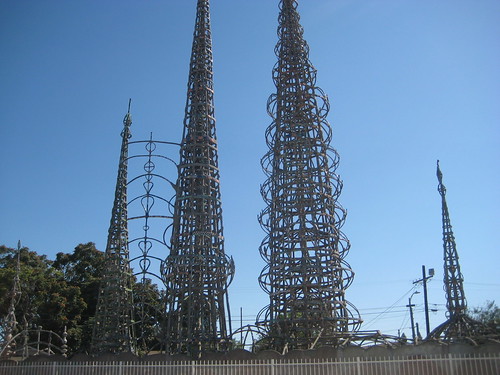
    watts towers
    Watts Towers by Paul Narvaez

    Before Ferguson, black lives matter or the Rodney King beating there was the Watts riots. Wattstax was a festival that addressed the underlying issues that kicked off the riots. It was put on by Stax Records. The accompanying documentary is amazing. Richard Pryor provides a narrative, beautiful photography and brilliant performances.

    More from Open Culture here: Wattstax Documents the “Black Woodstock” Concert Held 7 Years After the Watts Riots (1973)

    My computer monitor packed up. I couldn’t get it repaired through my usual suppliers so I got a refurbished monitor through Secondbyte Micro. I am getting rid of my dead monitor on eBay here.

    Tim Hwang has written a book comparing online advertising to the 2007-08 financial crash. Subprime Attention Crisis and I’ve pre-ordered a copy. Hoang reckons that there will be a big crash when marketers at large work up to two things:

    • Micro-targeting doesn’t work
    • Online ads were taking credit for sales that would have happened anyway through the ‘selection effect’. Basically the reason why performance marketing has fallen out of balance with brand marketing

    I am not convinced that there will be a big crash. I don’t think that anyone would be surprised that: tech companies don’t get marketing and don’t tell the truth. Previous generations would have sold shonky enterprise software and vapourware.

    I think budgets will try to be adjusted by marketers more towards brands. But at the rate that boards seem to go through marketing leaders; you first have to convince the C-suite to think about marketing strategically. Which ain’t going to happen thanks to the pervasiveness of Jack Welch’s blinkered perception of shareholder value.

    Finally, I think that this is the first time I have seen a manufacturer teardown its own product pre-launch for consumer audiences. I love that its done by one of Sony’s own engineers.

    The user serviceable dust traps were a particularly interesting touch to the device.

  • Weight lightening + more things

    Midgards Messer Shop – interesting weight lightening techniques in their product designs. It reminds me of the weight lightening techniques racing cars used to use. Drilling out metal on parts like bonnet hinges to retain strength but not the weight. More design related content here.

    In U.S. and UK, Globalization Leaves Some Feeling ‘Left Behind’ or ‘Swept Up’ | Pew Research Center – which gives a good idea of where populism came from

    Rolex Panerai 3646 Service Invoice from 1955 – Vintage Panerai and other iconic timepieces under the loupe at Perezcope – interesting implications on brand provenance and heritage

    Mulberry warns on sales after falling to £14m loss | FT – the comments on online shopping by the CEO in my opinion don’t ring true.

    Facebook to defy new Turkish social media law | Financial Times – Facebook must feel that the Turkish market isn’t worth taking negative PR in the US and EU. It must have relatively meagre advertising revenues for them to make this decision. Why put their foot down in Turkey and not in other markets like Hong Kong or Russia?

    People love products with rituals – Ariyh – the role of rituals in product consumption can drive sales, interesting research. Examples would be:

    • The different ways one would eat a Cadbury’s Creme Egg
    • Twisting to separate the biscuit from the filling on an Oreo
    • Waiting for the head to settle on a pint of Guinness
    • Cadbury’s Flake bath adverts the emphasised enjoying the bar in private ‘me time’ moment

    Facebook Says Government Breakup of Instagram, WhatsApp Would Be ‘Complete Nonstarter’ – WSJ – interesting that the 14-page briefing document was leaked to the Wall Street Journal. Tim Wu’s takes on the claim are interesting ‘A government antitrust case against the company would likely rely on the argument that Facebook made serial acquisitions to reduce competition, a question that wasn’t considered when the Federal Trade Commission originally chose not to oppose the Instagram and WhatsApp deals

    Reebok teams up with fashion brand Yoshiokubo for traditional-culture-inspired sneakers | SoraNews24 -Japan News – interesting how they’re incorporating Japanese culture motifs

    Winston Privacy – ad blocker as hardware appliance