Category: design | 設計 | 예술과 디자인 | デザイン

Design was something that was important to me from the start of this blog, over different incarnations of the blog, I featured interesting design related news. Design is defined as a plan or drawing produced to show the look and function or workings of a building, garment, interfaces or other object before it is made.

But none of the definition really talks about what design really is in the way that Dieter Rams principles of good design do. His principles are:

  1. It is innovative
  2. It makes a product useful
  3. It is aesthetic
  4. It makes a product understandable
  5. It is unobtrusive
  6. It is honest
  7. It is long-lasting
  8. It is thorough down to the last detail
  9. It is environmentally-friendly – it can and must maintain its contribution towards protecting and sustaining the environment.
  10. It is as little design as possible

Bitcoin isn’t long lasting as a network, which is why people found the need to fork the blockchain and build other cryptocurrencies.

Bitcoin uses 91 terawatts of energy annually or about the entire energy consumption of Finland.

The Bitcoin network relies on thousands of miners running energy intensive machines 24/7 to verify and add transactions to the blockchain. This system is known as “proof-of-work.” Bitcoin’s energy usage depends on how many miners are operating on its network at any given time. – So Bitcoin is environmentally unfriendly by design.

On the other hand, Apple products, which are often claimed to be also influenced by Dieter Rams also fail his principles. They aren’t necessarily environmentally friendly as some like AirPods are impossible to repair or recycle.

  • iPods cultural impact + more things

    On Death and iPods: A Requiem | WIRED – on the cultural impact of iPods. Each medium including iPods, CDs and vinyl before it defined and shaped the public. The design was a media in and off itself that was affected by the heritage that went before. iPods were very much in this mould of media.  I miss the time when we were still defined by our music. When our music was still our music. I miss being younger, with a head full of subversive ideas; white cables snaking down my neck, stolen songs in my pocket. There will never be an app for that. More on consumer behaviour here.

    As Phones Expand, So Does the Word ‘Phablet – WSJ – the etymology of the word phablet – originally from GSMA and first mentioned in print by TelecomTV

    Grandparents Accidentally Tag Themselves As Grandmaster Flash | NPR – genius.

    IBM News room | IBM and Yonyou to Accelerate Big Data and Analytics Adoption – interesting Chinese partner on big data

    Apple Watch ‘too feminine and looks like it was designed by students’, says LVMH executive – Telegraph – ok a bit over-exaggerated coming from the man who heads up TAG Heuer, but beneath the comments lies a deep truth about the watches that I agree with

    Huawei In Bad PR Move With Anti-Corruption Campaign | Young’s China Business Blog – interesting analysis of Huawei’s corruption drive

    China May Be Heading for a Japanese-Style Economic Crisis | TIME – the Chinese have a lot more levers to pull and a stable government (rather than a new prime minister every year like Japan); both of which are in China’s favour. On the downside China has bigger internal security issues than Japan

    阿里美国IPO首场路演的38张PPT(全) – Alibaba IPO deck

    Microsoft is found in contempt of court for refusing to hand over user emails | The Inquirer – Microsoft has to go to the line on this as it is likely to affect future international cloud services businesses

    China Misses Out on First Wave of New iPhone Releases | Re/code – I wouldn’t be surprised if the government is holding it up deliberately rather like the FCC did with H-silicon-powered Huawei phones

    A Watch Guy’s Thoughts On The Apple Watch After Seeing It In The Metal (Tons Of Live Photos) — HODINKEE – some interesting observations, kudos for their industrial design and manufacturing but some really good questions

    For Alibaba’s Small Business Army, a Narrowing Path | Foreign Policy – TaoBao needs to fix its model for smaller merchants
  • BMW i8 & other things this week

    BMW made a video about the production of the BMW i8 to promote the car. However the tone of the video feels rather like a corporate video from the 1980s. Despite the 1980s vibes the BMW i8 carbon fibre monocoque chassis manfucturing is fascinating. As is the manufacture of the BMW i8 high voltage battery. Unfortunately all this effort in manufacturing doesn’t seem to result in high reliability of the vehicles it makes.

    Reebok’s classic range looked to draw on the history of Manchester in this video. It split opinions in the office. Many of my colleagues liked it, but I felt a dissonance between the big speech about building the future with visuals that came straight from 1988. The MA1 jacket, the Reebok Classic trainer – the chav proto-shoe, brutalist architecture, a nice house with 1970s architecture and a mid-to-late 1980s BMW M535i – allegedly beloved of drug dealers trying to shift a load. The car looked discreet about its performance, but could still go like the clappers

    Great demonstration by Grandmaster Flash (of Grandmaster Flash and the Furious Five) of mixing circa 1983

    Kickstarter have a campaign running to reprint the New York Transit Authority’s standards manual which was much more than a style guide but went into things like the methodology of planning signage and usability of New York public transport. More design related content here.

    Anton Corbjin’s film A Most Wanted Man makes Hamburg amazing and gets great performances out of actors including Willem Defoe and Phillip Seymour Hoffman. The film feels believable because it’s based on a John LeCarré novel of the same name. LeCarré’s post-cold war output was a critique of populism, globalisation and the political nature of the war on terror. As would be expected in the 21st century the US comes out of it pretty poorly. Corbjin gives an honest portrayal of the book.

  • First Apple Watch impressions

    I was underwhelmed by the Apple Watch wearable product. It is impressive what they have done, but from a product design point of view the case looks cumbersome rather like a slightly better Samsung Gear. The use of haptics was one of the smarter things that I saw in the demonstration and the use of emoji as an essential ‘social lubricant’ borrows heavily from Asian mobile usage of stickers on the likes of LINE, KakaoTalk and WeChat.

    Looking at the demonstrations, I still think that the use case for a wearable still isn’t there for mainstream consumers. The use cases for haptic communications for instance were downright creepy and I wasn’t convinced by the cloud of spots interface. The fitness app and workout apps were similar to products from the likes of Suunto and Polar or the miCoach app by adidas for a smartphone. There needs to be more general purpose apps, then the Apple fitness option might be able to drive out the fitness sector.

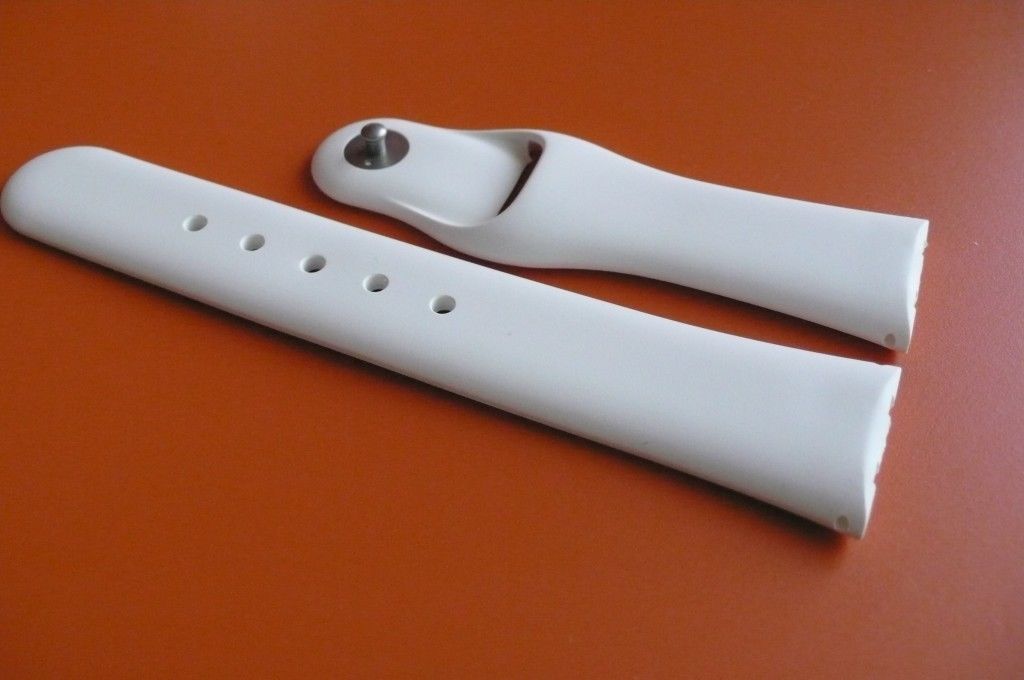
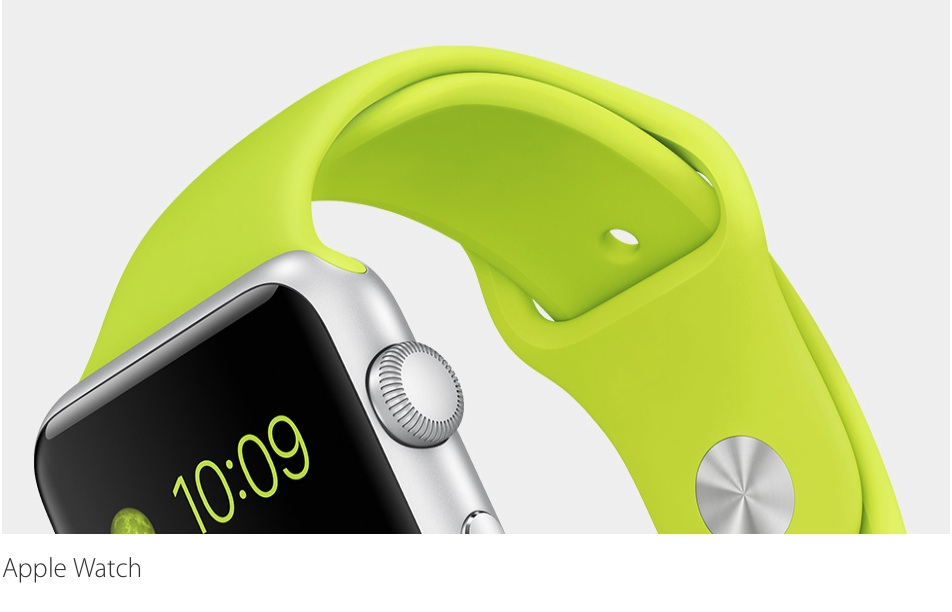
    In terms of the industrial design, I was particularly interested in the strap. Apple has borrowed a distinctive looking catch and strap connector  from one of the strap designs from the now defunct Ikepod Watch company co-founded by Marc Newson who recently joined Apple’s design team.

    Ikepod Megapod strap
    ikepod

    First Apple Watch strap. This probably explains why Marc Newson was brought on board as part of Jonny Ive’s team; as the Ikepod strap was something that he had designed back in the mid to late 1990s. You can see it on the Hemipod watch design here.
    applewatch

    While the case shape looks suspiciously like a homage to H Moser, I think that luxury brands won’t be particularly concerned, at least at this first Apple Watch, lets hope that future iterations prove me wrong. More on design here.

  • Cristiano Ronaldo & things from last week

    Football star Cristiano Ronaldo is sponsored by a Japanese company to promote a facial fitness device resulting in a cringeworthy advertisement and some of the most uncomfortable event footage I have seen in a while. It is worthwhile watching just for the cringe factor. There is no word on how well the Cristiano Ronaldo promotion has been doing for manufacturer MTG.

    The deal looks like a triumph of money over fit with the Cristiano Ronaldo’s profile. It is a freakish spectacle. More related content here.

    Amazing video of how the FBI used to handle fingerprints prior to digitisation of records. The filing cabinets are impressive and the process is laborious. The sheer scale of the filing cabinet room is mind boggling. It is more like a factory than an office space.

    Finally a great presentation from New Zealand conference Webstock on the benefits of quitting, which seemed appropriate content to round this post off on

  • Ghost in the Shell

    Masamune Shirow’s Ghost In The Shell is a three-volume manga series (volumes 1, 1.5 and 2) that is based on a Japanese security service team who try and solve cyber-crime related issues.

    The stories deal with a future where technology is embedded into human beings and augment them. It is also based around a world where the internet of things is an everyday occurrence. Shirow’s future is believable. Unlike Star Trek, he recognised that the future is built in layers on the past. So you see this in the architecture in the background of picture cells.

    You also see that layers in terms of everything from clothing and personal effects to vehicles of the protagonists.

    The author obvioiusly goes deeply into the story as a thought experiment with copious side notes explaining either technological developments or why he has made certain decisions. The stuff that he incorporated was cutting edge scientific research at the time. Whilst I love the anime adaptions, this insight into Shirow’s thinking makes the books invaluable.

    The books seem to have been remarkably prescient about hacking and the risks of technology. In previous literature, hackers were generally on the side of good or libertarians. In Ghost In The Shell you have cyber warfare and cyber crime similar to our own reality today. A crumbling healthcare system, organised crime, private military entities and shadowy state actors.

    Unfortunately, the designers of smart televisions and refrigerators didn’t pay much attention to these books, otherwise they would not have left these products so open to being hacked. Come for the sci-fi stay the course of the books for the underlying ideas. More book reviews here.