FMCG or fast moving consumer goods sprang out of the mass industrialisation. Brands sprang up originally as a guarantee of quality. Later on as these brands needed to be promoted, we saw the foundation of the what we think of as modern marketing and advertising.
Today media and entertainment takes up an increasing amount of the household spend, as does housing, but FMCGs are a crucial part of their essential and disposable income spend.
They have nostalgia wrapped up in them, distinctive aromas, taste and packaging designs. From the smell of my Granny using so much Pledge on the TV that I was surprised it didn’t burst into flame to the taste of Cidona and texture of Boland’s Fig Roll biscuits in my mouth.
The sound of their advertising jingles was the soundtrack of my childhood. Digital advertising is largely rationale, it lacks the fluent devices that provide the centre to advertising and made FMCG advertising iconic. Fluent devices like the Peperami ‘Animal’, the M&M characters or the Cadbury Smash robots were embedded in deep marketing research. FMCG brands still sponsor the best research in marketing science.
I had the good fortune to work inhouse at Unilever and agency-side for their brands. I also managed to work on Coca-Cola and Colgate during my time in Hong Kong.
The Martin Sorrell departure from WPP was like an earthquake in the marketing and advertising industry. Sorrell started at Saatchi & Saatchi before building WPP as a marketing services conglomerate with global reach. I decided not to write a post on his retirement because there were more questions than answers. A couple of things saddened me:
The Martin Sorrell departure was assumed by some outsiders to be part of the #metoo movement. This seems to be a default setting for many now
Headlines like the Globe & Mail that talked about Sorrell’s departure as the end of the Mad Man era. You have journalists and the sub-editors that they work with having no understanding of the industry that they cover. Martin Sorrell was a major factor in the end of the Mad Man era; moving advertising from being the closest thing in business to art, to something numeric in nature. One could argue that technology has moved the bar too far in terms of removing the craftsmanship all together, but that’s a discussion for another day about Google and Facebook rather than about WPP
Wetherspoons walking away from social media. Again the whys and wherefores of this seems to have as many questions as it does answers. As an outsider, their digital strategy and execution on social channels was patchy at best. It wasn’t something that Tim Martin was that committed to anyway. It probably won’t make that much difference to their business. More related content here.
Whilst as a marketer I can point to high street brands to who do social really well (Paddy Power, Poundland or Tesco Mobile a number of years ago); there are a lot of mediocre brand accounts. I can see the argument for going all-in, or not at all.
This Sould Out tune seems to bridge the gap between disco and the late 1980s / early 1990s Italian house sound popular in the North of England.
Shinsegae Food
Lastly, here’s one of them ads that never got approved by the client. Shinsegae Food is the food manufacturing arm of Samsung in Korea. Samsung is completely vertically integrated with these food products often sold in Samsung owned restaurants and Shinsegae department stores which can be paid for with a Samsung credit card. Mamee is a Malaysian manufacturer of instant noodles. The video is a satirical take on a usual Korean drama trope.
What Siri creator Norman Winarsky thinks of Apple’s Siri now — Quartz – not terribly surprising. Norman Winarsky is now a partner at a number of Silicon Valley venture firms. Whilst he is better known in business space now as a lecturer on business, entrepreneur and VC, he is an academic at heart.
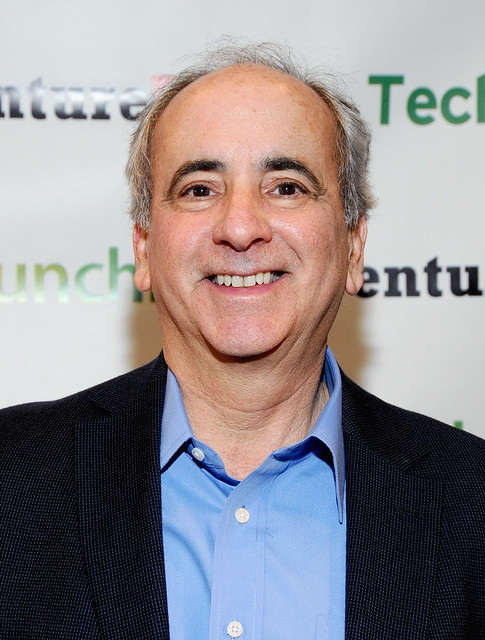
Norman Winarsky via the TechCrunch account on Flickr
Norman Winarsky studied and eventually ended up with a doctorate in mathematics. He started his private sector career at RCA Research (RCA’s answer to Xerox PARC or IBM Research), he had a career there for a number of decade as that moved through various owners. Eventually it became the east coast campus of SRI. Norman Winarsky went on to help found the SRI process for spinning off businesses and technology licensing. He was a co-founder of one of those businesses: Siri – that was bought by Apple. It will be interesting to see if Norman Winarsky has another high impact idea in him moving forwards. More related content here.
That’s the key finding from an analysis of regional and global agency deals by global marketing management consultancy Trinity P3 and Mark Ritson
Alibaba rival JD.com posts first annual profit as a public company | TechCrunch – The company’s fiscal profit was helped by a surprise $35 million profit in Q1 and a lucrative Q3 quarter in which it posted a RMB 1 billion ($151 million) profit thanks to its own efforts on Single’s Day, China’s online shopping bonanza. The company posted a RMB 909.2 million (US$139.7 million) loss for Q4, but that marked a 28 percent decrease year-on-year.
While Alibaba has a higher profile — with enormously profitable quarters — JD.com has quietly built out its e-commerce by expanding into financial services, offline retail and more
Consumer behaviour
This Chinese billionaire felt lost in US without WeChat, mobile payments | South China Morning Post – The chairman of Legend Holdings, the controlling shareholder of Lenovo, said China was now comparable to Japan and ahead of the US in terms of mobile internet technology, digital content and innovative business models.“If you haven’t stayed abroad for a long time, you might not understand [the difference],” said Liu, citing his recent experience in the US. His insights give credence to how Chinese technology companies have cultivated a hi-tech universe so large that it exists almost exclusively on its own – sustained by the country’s 1.4 billion people – but cut off from the rest of the world by Beijing’s Great Firewall, which blocks content not approved by the government. – the problem is that Chinese systems are ‘Galapagos’ technologies
BlackBerry suing Facebook for patent infringement | CNBC – “Blackberry’s suit sadly reflects the current state of its messaging business. Having abandoned its efforts to innovate, Blackberry is now looking to tax the innovation of others. We intend to fight,” Facebook general counsel Paul Grewal said – you see Facebook has sucked the blood out of other businesses for too long. I have little sympathy with them in this suit. It will be interesting to see how robust BlackBerry’s patents are and whether it would be cheaper for Facebook to pay them off or buy the business outright. The question is who is next after Facebook in Blackberry’s legal sights?
Luxury
Balenciaga is Putting its Money Where its Logo-Covered Hoodie Is for F/W 2018 | The Fashion Law – garments on the brand’s runway bore a phone number, +33156528799, which turns out to be Balenciaga’s “new hotline.” Call the number and you can answer a 20-question survey, inquiring about your age, primary language, height, and shoe size, as well as your favorite form of transportation, type of music, season, taste (your options are: Bitter, Salty, Sour, Sweet, or Umami), and so on.
A way for Balenciaga to better understand its customers? Maybe. Considering that the message is ends with the following note: “Thank you for taking the time to answer our questions. All data will be erased now,” I, for one, am guessing this is more interactive experience than fact gathering mission. If we have learned anything over the past several years, it is that “experiences” are everything to the modern-day consumer – I can imagine a choir of marketers howling in a symphony of pain about this
Meet the billionaire millennial pouring money into British fashion… and she’s only 27 | Telegraph Online – ‘My generation has completely different shopping habits,’ says Yu. ‘People born in the 1960s and ’70s buy into established brands such as Dior and Chanel. For them, it’s about showing status and where they fit into society. But my generation isn’t into logos – it’s not cool, it’s too obvious. [And] we prefer to shop online. We’ve become very interested and hungry for young, emerging designers.’
P&G’s Marc Pritchard calls for ‘fewer project managers’ at agencies as he vows to destroy ‘maze of complexity’ – “For media, data and analytics is enabling us to bring more media planning in-house, replacing multiple layers,” said Pritchard. “When it comes to buying, our purchasing people can negotiate with the best of them, so we’re doing more private marketplace deals in-house. And if entrepreneurs can buy digital media, why can’t the brand team on Tide, Dawn and Crest be entrepreneurs and do the same? They can, and they will.”
He explained that P&G wants and needs brilliant creatives, and will invest in such talent. But “creatives represent less than half of agency resources, because they’re surrounded by excess management, buildings and overhead.”
Media
Time for news to fight back | The Australian – Mark Ritson arguing that that agencies may be pushing clients into digital media because it can result in greater commissions for the agencies — in some cases almost 3 times greater than for traditional media (paywall)
Retailing
Smartphone users are spending more money each time they visit a website – Recode – The amount of money people spent per visit to online retailers has increased 27 percent since the beginning of 2015, according to new data from Adobe Analytics. Meanwhile, the length of smartphone website visits has actually declined 10 percent
Silicon Valley Is Over, Says Silicon Valley – The New York Times – In recent months, a growing number of tech leaders have been flirting with the idea of leaving Silicon Valley. Some cite the exorbitant cost of living in San Francisco and its suburbs, where even a million-dollar salary can feel middle class. Others complain about local criticism of the tech industry and a left-wing echo chamber that stifles opposing views. And yet others feel that better innovation is happening elsewhere – like Shenzhen? I think a lot of the problem with Silicon Valley is that it doesn’t build hardware any more. Bright people are mobile for the right pay, what you can’t easily do is the kind of commercialisation and manufacturing speed as a feedback loop like you see in Southern China
Techmeme Ride Home by Techmeme on Apple Podcasts – nice summary of the biggest stories in the tech sector on a 15 minute podcast. Techmeme started as a tech focused news aggregator, but this Techmeme ride home podcast is really handy to listen to on my commute.
FK Twigs x Spike Jonze
HomePod — Welcome Home by Spike Jonze — Apple – FKA Twigs dances along in a mind bending video that’s part LSD trip and part old time Hollywood musical. Just a shame that its advertising the Apple HomePod. More related content here.
Stephen Hawking Voice Generator (play/download) ― LingoJam – kind of like the Speak n Spell you had when you were a kid but more adaptable. Hawking came to view his voice generator as part of his personality. When it was glitching out at the end of its natural life, a tremendous effort was put into replicating its sound for Hawking. The story in itself says a lot about how we relate to technology.
Let’s Go Twitter – I haven’t watched a film at the cinema in a while so am probably way late to this creative. I ended up being really confused by this advert. Visually, its a feast for the eyes, but still confusing. I love Twitter but good lord do they honestly think that advertising will solve what they seem to have diagnosed as a UX issue in on boarding for a new account?
Supermarket chain REWE empowered shoppers to choose the sugar content of its own-brand chocolate pudding. During the campaign, REWE distributed puddings that had 20%, 30%, and 40% less sugar alongside its original formula; the favorite formula (30% won!) will be permanently available for sale at the supermarket. Of course, one could say that there is a bias in the survey design, but this idea of co-creation and a transparent discussion about sugar is a welcome change. via Trendwatching.
WSJ City | Five signals sent by China’s Anbang takeover – Reining in big spenders (spending capital abroad in an untargeted manner), reduction of systemic financial risk, concern over complex short-term high-yielding wealth products
Opinion | The Tyranny of Convenience – The New York Times – Americans say they prize competition, a proliferation of choices, the little guy. Yet our taste for convenience begets more convenience, through a combination of the economics of scale and the power of habit. The easier it is to use Amazon, the more powerful Amazon becomes — and thus the easier it becomes to use Amazon. Convenience and monopoly seem to be natural bedfellows. – great article by Tim Wu
Burson Cohn & Wolfe – SixtySecondView – like any other business merger the focus will keep the eye off the ball at a time when the PR industry is seeing exceptionally low growth rates. I have friends and former colleagues on both sides of this in both Asia and Europe; so I hope it works out well.
Smart homes and vegetable peelers — Benedict Evans – interesting starting point, but I think that there should be a second layer. Can the intelligence be local (like lighting sensors based on movement and presence in office buildings) or does it need cloud computing? Why can’t smart lightbulbs be at the edge rather than in the cloud. Why does a Nest thermostat need to be in the cloud?
Samsung says it’s going to stop pumping out features and start making devices good instead – BGR – “We developed mobile phones earlier than China, and we were obsessed with being the world’s first and industry’s first rather than thinking about how this innovation would be meaningful to consumers,” Koh said. “Being the first turns out to be meaningless today, and our strategy is to launch something that consumers believe meaningful and valuable at a right time.” – this reads like a slap in the face to Huawei’s approach on innovation and features
May braced for Unilever decision on headquarters | FT – Unilever: ‘stichting’ up a move to the Netherlands, which would make sense. 100VE is a leased building, its overcrowded and a number of the people there were contractors like me. The team that I worked in had already upped sticks to the Netherlands with the roles moving but not many of the people were redeployed, let go or didn’t have their contracts renewed
Millennial insecurity is reshaping the UK economy – interesting impact – not moving out of region to take a job like I did when I had a degree affecting productivity and entrepreneurship. One could see how Brexit will exasperate things further. It doesn’t imply that there will be a corresponding youthquake to overturn it at a later date
The Case Against Google – The New York Times – the problem with Found’em and the way the story was started is that it came off a bit cray cray a decade ago when it first popped up. They weren’t cut from the same cloth as Silicon Valley wunderkinder. That and they looked like Microsoft finger puppets. You had the SCO vs. Novell court case over the future of Linux at the time and there was evidence of Microsoft’s finger prints all over it (via Wikipedia): “On March 4, 2004, a leaked SCO internal e-mail detailed how Microsoft had raised up to $106 million via the BayStar referral and other means. Blake Stowell of SCO confirmed the memo was real. BayStar claimed the deal was suggested by Microsoft, but that no money for it came directly from them. In addition to the Baystar involvement, Microsoft paid SCO $6M (USD) in May 2003 for a license to “Unix and Unix-related patents”, despite the lack of Unix-related patents owned by SCO. This deal was widely seen in the press as a boost to SCO’s finances which would help SCO with its lawsuit against IBM” – And at the time if it had the taint of Microsoft involvement that overwrote any Google wrong. People seem to have forgotten the Judge Jackson trial and what an evil sack of shite Microsoft was shown to be. It would have been really hard sell to the media