Over the space of 20 years, luxury changed enormously. The Japanese had been a set of new consumers for luxury, but in terms of numbers they hadn’t eclipsed the US as the biggest market for luxury.
China’s ascent into the WTO (World Trade Organisation) made a lot of business people and politicians a lot richer. China challenged the US in terms of luxury market size. On their rise, Chinese consumers changed a lot in their sophistication as they educated themselves on luxury consumption.
These new consumers picked up new traits such as wine drinking. This also meant that luxury goods became new asset classes as Chinese money looked to acquire only the best. Chinese culture in turn impacted luxury design. Chinese new year became more important than Christmas.
Then there was the second generation money. Young rather than old consumers. Consumers who were looking for something less formal, either because they didn’t wear anything but streetwear or they worked in the creative classes rather than the traditional professions and high finance.
The industry had traditionally avoided rap artists and R&B singers, now Jay Z and Beyonce are the face of Tiffanys and Fendi had collaborated with Rihanna.
They no longer wanted to have to wear a jacket and tie to have afternoon tea at the Mandarin. They took an eclectic look more attuned to the Buffalo Collective than Vogue Italia.
You had hybridisation with the street to create a new category of luxe streetwear in a way that also owes a debt to football casual terrace wear and the pain.
Now you have Zegna badge engineering approach shoes from alpine brand La Sportiva and Prada has done a similar thing with adidas’ iconic Stan Smith tennis shoes. Balenciaga with their Speed Sock looks like a mix between Nike’s flyknit football boots and the Nike Footscape sole.
Luxury has traditionally reflected status. Goods of a superior nature that the ‘wrong sort’ of people would never be able to afford. Luxury then became a symbol that you’d made it. In Asian markets, particularly China, luxury became a tool. People gifted luxury products to make relationships work better. It also signified that you are the kind of successful business person that partners could trust. You started to see factory managers with Gucci man bags and premium golfwear to signal their success. Then when the scions of these business people and figures in authority were adults, luxury has become about premium self expression.
I was taken back to to memories of Skeleton Records in Birkenhead during the early 1990s due to a Taylor Swift album mispress. As a young record buyer I used frequent secondhand record shops to pick up promo copies of records. A rock orientated shop would often not realise what they had, this was before widespread internet access.
The gaunt middle-aged shop assistant was sat behind the counter looking at a picture disc of Fish – State of Mind on picture disc. Fish had recently left then popular rock band Marillion and State of Mind was a single from his first solo album Vigil in a Wilderness of Mirrors.
Apparently one of his customers worked as an assistant shop manager, realised what they had and ‘lost’ the record before the distributor came to collect all the copies of the mispress. The reason why the distributor would want to collect the records? Because they played Madonna’s Cherish instead. The shop assistant said to no one in particular, that will be worth something one day. He wasn’t wrong, I have seen prices quoted as high as 650 dollars paid – if the right Madonna or Marillion completist collector actually finds a copy for sale.
Taylor Swift Speak Now Concert at Heinz Field by Ronald Woan
A similar thing happened to Taylor Swift fans this week, who ordered her latest album and ended up with Taylor Swift artwork, but songs from the early 1990s electronica compilation Happy Lands volume 1 playing instead.
This mispress became know as the ‘cursed version’ presumably because of its dark electronic sounds featuring Cabaret Voltaire and others. They might be able to take heart when they realise the such mispresses have become collectors items in the past with an appreciating value.
Back when I was a child, the oil refinery was a cathedral to industry rather than a climate crime scene and working in the oil industry was a cut above working in other industries.
3D printing industry gripped by intrigue, litigation and churn | Financial Times – 3D printing or additive manufacturing is currently used for small batch manufacturing by the likes of GE, Rheinmetall, Airbus and Lockheed Martin. You had a similar set up with CNC milling (including multi-axis machines) and multitasking machines which were confined to manufacturing ‘cells’ until Apple went out and bought thousands of them and had them running in parallel on Foxconn lines manufacturing iPhone chassis’. Additive manufacturing needs its ‘iPhone moment’ to cross the chasm to mainstream use. That is reliant on an innovative client rather than supplier innovation and the current players like Stratasys aren’t in a position to drive this next stage of innovation, but their customers might be.
Letter Statement March2023 | DAIR – Tl;dr: The harms from so-called AI are real and present and follow from the acts of people and corporations deploying automated systems. Regulatory efforts should focus on transparency, accountability and preventing exploitative labor practices.
A number of things have happened that made me think about the idea of the British discount. A fund manager came out and said that UK equities were cheap compared to their counterparts listed on other stock markets and would likely remain so for a long time.
Genuine sale bargains?
There are a number of reasons why these companies may trade at a British discount:
The London Stock Exchanges doesn’t have a reputation for high growth businesses in the same way that the New York Stock Exchange or NASDAQ does. Instead it has a preponderance of mining companies and similar firms
UK pension funds are discouraged from purchasing stocks
The UK doesn’t foster the kind of businesses that growth investors would want to invest in
British banks don’t particularly want to invest in British businesses beyond property portfolios
Management demonstrate short-termism in their investment approach, as does the banking system
There isn’t a culture of retail share ownership
The UK economy has numerous structural challenges, some of them self inflicted
The British discount goes beyond the stock market, but instead the very nature of the UK itself.
Indebted government
Government debt is ballooning and will continue to do so, yet productivity is stubbornly low meaning the bonds will be ever harder to pay off. Finally as the Liz Truss debacle showed even leadership shows the British discount.
The state Britain has been in
The ideas and concepts the British discount aren’t even new – most of them came from ideas in Will Hutton’s The State We’re In originally published in 1995.
The fund manager can be confident in the British discount to be long-lasting as he knows that neither the Labour Party or their Conservative Party counterparts had managed to address existing structural economic issues. Instead they managed to create new ones.
The Trajectory of China’s Industrial Policies – IGCC – Barry Naughton, Siwen Xiao, and Yaosheng Xu argue that most of the changes in Chinese industrial policy since the mid-2000s can be thought of as being part of a trajectory that seeks to build a policy/planning mechanism, and that shifts the ultimate objective of technology and industry policies from economics to security.
Saudi Arabia’s Barn’s Coffee plans 25 outlets in Malaysia – Malaysia’s Premier Fine Foods plans to establish 25 outlets in Kuala Lumpur as its hub and expand operations to other Southeast Asian countries, including Brunei, Cambodia, Indonesia, Laos, Myanmar, the Philippines, Singapore, Thailand and Vietnam, in its aim to have 300 outlets in the next 10 years – interesting franchise coming out of Saudi Arabia
Street Style in Tokyo: “Harajuku Is Like a Fashion Gallery With a Free Entrance” | Vogue – “In present-day Harajuku, there are probably more foreigners walking around than there are Japanese people. They used to be watchers of Harajuku fashion, but now they are players; it’s a new movement in the neighborhood. In this story, there are many Chinese and Korean individuals who seem to enjoy and carry forward the Harajuku fashion of the 1990s and 2000s, rather than simply copying it
Full article: ChatGPT, AI Advertising, and Advertising Research and Education – leading scholars and industry thinkers in our field and neighboring disciplines are actively examining and engaging in debates on AI technologies and their applications to advertising practices and effects. However, we have not imagined such powerful AI technologies as ChatGPT emerging and spreading in the general public so quickly. According to industry estimates, ChatGPT reached 100 million monthly users in the first two months after launch, which makes it the fastest-growing technology application in history, but web traffic has since peaked. ChatGPT and other generative AI technologies in this new phase of AI advancement are expected to completely transform the advertising business and research. More research is urgently needed to gain an understanding of the short- and long-term impacts of this new generation of transformative AI technologies on advertising across the micro, meso, and macro levels
Influence 100: In-House PR Budgets Slashed | Provoke Media – This year, our Influence 100 cohort control a combined spend of $3.7 billion, a drop of more than $1bn on last year’s figure of $4.8 billion and far below 2020’s dip to $4.2 billion, after being at $4.8 billion in 2019. The drop is largely down to a significant dip in the number of our Influence 100 managing top-end budgets. Last year the number who managed budgets of more than $100m was 25% (compared to 27% in 2021), while this year it is down to 17%. The number of CMOs and CCOs managing between $75 and $100m also dropped, from 12.5% last year to 10% (although this is on a par with 11% in 2021), and the next budget bracket, $50-$75m, also saw a drop from 17.5% to 13%, one percentage point lower than 2021. The proportion of communications leaders managing budgets of between $25m and $50m remained the same as last year, at 10%, and the only budget bracket that saw an increase was at the lower end, $10m-$25m, which shot up from 12.5% to 30% – unsurprising given the dip in advertising spend
Materials
Machine learning based design optimisation was used to create additive manufactured brackets for NASA instruments. They feel organic in nature, presumably because they the result of millions of virtual trials, rather like generations of biological evolution.
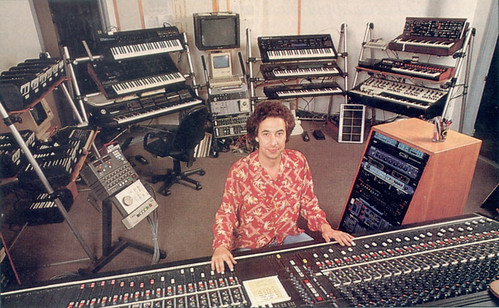
Synclavier Regen Synthesizer Introduction – Synthtopia – the old New England Digital Synclavier was a floor to ceiling rack full of equipment paired with a monitor mouse, computer keyboard and musical keyboard. Synclavier was an early digital synthesiser and then evolved to create the first digital audio workstation, featuring digital tapeless recording, digital effects, sequencing of instruments, sampling and synthesis. By 1980, the Synclavier 2 was launched. Then you started to increased adoption including Michael Jackson for this Thriller album and across the US film industry for sound effects work.
Producer Michael Hoenig circa 1987
The sampling and synthesis of Synclavier helped define the sound of 1980s record production for a wide range of groups from the era including
At the time there was concern that the digital synthesis and sampling of the Synclavier would put live music out of the business, so many concert halls in the US banned the use of the Synclavier.
Mirage FM: how patten created the first LP made entirely from AI sounds | Dazed – Pattern’s album brings synthesis forward to the present day. A mix of crude pads and textures hint at how machine learning can change synthesis over time. At the moment, record labels are looking to restrict the use of machine learning, which they view as a similar threat to the MP3 format of the early 2000s and digital sampling from the early 1990s. Like earlier technologies, they will eventually make their peace with machine learning based synthesis and use the opportunity to further gouge artists and creators
Three years of National Security Law in Hong Kong: Farewell “special status”? | Merics – the NSL has severely reduced the rule of law in Hong Kong by granting the government powers to circumvent the courts and thereby deny defendants a fair trial. The case of media entrepreneur Jimmy Lai illustrates how this presents a risk to businesses and their property rights. The Hong Kong government froze Lai’s majority of shares in his company Next Media, which led to its liquidation and the end of the pro-democracy newspaper Apple Daily. The case is highly political and does not reflect the situation of most businesses, but it does show the power the Hong Kong government can wield over business. – German think tank on the NSL
Edelman Cutting Roughly 240 Employees Amid Reorganization | Provoke Media – Edelman is just the canary in the coal mine. Beyond (part of Next Fifteen) is closing down its London office, smaller agencies have been going to the wall and another of my former agency alma mater WE are laying off just under 5 per cent of their headcount. I don’t remember this happening during the 2008 financial crisis. There are likely to be several factors blamed:
Rising interest rates combined with already lean cashflow has driven some agencies to the wall
Declining economic conditions has resulted in declining marketing budgets
Some agencies (Edelman being a case in point) bulked up on talent, expecting a fast exit from COVID driven decline
Brands are getting shaky on the commitment to brand purpose which will hit a lot of below the line agencies particularly hard
More marketing spend is being spent on innovation with an expectation of cost savings down the line (particularly in production and across B2B marketing)
MikroE welcomes back IrDA with Click board | EETimes – IrDA was first introduced in 1994 for consumer equipment but has since been used in areas such as power systems where a light-based system is safer or RF is problematic. It’s slow with data rates up to 115kbit/s at 1 metre. The reality is usually much slower. I used to use IrDA for transferring business cards of a few KB each which would take 30 seconds or more
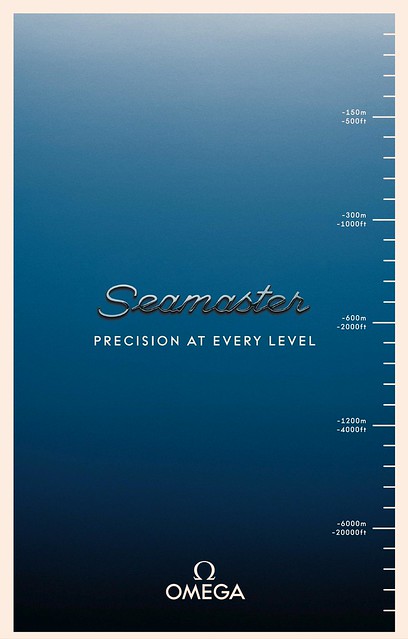
Plenty have already covered the OceanGate Titan implosion in more detail. I will not repeat that work but wanted to bring to wider attention how marketers have jumped on the bandwagon. The following advert appeared in the print edition of the Financial Times, placed by Omega watches promoting their Omega Seamaster Planet Ocean Ultra Deep series of watches.
‘Seamaster – Precision at every level’ next to a scale going beyond 6,000 metres.
Omega
I personally thought that the advert was too soon after the implosion for good taste. Although the watch community has seen a renewed interest in deep diving capable watches after the OceanGate Titan incident.
Young Japanese are craving fast fashion. What happened? | Vogue Business – it’s the economy stupid, luxury is less accessible. Secondly, much of the youth looks like Gyaru peaked in the early 2000s due to financial issues and things haven’t improved since. Shibuya subcultures were as dependent on the ability to spend as on youth creativity.
I was sparked to lead this post based on footage that I watched about a priest in South India with regards a robotic elephant. Robots in religion have taken off in both Shinto and Hindu ceremonies.
Japan
Academics have widely talked about how the Shinto-based belief system have aided Japanese societal acceptance of robots, in comparison to western society. Secondly, Japanese authors have been exploring what it means to be human and what kind of dilemmas and opportunities do robots and AI bring in a future society. Robots in religion are a natural extension of robots in society.
Buddhism leads the way
What’s less commented on is that Japan’s buddhist temples have been leading robots in religion. The reality is that many Japanese see Shinto and Buddhism as complementary in nature and get involved in both beliefs.
Japan has some unique religious challenges that are interlinked. Temples are struggling as less people are active in their religious practice, the factors for this decline is multi-factorial in nature.
A second challenge that as the population shrinks roles need to be automated. What started in factories is now impacting the food and beverage sector (vending machines and restaurant robo-serving staff), so it was only a matter of time that robots in religion would supplement the clergy.
India
In India robots in religion is about kindness and de-risking religious ceremonies. In South India elephants take part in religious ceremonies. However the conditions that elephants are kept in can be cruel in nature and even result in death. Secondly, elephants can unintentionally kill or injure people involved in a religious celebration. This report on NHK World shows how robots in religion have been adapted to Hindu needs.
Finally, the elephant robot is used in celebrations over a large geographic area and is easily transported around. Robots in religion are likely to make even more sense as India urbanises even further, as the benefits are amplified in the denser environment.
How confucianism, communism (in particular Stalin’s take on Leninism) and an accident of history has led to the nationalistic, fragile, insecure Chinese state with imperial ambitions we know today.
China’s ‘trinket town’ at heart of push for renminbi trade | Financial Times – Yiwu was one of the first cities in China to allow individual merchants to settle larger cross-border deals in renminbi. Most cities have an annual cap of $50,000. Given Yiwu’s reputation for cheap goods and flexible terms, helped by the fact that wholesalers do not pay either corporate tax or market rent, exporters have sufficient bargaining power to request settlement in renminbi. “When you have only one place to go to purchase something, the seller sets the terms on how transactions are settled,” said James Wu, a Yiwu-based furniture exporter who began demanding renminbi payments from Middle Eastern clients last year – the last quote is a great example of
Interesting video from NHK World on how temples are adapting to a lack of new attendees and priests. I am not sure whether this is down to demographic change or the secularisation of society
A Pokémon-Card Crime Spree Jolts Japan – WSJ – Japan has been staggered by a Pokémon crime spree. Stores are now paying for banklike security to ward off villains who go to extraordinary lengths, even rappelling down the side of buildings, to plunder Pokémon. Hosaka was working in senior care when he had the idea of opening a cozy card shop in the suburb of Machida where customers could mingle at tables. Instead, he says, the little cards, “have become like Rolex watches, gold, silver, platinum or used cars.” – It makes sense when you think of the cards being ‘real life NFTs’
Criminal Rolex Gangs and Traveling with Watches, Part I – WOE – crime affecting luxury consumption. Interesting that London is a crime centre is prominently name checked alongside Johannesburg, South Africa. This will impact luxury retailers, luxury travel and hospitality and auction houses
Luxury
Bay Area Lawsuit Alleges Man Spent $220,000 To Get A Watch He Never Got – there’s also the added complexity of Shreve recently losing its status as a Patek AD. The lawsuit brings some ten causes of action against Shreve, including breach of contract, intentional and negligent misrepresentation, fraudulent concealment, false promise, and unfair business practices, pursuant to California’s Unfair Competition Law – this was only a matter of time. Its the same in the UK
Ad agencies and clients clash: tension over transparency in fees, services | Ad Age – a talent shortage has left agencies without enough senior executives to service accounts. Combined, such factors contribute to what marketers see as an increasing lack of transparency. One executive who leads procurement across marketing and content for a major consumer goods company said the discounts and rebates that media agencies, in particular, get from a media buy have always been “murky,” but one area agencies have always been transparent in is breaking down their fees. The brand executive said auditors, working on behalf of the marketers, have previously been able to get agencies to disclose their margins, overheads and salaries without protest—it’s standard practice and allows clients to know they are being charged a fair price. But that’s starting to change, they said, having run into issues with getting shops to break down their fees in the recent agency review their company underwent
Media
This Year Next Year: 2023 Global Mid-Year Forecast – GroupM – calls the end of radio’s global growth story. Even taking into account streaming, WPP says that, globally, ad-supported audio has peaked. It will grow just 0.3% this year, says GroupM then “remain roughly flat over the next five years”. It’s about to join newspapers, magazines and broadcast television in a downward trajectory. GroupM also tackles the impact of AI on the industry. It reckons that within five years, the portion of “AI-enabled” advertising revenue globally will be worth $800bn. What is impossible to quantify is whether any of that is new money. Most likely, none of it. What is also impossible to quantify is just how dramatic the AI-driven reductions in cost of production will be. That sounds a relatively benign question until one realises that all those reduced costs are human jobs. GroupM identifies five key themes: Regulation (particularly around data privacy); connected TV (and an annualised 10%+ growth in the segment)’; AI “is likely to inform, or touch in some way, at least half of all advertising revenue by the end of 2023”; retail media to overtake TV by 2028; and “new business growth” (which sounds like the sort of thing an agency person would put in their predictions). Most importantly though, the GroupM outlook points to a more more significant factor. We’re at the end of a cycle that was defined by shifts between advertising channels, and then the disruption of Covid. “We are at an inflection point where the secular drivers of advertising growth above and beyond GDP growth are maturing, the pandemic upheaval is receding and the dynamic rise of digital advertising has slowed. This is the basis of our underlying forecast of mid-single-digit advertising growth over the next five years. However, the pervasive impact of AI on the world of advertising could change that.”
AI at Work: What People Are Saying | BCG – leaders love it, workers don’t. Businesses have only addressed the needs of leaders, which probably dialled up the anxiety with a sense that AI is something that happens to you and your career rather like a bad car accident
Beeper — All your chats in one app. Yes, really. – clients like Adium became less useful as Google and other services went away from common protocols and the IM giants AOL, MSN and Yahoo! disappeared. Beeper are trying to address this