It makes sense to start this category with warning. Marshall McLuhan was most famous for his insight – The medium is the message: it isn’t just the content of a media which matters, but the medium itself which most meaningfully changes the ways humans operate.
But McLuhan wasn’t an advocate of it, he saw dangers beneath the surface as this quote from his participation in the 1976 Canadian Forum shows.
“The violence that all electric media inflict in their users is that they are instantly invaded and deprived of their physical bodies and are merged in a network of extensions of their own nervous systems. As if this were not sufficient violence or invasion of individual rights, the elimination of the physical bodies of the electric media users also deprives them of the means of relating the program experience of their private, individual selves, even as instant involvement suppresses private identity. The loss of individual and personal meaning via the electronic media ensures a corresponding and reciprocal violence from those so deprived of their identities; for violence, whether spiritual or physical, is a quest for identity and the meaningful. The less identity, the more violence.”
McLuhan was concerned with the mass media, in particular the effect of television on society. Yet the content is atemporal. I am sure the warning would have fitted in with rock and roll singles during the 1950s or social media platforms today.
I am concerned not only changes in platforms and consumer behaviour but the interaction of those platforms with societal structures.
Revealed: residency loophole in Malta’s cash-for-passports scheme | Malta | The Guardian – Henley’s files reveal that in the early years of the scheme, many applicants told the government upfront that they planned to develop only the most superficial links to the country, with most disclosing that they planned to spend just a few weeks in Malta during the supposed 12-month residency period
US Sanctions Help Crack Malaysian Crime Ring — Radio Free Asia – “This continues a pattern of overseas Chinese actors trying to paper over illegal criminal activities by framing their actions in terms of China’s Belt and Road Initiative (BRI), the China Dream, or other major initiatives of the CCP [Chinese Communist Party],” the government agency said, referring to China’s ambitious program of building a modern-day Silk Road through a network of infrastructure projects stretching through Southeast Asia, South Asia and elsewhere.
Hong Kong
Wells Fargo plans to shift Asian hub from Hong Kong to Singapore | Financial Times – The plan would involve slowly building up Singapore as Wells Fargo’s Asian hub through a mixture of new hires and redundancies in Hong Kong, according to four people with knowledge of the matter. It would still maintain a presence in the territory. One former employee said the plan was dubbed internally “project sun”.
The mystery mansion near Calgary that has everyone talking – Macleans.ca – Class is something polite Canadians avoid discussing. We think of our country as comparatively classless, and we manage the cognitive dissonance presented by the haves and have-nots of housing by requiring our rich people to keep quiet. They should wear clothes that are well-cut and well-designed, but not flash. Buy the multi-millionaire’s car, but paint it in a sedate hue. Wealthy neighbourhoods should feature winding streets with mature trees and large lots, the better to conceal the true size of the homes built upon them
Inside the ‘digital cleanse’ companies taking on cancel culture | Financial Times – Former Sainsbury’s boss Justin King, one of The Marque’s clients, tells me that part of the appeal of having an SEO-optimised profile was that he was sick of people looking him up on Wikipedia and emailing him to ask if he was the guy who took away the Christmas bonus. “Forever, my Wikipedia profile will tell you that I’m Scrooge,” he says. “The idea that you could keep a single source of truth in one place – my truth about me and what I do – was very appealing.” – the idea of SEO as a ‘luxury’ good is interesting. More related content here.
Marketing
Facebook advertising chief worried about whether it overstated reach | Financial Times – “We are going to get really criticized for that (and justifiably so),” she said. “If we overstated how many actual real people we have in certain demos, there is no question that impacted budget allocations. We have to prepare for the worst here.” Two months ago, other documents in the case revealed that the Facebook product manager in charge of the reach metric said in an internal email that the company had made “revenue we should have never made given the fact [the metric is] based on wrong data”
Perfect Porsche? This British-built 911 restomod comes close : CityAM – the idea of the perfect Porsche is contextual and highly personal. I would prefer a car that looks like an early air-cooled car, with no aerodynamic spoiler or flared arches and Fuchs wheels. There are a number of vendors doing a restomod 911. US company Singer is probably the most famous with its muscular looking restomod 911 models. In the article, there is a particularly interesting bit is about the redistribution of parts and lightweight replacement parts in the 911 restomod by Theon Design.
Chinese censors take aim at former premier Wen Jiabao’s essay | Financial Times – really interesting that this appeared in a Macao publication, like it was designed to give it a few days out there. Wen was generally a bit more soft-hearted than Hu when the two were in the politburo. And Hu was moderated by the committee approach of the politburo. Xi had learned from Bo Xijlai that populism and nationalism worked and has a hawkish view that is untempered by the politburo.
China’s keyboard warriors like to fight . . . each other | Financial Times – China’s grassroots nationalist bloggers seem less like that unified “main force” than dispersed militias which argue with one another as much as they do with external enemies. “The difference between Chinese nationalist factions is probably bigger than the difference between all of them and an American patriot,” says one Beijing-based blogger who is researching a book on Chinese internet culture. And while the CCP’s professional trolls may generate reposts and likes, “volume is not influence”, he adds – interesting article. I keep thinking about how different red guard groups used to fight against each other during the cultural revolution
Design
Trapped on Technology’s Trailing Edge – IEEE Spectrum – Repairing the system entailed either redesigning a few circuit boards and replacing other obsolete integrated circuits for US $21 million, as the B-2 program officers chose to do, or spending $54 million to have the original contractor replace the whole system. The electronics, in essence, were fine—they just couldn’t easily be fixed if even the slightest thing went wrong. – which makes me wonder about the internet of things.
Luxury
Why Chow Tai Fook sees opportunity in rural China and lower-tier cities | Marketing | Campaign Asia – Surrey Pau, deputy general manager of Chow Tai Fook Jewellery Group, responsible for market expansion, explained how and why the brand intends to seize opportunities in China’s fourth-and-fifth-tier cities, despite a natural bias in the sector towards selling luxury items to tier-one markets. Charts comparing urban (blue) and rural (yellow) growth rates Growth in rural China “Some people believe that in rural areas you don’t have much of an income, that you rely heavily on agriculture and have a very simple economic structure,” Pau said. “However we believe that is just a myth.” Comparing household consumption and spending trends in rural and urban areas, Pau sees the countryside soon catching up with cities, helped by government support to rural areas. And along with higher incomes, the brand is seeing people shift to devoting more disposable spending to lifestyle improvements, including cosmetics and jewellery. The other macrotrend is the massive rise in ecommerce spending. And thanks to recent infrastructure investments in new networks, the digital playing field has been levelled to a great degree in China – I don’t think that there’s the growth in Chinese lower tier cities and rural areas that Chow Tai Fook thinks
Marketing
6 Elements Of Digital Brand Dominance | Branding Strategy Insider – The old adage “stick to your knitting,” for example, a colloquial version of “build on your core competence,” tends to narrow a company’s imagination. Yet a bold imagination is a requirement for leaders today. Netflix, Amazon, Facebook, and Google would not be what they are if their CEOs and executive teams had not imagined a future that did not yet exist. – but do these businesses also suffer from a lack of focus and a conglomerate discount at some point?
Nano-influencers – those with 1,000 to 5,000 followers – had the lowest proportion of fraud, occurring in 42 per cent of accounts. The most common tactics used included buying followers, likes and comments from click farms, buying story views, and engaging with comment pods – where a group of Instagram users get together and systematically engage with each other’s posts
Lycamobile names CEO to lead digital push beyond expatriates | Financial Times – they’ve tried to do this previously. Lycamobile was usually the first SIM that EU migrants got to establish themselves in the UK. They then moved on to domestic aimed products. Brexit has made this move a life or death struggle now
Creative Culture ran a roundtable that provided with Japanese insights across brands and consumers. Well worth a watch.
Key outtakes
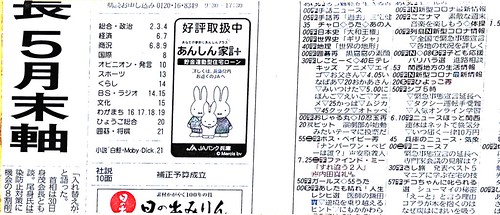
Kawaii or cute occurs in areas that you wouldn’t expect it. From Hello Kitty airlines and maternity wards to Miffy being used to sell mortgage services.
Imagine 2060, more than 40% of Japan’s population will be 65 and older. This changes what market segments look like; no point chasing the latest generation. It will change what marketing will look like and what products will be sold. It would be an exciting time for product designers, creatives and strategists working with local clients who are willing to embrace the opportunity.
Couple by Norimutsu Nogami
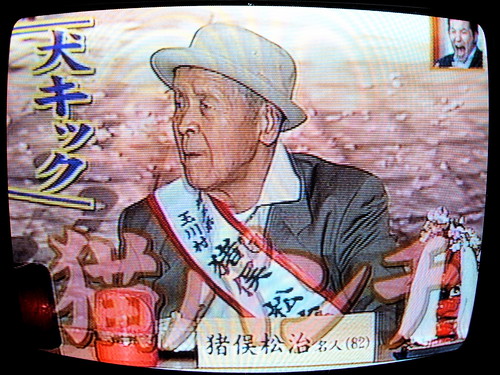
Newsprint and television are still popular media in Japan (and more popular than marketers are willing to admit outside Japan). These media still have a strong influence on consumers and are represented more strongly in the media mix by Japanese companies. In terms of Japanese insights for brand marketers this means that brand building should be less of a challenge from a media investment point of view than it would be in in some western markets or China.
Japanese television by buck82
Consumers shop daily or every other day. This is because they don’t have enough space to keep their groceries. So there are convenience stories in every neighbourhood. Retailers want to keep minimum inventory, so they receive frequent, small deliveries almost daily. Since there is a rapid turnover this in turn allows innovation around product innovation. Special edition Kit-Kats are the example most familiar to consumers. But you can see different products in the convenience store at different times of the day.
Family Mart Convenience Store, Harajuku, Tokyo by MD111
Moving from Japanese insights to Chinese strategy, the Center for Strategic & International Studies discusses what is needed for the west to have a better China strategy.
Technology
The Computer History Museum in Silicon Valley, took the opportunity to interview Mark Markkula. Markkula was an engineer and product marketer involved at Fairchild and Intel during the early days. He put in seed capital into Apple and sat on the board until 1997.
If you watch nothing else on this post, watch this discussion between Stephen King and Jeremy Bullmore at J Walter Thompson. Bullmore ended up as chairman of J Walter Thompson, eventually retiring in 1987. King established the first account planning department in the advertising industry at J Walter Thompson in 1968.
May of the problems outlined are similar to problems today.
kisho kurokawa’s metabolist ‘capsule house K’ from the 1970s to be preserved in japan – the metabolist group, formed by architects, designers and critics, imagined a world of flexible cities where buildings, like people, were transient and ever changing. designed and built between 1971 and 1973, ‘capsule house K’ exemplifies the ideas of metabolism, recyclability and exchangeability – What separates the Japanese metabolist architecture and design movement from the western prefab manufacturing is that it was genuinely modular. A single capsule like this house could exist on its own, or could be part of a tower structure. The focus on flexible cities at the centre of metabolist design and the idea of recyclability. The western prefab approach is all about bringing product line techniques to create quick builds.
The Wall Street Journal’s Internal Audit – The New York Times – none of the editors understand digital and that the paper is unlikely to have any success reaching the younger readers they desperately need without managing to write something about either race or gender. More media related content here.
Security
A secretive Home Office unit has hoarded data on millions of people | WIRED UK – more than 30 data providers are listed in the documents. Only two of these, fraud prevention company GB Group and data analytics firm, Dun & Bradstreet, were not redacted. GB Group acknowledged it provided data to the unit but declined to provide any further details citing “confidentiality obligations”. Dun & Bradstreet says it is against its policy to comment on its work with clients. I’d be surprised if they weren’t
Leaving missed calls in this way — effectively using a mobile phone as a kind of latter-day pager — was a consumer hack that, in the 2000s, before India’s cheap smartphone and data revolution, grew more popular than texting. The missed call emerged in India as a critical means of communication for those who counted every rupee spent on recharge credit. But the practice soon spread, became trendy, and, even as call rates plunged in the 2000s to among the lowest in the world, evolved into a general tool of convenience: a missed call could mean “I miss you,” “Call me back,” or “I’m here.” The fact that the missed call demanded only basic numeric literacy made them accessible to the third of India’s population that was illiterate. In 2008, one study estimated that more than half of Indian phone users were in the habit of calling people with the expectation that they wouldn’t pick up – you had similar consumer patterns around the world, but Indians seem to have taken it to a new level
Back in 2005, I worked in the search group at Yahoo!. One of the projects that I worked on was Yahoo Answers. 16 years later, Yahoo Answers is being closed down. I thought I would capture some of my memories and inside knowledge on Yahoo Answers.
But first we need some context so that what I write later about Yahoo Answers will make sense.
The beginning
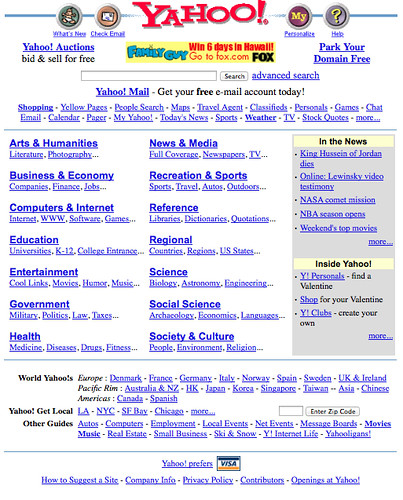
Let’s go back to the beginning. Back to the early-1990s. Jerry Yang and David Filo founded Yahoo!. It fits the classic Silicon Valley archetype story and you can find plenty of accounts of it elsewhere. The key is what Yahoo! originally was. Its a list of links for websites. Once the list grew above 200 links or so; Jerry and David came up with a way of displaying this list by grouping it into subject areas.
What would later be called a web directory. There were other directories around about this time like:
Netscape Communications had their own directory when they acquired Gnuhoo, this eventually became DMOZ and then Curlie. Gnuhoo did rely on a search engine to help you find things in their directory. This is available as open source code at GitHub
All of them had a certain amount of editorial input over what was good. Yet Yahoo! became the top one through buzz marketing – cheap ways to do brand building.
When I was there, I worked with an agency to organise event hijacking at the Harry Potter and the Half Blood Prince book launch at Waterstones flagship store on Oxford Street. Yahoo! would vinyl wrap any employee’s car for free. There were also strategically placed billboards, such as this one in San Francisco.
People who managed this directory were known as web surfers. But there was also search engines out there, like the Knowbot search engine for Telnet developed in the late 1980s. There was Archie which was the closest to what we think of as a search engine now. Archie searched FTP archives around the world.
As computer science post-grad students, Filo and Yang would have been familiar with the idea of the search engine. At the time David Filo felt that no machine would provide better filtering than a human. Media accounts of the time showed that Silicon Valley venture capitalists were all in favour of search engines over directories.
Peer companies like:
Webcrawler
Metacrawler
Lycos
Ask Jeeves
Infoseek
Excite
AltaVista
All offered what we’d recognise as reasonable search experiences. But Filo’s comments on human filtering is something that we will revisit later.
Web portal & web advertising
Search engines were the future but as the dot com era took off it wasn’t apparent how to monetise them.
Yahoo! home page early on the morning of March 3, 1999
At the height of the dot com era; Yahoo! had about 40 million users a month. You have to remember there weren’t that many people online in comparison to now. Internet usage had grown from 45 million users in 1995 to over 410 million by 2000. At the time it didn’t seem to matter that Yahoo! took longer to load as a website compared to its peers. Longer page times, meant that you could get away with less equipment in your data centre hosting the website and supporting infrastructure.
The internet didn’t give birth to culture in the same way that memes, influencers and platforms do now. Instead it was the meme. It was all over the mainstream media, often tied up with ideas of cyberpunk culture, bulletin boards and the ‘information superhighway’. Examples of this included:
The Site by MSNBC
The i in iMac was for internet. The idea was that you could take the computer out of its box, plug it in to your wall socket and telephone socket. When you turned it on, it would configure you an internet service. The cool product design was a byproduct of this internet appliance plus personal computer thinking
Movies: The Lawnmower Man, Hackers, The Matrix, Ghost In The Shell
Books: Snow Crash, William Gibson’s Neuromancer
A plethora of internet magazines, including Ziff-Davis’ Yahoo! Internet Life which was a mix of technology and gadget reviews, media and celebrity content and website recommendations. Yahoo! Internet Life was published from 1996 to 2002
It felt like something big was going to happen, even if we didn’t know what it was. What was obvious was the potential for advertising online. And the clearest analogue was newspaper advertising due to the long page format of web pages.
Web portals came about for a number of reasons:
There was now the technology to pull content from different sources together. You would have:
Weather forecast
Horoscope
Up to date news
Local information (for major cities like San Francisco)
Business
Finance
Entertainment and celebrity news
Like the newspaper before it, it offered the first media you needed, but on the web.
It was mainstream enough for brands to advertise against for brand building.
By the time I was leaving college, Yahoo! Mail accessed through the Yahoo! home page made perfect sense.
So before the dot com bubble bursts Yahoo! had a major media business valued at 2.8 billion dollars, or about $70 dollars per user. Which sounds expensive, but when you consider that Google is now worth about $386 per user, it’s not that bad. Secondly, online advertising per impression was much more lucrative back then and ad fraud was much less of an issue.
What there wasn’t was a way of taking advantage of the highly relevant search results provided by search engines and adequately monetising them. So companies had three ways of monetising search:
Companies created portals the so called ‘homepages of the web’ to put display adverts on like My Yahoo! or MSN.com and search was a service alongside news, weather and horoscopes
They became infrastructure companies selling search functionality in the background a la Inktomi
They sold inclusion in their directory. This was controversial as it went against the editorial integrity of the directory and still a hot button when I arrived at Yahoo! in 2005
The bubble bursts
In the US stock market we had was now known as the internet or dot.com bubble. Looking at the NASDAQ composite data, it seemed to start in the last quarter of 1995, six months or so before Yahoo! went public in April 1996. It reached its nadir in the last quarter of 2002.
In reality, this was more than about websites. Telecoms deregulation, satellite networks and the rise of cellphones had seen a boom in new companies and network equipment providers to support them. The need for servers had created booms in:
Computers: SGI, Sun Microsystems and IBM
Networking equipment: US Robotics, 3Com, Cisco
Software: VA Linux, RedHat, Open Text
Software as a service: I2, Salesforce, NetSuite
Web hosting and ‘data hotels’: Equinix, Intel, Rackspace, PSINet
Telecoms and ISPs: Level3, Global Crossing, Earthlink, Iridium, GlobalStar, AOL, @Home Network
NASDAQ composite index covering the dot com boom and crash
Add into that artificially high growth in earnings for enterprise IT companies in the run up to the Y2K bug issue and the whole sector was left with a bad hangover.
Eric Steiner tells his tale as the CEO of Inktomi in 2004
Steiner’s talk is interesting because it shows how the search business, selling search capability to the likes of Microsoft, Amazon and eBay had slow and steady growth rather than outstanding growth during this time.
Yahoo! went through a traumatic time. When I worked at Yahoo! Europe, I was told online advertising sales dropped to a third of what they were during the dot com boom. The European business managed to hold on by its finger tips thanks to revenues from online dating services.
Some of the ‘smart bets’ Yahoo! made during the boom times looked like hubris. The exemplar of this was Yahoo!’s acquisition of Broadcast.com. Broadcast.com provided video streaming (then called web casting) and internet radio services. It was the technology partner for the first online Victoria Secret Fashion Show streamed online. Yahoo! acquired it for 5.6 billion of Yahoo! stock. This was a bad decision, but thankfully, they didn’t pay cash.
When I joined Yahoo! the Broadcast.com acquisition was still a scar on acquisition decision-making. You can attribute the impact of this to subsequent failed purchases of Google and Facebook.
GoTo and Google
In 1998, the company GoTo.com launched paid advertising placement in search engine results. The next year they introduced real time bidding. It was renamed Overture and started providing these services for Yahoo! and others. It started to become successful as a business.
Meanwhile, Google had moved from a research project to a serious search engine. In 2000, Google began selling advertisements associated with search keywords. This was against Page and Brin’s initial opposition toward an advertising-funded search engine, they saw themselves more as a ‘search appliance’ business rather like Inktomi. Yahoo! adopted Google search around about the same time that Google started its search advertising business.
This put Google in front of a large number of consumers and helped Google further refine its search engine.
Google’s own offering was the exact opposite of Yahoo!. It prided itself its clean design with just a search box. Google also had a fanatical obsession with reducing page load times and the time taken to return search results.
This was what more and more people wanted. Google used the dot com crash to build its business and its infrastructure. It wasn’t until its 2004 IPO that rivals realised how much of a head start Google had.
Google revolutionised data centre server design, reducing cost and increasing the amount of servers that it could use. By contrast every Yahoo! data centre hardware purchase went via David Filo. If you used Yahoo! small business hosting, you were using tired and almost expired Yahoo! servers. In retrospect, they looked after the datacentre pennies, but let the pounds slip away.
2003 saw Yahoo! get serious about the search engine business. The company purchased Overture which included GoTo.com and Altavista. But the problem was that even if Yahoo! built a search engine as good as Google, it didn’t matter if people didn’t use it. During my time at Yahoo! there was a push to get the necessary servers in place and a product that was as good as Google. However there was a constant tit-for-tat feature development in the search space. By this time Google had already verbed. The Google habit means that its hard to compete against them.
I heard that inside Microsoft they tried to take drastic measures to persuade employees to use Bing over Google. When I worked at Yahoo! people used Google a lot too.
The only way to compete with Google was to have a different idea. Google defined its mission is to organize the world’s information and make it universally accessible and useful.
Yahoo! needed a new idea that was distinct from Google’s mission. The idea was knowledge search.
Knowledge search and Yahoo! Answers
Knowledge search as a concept was well under way by the time that I arrived. It was to capture and make searchable all the ‘knowledge’ (rather than information in the world). Opinions, experience and recommendations are knowledge rather than information. Yahoo!’s web 2.0 acquisitions including Flickr and delicious were made to support this vision.
Tagging built up words and associations with web links and images, effectively human filtering – some of which would be used to train machine learning algorithms. The next logical step would be to build a repository of knowledge by the people, for the people. That’s where Yahoo! Answers came in.
The inspiration for Yahoo! Answers came from a product that Yahoo! Taiwan had rolled out. It in turn probably inspired by Korean site Naver Knowledge IN. Bradley Horowitz apparently claimed that Yahoo! Answers was inspired by Naver Knowledge IN directly.
Knowledge IN was designed to encourage user created content, since there wasn’t much material on the Korean web at the time.
When I heard Jerry Yang talk about it internally at the time, he talked bruskly about a product built by Yahoo! Taiwan as having inspired it. Jerry didn’t do jet lag well and came across as morose on the couple of times I saw him in Europe, so wasn’t exactly an effusive speaker.
Yahoo! Answers was championed by Jerry and that blessing allowed it to be pushed through when so many other product died before they got pushed to beta. It makes sense to point out the human crafted nature of Yahoo! Answers. In this respect it can be seen as a direct line back to the original Yahoo! directory product. Both were fuelled by a belief that people had some ability that was better than machines.
Qi Lu was responsible for new products within the core search business and the troubled Panama search advertising project at the time. Weekly conference calls saw a plethora of existing projects cancelled, or reprioritised by Qi Lu, while new ones would suddenly appear. This constant change in the roadmap mean’t a lot of wasted efforts.
Yahoo! Answers and much of the knowledge search related acquisitions sat under Bradley Horowitz. Tim Mayer was focused on the commercial side of things, although there was some overlap in the roles. Eckhart Walter sat above Tim. Jeff Weiner was the main shot caller having both Search and Marketplace businesses reporting into him. If you’re thinking, that’s a lot of senior management involved. You’d be right, there were a lot of managers with varying degrees of responsibility involved.
But they were all good people and I’d be happy to work with them again.
Prior to Yahoo!,I had been working agency side for Transversal. Transversal powered the support functions for a number of companies including Sony Playstation. I had a good idea how much this service was priced and floated the idea of sponsored channels for instance around Sony Playstation and had a good idea how much Sony must be paying to support user troubleshooting.
But it didn’t fit that well as an idea with knowledge search.
Concerns and how is babby formed?
In the European team we had some concerns about Yahoo Answers like how was it going to get monetised? The quality of the content was also a concern. Knowledge IN and similar services in Asia work partly due to culture. We were worried when it hit a more individual-focused culture like the US or Europe.
Another problem was calibrating the rewards within the system. Its really hard to get the balance on good quality questions and answers. Generally people who are time rich, aren’t necessarily the best respondents. If you need one proof point to show how much of a failure this was, you only have to look at the how is babby formed? meme.
Rewards aren’t the only problem however. The second issue was the way the community was built. Generally, a great community is built carefully from like-minded people. With flickr it was around the passion of photography. Facebook is actually closer to Reddit, built on groups of groups. The death of a group dynamic won’t necessarily kill the platform.
I was involved in early seeding of the initial content on Yahoo! Answers. I answered 42 questions, the first one question I answered was ‘What to take from airport to downtown Munich?‘ My response: The taxi is reasonable, it cost me 30 Euros – which shows the contextual nature of knowledge search. 30 Euros was reasonable for me at the time, since I could expense it back, but it wouldn’t be reasonable for a backpacking traveller.
I also wrote six questions, the first one was ‘Has anybody got a Pentax K100D, if so what do you think of it? What are its pitfalls and what aspects of it do you particularly like? I wanted to get a a bit more colour beyond the reviews I’ve read online. – I was getting ready to leave Yahoo! and was going to buy a DSLR camera to take better pictures on my Flickr account. I deliberately structured the question to get opinions from early users. The Pentax K100 had recently been launched.
Careful community management is at odds with a platform trying to capture the world’s knowledge. So the Yahoo Answers community was built for rapid global user growth. For the English language versions at least, there was a global content index, sitting on top of a distributed Oracle database.
This meant a clash of cultures and variable quality content. I quickly found the site unusable for productive questions. Yahoo! spent the next few years trying to perfect it. People that formerly worked on Yahoo! Directory and front page brought their content and editorial skills to bear on Yahoo! Answers.
I suspect that trying to monetise the service would have been a constant challenge. Yahoo! Answers provided variable quality answers for children’s homework and was the butt of memes. Neither of which are an ideal recipe for the kind of content large brands like Procter & Gamble would want to put their name against.
Quora’s lean pickings
Google tried to do it better with Google Knol and also failed.
Quora was formed in 2009 and managed to build a better community, but I’ve still seen a steady decline in the quality of their answers. In 2019, they had a user base of 300 million people and total revenue (from advertising) of 20 million dollars. Thats an ARPU of 6.6 cents. That’s not a good internet media business. From that 20 million, they need to pay their infrastructure costs, maintain and improve the product, pay the salaries of their 300 employees. And I haven’t even talked about how their investors must feel.
Knowledge search is still a technology challenge waiting to be conquered.