Category: web of no web | 無處不在的技術 | 보급 기술 | 普及したテクノロジー
The web of no web came out of a course that I taught at the La Salle School of Business at the University Ramon Llull in Barcelona on interactive media to a bunch of Spanish executive MBA students. The university wanted an expert from industry and they happened to find me by happenstance. I remember contact was made via LinkedIn.
I spent a couple of weeks putting together a course. But I didn’t find material that covered many of things that I thought were important and happening around us. They had been percolating around the back of my mind at the time as I saw connections between a number of technologies that were fostering a new direction. Terms like web 2.0 and where 2.0 covered contributing factors, but were too silo-ed
So far people’s online experience had been mediated through a web browser or an email client. But that was changing, VR wasn’t successful at the time but it was interesting. More importantly the real world and the online world were coming together. We had:
Mobile connectivity and wi-fi
QRcodes
SMS to Twitter publishing at the time
You could phone up Google to do searches (in the US)
Digital integration in geocaching as a hobby
The Nintendo Wii controller allowed us to interact with media in new ways
Shazam would listen to music and tell you what song it was
Where 2.0: Flickr maps, Nokia maps, Yahoo!’s Fireeagle and Dopplr – integrated location with online
Smartphones seemed to have moved beyond business users
Charlene Li described the future of social networks as ‘being like air’, being all around us. So I wrapped up all in an idea called web of no web. I was heavily influenced by Bruce Lee’s description of jeet kune do – ‘using way as no way’ and ‘having no limitation as limitation’. That’s where the terminology that I used came from. This seemed to chime with the ideas that I was seeing and tried to capture.
The BBC had Darren McGarvey on, reading is own book The Social Distance Between Us. Something is added to the content through McGarvey’s own voice reciting his own book adapted for the ‘book of the week’ slot. His Glaswegian accent and experience recording Scottish tinged rap helps in his delivery. Darren McGarvey is better known in music circles as Loki and his two albums published in the 2010s before he became an author and fronted documentaries (like working-class Londoner Professor Green). This is McGarvey’s second book after Poverty Safari, which was released in 2018. Both of the books deal with the realities for the British working class.
Revlon files for bankruptcy – CNN – one would normally expect a brand like Revlon to be resilient in a recession for being an affordable luxury a la Esteé Lauder. Ron Perelman overburdened Revlon with too much debt and its impressive that it lasted this long
China
Chinese courts flex intellectual property muscle across borders | Financial Times – Chinese courts have issued four key cross-border “anti-suit injunctions” following claims made by the country’s massive telecom equipment and smartphone groups — Huawei, Xiaomi, ZTE and Oppo — in disputes against Germany’s Conversant, US group InterDigital, and Japan’s Sharp. These rulings have essentially sought to block non-Chinese companies from enforcing IP rights in other jurisdictions, meaning Chinese companies cannot be sued for alleged infringements.They are enforced via daily penalties on a foreign company’s local operations in China, if that company insists on pursuing a case. According to Rieko Michishita, a veteran China IP lawyer at Bird & Bird, the rapidly mounting penalties make the injunctions akin to “taking a hostage”. And the cases are an indication, she warns, of how Chinese companies and courts will become more confident in deploying such legal manoeuvres as the country’s technological prowess steams ahead
Fears of data abuse as Chinese health code turns red for financial scandal protesters | South China Morning Post – Victims of what could be one of China’s largest financial scandals found themselves unable to step outside to join planned protests because their health QR codes had turned red, reigniting fears that the large-scale data collected for contact tracing would be abused for other uses. Since late May, hundreds of people have taken to the streets in China’s central Henan province, calling for authorities to ensure the return of their deposits that were frozen in four rural banks in the province.
Transforming logos for Pride has lost brand impact | Marketing Week – When the mass market starts arguing over who gets the specially altered distinctive asset for the month, it’s probably time to retire the whole code-playing business forever. Monkeys cannot run the zoo – especially the zoo’s Special Surprise Tricks Unit, which designs things to influence the monkeys without them knowing anything about it. Pride month clashed with the platinum jubilee. Brands got involved with the platinum jubilee celebrations as planning got under way by local councils and British embassies by mid-May. The platinum jubilee allowed brands to reach a wider swathe of consumers than would otherwise be the case and increase their relevance to consumers lives. Celebration of pride month was seen as brands ‘deprioritising’ the platinum jubilee on one side, while platinum jubilee critics were seen as been prejudiced in nature. What struck me was the quiet of the voices in the middle ground of the Pride – platinum jubilee dispute. Perhaps its better for brands to stay out?
The West’s Struggle for Mental Health – WSJ – American psychiatrists have been studying rates of functional mental illness, such as depressive disorders and schizophrenia, since the 1840s. These studies show that the ratio of those suffering from such diseases to the mentally healthy population has been consistently rising. Ten years ago, based on the annual Healthy Minds study of college students, 1 in 5 college students was dealing with mental illness. – and depression has surged 135 percent over an 18 year period. The finding are that “The more a society is dedicated to the value of equality and the more choices it offers for individual self-determination, the higher its rates of functional mental illness.”
☕️ Candy in your coffee – this seems to be an extension of the ‘sweet flavours’ available historically from the likes of Dunkin Donuts and other coffee outlets
National security law: can Hongkongers still hold June 4 commemorative events marking anniversary of Tiananmen Square crackdown? | South China Morning Post – political scholar Steve Tsang, director of the University of London’s School of Oriental and African Studies, also said the security law was intended to ensure activities that were deemed unpatriotic could not take place in Hong Kong. “It has been enforced in a way to secure an intimidation effect,” he said. “Unless someone or members of a civil society organisation are prepared to be charged and jailed … they will not hold a public event of any sort.” Lau Siu-kai, vice-president of the semi-official Chinese Association of Hong Kong and Macau Studies, said a large vigil commemorating June 4 might be seen as an act that undermined China’s sovereignty and therefore was not worth the risk. Asked what kinds of June 4 events might be allowed in the future, the pro-Beijing scholar said: “Some implicit actions, in private, and in small groups, should be fine under the current political atmosphere.” Simon Young Ngai-man, associate dean of research at HKU’s law faculty, said the question centred on whether such acts signalled “seditious intent”, which might risk violating the Crimes Ordinance – an offence punishable by up to two years in prison for first-time offenders. “Note that intending to promote feelings of ill will and enmity between different classes of the population is also a seditious intent,” he said. “The precise meaning of ‘exciting disaffection’ is unclear. Does it cover any kind of criticism of the Chinese and Hong Kong governments?”
Diabetes drug leads to notable weight loss in people with obesity – study | The Guardian – interesting article that touches on multiple aspects of obesity as a chronic condition. The biggest issue is that government’s aren’t looking to treat it as the chronic condition related to an an endocrine system imbalance that it is. I worked on a rival drug to the one mentioned, which is being promoted in the US and other countries at the moment
An Oxford case study explains why SpaceX is more efficient than NASA — Space Business — Quartz – Planners behind projects that attempt to achieve a massive gain in a single leap, they posit, enmesh themselves in psychological patterns that lead to failure. They delude themselves in thinking the actual costs of the project will be much less than expected, because if the real costs were known, the projects would never be attempted. Platforms, on the other hand, grow incrementally. These aren’t just digital constructions but real world activities that share several characteristics: Repeatability, extendability, the ability to absorb new knowledge and adapt to new situations.
Microsoft Azure cross-tenant cloud security flaws concerning – Protocol – “It’s concerning. And it is a pattern,” said Rich Mogull, CEO at independent security research firm Securosis and a longtime security industry analyst. “And so the question is: Do we believe that that’s because they’re under greater scrutiny? Or is it that they have more problems? It might be a little bit of both.” At cloud security firm Orca Security, whose researchers have found two of the cross-tenant vulnerabilities in Azure services, the issues strongly suggest that Azure is not withstanding the pressure applied by researchers to the same degree as AWS and Google Cloud, according to Orca CTO Yoav Alon. – the more things change, the more they stay the same
Deadly secret: Electronic warfare shapes Russia-Ukraine war | AP News – Russian jamming of GPS receivers on drones that Ukraine uses to locate the enemy and direct artillery fire is particularly intense “on the line of contact,” he said. Ukraine has scored some successes in countering Russia’s electronic warfare efforts. It has captured important pieces of hardware — a significant intelligence coup — and destroyed at least two multi-vehicle mobile electronic warfare units.
A primary metaverse leader is leaving Microsoft at the wrong time — Quartz – Kipman’s exit came as a surprise to some AR industry insiders. Kipman has been the leading evangelist for Microsoft’s immersive computing efforts since the launch of the HoloLens AR headset in 2015, which he helped develop. In addition to the HoloLens, Microsoft offers its bleeding-edge Azure Kinect spatial computing depth camera, which captures and tracks 3D objects. The company has also developed Microsoft Mesh for shared AR interactions, supports a wide array of VR headsets via its Windows Mixed Reality platform, and boasts one of the most popular VR communities in AltspaceVR. Quietly, Microsoft has become the biggest name in the metaverse next to Meta, largely due to its focus on business enterprise users. But now that Microsoft is losing its immersive computing champion, where does the company’s metaverse path lead? And why is Kipman leaving at such a crucial moment?
I was first aware of MEMS (micro-electromechanical system) with Texas Instruments DLP chips in projectors which were key to digital cinema and vast improvements in home projectors alongside LED light sources. I did a bit of freelance work for AOL Germany and had a review of the DLP technology that had been installed in Leicester Square and used to show the remastered original Star Wars trilogy. Depending on the MEMS, they do not even have mechanical parts.
They are classified as MEMS because they use structures used in conventional machinery, such as springs, channels, cavities, holes and membranes. Some MEMS devices convert a measured mechanical signal into an electrical or optical signal, they may also be referred to as transducers. In Japan, MEMS are more commonly known as micromachines, and in European countries, MEMS are more commonly referred to as microsystems technology (MST).
MEMS are in every modern smartphone as digital compasses and accelerometers that provide essential functionality for these phones. Asianometry provide a really good background of the potential in MEMS.
The Goodwill Project
The Goodwill Project published an interesting spoken word work by Milorgia (Georgia Anne Muldrow and Milo better known as R.A.P. Ferreira). You can hear more of the project on the Bandcamp page. It’s an interesting freewheeling collaborative work that draws from R&B and hip hop.
Russia’s situation
Interesting interview with Russian opposition politician Vladimir Milov at the Austrian Institute For Europe and Security Policy. Some of the comments about the importance of the Orthodox Church in Russia has been overblown in importance is very interesting.
Saab 900
Big Car did a great history of the original Saab 900, for a car that was as revolutionary in the 1980s as Tesla had been in the 2010s. The reality is that the Saab 900 was a mix of clever engineering and hand me down parts from the likes of British Leyland.
Saab never managed to get scale in its car business, which was the reason why it disappeared under the disastrous ownership by General Motors. However, looking at other manufacturers like Rover Group, there is no guarantee that an alternative owner could have done any better. The Saab 900 Turbo, alongside the Audi Quattro was the stuff of my pre-teen automotive dreams.
Iain Tyrell this tour around a beautiful example of the Saab 900 Turbo 16S. His detailed explanation on turbos is really interesting. Its also interesting to hear that its a bit lighter than a Porsche Boxster.
Lessons from Ukraine
Interesting BBC segment on how the Ukraine war is changing the nature of war. Integrating information into the fighting is interesting. Their assumptions about the tank doesn’t take into account that the Russians haven’t used infantry and armoured vehicles in a tactically smart way. Infantry without tanks are vulnerable, as are tanks without infantry.
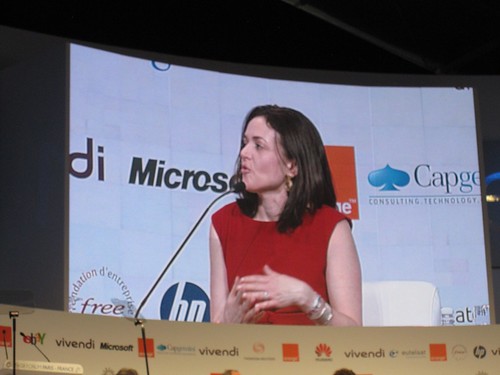
Sheryl Sandberg is leaving Meta. She has roughly 1.6 billion reasons never to work again – that isn’t lives ruined by Facebook, but her net worth on leaving Meta after 21 years at Google and Facebook building advertising sales operations teams.
Sandberg’s resignation has been a long time coming, and was repeatedly predicted since the early 2010s when the toxic nature of Facebook’s ad model became apparent. You had the sense that she viewed herself as a presidential candidate in waiting. Her exhortations to lean in were at odds with the ‘tech bro’ culture that still permeates Meta and other Silicon Valley firms. Sandberg leaves Meta with her reputation in tatters and with less chance of becoming president than More on Sheryl Sandberg leaving Meta here: Sheryl Sandberg calls it quits – by Casey Newton & Axios Login: Sandberg’s ad jackpot
Number of Hongkongers applying for BN(O) scheme rises 25 per cent in first quarter of 2022, likely from families applying before new school year | South China Morning Post – Some 123,400 Hongkongers have applied for pathway to British citizenship since January 31 last year, with 92 per cent of them successful. Canada, Australia have offered alternative routes, but immigration experts say BN(O) and Canadian programmes will remain most popular. – A few observations on this. There has been a strong historic connection between Hong Kong and Vancouver going back to at least the 1967 riots. The South China Morning Post used to have a Vancouver column until April this year. Prominent people like Li Ka-shing had their families there. There is a similar connection with the UK, though I found that I was running into more Canadians than British born Chinese during my time in Hong Kong. Secondly, the dominance of mainland Chinese in creating a threatening atmosphere for Hongkongers in Australia is a big issue
Ideas
Should Cities Disband their Police Departments? – ScienceDirect – the short answer social science data research says no they shouldn’t. The long answer. Unlike the UK, in the US large towns can have their own police forces. There are then county sheriffs departments and state police as well. Closing a ‘city police department just means less responsive policing with less crime solved, less transparent data indicating the quality of policing going on. Crime still happens.
FT’s How To Spend It magazine rebrands as big spenders go out of style | Financial Times | The Guardian – The How To Spend It name was created in 1967, when the FT’s first female employee suggested the wives of its readers might enjoy a section on how to spend their husband’s income. It later became a standalone magazine, riding the luxury goods – and financial services boom – of the 1990s and 2000s. Alice Pickthall, of Enders Analysis, told a 2018 Guardian long read that the magazine was best understood as the “Argos catalogue for rich people” – my issue with HTSI has been less about nice things and more about the lack of quality many of the items have in terms of design, build quality and longevity
Marketing
How the 968CS rebuilt the Porsche powerhouse | Financial Times – ‘You don’t understand: if we don’t get a car at under £29,000 then we’re dead’,” says Gaskell, now 63, a multiple non-executive director, investor and speaker – and a transatlantic rowing record-holder too. He got together with some colleagues to work out how to get a 968 priced at £28,995. “Out went air conditioning, electric windows, rear seat, rear wiper, boot lock – and the big electric driver and passenger seats were replaced with lighter ones.” They got it down to £28,975, then realised they had another problem: “Buyers wouldn’t like saying they’d bought a cheap Porsche.” The solution was to position it as a “lightweight” road-racer. “We lowered the suspension, quietly had a special steering wheel made for us by Italian manufacturer Momo – the factory would have gone nuts if they’d known – and called it the ‘Club Sport’. A couple of professional drivers reported that it was a fantastic driver’s car. We’d accidentally created a game-changer, and in 1993 it was named ‘Performance Car of the Year’.” – interesting tale about innovating in adversity. There are a some bits missing however. Porsche had form making lightweight cars like this, notably the Porsche 911 Club Sport from 1987. So there was a ready use case, concept and language that could be adapted for the cheap 968 rather than a completely new creation as implied by this article.
Media
Amazon to close China Kindle Store after losing out to domestic rivals | Financial Times – Amazon will leave behind a growing customer base of digital book lovers. More than 500mn Chinese listened to or read books on a digital device in 2021, according to research by the China Audio-video and Digital Publishing Association. China’s digital reading market generated more than Rmb40bn ($6bn) of sales last year, an increase of more than 18 per cent from 2020 – back when I started going to China there was a substantial trade in purchasing Kindle tablets from the US and Japan. For regulatory reasons Amazon China has been slow to get into e-books. So local competitors fuelled a parallel trade in Kindles. These tablets were then refreshed and pointed to local e-book stores. It must be galling to Amazon to know that not only did they lose out on e-tailing in China, but the subsidised Kindles from other markets built China’s rivals in e-book sales.
What’s next for Glossier as founder Emily Weiss steps down after eight years | Vogue Business – Glossier is famous for popularising millennial pink in its stores, its zip-lock bubble pouch and for pioneering everyday beauty in an industry obsessed with perfection. However, signs of internal shifts began earlier this year when the beauty brand laid off nearly one-third of its staff, according to an internal email obtained by Modern Retail. It also enlisted the singer and Gen Z favourite Olivia Rodrigo to promote the brand in April, after years of relying on its own community. There have been other bumps in the road. Two years ago the sub-brand Glossier Play closed, and the brand was also called out by former store employees who made allegations about racist behaviour and a toxic work culture. Glossier publicly apologised. – for many marketers in the beauty and personal care space Glossier was the poster child of a ‘new way’ of brand building. It looks as if it wasn’t the new way at all and its had to pivot to more conventional means.
Glossier is moving from scrappy start-up to a mainstream beauty brand. Will Weiss stepping back mean that Glossier will be up for sale?
Consumer behaviour
How Labour lost the Indian vote in the local elections – New Statesman – new Indian immigrants have more in common with Rishi Sunak than with the 1970s East Africans. Born to a wealthy, upper-caste Hindu family, this immigrant is likely to have attended one of India’s most prestigious private schools, aspiring to attend an Ivy League university. They were raised by domestic help who cooked and cleaned for them. Sunak embodies the Indian upper middle class. He understands the new wealthy India. Hell, he’s a card-carrying member of the new wealthy India: the Stanford educated son-in-law of one of the biggest Indian tech families, born to middle-class Indian doctors. This means that when Labour draws attention to Sunak’s elitist background, it makes him more appealing to both Indian demographics. He achieved the social mobility the 20th-century immigrants hoped for for their children, and he is a member of the family that encapsulates the new elite India
Economics
All the reasons why so many near-retirees are going back to work — Quartz – the pandemic may have been an even bigger setback to this age group than the current data suggests. There may be many older workers who want to return to work right now and are facing well-established obstacles, such as age discrimination, that make it much harder for an older employee to be rehired after leaving or losing a job, Davis suggests. Going back to work after retirement? It’s complicated. The data also don’t indicate how many of the people who went back to work would have preferred to retire, but couldn’t—a sign that the system could be failing them
Is British science aiding and abetting the Chinese human organ trade? – Last month, for example, a government bill was passed banning British citizens from travelling overseas to purchase an organ. Accompanying this awareness is a growing unease in western academia. Eminent medics are starting to look back uncomfortably on decades of “constructive engagement” with the Chinese medical establishment – those all-expenses-paid trips to lecture budding surgeons, and the profitable arrangements to train batches of them in the west. Meanwhile editors of academic journals are scouring their back issues for too-good-to-be-true studies on organ transplants, that may have arisen from experimentation on human guinea pigs in places such as Xinjiang. In October last year a world-renowned Australian transplant doctor, Professor Russell Strong, called on all Chinese surgeons to be banned from western hospitals to prevent them using the skills they pick up there in the organ harvesting market. Now, a leading human rights body has warned medical equipment manufacturers – among others – that they might be prosecuted if their kit is found to be used in the illegal Chinese trade. – this is going to expand areas of decoupling
Unilever’s Samir Singh: Sustainability shouldn’t burden consumers with guilt or expense | Campaign Asia – existential threats to the personal care business wouldn’t just come from being innovation laggards, but could also come from feisty D2C brands or strong local rivals eating into market share. Here, Singh is more concerned about one over the other. “Despite the noise, D2C brands have made no impact on market share charts in the personal care business,” he contends. “You will hear a lot about them for the first six months to a year, (then) they will peak and then in two or three years, they tend to disappear.” Instead, it is strong homegrown local brands that worry Singh more. He points out that across categories ranging from deodorants to skin care and across markets ranging from India to Indonesia, Unilever has felt local threats to its storied global brands. These brands have been able to compete on price, innovation, distribution and brand recall. “While we have been winning with our global names, these local brands have taken market share from us previously,” he admits. – this looks like headstone for the DTC CPG boom, other comments about sustainability are interesting as well
Chanel profits skyrocket 171% on price hikes, Americas gains | Vogue Business – Chanel famously increased the prices of its iconic handbags last year (the small Classic Flap bag rose by an average 21 per cent in 2020 and a further 30 per cent in 2021, according to Jefferies analyst Flavio Cereda) and said a twice-year price adjustment is the norm for the brand. Price increases “depend on product categories and countries because it depends if the currency in one country has moved in a direction. There is not a single pricing decision which has been made in January. Usually, we revise, we adjust prices when we have to, twice a year.”
Joint Venture Between High-Tech Rheinmetall AG and DEMALOG, Germany’s Biggest Biometrics Company – Soldier Systems Daily – The strategic objective is to integrate biometric technology, artificial intelligence software, and digitization solutions in three different areas: driver monitoring, security, and industry. For Rheinmetall, the joint venture marks an important step in the transformation to digitization technology and expanding into driver monitoring solutions. Furthermore, the new joint venture enhances the Düsseldorf-based technology group’s future-oriented diversification into biometrics applications geared to the security sector and industry. The move also adds to its existing digitization and software expertise. Importantly, the partnership reinforces Rheinmetall’s capabilities in five strategic technology clusters: automation, sensors, digitization, alternative mobility, and artificial intelligence
Virtual clubbing points to future profits from the metaverse | FT – Hybe, the agency behind K-pop band BTS, was hit by a 98 per cent plunge in sales from its core live concert business in 2020 as tours were cancelled. But total annual revenues and operating profit still rose over a third, as it was quick to offer VR concerts and content. With such digital content repurposed at a fraction of the cost of live shows, operating margins rose to nearly a fifth higher than pre-pandemic levels. CJ ENM, which started using the latest VR and augmented reality technology for its virtual concerts in 2020, has also enjoyed a boost to content sales. These have since risen steadily, more than doubling in the latest quarter, as did operating profits from its music division. For Sony, sales from its music segment rose a fifth in the year to March
Making the metaverse – Smart2.0 – its odd, or disingenuous the way Meta is outlining an open metaverse rather than a walled garden, rather like a turkey voting for Christmas