Month: November 2023

  • MCN

    MCN stands for multi-channel network, these are companies, often based in the likes of China and Japan who actively develop popular influencer channels. They work with influencers to help them improve the quality of their content and then build their audience. In return the MCN gets a cut of the revenue from the influencers channel. In some respects it is similar to the traditional model of record labels, in particular their A&R and ‘plugging’ functions.

    Classic examples of MCN augmented influencer channels

    Li Ziqi (李子柒)

    Sichuan native Li had worked in a number of jobs including being a singer and DJ, prior to returning home to the countryside to care for a sick family member. She initially developed video content to help support the family business selling agricultural produce on TaoBao. Eventually she partnered with MCN Hangzhou Weinian Brand Management to shoot and distribute content. This partnership included building a 17.7 million strong subscriber base at the time of writing on YouTube.

    Li has stopped producing content in 2021 due to a dispute with Hangzhou Weinian, the full details of which haven’t been disclosed.

    John Daub

    Daub is an American living in Japan. He started his career in Japan as an English teacher, settled down and married a local woman with whom he has a child. Eventually John Daub got experience in front of the camera as a reporter for NHK World. NHK World is the Japanese equivalent of the BBC World Service.

    Eventually Daub took his NHK World experience online and create his own content alongside his occasional NHK World presenter work. Only In Japan filmed content around the country focusing on food, technology culture and places to visit. Daub partnered with the WAO Corporation in an MCN style relationship to built a channel called WAO RYU!Only in Japan.

    Daub and WAO parted company in 2020. At the time the YouTube channel had 1.35 million subscribers. WAO has continued the add content to the channel but only managed to grow it to 1.44 million subscribers at the time of writing.

    Daub set up a new channel and an audience of 277,000 subscribers. WAO and Daub’s separation seems to be more amicable than Li & Hangzhou Weinian Brand Management. But if they had remained combined, they would have likely become more successful.

    MCN eco-system in China
    mcn

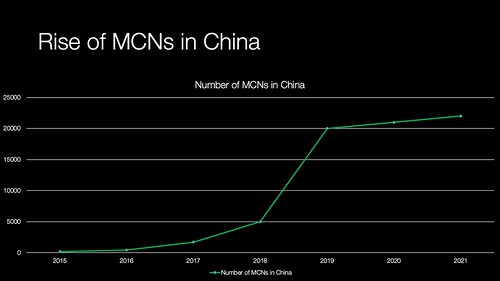
    The MCN eco-system in China has grown in leaps and bounds. This could be everything from houses of live streamers, that are basically e-commerce sweatshops through to TV programme level productions like Li’s channel content. Live streaming services featuring virtual gifting and e-commerce integration was responsible for that step change between 2018 and 2019. This happened despite Chinese government efforts to ‘purify’ internet content.

    More related content can be found here.

  • Dimensions of luxury

    Dimensions of luxury as a post came together thinking about fictional influence account Gstaad Guy, Horizon Catalyst’s New Codes of Luxury report and Sense Worldwide’s Future of Luxury report.

    IMGP0699.JPG

    Dimensions of luxury breaks down into three areas which Catalyst calls:

    • Traditional luxury
    • Contemporary luxury
    • Personal luxury

    Nowadays, most luxury brands won’t fit neatly into these classifications. For instance the Swiss watch brand Blancpain would be considered to be traditional luxury, but the Swatch x Blancpain collaboration which borrows the design language of the 50 Fathoms dive watch is very much contemporary luxury. Part of this has been driven by many brands being part of large combines:

    • LVMH – depending when you look at the stock price, Europe’s largest company by value run by Bernard Arnault. Related to L Catterton private equity fund which has been financed deals such as Birkenstocks.
    • Kering – LVMH’s rival best known for Gucci. It is currently run by François-Henri Pinault
    • Richemont – Swiss listed group focused more on jewellery and watches than rivals. It has a range of brands including Dunhill, Montblanc and Panerai.
    • Swatch Group – which owns most of Switzerland’s premier watch brands
    • Fosun – China-based multi-sector conglomerate which owns a hodge podge of western heritage and luxury brands including Ahava, Folli Follie, Lanvin, Sergio Rossi, Silver Cross prams and St John knitwear.

    Notable independents include The Rolex Trust and Hermés.

    Traditional luxury

    Unsurprisingly this is the kind of luxury that most people would think of. Timeless style, heirloom designs and peerless quality are likely to be the kind of language that springs to mind. When the luxury industry talks about sustainability and the circular economy, the lives of these traditional luxury products come into focus, since they are often passed down. The influencer behind Gstaad Guy in an interview with the FT talks about his favourite item of clothing being a Loro Piana vest that was his Grandad’s.

    What we think of as ‘traditional’ luxury brands came out of businesses with heritage that are known for their quality

    • Loro Piana and Zegna were both high end fabric manufacturers before becoming ‘luxury brands’
    • Rolex made high quality reliable tool watches, as did Omega and Panerai.
    • Louis Vuitton made high quality robust trunks for travellers.
    • Zero Halliburton and Rimowa made cases that were ideal for air travel and protecting sensitive instruments and camera equipment. The Halliburton in Zero Halliburton actually refers to Halliburton Company who are famous for providing oilfield services.

    Contemporary luxury

    Contemporary luxury is where the greatest controversies of luxury tend to lie. Horizon Catalyst tend to tie up premium brands like AirBnB and Apple together with the luxury sector. It includes values like innovation and sustainability. But it doesn’t discuss what Dana Thomas calls the massification of luxury, with traditional European brands being more often being ‘Made In China’. This has driven a drive for brands to try and ‘shortcut’ their way to success. Luxury brands have adopted the techniques of streetwear brands were scarcity and limited drops fuel the ‘hype’. What Sense Worldwide called ‘Supremification’. Chanel is opening special UHNWI only boutiques. And ‘Made In China’ allowed China to develop its own ateliers.

    Personal luxury

    Catalyst defines personal luxury as subjective in nature, individual to each person and having a deeper connection with personal values. It could be items that might be considered treats like having their groceries delivered. Their discussion of everyday luxury would be familiar to marketers in terms of the ‘Lipstick effect’ familiar from Juliet Schor’s work during recessions. But it’s interesting that luxury is being defined by consumers and followed by brands. The classic example of this would be brands from Nike to LVMH getting on board with NFTs, following consumers and creators.

    Further information

    Best of Tatler Hong Kong: The price of viral fashion | Tatler Asia 

    Luxury Brands | Cultural Shifts | Horizon Catalyst 

    Future of Luxury | Sense Worldwide

    Deluxe: How Luxury Lost its Lustre by Dana Thomas

    Louis Vuitton, Supreme: streetwear & luxury brands | renaissance chambara

    Gstaad Guy, the man who turned a lifestyle parody into a luxury brand | FT How To Spend It magazine

    Something New For The 1%: Private Chanel Stores | Highsnobriety

    The Overspent American by Juliet Schor