Consumer behaviour is central to my role as an account planner and about how I look at the world.
Being from an Irish household growing up in the North West of England, everything was alien. I felt that I was interloping observer who was eternally curious.
The same traits stand today, I just get paid for them. Consumer behaviour and its interactions with the environment and societal structures are fascinating to me.
The hive mind of Wikipedia defines it as
‘the study of individuals, groups, or organizations and all the activities associated with the purchase, use and disposal of goods and services.’
It is considered to consist of how the consumer’s emotions, attitudes and preferences affect buying behaviour. Consumer behaviour emerged in the 1940–1950s as a distinct sub-discipline of marketing, but has become an interdisciplinary social science that blends elements from psychology, sociology, social anthropology, anthropology, ethnography, marketing and economics (especially behavioural economics or nudge theory as its often known).
I tend to store a mix of third party insights and links to research papers here. If you were to read one thing on this blog about consumer behaviour, I would recommend this post I wrote on generations. This points out different ways that consumer behaviour can be misattributed, missed or misinterpreted.
Often the devil is in the context, which goes back to the wide ranging nature of this blog hinted at by the ‘renaissance’ in renaissance chambara. Back then I knew that I needed to have wide interests but hadn’t worked on defining the ‘why’ of having spread such a wide net in terms of subject matter.
An end to cigarettes? New Zealand aims to create smoke-free generation | New Zealand | The Guardian – banning tobacco sales to people born after 2004, will drive illegal sales. New Zealand could quite easily have a prohibition type situation on his hands with rampant tobacco smuggling and organised crime. New Zealand has been a leader in tobacco legislation but replication of this in other countries could be challenged in courts on grounds of discrimination
Invisible China: How the Urban-Rural Divide Threatens China’s Rise – ChinaTalk – Xi Jinping just like two days ago was bragging about all these gangs that he’s been able to crack down on it. But the fact that he’s able to say he cracked down on [3,600 “mafia like groups] means that there were a whole lot more than [3,600 ganges- to crack down on in the first place. In the past few years, a few of the potential faults that you write about if China isn’t able to increase its workforce and find decent jobs for the common folk who haven’t made it to the cities yet is crime and social unrest. What are your thoughts about criminal enterprise in China and how it feeds into the themes that you talk about in your book? In the 1980s in Mexico, there was no crime. It wasn’t the Mexico that we know today. The Mexican government talked about what a safe place it was as they were growing very fast. Of course, everybody had a job. Everybody was employed. And that’s China today. China’s not a dangerous place, but Mexico wasn’t a dangerous place in the 1980s. What happened in Mexico, of course, is China happened, right? Wages in Mexico went up, as everybody got employed and the factories in Mexico decided to move. The maquiladoras moved to China. They moved back to the United States. They moved to elsewhere in the world and suddenly, within a couple years, 10 million people lost their jobs and that was 20% of the Mexican labor force – such a great interview
Consumer behaviour
Covid-19 and the rise in news misinformation – Press Gazette – “Our analysis of traffic to the top 100 global English-language news sites reveals that while news consumption soared overall in 2020, untrustworthy news sites saw bigger surges in readership” – Hat tip to Alan Morrison
What brands should know about Zhihu | Vogue Business – Initially invite-only, Zhihu has grown into an online content community of 75.7 million average monthly active users, who ask and answer questions and have access to in-depth articles, columns, videos and live-streaming sessions, often produced by the platform’s 43.1 million content creators… It makes most of its revenues through online advertising, but also offers a membership programme and online education to users, as well as content-commerce solutions to brands
Future Trends: Far-Right Terrorism in the UK – A Major Threat? | Global Risk Insights – there are also reasons to think that far-right terrorism may not develop into the major threat. Large ideological schisms exist within the far-right milieu (such as disagreements over anti-Semitism, capitalism, and violent vs democratic action) that keep far-right activity fractured. Far-right groups also tend to disintegrate due to infighting at a higher rate than Islamist groups do. Additionally, law enforcement may find far-right groups easier to infiltrate and monitor, as there would not be any linguistic or cultural barriers to surmount
The $1 billion Russian cyber company that the US says hacks for Moscow | MIT Technology Review – One area that’s stood out is the firm’s work on SS7, a technology that’s critical to global telephone networks. In a public demonstration for Forbes, Positive showed how it can bypass encryption by exploiting weaknesses in SS7. Privately, the US has concluded that Positive did not just discover and publicize flaws in the system, but also developed offensive hacking capabilities to exploit security holes that were then used by Russian intelligence in cyber campaigns.
Much of what Positive does for the Russian government’s hacking operations is similar to what American security contractors do for United States agencies. But there are major differences. One former American intelligence official, who requested anonymity because they are not authorized to discuss classified material, described the relationship between companies like Positive and their Russian intelligence counterparts as “complex” and even “abusive.” The pay is relatively low, the demands are one-sided, the power dynamic is skewed, and the implicit threat for non-cooperation can loom large
US Senator Who Served as Ambassador to Japan Lauds Closer Ties but Issues Warning | Voice of America – English – American concern about technology transfers extends beyond its relationship with Japan. “When the U.S. shares its cutting-edge technology with allies, it runs the risk that some of what is shared ends up in the hands of adversaries,” she said. For his part, Hagerty says that compared with four years ago, when he first took up the post as U.S. ambassador to Japan, the strategic challenge facing America “continues to get more serious, particularly with respect to China.”
Logic Chip Teardown From Early 1990s IBM ES/9000 Mainframe | Hackaday – The 1980s and early 1990s were a bit of an odd time for semiconductor technology, with the various transistor technologies that had been used over the decades slowly making way for CMOS technology. The 1991-vintage IBM ES/9000 mainframe was one of the last systems to be built around bipolar transistor technology, with [Ken Shirriff] tearing into one of the processor modules (TCM) that made up one of these mainframes – I remember when I was at college that bipolar / CMOS hybrid chips were touted to provide a radically faster computer chip
2102.12627] How to represent part-whole hierarchies in a neural network – This paper does not describe a working system. Instead, it presents a single idea about representation which allows advances made by several different groups to be combined into an imaginary system called GLOM. The advances include transformers, neural fields, contrastive representation learning, distillation and capsules. GLOM answers the question: How can a neural network with a fixed architecture parse an image into a part-whole hierarchy which has a different structure for each image? The idea is simply to use islands of identical vectors to represent the nodes in the parse tree. If GLOM can be made to work, it should significantly improve the interpretability of the representations produced by transformer-like systems when applied to vision or language
Creative Culture ran a roundtable that provided with Japanese insights across brands and consumers. Well worth a watch.
Key outtakes
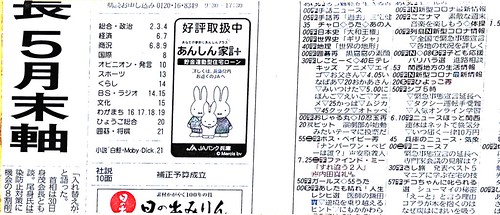
Kawaii or cute occurs in areas that you wouldn’t expect it. From Hello Kitty airlines and maternity wards to Miffy being used to sell mortgage services.
Imagine 2060, more than 40% of Japan’s population will be 65 and older. This changes what market segments look like; no point chasing the latest generation. It will change what marketing will look like and what products will be sold. It would be an exciting time for product designers, creatives and strategists working with local clients who are willing to embrace the opportunity.
Couple by Norimutsu Nogami
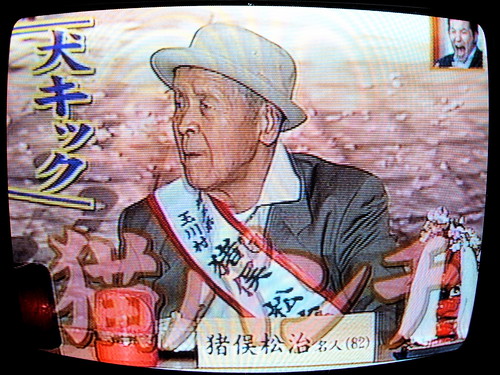
Newsprint and television are still popular media in Japan (and more popular than marketers are willing to admit outside Japan). These media still have a strong influence on consumers and are represented more strongly in the media mix by Japanese companies. In terms of Japanese insights for brand marketers this means that brand building should be less of a challenge from a media investment point of view than it would be in in some western markets or China.
Japanese television by buck82
Consumers shop daily or every other day. This is because they don’t have enough space to keep their groceries. So there are convenience stories in every neighbourhood. Retailers want to keep minimum inventory, so they receive frequent, small deliveries almost daily. Since there is a rapid turnover this in turn allows innovation around product innovation. Special edition Kit-Kats are the example most familiar to consumers. But you can see different products in the convenience store at different times of the day.
Family Mart Convenience Store, Harajuku, Tokyo by MD111
Moving from Japanese insights to Chinese strategy, the Center for Strategic & International Studies discusses what is needed for the west to have a better China strategy.
Technology
The Computer History Museum in Silicon Valley, took the opportunity to interview Mark Markkula. Markkula was an engineer and product marketer involved at Fairchild and Intel during the early days. He put in seed capital into Apple and sat on the board until 1997.
If you watch nothing else on this post, watch this discussion between Stephen King and Jeremy Bullmore at J Walter Thompson. Bullmore ended up as chairman of J Walter Thompson, eventually retiring in 1987. King established the first account planning department in the advertising industry at J Walter Thompson in 1968.
May of the problems outlined are similar to problems today.
kisho kurokawa’s metabolist ‘capsule house K’ from the 1970s to be preserved in japan – the metabolist group, formed by architects, designers and critics, imagined a world of flexible cities where buildings, like people, were transient and ever changing. designed and built between 1971 and 1973, ‘capsule house K’ exemplifies the ideas of metabolism, recyclability and exchangeability – What separates the Japanese metabolist architecture and design movement from the western prefab manufacturing is that it was genuinely modular. A single capsule like this house could exist on its own, or could be part of a tower structure. The focus on flexible cities at the centre of metabolist design and the idea of recyclability. The western prefab approach is all about bringing product line techniques to create quick builds.
The Wall Street Journal’s Internal Audit – The New York Times – none of the editors understand digital and that the paper is unlikely to have any success reaching the younger readers they desperately need without managing to write something about either race or gender. More media related content here.
Security
A secretive Home Office unit has hoarded data on millions of people | WIRED UK – more than 30 data providers are listed in the documents. Only two of these, fraud prevention company GB Group and data analytics firm, Dun & Bradstreet, were not redacted. GB Group acknowledged it provided data to the unit but declined to provide any further details citing “confidentiality obligations”. Dun & Bradstreet says it is against its policy to comment on its work with clients. I’d be surprised if they weren’t
Leaving missed calls in this way — effectively using a mobile phone as a kind of latter-day pager — was a consumer hack that, in the 2000s, before India’s cheap smartphone and data revolution, grew more popular than texting. The missed call emerged in India as a critical means of communication for those who counted every rupee spent on recharge credit. But the practice soon spread, became trendy, and, even as call rates plunged in the 2000s to among the lowest in the world, evolved into a general tool of convenience: a missed call could mean “I miss you,” “Call me back,” or “I’m here.” The fact that the missed call demanded only basic numeric literacy made them accessible to the third of India’s population that was illiterate. In 2008, one study estimated that more than half of Indian phone users were in the habit of calling people with the expectation that they wouldn’t pick up – you had similar consumer patterns around the world, but Indians seem to have taken it to a new level
Back in 2005, I worked in the search group at Yahoo!. One of the projects that I worked on was Yahoo Answers. 16 years later, Yahoo Answers is being closed down. I thought I would capture some of my memories and inside knowledge on Yahoo Answers.
But first we need some context so that what I write later about Yahoo Answers will make sense.
The beginning
Let’s go back to the beginning. Back to the early-1990s. Jerry Yang and David Filo founded Yahoo!. It fits the classic Silicon Valley archetype story and you can find plenty of accounts of it elsewhere. The key is what Yahoo! originally was. Its a list of links for websites. Once the list grew above 200 links or so; Jerry and David came up with a way of displaying this list by grouping it into subject areas.
What would later be called a web directory. There were other directories around about this time like:
Netscape Communications had their own directory when they acquired Gnuhoo, this eventually became DMOZ and then Curlie. Gnuhoo did rely on a search engine to help you find things in their directory. This is available as open source code at GitHub
All of them had a certain amount of editorial input over what was good. Yet Yahoo! became the top one through buzz marketing – cheap ways to do brand building.
When I was there, I worked with an agency to organise event hijacking at the Harry Potter and the Half Blood Prince book launch at Waterstones flagship store on Oxford Street. Yahoo! would vinyl wrap any employee’s car for free. There were also strategically placed billboards, such as this one in San Francisco.
People who managed this directory were known as web surfers. But there was also search engines out there, like the Knowbot search engine for Telnet developed in the late 1980s. There was Archie which was the closest to what we think of as a search engine now. Archie searched FTP archives around the world.
As computer science post-grad students, Filo and Yang would have been familiar with the idea of the search engine. At the time David Filo felt that no machine would provide better filtering than a human. Media accounts of the time showed that Silicon Valley venture capitalists were all in favour of search engines over directories.
Peer companies like:
Webcrawler
Metacrawler
Lycos
Ask Jeeves
Infoseek
Excite
AltaVista
All offered what we’d recognise as reasonable search experiences. But Filo’s comments on human filtering is something that we will revisit later.
Web portal & web advertising
Search engines were the future but as the dot com era took off it wasn’t apparent how to monetise them.
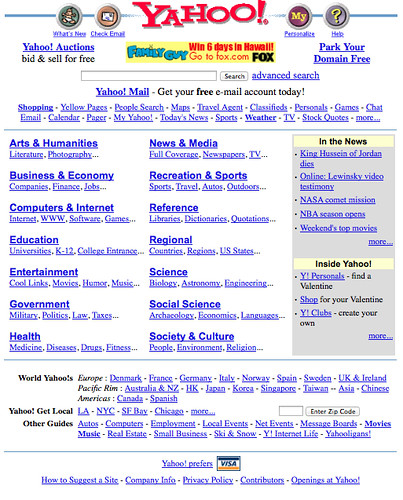
Yahoo! home page early on the morning of March 3, 1999
At the height of the dot com era; Yahoo! had about 40 million users a month. You have to remember there weren’t that many people online in comparison to now. Internet usage had grown from 45 million users in 1995 to over 410 million by 2000. At the time it didn’t seem to matter that Yahoo! took longer to load as a website compared to its peers. Longer page times, meant that you could get away with less equipment in your data centre hosting the website and supporting infrastructure.
The internet didn’t give birth to culture in the same way that memes, influencers and platforms do now. Instead it was the meme. It was all over the mainstream media, often tied up with ideas of cyberpunk culture, bulletin boards and the ‘information superhighway’. Examples of this included:
The Site by MSNBC
The i in iMac was for internet. The idea was that you could take the computer out of its box, plug it in to your wall socket and telephone socket. When you turned it on, it would configure you an internet service. The cool product design was a byproduct of this internet appliance plus personal computer thinking
Movies: The Lawnmower Man, Hackers, The Matrix, Ghost In The Shell
Books: Snow Crash, William Gibson’s Neuromancer
A plethora of internet magazines, including Ziff-Davis’ Yahoo! Internet Life which was a mix of technology and gadget reviews, media and celebrity content and website recommendations. Yahoo! Internet Life was published from 1996 to 2002
It felt like something big was going to happen, even if we didn’t know what it was. What was obvious was the potential for advertising online. And the clearest analogue was newspaper advertising due to the long page format of web pages.
Web portals came about for a number of reasons:
There was now the technology to pull content from different sources together. You would have:
Weather forecast
Horoscope
Up to date news
Local information (for major cities like San Francisco)
Business
Finance
Entertainment and celebrity news
Like the newspaper before it, it offered the first media you needed, but on the web.
It was mainstream enough for brands to advertise against for brand building.
By the time I was leaving college, Yahoo! Mail accessed through the Yahoo! home page made perfect sense.
So before the dot com bubble bursts Yahoo! had a major media business valued at 2.8 billion dollars, or about $70 dollars per user. Which sounds expensive, but when you consider that Google is now worth about $386 per user, it’s not that bad. Secondly, online advertising per impression was much more lucrative back then and ad fraud was much less of an issue.
What there wasn’t was a way of taking advantage of the highly relevant search results provided by search engines and adequately monetising them. So companies had three ways of monetising search:
Companies created portals the so called ‘homepages of the web’ to put display adverts on like My Yahoo! or MSN.com and search was a service alongside news, weather and horoscopes
They became infrastructure companies selling search functionality in the background a la Inktomi
They sold inclusion in their directory. This was controversial as it went against the editorial integrity of the directory and still a hot button when I arrived at Yahoo! in 2005
The bubble bursts
In the US stock market we had was now known as the internet or dot.com bubble. Looking at the NASDAQ composite data, it seemed to start in the last quarter of 1995, six months or so before Yahoo! went public in April 1996. It reached its nadir in the last quarter of 2002.
In reality, this was more than about websites. Telecoms deregulation, satellite networks and the rise of cellphones had seen a boom in new companies and network equipment providers to support them. The need for servers had created booms in:
Computers: SGI, Sun Microsystems and IBM
Networking equipment: US Robotics, 3Com, Cisco
Software: VA Linux, RedHat, Open Text
Software as a service: I2, Salesforce, NetSuite
Web hosting and ‘data hotels’: Equinix, Intel, Rackspace, PSINet
Telecoms and ISPs: Level3, Global Crossing, Earthlink, Iridium, GlobalStar, AOL, @Home Network
NASDAQ composite index covering the dot com boom and crash
Add into that artificially high growth in earnings for enterprise IT companies in the run up to the Y2K bug issue and the whole sector was left with a bad hangover.
Eric Steiner tells his tale as the CEO of Inktomi in 2004
Steiner’s talk is interesting because it shows how the search business, selling search capability to the likes of Microsoft, Amazon and eBay had slow and steady growth rather than outstanding growth during this time.
Yahoo! went through a traumatic time. When I worked at Yahoo! Europe, I was told online advertising sales dropped to a third of what they were during the dot com boom. The European business managed to hold on by its finger tips thanks to revenues from online dating services.
Some of the ‘smart bets’ Yahoo! made during the boom times looked like hubris. The exemplar of this was Yahoo!’s acquisition of Broadcast.com. Broadcast.com provided video streaming (then called web casting) and internet radio services. It was the technology partner for the first online Victoria Secret Fashion Show streamed online. Yahoo! acquired it for 5.6 billion of Yahoo! stock. This was a bad decision, but thankfully, they didn’t pay cash.
When I joined Yahoo! the Broadcast.com acquisition was still a scar on acquisition decision-making. You can attribute the impact of this to subsequent failed purchases of Google and Facebook.
GoTo and Google
In 1998, the company GoTo.com launched paid advertising placement in search engine results. The next year they introduced real time bidding. It was renamed Overture and started providing these services for Yahoo! and others. It started to become successful as a business.
Meanwhile, Google had moved from a research project to a serious search engine. In 2000, Google began selling advertisements associated with search keywords. This was against Page and Brin’s initial opposition toward an advertising-funded search engine, they saw themselves more as a ‘search appliance’ business rather like Inktomi. Yahoo! adopted Google search around about the same time that Google started its search advertising business.
This put Google in front of a large number of consumers and helped Google further refine its search engine.
Google’s own offering was the exact opposite of Yahoo!. It prided itself its clean design with just a search box. Google also had a fanatical obsession with reducing page load times and the time taken to return search results.
This was what more and more people wanted. Google used the dot com crash to build its business and its infrastructure. It wasn’t until its 2004 IPO that rivals realised how much of a head start Google had.
Google revolutionised data centre server design, reducing cost and increasing the amount of servers that it could use. By contrast every Yahoo! data centre hardware purchase went via David Filo. If you used Yahoo! small business hosting, you were using tired and almost expired Yahoo! servers. In retrospect, they looked after the datacentre pennies, but let the pounds slip away.
2003 saw Yahoo! get serious about the search engine business. The company purchased Overture which included GoTo.com and Altavista. But the problem was that even if Yahoo! built a search engine as good as Google, it didn’t matter if people didn’t use it. During my time at Yahoo! there was a push to get the necessary servers in place and a product that was as good as Google. However there was a constant tit-for-tat feature development in the search space. By this time Google had already verbed. The Google habit means that its hard to compete against them.
I heard that inside Microsoft they tried to take drastic measures to persuade employees to use Bing over Google. When I worked at Yahoo! people used Google a lot too.
The only way to compete with Google was to have a different idea. Google defined its mission is to organize the world’s information and make it universally accessible and useful.
Yahoo! needed a new idea that was distinct from Google’s mission. The idea was knowledge search.
Knowledge search and Yahoo! Answers
Knowledge search as a concept was well under way by the time that I arrived. It was to capture and make searchable all the ‘knowledge’ (rather than information in the world). Opinions, experience and recommendations are knowledge rather than information. Yahoo!’s web 2.0 acquisitions including Flickr and delicious were made to support this vision.
Tagging built up words and associations with web links and images, effectively human filtering – some of which would be used to train machine learning algorithms. The next logical step would be to build a repository of knowledge by the people, for the people. That’s where Yahoo! Answers came in.
The inspiration for Yahoo! Answers came from a product that Yahoo! Taiwan had rolled out. It in turn probably inspired by Korean site Naver Knowledge IN. Bradley Horowitz apparently claimed that Yahoo! Answers was inspired by Naver Knowledge IN directly.
Knowledge IN was designed to encourage user created content, since there wasn’t much material on the Korean web at the time.
When I heard Jerry Yang talk about it internally at the time, he talked bruskly about a product built by Yahoo! Taiwan as having inspired it. Jerry didn’t do jet lag well and came across as morose on the couple of times I saw him in Europe, so wasn’t exactly an effusive speaker.
Yahoo! Answers was championed by Jerry and that blessing allowed it to be pushed through when so many other product died before they got pushed to beta. It makes sense to point out the human crafted nature of Yahoo! Answers. In this respect it can be seen as a direct line back to the original Yahoo! directory product. Both were fuelled by a belief that people had some ability that was better than machines.
Qi Lu was responsible for new products within the core search business and the troubled Panama search advertising project at the time. Weekly conference calls saw a plethora of existing projects cancelled, or reprioritised by Qi Lu, while new ones would suddenly appear. This constant change in the roadmap mean’t a lot of wasted efforts.
Yahoo! Answers and much of the knowledge search related acquisitions sat under Bradley Horowitz. Tim Mayer was focused on the commercial side of things, although there was some overlap in the roles. Eckhart Walter sat above Tim. Jeff Weiner was the main shot caller having both Search and Marketplace businesses reporting into him. If you’re thinking, that’s a lot of senior management involved. You’d be right, there were a lot of managers with varying degrees of responsibility involved.
But they were all good people and I’d be happy to work with them again.
Prior to Yahoo!,I had been working agency side for Transversal. Transversal powered the support functions for a number of companies including Sony Playstation. I had a good idea how much this service was priced and floated the idea of sponsored channels for instance around Sony Playstation and had a good idea how much Sony must be paying to support user troubleshooting.
But it didn’t fit that well as an idea with knowledge search.
Concerns and how is babby formed?
In the European team we had some concerns about Yahoo Answers like how was it going to get monetised? The quality of the content was also a concern. Knowledge IN and similar services in Asia work partly due to culture. We were worried when it hit a more individual-focused culture like the US or Europe.
Another problem was calibrating the rewards within the system. Its really hard to get the balance on good quality questions and answers. Generally people who are time rich, aren’t necessarily the best respondents. If you need one proof point to show how much of a failure this was, you only have to look at the how is babby formed? meme.
Rewards aren’t the only problem however. The second issue was the way the community was built. Generally, a great community is built carefully from like-minded people. With flickr it was around the passion of photography. Facebook is actually closer to Reddit, built on groups of groups. The death of a group dynamic won’t necessarily kill the platform.
I was involved in early seeding of the initial content on Yahoo! Answers. I answered 42 questions, the first one question I answered was ‘What to take from airport to downtown Munich?‘ My response: The taxi is reasonable, it cost me 30 Euros – which shows the contextual nature of knowledge search. 30 Euros was reasonable for me at the time, since I could expense it back, but it wouldn’t be reasonable for a backpacking traveller.
I also wrote six questions, the first one was ‘Has anybody got a Pentax K100D, if so what do you think of it? What are its pitfalls and what aspects of it do you particularly like? I wanted to get a a bit more colour beyond the reviews I’ve read online. – I was getting ready to leave Yahoo! and was going to buy a DSLR camera to take better pictures on my Flickr account. I deliberately structured the question to get opinions from early users. The Pentax K100 had recently been launched.
Careful community management is at odds with a platform trying to capture the world’s knowledge. So the Yahoo Answers community was built for rapid global user growth. For the English language versions at least, there was a global content index, sitting on top of a distributed Oracle database.
This meant a clash of cultures and variable quality content. I quickly found the site unusable for productive questions. Yahoo! spent the next few years trying to perfect it. People that formerly worked on Yahoo! Directory and front page brought their content and editorial skills to bear on Yahoo! Answers.
I suspect that trying to monetise the service would have been a constant challenge. Yahoo! Answers provided variable quality answers for children’s homework and was the butt of memes. Neither of which are an ideal recipe for the kind of content large brands like Procter & Gamble would want to put their name against.
Quora’s lean pickings
Google tried to do it better with Google Knol and also failed.
Quora was formed in 2009 and managed to build a better community, but I’ve still seen a steady decline in the quality of their answers. In 2019, they had a user base of 300 million people and total revenue (from advertising) of 20 million dollars. Thats an ARPU of 6.6 cents. That’s not a good internet media business. From that 20 million, they need to pay their infrastructure costs, maintain and improve the product, pay the salaries of their 300 employees. And I haven’t even talked about how their investors must feel.
Knowledge search is still a technology challenge waiting to be conquered.
How Lee Dunne challenged the depiction of working-class mothers | RTÉ – I originally didn’t know Lee Dunne as a novelist. Instead he was part of my childhood. Lunchtime listening when I wasn’t at school was Harbour Hotel, a radio soap opera written by Lee Dunne that gave a good sense of everyday life. The graininess of listening to the show on medium wave added to the experience. Dunne wrote each episode a bit like Roshomon, with each character talking about an event (like an argument) from their perspective. RTÉ’s obituary also focuses on Dunne’s social commentary literature that was banned by the Irish government in the 1960s through to the mid-1970s. Lee Dunne like James Plunkett wrote about the everyman. Plunkett’s work differed from Lee Dunne in that it had more of a socialist tenor to the content. Lee Dunne had particular success with his 1969 novel Goodbye To The Hill, more Ireland related content here.
Beauty
Shu Uemura to Exit Korean Market | BoF – Shu Uemura, a Japanese beauty brand owned by L’Oréal, is exiting the South Korean market in September after 16 years. While some speculate this is due to Korean consumer boycotts of Japanese products that began in 2019, L’Oréal states the withdrawal is part of a strategy to optimise its brand portfolio and respond to local market demand. Another contributing factor is likely the intense competition within the Korean beauty market. Shu Uemura currently operates over 70 outlets in the country.
NewNew™ on the App Store – god this dark. In th sage words of Matt Muir – how else do you describe a new app, with significant VC funding, whose main purpose seems to be to allow ‘creators’ (we’ll come back to that word) to earn money from their ‘fans’ in exchange for letting said ‘fans’ determine the course of their life, in some sort of modern, ersatz version of The Diceman?
How China’s online hate campaigns work – Protocol — The people, power and politics of tech – In today’s China, a nationalist campaign involves something far more complex than paying people to post scripted messages parroting Beijing’s line. The government has mastered the craft of influencing people’s genuine emotions and having these ordinary users do the trolling and doxxing — for free. Oftentimes, this means appealing to misogyny or chauvinism, something that virtually guarantees more clicks. Many videos and articles attacking Xu have tried to paint her personal life as promiscuous and delinquent. Web users have frequently called Xu a “female Han traitor,” a dog whistle that conflates concepts of chastity and national loyalty
How China structures loans to become Africa’s “preferred” lender — Quartz Africa – Chinese contracts contain broad confidentiality clauses that stop borrowers from sharing details about the contracts, or sometimes even the fact that they exist. And with a confidentiality clause in every contract in the dataset since 2014, the contracts had become more secretive over time. Most of the clauses commit the borrowing countries not to disclose any of the contract terms or related information, unless required by law.
Hong Kong’s elites should think about an exit strategy – Nikkei Asia – The most serious concern for Hong Kong’s elites is the impact on their interests if China’s economic integration plan is fully implemented. Hong Kong’s tycoons may see this plan as a great opportunity and believe that their connections on the mainland will help them. But they may be in for a rude shock. Beijing wants to integrate Hong Kong’s economy not to enrich its tycoons, but to make the city’s economic future even more dependent on the motherland. In this process, Beijing would understandably give preference to mainland players, in particular state-owned enterprises, at the expense of Hong Kong’s businesses. – this covers all the reasons why I think Jardine’s pivot to Indonesia is smarter than Swire doubling down on mainland China
The great British retail reopening | Vogue Business – The 12 April reopening of all physical stores in the UK is an occasion for optimism, but it’s heavily laced with caution. “The big question is how much of the massive increase in total share of spend will online retain?” says Richard Hyman, veteran UK retail analyst. His rough estimate, he says, is about 85 per cent. “If online hangs on to a material portion of spend, then the cost of selling something in a shop will have gone up significantly.”
Job search | Amazon.jobs – interesting job ads. Amazon is looking for a lot of product designers and software engineers to work on visual search and augmented reality as part of the ‘next generation of shopping innovation’ – I found this via the ex-Yahoo! employees groups on LinkedIn. Yahoo! had a large contingent of people working in areas such as image and video search that would be of interest to Amazon now. The team is based just down the road from Sunnyvale in Palo Alto