Category: culture | 文明 | 미디어와 예술 | 人文

Culture was the central point of my reason to start this blog. I thought that there was so much to explore in Asian culture to try and understand the future.

Initially my interest was focused very much on Japan and Hong Kong. It’s ironic that before the Japanese government’s ‘Cool Japan’ initiative there was much more content out there about what was happening in Japan. Great and really missed publications like the Japan Trends blog and Ping magazine.

Hong Kong’s film industry had past its peak in the mid 1990s, but was still doing interesting stuff and the city was a great place to synthesise both eastern and western ideas to make them its own. Hong Kong because its so densely populated has served as a laboratory of sorts for the mobile industry.

Way before there was Uber Eats or Food Panda, Hong Kongers would send their order over WhatsApp before going over to pay for and pick up their food. Even my local McDonalds used to have a WhatsApp number that they gave out to regular customers. All of this worked because Hong Kong was a higher trust society than the UK or China. In many respects in terms of trust, its more like Japan.

Korea quickly became a country of interest as I caught the ‘Korean wave’ or hallyu on its way up. I also have discussed Chinese culture and how it has synthesised other cultures.

More recently, aspect of Chinese culture that I have covered has taken a darker turn due to a number of factors.

  • Yahoo corporate culture

    I bumped into some former colleagues over the past couple of weeks and the experience reminded me of a lot of the items in this post. We shared a common bond based on our exposure to the Yahoo corporate culture. Given the circling activist investors surround the current iteration of Yahoo! this maybe a capsule of a soon-to-disappear culture. Many of the things below are artefacts, totems of the Yahoo corporate culture.

    • You know that Yahoo! was the brand and a Yahoo was a person who worked for Yahoo!
    • You were told that you bleed purple. There were values that were ingrained into you
    • You understood the struggle of constantly moving budgets and spending a quarter’s marketing budget in three weeks
    • You have an address book full of friends and aquantances working at great companies in digital media. The business was a rotating door for talent, in six months you had a great Rolodex full of contacts.
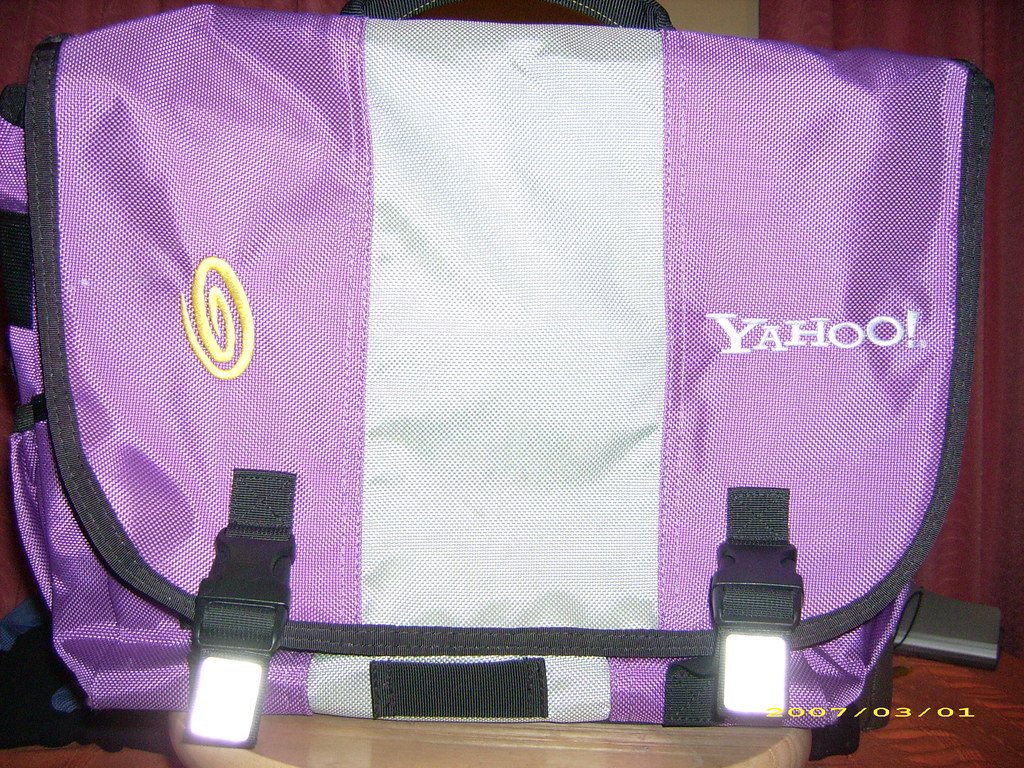
      Yahoo! timbuk2 bag
      Your have an old brand Yahoo! laptop bag that just won’t die. Not too sure what they made those Timbuk2 bags from but mine is eight years old, well travelled and still looks new.
    • Friends introduce you to former colleagues you were less familiar with by including their IM identity as well as their name.
      Yahoo! star
      You still have a star kicking around in a box somewhere from when you packed up your desk one last time.
      Lost
      Your colleagues gave you a list of tchotchkes to get from the shop in building D if you went to the headquarters campus in Sunnyvale.

    You’re still using at least one of Jerry and David’s Christmas presents around the house.

  • Social media week & things from last week

    My week was dominated by Social Media Week. I got to see Battenhall’s opening presentation and catch up former colleagues from past agency and in-house lives. A lot of Social Media Week is useless, its like as if the industry doesn’t move on from the late 2000s. I was very disappointed that I didn’t get to see Ogilvy’s presentation on Twitter cards, which look extremely useful. So will have to make do with Slideshare:

    Twitter cards offer opportunities for marketing consent and building audiences. James Whatley’s presentation for Social Media Week covers the possibilities offered by Twitter cards really well. 

    American rock band The Eagles are known for being extremely difficult and unpleasant. As I was once told, if you were a festival organiser and where offered stage four cancer or The Eagles – the cancer is preferable. Don Henley and Glenn Frey were allegedly horrible excuses for humanity. The world is reputedly better off now that Frey is dead, after a decade and half of being seriously ill.

    For instance, it is impossible to clear samples or have their tracks played on television. David Letterman takes them to town. It absolutely destroys them. This clip was originally run in 2014, when Letterman was the host of The Late Show.

    JJ Abrams reinvigoration of the Star Wars franchise includes a Millennium Falcon with a Batman tumbler easter egg

    I love this advert for Hong Kong app / service GoGoVan; chock full of memes and Hong Kong cultural references.

    Finally Slate wrote a great ode to the font Futura.

  • Charlie Rose, Tim Cook, Apple and television

    Charlie Rose runs the a talk show. His show appears on the PBS network. His interviews give the public something new, without ruffling the feathers of the senior executives and celebrities that he has on his show. He is both inquisitor and coach like a defence lawyer interrogating his client at the stand. Rose studied law at Duke University.
    Charlie Rose / Ken Burns
    Charlie Rose is also one of the elite. His estranged wife is the sister of John Mack, the former chairman and CEO of Morgan Stanley. His current partner is Amanda Burden. Burden’s father was an heir to the Standard Oil fortune, her first husband is related to the Vanderbilt family. Her second was the head of Warner Communications. Burden was the former chairman of the city planning commission under New York’s Mayor Bloomberg. Before being a journalist, Rose worked at Bankers Trust; and continued working there for a while whilst working as a reporter on the weekend.

    All this is why he has had access to all the titans of the technology sector, including Steve Jobs. So it made perfect sense that Tim Cook would sit down with him after the launch of Apple’s wearable products. Cook also used the opportunity to reiterate Apple’s new positioning on privacy that makes a virtue of the fact Apple isn’t an online advertising company.

    Despite being on PBS, Rose’s interviews gain respect and become media agenda setters in their own right. Similar to the way BBC Radio 4’s Today programme influences the UK political agenda.

    I found it interesting that Rose’s interview with Cook triggered so many news stories afterwards. I had at least one friend phone me to ask what I thought the significance was of Cook’s comments about television. Like me, they had been peppered with questions about when Apple’s transformation of TV was due?
    New Apple TV w/Flickr
    I found the interview of interest only because Apple executives rarely do interviews. The questions were a temperature check and update of ones Rose had asked Steve Jobs on a previous interview. The television industry comments Cook made Apple’s position in only one respect. They acknowledged that the Apple TV business is now a bit larger than a ‘hobby’. Steve Jobs called the Apple TV a hobby at AllThingsDigital four years ago. When Cook said TV was stuck in the 1970s; Jobs had said the same thing: the current TV business model squashed innovation. My understanding of news was that it was about events that were new, surprising or noteworthy. The commentary on TV was none of these things.

    The media took this to mean that Apple was going to do ‘something’. What they failed to pick up on was Cook’s comments later on where he talked about business focus. Steve Jobs had talked about all Apple’s product range could be fit on a desk, showing the level of company focus. In contrast to industry peers with thousands of SKUs (stock control units). Cook made the same comment about the entire Apple product range fitting on a desk in this interview. The people at Apple are smart enough to realise that lots of products and services are bad. But they will only address a few where they can make the most difference. (More Apple related content here).

    The media saw a hook and ran with it, psychologists would call it perceptual closure. There is a temptation with a company as private as Apple to write anything. There is also the pressure of producing enough content for online. This pressure can have a few outcomes:

    • A temptation to ‘chunk’ content without context to create more stories out of a given bit of information
    • Insufficient time to research how this content fits with past statements
    • No longer the same level of fact-checking that one would have seen at traditional publications like The New Republic (and even then they had Stephen Glass)

    More informtion
    Charlie Rose interview with Tim Cook part one
    Charlie Rose interview with Tim Cook part two
    Apple sets its sights on redesigning the TV after CEO Tim Cook describes it as being ‘stuck back in the Seventies’ | Mail Online
    Tim Cook Hints at Improvements for Apple TV in Charlie Rose Interview | NBC News
    Apple CEO Tim Cook talks to Charlie Rose about TV and why he bought Beats | Engadget
    Tim Cook Talks up Apple TV, Steve Jobs and the Future with Charlie Rose | Patently Apple
    Jobs: Apple TV a hobby because there’s no viable market | AppleInsider
    Gestalt Laws of Perceptual Organisation | About.com
    Stephen Glass | Wikipedia

  • BMW i8 & other things this week

    BMW made a video about the production of the BMW i8 to promote the car. However the tone of the video feels rather like a corporate video from the 1980s. Despite the 1980s vibes the BMW i8 carbon fibre monocoque chassis manfucturing is fascinating. As is the manufacture of the BMW i8 high voltage battery. Unfortunately all this effort in manufacturing doesn’t seem to result in high reliability of the vehicles it makes.

    Reebok’s classic range looked to draw on the history of Manchester in this video. It split opinions in the office. Many of my colleagues liked it, but I felt a dissonance between the big speech about building the future with visuals that came straight from 1988. The MA1 jacket, the Reebok Classic trainer – the chav proto-shoe, brutalist architecture, a nice house with 1970s architecture and a mid-to-late 1980s BMW M535i – allegedly beloved of drug dealers trying to shift a load. The car looked discreet about its performance, but could still go like the clappers

    Great demonstration by Grandmaster Flash (of Grandmaster Flash and the Furious Five) of mixing circa 1983

    Kickstarter have a campaign running to reprint the New York Transit Authority’s standards manual which was much more than a style guide but went into things like the methodology of planning signage and usability of New York public transport. More design related content here.

    Anton Corbjin’s film A Most Wanted Man makes Hamburg amazing and gets great performances out of actors including Willem Defoe and Phillip Seymour Hoffman. The film feels believable because it’s based on a John LeCarré novel of the same name. LeCarré’s post-cold war output was a critique of populism, globalisation and the political nature of the war on terror. As would be expected in the 21st century the US comes out of it pretty poorly. Corbjin gives an honest portrayal of the book.

  • Japanese week

    Things that made my day this week has a lot of a Japanese feel, this maybe some sort of invisible psychological hand of some sort as I am currently reading Ghost In The Shell Man-Machine Interface by Masamune Shirow, but more on that later.

    First up Bose have been positioning their brand as having a love for music through a series of short films, my favourite one was about how Japanese people have taken the Jamaican dancehall sound and done their own thing with it. Japanese dancers have won competitions in Jamaica. Like hip-hop and Chicano car culture before it, Japan put their own spin on it rather doing straight cultural appropriation. 

    Usagi Yojimbo is an American comic drawn by a Japanese American author Stan Sakai and based on classic Japanese chambara film, so you can imagine how psyched I was to know that this was a proof-of-concept prior to a possible animated film.

    Toyo Tires have combined their Japanese heritage with tire technology to come up with yakatas (traditional summer weight kimonos) with a tire tread based print that still didn’t seem out of place.
    Toyo Tire yakatas
    Toyo Tire yakatas
    Moving away from the land of the rising sun to China, Apple’s new iPad featuring Yaoband who use an iPad in a similar way to the way the Art Of Noise used the Fairlight CMI or hip-hop producers used the famous Akai MPC workstation series. It’s interesting that Apple is focusing the light back on creativity.

    Finally a vintage film about the MTR in Hong Kong complete with a stuffy voiceover and pseudo-Krautrock backing track. The trains look retro-futuristic in a Logan’s Run kind of way

    More Japan related content here.