Category: finance | 은행업

Finance is a really odd section for me to have. I don’t come from a finance background, I have no interest in fin-tech. Yet it makes its appearance here on this blog.

When thinking about this category, I decided to reflect on why its here. It’s usually where curated content sits, rather than my own ideas.

The reality of life in the west is that everything has become financialised. As I write this as people think about web 3.0, they are thinking about payment systems first and working about utility later. This implies that the open web we know won’t be part of the metaverse in terms of ideas or ethos.

Instead of economic growth consumer spending depends on different ways of creating credit. Its no accident that delayed payments finance company Klarna is the biggest thing in European e-commerce at the time of writing this page.

Back when I started writing we were heading into the financial crisis of 2008, the knock on effects of that could still be felt a dozen years later and was a contributing factor to Brexit and Trump victories. The ‘occupy’ movement was catalysed by the financial crisis and then turned into something else. For instance it became a pro-democracy movement in Hong Kong.

We had the implosion of financial brands like Lehman Brothers and the Royal Bank of Scotland. This created a lack of trust in business, the media and the government.  We are still seeing that play out today, from cryptocurrency to conspiracy theories and a lack of trust by the public in experts.

  • El Capitan + more things

    Things that made my day this week. I have been quiet on here as El Capitan has a real problem with memory leakage with regards to mail.app, this necessitated a complete rebuild of the computer (which didn’t solve anything) and an eventual pruning of the library. This is a real software quality problem for Apple. Be careful with El Capitan, otherwise you might have the same kind of pain that I endured. 

    Piers Sanderson, who I first met a few years ago has put out a new film called the Art of The DJ which uses the story of Steve Lawler to tell the wider story of the rise of the superstar DJ. When I met Piers he was struggling to get sponsorship to pay for the licensing rights to the music in his acid house film High on Hope. This time around, he has Lawler’s record label backing him and the documentary has been realised as a paid for stream through Lawler’s Facebook page. If you want to watch it it costs 3.50GBP.

    Taco Bell managed to make a brand event out of their rescue of the original Taco Bell store, which is being moved to Taco Bell headquarters for posterity. More from the old school web cam footage here.

    Jakob was just your average IP infringing online oversharer until the Business Software Alliance (basically Microsoft) legaled him in his native Czech Republic. He was offered a deal to appear in an anti-piracy film and had to gain 200,000 viewers. It looked like a win for the software owners, in reality Jakob has become a figure that netizens seem to have rallied around if you look at the comments on his video.

    I read Liar’s Poker in college and enjoyed his book The Big Short that is ostensively about investors who realised first that the mortgage market was unsustainable, but acted as a insiders guide to mortgage cons in a similar way to his insiders view of derivatives in Liars Poker over 25 years earlier. Hollywood is hoping to cash in on Lewis’ book in the same way that it did with Money Ball and the trailer looks awesome (hat tip  for the trailer to Whatleydude).

    More stories related to Michael Lewis, the author of The Big Short here.

  • Black Friday Sale + more things

    REI to Close Stores During Black Friday Sale and Encourages Customers to Go Outside | Time – this is a smart more by REI on its Black Friday sale for a number of reasons. It is in keeping things on brand. It focuses purchases to their online channels. It also reels in Patagonia’s differentiator during the Black Friday sale of the Thanksgiving holiday season

    Oxford Professor Schools CalPERS: Contrary to Board Presentation, Private Equity is “Most Expensive Asset Class, By Far” – not terribly surprising results. CalPERS seems to be a basket case at the moment

    Google Reveals Its New “RankBrain” Artificial Intelligence System – interesting focus on complex queries by Google, presumably because there will be more clues in user context. But where will this leave experienced netizens who use Boolean search terms to refine their searches? Is Google enough of a utility to ignore early adopters, and could early adopters go elsewhere?

    IBM Opens the Door for Carbon Film NV Memory | EE Times – This latest work may well have solved the problems that have so far inhibited the development of carbon-based memory and opened the door to the possible use of oxygenated amorphous carbon

    SMARTPHONES: Smartphone Price Wars Claim More Suppliers ~ Young’s Business China – consolidation at component level likely to affect smaller phone manufacturers, but will it cause more sensible component pricing? More wireless industry related posts here.

    WPP reports 3.3% hike in net sales for Q3 but UK revenue growth slows – WPP attributed to a “softening” in advertising, media investment management (media buying), data investment management (market research and CRM) and healthcare – interesting that this vertical in particular is soft. Healthcare is usually much more resilient as a vertical market.  (paywall)

    Advertisers often don’t know what they are buying when talking mobile | Campaign – lack of context, intrusive formats and taking the piss on data connections (paywall)

  • Mac vs PC + more news

    Microsoft and partners revive Mac vs PC ads — without mentioning Mac – CNET – This is all a bit odd. If you’re going to do a competitive comparison you have to mention the competition. That and the humour was why the Mac vs PC ads worked. Not mentioning them looks like Voldemort like fear in this context. Yet the ads seem to be run more like a PR campaign where you don’t mention the competitor. More Microsoft related content here.

    Taking Stock With Teens – Fall 2015 – US only research, OTT video increase is no surprise, what is how far Hulu has fallen

    The subprime ‘unicorns’ that do not look a billion dollars – FT.com – Michael Moritz calling out unicorn businesses due to their risks, negative sentiment to Silicon Valley boom. No big deal except that Moritz is a former journalist who knew the likes of Steve Jobs well. He then moved to Sequoia Capital and funded businesses like Google, Yahoo!, PayPal and Zappos (paywall)

    Is Tencent leading the way or lagging behind Facebook? | Walk the Chat

    The CEO of one of South Africa’s largest mobile networks thinks Whatsapp is a freeloader | Quartz – interesting that WeChat clocks in at 7% usage for South Africans

    HKMA warns banks about security loopholes with NFC credit cards – the Hong Kong Monetary Authority (HKMA) ordered banks Monday to conduct a thorough review of the security of their credit cards

    Hong Kong Luxury Stores See Worst “Golden Week” Ever – overly dramatic but interesting

    New-media firms shift attention to TV  – online a training ground for media mainstream?

    The DraftKings Crash | Slate – Nevada gaming laws may make Overseas expansion a ‘do or die’ requirement

    Lenovo nixed idea of selling Microsoft’s Surface Pro tablet – CNET – interesting that HP and Dell will sell it

    Why mass market VR won’t come soon | GigaOM – assuming you have to run at 4K, HD would be good enough and the content could be immersive but passive like film rather than games. More on web of no web experiences here.

    WSJ: NX could launch in 2016, will be Nintendo’s most powerful console ever – this is a high risk play given how the last console did

    IBM Allows Chinese Government to Review Source Code | WSJ – (paywall)

  • The return of Radio Rentals in the smartphone era

    I haven’t thought about Radio Rentals and its ilk in years. But I started to think of them again with this post. The idea came out of a couple of conversations that I had over the past few months.
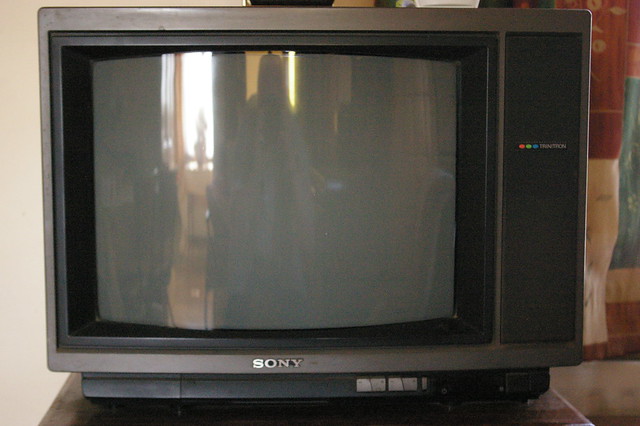
    Sony Trinitron TV

    What is Radio Rentals?

    Radio Rentals is one of a number of brands (Martin Dawes, Granada, Radio Rentals DER and Rumbalows), who used to rent TVs and video recorders. Globalisation made TVs discretionary items and technology made them more reliable.

    Maturation of the smartphone market

    As of February this year Apple was sitting on a cash hoard of 178 billion US dollars, most of which is kept outside the US to ensure it doesn’t get taxed. It has made the bulk of the money from the iPhone.  However the smartphone market is changing, the growth in mature markets is slowing down dramatically, as has smartphone growth in China. The growth in developing markets is being driven by smartphones priced so low that margins are razor thin. Things are so tight that component suppliers have gone under.

    Apple is at the premium end of the market but other players are trying to migrate in that direction to which means that the middle of the market and premium products are very similar in terms of industrial design.  So if one had a cheap source of capital it would be advantageous to come up with a way to stitch in clients and making it easier to onboard clients from the competition. Rather like the TV rental business of old.

    So when Apple launched the 6S range of handsets, this wasn’t much of a surprise

    Exclusively at Apple’s retail stores in the US, customers can choose their carrier and get an unlocked iPhone 6s or iPhone 6s Plus with the opportunity to get a new iPhone annually and AppleCare+ on the new iPhone Upgrade Program with monthly payments starting at $32 (US) and $37 (US), respectively.

    From a carrier point-of-view this presents a set of mixed blessings, it decouples the handset upgrade path from the consumer’s mobile carrier plan. On the one hand carriers no longer have to foot the high cost of iPhone purchases, but iPhone customers have less of an incentive to sign up to two-year contract with the likes of Verizon or Sprint which will make their cashflow less predictable in the longer term as consumers churn contracts and carriers will have get more creative with their contract incentives.

    We may see hybrid deals of content, voice minutes and data – rather like cable companies or BTVision. Of course, having those kind of OTT bundles has implications for for their networks and the likes of HBO are probably not likely to commoditise their product prices so that bandwidth and be saved from a downward spiral.

    Apple’s move has some advantages, but isn’t without risks:

    • Moving consumers to a lease model means a degree of predictable revenues
    • It provides with a modicum of control over the market for pre-used handsets, if they use it. This huge. Think about the roles that smartphones play in our lives for a moment; they aren’t just communications devices but give an idea of status and self expression as well. Just because cheap smartphones are for sale in the developing world doesn’t means that consumers don’t want the real thing. Apple could tap into a pre-existing informal market of channels to sell pre-owned smartphones into these markets and make their competitors hurt a lot more. It would effectively dig a trench between mid-market and premium handsets and force competitors to go to lower price points
    • It raises competitive barriers against competitors. Not that many competitors have the access to easy cheap money in order to finance this kind of scheme. If it could be done profitably by third parties; we would see the  likes of ICBC and the Bank of China setting up subsidiaries to finance Huawei phone purchases. There is little to no margin in the financing itself. For investors the opportunity cost wouldn’t be worthwhile.  Given its lack of profitability the leases can’t be securitised easily to palm the risk off on institutional investors – which was how the likes of MBNA grew their consumer finance businesses. Third parties would need to get involved in areas that aren’t their strength such as a superior supply chain and channel strategy to that held by the wireless carriers to bring down the cost per handset and ensure that the handset was available near the consumer. Apple doesn’t need to make a profit on the leasing business, it just needs to not make a loss

    The risks in this move are:

    • Increased amounts of handset repairs. Many consumers today put up with cracked screens rather than having them repaired due to the cost and inconvenience involved. Going to the leasing model puts all of that back on Apple. If a third party were  to attempt it, there would be a whole service network which they would need to build out
    • Leasing agreements like this will be a magnet for organised and disorganised crime. There will be small but significant loses of handsets from false address fraud to ‘fake thefts’, Apple will be facing the kind of persistent criminal problems that face catalogue retailers to credit card companies
    • What happens when the US economy tanks and Apple faces default payments on its handset leasing programme?
    • The strategy relies on consumers seeing a continued value in regularly upgrading their handset. What led to the demise of TV rental companies was: more reliable televisions with the move from discrete components to integrated circuits, real cost reduction of TVs as they became more popular and a lack of compelling reason to upgrade once they had a colour TV. When we think about smartphones, the cost of a handset is being reduced  (at least in the Android eco-system), they are generally pretty reliable – the weak points being the easily damaged screen and chemical life of the battery and there hasn’t been significant new use cases from successive generations of handsets

    More information

    CCS Insight cuts global handset forecast | TotalTelecom
    SMARTPHONES: Price Wars Topple Huawei, ZTE Supplier
    Apple Introduces iPhone 6s & iPhone 6s Plus

    More on Apple here.

  • Hong Kong banks + more

    Hong Kong banks

    Hackers threaten to take down websites of Hong Kong banks unless they pay bitcoin ransoms – interesting move and good PR by Akamai, the block chain has allowed researchers to see which Hong Kong banks are paying up.

    Business

    Chinese Soccer Prepares to ‘Fly Alone’: Will Success Follow? | WSJ – moving away from government. It will be interesting to see if China can displace the European teams in the world’s sports media markets. I suspect that a key component of that, which hasn’t been addressed yet, would be changes in sports betting

    Design

    Should Your Logo Be a Wordmark or a Symbol? + Subtraction.com – app design space predictates going with a brand symbol which has its own risks. But wordmarks work in other media like word-of-mouth

    Gallery: A practical, low-tech Japan | Ars Technica – really clever product design

    How to

    BeeCanvas – Collect and share your information visually – great for assembling mood boards

    Innovation

    LINE Maps for Indoor – Android Apps on Google Play – Japan only indoor mapping. More related posts here.

    Glove-like socks are made from material stronger than Kevlar – Swiss Barefoot Company. It is interesting that so much effort is put into materials technology for glove-like socks.

    Ireland

    Direct flights from Hong Kong to Ireland would really see bilateral trade take off, says Irish consul general | South China Morning Post – it would also affect the role as Heathrow as the long haul hub for Irish flights

    Marketing

    3M Builds an Impressive Branded Rube Goldberg Machine From a Variety of Its Products – absolutely nails the brand positioning of 3M as a business and is a good profile raiser amongst technical specifiers

    Selfridges puts Apple Watch at the center in floral window display | Luxury Daily – interesting targeting strategy by Selfridges, focusing on Apple Watch sales to women, rather than men. It reinforces the devices status as a fashion device that happens to have health benefits

    Online

    LinkedIn Lookup app replaces company intranets – Business Insider – defensive move against Facebook for Work

    Kik Takes $50 Million Investment From WeChat Parent Company Tencent, Hits $1 Billion Valuation – interesting move by Tencent to invest in Nik

    Vlogger Chyaz on product placement online – BBC News – ASA clarifying yet again

    Retailing

    Smartphone-Owning Millennials Say Most of Their Retail Browsing Occurs In-Store | Marketing Charts – so retailers need to put in free wi-fi without a reg wall

    Wireless

    China’s smartphone sales slide 10% year-on-year (but not for the reason you think) | Techinasia – consumers going for premium handsets and keeping them for longer than changing cheap handsets. Is it total cost of ownership or status driven?