What constitutes a gadget? The dictionary definition would be a small mechanical or electronic device or tool, especially an ingenious or novel one.
When I started writing this blog the gadget section focused on personal digital assistants such as the Palm PDA and Sony’s Clie devices. Or the Anoto digital pen that allowed you to record digitally what had been written on a specially marked out paper page, giving the best of both experiences.
Some of the ideas I shared weren’t so small like a Panasonic sleeping room for sleep starved, but well heeled Japanese.
When cutting edge technology failed me, I periodically went back to older technology such as the Nokia 8850 cellphone or my love of the Nokia E90 Communicator.
I also started looking back to discontinued products like the Sony Walkman WM-D6C Pro, one of the best cassette decks ever made of any size. I knew people who used it in their hi-fi systems as well as for portable audio.
Some of the technology that I looked at were products that marked a particular point in my life such as my college days with the Apple StyleWriter II. While my college peers were worried about getting on laser printers to submit assignments, I had a stack of cartridges cotton buds and isopropyl alcohol to deal with any non catastrophic printer issues and so could print during the evening in the comfort of my lodgings.
Alongside the demise in prominence of the gadget, there has been a rise in the trend of everyday carry or EDC.
Fascinating Traffic Experiments by Publishers (by @baekdal) #analysis – Presence is often a very big part of the effect that you can have, in that, if you can be present in people’s minds, you often experience a kind of spillover effect on your business as a whole. This is not just true for content, but also everything else … like advertising. We know that creating an ad campaign where you show up in front of people continually over time is far more effective than just having one good ad. – a great delve into online with these traffic experiments. The practice of digital advertising tries to move away from ‘traditional’ advertising thinking a la branded recall. But it ends up validating it. The comment particularly resonates the findings of people like Byron Sharp. More related posts here.
Great video essay on the Yamaha DX-7 synthesiser. After you listen to the bits on percussion you’ll never listen to your iPhone ringtones in quite the same way again.
Useful video, well worth a watch about applying Bayes Theorem to everyday life
Key takeouts:
Remember your priors – what do you know about the context in advance of making an assumption
Imagine that your hypothesis is wrong? Would the world look different? – it forces you to check your presumptive assumptions
Update incrementally – all yourself to gradually change your mind based on updated information (flexible stance rather than dogmatic belief, as body of proof builds over time)
I love Connie Chan blog posts and presentations. In this talk she covers how Asian applications manage to squeeze so much more features into their apps than their western equivalent to provide a fuller eco-system of services that she terms super-apps.
Connie Chan isn’t only smart, but manages to talk about Chinese eco-systems in a simple coherent way, which is an art in itself. More Connie Chan related content here.
For These Young Entrepreneurs, Silicon Valley Is, Like, Lame – WSJ – for most of the 18 entrepreneurs and investors, and especially for those in their 20s and 30s, last week’s visit largely failed to impress. To many in the group, northern California’s low-rise buildings looked shabbier than the glitzy skyscrapers in Beijing and Shenzhen. They can’t believe Americans still use credit cards and cash while they use mobile payment for almost everything back home – not terribly surprised. Silicon Valley is no longer the place ‘where wizards stay up late’. Agencies work harder than their Bay Area tech clients and it is full of hubris
Luxury is thriving in China again, thanks to millennials — Quartz – Chinese millennials start buying luxury younger, and they buy high-end products more frequently, the firm says. (It undoubtedly helps that they have more spending power than previous generations did at their age.) What they’re buying is also different. Bain surveyed about 500 Chinese millennials and found their interests leaned toward casual and street-inspired fashion – Supreme rather than Prada, put into context here
Huawei – Really Convincing Story, Not. | Radio Free Mobile – this means that this feature (RCS – Rich Communication Services), like its AI assistant, AI chip and its now commoditised imaging offering will be unable to generate any differentiation for Huawei in its devices. This leaves it exactly the same boat as all of the other Android handset makers who differentiate purely on the basis of hardware
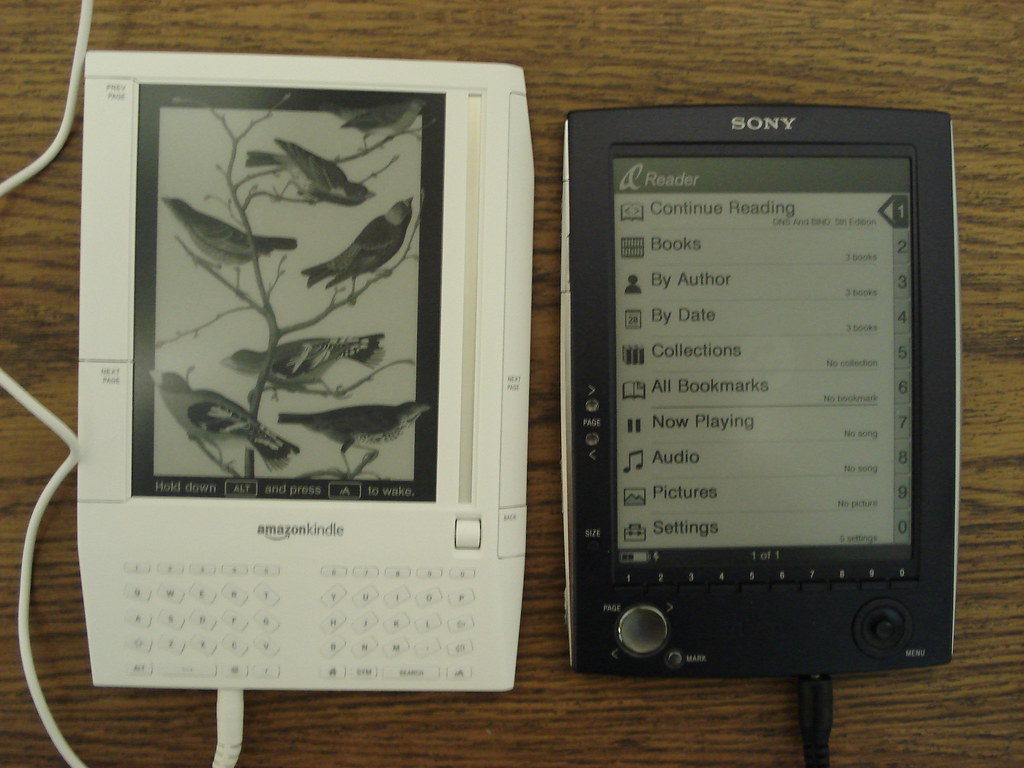
I was blown away when I realised that it was the tenth anniversary of the the Amazon Kindle. Ten years, think about that for a moment.
If you look at the original Kindle versus the latest model you can see how the design language moved from a ‘BlackBerry’ type product design to a smartphone type design. Along the way it benefited from improvements in e-ink display technology to provide a crisper viewing experience. Sony’s competitor might have looked more modern bit it didn’t manage to get the marketing mix and the hardware / services mix right.
Sony’s failure indicated while you could be successful in a number of media markets, it didn’t guarantee success in other media.
Ten years ago today, we launched the first-ever Kindle. Happy 10th birthday @AmazonKindle and thank you to all the Kindle readers and authors! pic.twitter.com/qelfniBSK1
Rather like Apple products Kindle is a combination of hardware, software (including content), payment infrastructure and the Whispernet global mobile virtual network.
Like Apple, Amazon came in and refined an existing business model. Companies like Sony made very nice e-readers, but they didn’t have the publisher relationships and market access that Amazon had.
Context rather than convergence
In a time where consumer electronics thinking was all about convergence, from the newly launched iPhone to the Symbian eco-system, Amazon were determined to come up with a single purpose device.
Amazon resisted the trend and created a dedicated device for reading. That is why you have a black-and-white e-ink screen and an experience exclusively focused on seamless content downloads.
Yes, they’ve rolled out tablets since, but even the latest range stick to the original Kindle playbook. Some of their decisions were quite prescient. The Kindle was deliberately designed so that it didn’t require content to be side loaded from personal computer like an iPod.
The Kindle has survived the smartphone and the tablet device as a reading experience. Even if ebooks didn’t conquer the book publishing market in quite the way Amazon had planned.
Using the U.S. legal system to clear the field
Amazon was helped out by the US government prosecuting Apple under the Sherman Act. Wikipedia has a good summary of this case. On the face of it Apple was doing a similar structured deal with publishers on book pricing to what it had done previously with record companies for iTunes music.
This case effectively stalled Apple book store momentum and lumbered Apple with overzealous US government overwatch. The consumer benefit has been minimal – more on that later. The irony of all this is the way Amazon has leveraged its monopolistic position to decimate entire sectors of the retail economy.
The interesting thing about this case, say compared to the Apple | Qualcomm dispute is that Apple still kept Audible audio book sales in iTunes throughout this dispute and didn’t look at ways to bounce the iPad Kindle app from the app store. Audible is an Amazon-owned company.
By comparison, Amazon bounced Apple’s TV from its own e-commerce platform and has taken a long time to support the AppleTV app eco-system – long after the likes of Netflix.
Piracy in China
Amazon hasn’t had it all its own way. China had a burgeoning e-book market prior to the Kindle and Chinese consumers used to read these books on their laptops. Depending which store you used; it might have more books at a cheaper price because intellectual property wasn’t ironed out. This has undermined Amazon’s slow entry into the Chinese e-book marketplace.
A cottage industry sprang up that saw Kindles acquired in the US and Japan shipped back to China and reflashed with software that made them compatible with the local app stores. These Kindles were bought at a subsidised price as Amazon looked to sell devices to sell books.
The Kindle brain phenomenon
I moved from the UK to Hong Kong to take up a role and tried to lighten my burden by moving my reading from books to the Kindle. I found that I didn’t retain the content I read. I enjoyed the process of reading less and did it less often. I wasn’t an e-book neophyte I had enjoyed reading vintage pulp fiction novels as ebooks on Palm devices and Nokia phones in the early 2000s as a way of passing them time on my commute.
Talking to friends their experience was similar. I now read on the Kindle or listen to audio books only for pleasure. I tend to buy my reference books in the dead tree format. There is something more immediate about the process of reading from a ‘real book’ rather than an e-book.
It seems that digital natives aren’t ready to give up books just yet. Studies about the use of digital technology and e-books in education are mixed and anecdotal evidence suggests that technology industry leaders liked to keep the level of digital content in their children’s lives at a low threshold.
The Kindle hasn’t replaced the bookshelf and the printing press yet.
Pricing
Disposing of the medium didn’t mean that we got cheaper e-books. On Amazon it is worth looking carefully to see what is the cheapest format on a case by case basis. Kindle competes against print books and secondhand books.
Secondhand books win hands down when you are looking at materials beyond bestsellers. A real-world book is easier to gift and Amazon Prime allows for almost instant gratification. The Kindle starts to look like Amazon covering all the bases rather than the future of publishing. This may change over time, a decade into online news was a more mixed media environment than it is now – but Kindle feels as if it has reached a balance at the moment. More related content here.
They were also focused on making it easy for customers by ensuring they could access new books without connecting a cable to a computer for download. That dedication, which lead to a built-in cellular data connection and, eventually, the ability to sync your books across Kindle devices and app, was no small feat. “We said books needed to download in less than 60 seconds, but it definitely didn’t work that way at first,” said Kessel.
Patience was something the team was forced to learn.
“Originally I told Jeff (Bezos) it would take us about 18 months to build the Kindle and we could do it with a couple handfuls of folks. It took us three-and-a-half years and a lot more than a couple of handfuls of folks.” – On the 10th anniversary of the Kindle, it is also worthwhile thinking about why it didn’t bring in a paper book apocalypse, and sales of paper books even increased.More Kindle related content here.
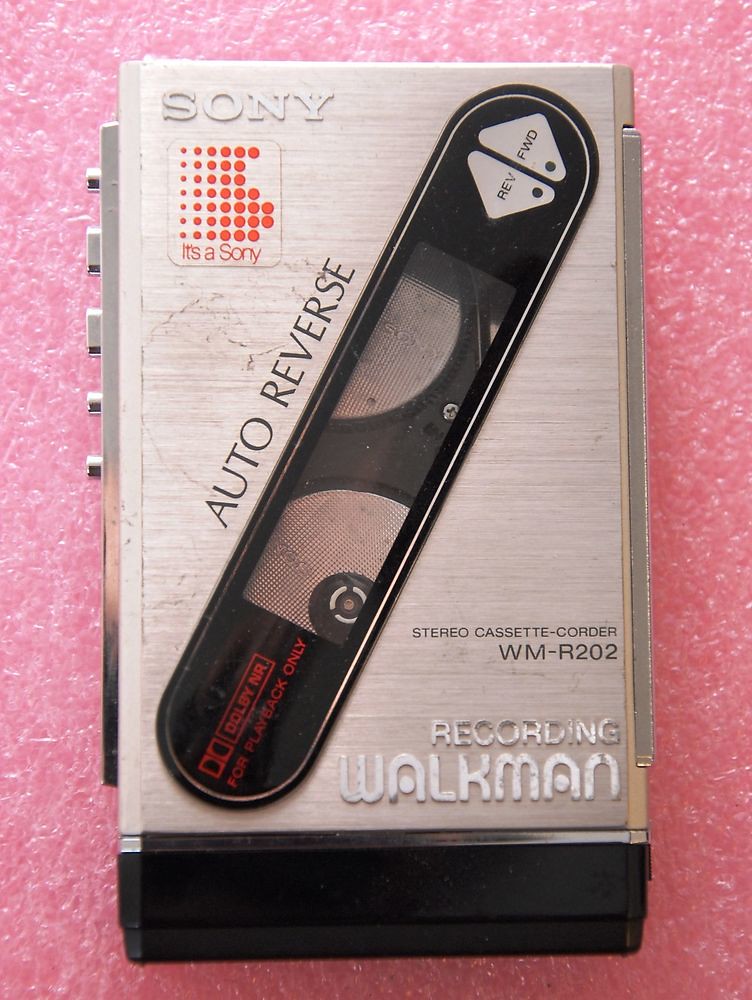
I got a Sony Walkman WM-R202 and loved it, though it was only for a short while. It was delicate and fragile, or I had a lemon; but it was the kind of device that stuck with me and made sense for me to profile as an iconic throwback gadget. Back when I started work I was obliged to do night classes in advanced chemistry. It was tough going (partly because I wasn’t that focused). I had a long commute home in a company minibus and my existing Walkman WM-24 whilst good had given up the ghost. I decided to put what money I had towards a Sony Walkman WM-R202 that would help with my commute boredom and my night classes.
Why that model:
It could record reasonably well which I convinced myself would be handy for lectures. It was not up to a Pro Walkman standard as the Dolby circuit fitted was for playback only. (I couldn’t afford the professional grade WM-D6C at the time and they weren’t the kind of device that you could easily fit in a pocket either. They were big and substantial.)
It had a good reputation for playback. Not only did it have Dolby B noise reduction and auto reverse on cassette playback, but it held the cassette really well due to its metal construction. I learned the benefits of good tape cassette fit in a rigid mechanism the hard way. I had got hold of a WM-36 which on paper looked better than my previous Walkman with Dolby B noise reduction and a graphic equaliser, but had to keep the door closed with a number of elastic bands. It was a sheep dressed up as a wolf and I struggled on with my original dying Walkman
Probably the biggest reason was that it intrigued me. It wasn’t much larger than an early iPod and was crafted with a jeweller’s precision. It was powered by a single AA battery or a NiCd battery about the size of a couple of sticks of chewing gum. It looked sexy as hell in in a brushed silver metal finish.
Whilst the buttons on the device might seem busy in comparison to software driven smartphones it was a surprisingly well designed user experience. None of them caught on clothing, the main controls fell easily to hand and I can’t remember ever having to use the manual.
What soon became apparent is that you needed to handle it very carefully to get cassettes in and out. I used to carefully tease the cassettes in and out. Despite my care, one day it stopped working. Given that mine lasted about two weeks, I am guessing that mine was a lemon and that the build quality must have been generally high as you can still see them on eBay and Yahoo! Auctions in Japan.
Since mine gave out well within a warranty period, I look it back to the shop and put the money towards a Sony D-250 Discman instead.
Here’s a video in Japanese done by someone selling a vintage WM-R202 on Yahoo! Auctions which shows you all the features in more depth.