Category: gadget | 小工具 | 가제트 | ガジェット

What constitutes a gadget? The dictionary definition would be a small mechanical or electronic device or tool, especially an ingenious or novel one.

When I started writing this blog the gadget section focused on personal digital assistants such as the Palm PDA and Sony’s Clie devices. Or the Anoto digital pen that allowed you to record digitally what had been written on a specially marked out paper page, giving the best of both experiences.

Some of the ideas I shared weren’t so small like a Panasonic sleeping room for sleep starved, but well heeled Japanese.

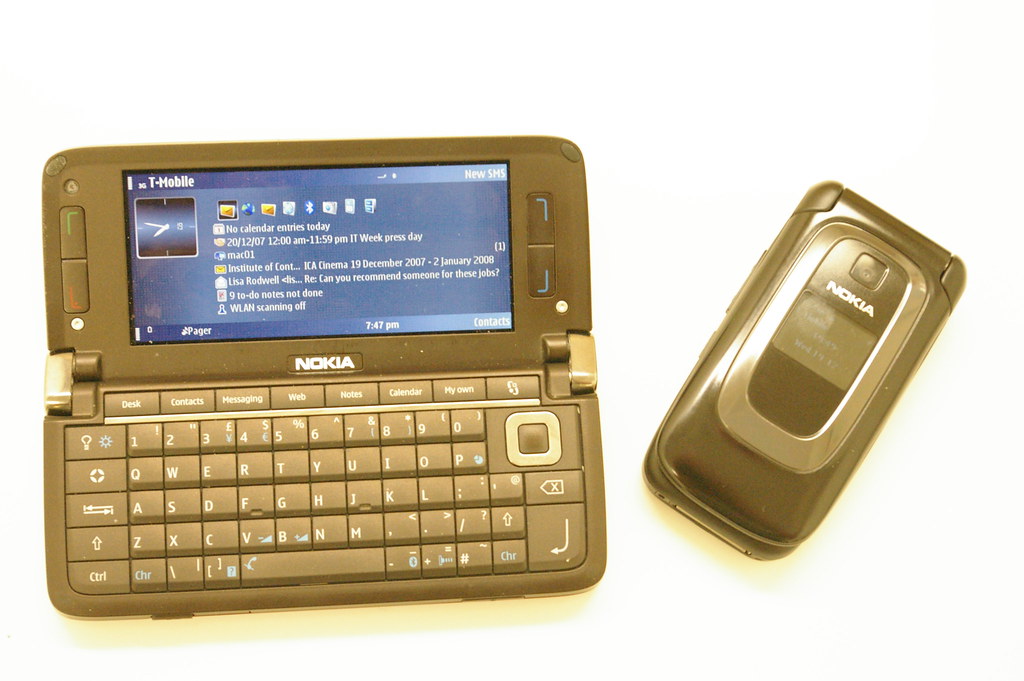
When cutting edge technology failed me, I periodically went back to older technology such as the Nokia 8850 cellphone or my love of the Nokia E90 Communicator.

I also started looking back to discontinued products like the Sony Walkman WM-D6C Pro, one of the best cassette decks ever made of any size. I knew people who used it in their hi-fi systems as well as for portable audio.

Some of the technology that I looked at were products that marked a particular point in my life such as my college days with the Apple StyleWriter II. While my college peers were worried about getting on laser printers to submit assignments, I had a stack of cartridges cotton buds and isopropyl alcohol to deal with any non catastrophic printer issues and so could print during the evening in the comfort of my lodgings.

Alongside the demise in prominence of the gadget, there has been a rise in the trend of everyday carry or EDC.

  • My decade of the iPhone

    A decade of the iPhone – last week has seen people looking back at the original launch. At the time, I was working an agency that looked after the Microsoft business. I used a Mac, a Nokia smartphone and a Samsung dual SIM feature phone.  At the time I had an Apple hosted email address for six years by then, so I was secure within the Apple eco-system. I accessed my email via IMAP on both my first generation MacBook Pro and the Nokia smartphone.

    Nokia had supported IMAP email for a few years by then. There were instant messaging clients available to download. Nokia did have cryptographic signatures on app downloads, but you found them on the web rather than within an app store.

    At the time BlackBerry was mostly a business device, though BlackBerry messaging seemed to take off in tandem with the rise of the iPhone.  The Palm Treo didn’t support IMAP in its native email application, instead it was reliant on a New Zealand based software developer and their paid for app SnapperMail.

    Microsoft had managed to make inroads with some business users, both Motorola and Samsung made reasonable looking devices based on Windows.

    The iPhone launch went off with the characteristic flair you would expect from Steve Jobs. It was a nice looking handset. It reminded me of Palm Vx that I used to have, but with built in wireless. Whilst the Vx had a stylus, I had used my fingers to press icons and write Graffiti to input text. It looked good, but it wasn’t the bolt from the blue in the way that others had experienced it.

    But in order to do work on the Palm, I had a foldable keyboard that sat in my pocket.

    By the time that the iPhone launched, I was using a developer version of the Nokia E90 which had an 800 pixel wide screen and a full keyboard in a compact package.

    Nokia e90 and 6085

    I had Wi-Fi, 3 and 3.5G cellular wireless. I could exchange files quickly with others over Bluetooth – at the time cellular data was expensive so being able to exchange things over Bluetooth was valuable. QuickOffice software allowed me to review work documents, a calendar that worked with my Mac and a contacts app.  There was GPS and Nokia Maps. I had a couple of days usage on a battery.

    By comparison when the iPhone launched it had:

    • GSM and GPRS only – which meant that wireless connectivity was slower
    • Wi-Fi
    • Bluetooth (but only for headphone support)
    • No battery hatch – which was unheard of in phones (but was common place in PDAs
    • No room for a SD, miniSD or microSD card – a step away from the norm. I knew people who migrated photos, message history and contacts from one phone to another via an SD card of some type

    I wasn’t Apple’s core target market at the time, Steve Jobs used to have a RAZR handset.

    As the software was demoed some things became apparent:

    • One of the key features at the time was visual voicemail. This allowed you to access your voicemails in a non-linear order. This required deep integration with the carrier. In the end this feature hasn’t been adopted by all carriers that support the iPhone. I still don’t enjoy that feature. I was atypical at the time as I had a SIM only contact with T-Mobile (now EE), but it was seemed obvious that Apple would pick carrier partners carefully
    • There was no software developer kit, instead Apple encouraged developers to build web services for the iPhone’s diminutive screen. Even on today’s networks that approach is hit-and-miss
    • The iPhone didn’t support Flash or Flash Lite. It is hard to explain how much web functionality and content was made in Adobe Flash format at the time. By comparison Nokia did support Flash, so you could enjoy a fuller web experience
    • The virtual keyboard was a poor substitute for Palm’s Graffiti or a hardware keyboard – which was the primary reason that BlackBerry users held out for such a long time
    • The device was expensive. I was used to paying for my device but wasn’t used to paying for one AND being tied into an expensive two year contract
    • Once iPhones hit the street, I was shocked at the battery life of the device. It wouldn’t last a work day, which was far inferior to Nokia

    I eventually moved to the Apple iPhone with the 3GS. Nokia’s achilles’ heel had been its address book which would brick when you synched over a 1,000 contacts into it.

    By comparison Apple’s contacts application just as well as Palm’s had before it. Despite the app store, many apps that I relied upon like CityTime, MetrO and the Opera browser took their time to get on the iPhone platform. Palm already was obviously in trouble, BlackBerry had never impressed me and Windows phone still wasn’t a serious option. Android would have required me to move my contacts, email and calendar over to Google – which wasn’t going to happen.

    SaveSave

  • North Korea + more news

    North Korea

    North Korean Restaurants in China Close Amid Regional Tensions | Radio Free Asia – quality of food or China – North Korea politics? While both North Korea and China claim a close political kinship

    Business

    Nestle Targeted by Dan Loeb in Activist’s Biggest-Ever Bet – Bloomberg – Third Point up to its usual tricks, or something more?

    Consumer behaviour

    We Analyzed 100 Million Headlines. Here’s What We Learned (New Research) | Buzzsumo – probably the most depressing post on data driven content strategy in a while. (Rocks with head in hands whilst having no respect for audience)

    Culture

    The Vault Of The Atomic Space Age – amazing 20th century tech photography

    Design

    The Beautiful, Impossible Dream of a Simpler Smartphone | WIREDThe Apple Watch’s purpose (at least at first) was to quieten the demands of the iPhone

    FMCG

    Coffee Ripples – Home of the Ripple Maker – there is something soul destroying about this product

    Hong Kong

    Activist investor calls Hong Kong market rout | Reuters – network of mainland business people running a ‘pump and dump’ scheme on Hong Kong small caps market

    Ideas

    The iPhone Was Inevitable – The Atlantic – interesting how much testing of concepts went into the iPhone. It also emphasises the idea of the technium

    Legal

    Ends, Means, and Antitrust – Stratechery by Ben Thompson – worthwhile reading with regards Google’s EU antitrust trouble

    Luxury

    London Luxury Home Values Fall 6.8% in Year Since Brexit Vote – Bloomberg – by the looks of this the luxury home market is splitting. The track funded by banking and related professions is in decline. But luxury homes funded by inward foreign property investment seems to have suffered less, if at all

    Media

    Facebook video ad viewability rates are as low as 20 percent, agencies say | Digiday

    Security

    Internal Memo: Sir Martin Assures WPP Staff That Everything Is Fine in Wake of Cyberattack | AdWeek – WPP’s love of Windows left so many people exposed. Insistance on proprietary encrypted USB sticks would make working from home harder

    The global ransomware attack weaponized software updates – The Verge – this is epic

    China’s New Cybersecurity Law: The 101 | China Law Blog – interesting requirements laid down for data protection including use of encryption

    Software

    WeChat Developer Error Codes | Grata – so handy for English-speaking  developers

    Twist is Slack without the annoying distractions | TechCrunch – more of a feature that Slack can replicate rather than an alternative app?

    Tencent OS Ceases Services This Week | ChinaTechNews – Tencent finally wrapping up its distribution of Android. With WeChat’s dominance the OS has become a burden rather than an asset

    Where Technology Meets Culture: Week 1 of Living in Beijing – not news to readers of this blog, but a great summary of the WeChat economy in action

    Technology

    Apple Should Buy IBM | Forrester Blogs – Forrester seems to have a far higher opinion of Watson than many people I know in the industry. This comment from Max Pucher shreds Colony’s argument: As an ex-IBMer, Apple afficionado and Machine Learning expert I could not diisagree more. Apart from the immense cultural clash there is no need to buy IBM to get Watson. Watson is a marketing stunt that sells a consulting package to create a custom ML setup. What won Jeopardy was a glorified full text search engine that can’t be used for anything else. Siri is not grand but a lot more powerful than Watson.

    With ML-Kit in the next Apple software releases it will empower the Apple ecosystem to use machine learning extensively and widely. With Watson ML needs 50 IBM experts to do some pattern recognition application. At Apple a million creative developers will jump at the opportunity to use the embedded power of audio, image and video recognition in the platform.

    Apple’s GPUs will play a significant role in that.

    IBM is all AI hype and no substance snd while buying IBM would possibly be good for current IBM customers, Apple would not gain anything. But it shows how good IBM is in that form of marketing. IBM did the same stunt with Deep Blue when Joel Benjamin won against Kasparov with the help of a machine … that wasn’t AI either …

    Moore’s Law’s End Reboots Industry | EE Times – really interesting analysis of slowing process in semiconductors affects other industries

    American Chipmakers Had a Toxic Problem. So They Outsourced It – Bloomberg – technology’s tabacco moment is already upon us

  • Interface design

    Interface design

    This reflection on interface design has taken a while to write. When I started we were on the cusp of Apple’s Worldwide Developer Conference. If you’re interested in technology, but aren’t an Apple fan it still matters as it sets the agenda. Apple’s moves affect wearables, smartphones, tablets and OTT (over the top) TV services.
    The New York Times published an interesting article Apple Piles On the Apps, and Users Say, ‘Enough!’.
    Ignore the title of the article itself, which is a function of clickbait rather than content. Instead, it provides an good critique of interface design across platforms. It highlights:
    • The difficulty in finding and installing other apps inside Messages. Many users aren’t aware of the functionality. This is different to the ‘interface as oldster barrier’ that SnapChat had. DoorDash – a Deliveroo analogue dropped a support after a few months due to a lack of users. Apple took a second run at this with iOS 11 trying to improve discoverability
    • Apple 3D touch isn’t used to drive contextual features by app developers
    • The Apple Watch’s mix of crown, button and small touch screen made ‘lean in’ interactive apps hard. The Apple Watch interface isn’t learned by ‘playing’ in the same way that you can with a Mac or an iPhone. Apple’s forthcoming watchOS update looks to have Siri ‘guess’ what you want. It wants to provide contextual information to users (and reduce interactions)
    If you ignore 3D touch for a moment, these problems are cross platform in nature. (Some vendors like Huawei have attempted a similar 3D touch feature in their own apps. They did not try to get developer adoption.)
    Thinking about Messenger app developers struggle to integrate disparate features into the interface. The exceptions are:
    • LINE
    • WeChat – the take up of mini-apps in WeChat have been disappointing performers. Is this indicating a possible ceiling for functionality?
    Wearables as a category looks thin, with Apple being one of the largest players. Pebble got acquired by Fitbit. Jawbone seems to be a dead company walking. Their blog was last updated in October 2016, Twitter in February. It’s ironic: their original BlueTooth headset business would now be a great opportunity.
    I’ve tried Casio’s BlueTooth enabled G-Shock, four Nike Fuelbands and a Polar wearable. I am on my second Apple Watch and I still don’t know what the real compelling use case is for these devices.
    So how does this stuff come about? I think its down to the process of creation, which affects analysis and critical analysis of the product. Creation in this case is essentially throwing stuff up against the wall until it sticks and then the process becomes reductive. As a case in point, look how smartphones have evolved to the slab form factor. 
    Throwing stuff against the wall
    I’ve worked enough times on digital products to understand the functionality is king. It’s the single most important thing. I’ve worked on products that wonderful functions but:
    • Consumers didn’t know they had a need, its hard to get consumers to build new habits. Forming habits can be hard
    • They were a bitch to sign up with. Yahoo!’s sign-up process killed products. It’s a fact. We’d get consumers hyped up, we’d deliver them to the relevant page and they wouldn’t convert. I didn’t blame them, if I wasn’t an employee or digital marketer I’d have done the same
    That’s how products are now built. The focus is on speed of execution of the idea. It isn’t about thinking through the complete experience. Agile methodologies with their short sprints puts emphasis on function. Away from data to feed into big picture optimisation. A function focus means that you end up with ‘lean in’ interaction designs as default.
    There aren’t many organisations that get it right. I’d argue that the early Flickr team and Slack ‘got it’. Though there are common factors:
    • Both Flickr and Slack had common key team members
    • Both products fell out of failure. Flickr came out of tools for Game Neverending. Slack began as a tool in the development of Glitch
    Where are the ergonomists and futurists?
    There are people who can provide the rigorous critique.
     
    Back in the day organisations with large R&D functions like NASA and BT employed writers to envisage the future. Staring into the future became a career. People like Syd Mead provided a visual map of the future. Mead and others did a lot of work thinking about the context of technology to users. At the present time lots of criticism levelled at VR glasses is it being anti-social. This comes as no surprise to anyone who has read William Gibson’s Neuromancer. Social interaction is more likely to come glasses wearer to glasses wearer. It will happen in a virtual third space. Neal Stephenson explored this third space in Snow Crash. The Black Sun was a virtual night club.

    Bill Moggridge, designer of the GRiD Compass computer – the world’s first laptop thought a lot about ergonomics. The laptop had a 11 degree slope from pop-out leg to the keypad. This is something that your MacBook Pro or Surface doesn’t have. There is a lack of depth in technology design compared to what Moggridge had. He brought in psychologists and studied human computer interaction. He eventually co-founded IDEO.

    Whilst the elements that Moggridge looked at were well known the thinking doesn’t seep into product categories. We are very good at asking can a product be made. We are poor at asking what does the product really mean. Apple’s viewpoint on the tablet segment is a case in point.

    The vast majority of tablets are used for lean back media consumption from watching films and reading books to reviewing emails. It can work as a productivity device in specific circumstances with custom built apps – say field sales or replacing a pilot’s flight paperwork. The keyboard and power of modern Macs (and PCs) provide a better tool for content creators; whether its analysing a spreadsheet or writing this blog post. 

    Yet, since its launch by Steve Jobs, Apple has viewed the iPad as a new PC. The iPad Pro has been designed to try and catch up in features with the Mac. It is ironic that Microsoft has moved a slim ‘MacBook clamshell design’ analogue into its latest Surface range.  

    Shanzhai

    It is very different to the pragmatic design ethos of China’s ‘shanzhai‘ gadget markers who came up with both laughable and exceptionally smart solutions. Everything from the dual SIM phone to the phone / electric razor hybrid. Successes bloomed, educated a collective knowledge of makers and a manufacturing ecosystem of facilitators, while the oddities slipped into the night.

    The manufacturing ecosystem played a crucial role in upping smartphone quality. Metal phone enclosures started to trickle down to other manufacturers once Apple had grown the capability of CNC manufacturers with orders for thousands of machines in Foxconn factories. This also fed expertise in how to use these machines in mass manufacturing. Which shows how physical interface design can be influenced almost as fast as software interface design in terms of commercial rivals.

  • Tumblr + more news

    Tumblr

    ‘Nobody at Yahoo understood Tumblr’: Why Marissa Mayer’s big bet on Tumblr never panned out – this all sounded eerily familiar. I was at Yahoo! when it put together really interesting pieces of web 2.0 and social services. The piece on Tumblr was so reminiscent of Flickr, del.icio.us experience in many respects. Flickr was breaking even by the time it went to Yahoo!. Del.icio.us was a service that was run out of home server room in Joshua Schacter’s apartment that was really his coat cupboard. Like Tumblr, both had their finger on something. Yahoo! did early work on mobile; and the fumbled opportunity again looked like Tumblr. In all of these cases, the problem at Yahoo! seems to be process and senior management mindset rather than technology. Tumblr was just on a bigger scale in terms of cost; if not opportunity cost. – Despite Yahoo! growing through strategic acquisitions, it surfed a lot of waves a little too early; yet had a very late wave mentality (boring heavily from an analogy in Bob Cringely’s Accidental Empires). I hope that there is a better future for Tumblr. More related content here.

    Business

    Common Sense: Did the Jack Welch Model Sow Seeds of G.E.’s Decline? | New York Times – interesting read, I wonder whether this will discredit other parts of ‘Neutron’ Jack’s legacy

    How to prevent the UK’s self-destruction | HKEJ Insights – Jim O’Neill on the state of Britain

    In Pakistan, China presses built-in advantage for ‘Silk Road’ contracts – Reuters – China’s advantage isn’t IP, price or product but willingness to deploy cheap capital fast. Huawei isn’t bought because its better, but because its cheaper. A lot of the discount comes down to negative interest vendor loans provided by Chinese state banks to mobile networks rolling out Huawei equipment and services

    FMCG

    Nestle mulling sale of its nearly US$1 bn confectionary business in the US | SCMP – really interesting move that shows Nestle following a trend that PepsiCo tried to go down a number of years ago

    Aldi fires $3.4 billion shot in US supermarket wars | RTE – really interesting move with huge potential impact for FMCG brands

    Gadget

    Tech Fix: New iPad Pro Inches Toward Replacing PC, but Falls Short | New York Times – I still think of the iPad as predominantly a content consumption device. Whilst it can be great with apps for specific work, it isn’t a general purpose device like a Mac

    Luxury

    Women have no idea what to wear to work today — Quartz – ironically they are too illiberal for men’s clothing

    Media

    Dentsu Aegis Second Big Shop To Downgrade 2017 Ad Expansion | Mediapost

    Security

    Busting Thieves One Dyetonator At A Time | ogilvy.com

    London Bridge attack: how a crippling shortage of analysts let the London attackers through | UK news | The Guardian

    US intelligence agencies are beginning to build AI spies | Quartz – not surprising they would want to hand off first line analysis on data to machines. Machine learning works really well on things like counting the number of cats in a photo, so it would work really well for agencies like the NRA – national reconnaissance office

    Software

    The blockchain paradox: Why distributed ledger technologies may do little to transform the economy — Oxford Internet Institute

    WWDC 2017 — Some Thoughts – Learning By Shipping – interesting analysis – Steven Sinofsky was a senior executive at Microsoft

    Telecoms

    Nokia Touts NPU for Internet’s Next Chapter | EE Times

    Web of no web

    Indoor GPS could stop us getting lost – and make us spend more money | CityMetric – indoor navigation still feels clunky

    Wireless

    7 of the top 10 smartphone suppliers headquartered in China | Electroniq

    Q&A with Connie Chan | Techinasia – Connie works at A16z and really gets the Chinese eco-system better than anyone else on Sandhill Road

  • Black technology (黑科技)

    Black technology

    An all-compassing phrase that I’ve heard being used by Chinese friends Hēi kējì in Pinyin or black technology. It’s been around for a couple of years but recently gained more currency among people that I know.

    Microsoft Hololens 💥

    It is used as a catchall for disruptive / cool innovative products. What constitutes ‘black technology’ is subjective in nature but generally Chinese would agree on some examples such as:

    • Magic Leap
    • Microsoft Holo Lens
    • Bleeding edge silicon chips with an extraordinary amount of memory or machine learning functionality built in
    • Tesla self-driving cars

    Magical quality

    The key aspect is that the product as ‘magical quality’ in the eyes of the user. Technology companies have tried to use it in marketing to describe the latest smartphone and app features like NFC, gesture sensitive cameras and video filters. Your average Chinese consumer would see this as cynical marketing hype. Xiaomi had been guilty of this over the past couple of years. Chinese netizens aren’t afraid to flay the brands for abusing the term black technology.

    As technology develops, the bar for what represents black technology will be raised higher.

    Manga origins

    According to Baidu Baike (a Quora-like Q&A service / Wikipedia analogue) it is derived from the Japanese manga Full Metal Panic! (フルメタル·パニック! |Furumetaru Panikku!).

    In the manga black technology is technology far more advanced than the real world. An example of this would be ‘Electronic Conceal System’ – active optical camouflage used on military helicopters and planes in the manga. It is created by the ‘Whispered’ – people who are extremely gifted polymaths who each specialise in a particular black technology.

    In the manga they are frequently abducted and have their abilities tested by ‘bad organisations’ who support terrorism. Whispered also have a telepathic ability to communicate with each other. If they stay connected for too long there can be a risk of their personalities coalescing together. Similar content can be found here.

    More information

    黑科技 (动漫中出现的词语)- Baidu Baike
    Full Metal Panic – Amazon