Category: innovation | 革新 | 독창성 | 改変

Innovation, alongside disruption are two of the most overused words in business at the moment. Like obscenity, many people have their own idea of what innovation is.

Judy Estrin wrote one of the best books about the subject and describes it in terms of hard and soft innovation.

  • Hard innovation is companies like Intel or Qualcomm at the cutting edge of computer science, materials science and physics
  • Soft innovation would be companies like Facebook or Yahoo!. Companies that might create new software but didn’t really add to the corpus of innovation

Silicon Valley has moved from hard to soft innovation as it moved away from actually making things. Santa Clara country no longer deserves its Silicon Valley appellation any more than it deserved the previous ‘garden of delights’ as the apricot orchards turned into factories, office campus buildings and suburbs. It’s probably no coincidence that that expertise has moved east to Taiwan due to globalisation.

It can also be more process orientated shaking up an industry. Years ago I worked at an agency at the time of writing is now called WE Worldwide. At the time the client base was predominantly in business technology, consumer technology and pharmaceutical clients.

The company was looking to build a dedicated presence in consumer marketing. One of the business executives brings along a new business opportunity. The company made fancy crisps (chips in the American parlance). They did so using a virtual model. Having private label manufacturers make to the snacks to their recipe and specification. This went down badly with one of the agency’s founders saying ‘I don’t see what’s innovative about that’. She’d worked exclusively in the IT space and thought any software widget was an innovation. She couldn’t appreciate how this start-ups approach challenged the likes of P&G or Kraft Foods.

  • New York Times culture

    The internal Innovation report by The New York Times leaked widely and has been reported on, mainly in how it reflected the internal politics that led so the departure of Jill Abramson from the paper. It has also been heralded as document of importance in the industry. Given the nature of the document I decided to do page-by-page commentary on the report (so that you don’t have to read all 96 pages). I read it once first of all to get an overall picture of it and then made notes on a page-by-page basis as I read it a second time in more depth. Below are the notes that I made on the second pass through the document:

    Page 3 – The memo starts by outlining its faith in the quality of the journalism at The New York Times. I think that this may be their first flaw as later they compare themselves unfavourably to outlets such as Yahoo! News which implies general news coverage is a commoditised product and The New York Times isn’t providing enough analysis of sufficient value to share.

    Page 4 – This is an executive summary of recommendations, most of which are quite prosaic. Develop the audience, strengthen the news room through working with other parts of the business and develop a newsroom strategy team. First up, developing the audience focuses on growth; there isn’t a mention about the quality of the audience – which would matter to advertisers. Strengthening the newsroom as described shows a willingness to bend the journalism / sales Chinese wall to breaking point.

    Page 5 – A graph of what I presume is monthly unique visitors under the headline of “…But Many Competitors Are Growing Faster” calls out Huffington Post and Buzzfeed as competitors who are outstripping The New York Times in reader traffic. There are no qualifying demographics for this; in the print space would The New York Times compare itself with The New York Post? Both are newspapers but both have different demographics.

    Page 6 and 7 – “Our Proposals, In Brief” basically reiterates pages 4 and 5.

    Page 8 – “Our Mission (And How It Evolved)” explains the methodology behind the report. Having read it, there were a couple of knowledge sources that didn’t seem to have been tapped, but that would have been useful.  Interviewing some of the media agencies to get their takes on media consumption trends, looking at external data sources such as comScore, Nielsen Net Ratings and academia such as the MIT Media Lab, Annenberg Journalism School and the Berkman Center for Internet & Society to peer further into the future.

    Page 12 – the start of the “Growing Our Audience’ section starts with a users guide to the report which basically explains the filters they used in writing and presenting the report in order to dumb it down for the readership.

    Page 14-15 – contrast moves in the news media industry with moves at The New York Times.  The three big NYT moves were:

    • Redesigning nytimes.com
    • Ravaging and rebranding The International Herald Tribune as The International New York Times (this alone would have precipitated a need for a redesign or reengineering of the nytimes.com).  The report itself calls The International New York Times a launch
    • The rollout of native advertising described as a ‘new world’ giving it a romantic heroic quality rather than it having been demanded by media buyers and becoming the norm

    The New York Times is facing the classic disruptee problem, trying to re-orientate itself for the digital age whilst change churns around it. The report treads lightly rather than scaring the bejesus out of its readership  (who are likely part of the problem and need to get on board with a radical attitude adjustment and become part of the solution).

    Page 17-18 is interesting as the document sets out “A Competitor Cheat Sheet”:

    • Buzzfeed
    • Circa
    • ESPN
    • First Look Media
    • Flipboard
    • Vox
    • Yahoo! News

    Here was a few of my takeaways from that list:

    Circa and Flipboard are aggregators with a bit of smarts behind them. These are disrupting the editorial process. I would argue that this goes back further than Circa to email newsletters like Dave Farber’s Interesting People or conferences on The WeLL. Neither of these are new and a news room should have recognised and evolved with this years ago.

    ESPN is particularly interesting as this is a traditional media company that has embraced digital particularly well, highlighting a failure of imagination and gumption in management.

    I think that First Look Media is less about the disruption of news media by digital technology and more about younger consumers being hungry for a reboot of news journalism. This is the reason why Shane Smith and company have moved style and culture magazine VICE successfully into news journalism; showing up major news organisations on their coverage of North Korea and the situation in Ukraine.

    Again there is no questions about whether these companies have the right type of audiences, merely the size of the audiences attracted.

    Finally a good piece of news for Marissa Mayer at Yahoo!. At least The New York Times thinks that her efforts are delivering business difference, I was surprised to see Yahoo! cited as a competitor news source due to the brand positioning. Yahoo! has been experimenting with original news on-and-off for the best part of a decade such as The Hot Zone which featured reportage from journalist Kevin Sites back in 2005/6.

    Page 23 – highlights three graphs under the heading “Tough Trends”. In contrast to the soft soap language that accompanies the charts the data is displayed in a manner to ‘cut to the chase’ and it is important to bear this mind when reading a chart.

    Home page visitors had almost halved over three years. This could be due to changing usage patterns has The New York Times introduced its paywalls. Overall page views showed a less aggressive rate of decline. Time spent on the site dropped by a third which I suspect again is a function of the digital paywall The New York Times introduced. I try and only pick my 10 articles a month carefully to maximise the utility of it.

    It was also interesting to see a drop in mobile readership using the iPhone app.

    Page 24 – there was one quote that stood out for me:

    “The hardest part for me has been the realisation that you don’t automatically get an audience,” said Janine Gibson, editor-in-chief of The Guardian’s website. “For someone with a print background, you’re accustomed to the fact that if it makes the editor’s cut – gets into the paper – you’re going to find an audience”

    I think that this rationale is based on a logical fallacy, that if a paper is put into the hands of a reader it will be devoured cover-to-cover. I would flicking though a paper analogous to skimming past links without clicking.

    Digital now makes this more apparent which is where Gibson had her satori that content needs to be promoted to an audience on digital platforms.

    The authors of the report split their view of competitors into content and delivery mechanisms:

    But BuzzFeed, Huffington Post and USA Today are not succeeding simply because of lists, quizzes, celebrity photos and sports coverage. They are succeeding because of their sophisticated social, search and community-building tools and strategies, and often in spite of their content.

    I think that this division is particularly interesting. Firstly, content is complementary to and indivisible from search and social strategies that these people may have. Secondly, the last bit of the quote dismisses the ‘snackable’ nature of these content formats, when in reality this might be part of their success.

    Page 25 – features a bit of future gazing on how with the right contextual information available, content could be serviced just-in-time to a mobile device from the paper’s news section, alongside archive content like restaurant reviews etc. There is also an ongoing challenge in managing that data to keep the context fresh and relevant – for instance knowing restaurants close or move location.

    Page 26 – “Our Proposals, In Brief”. I am shocked that the current technology used by the paper to support it’s newspaper seems to not used to tag or structure the vast amount of data published to date.

    Page 27 – is an explanation of ‘deep linking’ without mentioning that terminology once. The concern about readers not going to a home page or a section page is interesting, these are print paradigms put into pixels; yet on page 26 the authors had pointed out that one of the paper’s CMS limitations was that it was structured to reflected just this kind of print view.

    Page 28 -30 – talks about using curation to highlight older relevant content that can be used to provide context for a newer piece or timely collection. This raises the lifetime value of archive content because of the increased option for ad inventory to be viewed. I know this might sound obvious, bit it was obviously a revelation for the authors.

    Page 31-32 is a basic schooling in the scientific method  of experimentation – presumably to inspire innovation in the report readership.

    Page 33-35 look at how clustering coverage around common interest collections can increase readership

    Page 36 “Balancing Act: One-offs vs. Replicability” compares and contrasts The New York Times blockbuster approach to big digital projects versus competitors who build tools that they can use again and again; in order to maximise technical investment. An example of this would be Quartz’ Chartbuilder.

    Page 39-40 – The New York Times reimplemented a function to allow readers to follow columnists. Some of the data on the page would make me question the value of a prominent journalist in terms of the amount of loyalty and fan base that they can build. This is basically advocating that the journalists cultivate fame and a fan base. It would have been interesting to explore a bit more the dynamic between the newspaper brand and the journalist brand.

    Page 41 – talks about structured data and tagging. What I am surprised didn’t come up was the topic of folksonomies which could have been an answer to the ‘tag famine’ that they paper seems to suffer from. For instance, no tag for Benghazi despite the fact this was a story that would run-and-run.

    Page 43-44 – “Promotion” talks about social. Here’s what it says about email newsletters:

    Other competitors, like The Atlantic and Politico are also using emails as direct channels to readers. This basic tool has become one of the most popular and efficient ways to cut through all the noise of the social web and reach readers directly.

    The New York Times already does use email marketing. This ‘us and them’ view of journalists and the audience lacks subtlety. It neglects to take into account that some of their readers are tastemakers or curators that their friends tap into. Influencing people who can propagate content links even further is a relatively easy win. RSS seems to be the Rodney Dangerfield in this picture getting no respect. Whilst there aren’t prolific RSS usage amongst the masses, it is often used by curators and as pipework for aggregators like Feedly or Flipboard.

    Page 45 – what becomes apparent is that linkages such as social sharing analytics isn’t being used to drive editorial decisions. The twitter metric of engaged fans in a chart that compares The New York Times to other media outlets is interesting. What does ‘engaged fans’ mean in this content?

    Page 49-54 – “Connecting” is about The New York Times getting closer to the reader as a corporate brand:

    • User-generated content
    • Expand Op-Eds
    • Events
    • Using reader data to know them better

    Page 55-59 – “Strenghtening Our Newsroom”. I was gobsmacked reading this section. The New York Times seemed to be way behind peers like The Telegraph in terms of using data for the news room. Secondly, they have a consumer insight group yet didn’t have this expertise to help drive editorial decisions as a proxy reader’s champion.

    Page 60-70 – discuss what the authors call reader experience. This touches on content but also goes into how the content is manifested and the user experience. In a world where data journalism is freely bandied around, I can’t understand the gulf here. Back when I used to work at Yahoo! tweaking user experience was a major part of the creation process across the Yahoo! network properties.

    Page 71-74 – The New York Times editorial team don’t seem to network with peers and keep abreast of industry developments. They hadn’t been thinking about how to change news reporting to remain current and relevant.

    Page 75-77 – is a simple explanation of the ‘fast failure’ model of innovation.

    Page 78-80 – outlines the cultural challenges that the editorial team need to scale in order to be able to change the organisation. A lot of this mirrors what reporters would have written about businesses in mature economies adapting to change. Integrity seems to have been interpreted institutionally has embracing a luddite philosophy.

    Page 81-87 – “Digital First” isn’t exactly a new concept it has been the clarion cry of news media groups for years.  It is concerning that they even have to have a boxout defining what is means to be digital first on page 82.

    Page 88 -90 “In Their Own Words: Digital Departures” looks as the reason why digital journalists have been leaving the paper. These outtakes from what amounted to be exit interviews reflected the need for a flatter structure and more agile business.

    Page 91 – One quote said it all for me when they talked about talent “Winning The Talent Wars”:

    We need makers, entrepreneurs, reader advocates and zeitgeist watchers.

    How can you have a news organisation that is that isn’t lacking in curiosity amongst it’s journalists that the above statement needs to be said?

    More information
    The leaked New York Times innovation report is one of the key documents of this media age | Nieman Journalism Lab
    Mondo Vice: going backwards to bring news media forwards
    Quartz Chartbuilder on Github
  • Big data issues

    Big data origins

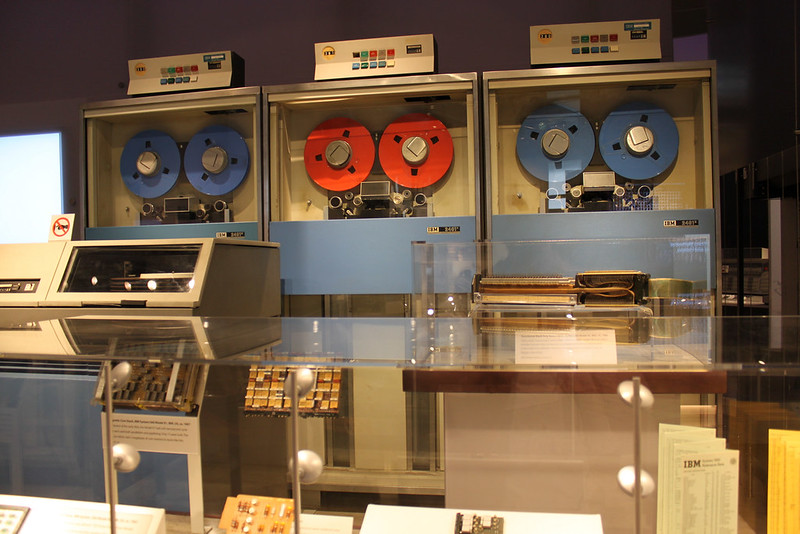
    In the past, what is now included in the envelope of big data resided with just a few organisations. The story of big data started with the US government. The government used a young company called IBM and their punch card technology to help tabulate their census data. Punch card technology started in the textile industry, where industrial revolution-era jacquard looms manufactured complex fabric patterns. Punch cards also controlled fairground organs and related instruments. It was with early tabulating machines made by IBM and others that started to change the world as we know it.
    Computer History Museum
    When the mainframe came along governments used them to manage tax collection and to run the the draft for Vietnam. It came a key part of the US anti-war protesters to destroy machine readable draft cards. (The draft card destruction didn’t affect the draft process. But burning the draft card was still an offence and some people underwent punishment.)

    Credit agencies

    Also around this time, the credit agency was coming into its own in the US. Over a period of 60 years, it had gradually accumulated records on millions of Americans and Canadians. The New York Times in 1970 described the kind of records that were held by Retail Credit (now known as Equifax):

    …may include ‘facts, statistics, inaccuracies and rumors’ … about virtually every phase of a person’s life; his marital troubles, jobs, school history, childhood, sex life, and political activities.

    These records helped to vet people for job applications, bank loans and department store consumer credit. It was like a private sector version of the J. Edgar Hoover files. Equifax moved to computerise its records. One reason was to improve the professionalisation of its business. This also had an implication on the wider availablity of credit information. Computerisation led to the Fair Credit Report Act in the US. This legislation was designed to give consumers a measure of transparency and control over their data.

    Forty years later, mainframe computers are still used to process tens of thousands of credit card transactions every second. New businesses including social networks, search engines and online advertising companies have vast amounts of data; unlike anything a credit agency ever had.

    The social, cultural & ethical dimensions of big data

    The recent The Social, Cultural & Ethical Dimensions of “Big Data” event held at New York University by the Data & Society Research Institute was important. Events like these help society understand what changes to make in the face of rapid technological change.

    Algorithmic accountability

    The Algorithmic Accountability primer from the event highlights the seemingly innocuous examples of how technology like Google’s search engine can have far reaching consequences. What the Data & Society Research Institute called ‘filter bubbles’. Personalisation of search will change that consumers see from individual to individual. This discrimination could also be applied to items like pricing. Staples has produced an algorithm that based pricing on location of the web user; better off customers were provided with better prices. One of the problems of regulating this area is first of all defining what an algorithm actually is from a policy perspective.

    Algorithmic systems are generally not static systems but are continually tweaked and refined, so represent a moving target. During my time at Yahoo! we rolled out a major change to the search algorithm every two weeks on a Wednesday evening US west coast time. I imagine that pace of change at the likes of Google and Facebook has only accelerated.

    The problem with many rules based systems now is that we no longer write the rules or teach the systems; instead we give the system access to large data sets and it starts to teach itself – the results generally work but we don’t know why. This is has been a leap forward for what would be broadly based artificial intelligence, but makes these systems intrinsically hard to regulate.
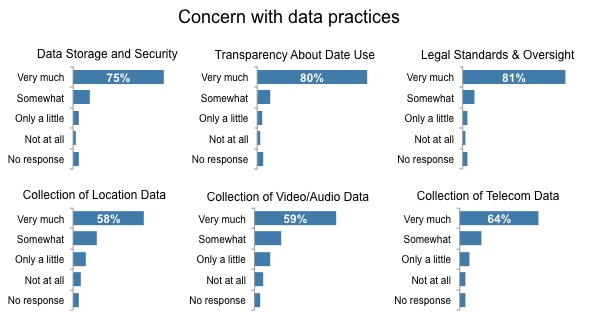
    concern with data practices
    Given all this it is hardly surprising that research carried out  on behalf of President Obama by The Whitehouse showed a high level of concern amongst US citizens. More related content here.

    More information

    Jacquard Loom – National Museums Scotland
    Separating Equifax from Fiction | Wired (Issue 3.05)
    Data & Society | Algorithmic Accountability primer
    This Landmark Study Could Reveal How The Web Discriminates Against You | Forbes
    Websites Vary Prices, Deals Based on Users’ Information | WSJ
    The 90-day review for Big Data | Whitehouse
    Data & Society | Alogrithmic Accountability Workshop Notes
    Digital Me: Will the next Cringely be from Gmail? | I, Cringely

  • Luxury assets + other news

    Luxury assets

    Super rich get to cash in on luxury assets | CityAM – interesting move putting luxury assets as a financial instrument basically. The luxury assets mirror similar secondary markets in street wear. Some luxury assets make sense like rare watches or fine art. It also probably says something about the values of stocks, bonds and currency? Hot money is chasing opportunities for investment that aren’t over-inflated, hence luxury assets

    Business

    Executives in China earning more than their companies | WantChinaTimes – part of a culture of making money today as you don’t know what tomorrow may bring

    Time to bid farewell to Barbie, say China’s toymakers | WantChinaTimes – China needs to move up the food chain to be competitive, no longer lowest cost manufacturing base

    To surf or not to surf? That is the question – interesting take on Yahoo!’s finances by our Nigel

    Apple’s Profit Still Climbs, but Pressure is Growing – NYTimes.comIf Apple grew the next five years like it did the previous five years, it would be approaching the G.D.P. of Australia

    Qualcomm Slips: FYQ2 Rev Misses; Raises Year EPS View | TechTraderDaily – not terribly surprising given that Chinese smartphone sales volumes were down

    Government Clampdown Trips Up Sina | Young’s China Business – this has been astounding

    Alibaba buying stake in Youku Tudou, a Chinese Web TV company, for $1.2 billion | NY Times – it is Jack Ma rather than Alibaba but you get the gist from the headline, not sure how good a deal it is for him now that the Chinese government is banning some of the most popular content on these streaming channels like Big Bang Theory

    The smart businesses are investing in things that will make your clients obsolete | Advertising news | Campaign – digital isn’t just about data and business models but disruptive non-hierarchical networks of people. Hasn’t it always been?

    Consumer behaviour

    Global Automotive Demand: Spotlight on China | Nielsen

    Taiwanese ‘chameleon’ workers vs Chinese ‘tigers’|WantChinaTimes.com – Taiwanese employees, generally speaking, can be characterized by make efforts to fit in and fulfill work commitments, while their Chinese counterparts think more about “winning,” and how best to earn money and be successful

    What do you get if you cross a suitcase with rollerblades? » The SpectatorThere are several reasons why video-conferencing has been so slow to take off. In the business world, it was mistakenly sold as ‘the poor man’s air travel’ when it should have been positioned as ‘the rich man’s phone call’. But in the home setting, I think there is another problem. Bluntly put, video-conferencing on a PC or mobile phone fails because we just don’t like many people enough to want their face within two feet of our own.

    Economics

    Requiem for the Middleman | Slate – interesting critique of the sharing economy

    Amazon and the Squeezing of the Middle Class | Gawker – Amazon eating its own customer base?

    Ethics

    Are US universities are choosing rich Chinese students over Asian Americans? | Quartz – not so sure about the racism of US universities but wealthy Chinese families sending their kids is on a definite growth spurt

    Is the DOJ Forcing Banks to Terminate the Accounts of Porn Stars? | VICE News – regardless of the moral aspects of the industry, what is interesting is the extra-judical nature of the way the accounts are closed down. What happens when they start using this as an economic weapon to protect strategic US business interests…

    FMCG

    UK Tea Tastes Turn Premium | EuroMonitor International – interesting to see, especially with Premier Foods having had poor financial results this week

    Gadgets

    Huawei sets sights on Samsung, aims to rule 4G era | WantChinaTimes – Shao Yang has big dreams. Huawei phones would need to improve software, hardware and online services in order for this to happen. At the moment from a technical and design point of view they don’t compare to the likes of Oppo, Xiaomi, Samsung or Apple. In addition, Huawei would need to do a 180 degree turnaround on brand marketing and advertising which is only likely to happen over Mr Ren’s dead body. Mr Ren is said to believe that the best advertisement for Huawei is its people which is fine when you aren’t marketing consumer goods

    Nike CEO Confirms Move Away from Wearables“I think we will be part of wearables going forward, it’ll be integrated into other products that we create.” – doesn’t really sound like a move away, but a change in tack, wearables become hygiene rather than a product category?

    Innovation

    Apple filing points to ‘next big thing’ | FT Tech blog – 2.8 billion dollars put aside for whatever new thing is going into the pipeline

    Japan

    Race against the clock: Shinkansen staff have just 7 minutes to get bullet train ready to ride | RocketNews24 – really interesting bit of process design

    Journalism

    Felix Salmon is leaving Reuters for the Fusion network because the future of media is “post text” – a loss for Reuters as Salmon has a great understanding and opinionated view of the sector. Not so sure about the ‘post text’ explanation, I presume they mean programmes on the wireless or them new fangled ‘talkies’ that they show at the cinema filmed in Hollywood

    Luxury

    Fake luxury goods market in China moves to WeChat | WantChinaTimes – no real surprise

    Hermes holds first sale in China as frugality drive bites | WantChinaTimes

    Why Burberry’s ‘Unusual’ Tmall Shop Is A Savvy China Move – because Alibaba owns e-commerce in China

    Marketing

    Is OnePlus a wholly owned subsidiary of Oppo? Chinese document suggests that the answer is yes – this is interesting, particularly as OPPO is as smart a brand marketer as you have in China

    BlueFocus chief Oscar Zhao outlines global ambitions | PR Week – 30 per cent revenue from overseas or 900M USD annual billings by 2022

    Media

    Guangdong TV and radio broadcasters form conglomerate | WantChinaTimes – interesting media consolidation moves in China

    China’s censors order 4 US shows to be taken off streaming sites

    Mindshare launches The Loop | Marketing Interactive – this is interesting; real-time marketing a la the Oreo black out becomes a service sold around events on a Regus serviced office-type model

    Facebook Beats In Q1 With $2.5B In Revenue, 59% Of Ad Revenue From Mobile, 1.28B Users (Josh Constine/TechCrunch) – how much of this revenue is from contextual marketing and how much is from app installs? If the focus is the latter it could be like the business of selling McMansions during the US property boom – wait for the bust…

    WeChat To Launch Self-Serve Advertising System In Weeks — China Internet Watch – this is a really big deal

    Online

    Vladimir Putin Wants His Own Internet | Slate – interesting less because of the geopolitical theatre than it represents the kind of existential threat that the cloud faces as a business model and the balkanisation of the Internet due to security concerns from ECHELON to Snowden and beyond

    Retailing

    8 Things Most People Don’t Know About Amazon’s Bestsellers Rank (Sales Rank) | MakeUseOf – as important as SEO to sellers

    $45 a Month for Unlimited Coffee | Slate – this needs to come to London and Hong Kong pronto

    华为商城官网 -华为官方电子商务平台,提供华为手机(华为荣耀3C、畅玩版、3X、X1、P6等)、平板电脑、移动终端等产品。 – Huawei’s new direct e-tailing channel for China, also features opportunity for customer feedback. I guess trying to be Xiaomi with Huawei sensibilities

    Security

    The Internet Is Being Protected By Two Guys Named Steve | Buzzfeed – surprisingly readable Buzzfeed article on the developers behind OpenSSL

    F.B.I. Informant Is Tied to Cyberattacks Abroad | NY Times – FBI sanctioned hacking overseas to gather intelligence?

    Software

    When Orange is not Just a Colour, and Other Challenging Queries | Brandwatch – great post on honing searches

    Design News – Automotive Infotainment Still ‘Bugs’ Luxury Vehicles – it scares me that this is becoming more pervasive

    Study: Samsung’s Apps Are Ubiquitous but Unloved – Digits – WSJ – the most damning number here has to be the percentage usage of ChatOn – given that OTT messaging platforms are currently the hot thing in mobile apps. Even in Korea KakaoTalk would be kiling it, maybe it would make sense for Samsung to buy some great Korean companies like Sentence Lab and Kakao Software

    Space

    Lunar Orbiter Photo Gallery – from the original NASA missions of 1965 and 1966

    Technology

    Micro-Robots Are Scary Awesome | Hack A Day – these could be more interesting than 3D printing for manufacturing

    IBM unveils Power8 and OpenPower pincer attack on Intel’s x86 server monopoly – interesting that the focus isn’t necessarily computing power per watt of energy expended

    I, Cringely Digital Me: Will the next Cringely be from Gmail? – I, Cringely – is Google using the mail provider for machine learning as well as advertising?

    Telecoms

    China Now Has Over 250,000 4G Base Stations | ChinaTechNews

    The US just isn’t that important of a market for Huawei, after all | Quartz – but Europe is critical

    Web of no web

    Russia’s Hoping to Make Its GLONASS Positioning System a Competitor to GPS | Motherboard – this could be interesting if one cross-referenced Galileo, GLONASS and GPS

    Wolverton: Smartwatches show promise, but need work – SiliconValley.com – it is very early days with wearables yet

    Digital Mapping May Be Nokia’s Hidden Jewel – NYTimes.com – Microsoft wanted to buy Here and failed why would Nokia sell? More likely the company gets bought and broken up for resale. More related content here.

    Wireless

    How do Chinese Phones cost so little? The reasons why availbility is an issue, demand is high and prices are low – Gizchina.com | Gizchina.com

    It’s mostly Android deserters who buy cheap iPhones | BGR – interesting that Apple is getting Android transfer rather than feature phone users

  • Green Tomato App demo

    Green Tomato is a Hong Kong based innovation consultancy founded in 2003. They specialise in developing mobile enterprise solutions and creation of great mobile apps that have won awards. Green Tomato is a winner of several technology and marketing awards including Asia Pacific ICT Alliance Grand Award winner and Red Herring Global 100.

    Green Tomato developed TalkBox a proto-OTT voice messenger solution before WhatsApp and WeChat came along. TalkBox has since moved way from being a consumer product to become an enterprise push-to-talk (PTT) competitor. More recently Green Tomato have done a lot of work on the integration of mobile apps, with ‘other screen content’. They have done great work on digital retailing experiences in Hong Kong. Unfortunately their work has been ahead of its time and risks eclipsed by other people building on the likes of iBeacon.

    I particularly like the Green Tomato Pointcast demo below. It was done for Coca-Cola Hong Kong. The app works with a Coca-Cola video advert to increase engagement. It could be applied just as easily with with traditional media like cinema or TV advertising or new video advertising formats on YouTube or YouKu. It makes the advertising spend work harder which is one of the key reasons why Mondelez are so excited by mobile marketing.

    It also helps make traditional media brand building AND brand activation as well. 

    The challenge with this technology is that it makes the job of creative directors harder. Interaction becomes a key part of the experience rather than just a story amplifier. The technology is less amenable than social media to be bolted on to the side of a campaign like a rocket motor. On the plus side, it protects creative by providing additional arguments for continued traditional media. The innovation side of things will be an effective bulwark against the media agency skewing plans towards digital because its more profitable. For more content like Green Tomato click here

  • Big life moments & digital

    I spent much of January in Shenzhen and went to a concert played by a local band. I can’t remember much about their music save that the lead singer work a bowler hat and seemed to influenced by 1990s Brit Pop and A Clockwork Orange. What was remarkable about the gig was that for the first time in about 10 years I saw concert goers dancing, swaying, being in the moment. There was was no digital mediation of these big life moments. More importantly I saw them watch the concert with their view unmediated by a smartphone screen which allowed them to actually participate rather than record the event.
    Untitled
    It was remarkable that digital technology had not invaded this happening as the audience were tech-savvy Chinese middle class. The ideal demographic where the smartphone has already achieved ubiquity to capture all their big life moments.

    Kevin Kelly’s book What Technology Wants posits that technology like progress is a natural unstoppable force moving forward what he calls the technium. This movement forward changes life, sometimes in ways that aren’t necessarily great. Part of the issue is that social norms don’t move at the same space as technology hence the lack of rules around digital big life moments.

    I was looking through Smart magazine: a Japanese men’s magazine and came across an advert for a digital wedding ring box. Big life moments don’t get much bigger.
    Digital wedding ring box
    ENUOVE is a costume jewellery brand that has come up with the movie box; a small media player built into the wedding ring box which can accepts a small video clip in a number of popular formats.

    I found this advertisement interesting  and cut it out of the magazine because it was a great example of digital inserting itself into social norms of one of the most important life events of all. I tried to understand what role the digital technology would play. Usually in the west, the ring is presented with the man down on one knee whilst he asks the object of his affection to marry him whilst presenting the ring.

    My initial reaction was to think that the video allowed the man to use technology to mediate the discussion rather than having to worry about fluffing whatever speech that they had put together.  But what would the recipient think this cop out of doing a proposal by box.?

    I asked two colleagues who were currently engaged. The first one pointed out that a non-verbal proposal was considered ok if it was suitably grandiose:

    • Flying over a tropical beach in a helicopter where the proposal is written in the pristine sand below in two-storey letters
    • Having the proposal appear on an advertising board on Time Square
    • Hiring a sign writing plane to proclaim the offer across the skies

    I thought that these were pretty extreme examples? Outlier proposals? My colleague indicated that this was the case.

    The second colleague I asked introduced me to this video below, billed as the first lip dubbed wedding proposal that seemed to involved a whole neighbourhood as the cast.

    Isaac’s lip dub proposal has been seen over 25 and a half million times. She thought that the digital box was ok; it was a nice novelty and would be reasonable for a proposal if the prospective groom didn’t have the gumption to pull off something at least as epic as Isaac’s lip dub wedding.

    She might keep the box longer, as she didn’t even know where her current ring box was, it got lost after the first few weeks after the engagement.

    Now admittedly my study is very unscientific, but my conclusion was that digital had permeated the wedding proposal in a different way to what I had anticipated. YouTube has had a thermonuclear effect on what my colleagues thought was an acceptable / adequate wedding proposal. It had to have drama, spectacle and a uniqueness to it.  Their major life moments would take on a large scale cinematic element.

    The movie box offered a lower key alternative that was still acceptable due to it’s unique nature for a groom who couldn’t drill family numbers for a few months in performance of a lip dub or have their feelings writ large on a beach in the Maldives.

    Digital had already permeated our big life moments and we’re all as eccentric as Stanley Kubrick. More related content here.

    More information
    ENUOVE website
    Smart magazine (Japanese language only)
    OCT LOFT website