Jargon watch as an idea was something that came from my time reading Wired magazine. I found that in my work terms would quickly spring up and just as quickly disappear. So it made sense to capture them in the moment.
The best way of illustrating jargon watch is by example. I came across the term black technology through mainland Chinese friends. One of the key things that Chinese consumers think about technology products is the idea of ‘black technology’. This makes no sense to your average western reader. It equates to cool and innovative.
The term itself comes from a superior technology featured in a Japanese manga series plot. As an aside the relationship between Chinese and popular Japanese culture is becoming increasingly attenuated due to Chinese nationalism.
What might be black technology this year might be humdrum in six months as the companies quickly catch up. Black technology is a constant moving target, but generally its sophisticated and likely has a cyberpunk feeling to it.
I keep an eye out for jargon like this all the time, hence jargon watch. I find this content in my professional reading and in the sources that I follow online. What makes something worthwhile to appear here is purely subjective based about how I feel about it and how much I think it resonates with my ideas or grabs my attention. A lot of British youth culture doesn’t make it because it doesn’t have that much of an impact any more beyond the UK.
Bob Cringely was writing about the concept of big sky in one of his recent columns and I thought that it was worthwhile sharing here.
Big sky by Whatknot. (The picture was originally taken in Nevada).
Origins of big sky theory in early flight
Big Sky theory came from early aviation. The main problem pilots faced was crashing into the ground rather than a mid-air collision. There was relatively few planes happening compared to the big sky out there. That meant the odds of collision were so low as to be not worth worrying about.
Or as Cringely put it:
Another version of Big Sky is Inshallah, an Arabic language expression meaning “if God wills” or “God willing.” The term is mentioned in the Quran and Muslims often use it when speaking about future events. Climate change or organized crime or the well running dry or uncontrolled instrument flight won’t negatively affect us if we are on the correct side of God, Inshallah.
Bob Cringely
It was only with the increasing air travel of the mid-1950s that the air traffic controller directed traffic we are used to now came into force. This traffic controller directed process is known as positive control.
Data as antidote
The phrase is used in areas such as environmental concerns around climate change, deforestation or peak oil. It makes the most sense when based on individual empirical experience or opinion. It works really well in rhetoric. Often dangerously so. It is usually countered by the use of data. Data provides qualitative risk calculations. Data is now used to conduct planes along airways one after the other. It is the same with shipping lanes.
From economics to pandemic prevention data based regulation has proved it’s worth.
In essence it represents thinking 180 degrees away from Malthusian ideas. More similar content here.
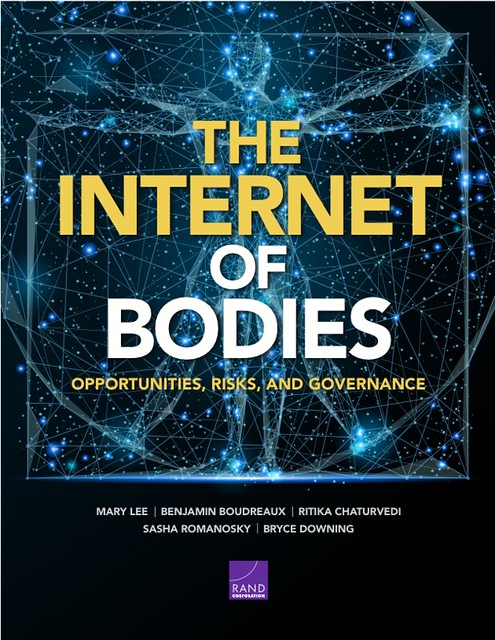
Internet of bodies or IoB is a term that I first heard as The Internet of Bodies – a RAND Corporation report into internet connected devices that
…monitor the human body and transmit the data collected via the internet. This development, which some have called the Internet of Bodies (IoB), includes an expanding array of devices that combine software, hardware, and communication capabilities to track personal health data, provide vital medical treatment, or enhance bodily comfort, function, health, or well-being.
RAND Corporation
RAND Corporation were interested in the internet of bodies because of the complexity of the area. There are benefits which are well documented by others. However there are also ethical considerations around:
Data use by commercial organisations (advertising, health insurance, pharmaceutical industry)
Misleading product claims around product efficacy
Privacy risks
Data security risks
Underdeveloped and complex regulatory environment
What the Internet of Bodies covers includes:
Fitness trackers
Fitness software running on smartwatches or smartphones and device sensors
Connected health devices: insulin pumps, pacemakers
Patient adherence apps on smartphones
Patient diaries about their condition
The report came to a number of conclusions including:
As 5G, Wi-Fi 6, and satellite internet standards are rolled out, the US government conduct research projects to better understand any potential issues that might emerge There is a challenge that needs to be addressed to replace earlier generation devices and services with poor information security practices. The issue of cybersecurity needs to have more attention paid to it, right from the beginning of IoB product development
Device makers should test products and services for vulnerabilities often, and devise methods for users to patch software.
Data transparency and protection regulations need to be revisited to take account of materials received from the IoB
As with any new sector, a tighter regulation is required to prevent false or misleading product claims
I came across the idea of CPO in GQ magazine. I know few people that have bought anything other than the G-Shocks in their collection for retail.
There’s a few reasons for that:
The watches that people like are often vintage models, it’s reverse of the hot streetwear and luxury ‘drop’ scene
With the exception of sought after models from the likes of Rolex; most watches suffer from a similar depreciation curve to buying a new car
If you’re buying a watch to wear, so I care less about the box, immaculate cardboard outer box and papers
A quality watch is a classic example of heirloom design. Whilst they will need to be serviced every three to five years; they can also last beyond the lifetime of the owner to be handed down in families.
Watch resellers
A number of watch dealers that were known by word-of-mouth have gone to the wall. For instance, Austin Kaye, which had been a regular fixture on The Strand longer than I have lived in London closed at the end of 2019.
Online watch resellers have taken off. Crown & Caliber and WatchBox in the US; Watchmaster in Germany and Watchfinder & Co. from the UK – are some of the biggest players. Scale, brand trust and a panel of expert watchmakers have formalised the purchase process with validation that you’re not buying a fake or a ‘frankenwatch’.
CPO
This verification is usually called certified pre-owned or CPO in the trade. At first you used to see this in the Japanese luxury resale market provided by the likes of BRAND OFF.
BRAND OFF is trusted by luxury shoppers across East Asia.
It then extended to this new breed of online resellers. Luxury watch brands have bought some of the watch resellers. For instance, Richemont bought Watchfinder & Co. Other watchmakers, now have a formal process to CPO their watches.
Previously, you would have to submit a watch in for a service to get proof that the watch was legitimate. Some brands are even reselling CPO watches including H Moser & Cie. Pre-owned items offer the luxury industry an opportunity to be more sustainable. Greater involvement in the pre-owned market also allows watch brands to get more value from their products over time.
I first heard of the merge from Sam Altman’s blog. He said that it was a popular topic of conversation in Silicon Valley to guess when (not if) humans and machines will merge. In a meaningful way rather than just a Johnny Mnemonic-style walking data storage unit.
When I heard of this definition of the merge, I immediately thought of the digital series H+.
H+ The Digital Series
H+ told the tale of a technological hack that killed people by disrupting the implants in their heads. Some of the few survivors were out of cellular network reach in the basement of multi-story car park.
He went on to explain that it may not be a hybridisation of humans literally with technology but when humans are surpassed by a rapidly improving (general purpose) AI. The third possibility was a genetically enhanced species surpassing humans in the same way that homo sapiens surpassed the neanderthal.
What’s interesting is that some of the people don’t give ‘the merge’ a name at all. Back during the dot com boom, when Ray Kurzweil published his book Age of Spiritual Machines it was given the name The Singularity.
Part of the resistance to this established term was that The Singularity implies a single point in time. I don’t think Kurzweil meant it in that way. But its been almost 20 years since I read Age of Spiritual Machines, and I suspect most of the debaters have only read about it from a Wikipedia article.
Alton points out that in some ways the merge has been with us for a good while.
The contacts app on our devices and social networks take the place of us remembering telephone numbers. I can remember my parents landline number and the number of the first family doctor that we had. But I wouldn’t be able to tell you my parents current cell phone number; or the number of my current doctor.
On a grander scale; general knowledge and desire to read around has been depreciated by Google and Wikipedia. Our phones, tablets and laptops are not implanted in us, but at least one of them will be seldom out of reach. I learned to touch type and I am now not conscious of how I input the text into this post. It goes from my thought to the screen. Only the noise of the keys gives away illusion of mind control as I stare at the screen. Ironically voice assistance makes me more conscious of ‘the other’ nature of the device.
But it no longer just about memory and our personal connectedness of the devices. Our device control us and suggest what to do and when. Social media platform curation affects how we feel.
As Altman puts it:
We are already in the phase of co-evolution — the AIs affect, effect, and infect us, and then we improve the AI. We build more computing power and run the AI on it, and it figures out how to build even better chips.
This probably cannot be stopped. As we have learned, scientific advancement eventually happens if the laws of physics do not prevent it.
Innovation often spits out the same process in several waves before it works. Before Siri, Alexa and Google home there was Wildfire. Before Wildfire there were various speech recognition technologies including Nuance for call centres, Lernout & Hauspie, Dragon Systems and Kurzweil Computer Systems. The last two were founded in the mid-1970s. SRI International’s AI research started delivering results in the mid 1960s.
AI in its broadest terms has gone through several research booms and busts. The busts have their own name ‘AI winters’. The cadence of progress could easily be far slower than Altman imagines.
One could easily argue that machine learning might run its natural course to technical maturity without much more improvement. Google and other technology companies are basing their work on research done at Canadian universities in the 1980s during an ‘AI winter’ characterised by a lack of basic research funding. Canada continued to support the research when others didn’t.
Silicon Valley companies not engaging in basic research themselves. As Judy Estrin observed in her book Closing The Innovation Gap back in 2008, Silicon Valley no longer engages in ‘hard innovation’. Without that basic research; a general purpose AI envisioned by Kurzweil and Altman maybe out of reach. Which is why Silicon Valley pundits put the merge as somewhere in a 50-year window.
Altman also caveats his prediction based on the laws of physics. Aaron Toponce : The Physics of Brute Force provides an idea of the physical limits imposed by cracking cryptography. It would not be inconceivable that a general purpose AI may hit similar challenges. More on machine learning and innovation here.
Historically, social cryptomnesia has been used as a term to talk about the way movements don’t get credit for societal change. For instance, activists such feminism or the green movement don’t get credit for widespread acceptance of women’s rights or climate change. Instead politicians like Al Gore got the credit. Instead feminist groups and environmental groups are still stigmatised.
The BBC think that ideas espoused by groups like Black Lives Matter and Extinction Rebellion maybe incorporated into mainstream thinking. Even as these organisations are demonised.
Although most of the discussion about social cryptomnesia revolves around activist groups, I think it’s bigger than that. We can see social cryptomnesia in wider cultural shifts. Hippies were thought of as soap dodgers and weed heads. Yet the values of free love and existentialism defined much of the behaviour change in mainstream society through the 1970s and into the 1980s.
Long after most punk rockers had shaved out their mohawk and put away their Vivienne Westwood bondage outfits; the DIY entrepreneur ethos lived on in media and publishing. You wouldn’t have had independent record labels, football fanzines or Vice magazine without punk.
Cryptomnesia is a term for when a forgotten memory is repackaged as one’s own. Think a lot of new age concepts like past lives, memory regression or alien abduction.
It also happens in more prosaic environments, where a memory is mistaken for an original thought. So when a colleague repeats something you said as their idea, they might genuinely believe its their idea rather than yours.
There has been a whole body of academic research done into the link between cryptomnesia and inadvertent plagiarism.