Over the space of 20 years, luxury changed enormously. The Japanese had been a set of new consumers for luxury, but in terms of numbers they hadn’t eclipsed the US as the biggest market for luxury.
China’s ascent into the WTO (World Trade Organisation) made a lot of business people and politicians a lot richer. China challenged the US in terms of luxury market size. On their rise, Chinese consumers changed a lot in their sophistication as they educated themselves on luxury consumption.
These new consumers picked up new traits such as wine drinking. This also meant that luxury goods became new asset classes as Chinese money looked to acquire only the best. Chinese culture in turn impacted luxury design. Chinese new year became more important than Christmas.
Then there was the second generation money. Young rather than old consumers. Consumers who were looking for something less formal, either because they didn’t wear anything but streetwear or they worked in the creative classes rather than the traditional professions and high finance.
The industry had traditionally avoided rap artists and R&B singers, now Jay Z and Beyonce are the face of Tiffanys and Fendi had collaborated with Rihanna.
They no longer wanted to have to wear a jacket and tie to have afternoon tea at the Mandarin. They took an eclectic look more attuned to the Buffalo Collective than Vogue Italia.
You had hybridisation with the street to create a new category of luxe streetwear in a way that also owes a debt to football casual terrace wear and the pain.
Now you have Zegna badge engineering approach shoes from alpine brand La Sportiva and Prada has done a similar thing with adidas’ iconic Stan Smith tennis shoes. Balenciaga with their Speed Sock looks like a mix between Nike’s flyknit football boots and the Nike Footscape sole.
Luxury has traditionally reflected status. Goods of a superior nature that the ‘wrong sort’ of people would never be able to afford. Luxury then became a symbol that you’d made it. In Asian markets, particularly China, luxury became a tool. People gifted luxury products to make relationships work better. It also signified that you are the kind of successful business person that partners could trust. You started to see factory managers with Gucci man bags and premium golfwear to signal their success. Then when the scions of these business people and figures in authority were adults, luxury has become about premium self expression.
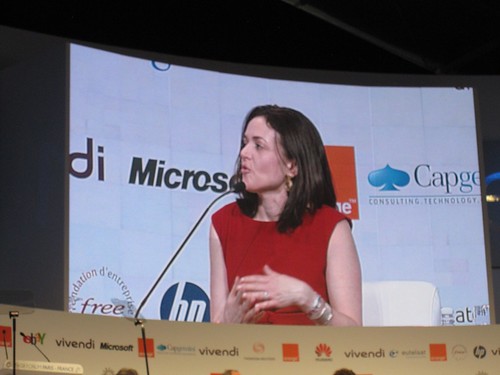
Sheryl Sandberg is leaving Meta. She has roughly 1.6 billion reasons never to work again – that isn’t lives ruined by Facebook, but her net worth on leaving Meta after 21 years at Google and Facebook building advertising sales operations teams.
Sandberg’s resignation has been a long time coming, and was repeatedly predicted since the early 2010s when the toxic nature of Facebook’s ad model became apparent. You had the sense that she viewed herself as a presidential candidate in waiting. Her exhortations to lean in were at odds with the ‘tech bro’ culture that still permeates Meta and other Silicon Valley firms. Sandberg leaves Meta with her reputation in tatters and with less chance of becoming president than More on Sheryl Sandberg leaving Meta here: Sheryl Sandberg calls it quits – by Casey Newton & Axios Login: Sandberg’s ad jackpot
Number of Hongkongers applying for BN(O) scheme rises 25 per cent in first quarter of 2022, likely from families applying before new school year | South China Morning Post – Some 123,400 Hongkongers have applied for pathway to British citizenship since January 31 last year, with 92 per cent of them successful. Canada, Australia have offered alternative routes, but immigration experts say BN(O) and Canadian programmes will remain most popular. – A few observations on this. There has been a strong historic connection between Hong Kong and Vancouver going back to at least the 1967 riots. The South China Morning Post used to have a Vancouver column until April this year. Prominent people like Li Ka-shing had their families there. There is a similar connection with the UK, though I found that I was running into more Canadians than British born Chinese during my time in Hong Kong. Secondly, the dominance of mainland Chinese in creating a threatening atmosphere for Hongkongers in Australia is a big issue
Ideas
Should Cities Disband their Police Departments? – ScienceDirect – the short answer social science data research says no they shouldn’t. The long answer. Unlike the UK, in the US large towns can have their own police forces. There are then county sheriffs departments and state police as well. Closing a ‘city police department just means less responsive policing with less crime solved, less transparent data indicating the quality of policing going on. Crime still happens.
FT’s How To Spend It magazine rebrands as big spenders go out of style | Financial Times | The Guardian – The How To Spend It name was created in 1967, when the FT’s first female employee suggested the wives of its readers might enjoy a section on how to spend their husband’s income. It later became a standalone magazine, riding the luxury goods – and financial services boom – of the 1990s and 2000s. Alice Pickthall, of Enders Analysis, told a 2018 Guardian long read that the magazine was best understood as the “Argos catalogue for rich people” – my issue with HTSI has been less about nice things and more about the lack of quality many of the items have in terms of design, build quality and longevity
Marketing
How the 968CS rebuilt the Porsche powerhouse | Financial Times – ‘You don’t understand: if we don’t get a car at under £29,000 then we’re dead’,” says Gaskell, now 63, a multiple non-executive director, investor and speaker – and a transatlantic rowing record-holder too. He got together with some colleagues to work out how to get a 968 priced at £28,995. “Out went air conditioning, electric windows, rear seat, rear wiper, boot lock – and the big electric driver and passenger seats were replaced with lighter ones.” They got it down to £28,975, then realised they had another problem: “Buyers wouldn’t like saying they’d bought a cheap Porsche.” The solution was to position it as a “lightweight” road-racer. “We lowered the suspension, quietly had a special steering wheel made for us by Italian manufacturer Momo – the factory would have gone nuts if they’d known – and called it the ‘Club Sport’. A couple of professional drivers reported that it was a fantastic driver’s car. We’d accidentally created a game-changer, and in 1993 it was named ‘Performance Car of the Year’.” – interesting tale about innovating in adversity. There are a some bits missing however. Porsche had form making lightweight cars like this, notably the Porsche 911 Club Sport from 1987. So there was a ready use case, concept and language that could be adapted for the cheap 968 rather than a completely new creation as implied by this article.
Media
Amazon to close China Kindle Store after losing out to domestic rivals | Financial Times – Amazon will leave behind a growing customer base of digital book lovers. More than 500mn Chinese listened to or read books on a digital device in 2021, according to research by the China Audio-video and Digital Publishing Association. China’s digital reading market generated more than Rmb40bn ($6bn) of sales last year, an increase of more than 18 per cent from 2020 – back when I started going to China there was a substantial trade in purchasing Kindle tablets from the US and Japan. For regulatory reasons Amazon China has been slow to get into e-books. So local competitors fuelled a parallel trade in Kindles. These tablets were then refreshed and pointed to local e-book stores. It must be galling to Amazon to know that not only did they lose out on e-tailing in China, but the subsidised Kindles from other markets built China’s rivals in e-book sales.
What’s next for Glossier as founder Emily Weiss steps down after eight years | Vogue Business – Glossier is famous for popularising millennial pink in its stores, its zip-lock bubble pouch and for pioneering everyday beauty in an industry obsessed with perfection. However, signs of internal shifts began earlier this year when the beauty brand laid off nearly one-third of its staff, according to an internal email obtained by Modern Retail. It also enlisted the singer and Gen Z favourite Olivia Rodrigo to promote the brand in April, after years of relying on its own community. There have been other bumps in the road. Two years ago the sub-brand Glossier Play closed, and the brand was also called out by former store employees who made allegations about racist behaviour and a toxic work culture. Glossier publicly apologised. – for many marketers in the beauty and personal care space Glossier was the poster child of a ‘new way’ of brand building. It looks as if it wasn’t the new way at all and its had to pivot to more conventional means.
Glossier is moving from scrappy start-up to a mainstream beauty brand. Will Weiss stepping back mean that Glossier will be up for sale?
Consumer behaviour
How Labour lost the Indian vote in the local elections – New Statesman – new Indian immigrants have more in common with Rishi Sunak than with the 1970s East Africans. Born to a wealthy, upper-caste Hindu family, this immigrant is likely to have attended one of India’s most prestigious private schools, aspiring to attend an Ivy League university. They were raised by domestic help who cooked and cleaned for them. Sunak embodies the Indian upper middle class. He understands the new wealthy India. Hell, he’s a card-carrying member of the new wealthy India: the Stanford educated son-in-law of one of the biggest Indian tech families, born to middle-class Indian doctors. This means that when Labour draws attention to Sunak’s elitist background, it makes him more appealing to both Indian demographics. He achieved the social mobility the 20th-century immigrants hoped for for their children, and he is a member of the family that encapsulates the new elite India
Economics
All the reasons why so many near-retirees are going back to work — Quartz – the pandemic may have been an even bigger setback to this age group than the current data suggests. There may be many older workers who want to return to work right now and are facing well-established obstacles, such as age discrimination, that make it much harder for an older employee to be rehired after leaving or losing a job, Davis suggests. Going back to work after retirement? It’s complicated. The data also don’t indicate how many of the people who went back to work would have preferred to retire, but couldn’t—a sign that the system could be failing them
Is British science aiding and abetting the Chinese human organ trade? – Last month, for example, a government bill was passed banning British citizens from travelling overseas to purchase an organ. Accompanying this awareness is a growing unease in western academia. Eminent medics are starting to look back uncomfortably on decades of “constructive engagement” with the Chinese medical establishment – those all-expenses-paid trips to lecture budding surgeons, and the profitable arrangements to train batches of them in the west. Meanwhile editors of academic journals are scouring their back issues for too-good-to-be-true studies on organ transplants, that may have arisen from experimentation on human guinea pigs in places such as Xinjiang. In October last year a world-renowned Australian transplant doctor, Professor Russell Strong, called on all Chinese surgeons to be banned from western hospitals to prevent them using the skills they pick up there in the organ harvesting market. Now, a leading human rights body has warned medical equipment manufacturers – among others – that they might be prosecuted if their kit is found to be used in the illegal Chinese trade. – this is going to expand areas of decoupling
Unilever’s Samir Singh: Sustainability shouldn’t burden consumers with guilt or expense | Campaign Asia – existential threats to the personal care business wouldn’t just come from being innovation laggards, but could also come from feisty D2C brands or strong local rivals eating into market share. Here, Singh is more concerned about one over the other. “Despite the noise, D2C brands have made no impact on market share charts in the personal care business,” he contends. “You will hear a lot about them for the first six months to a year, (then) they will peak and then in two or three years, they tend to disappear.” Instead, it is strong homegrown local brands that worry Singh more. He points out that across categories ranging from deodorants to skin care and across markets ranging from India to Indonesia, Unilever has felt local threats to its storied global brands. These brands have been able to compete on price, innovation, distribution and brand recall. “While we have been winning with our global names, these local brands have taken market share from us previously,” he admits. – this looks like headstone for the DTC CPG boom, other comments about sustainability are interesting as well
Chanel profits skyrocket 171% on price hikes, Americas gains | Vogue Business – Chanel famously increased the prices of its iconic handbags last year (the small Classic Flap bag rose by an average 21 per cent in 2020 and a further 30 per cent in 2021, according to Jefferies analyst Flavio Cereda) and said a twice-year price adjustment is the norm for the brand. Price increases “depend on product categories and countries because it depends if the currency in one country has moved in a direction. There is not a single pricing decision which has been made in January. Usually, we revise, we adjust prices when we have to, twice a year.”
Joint Venture Between High-Tech Rheinmetall AG and DEMALOG, Germany’s Biggest Biometrics Company – Soldier Systems Daily – The strategic objective is to integrate biometric technology, artificial intelligence software, and digitization solutions in three different areas: driver monitoring, security, and industry. For Rheinmetall, the joint venture marks an important step in the transformation to digitization technology and expanding into driver monitoring solutions. Furthermore, the new joint venture enhances the Düsseldorf-based technology group’s future-oriented diversification into biometrics applications geared to the security sector and industry. The move also adds to its existing digitization and software expertise. Importantly, the partnership reinforces Rheinmetall’s capabilities in five strategic technology clusters: automation, sensors, digitization, alternative mobility, and artificial intelligence
Virtual clubbing points to future profits from the metaverse | FT – Hybe, the agency behind K-pop band BTS, was hit by a 98 per cent plunge in sales from its core live concert business in 2020 as tours were cancelled. But total annual revenues and operating profit still rose over a third, as it was quick to offer VR concerts and content. With such digital content repurposed at a fraction of the cost of live shows, operating margins rose to nearly a fifth higher than pre-pandemic levels. CJ ENM, which started using the latest VR and augmented reality technology for its virtual concerts in 2020, has also enjoyed a boost to content sales. These have since risen steadily, more than doubling in the latest quarter, as did operating profits from its music division. For Sony, sales from its music segment rose a fifth in the year to March
Making the metaverse – Smart2.0 – its odd, or disingenuous the way Meta is outlining an open metaverse rather than a walled garden, rather like a turkey voting for Christmas
Davis Polk Asia chair withdraws from Hong Kong security law forum | Financial Times – Guessing that Davis Polk Asia didn’t do a thorough opportunity cost analysis before agreeing to participate in the Hong Kong National Security Law Forum. An alternative hypothesis that I have heard about Davis Polk Asia could be due to being really screwed globally and will ANYTHING for some billings. Even if David Polk Asia really desperate, I can’t imagine that there will be that much upside in the greater China market and maybe some backlash in the law firm’s other international and US domestic offices. The backlash happened as soon as the FT published news of their forthcoming participation. I can also imagine that the subsequent Davis Polk Asia withdrawal will cause blowback with mainland clients and government contacts. The smart play for Davis Polk Asia would have been to decline the place in the first instance. It is even more surprising when David Polk Asia could have looked at Mayer Brown pulling away from representing Hong Kong University last year was a case study in likely outcomes. Given that one would want solid wise heads in the senior staff of a law office rather than status seeking sycophants, the Davis Polk Asia chairman Mr Rogers doesn’t look like a credit to his firm. Discretion might have been the better part of valour in this case.
Shanghai lockdown exposes global supply chain strains | Financial Times – the Port of Los Angeles, for example, is monitoring data from China on energy consumption, traffic patterns and pollution, to understand how busy the country’s factories are so it can prepare for the volumes of cargo to come. “I’m on the phone most evenings with friends . . . in Shanghai telling me what’s happening on the ground,” – interesting how they’re having to rely on abstract data
As Q1 results disappoint, should brands look beyond China? | Advertising | Campaign Asia – brands were able to offset these losses thanks to the strength in North America and Europe. Aeffe, the parent company of Mochino, nearly tripled its net income in the three month period, as Europe (which represents almost one-third of its total revenue) jumped 37.5% thanks to Germany and the UK. Tapestry shares even climbed on May 12 after it posted that sales in North America rose 22% year-on-year, fully offsetting mid-teens decline in China. These two regions will be crucial as China slowly recovers from its worst Covid wave since 2020. Although the mainland is on track to become the world’s largest luxury market by 2025, the US is still in top spot, accounting for 31% of the global market (China accounts for 21%). As such, it is important for brands to continue building traction in North America and Europe to cushion against near-term losses in Asia
China Brief: Expanding State Power Still Tops Xi Jinping’s Agenda – The published speech shows how much of Xi’s economic thinking is about control, tied to what he sees as a necessary expansion of government power. The speech frames China’s problems as coming down to the “reckless expansion of capital,” or private industry, which can only be curbed by expanding the CCP’s power. That idea relates to one of Xi’s favorite terms from last year: “common prosperity,” achieved via the redistribution of wealth. Publishing the 2021 speech now may be an attempt to revitalize that language. Other Chinese officials, such as Premier Li Keqiang, are focused primarily on addressing economic issues, but party power still tops Xi’s agenda. One part of the speech may seem incompatible with its profession of socialist values: how conservative it sounds about welfare. Xi explicitly states that “common prosperity” isn’t welfare. His words also suggest a fear of overpromising what the government can deliver, but they also echo an idea I’ve heard from rich and powerful people in China—that people living in democracies never vote to cut welfare benefits because the public is lazy and entitled
Consumer behaviour
“Macho pink” menswear takes over in China | Vogue Business – “Macho pink” can be seen as a kind of “rebellion”, however, this rebellion currently remains limited to product categories considered mainstream for men, such as e-sports, sneakers and electronics. As male consumers in China put more emphasis on self-expression, this is validated to some extent by pink goods. – this reminds me of the bold neon colours of 1980s skiwear brands like Nevica. More on the social impact here: Millennial Pink Begone, Enter the Age of Hot Pink Fury | High Sobriety
Liberals Should Be Worried About the Conservative Comedy Scene – POLITICO – Conservative humorists aren’t merely catching up to their liberal counterparts in terms of reach and popularity. They’ve already caught them — and, in some cases, surpassed them, even as the liberal mainstream has continued to write conservative comedy off as a contradiction in terms. “[Liberals] are ceding ideological territory in the culture wars to the right via comedy,” Marx told me, noting that once-beloved liberal comedians like Stewart are struggling to find their footing in the treacherous landscape of post-Trump humor. “This thing that we thought we have owned for the last 20 years has been leaking, and the borders are slowly getting shifted.”
Company Reviews on Glassdoor: Petty Complaints or Signs of Potential Misconduct? – HBS Working Knowledge – Whether it’s Theranos and its fraudulent blood testing technology, Wells Fargo and its fake financial accounts, or Volkswagen and its bogus emissions data, a whistleblower eventually comes forward to expose the behavior, and executives are held accountable. “But what you start to realize is that the problems that have been uncovered have been going on for a very long time,” says Dennis Campbell, a professor of business administration at Harvard Business School. Far from being just a few bad apples, most business improprieties occur within a widespread culture of bad behavior—or at least, a lot of people looking the other way as misconduct is taking place, he says.
Koreans Think AI Is the Future – The Chosun Ilbo – 1/ artificial intelligence 2/ robotics 3/ future mobility 4/ hydrogen fuel 5/ energy 6/ biotechnology 7/ aerospace 8/ new materials 9/ batteries 10/ semiconductors – skews to Korea’s current strengths in semiconductors, hydrogen fuel cells and robotics
Luxury
LVMH-owned watchmaker Tag Heuer to accept crypto payments | Vogue Business – terrible timing given the bear market in crypto at the moment. Its also part of the odder financial aspects happening in the watch sector. From companies going vertical into the pre-owned marketplace to Breitling adopting a car lease type model for watches
Marketers, investing in market research is not superfluous – there is the big initial deep dive that happens when a new CMO arrives or a new product or market is contemplated. Second, there is the lesser but more common annual research that updates the organisation on the market, its segments and associated behaviour that feeds annual market planning. Finally, there is the more occasional inquiry into a specific micro issue that springs up. A pricing problem, a sudden reduction in market share or some other occasional issue that demands customer insight to guide management action
Hong Kong Considers Blocking Telegram Messaging App, Local Paper Says – Bloomberg – Hong Kong authorities are deliberating whether to curtail public access to the messaging service Telegram, the Sing Tao Daily reported, potentially reviving fears the former British colony is moving closer toward Beijing-style internet controls. The Privacy Commissioner for Personal Data is considering invoking regulations for the first time to restrict access to a platform it found to be rampant with doxxing, the local newspaper reported Tuesday. The widespread doxxing — or online exposure of sensitive and personal data — was aimed at government officials as well as citizens, the newspaper said, citing unidentified people.
Chinese Hackers Tried to Steal Russian Defense Data, Report Says – The New York Times – The emails landed on March 23 in the inboxes of scientists and engineers at several of Russia’s military research and development institutes, purportedly sent by Russia’s Ministry of Health. They carried a subject line that offered seemingly tantalizing information about a “list of persons under U.S. sanctions for invading Ukraine.” But the emails were actually sent by state-sponsored hackers in China seeking to entice their Russian targets to download and open a document with malware, according to a new report to be released Thursday by the Israeli-American cybersecurity firm Check Point… The Chinese campaign targeted Russian institutes that research airborne satellite communications, radar and electronic warfare
I think my interest in this vintage TV series Special Branch comes from a couple of places:
Sharing Mike Herron’s subversive books, Apple TV adaption and audio books with friends and my Dad
Sharing my love of John LeCarre with friends during lockdown
Special Branch was before my life time. The episodes start very much in the vein of a Le Carre or Len Deighton-type story. Later episodes were more human interest focused including an investigation of a religious cult. However one episode touches on the often overlooked post-war history of the British security services and military combatting Cypriot desire for independence.
You can see more episodes of Special Branch on YouTube here.
Genesis on luxury
This is an interesting event that Genesis took part in for marketing purposes. The tone of voice on the session was more about the ‘business of luxury’ rather than encouraging luxury consumption. It’s trying in a way that Lexus didn’t need to. Lexus let their engineering do the talking, by comparison luxury and fashion is something that Mercedes and BMW have increasingly lent into.
There is also no focus on sport in the way that BMW, Mercedes-Benz, Audi, Infiniti and Lexus have had.
Lights and shadows
A lovely collection of video footage showing light and shadow views in Japan. A good deal of it is the the same locations shot at different times of the day. There is some b-roll, TV and film footage mixed in for good measure.
Mysterious circles in the Sahara
My guess when I first saw this was oil exploration. I had worked in the oil industry before I went to university and heard the upstream and exploration adventures of older colleagues. This documentary is a fascinating journey to find out the truth and the limits of the internet and assumptions about modern industry practices not being a good guide of past practices. Without any further introduction I will leave you to this mystery of the Algerian desert.
Calculus on Pornhub
Taiwanese mathematics tutor puts calculus lessons on Pornhub. Attracts audience with attractive female assistants who clean the board. His rationale of taking his content to a less crowded platform can’t be faulted though.
Bongbong Marcos aka Ferdinand Romualdez Marcos Jr is the son of former Filipino president Ferdinand Marcos. The Asia Society did a really good talk on the election which explains what got Bongbong Marcos elected as president of the Philippines. Yes there was a lot of misinformation and sketchy tactics by the Bongbong Marcos campaign, but there is more going on.
Much of the issue seems to be that Marcos is viewed as standing against local Filipino dynasties that have most of the economic power in the country. I found this particularly interesting as Bongbong Marcos and his running mate Sara Duterte are both from dynasty families.
Marcos’ mother Imelda had a dad who as a lawyer, an uncle who was a supreme court judge, a cousin who was in the lower house of parliament and her brother was a provincial governor. On his father’s side, Bongbong’s grandfather was a lawyer and politician, and the mother was a school teacher. While both of Bongbong’s parents had known poverty, they could rely on a strong powerful network of family ties to help get them good jobs. Ferdinand Marcos even managed to get away with murder in 1939.
Bongbong Marcos is supposed to be stuffing people he can trust through blood ties into key government and political positions such as speaker of the house and ministerial roles.
Opposition party strategy
The Marcos campaign managed to play on nostalgia for older voters and addressed young voters through TikTok. The opposition party strategy failed in online marketing. Misinformation was an aggravating factor.
Corrosion of liberal democracy
The average Filipino voter doesn’t feel invested in democracy in the same way that the middle class would be. 7 out of 10 surveyed by Pew wouldn’t mind an authoritarian leader like Bongbong Marcos – so Marcos was pushing against an open door. The middle classes are looking for ‘order and discipline’ rather than dysfunction. They think that economic success and freedom are mutually exclusive. They look to the United Arab Emirates and Singapore as exemplars. There are similarities with middle income countries like Modi in India, Erdoğan in Turkey, Urban in Hungary and Bolsonaro in Brazil.
From an economic perspective what does Bongbong Marcos mean? Noah Smith made their most optimistic take on the economics of the Philippines Can the Philippines sustain its growth? – by Noah Smith. An authoritarian Bongbong Marcos government might see the departure of foreign companies who have been responsible for powering the past two decades of economic growth in the Philippines. The only reason why you might not see a foreign multi-national company exit would be ‘de-Chinaisation’ of global supply chains.
Siemens to discontinue business in Russia – eeNews Europe – Siemens stopped all new business with and international deliveries to Russia and Belarus. The comprehensive international sanctions and the current and potential countermeasures are affecting the company’s business activities in Russia – especially its railway service and maintenance business. For companies that are mainly active in B2B business, the decision to completely exit a region is more difficult to make than for companies that sell consumer goods. The reason: contracts for the maintenance of industrial plants and trains are concluded for many years, sometimes decades – this is an opportunity for Chinese railway businesses
Firms as Revenue Safety Nets: Political Connections and Returns to the Chinese State | The China Quarterly | Cambridge Core – restructured state-owned enterprises (SOEs) with political connections pay more tax than their assessed amount, independent of profits, in exchange for more preferential access to key inputs and policy opportunities controlled by the state. Examining taxes rather than profits also offers a new interpretation for why China continues to favour its remaining SOEs even when they are less profitable – it also explains why apparently inefficient SOEs get so many bank loans from state owned banks
California’s demography is at odds with the old California Dream | The Economist – The population fell to 39.2m in the year to January 2022, 400,000 lower than in 2020 (see chart). In 1990, the number of Californians had been rising by a robust 2.5% a year. The biggest contribution to the decline came from migration. In 2021, the net change (people moving out of state minus those moving in) was twice as large as the number of covid deaths and four times the population’s natural change (the excess of deaths over births). Big cities have been hit hardest; the population of Los Angeles County has fallen for the past four years. Even if these declines were no worse than average—and national demographic trends are slowing, too—they might seem worse in a state where, as its governor once said, “the future happens here first”. In fact California’s demography is worse than average. The state’s total fertility rate (tfr, an estimate of the number of children women will bear over their lifetimes) fell from 2.2 in 2006 to 1.5 in 2020, more than in America as a whole, where the fall was from 2.1 to 1.6.
Arrest of Cardinal Zen send chills through Hong Kong’s Catholic church | Financial Times – a diocesan administrator tendered their resignation over a posting on the “Catholic Way” Facebook page on April 27. The post, which was quickly deleted, summarised a television interview in which a local priest accused China of attempting to control religion in Hong Kong. The diocese said the administrator had resigned of their own accord. The police investigation of the 612 Humanitarian Relief Fund, of which Zen was a trustee and which supported pro-democracy protesters, could also have implications for Hong Kong’s legal system. Police said on Thursday that they had complained to the Bar Association and Law Society about alleged misconduct by unnamed lawyers who took on the fund’s cases
Talking about white privilege online can backfire – Futurity – The relationship between question language and the content of the responses was mediated by their support or opposition to renaming buildings. This suggests that, rather than causing people to think differently about the world, the term white privilege causes an emotional reaction which then affects their response, Quarles says. Inclusive ways of speaking about race online, such as the term “racial inequality,” are more likely to create a sense of shared purpose, he says. Policymakers who want to promote racial equity should consider how their language can either unite people or alienate potential allies, he says. – but this doesn’t understand that white privilege as a term comes from left-wing thinking and isn’t designed for dialogue. The emotional reaction is elicited by design as part of the narrative of ideological struggle. Either the party is worn down to the ideology or they are part of the enemy, which is then followed to its conclusion in Stalinism
Recovery for Bosch as it warns of slowdown – eeNews Europe – It’s worth taking a closer look at how the war affects climate action. My assessment is nuanced: in the short term, the acute conflict will slow progress in reducing carbon emissions, but in the long term, it will accelerate the technological transformation in Europe – Bosch also particularly keen on green hydrogen
Lex in depth: why the luxury market needs to hedge against China | Financial Times – Customers at the exclusive Shinsegae department store in the Gangnam district of Seoul prefer to display their wealth discreetly. But their high spending was exposed to the wider world when it revealed annual sales had topped $2bn in 2021 — the highest turnover for a single store in the world. It outpaced even Harrods in London, which before the coronavirus pandemic had long held the world’s top spot
EU plans to require backdoor to encrypted messages for child protection | AppleInsider – “When executing the detection order, providers should take all available safeguard measures to ensure that the technologies employed by them cannot be used by them or their employees for purposes other than compliance with this Regulation,” says the proposal, “nor by third parties, and thus to avoid undermining the security and confidentiality of the communications of users.” – congratulations EU you’ve just empowered authoritarian regimes and risked the lives of millions elsewhere