Category: oprah time | 書評 | 서평 : 文芸批評

Welcome! I guess the first question that you have is why oprah time? Well in my last year of college I used to sit in the house that I shared with my landlord and write my essays whilst watching cable TV.

There I would be sipping tea, writing away and referencing from text books spread around me on the couch and coffee table. One of the programmes on the in the background was Oprah Winfrey. A lot of the show was just background noise. But I was fascinated by Oprah’s book club.

She’d give her take on a book, maybe interview the author. And then it would be blasted up the New York Times bestsellers list. This list appears weekly in the New York Times Book Review. Oprah’s book club was later emulated by other talk show hosts, notably the UK’s Richard Madeley and Judy Finegan.

On the high end you had Melvyn Bragg‘s South Bank Show when they profiled an author of the moment.

When I came to writing my own review of books that I’d read, I was was brought back to that time working on a sofa. Apple laptop in hand. It made sense to go with Oprah time.

You might also notice a link called bookshelf. This is a list of non-fiction books that I have kept. And the reasons why I have kept them.

If you’ve gone through my reviews and think that you’d like to send me a book to review. Feel free to contact me. Click this link, prove that you’re human and you will have my email address.

  • The limits of the IPA’s The Long And The Short Of It

    The IPA’s The Long And The Short Of It (TLATSOI) has been a north star for agency strategists since it was published in 2013. It’s now been out there long enough to understand the limits of its approach.  This post started with a blog post that talked about the IPA’s The Long And The Short Of It (TLATSOI) role in the planning and strategy process of the ad industry.

    Thermometer

    The Long And The Short Of It Needs The Wrong And The Shit Of It. Feel free to go and have a read and come back.

    The Limits

    The IPA’s original research had flaws that dictated the limits in the methodology:

    • Focusing purely on successes brings in biases due to the research being taken out of context. Context provided by the ‘complete’ population of good, mediocre and awful campaigns rather than award winners
    • There aren’t any lessons on how not to truly mess up

    TLATSOI isn’t a LinkedIn article

    Its easy to throw shots over the table when someone has done a lot of work. TLATSOI isn’t an article on the ‘five morning habits of Warren Buffet’ to make you successful.

    Les Binet and Peter Field analysed 996 campaigns entered in the IPA Effectiveness awards (1980 – 2010). That would have taken them a considerable amount of time to do. They then managed to write it all up and distill it down into a very slim volume on my bookshelf.

    The work is an achievement and Binet & Field deserve our gratitude and respect. Secondly, other marketing disciplines don’t have their version of TLATSOI. We couldn’t critique TLATSOI if it didn’t exist.

    Let’s say we want to stand on their shoulders and build something more comprehensive than TLATSOI. Just what would it take?

    The limits of working with what you have

    Binet and Field worked with what they have. If you’ve ever written an award entry you’ll know pulling it together is a pain in the arse. 996 award entries represents thousands of weeks of non-billable agency time. This was also strained through their empirical experience in the business, which adds a ‘welcome’ bias.

    Now imagine if that kind of rigor in terms of documentation and analysis was put into mediocre campaigns. The kind of campaign where the client logo barely makes into the agency credentials deck.

    Without a major agency (nudge, nudge, wink, wink BBH) providing all their warts-and-all data, the initative won’t start.

    It will be hard to get what is needed. Agency functions aren’t geared up to deliver the information. A technological solution would take a good while to put in place; and like all IT projects would have a 70% failure rate.

    In an industry where careers are made and talent attracted on ‘hits’; theres a big chunk of realpolitik to address.

    How would you keep a lid on the dirty laundry?

    We live in a connected world. To the point that there are now likely to be four certainties. Birth, death, taxes and data breaches. Imagine a data dump, some Excel skills and what was a bit of snark would do to an agency’s reputation? The stain of an ad agency equivalent of the movie industry Gold Raspberries would likely bury careers.

    What do we measure?

    My friend Rob Blackie started some of the thinking on effectiveness data SLA tiers

    A = Tests the objective directly using a Randomised Control Test (RCT) in a real world environment (e.g. measured at point of sale).
    B = RCT tests of proximate objective (e.g. brand), direct measurement of impacts without correction for population bias or confounding factors (e.g. a sunny week drives a lot of ice cream consumption). Or case studies (independent), quality survey data on changes in behaviour, testing in an artificial environment. For instance a Nielsen Brand Lift study
    C = Case studies (non-independent), data sources that may contain significant bias compared to the underlying population. For instance: Award entries.
    D = Indicative data such as PR coverage, social media Likes and similar.
    E = Anecdotes. Extra points for quality, and reproducibility across different suppliers / evaluators.

    There are challenges capturing long-term branding factors such as advertising ‘ad stock’ or ‘carryover‘. That then takes you into fundemental questions:

    How long is the minimum viable time of campaign duration to be considered for assessment?

    How long should we be measuring long term branding effects? How do you measure ‘clientside’ quality issues:

    • Resourcing / budgets
    • Product
    • Ambience in the case of client-owned channels
    • Adequate quality briefs. Are the objectives written well? Are they relevant to the business
    • Mission creep or changing company agendas

    All of this means that getting to the greater volume of poor campaigns as well as the best is easier said than done. The best way to kick it off would be having large agencies to work together on putting together data sets.
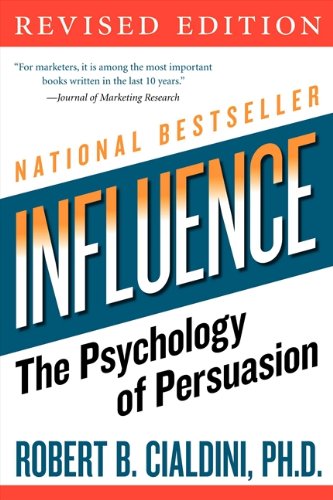
  • Influence – The Psychology of Persuasion by Robert M Cialdini

    Cialdini’s Influence is now over ten years old and still stands up. It is a good guide on the psychology of why people say “yes”. The accessible style of Influence reminded of Douglas Rushcoff, or Malcolm Gladwell. Ok Malcolm Gladwell is a poor analogy, Cialdini’s work isn’t candy floss for the mind. This is deceptive as there is usually an inverse relationship between value and accessibility. Exceptions to this heuristic would be the likes of Sun Tzu – The Art of War.

    Influence by Cialdini

    Cialdini hasn’t been researched within an inch of its life in the same way Byron Sharp’s books have been.

    Cialdini provides planners and strategists with starting points for customer experiences. The book isn’t a how to guide for digital journeys but provides first principles. Psychology is not channel-specific.

    The Journal of Marketing Research described it as

    …among the most important books written in the last 10 years.

    The book’s style allowed me to pick it up and put it down, to fit in with my holiday schedule of train travel and family time.

    Why should you have Cialdini’s Influence?

    • If your work includes marketing planning or strategy, your bookshelf should have this book. If you are thinking about customer interactions, this book outlines the first principles that you need
    • If you’re a consumer and want to know how you’re being sold to; read this book
    • If you want to get on better with people ( your kids or co-workers); buy this book

    My copy is well-thumbed and stuffed with post-it notes around the edges as I go back and forth into it on a regular basis. More marketing related content here.

    SaveSaveSaveSave

    SaveSave

  • Operaatio Elop

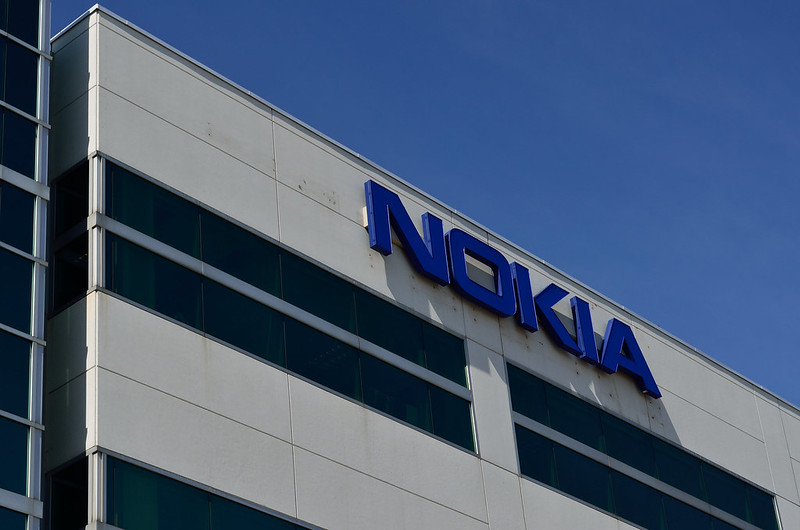
    Nokia

    Operaatio Elop covers one of the most dramatic events in Finland since the Winter War. At the time of Nokia’s high point it accounted for over 25% of the Finnish economy. There has seldom been a fall so drastic as Nokia’s fall in the mobile phone market from leading player to disaster. With that fall came the humbling of an entire country.

    Given the scale of the fall and the size of Nokia as a brand around the world, I was surprised the the Operaatio Elop hadn’t been translated and published in different language editions. Instead it was up to numerous Finns to crowdsource a translation into English for free and provide it on an as is basis.

    Has Nokia’s fall had been so complete that it literally fell out of interest for non-Finns?

    What becomes apparent is that a story more nuanced than the press coverage would allow. Elop comes out of it a flawed tragic figure – a one-trick pony; rather than a skilful trojan horse.

    Nokia’s feature phone line up where surprisingly a hero of the piece contributing positively to the business for longer than I would have expected and slowing down the business collapse precipitated in the smartphone business.

    Nokia’s board of directors and former management come out of it much worse.

    Fatal flaws

    Nokia’s strengths had become its weakness.

    • Smartphone manufacturing processes weren’t ready for mass adoption
    • MeeGo had been unfairly assessed
    • It blew its marketing budget on a bet on the North American market, ignoring other countries
    • The marketing budget was spent too early and all at once. What resulted was an ineffective and inefficient marketing campaign. By my reckoning it was roughly $100 per phone sold during the launch of the Lumia range in the US
    • Poor quality Windows Phone software, small Windows Phone application ecosystem and cheap Android phones were key issues
    • Chip technology partner issues from its relationship with Qualcomm to Intel’s failure in 4G as it focused on WiMax rather than LTE

    The more pertinent question would be is there any circumstances where Nokia stood a chance of staying on top in the mobile phone marketplace? Operaatio Elop is a compelling but balanced read and I can’t recommend it highly enough. More book reviews here.

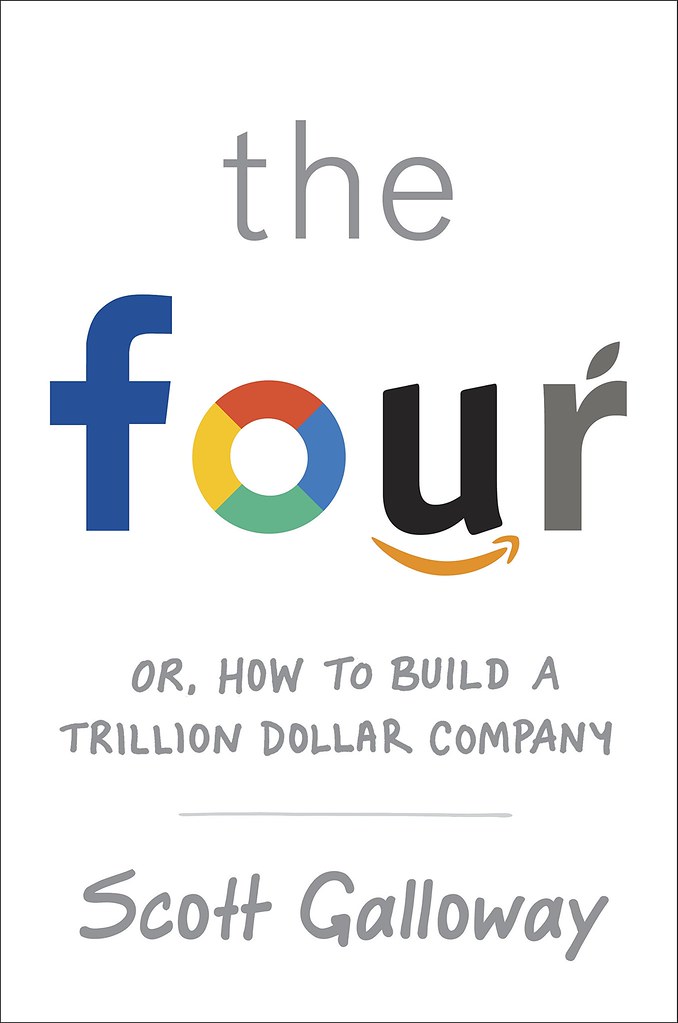
  • The Four by Scott Galloway

    Author of The Four; Galloway is known as the founder of L2 and as a perceptive commentator on the digital economy (well as perceptive as anyone is with a bank of researchers behind them). He admits freely in his book that his fame was due to years of effort, advertising spend, researchers, script writers, video editors and studio time.

    The Four

    The Four is Scott Galloway channelling Malcolm Gladwell; explaining for the average man:

    • How Google, Facebook, Amazon and Apple make their money?
    • How the digital economy is affecting the overall economy?
    • What are the negative aspects of their effect on the digital economy?

    Galloway does a really good job of surfing the media and policy wonk groundswell against Google, Facebook, Amazon and Apple. Despite all that Scott Galloway has been a long term shareholder in at least one of the four – Amazon. Ethics only has so much.

    As a digital marketer the book won’t tell you won’t know already know.  I found it a bit disappointing given the role that Galloway and L2 play in the industry.  Secondly, Galloway has already covered all the territory repeatedly in his media appearances and opinion editorials over the past year. He has left little unsaid that would be considered an exclusive for the book

    As a digital marketer, if you want your family and loved ones to understand what you do for the living and the major issues that are shaping your job Galloway’s book is a good option.

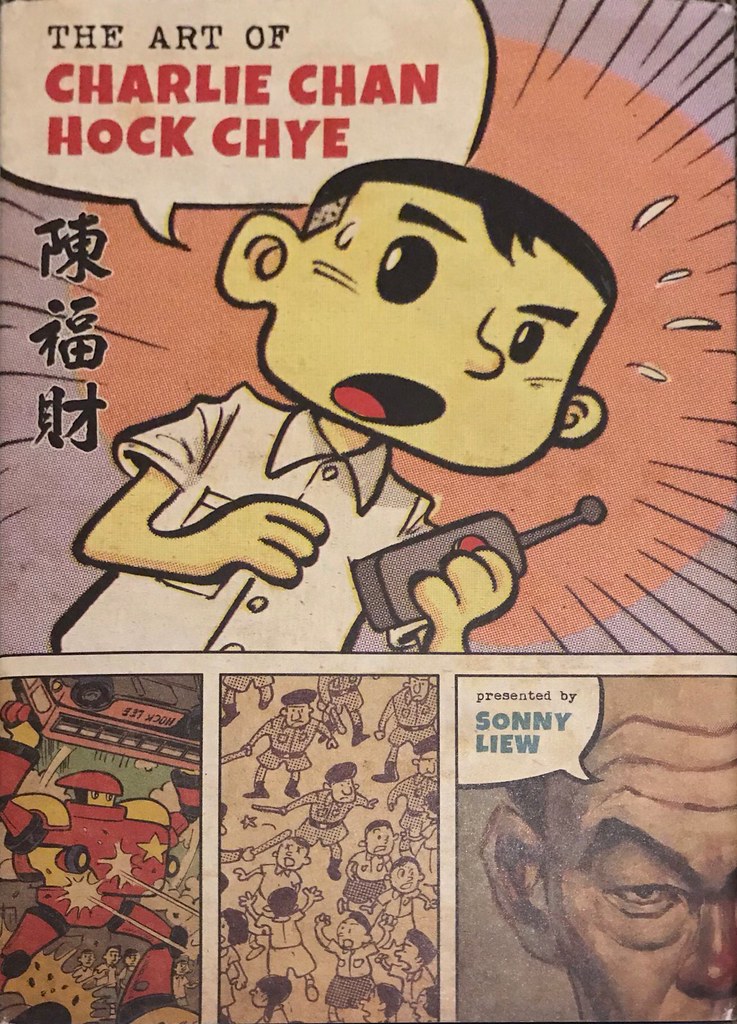
  • The art of Charlie Chan Hock Chye

    Untitled

    Sonny Liew’s The art of Charlie Chan Hock Chye is the autobiography of a fictional comic book creator. It is also an illuminating history of Singapore and a clever exercise in multilayered storytelling.

    Charlie’s story takes you through his family’s history, growing up in a shop house run by his parents and his own life that largely stands still as an unknown comic writer.  It covers his disappointments in comic publishing and the decline in ‘pavement libraries’ as TV became an important form of information and entertainment. One of Chan’s comic book superheroes is a ‘night soil man’ who gets bitten by a cockroach and develops super strength and abilities. Until the necessary infrastructure was built out Singaporeans used to dispose of their toilet contents manually. They would be collected by a night soil man and driven for disposal in a lorry.

    Various life events of Chan are outlined; his parents selling the shop to pay for his father’s unsuccessful medical treatment in Singapore. The love of his life marrying a business man and an unsuccessful visit to ComicCon. All of this tangentially addresses changes in Singaporean society in terms of public housing, medical care and economic improvements. Chan’s failure reflects on what they author felt Singapore lost by not having this kind of critique.

    Through Chan’s comic stories we see a post-war Singapore lose respect for the British following their defeat by Japan and the path toward a post colonial future. The book takes an oblique but cutting tilt at the legacy of the People’s Action Party and Lee Kuan Yew and asks at the end what if things had turned out differently.

    Beyond the storytelling and the historic analysis of Singapore, the book is a homage to the greats of the comic book world:

    • Osamu Tezuka
    • Walt Disney
    • Will Eisner
    • Stan Lee and Steve Ditko

    Despite being relatively oblique in its critique of Singaporean history, the Singapore National Arts Council withdrew a grant $8,000 for the book. Citing “sensitive content” and its potential to “undermine the authority and legitimacy” of the government. Just a few decades earlier Liew could have received a stronger reaction to his work from the state.

    It leaves some interesting questions, Singapore has been a success growing from a post-war where much of the infrastructure was destroyed to an economic power house unlike any other country in South East Asia. Admittedly, it did much of this prior to the opening up of China; but it also didn’t enjoy the natural resources of its neighbours either.  Had Singapore missed out in this dash to economic success?

    The post-war change of sentiment towards fallible British rulers raises questions about whether a post-Brexit freebooting global Britain open for trade will be successful in the face of 7 decades of diminished responsibility and respect around the world?