Category: technology | 技術 | 기술 | テクノロジー

It’s hard to explain to someone who didn’t live through it how transformation technology has been. When I was a child a computer was something mysterious. My Dad has managed to work his way up from the shop floor of the shipyard where he worked and into the planning office.

One evening he broad home some computer paper. I was fascinated by the the way the paper hinged on perforations and had tear off side edges that allowed it to be pulled through the printer with plastic sprockets connecting through holes in the paper.

My Dad used to compile and print off work orders using an ICL mainframe computer that was timeshared by all the shipyards that were part of British Shipbuilders.

I used the paper for years for notes and my childhood drawings. It didn’t make me a computer whiz. I never had a computer when I was at school. My school didn’t have a computer lab. I got to use Windows machines a few times in a regional computer labs. I still use what I learned in Excel spreadsheets now.

My experience with computers started with work and eventually bought my own secondhand Mac. Cut and paste completely changed the way I wrote. I got to use internal email working for Corning and internet connectivity when I went to university. One of my friends had a CompuServe account and I was there when he first met his Mexican wife on an online chatroom, years before Tinder.

Leaving college I set up a Yahoo! email address. I only needed to check my email address once a week, which was fortunate as internet access was expensive. I used to go to Liverpool’s cyber cafe with a friend every Saturday and showed him how to use the internet. I would bring any messages that I needed to send pre-written on a floppy disk that also held my CV.

That is a world away from the technology we enjoy now, where we are enveloped by smartphones and constant connectivity. In some ways the rate of change feels as if it has slowed down compared to the last few decades.

  • Kindle – tenth anniversary

    I was blown away when I realised that it was the tenth anniversary of the the Amazon Kindle. Ten years, think about that for a moment.
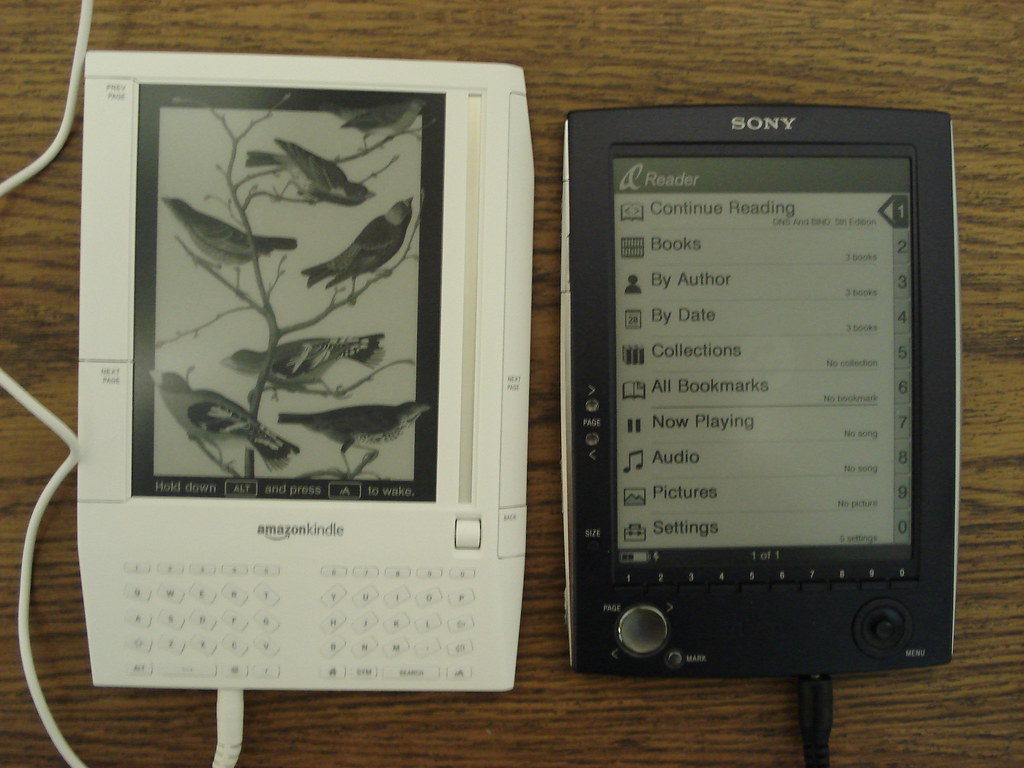
    Amazon Kindle & Sony eBook

    If you look at the original Kindle versus the latest model you can see how the design language moved from a ‘BlackBerry’ type product design to a smartphone type design. Along the way it benefited from improvements in e-ink display technology to provide a crisper viewing experience. Sony’s competitor might have looked more modern bit it didn’t manage to get the marketing mix and the hardware / services mix right.

    Sony’s failure indicated while you could be successful in a number of media markets, it didn’t guarantee success in other media.

    Rather like Apple products Kindle is a combination of hardware, software (including content), payment infrastructure and the Whispernet global mobile virtual network.

    Like Apple, Amazon came in and refined an existing business model. Companies like Sony made very nice e-readers, but they didn’t have the publisher relationships and market access that Amazon had.

    Context rather than convergence

    In a time where consumer electronics thinking was all about convergence, from the newly launched iPhone to the Symbian eco-system, Amazon were determined to come up with a single purpose device.

    Amazon resisted the trend and created a dedicated device for reading. That is why you have a black-and-white e-ink screen and an experience exclusively focused on seamless content downloads.

    Yes, they’ve rolled out tablets since, but even the latest range stick to the original Kindle playbook. Some of their decisions were quite prescient. The Kindle was deliberately designed so that it didn’t require content to be side loaded from personal computer like an iPod.

    The Kindle has survived the smartphone and the tablet device as a reading experience. Even if ebooks didn’t conquer the book publishing market in quite the way Amazon had planned.

    Using the U.S. legal system to clear the field

    Amazon was helped out by the US government prosecuting Apple under the Sherman Act. Wikipedia has a good summary of this case. On the face of it Apple was doing a similar structured deal with publishers on book pricing to what it had done previously with record companies for iTunes music.

    This case effectively stalled Apple book store momentum and lumbered Apple with overzealous US government overwatch. The consumer benefit has been minimal – more on that later. The irony of all this is the way Amazon has leveraged its monopolistic position to decimate entire sectors of the retail economy.

    The interesting thing about this case, say compared to the Apple | Qualcomm dispute is that Apple still kept Audible audio book sales in iTunes throughout this dispute and didn’t look at ways to bounce the iPad Kindle app from the app store. Audible is an Amazon-owned company.

    By comparison, Amazon bounced Apple’s TV from its own e-commerce platform and has taken a long time to support the AppleTV app eco-system – long after the likes of Netflix.

    Piracy in China

    Amazon hasn’t had it all its own way. China had a burgeoning e-book market prior to the Kindle and Chinese consumers used to read these books on their laptops.  Depending which store you used; it might have more books at a cheaper price because intellectual property wasn’t ironed out. This has undermined Amazon’s slow entry into the Chinese e-book marketplace.

    A cottage industry sprang up that saw Kindles acquired in the US and Japan shipped back to China and reflashed with software that made them compatible with the local app stores. These Kindles were bought at a subsidised price as Amazon looked to sell devices to sell books.

    The Kindle brain phenomenon

    I moved from the UK to Hong Kong to take up a role and tried to lighten my burden by moving my reading from books to the Kindle. I found that I didn’t retain the content I read. I enjoyed the process of reading less and did it less often. I wasn’t an e-book neophyte I had enjoyed reading vintage pulp fiction novels as ebooks on Palm devices and Nokia phones in the early 2000s as a way of passing them time on my commute.

    Talking to friends their experience was similar. I now read on the Kindle or listen to audio books only for pleasure. I tend to buy my reference books in the dead tree format. There is something more immediate about the process of reading from a ‘real book’ rather than an e-book.

    It seems that digital natives aren’t ready to give up books just yet. Studies about the use of digital technology and e-books in education are mixed and anecdotal evidence suggests that technology industry leaders liked to keep the level of digital content in their children’s lives at a low threshold.

    The Kindle hasn’t replaced the bookshelf and the printing press yet.

    Pricing

    Disposing of the medium didn’t mean that we got cheaper e-books. On Amazon it is worth looking carefully to see what is the cheapest format on a case by case basis. Kindle competes against print books and secondhand books.

    Secondhand books win hands down when you are looking at materials beyond bestsellers. A real-world book is easier to gift and Amazon Prime allows for almost instant gratification. The Kindle starts to look like Amazon covering all the bases rather than the future of publishing. This may change over time, a decade into online news was a more mixed media environment than it is now – but Kindle feels as if it has reached a balance at the moment. More related content here.

    More information

    New study suggests ebooks could negatively affect how we comprehend what we read | USA Today
    Shelve paperbacks in favour of E-books in schools? | BBC
    Study challenges popular beliefs on e-reading | The Educator
    Are Digital Textbooks Finally Taking Hold? | Good eReader – makes the case for a heterogenous book environment of standard textbooks, e-books and used books
    Do ‘Digital Natives’ Prefer Paper Books to E-Books? | Education Week
    Our love affair with digital is over | New York Times (paywall)
  • Tencent Ad Hub + more news

    Tencent Ad ‘Hub’ Connects Brands And Chinese Consumers | The Holmes Report – interesting that they have created a hub for this, the data implications and opportunities are huge. Tencent Ad Hub builds on the huge data set that Tencent already has with WeChat

    Energy

    Amid global electric-car buzz, Toyota bullish on hydrogen – not surprising to proof against lithium bubble

    FMCG

    McDonald’s flips fortunes with back to basics approach – they seem to yo-yo between price/convenience and product innovation. I wish they would bring back drip coffee

    Luxury

    Why Luxury Brands’ Approach to “Chinese Aesthetics” Fail | Jing Daily – interesting read with great examples. I’ve even noticed Shanghai Tang making a few mistakes

    Media

    Facebook blocks viral website Unilad’s page  | Telegraph – it is foolish to build something purely on a platform you don’t own

    Trust Indicators let you know more about a publisher on Facebook | TheNextWeb – guess this is part of the attempt against fake media, but its only a small part of the solution

    Here’s What You Should Be Talking About Instead of Video | Digital – AdAge – (paywall)

    The Economist unwinds: the luxury of print | The Drum – print as ‘lean back’ content

    Online

    Flickr: The Help Forum: Sorry, the photo couldn’t be added to the group because it is already in the maximum number of group pools. – Oath hasn’t been in the driving seat all that long and there are already issues in platform management. This follows on from shutting down the Yahoo! Finance data APIs

    Security

    How the Chinese Government Fabricates Social Media Posts for Strategic Distraction, not Engaged Argument by King, Pan & RobertsChinese regime’s strategy is to avoid arguing with skeptics of the party and the government, and to not even discuss controversial issues. We show that the goal of this massive secretive operation is instead to distract the public and change the subject, as most of the these posts involve cheerleading for China, the revolutionary history of the Communist Party, or other symbols of the regime (PDF) – fascinating study, more online related content here.

    Technology

    Sony: Colour Matching Between OLED and CRT | EETE LED Lighting – interesting that CRTs we’re still the reference standard (reg wall) (PDF) – Trinitron still counts for something

    The best laptop ever made – Marco.org – Marco nails it, the newer machines fall short and require a bag of dongles

  • Sony Walkman WM-R202 – throwback gadget

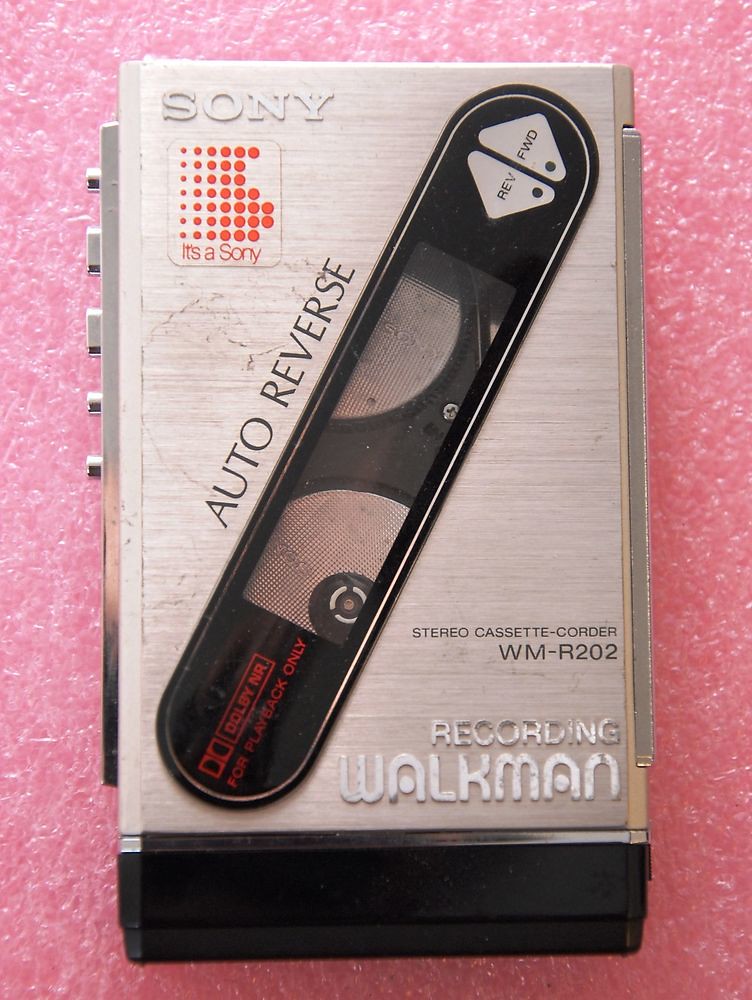
    sony wmr202
    I got a Sony Walkman WM-R202 and loved it, though it was only for a short while. It was delicate and fragile, or I had a lemon; but it was the kind of device that stuck with me and made sense for me to profile as an iconic throwback gadget. Back when I started work I was obliged to do night classes in advanced chemistry. It was tough going (partly because I wasn’t that focused). I had a long commute home in a company minibus and my existing Walkman WM-24 whilst good had given up the ghost.  I decided to put what money I had towards a Sony Walkman WM-R202 that would help with my commute boredom and my night classes.

    Why that model:

    • It could record reasonably well which I convinced myself would be handy for lectures. It was not up to a Pro Walkman standard as the Dolby circuit fitted was for playback only. (I couldn’t afford the professional grade WM-D6C at the time and they weren’t the kind of device that you could easily fit in a pocket either. They were big and substantial.)
    • It had a good reputation for playback. Not only did it have Dolby B noise reduction and auto reverse on cassette playback, but it held the cassette really well due to its metal construction. I learned the benefits of good tape cassette fit in a rigid mechanism the hard way. I had got hold of a WM-36 which on paper looked better than my previous Walkman with Dolby B noise reduction and a graphic equaliser, but had to keep the door closed with a number of elastic bands. It was a sheep dressed up as a wolf and I struggled on with my original dying Walkman
    • Probably the biggest reason was that it intrigued me. It wasn’t much larger than an early iPod and was crafted with a jeweller’s precision. It was powered by a single AA battery or a NiCd battery about the size of a couple of sticks of chewing gum. It looked sexy as hell in in a brushed silver metal finish.

    Whilst the buttons on the device might seem busy in comparison to software driven smartphones it was a surprisingly well designed user experience. None of them caught on clothing, the main controls fell easily to hand and I can’t remember ever having to use the manual.

    What soon became apparent is that you needed to handle it very carefully to get cassettes in and out. I used to carefully tease the cassettes in and out. Despite my care, one day it stopped working.  Given that mine lasted about two weeks, I am guessing that mine was a lemon and that the build quality must have been generally high as you can still see them on eBay and Yahoo! Auctions in Japan.

    Since mine gave out well within a warranty period, I look it back to the shop and put the money towards a Sony D-250 Discman instead.

    Here’s a video in Japanese done by someone selling a vintage WM-R202 on Yahoo! Auctions which shows you all the features in more depth.

    SaveSave

  • Small business + other news

    Small business

    What does small business really contribute to economic growth? | Aeon Essays – not as much as politicians etc would have you believe. Probably the most emblematic example of ‘small business’ contributing to economic growth was Margaret Thatcher. Small business and financial services were supposed to replace the manufacturing sector which had been devastated.

    Business

    Will.i.am’s startup raises $117 million, enters enterprise market | Reuters – don’t hold your breath

    Poor PR Performance Puts Publicly-Held Agencies On Back Foot | Holmes Report – great analysis by Arun

    Consumer behaviour

    Majority Of White Americans Say They Believe Whites Face Discrimination : NPR – where to start with this?

    Online eco-system maps | Coventry University – students self-identify their web habits looking at it you can see how the public focuses on just a few sites

    Ethics

    No, of that I’m innocent. – Scobleizer – I was reading this and had my fingers covering my eyes. I am just thankful not to be counselling Scoble as a PR person or a lawyer

    Marketing

    Trump Data Guru: I Tried to Team Up With Julian Assange  – A Republican digital strategist who worked with Cambridge Analytica during the 2016 campaign told The Daily Beast that Nix should not be viewed as a reliable narrator.
    “Alexander Nix is not credible at all,” the strategist said. “He is a consummate salesman, and there are numerous instances already out in the public record where he made claims that were not just factually wrong—they were total fabrications.” – we’re still no closer to the truth

    PRCA Study: ROI Concerns Slow Digital Marketing Spend For UK PR firms – I suspect that this is a problem of strategy rather than measurement. Influencer programmes are very much a random bet in comparison to paid media

    Uniqlo’s Four Secrets for Building a Global Brand | Fortune – ‘truth telling’ rather than storytelling

    Media

    Taylor Swift is going to save the CD | Quartz – one of the few things I can agree with Taylor Swift on

    Clarifying Recent Tests | Facebook Media – interesting move given the panic caused by falling page engagement rates

    Retailing

    Alibaba revenues up 61% to US$8.3T, annual active consumers grew to 488M in Q3 2017 | China Internet Watch – the scale of the numbers are huge

    Ikea returns to Aichi after 1970s department store presence proved hard fit | The Japan Times – interesting reflections on when the flat pack giant was sold in a Japanese department store. There was an expectation that products came fully assembled

    Technology

    Harmony Link EOS or EOL? Logitech – looks like Logitech is going to need a crisis comms agency in March next year

    China’s Technology Ambitions Could Upset the Global Trade Order – The New York Times – AMD unpatriotic

    Wireless

    The Unprecedented Explosion of Smartphones in Myanmar – Bloomberg – this is insane. When I was working on Myanmar programmes some 3 years ago the internet penetration was in single figures

    Web of no web

    iPhone supplier Catcher Tech to make augmented-reality parts- Nikkei Asian Review – but this doesn’t mean that they are for Apple

  • Older iPhones + more news

    Apple CEO Cook breathes new life into old iPhones | Reuters – how Apple’s lower models contribute in markets like India. Older iPhones resold also drive services sales on an ongoing basis, whether the older iPhones are based on to children or sold on

    Culture

    Funko CEO reacts to stock’s 40% plunge on figurine maker’s first day as a public company | Geekwire – surprising given the prominence of geekdom in popular culture

    Gadgets

    aibo | Sony Japan – Matt’s commentary on this from his Web Curios newsletter ‘When I was about 20 I was obsessed with the idea of Sony’s Aibo, the robot dog that was JUST LIKE A REAL PUPPY  but with no hair or faeces or propensity to maul people.; now Sony have announced a rebooted version which is slightly less robotic and slightly more cute, and doubtless far more sophisticated in its ability to dance and caper and charmingly present to demand tickles that will never feel. The weird thing is, though, that now I am older I look at this and feel nothing but a deep and abiding sadness at the thought of the sort of people for whom this actually designed – not rich twats who want a toy, but the terminally lonely for whom a small robotic dog and stroking its plastic, unfeeling case in lieu of actual biological contact. Imagine that being your only interaction with another ‘thing’ for days and days and days on end. I don’t want to grow old.’ Not too sure if this a manifestation of his realisation of mortality that usually kicks in with the start of middle age. It does reflect the resurgence of Sony and how it thinks about consumer products for a greying market.

    Marketing

    See the cool kids lined up outside that new restaurant? This app pays them to stand there. – The Washington Post  – “They hire promoters and marketers and PR agencies to connect, but it’s a one-sided interaction that involves blasting out a message to get people engaged, but they don’t necessarily know if that message is being received.”

    WPP’s PR Units Slip as Sorrell Warns on ‘New Normal’ – O’Dwyer PR  – “It does seem that in new normal of a low growth, low inflation, limited pricing power world, there is an increasing focus on cost reduction, exacerbated by a management consultant emphasis on cost reduction and the close to zero cost of capital funding of activist investors and zero-based budgeters,” wrote Sorrell in WPP’s trading update.

    Online

    Damning stat Facebook tried to bury | News.com.au – 270 million accounts are duplicate or fake

    Software

    This app is like Shazam for fonts | The Next Web – genius, more design related content here.

    Berlin’s Ada Health raises $47M to become the Alexa of healthcare | TechCrunch – would the money be better spent on building skills into Alexa or Google Home?

    Wireless

    Q’comm Profits Dive Amid Patent Disputes | EE Times – ingredient brand most hated by its partners….