It’s hard to explain to someone who didn’t live through it how transformation technology has been. When I was a child a computer was something mysterious. My Dad has managed to work his way up from the shop floor of the shipyard where he worked and into the planning office.
One evening he broad home some computer paper. I was fascinated by the the way the paper hinged on perforations and had tear off side edges that allowed it to be pulled through the printer with plastic sprockets connecting through holes in the paper.
My Dad used to compile and print off work orders using an ICL mainframe computer that was timeshared by all the shipyards that were part of British Shipbuilders.
I used the paper for years for notes and my childhood drawings. It didn’t make me a computer whiz. I never had a computer when I was at school. My school didn’t have a computer lab. I got to use Windows machines a few times in a regional computer labs. I still use what I learned in Excel spreadsheets now.
My experience with computers started with work and eventually bought my own secondhand Mac. Cut and paste completely changed the way I wrote. I got to use internal email working for Corning and internet connectivity when I went to university. One of my friends had a CompuServe account and I was there when he first met his Mexican wife on an online chatroom, years before Tinder.
Leaving college I set up a Yahoo! email address. I only needed to check my email address once a week, which was fortunate as internet access was expensive. I used to go to Liverpool’s cyber cafe with a friend every Saturday and showed him how to use the internet. I would bring any messages that I needed to send pre-written on a floppy disk that also held my CV.
That is a world away from the technology we enjoy now, where we are enveloped by smartphones and constant connectivity. In some ways the rate of change feels as if it has slowed down compared to the last few decades.
The new Roxanne Shante biopic looks amazing and you know the soundtrack is going to be good. Roxanne Shante was like a breadth of fresh air in the early rap scene. She had an amazing technique and was well able to cut male competitors down to size. Roxanne Shante is a legend despite her limited profile.
The South China Morning Post have launched a news site for an international audience focused on the Chinese technology sector – Abacus. Given the amount of blogs that used to cover the China tech sector that have disappeared, this is a welcome addition. Its a nice looking site, it has great interactive design and a good editorial team. My one complaint is that it doesn’t have an RSS feed which is a real bummer.
Unsupported | The Greatest Stories Retold – interesting attempts at really short form storytelling. It doesn’t work well in Safari as a web browser. Something to provide creative inspiration for those 15 second ad spot scripts.
Re-evaluating Media is a piece of research put together that tried to rebalance expectations on more traditional media. Whilst there was room to land meaningful points (TV is better at mass reach for a given CPM), and there is an argument to be made for a media neutral approach where the media mix fits the communications problem to be solved. Instead they made bigger leaps and had a methodology that was optimistic at best – this became the focus of debate among people that I knew. There are arguments to be made about the wider role of brand building which would better help traditional broadcast advertising more.
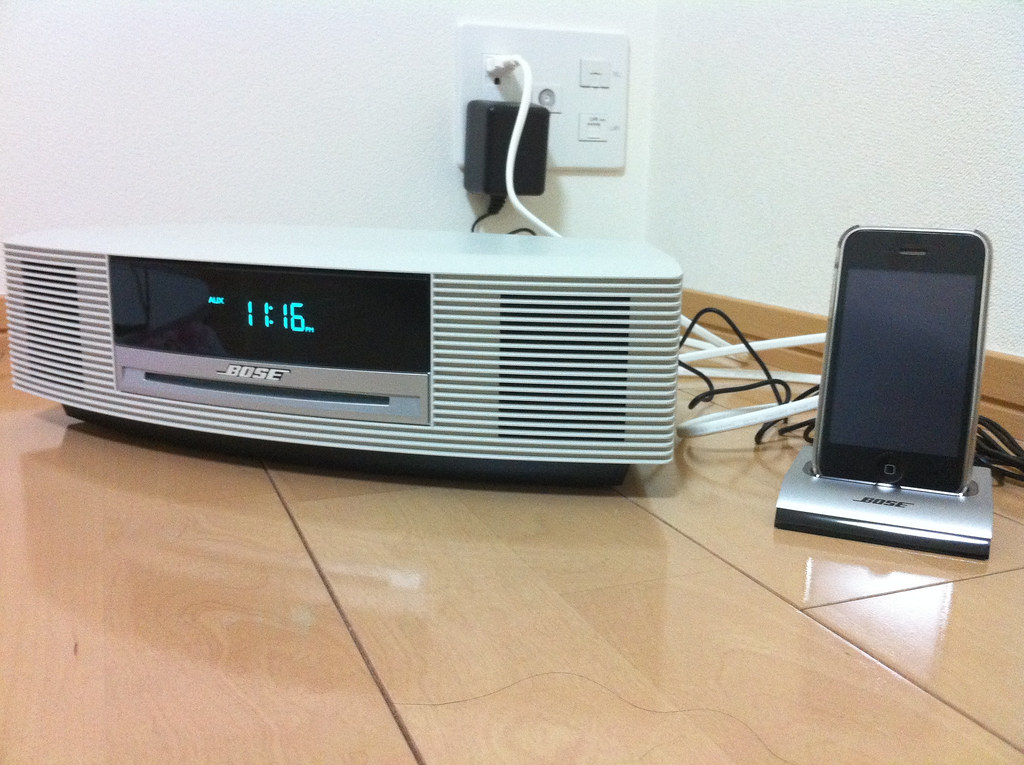
It is a little disingenuous to call the Bose Wave Music System a throwback gadget, mainly because Bose still makes it. It would be reasonable to call it a design classic. There are benefits to picking up a 2006 model Bose Wave Music System, rather than paying the premium of a new device.
Bose Wave System timeline
The original Bose Wave System was launched back in 1984; this was back when Sony was king due to the Walkman, digital wasn’t really on the horizon with the Discman only launching same year. The Acoustic Wave 1 (AW1) was a new take on the boom box radio that was ubiquitous in households and workplaces at that time. The AW1 featured a cassette deck and a two band radio.
Eight years later digital finally arrived when Bose switched out the cassette for a top-loading CD player instead.
In 1993, the Bose Wave System shrank from about the size of a medium sized boom box to something about as tall as an iPod Classic but featured radio only and was called the Wave Radio.
Five years later a slot loading CD player was integrated. In 2004, the CD player also accepted MP3 based discs and Boselink connectivity.
Boselink
Boselink is unique in consumer electronics in terms of the expandability it allows. It was originally designed as a communications protocol for multi-room sound systems, but is also useful for connecting modules that extend the functionality of the basic Bose Wave System. Compatible accessories include:
Multi-CD drive
Soundlink – playback of music which is streamed to the device over Bluetooth
DAB module – UK-only adapter allowing reception of digital radio as well as AM and FM signals
Bose also offered an iPod kit, which charges your iPod Classic and plays back the music. There is a replacement remote for the Bose Wave Music System which integrates basic iPod playback controls.
Vintage over new
The key benefit of a vintage Bose Wave System over a new device is the display. New devices have a back lit LCD display which wash out and aren’t as legible as the vintage vacuum fluorescent displays.
Secondly, you still enjoy the ‘big box’ sound created by the diminutive size of the Bose Wave Music System. They use use a folded waveguide, which is a series of passages from the speaker driver to the speaker grill. This attempts to replicate sound from larger systems. Bose claims the waveguide “produces full, clear stereo sound from a small enclosure by guiding air through two 26” folded wave guides.” The design of the wave guides has changed minimally over the years.
My casual listening at home is based on two systems. A 12 year old Apple iPod Hi-Fi A1121, which works as a centre speaker for my TV when I need it. It takes audio in via TOSLink and gives a better sound than most sound bars that I’ve listened to.
I use a Bose Wave Music System of a similar age to the iPod Hi-Fi with the DAB module connected via BoseLink and iPod adaptor as my go to radio around the house. It is the default provider of background music and up to the minute news. It provides a better sound than most of its newer BlueTooth enabled competitors. It wins out over the Apple iPod Hi-Fi, because of its ability to play digital radio and hide out of the way on book shelf.
I then use a dedicated hi-fi for serious music listening of CDs and vinyl records.
Ok this isn’t the most technical video in terms of its review of the Chinese smartphone eco-system and it doesn’t touch on the WeChat eco-system, but its a good introductory video for westerners by Winston Sterzel, a YouTuber living in Shenzhen. It focuses on only the top domestic Chinese smartphone brands.
If I was looking to explain Chinese smartphone dynamics to a western client, this video is as good an introduction as any to the hardware side of the business.
Here are the key points I’d highlight and additional comments that I would add to the film.
Mobility in the working population drove Chinese smartphone adoption
The transitory nature of the Chinese workforce following China’s opening up has mean’t that many people are migrants and many only return home once a year (for lunar new year) if they are lucky. Staying in touch is critical to keep families together. Secondly being migrants, having a ‘computer’ that you can carry makes more sense than a traditional PC. Finally, the price point of smartphones puts the internet in the hands of pretty much anyone who wants one. These three factors explain why smartphones took off so dramatically in China. This started in the urban areas, but then migrants brought them home to relatives and gave them away as Chinese new year gifts.
China Mobile had a government mandate to build out connectivity into even the most rural areas in China. Data packages and the applications that run on it like WeChat made telecommunications even cheaper and easier.
The smartphone is where the majority of Chinese online shopping takes place, how families keep in touch and are starting to be a tool for the delivery of government services.
The price-value balance of smartphones
The development of the iPhone had an unintended on the Chinese smartphone contract manufacturers. If we go back to the early Samsung Galaxy models from the S to the S4; the industrial design of these phones owed a lot to Nokia. They had replaceable storage with micro SD cards and a replaceable battery with a battery hatch in plastic. If you dropped the phone the hatch may pop off. This was by design as it got rid of the some of the energy from the fall and the frame had a degree of flex to protect the innards. This is one of the reasons why Nokia 3310 feature phones ran and ran. The face and back might pop off your phone if you dropped it; but they could easily be snapped back on.
Manufacturing phones of that nature also helps with scaling up manufacturing based on mouldings.
Apple didn’t bother with external batteries, which at the time sparked a huge controversy. Their battery life was awful and most working stiffs kept their phone charging from their office PC during the day. By comparison I had a desktop charger with previous Ericsson and Nokia phones, along with a few spare batteries and felt comfortable going on holiday for a few days with a spare charged battery in a zip loc bag and no phone charger. Up until the 6 plus, Apple’s battery has been a real pain.
So Apple differentiated by done what seemed like an insane idea of using a CNC (computer numeric controlled) machine to make the phone chassis. This is like a robot version of the machine tools that you would have used in shop class individually making each phone chassis.
Apple tried this out with the stainless steel ‘belly band’ of the 4 series phone and then perfected it with the 5 series. I suspect the reason why they moved from stainless steel to aluminium alloy for manufacturing was to balance durability with optimising manufacturing time.
Over time these machines move from the Apple production lines onto another product. Soon you can’t be the smartphone chassis manufacturing business unless you have this capability. Apple’s machines may have been sold on, but there was probably an increase in the CNC machine makers manufacturing capacity as well.
So all of the smartphones shown, whether it cost £80 or £800; none of them felt cheap or had a ‘China penalty’ in terms of case design. This has affected the market in the Chinese smartphone eco-system. They are more durable, but there is less incentive to go premium when a cheap or medium priced phone looks and feels this good.
The durability of modern Chinese smartphones might be one fo the reasons why sales in smartphones have declined year-on-year. I’d argue a second reason is WeChat; so long as you can use WeChat your smartphone is fine. WeChat has had a similar effect on Chinese smartphones to what the web had on western PC sales over the past two decades – computers had become about as useful as they were going to be and performance became less of an issue.
Chinese smartphone market consolidation
Winston kind of alluded to it in his video but Oppo, Vivo and OnePlus are all related to BBK Electronics; a longtime Chinese phone and consumer electronics manufacturer. When I first went to visit China I bought a BBK ‘keitai’ style clamshell feature phone. At that time BBK competed with international players like Nokia or Samsung and domestic brands like Ningbo Bird. (Ningbo Bird was the largest manufacturer in China from 2003 – 2005).
Now they make everything from cheap TVs and speakers under the Memorex brand, to smartphones and high end Blu-Ray players as Oppo.
In the smartphone sector, they operate under three main brands. OnePlus is aimed at international users and kind of similar to Xiaomi in terms of the balance that it strikes between technology, features and price. Oppo is more of a Samsung or Huawei analogue. Vivo was launched to have a lower price youthful brand.
Between BBK, Xiaomi and Huawei you now have most of the Chinese smartphone eco-system, by value and sales volume. Just a few years ago there would have been far more players that would have merited a review including the following the companies and their sub-brands:
ZTE
Lenovo
Meizu
Coolpad
TCL
These are still big businesses, and I am not denigrating these brands. The analyst reports show that the Chinese smartphone eco-system is undergoing rapid consolidation; in the same way as Sony and HTC have been dwarfed by Samsung and Huawei.
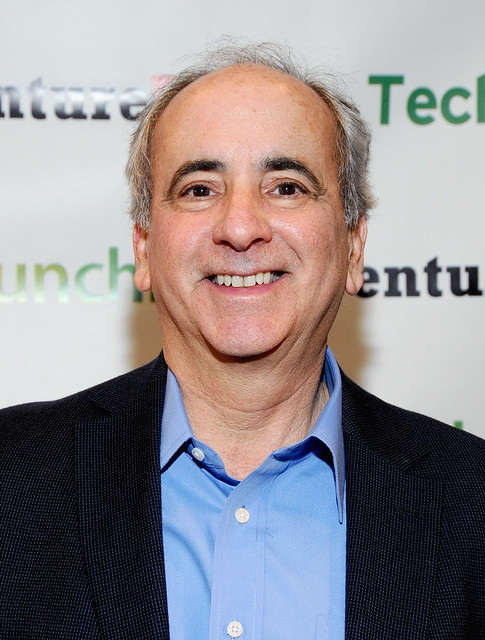
What Siri creator Norman Winarsky thinks of Apple’s Siri now — Quartz – not terribly surprising. Norman Winarsky is now a partner at a number of Silicon Valley venture firms. Whilst he is better known in business space now as a lecturer on business, entrepreneur and VC, he is an academic at heart.
Norman Winarsky via the TechCrunch account on Flickr
Norman Winarsky studied and eventually ended up with a doctorate in mathematics. He started his private sector career at RCA Research (RCA’s answer to Xerox PARC or IBM Research), he had a career there for a number of decade as that moved through various owners. Eventually it became the east coast campus of SRI. Norman Winarsky went on to help found the SRI process for spinning off businesses and technology licensing. He was a co-founder of one of those businesses: Siri – that was bought by Apple. It will be interesting to see if Norman Winarsky has another high impact idea in him moving forwards. More related content here.
That’s the key finding from an analysis of regional and global agency deals by global marketing management consultancy Trinity P3 and Mark Ritson
Alibaba rival JD.com posts first annual profit as a public company | TechCrunch – The company’s fiscal profit was helped by a surprise $35 million profit in Q1 and a lucrative Q3 quarter in which it posted a RMB 1 billion ($151 million) profit thanks to its own efforts on Single’s Day, China’s online shopping bonanza. The company posted a RMB 909.2 million (US$139.7 million) loss for Q4, but that marked a 28 percent decrease year-on-year.
While Alibaba has a higher profile — with enormously profitable quarters — JD.com has quietly built out its e-commerce by expanding into financial services, offline retail and more
Consumer behaviour
This Chinese billionaire felt lost in US without WeChat, mobile payments | South China Morning Post – The chairman of Legend Holdings, the controlling shareholder of Lenovo, said China was now comparable to Japan and ahead of the US in terms of mobile internet technology, digital content and innovative business models.“If you haven’t stayed abroad for a long time, you might not understand [the difference],” said Liu, citing his recent experience in the US. His insights give credence to how Chinese technology companies have cultivated a hi-tech universe so large that it exists almost exclusively on its own – sustained by the country’s 1.4 billion people – but cut off from the rest of the world by Beijing’s Great Firewall, which blocks content not approved by the government. – the problem is that Chinese systems are ‘Galapagos’ technologies
BlackBerry suing Facebook for patent infringement | CNBC – “Blackberry’s suit sadly reflects the current state of its messaging business. Having abandoned its efforts to innovate, Blackberry is now looking to tax the innovation of others. We intend to fight,” Facebook general counsel Paul Grewal said – you see Facebook has sucked the blood out of other businesses for too long. I have little sympathy with them in this suit. It will be interesting to see how robust BlackBerry’s patents are and whether it would be cheaper for Facebook to pay them off or buy the business outright. The question is who is next after Facebook in Blackberry’s legal sights?
Luxury
Balenciaga is Putting its Money Where its Logo-Covered Hoodie Is for F/W 2018 | The Fashion Law – garments on the brand’s runway bore a phone number, +33156528799, which turns out to be Balenciaga’s “new hotline.” Call the number and you can answer a 20-question survey, inquiring about your age, primary language, height, and shoe size, as well as your favorite form of transportation, type of music, season, taste (your options are: Bitter, Salty, Sour, Sweet, or Umami), and so on.
A way for Balenciaga to better understand its customers? Maybe. Considering that the message is ends with the following note: “Thank you for taking the time to answer our questions. All data will be erased now,” I, for one, am guessing this is more interactive experience than fact gathering mission. If we have learned anything over the past several years, it is that “experiences” are everything to the modern-day consumer – I can imagine a choir of marketers howling in a symphony of pain about this
Meet the billionaire millennial pouring money into British fashion… and she’s only 27 | Telegraph Online – ‘My generation has completely different shopping habits,’ says Yu. ‘People born in the 1960s and ’70s buy into established brands such as Dior and Chanel. For them, it’s about showing status and where they fit into society. But my generation isn’t into logos – it’s not cool, it’s too obvious. [And] we prefer to shop online. We’ve become very interested and hungry for young, emerging designers.’
P&G’s Marc Pritchard calls for ‘fewer project managers’ at agencies as he vows to destroy ‘maze of complexity’ – “For media, data and analytics is enabling us to bring more media planning in-house, replacing multiple layers,” said Pritchard. “When it comes to buying, our purchasing people can negotiate with the best of them, so we’re doing more private marketplace deals in-house. And if entrepreneurs can buy digital media, why can’t the brand team on Tide, Dawn and Crest be entrepreneurs and do the same? They can, and they will.”
He explained that P&G wants and needs brilliant creatives, and will invest in such talent. But “creatives represent less than half of agency resources, because they’re surrounded by excess management, buildings and overhead.”
Media
Time for news to fight back | The Australian – Mark Ritson arguing that that agencies may be pushing clients into digital media because it can result in greater commissions for the agencies — in some cases almost 3 times greater than for traditional media (paywall)
Retailing
Smartphone users are spending more money each time they visit a website – Recode – The amount of money people spent per visit to online retailers has increased 27 percent since the beginning of 2015, according to new data from Adobe Analytics. Meanwhile, the length of smartphone website visits has actually declined 10 percent
Silicon Valley Is Over, Says Silicon Valley – The New York Times – In recent months, a growing number of tech leaders have been flirting with the idea of leaving Silicon Valley. Some cite the exorbitant cost of living in San Francisco and its suburbs, where even a million-dollar salary can feel middle class. Others complain about local criticism of the tech industry and a left-wing echo chamber that stifles opposing views. And yet others feel that better innovation is happening elsewhere – like Shenzhen? I think a lot of the problem with Silicon Valley is that it doesn’t build hardware any more. Bright people are mobile for the right pay, what you can’t easily do is the kind of commercialisation and manufacturing speed as a feedback loop like you see in Southern China
Techmeme Ride Home by Techmeme on Apple Podcasts – nice summary of the biggest stories in the tech sector on a 15 minute podcast. Techmeme started as a tech focused news aggregator, but this Techmeme ride home podcast is really handy to listen to on my commute.
FK Twigs x Spike Jonze
HomePod — Welcome Home by Spike Jonze — Apple – FKA Twigs dances along in a mind bending video that’s part LSD trip and part old time Hollywood musical. Just a shame that its advertising the Apple HomePod. More related content here.
Stephen Hawking Voice Generator (play/download) ― LingoJam – kind of like the Speak n Spell you had when you were a kid but more adaptable. Hawking came to view his voice generator as part of his personality. When it was glitching out at the end of its natural life, a tremendous effort was put into replicating its sound for Hawking. The story in itself says a lot about how we relate to technology.
Let’s Go Twitter – I haven’t watched a film at the cinema in a while so am probably way late to this creative. I ended up being really confused by this advert. Visually, its a feast for the eyes, but still confusing. I love Twitter but good lord do they honestly think that advertising will solve what they seem to have diagnosed as a UX issue in on boarding for a new account?
Supermarket chain REWE empowered shoppers to choose the sugar content of its own-brand chocolate pudding. During the campaign, REWE distributed puddings that had 20%, 30%, and 40% less sugar alongside its original formula; the favorite formula (30% won!) will be permanently available for sale at the supermarket. Of course, one could say that there is a bias in the survey design, but this idea of co-creation and a transparent discussion about sugar is a welcome change. via Trendwatching.