Category: telecoms | 電信 | 통신 | テレコム

I thought about telecoms as a way to talk about communications networks that were not wireless. These networks could be traditional POTS (plain old telecoms systems), packet switched networks including ethernet or some hybrid of the two.

I started my agency career working during the dot com era. What was happening in the broader technology space was one wave of technology cresting, while another one rose.

In the cresting space was:

Enterprise software (supply chain software, financial systems, database software, middleware software tools).

NIC cards (network interface cards, a way of getting your computer to be able to communicate with an ethernet network. It was a little circuit board that connected on to the mother board and allowed.

Mainframe and  mini-computers. It was around about this time that company owned data centres peaked.

In the rising wave was:

Servers –

  1. Unix servers and workstation grade computers were what hosted the first generation of websites. Names that did particularly well were Sun Microsystems (now part of Oracle) and Silicon Graphics Inc. (SGI). Sun Microsystems ran everything from investment banking models to telecoms billing systems. It’s hardware and software made great web servers. SGI was facing a crisis in its core market of 3D modelling due to Moore’s Law, but its operating systems was still very powerful. They managed to get some work as servers because people had them around in creative agencies.
  2. You also had a new range of servers on the low end. A mix of new suppliers like Cobalt Networks and VA Linux, together with existing companies like Dell who were offering Linux and Windows web servers that were really repackaged local area network file servers.

Enterprise information management software. The web posted its own problems for content management and publishing and companies like Captiva and Open Text rushed in to plug the gap.

Traditional vendors like HP and IBM rushed into provide a mix of software and hardware based solutions including e-business by IBM, which morphed into ‘Smarter Planet’

Telecoms companies – two things happened.

  1. Phone services were deregulated opening up former state owned incumbents to competition in fixed line and mobile telephony
  2. Data services really started to take off. Multinational companies like Shell looked to have a global data network for routing their calls over, so in many respects they looked like their own telecoms company. Then those data networks started to become of interest to the nascent internet providers as well. Mobile data started to gain traction around about the time of the dot com bust

So it made sense that I started to think about telecoms in a wide but wired sense, as it even impacts wireless as a backhaul infrastructure. Whether this is wi-fi into your home router or a 5G wireless network connecting to a fibre optic core network.

  • MWC 2015 from the Sidelines: Day Zero

    Mobile World Congress (MWC) 2015 in Barcelona has kicked off, though for many of my Racepoint colleagues the event started months ago. During this week we’ll see the pay-off from preparation that involved long days and late nights burning the midnight oil.

    I won’t be there this year and so have been watching the event unfold from the sidelines.

    In contrast to previous years, MWC 2015 now has a de-facto day zero as HTC, Huawei, LG and Samsung all launched consumer devices on the Sunday. Android devices are no longer lagging in industrial design with all the smartphones launched eschewing plastic in favour of a metal chassis, or glass and metal case design; in order to provide a premium-looking product.

    Secondly wearables are improving in leaps and bounds with the Android Wear devices looking more polished than the new Pebble discussed over the previous few weeks. The Apple Watch won’t have the same gap in industrial design to competitor products that the Apple iPhone enjoyed on launch.

    HTC launched an Occulus Rift rival in association with games platform Valve. However the Vive was notable more for its clunky industrial design rather than technological disruption.

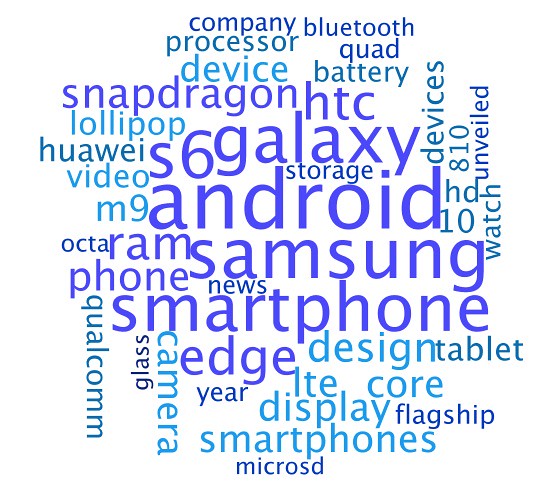
    Whist there were great leaps forward being made in product design for wearables, online discussions still centred around smartphone devices, with early adopters being focused on device core hardware – at the expense of features that provide a differentiated consumer experience.
    pr

    It was immediately apparent from running analytics on online chatter was the prominence in social as a vehicle for challenger brands to get their message across, and the huge interest in MWC launches from the US.
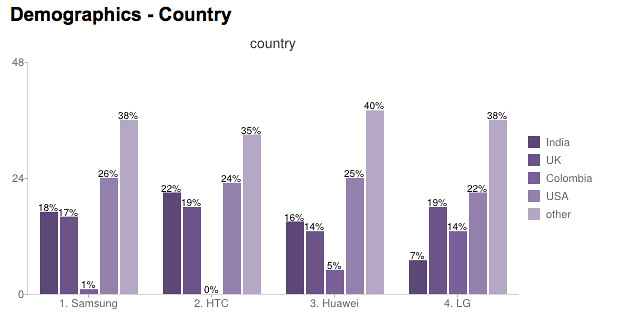
    country by country
    Would a device launched at the US CTIA event have a similar global consumer impact?

    There is a wider question which remains to be answered regarding the efficacy of a ‘going early’ media launch strategy at MWC; particularly when one’s competitors have all adopted a similar strategy.

    It is hard to judge the answer to this question purely on the response to the Microsoft and Sony events earlier this morning. It would be unfair to compare their relatively lacklustre handset line-up in comparison to the day before. Whilst HTC, Huawei, LG and Samsung focused primarily focused on premium devices, Microsoft and Sony featured at least some mid-market handsets.

    More information
    LG launches LG Watch Urbane at MWC, but disappoints with lack of G4 flagship | The Telegraph
    MWC 2015: Huawei MediaPad X2, Watch, Talkband N1 and N2 | GSM Arena
    Live from Samsung’s Galaxy Unpacked event at MWC! | Engadget
    MWC 2015: HTC One M9, Grip hands-on | GSM Arena
    Pebble Time: Hands-on with the most successful Kickstarter project ever | Pocket Lint

    All the day  derived in the charts using Sysomos MAP.
  • Rooster sauce & things that made my day this week

    David Tran, the founder and CEO of Huy Fong Foods, on how Rooster sauce came about

    David Tran is a Vietnamese man of Chinese ethnic origin. Sriracha sauce actually has its origins in Thai cooking where is also called man phrik. The Vietnamese use it as a condiment for pho and fried Noodles. Huy Fong Foods is named after the Taiwanese owned freighter that got Mr Tran out of Vietnam in 1979. It is called Rooster sauce because of the rooster on the bottle. The rooster is on the bottle because Mr Tran was born in the year of the rooster. 

    Venture capital firm Andreessen Horowitz | 16 Things looks at the trends shaping the companies that they invest in.

    Rendering fractals using CSS3 and HTML (without the help of JavaScript) | Snowflake – they had me at fractal.

    DLD15 – The Four Horsemen: Amazon/Apple/Facebook & Google–Who Wins/Loses (Scott Galloway) – his delivery is almost like freestyle rap. Galloway highlights real concerns about the business models of Amazon, Facebook and Google; which are destroying wider economic value.

    Amazon has decimated whole industry sectors: retail and retail real estate. It has tried to disrupt publishing and media production. Galloway’s book The Four is less engaging than his keynote delivery. More on The Four here

    To support the launch of the film Doraemon: Stand By Me in Hong Kong, a mobile merchandise shop was created that paid homage to the robot cat.

    Hong Kong like other Asian markets (Japan, Korea, Thailand) is a huge market for cute character franchise merchandise.

  • Desktop and mobile messaging

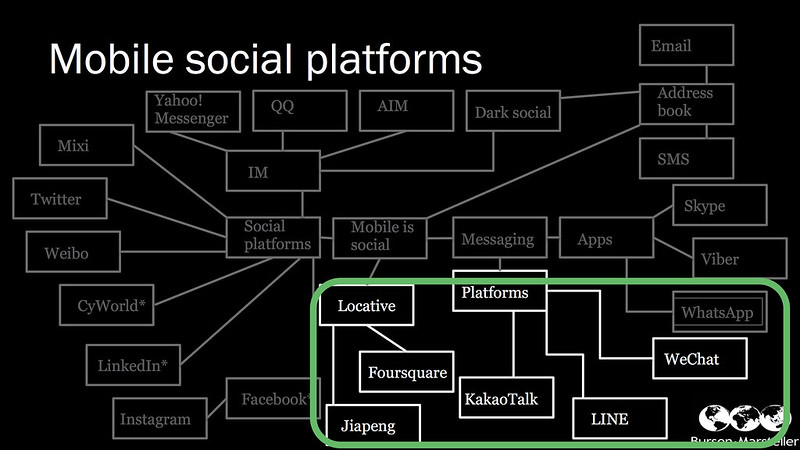
    Whatsapp gets into desktop and mobile messaging

    Over the past few weeks WhatsApp has rolled out a web client to complement its previously mobile-only experience. From a technical point-of-view this was WhatsApp playing catch-up with its rivals.
    Mobile social network ecosystems
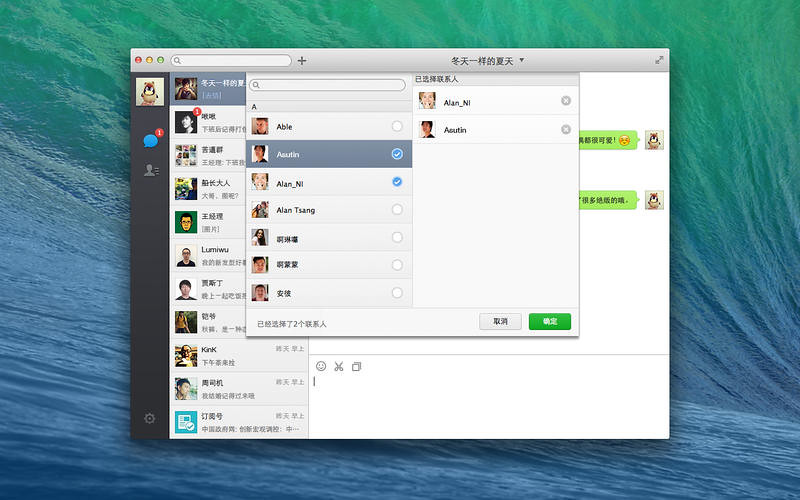
    Skype has long been a multi-platform desktop and mobile messaging system that made the leap to phones over eight years ago. LINE has had both desktop and mobile messaging applications for a while. WeChat had had a web interface for at least two years in addition to its mobile client and dedicated desktop clients for both OS X and Windows.
    wechat app
    Those whom I spoke to who had used the web interface talked of WhatsApp’s ‘unique’ way of handing off from mobile to the web through the use of QRcodes. And they were surprised when I showed them WeChat’s implementation that looked eerily similar and has been around for much longer.

    There is a certain paradox that the most successful OTT messaging platforms now have a presence on the desktop, yet instant messaging clients like Yahoo!, MSN, AOL and ICQ weren’t able to successfully move from desktop to mobile.

    So why desktop and why now?

    Is it about WhatsApp putting pressure on Apple to change its model to suit WhatsApp?

    The Messages app in iOS is secure, supports voice, photos and text messages. It offers much of the functionality of WhatsApp. WhatsApp complains that it can’t repeatedly charge on a yearly basis for its service on iOS, yet iOS has supported in-app payments for a while. I suspect WhatsApp wants to get a free ride or its beef with iOS is from some unstated reason.  In summary, whilst WhatsApp’s web service is only available to Android users, I don’t think that this is really about Apple.

    It is threatened by other apps?

    WhatsApp has a big presence across the world (outside of China) in the OTT messaging space with over 700 million active users. However other services are managing to increase their footprint.

    I took a straw poll of some friends with regards their messaging usage. Did they just leave one platform for another in the same way that Google won out in search or was there something else going on?

    Most people that I spoke to weren’t generally deleting  the more popular messaging apps and moving from one to the other generally. (They had tried and sometimes deleted the likes of Telegram or Wickr for instance). But they did have different groups of contacts in different places. So WhatsApp probably isn’t losing its spot on established users phones at all, and having a rival app on a phone isn’t likely to make WhatsApp lose out from being downloaded on a new phone.

    By all accounts, different messaging platforms are about different groups of friends and contexts. WhatsApp tended to connect with family more often than other messaging services.

    Is is about usage time?

    I suspect that this could be the case. It was interesting to hear a couple of friends talk about LINE. They commented that LINE had a range of stickers, but the main reason is that you can use LINE at work without having to use your phone and it be obvious with your boss. I think that this is where WhatsApp could be feeling a gap and decided to fill it.
    what is mobile
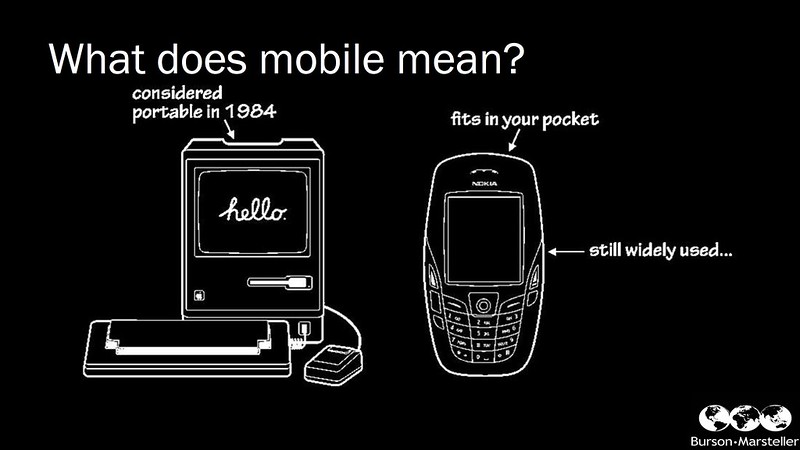
    It also begs a second question. When you have laptops that will run for 8 to 10 hours on a battery and slip in a bag like a tablet, is desktop yet another mobile device? The kind of work usage mentioned would also fit in nicely in a coffee shop or in front of the TV with the family; a subtle back channel to the outside world.

    My understanding was that WhatsApp was focused on getting people in the developing world on board, they provided a lean bandwidth frugal messaging platform that was leaner than Facebook. Instead, the web interface is more aimed at ‘first world problems’. More on WhatsApp here.

    More information

    Four Of The Top Six Social Networks Are Actually Chat Apps | Marketingland
    WhatsApp hits 700 million monthly active users — GigaOM
    Messaging app Kik passes 200M users | VentureBeat
    From Messaging Apps To Ecosystems : Line, WeChat, Viber & Others | LinkedIn
    Why Apps for Messaging Are Trending – NYTimes.com
    Every app is a communications app | Layer
    WeChat to overtake WhatsApp as top messaging app in India: GWI | Digital Market Asia
    WeChat Dominates APAC Mobile Messaging in Q3 2014
    Tencent Drafts Chinese Expats for U.S. Duel With WhatsApp – Bloomberg

  • Shenzhen ecosystem

    It is hard to believe that the Shenzhen ecosystem was built over just a few decades. Just over 30 years ago China moved from a period of cultural isolation to gradually opening up to the commercial world beyond its borders. The place to naturally start this was in Guangdong province close to the then British colony of Hong Kong. A small fishing village grew to become the workshop of the world. The growth of Shenzhen was driven by investment from multi-nationals and overseas Chinese. One of the earliest industrial areas was called Overseas Chinese Town or OCT. OCT has changed from manufacturing to retail and offices for the creative industries in the former factory buildings.

    Hong Kong had built up capability and expertise in light manufacturing and clothing from the 1950s through the 1970s. It is still important for supply chain intermediaries. This was the ‘golden age’ of Hong Kong. This is how many of the Hong Kong oligarchs made their first fortunes; which they then invested overseas, in China and into the Hong Kong real estate market.

    Globalisation had started after the second world war. But the opening up of China threw it into overdrive. Hong Kong industrials moved manufacturing plants for clothing, shoes, toys, plastic goods and electrical appliances to China.

    They were joined by Taiwanese electronics manufacturers and then multinationals from Europe, America and Japan. Hong Kong clothing manufacturers provided China supply chain expertise to western retailers like Walmart.

    The Shenzhen ecosystem was built on manual production. The deft fingers of Chinese women workers allowed a lot more precision than Japanese pick-and-place machines. Which meant a lot more flexibility in manufacturing using the Shenzhen factories. You wouldn’t have an iPhone if you used pick-and-place robots on the production line.

    Electronics manufacturing

    At first, these companies were used to fatten the wallets of customers who took on the marketing and distribution of electronics in the West. The dirty secret about many PC and laptop designs was they were standard underneath. Then this cost saving was passed on to the customer as people like Dell went for close to lowest price operator based on a direct mail / online direct ordering and cut out the channel.

    Finally that wasn’t enough, and most of the laptop and PC resellers make no money. Instead the main people to profit from these sales were Microsoft which licensed it’s Windows operating system and Intel which provided the majority of compatible micro-processors capable of running Windows-compatiable applications. In the PC industry there is usually just two or three profitable manufacturers and one of them is Apple. Historically it was Dell, then Hewlett-Packard and now it is likely to have be Lenovo.

    Shrinking PC-esque computing power into the palm of one’s hand was inevitable with the rise of flash storage and Moore’s Law facilitating power-efficient processors. The challenge is battery technology, packaging and industrial design.  Apple pushed the envelope with suppliers. Hon Hai and other manufacturers installed hundreds of CNC machines to fabricate thousands of metal phone chassis. These radical changes in manufacturing capability were opened up to lower tier manufacturers raising the standard of fit and finish immeasurably over a few years.

    Now Xiaomi and Lenovo product handsets that have better build quality than many Samsung and HTC handsets. The performance is good enough (again thanks to Moore’s Law) and the handsets run the same applications. Sony, HTC and Samsung handsets look as marooned as Sony’s Vaio PC range in the Windows eco-system.

    Shenzhen’s ecosystem has been a great leveller of manufacturing and industrial design capabilities with Apple at the leading edge of what’s possible from an industrial design and materials technology.

    More information
    Shenzhen Government Online – this loads slow like they are phoning the pages in from 2002, but is informative
    The smartphone value system – An earlier piece I wrote about the challenges of the Android eco-system

  • Beheadings + more things

    The Laborers Who Keep Dick Pics and Beheadings Out of Your Facebook Feed | WIRED – moderation might make up half the staffing numbers of social media sites. The materials is not only traumatic for the moderation staff, but often criminal evidence. Deleting beheadings might be disposing of war crimes evidence. As repulsive as beheadings are, they could be responsible for ensuring criminals get the justice that they deserve.

    China’s Assault on Corruption Enters the C-Suite | WSJ – could also be encouraging management to move the business out of the state sector

    HP Eyes Chinese Partner For Router Division | Young’s China Business – not convinced about the upside for Huawei given that it has already built an enterprise business

    Programmatic buying no solution without data breakthrough | Campaign Asia – data sharing a key issue

    China Mobile’s ARPU Drops While Net Profit Sinks 9.7% – voice calls and SMS down presumably due to OTT messaging services

    Daring Fireball: Retailers Are Disabling NFC to Block Apple Pay – not convinced but it is an interesting move, they think that mobile wallets give them a chance to disintermediate merchant services (bank debit card services, credit card services, charge cards)

    LG unveils Nuclun, its very own smartphone chip | The Inquirer – interesting move by LG; a stratagem to cut costs and differentiate in a commoditised Android handset marketplace. Expect the chipset to move into other consumer electronics

    Want to dance? Cabinet approves revised law easing regulations on dance clubs | Asahi Shimbun – Japan eases laws that was killing its dance music scene, probably about the Olympics in 2020. The LDP will be kill joys on nightlife in the future again

    Facebook and Yahoo Find a New Way to Save the Web’s Lost Email Addresses | WIRED – Aol should be crying out be part of this as well surely?

    The Asian Luxury Market Is Stumbling – Business Insider – Thailand and Hong Kong apparently

    footnoted* — What’s $8m to Google? – interesting article about Nikesh Arora. Is this similar to his departure from T-Mobile?

    Procter & Gamble Sets Duracell on New, Independent Course – NYTimes.com – interesting move, how will it affect Duracell distribution?

    High-tech jewellery to help you unplug | Tech blog – interesting and smart (from a design perspective) lack of ambition for the devices, context is king

    William Gibson: The Future Will View Us “As a Joke” | Mother Jones – any interview with William Gibson is a good thing

    Peak Google | stratechery by Ben Thompson – interesting article

    Apple Strengthens Pull of Its Orbit With Each Device – NYTimes.com – interesting analysis – Google is going on a similar trajectory and Microsoft has already been there for a while (paywall)

    Luxury goods: The end of ostentation | Campaign Asia – APAC markets less interested in flash luxury (paywall)

    Tod’s ignites ecommerce sales with online only handbag promotion | Luxury Daily – limited edition bag rather than discounts

    Material Design Icons | Prosthetic Knowledge – Google have open sourced a pile of icons

    False and misleading? Advertising on social media in China and Hong Kong | Freshfields – great summary of the legal position (PDF)

    Quick Reply – PressRush – interesting idea for the media

    94% of Chinese shoppers research on mobile while in-store. | Resonance China – comparison numbers with other countries in Europe

    China collecting Apple iCloud data; attack coincides with launch of new iPhone | GreatFire.org – probably implemented to deal with the increased device security that the FBI is wringing their hands about