Category: telecoms | 電信 | 통신 | テレコム

I thought about telecoms as a way to talk about communications networks that were not wireless. These networks could be traditional POTS (plain old telecoms systems), packet switched networks including ethernet or some hybrid of the two.

I started my agency career working during the dot com era. What was happening in the broader technology space was one wave of technology cresting, while another one rose.

In the cresting space was:

Enterprise software (supply chain software, financial systems, database software, middleware software tools).

NIC cards (network interface cards, a way of getting your computer to be able to communicate with an ethernet network. It was a little circuit board that connected on to the mother board and allowed.

Mainframe and  mini-computers. It was around about this time that company owned data centres peaked.

In the rising wave was:

Servers –

  1. Unix servers and workstation grade computers were what hosted the first generation of websites. Names that did particularly well were Sun Microsystems (now part of Oracle) and Silicon Graphics Inc. (SGI). Sun Microsystems ran everything from investment banking models to telecoms billing systems. It’s hardware and software made great web servers. SGI was facing a crisis in its core market of 3D modelling due to Moore’s Law, but its operating systems was still very powerful. They managed to get some work as servers because people had them around in creative agencies.
  2. You also had a new range of servers on the low end. A mix of new suppliers like Cobalt Networks and VA Linux, together with existing companies like Dell who were offering Linux and Windows web servers that were really repackaged local area network file servers.

Enterprise information management software. The web posted its own problems for content management and publishing and companies like Captiva and Open Text rushed in to plug the gap.

Traditional vendors like HP and IBM rushed into provide a mix of software and hardware based solutions including e-business by IBM, which morphed into ‘Smarter Planet’

Telecoms companies – two things happened.

  1. Phone services were deregulated opening up former state owned incumbents to competition in fixed line and mobile telephony
  2. Data services really started to take off. Multinational companies like Shell looked to have a global data network for routing their calls over, so in many respects they looked like their own telecoms company. Then those data networks started to become of interest to the nascent internet providers as well. Mobile data started to gain traction around about the time of the dot com bust

So it made sense that I started to think about telecoms in a wide but wired sense, as it even impacts wireless as a backhaul infrastructure. Whether this is wi-fi into your home router or a 5G wireless network connecting to a fibre optic core network.

  • The future is divergence

    The future of divergence has been bubbling along for a while. I was chatting to my friend Ian over lunch putting the technological world to right over the hour or so that we had. That coalesced some of the ideas that I have been thinking about for a while and posted about in fragments on this blog at different times and has coalesced in this post: the future is divergence.

    So what about the future is divergence?

    I’d like to think of it as an executive summary for the attention deficit disorder generation who have been brought up on MTV, online instant gratification and the shallow intellectual depths of strategy by PowerPoint presentation.  I guess if I was going for accuracy rather than a snappy headline it would be something like: the future of consumer electronics is likely to be context-dependent divergence rather than the convergence strategies that they have pursued: mostly unsuccessfully.

    Why?

    First of all let’s think about convergence the way it is manifested currently. For the past decade and a half we’ve seen the internet pervade more aspects of everyday life. It is handy to have the same network protocols being used connecting everything together, its what happens when they are connected is what matters.

    If we look at different devices we can see a an evolution of products until one fires the imagination and things kick off. For instance mobile email went through a number of iterations before coming a ubiquitous consumer product. Mobile email started in the mid-1980s with the Ericsson Mobitex network which allowed for two-way paging across a reliable narrowband digital data network. it is still used for breakdown services in the UK and by emergency services in North America. Research In Motion (RIM) made its first BlackBerry handset for the Mobitex network in the late-1990s

    It took another two decades for mobile email to become ubiquitous. I have been using mobile email since 2002, firstly on a Nokia 6600 and currently on an  Apple iPhone. But what has happened is that I have two mobile devices. My phone which is a Samsung feature phone which does my calls and has a week long battery life and my iPhone which handles,  text stuff like email, my calendar and address book. My usage hasn’t converged into one device as the iPhone’s battery life and call quality isn’t good enough.

    Mobile email hasn’t made me give up my desktop email either, I prefer to do long form emails on my laptop at home simply because the writing experience on the iPhone is inferior. Instead of convergence this is an exhibit of divergent devices based on user context.

    I suspect that the phone as a phone factor maybe around for a good while yet; particularly when you look at the utility that people find with Apple’s Siri service or the Vertu concierge service; both of which are often simpler to use than an application or firing up a web browser.

    This divergence of context is one of the reasons why I am skeptical about so-called smart televisions. Our homes are filled with screens that delivers content. The mobile phone is most often used in the home within reach of a wired telephone. Tablets are often used to access the internet whilst watching television. There is a reason why this works currently. I can pick up or put down the internet and have an immersive experience on the television screen; the consumer electronics manufacturers hope that I will soon enjoy this not just in high definition but with 4K (the same standard as many digital cinema set-ups).So why would I want this screen with modules telling me about the latest happenings on Facebook or Twitter a la Pop-up Video? It makes absolutely no sense, yet this is the vision that consumer electronics companies and Google want you to buy into.

    Granted in certain circumstances information presentation of this type can be useful; in particular news television a la CNBC, Bloomberg TV and CNN; but most TVs are more likely to be sold on entertainment and sports.

    The thing was consumer electronics manufacturers like Sony had divergence and frittered it away. The Walkman, Discman, Trinitron televisions, Dream Machine alarm clocks, the ES range of hi-fi separates – all were divergent devices based on user context. Digital didn’t change that, it changed the connectedness of devices and convenience of receiving media. Strategists at the major Japanese electronics manufacturers got blinded by the technology rather than how consumers use products – even Steve Jobs got it wrong on occasion. More on Sony here.
  • Consumer interest in iOS etc.

    If you’re like me you read far more journalist analysis of the wireless phone market than is good for you. I thought that it would be instructive to have a look at what consumers are looking for instead and look for any patterns. After sales availability and visibility consumer interest is probably the biggest determinator of success. My weapon of choice was Google Insights for Search. My research was based on a few assumptions about consumer interest in the wireless space and some limitations in the tool that I was using:

    • Consumers know what type of smartphone that they want
    • Consumers decisions aren’t carrier loyal
    • Consumers used Roman script to search for the brand
    • Search is a good proxy for consumer interest – it hasn’t been disrupted by Facebook in this regard yet despite what others may tell you
    • China despite being the world’s largest market isn’t going to be providing meaningful data because Google Insights for Search doesn’t cover that market
    • The Russia sample is indicative of overall consumer sentiment in Russia (Yandex is a big search player in Russia)

    Consumer Interest in platforms
    Some of the biggest interest in handset brands is in the developing world. In many respects this is their PC revolution. In developed Asian markets like Hong Kong and Singapore there is a much higher interest than EU countries – partly because of on-the-go lifestyles and partly because of the economic cataclysm that the western world is facing. The iPhone still attracts the most interest, but what is interesting is the acceleration that Android seems to have in terms of increasing interest. Microsoft’s efforts, whilst lauded by critics haven’t yet turned into consumer interest.  Research In Motion’s Blackberry platform seems to be down but not out yet in the consumer stakes.

    Nokia

    I took a snapshot of consumer interest in Nokia over the past three months to try and see what effect the global launch campaign for Nokia’s Windows phones are doing to consumer interest in the brand.

    I deliberately didn’t compare them to the iPhone because Nokia themselves acknowledge that they are competing against Android handset makers like HTC and Samsung. Nokia launched the Lumia phones with their biggest marketing campaign ever and had a lot of column inches written about the brand alongside a gamut of marketing commnications tactics from experiential events and advertising to point of purchase.


    Whilst Nokia’s new range of Lumia phones have had a substantial marketing budget put in place, but it doesn’t seem to have significantly affected search interest: it’s not quite living up the Amazing Everyday billing yet. This is also the case for Windows Phone with interest remaining consistently low in comparison to the Nokia brand. I think that the stubborn consumer disinterest in Windows Phone is a big challenge.

    More wireless related content can be found here.

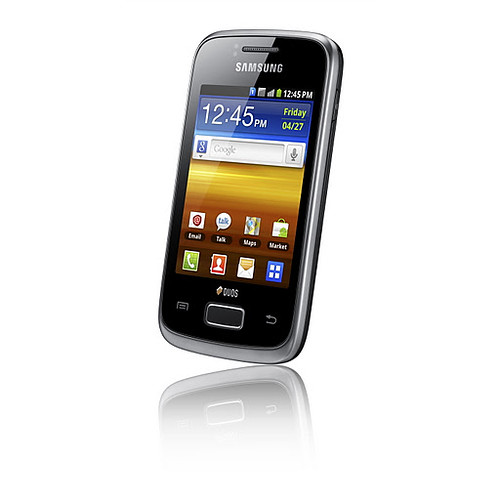
  • I like: Samsung Galaxy Y DUOS

    I currently have two mobile phones, an iPhone 3GS for all that stuff that smart phones do and texting. My second phone is a Samsung B5702 DUOS phone that does my voice calls. My Samsung B5702 DUOS is a predecessor of the new Sony Galaxy Y DUOS. Its a great feature phone with a week long battery life and a space for two SIMs.
    Samsung GALAXY Y DUOS Product Image (4)
    With the Samsung Galaxy Y DUOS, it looks like I’ve been finally given a reason to upgrade. On the specifications the phone is a basic Android smartphone. And that’s fine, I wouldn’t be interested in any of its Android features. Where the Samsung Galaxy Y DUOS excels is that unlike the vast majority of dual SIM feature phones and smartphones available it supports UMTS networks.  This provides you with yet more options when you are roaming abroad on networks.

    It should be available early next year, but you will need to trawl Google and Amazon (I’d advise Amazon Germany) to find it as your mobile phone carriers won’t like it. Mobile carriers tend not to like dual SIM phones. In domestic markets they would allow you to change your call routine based on the call plans of your two times, while still receiving calls.

    So you might do calls out on one SIM to take advantage of its free evening calls, will using a cheaper SIM for daytime calls. This means that the carrier doesn’t get to maximise the revenue from you as a customer.

    Consequently, distribution of these devices in western mobile markets will be limited. However I imagine them being very popular in the likes of Hong Kong where taxi-drivers usually have a bank of phones on their dashboard to handle customer orders.

    More information on Samsung’s press room – the press release doesn’t give an exhaustive breakdown of the technical specifications and too much meaningless marketing platitudes.

    You can find more device related opinions and reviews here. And more wireless related content here.

  • iPhone pragmatism

    Despite working as a digital strategist and creative thinker (whatever the hell that means) agencyside, I have a very pragmatic relationship with technology both past and present from the iPhone to my original Mac. I have had Macs since 1989, primarily because they were the closest thing I found to a computer that just worked.

    I had analogue mobile phones from my time DJing and having friends who worked in cell phone service centres. My first phone that I had to buy was digital, the mobile phone was a Motorola; mainly because One2One (now Everything Everywhere) sold a package where you paid just over 100 pounds and had a phone for 12 months, with a small amount of inbuilt local call time. At the time I used it as a more reliable version of my pager. Even back then SMS proved to be more reliable than the pager that I had used previously

    I went from Motorola to Ericsson, mostly because Ericsson handsets were really well made and then moved to Nokia when Ericsson merged its handset business with Sony. I moved from Nokia to the Apple iPhone and a Samsung feature phone for two reasons:

    • Apple had an address book that worked. My address book didn’t brick the phone. I haven’t had that bad problems with data corruption and it syncs with my computer. It has all the productivity applications I enjoyed on my Nokia phones like MetrO and QuickOffice. The iPhone also has major flaws. For instance, the browser isn’t great, but I put up with it because I can sync my bookmarks for it across from the Safari browser on my Mac. The biggest think that I miss was the Nokia keyboard and laptop layout on the Nokia E90 Communicator
    • My Samsung phone could take two SIMs which is a boon for traveling. This is something that most phone manufacturers don’t provide for markets outside the developing world

    My iPhone was also expensive, like the price of a cheap laptop kind of expensive, which means that I look at it in a different way to previous smartphones. Instead of getting rid of my phone every 18 months, I am thinking closer to three years, just like my laptop.  An additional factor  is that whilst the first iPhones were a radical leap forward,  the iPhone 4 and 4S don’t have sufficient must-have value for me to move on until my current phone dies or the next iteration of the iPhone comes out.

    Now I wouldn’t say that I am an everyman for the iPhone using population; but this has to have some effect on sales. For every iPad that Apple sells there maybe at least a few iPhone upgrades put on hold as an opportunity cost.

  • Palm | HP portable devices

    I decided to jot down some thoughts on the demise of the Palm | HP portable devices business. I am not going to say whether it was the right or wrong thing to do mainly because other people have been doing that already.

    HP and the mobile device

    HP was arguably the original modern mobile computing device manufacturer, coming out with the HP-35 scientific calculator back in 1972. The company had a long history of being a pioneer in mobile computing; so the move away from mobile devices is actually putting an ending to a long line of devices.

    Compaq had a set of handheld computers in the mid-1990s called Aero. These ran DOS and Windows 3.1, being the predecessors of devices like the ASUS eeePC netbook.

    HP developed a number of PDA devices in the early and mid-1990s including the 95LX, 200LX, 100LX and the OmniGo 700LX which allowed a Nokia 2110 to piggyback on the PDA with a specially molded section on the back of the case.

    The Jornada series of devices was a range of Microsoft Windows-powered PDAs were launched in 1998 and had a number of achievements including the first Windows Pocket PC colour touchscreen device and a UK-only GSM smartphone. The Jornada brand was phased out following the merger with Compaq.

    The iPAQ succeeded Compaq’s Aero line in 2000 and the HP Jornada line after Compaq had been acquired. The last iteration of the iPAQ range was in 2010.

    The Palm range of devices were first launched in 1996, the operating system was tweaked and prodded over the next decade to power various different devices including the iconic Palm III, V and Treo range of smartphones. Ultimately it eventually came up with the webOS after repeatedly fumbling its future.

    This is a long and rich history of engineering innovation for which the Touchpad and Pre don’t stake up as worthy successors.

    Things I never got when the Palm acquisition was first announced

    I wrote up some bullet points of things that I didn’t fully understand when HP originally announced the Palm acquisition:

    • Is HP overpaying for the company? There isn’t that many people interested in Palm and analysts had set a target share price of zero. Is this price as much about emotion as assets?
    • Why is the Palm WebOS going to live up to HP’s faith in it?
    • Much was made of Palm’s cloud services technology in the webcast, but how many extra servers or services will it actually sell for HP?
    • SKUs. I was alarmed at the amount of proposed device variants HP was envisaging in the future on the call with possible support in differing form-factors for Microsoft Windows, Windows Phone, Android and WebOS in personal devices

    With the benefit of hindsight:

    • Unless HP manages to parlay Palm’s intellectual property assets into a patent war chest either through an auction or successful legal action, it is unlikely to make its money back on the Palm acquisition and its Palm | HP portable devices. There isn’t likely to be licensing revenues from other manufacturers that would make up Palm acquisition. Whilst, the current uncertainty around Android may make manufacturers open to looking at an alternative operating system; but why take on webOS when both Palm and HP couldn’t make it work properly? It’s not like both these brands didn’t have a good reputation and heritage in building mobile computing devices, also in order to license the operating system HP would have to maintain and continue to develop it. What would that road-map look like and why would HP continue to develop consumer-facing software given its renewed focus on the enterprise
    • I never did find out how webOS was going to live up to HP’s leap of faith in the operating system because it evidently didn’t pan out, hence HP withdrawing it’s Touchpad and Pre devices

    The value of the Touchpad and its implications for the webOS

    Many of the eulogies for the Touchpad and the Pre point out that webOS was good software held back by Palm | HP portable devices hardware chops. This was the same criticism leveled at the original Palm Pre; so it begs the question why didn’t new owner HP try and deal with the performance issues second time around? I suspect that the leadership of Palm knew that the original Pre sucked, which why it was kept out of journalist hands for so much of the launch period.

    Given the resources of a large company like HP, I would have thought that the former Palm engineering team and their new HP would not have wanted to continue making poor performing products; and instead would have looked to draw a line under everything with a superior device.

    Yet when you look at the price that the remaining Touchpad devices are flying off the shelves in the US: 99 USD, this tells you a lot about the perceived value of the product.

    The 99 USD price point is some 220 USD below the tear-down price of the HP Touchpad. The tear-down price is a conservative estimate of the total cost of a Touchpad to HP. Now you can allow for the fact that the product has some discount priced in because HP was withdrawing from the market, but even Nokia isn’t taking that kind of bath with its Symbian handsets.

    So a fair amount of this discount must be due to the device experience provided by the webOS software. The risk versus rewards offered to users by this operating system far outweigh the intrinsic value of the hardware on which it runs. I would have to question why anyone would want to license webOS? You can find more more related content here.

    More Links

    HP | Palm deal thoughts

    HP: What Léo Apotheker’s Decisions Mean | Monday Note

    HP gave up on cool webOS devices but promises webOS PCs and printers | VentureBeat

    HP TouchPad Carries $318 Bill of Materials – Teardowns at iSuppli