Category: wireless | 無線 |무선 네트워크 | 無線

This blog came out of the crater of the dot com bust and wireless growth. Wi-Fi was transforming the way we used the internet at home. I used to have my Mac next to my router on top of a cupboard that contained the house fuse panel and the telephone line. Many people had an internet room and used a desktop computer like a Mac Mini or an all-in-one computer like an iMac. Often this would be in the ‘den’ or the ‘man cave’. Going on the internet to email, send instant messages or surf the internet was something you did with intent.

Wi-Fi arrived alongside broadband connections and the dot com boom. Wi-Fi capable computers came in at a relatively low price point with the first Apple iBook. I had the second generation design at the end of 2001 and using the internet changed. Free Wi-Fi became a way to attract people to use a coffee shop, as a freelancer it affected where I did meetings and how I worked.

I was travelling more for work at the time. While I preferred the reliability of an ethernet connection, Wi-Fi would meet my needs just as well. UMTS or 3G wireless data plans were still relatively expensive and slow. I would eventually send low resolution pictures to Flickr and even write a blog post or two. But most of the time I used it to clear my email box, or use Google Maps if I was desperate.

4G wireless services, started to make mobile data a bit more useful, even if the telephony wasn’t great


  • The Amazon Dash button post

    At the beginning of this month Amazon launched an addition to their Dash ordering hardware with the Amazon Dash button. There was a lot of incredulity amongst the media heightened by the unfortunate timing which overlapped with April’s Fool Day.

    Why the incredulity?

    I would break the cynicism down into two broad buckets:

    • The Amazon Dash button has a very singular usage / use case, narrower even the Yo! app which was a bit of a tech fad last year. Critics are at best uncertain that consumers would use them? I generally buy toilet rolls every 4-6 months, do I really need a button for that?
    • The Amazon Dash button implies that the hardware required is ridiculously cheap. How many boxes of washing powder, packets of Mac & Cheese or toilet rolls would be required for a button to break even?
    Business perspective

    Rather than ripping into this into too much depth I thought I would share Benedict Evans’ interesting hypothesis about the Amazon Dash button:

    Amazon is trying to eliminate both vendor and brand decisions, and turning itself into a utility company – get your house connected to power, water, gas and Amazon. And choosing which commodity product you need is just another piece of friction to be removed by Amazon’s kaizen

    There are some interesting directions that come out of this view point. Let’s break Benedict’s analysis down chunk-by-chunk:

    • Eliminating vendor decisions: there are two prongs to this. Firstly, it would reduce the basket size for supermarkets and also reduce impulse purchases. Let’s think about the Walmart ‘beer and diapers’ retail urban legend for a moment – if you weren’t shopping for the diapers, you aren’t likely to have picked up the beer next to it as you would have had no reason to go near those shelves. By implication it is also an attack on some of the categories carried in convenience stores. Given that the button is about ‘just-in-time’ shopping it implies that the users are not likely to have rooms in their lives for big box retailers or CostCo. The buttons are likely to aimed at urban dwellers rather than the suburbs were larger homes and larger vehicles to do the big box store shop are the norm – Sam’s Warehouse is safer than Walmart in this scenario
    • Eliminate brand decisions: since sales are diverted from supermarkets this also affects their private label sales, especially where they are acquired by accident as lookalikes stacked next to well-known brands. Challenger brands find that switching becomes much harder as they can’t intercept the customer at the point-of-intent through shopper marketing and the opportunity cost for the consumer gets raised due to the comparative nature of the friction in purchase.  It also begs a question about how much it affects the share price of WPP and other marketing combines who have spent big on shopper marketing acquisitions over the past few years. Do buttons offer a net gain or loss of value to them? I do know that the button puts Amazon in a much more powerful position versus vendors in terms of discount pricing to retailer and warehousing. The key to understand the power  that Amazon would bring is ‘choosing which commodity product you need…’. The very idea of a product being boiled down to a commodity buy would scare the living daylights of the average brand manager in an FMCG mega-corp
    • Turning itself into a utility: for Amazon this is about locking the consumer in via Prime to the consumer life. At the present time, logistics costs have been an increasing proportion of the cost of sales for Amazon, there must be a hope that the scale of grocery shopping will bring down the price of Prime and drive profits higher?

    There is no reason why the likes of Tesco, Ocado or Iceland couldn’t have done this. The wider Dash technology would make it easier for consumers to do grocery shopping and reduce the friction of online purchases. Instead they seem to have wanted to reduce cashier numbers inshore and focused on self-service tills. Time will tell if they made the right technological choice.

    What about the user?

    This is designed to make the consumers life easier and I can see how it makes purchase of otherwise annoying to shop for items frictionless, but it only works within reason. You can’t have a wall of buttons on the front door of your fridge freezer and just when do you press the button in the bathroom to order up more razor blades or toilet roll? What happens during the run up to Christmas when Amazon has had sub-optimal performance with regards deliveries on occasion? What is the buying frequency required to make the button habit forming, used without thinking about it, without consideration. When does the opportunity cost for the consumer tip in their favour regarding button usage?

    What I don’t have yet is a clear understanding on depth and breadth of the customer problem being solved by the Dash button.

    Product design

    The original Dash device was interesting because it represented a rejection of the broader theme of convergence where functionality is subsumed from dedicated hardware into a software layer running on a computer, via a web browser, tablet or smartphone. Instead Dash is a shopping appliance and wouldn’t look out of place in a cupboard full of Braun kit.

    The Dash button represents a further evolution of specialist hardware, a brand-specific, tactile hardware interface. It mirrors software like IFTTT’s ‘Do’ application, the Yo! messenger app and the Dimple smartphone button project.

    For non-food products like toilet rolls that come in a plastic bale that is quickly discarded, there may not be a barcode to scan in on your Dash device. Instead you would have to ask for a new pack of Charmin’ or more Mach3 razors. Processing each voice message is expensive, which makes the opportunity cost around creating dedicated buttons for certain classes of product much more attractive. Amazon first and foremost is a data-driven company, they will know which product categories that they want to have buttons for. However, what makes on an Excel spreadsheet doesn’t always make sense to the consumer…

    More information

    Amazon Dash button
    Benedict Evans newsletter edition 106
    Investing in smart logistics | Fidelity Worldwide Investments
    Amazon, in Threat to UPS, Tries Its Own Deliveries | WSJ (paywall)
    Supply Chain News: A 360-Degree View of E-Fulfillment Part 1 | Supply Chain Digest
    Amazon joins numerous startups in building delivery networks to disrupt Fedex and UPS. | DataFox
    The Amazon Dash post
    Dimple smartphone button project | Indiegogo
    SpinVox: the shocking allegations in full | The Kernel
  • Smartphone crown in China + more

    Apple takes smartphone crown in China – CNET – the smartphone crown is based on over a quarter of urban smartphones sold; Apple’s smartphone crown profit share rather than market share approach. More related content here.

    A New Wave of Chinese Smartphones Set to Emerge in 2015 – TechNode – the key thing here is likely to be relevant patents which many of these companies currently don’t have

    Billionaire Fridman targets US and Europe in $16bn telecoms spree – FT.com – board will include Lastminute.com co-founder Brent Hoberman and Irish telecoms entrepreneur Denis O’Brien, has been brought together to aid acquisitions in the technology sector to augment an already substantial portfolio of telecoms businesses. It will also include Osama Bedier, a former Google payments executive, former Skype executive Russ Shaw and Sir Julian Horn-Smith, one of the founding management team at Vodafone (paywall) – presumably a shedload of leverage as well since $16Bn won’t go that far

    Cyber Trends: 5 Subcultures on the Internet | Highsnobiety – interesting how the internet is melding and spawning tribes

    Panasonic to Release Spherical Fan/circulator – Nikkei Technology Online – gives Dyson a run for his money with this design. I love the space age feel of it

    From Socks To Sex Toys: Inside America’s Subscription-Box Obsession | FastCompany – I think that there is something to be said about careful curation ridding one from the tyranny of choice and giving the approximation of the great record store clerk or the guy at the comic shop – if they are done well. But I am also reminded mostly by these services of book and record clubs of yore

    How To Make A Secret Phone Call | Fast Company – interesting art project which illustrates the complexity of modern privacy

    Windows RT: Mission Accomplished | Fast Company – leverage on Intel

    Casio App Enables Word Searches on Recordings – WSJ – if this works as promised it is amazingly cool and the technology could revolutionise web search

  • RSS dead nonsense + more

    RSS dead nonsense

    Is RSS Dead? A Look At The Numbers | MakeUseOf – interesting stats on RSS – a very-much alive format. RSS dead is nonsense, I use it everyday. It is invisible plumbing. Reports of RSS dead is due to the demise of Google Reader. I can’t recommend RSS reader Newsblur enough. More related content here

    Business

    Adidas Group Forecasts 15 Percent Annual EPS Growth Through 2020 | Team Business – interesting definition of open source

    China

    China Focus: Top political advisor highlights CPC leadership, “Four Comprehensives” | Xinhua – comprehensively building a moderately prosperous society, deepening reform, advancing the rule of law and strictly governing the Party

    Culture

    ‘We Came to Sweat’ Tells the Story of New York City’s Oldest Black-Owned Gay Club | VICE – interesting artefact of club culture

    Economics

    Chinas slowdown has suddenly become a “fiscal shock” | Quartz – interesting economic data, the property price change doesn’t surprise me, Chinas slowdown is likely to be temporary

    FMCG

    Kraft and Heinz Merger a Cost Cutting Story | Euromonitor International – cost cutting could also be from a marketing perspective

    Innovation

    Venture investor Bill Gurley predicts startup failure – Fortune – we may not be in a tech bubble, the venture capitalist said, but we’re in a risk bubble

    Luxury

    “Dressing down” is only a status symbol for the elite – Quartz – flagged up by our Becky

    Online

    Facebook Unveils Immersive 360-Degree Video for News Feeds | WIRED – interesting moves to come up with immersive (non game) content

    Philippines

    Homegrown smartphone brand beats Samsung in the Philippines | Techinasia – part of a wider story about how Samsung is getting rolled back out of high growth markets in smartphones

    Security

    Ex-NSA director: China has hacked ‘every major corporation’ in U.S. – CNN Money – strident allegations, I wouldn’t be surprised if the 5Is have also done the same thing

    Software

    Messaging Apps Offer Do-It-All Services in Bid for Higher Profits – NYTimes.com – interesting article on how WeChat and LINE are blazing the trail for western OTT messaging platforms in terms of innovation and business models (paywall)

    WeChat is how content goes viral in China | Resonance China – from a marketing perspective this confirms the decline in Weibo as a platform. It also provides challenges due to the lack of visibility for brands in comparison to Weibo

    What’s missing from this 13-year-old girl’s iPhone home screen? – Quartz – interesting but not necessarily scientific. It does make me wonder why color coding doesn’t happen in app groupings UI specs

    Technology

    No, Really, the PC Is Dying and It’s Not Coming Back | WIRED – dramatic title, 5 per cent drop in PC sales numbers. It ignores the role of the personal computer as a business workhorse and as a creative tool

  • Apple Spring Forward event

    Apple Spring Forward event

    I started this post a few hours after watching Tim Cook and company launch a number of product revisions  under the title of Apple Spring Forward. The most anticipated of which was the Apple Watch. I was in full Post Traumatic Apple Event Disorder mode. I have collated some of my thoughts about the event below and tried to order them into some sort of cogent narrative.
    Apple TV connections

    AppleTV

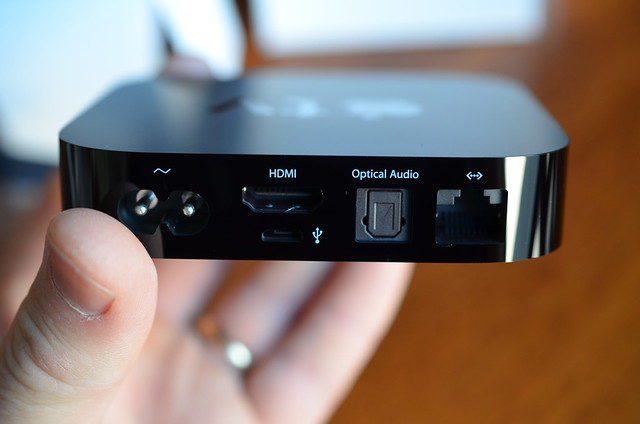
    The reduction of cost in Apple TV hardware at the Apple Spring Forward event was an interesting move. Apple has decided to go for market share rather than margin with the device and the incumbent HBO Now service might be just the catalyst to drive adoption. That Apple is leading with a HBO streaming service tends to imply that Apple has likely given up on trying to build its own ‘cable channel over IP’ offering. It does raise another interesting question about how other studios will want to handle their content in iTunes or via a an app similar to BBC iPlayer. Apple is passing on to consumers the cost benefits of using the older silicon design that powers the Apple TV. It also means that the Apple TV is the least powerful computer in Apple’s product range – including phones and tablets. The AppleTV is an egalitarian device rather a luxury brand product and a vote against widespread 4K adoption; unless the price discount is making room for a premium 4K capable device at a later date?

    Social Enterprise

    Apple’s moves at becoming a ‘social enterprise’ were interesting. For an organisation so polished at presenting itself to the outside world, the ResearchKit announcement and the case study with Christy Turlington felt awkward.  ResearchKit was delivered in a flat manner and didn’t explain how the product fitted in with Apple’s position on user privacy. Turlington’s appearance was like a particularly sycophantic Charlie Rose interview. There was a lot to talk about without having to ‘over-reach’ for celebrity endorsement.

    Apple needs to work harder picking the spokespeople to burnish its reputation, the nature of the projects and the deliver to be less cringeworthy. The very nature of the product and design story means that Apple already has a certain amount of implicit moral imperative and the company should be more in-tune with that.


    Apple Watch app
    Apple Watch

    I am deeply conflicted by a lot of the discussions around the Apple Watch, for a number reasons:

    I haven’t used an Apple Watch, but watching others use it in the demos made me think that it is fiddly and dare-I-say-it: hard to use. It could be un-Apple in nature

    Scott Galloway points to the Apple Watch and describes Apple as having transitioned to a luxury brand. The Edition watch maybe a luxury product, but not all of the Apple product range are luxurious – the AppleTV at a new price point of $69 implies ubiquity. This maybe a specific choice to get scale for the media content that other luxury Apple devices need to function. Just in the same way that quality newspapers couldn’t survive solely on sales to luxury consumers. What does this mean for those Apple customers who use the the devices as professional or creative tools?

    Much of the debate revolves around what luxury consumers want by people who can’t afford to buy the Edition version of the watch. Do the kind of luxury shoppers who wouldn’t care about a $13,000+ watch have a smartphone, or a smart person to organise their lives? An astute reader of Popbitch will soon realise that the celebrity accessory to have is a personal assistant, not a bejeweled Vertu. Secondly, not being available is a luxury as privacy and time are the preserve of the reach in an always-on world

    Many of the more positive predictions depend on the Chinese luxury market. The luxury market is changing in China. Luxury goods are used as tools in China; if you look successful, you are more likely to be successful in a culture that relies on high-touch personal relationships to facilitate business. However, consumers are becoming more sophisticated and moving away from at least some of the gaudier products. The Middle East may be a more opportune market for Apple.

    A second use case in the Chinese luxury market is that of a compact storage of value for capital flight or making a payment. The culture of payments for favours is being clamped down on my the Xi administration which has been made visible by a 20%+ drop in luxury watch sales. I don’t know the way plutocrats would likely jump on the gold Apple Watch.

    ‘Apple Watch is just an iPhone remote control‘ Craig Johnson senior analyst at Piper Jaffray – heard on Bloomberg TV. ‘Luxury watches are a store of wealth, an Apple Watch isn’t‘. Which is probably true for many people on Wall Street, but may not true for the truly rich.

    Apple MacBook

    The MacBook carried the biggest dissonance for me and was arguably the biggest disappointment of the Apple Spring Forward event. For long time Apple customers, MacBook means entry level laptop. They used to come white polycarbonate shells that matched the iMac G4 and Apple eMac. Instead the MacBook seems to reflect status:

    • A price point above the MacBook Air, but less powerful and less adaptable
    • Good battery life, but underpowered for many tasks
    • Three finishes including a gold colour that screams status in the iPhone line
    • A single port which made many of geek friends freak out with anger. The morning after one of my friends posted on Facebook about the single port: I am still angry. I use a Retina MacBook Pro at work and suffer from a lack of ports for external drives (including an optical drive), Ethernet, a secondary display and a card reader for multimedia work. The MacBook has a single port which replaces the MagSafe with a USB connection. For business users or creatives the machine is gloriously impractical and destroys their investment in things like the Apple Cinema display. I currently an Apple TV and have tried to screen-cast over Wi-Fi to it for presentations, it doesn’t like video at all. When I travel I usually present, for business users who travel regularly like me the MacBook feels like a pig-in-a-poke. Is the MacBook then decided to be a luxury consumer device?

    The trackpad which is being rolled out across other Apple laptop models looked attractive to me. The next generation of keyboard seems to be less convincing. I suspect its attractiveness will be inversely proportional to your touch typing speed due to the lack of haptic feedback from shorter key travel.  Despite the price point difference, I suspect that the MacBook is actually designed to cannibalise some Apple iPad sales as an executive toy – I don’t know whether it will.

    That’s my take on the Apple Spring Forward event, but I would be interested on your take on it.

    More information

    Post Traumatic Apple Event Disorder
    On Smart Watches, I’ve Decided To Take The Plunge
    The Watch Post
    Size Zero Design | 厌食症设计
    Questions I Have About Apple’s Business | Apple 业务挑战
    CES Trends
    Waking from an Apple Watch hangover « Observatory
    New Apple Stuff and You | The Wirecutter

  • MWC 2015 from the Sidelines: Day One

    In covering MWC 2015 yesterday I talked about the pre-event Sunday consumer product launches. These launches continued into Monday with Microsoft revealing more about Windows 10 alongside some mid-range smartphones. Sony’s press event was notable for both its style and content. Sony took a lower key approach to the show than in previous years. It hinted in interviews that this was part of a wider strategy by the company to shift Sony’s launch calendar, from being around the latest processor updates, to leading with consumer experience improvements.
    mwc day 1
    Looking at the online conversation around MWC on Monday, it unsurprisingly dominated by consumer devices. In particular hardware specifications of the devices, which shows just how much of a mountain Sony will have to climb in trying to change the event narrative away from device ‘speeds and feeds’.

    Mark Zuckerberg’s keynote at the event looked to downplay the role of internet.org rolling web access out in the developing world. In the reality his keynote was on the fault line of a chasm between telecoms providers and internet (or ‘over-the-top web’ to use Deutsche Telekom’s parlance) companies such as Google and Facebook.

    Messaging stripping away traffic from SMS, Project Loon and Internet.org have all been factors of concern. Google’s announcement that it planned to become a wireless carrier through a global set of MVNO (mobile virtual network operator) agreements hasn’t helped either. César Alierto, chief executive officer of Telefonica talked of moving the debate from net neutrality to a wider digital neutrality in order to create a level playing field for both carriers and internet companies.

    This divide between carriers and internet companies has been characterised by Bloomberg as part of a larger US/European digital divide, with large US companies having a greater market capital that they can use to buy up European rivals and push through developments in the face of carrier resistance.

    Another gap between the US and Europe was the continued importance of digital privacy at the show. Silent Circle rolled out a more polished version of the GeeksPhone-based Blackphone and a tablet companion. Finnish security company F-Secure promoted its Freedome VPN as a way of dealing with PRISM-style internet data collection.  Finnish mobile operating system company Jolla announced SailfishSecure in association with SSH Communications Security.

    Digital privacy wasn’t only a business opportunity for gadget makers, but also of concern to telco CEOs, who where concerned that a lack of consumer confidence in privacy would adversely affect business. Vodafone, Telenor, Deutsche Telekom and Telefonica all called for policy makers to provide stronger safeguards for citizens data privacy and digital security. This wasn’t solely altruistic as carriers saw a potential role to play in helping consumers securely manage their digital identity. How realistic that might be after the Gemalto data breach remains to be seen.

    Finally, the news that caused most confusion in Racepoint’s European HQ was that Ford showcase prototype MoDe electric bikes at their MWC press conference – I know we don’t get it either.

    More information
    Rory Cellan-Jones interviews Sony on whether it should walk away from mobile (BBC)
    Why Sony didn’t announce the Xperia Z4 smartphone at MWC | The Inquirer
    MWC 2015: Google Announces Wireless Carrier Plans By Becoming A ‘Mobile Virtual Network Operator’ | TechTimes
    Telcos Demand ‘Digital Neutrality’ | EETimes
    Zuckerberg in Barcelona highlights widening US-Europe gap | Bloomberg
    Security and Microsoft take center stage as Mobile World Congress 2015 opens | CNet
    Telco CEOs see urgent need for privacy, data security | TotalTelecom
    Mikko Hypponen To Talk Privacy At The Mobile World Congress | F-secure
    Ford unveils ‘MoDe’ electric bike prototypes at MWC 2015 | CNet