Blog

  • Digital PR report (in the UK)

    The PRCA have put together a digital PR report for the UK market in association with YouGov and the Holmes Report. The report made for interesting reading and raised some questions in my own mind about the industry.

    The main challenge raised by the panelists interviewed by the Holmes Report was one of agencies spreading themselves to wide in terms of a service offering. I think that this is about knowing when to partner and when to do it in agency. They flagged training as a secondary issue; I have done training in a number of agencies and found that the issue was having teams be able to implement their knowledge in a timely manner.

    Back to the digital PR report:

    Considering that the digital PR report was both agencyside and inhouse the sample size could be bigger. I suspect that the sample skewed towards business-to-business sectors looking at the answers later on. I suspect that the total digital marketing spend was bigger than the figures quoted simply because it probably happens outside the sphere of the communications department interviewed in these surveys.

    A smaller majority of respondents struggled to measure the ROI of social, but majority of respondents also said that their goals for social were ‘general marketing’, brand awareness and reach. This would be harder to wrap SMART objectives around to measure the activity against. Perhaps it is a mistake that so many in-house teams were defining social strategies? For business-to-business clients that I work with marketing automation tools are being looked to, in order to provide the ‘last mile’ in attribution and ROI for tactics that would fall under digital PR.

    I was surprised that 74% of respondents felt that the communications department was the first choice for digital tactical activity. I would have expected a stronger showing from marketers, this may be skewed by the sample. Part of the reason for my surprise is that many of the tactics used in digital PR would fall under search and digital marketing disciplines; we’ve hit a singularity in marketing and the roles and responsibilities could get messy. The numbers suggested a rise in the number of organisations with dedicated social teams; which was closer to my hypothesis.

    Looking at in-house needs versus agency offerings I was very conscious of the fact that search seems to have largely passed the PR industry by; except when it comes to ‘online reputation management’ and ‘digital crisis management’. Whilst agencies think that digital is going to be a massive source of revenue, there seems to be be a reallignment of figures required as more inhouse teams get on with it without agency help.

    In terms of branching out into future platforms I was surprised to see Instagram rank so highly for what feels like largely business-to-business respondents. I can only assume that Google+ was considered a future platform as this survey could have been conducted prior to Google recently moving away from attaching content authorship to Google+ profiles. In terms of training requirements, web design and build is probably something that should be provided by a professional rather than training PRs to have a go. Whilst intelligent, generally PR people aren’t that visual in their thinking (despite what they may say, the proof of the pudding is in the multitude of pitch decks that I have seen over the past 16 years or so).

    More information
    Study: Digital Skills Gap Poses Challenge For UK PR Firms | Holmes Report

  • First Apple Watch impressions

    I was underwhelmed by the Apple Watch wearable product. It is impressive what they have done, but from a product design point of view the case looks cumbersome rather like a slightly better Samsung Gear. The use of haptics was one of the smarter things that I saw in the demonstration and the use of emoji as an essential ‘social lubricant’ borrows heavily from Asian mobile usage of stickers on the likes of LINE, KakaoTalk and WeChat.

    Looking at the demonstrations, I still think that the use case for a wearable still isn’t there for mainstream consumers. The use cases for haptic communications for instance were downright creepy and I wasn’t convinced by the cloud of spots interface. The fitness app and workout apps were similar to products from the likes of Suunto and Polar or the miCoach app by adidas for a smartphone. There needs to be more general purpose apps, then the Apple fitness option might be able to drive out the fitness sector.

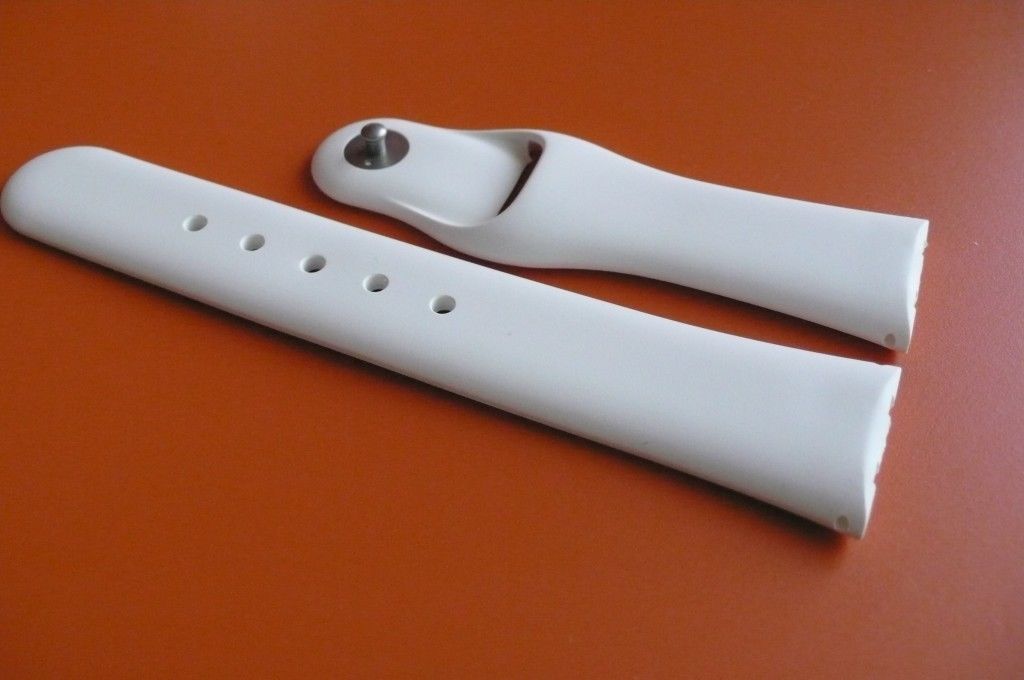
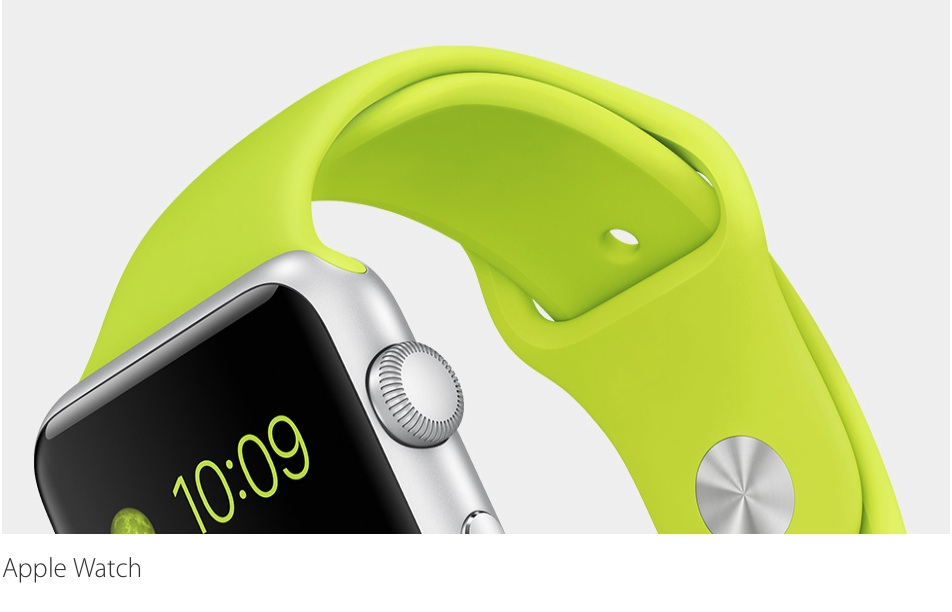
    In terms of the industrial design, I was particularly interested in the strap. Apple has borrowed a distinctive looking catch and strap connector  from one of the strap designs from the now defunct Ikepod Watch company co-founded by Marc Newson who recently joined Apple’s design team.

    Ikepod Megapod strap
    ikepod

    First Apple Watch strap. This probably explains why Marc Newson was brought on board as part of Jonny Ive’s team; as the Ikepod strap was something that he had designed back in the mid to late 1990s. You can see it on the Hemipod watch design here.
    applewatch

    While the case shape looks suspiciously like a homage to H Moser, I think that luxury brands won’t be particularly concerned, at least at this first Apple Watch, lets hope that future iterations prove me wrong. More on design here.

  • Cristiano Ronaldo & things from last week

    Football star Cristiano Ronaldo is sponsored by a Japanese company to promote a facial fitness device resulting in a cringeworthy advertisement and some of the most uncomfortable event footage I have seen in a while. It is worthwhile watching just for the cringe factor. There is no word on how well the Cristiano Ronaldo promotion has been doing for manufacturer MTG.

    The deal looks like a triumph of money over fit with the Cristiano Ronaldo’s profile. It is a freakish spectacle. More related content here.

    Amazing video of how the FBI used to handle fingerprints prior to digitisation of records. The filing cabinets are impressive and the process is laborious. The sheer scale of the filing cabinet room is mind boggling. It is more like a factory than an office space.

    Finally a great presentation from New Zealand conference Webstock on the benefits of quitting, which seemed appropriate content to round this post off on

  • Ghost in the Shell

    Masamune Shirow’s Ghost In The Shell is a three-volume manga series (volumes 1, 1.5 and 2) that is based on a Japanese security service team who try and solve cyber-crime related issues.

    The stories deal with a future where technology is embedded into human beings and augment them. It is also based around a world where the internet of things is an everyday occurrence. Shirow’s future is believable. Unlike Star Trek, he recognised that the future is built in layers on the past. So you see this in the architecture in the background of picture cells.

    You also see that layers in terms of everything from clothing and personal effects to vehicles of the protagonists.

    The author obvioiusly goes deeply into the story as a thought experiment with copious side notes explaining either technological developments or why he has made certain decisions. The stuff that he incorporated was cutting edge scientific research at the time. Whilst I love the anime adaptions, this insight into Shirow’s thinking makes the books invaluable.

    The books seem to have been remarkably prescient about hacking and the risks of technology. In previous literature, hackers were generally on the side of good or libertarians. In Ghost In The Shell you have cyber warfare and cyber crime similar to our own reality today. A crumbling healthcare system, organised crime, private military entities and shadowy state actors.

    Unfortunately, the designers of smart televisions and refrigerators didn’t pay much attention to these books, otherwise they would not have left these products so open to being hacked. Come for the sci-fi stay the course of the books for the underlying ideas. More book reviews here.

  • Pirate friendly platforms + more

    Govt waves stick at pirate friendly Google search • The Register – regulators upset at pirate friendly sites surfaced by the likes of Google. The problem is the momentum it starts towards mass censorship. Which begs the question, rather than just removing pirate friendly sites, why don’t they just go all the way and ask for Chinese style ‘harmonisation’ of the web and be done with it? Why not have one-party rule as well? It’s not about what they’re asking for, it’s the precedent for what might come down the line.

    Interview: Inside Google Brain Founder Andrew Ng’s Plans To Transform Baidu | Forbes – really interesting article on how Baidu is using AI or deep learning. And how Google has lost key talent to go and build these services in China instead.

    Anonymous Analytics: Tianhe Chemicals – interesting Chinese business report, the problem is one of trust and transparency make reports like these seem more credible. Audits of Chinese companies are too opaque, state secrets cover anything that China wants it to cover. It almost looks like a gangster state. More China related posts here.

    Nixon pardons Nu Skin | Bronte Capital – interesting article about network marketing beauty and wellness product company Nu Skin. Disclosure – I had consulted on Nu Skin business problems in China and Hong Kong when I worked out there.

    How China’s Mobile Ecosystem Is Different from the West | TheNextWeb – interesting how WeChat is driving app behaviours in Chinese consumers. The big impact will be felt in terms of operating system differentiation. A mid market phone becomes good enough eroding the premium phone sector.

    A billionaire’s son designs an app to keep nosy parents at bay | Quartz – interesting positioning away from WeChat and LINE, Hike has been around for a good 18 months and is only now getting publicity