Blog

  • Lunar new year culture clash

    Just before lunar new year an incident happened on Hong Kong’s MTR mass transit system between a group of ‘mainlanders’ and Hong Kong natives.

    So what drove this flare up around lunar new year? There are a number of points at which friction occurs between the two societies.

    The modern city of Hong Kong has largely been built on the rule of law. It has the second largest police force in the world in term of number of police per member of the population. The ICAC (Independent Commission Against Corruption) cleaned up Hong Kong bureaucracy for the past four decades to a standard that surpasses countries like the UK and the US.

    Hong Kong runs on rules that are designed to keep things civil but without the rigidity of say Singapore. China is a bit different. It has gone through enormous wrenching changes over the past three decades and societal norms and customs have struggled to keep pace. Wider altruism that was fostered during Mao’s era is frowned upon and there are legal implications around being a good samaritan that are an unintended consequence of Chinese case law. That doesn’t mean to say that the civic society doesn’t exist, but that it exists in a more laissez-faire environment which can be good in terms of less barriers and more experimental approaches to social problems.

    As a Chinese friend once told me:

    In the UK you can largely say what you like, in China you can largely do what you like

    This is a foundation for some of the very different world views. Then there are specific points at which friction arises, some of which is similar to the kind of inter-territory rivalry you see between London and other UK cities, or different counties in Ireland:

    • Perceived levels of sophistication and urbane living versus ignorance, a lack of taste and poor manners
    • Perceived focus on money and consumerism over everything else in life
    • Culture or the lack of it (language and food being the main fault lines)

    Some of which is legitimate, to name two:

    • Mainland Chinese desperate to ensure their kids have a Hong Kong identity using underhand techniques to have their children born in Hong Kong. One can understand the desire to do the best for one’s child, but I can also see the Hong Kong side to this as well. In addition, all of this running around cloak-and-dagger style adds additional risk and stress – which can’t be good for mother or child?
    • Over exploitation of Mainland tourists being forced to shop in certain stores and spend money. This is partly due the subsidised business model that tour operators used to get mainland Chinese to go on shopping trips to Hong Kong. The subsidy came from ensuring that they purchased from certain Hong Kong shops. It is similar in nature to the cheap or free holidays offered to sell timeshare properties in Spain and Portugal – immoral but the rational consumer would realise what they were likely to be stepping into

    Here is the video on Tudou without English subtitles:

    More related content here.
  • The future is divergence

    The future of divergence has been bubbling along for a while. I was chatting to my friend Ian over lunch putting the technological world to right over the hour or so that we had. That coalesced some of the ideas that I have been thinking about for a while and posted about in fragments on this blog at different times and has coalesced in this post: the future is divergence.

    So what about the future is divergence?

    I’d like to think of it as an executive summary for the attention deficit disorder generation who have been brought up on MTV, online instant gratification and the shallow intellectual depths of strategy by PowerPoint presentation.  I guess if I was going for accuracy rather than a snappy headline it would be something like: the future of consumer electronics is likely to be context-dependent divergence rather than the convergence strategies that they have pursued: mostly unsuccessfully.

    Why?

    First of all let’s think about convergence the way it is manifested currently. For the past decade and a half we’ve seen the internet pervade more aspects of everyday life. It is handy to have the same network protocols being used connecting everything together, its what happens when they are connected is what matters.

    If we look at different devices we can see a an evolution of products until one fires the imagination and things kick off. For instance mobile email went through a number of iterations before coming a ubiquitous consumer product. Mobile email started in the mid-1980s with the Ericsson Mobitex network which allowed for two-way paging across a reliable narrowband digital data network. it is still used for breakdown services in the UK and by emergency services in North America. Research In Motion (RIM) made its first BlackBerry handset for the Mobitex network in the late-1990s

    It took another two decades for mobile email to become ubiquitous. I have been using mobile email since 2002, firstly on a Nokia 6600 and currently on an  Apple iPhone. But what has happened is that I have two mobile devices. My phone which is a Samsung feature phone which does my calls and has a week long battery life and my iPhone which handles,  text stuff like email, my calendar and address book. My usage hasn’t converged into one device as the iPhone’s battery life and call quality isn’t good enough.

    Mobile email hasn’t made me give up my desktop email either, I prefer to do long form emails on my laptop at home simply because the writing experience on the iPhone is inferior. Instead of convergence this is an exhibit of divergent devices based on user context.

    I suspect that the phone as a phone factor maybe around for a good while yet; particularly when you look at the utility that people find with Apple’s Siri service or the Vertu concierge service; both of which are often simpler to use than an application or firing up a web browser.

    This divergence of context is one of the reasons why I am skeptical about so-called smart televisions. Our homes are filled with screens that delivers content. The mobile phone is most often used in the home within reach of a wired telephone. Tablets are often used to access the internet whilst watching television. There is a reason why this works currently. I can pick up or put down the internet and have an immersive experience on the television screen; the consumer electronics manufacturers hope that I will soon enjoy this not just in high definition but with 4K (the same standard as many digital cinema set-ups).So why would I want this screen with modules telling me about the latest happenings on Facebook or Twitter a la Pop-up Video? It makes absolutely no sense, yet this is the vision that consumer electronics companies and Google want you to buy into.

    Granted in certain circumstances information presentation of this type can be useful; in particular news television a la CNBC, Bloomberg TV and CNN; but most TVs are more likely to be sold on entertainment and sports.

    The thing was consumer electronics manufacturers like Sony had divergence and frittered it away. The Walkman, Discman, Trinitron televisions, Dream Machine alarm clocks, the ES range of hi-fi separates – all were divergent devices based on user context. Digital didn’t change that, it changed the connectedness of devices and convenience of receiving media. Strategists at the major Japanese electronics manufacturers got blinded by the technology rather than how consumers use products – even Steve Jobs got it wrong on occasion. More on Sony here.

  • My Rugged 211 and other books

    I am currently reading My Rugged 211, The Quest, Reamde and New Rules for  The New Economy.

    My Rugged 211 by Minoru Onozato – To be honest with you I am more leafing through this than avidly reading it for reasons that will become apparent. Onozato-san is editor-in-chief of Free&Easy; a Japanese style magazine that has been a driving force since the late 1990s in Japanese style circles. The magazine focuses on European and American work-wear and former fashions. This is one of the reasons why Japan is the home of brands that look to bring authenticity into their clothing from reproduction brands like Buzz Rickson, Iron Heart and Sugarcane to the likes of Neighborhood. It’s this movement that made Sperry Topsiders and Red Wing boots popular again – Hoxton was a johnny-come-lately to these trends.

    In the same way that i-D magazine, Paul Smith, Shawn Stüssy and Vivienne Westwood were held dear by the Japanese fashion industry during the 1980s and early 1990s; Free&Easy shares a similar role in western stylists today. My Rugged 211 is a trip into Onozato-san’s wardrobe: my rugged actually means fashion staples for what Stüssy called Burly Gear. Everything from vintage Ray-Ban glasses and US Air Force service shoes to items from street-wear brands like Tenderloin. A lot of it is the clothing equivalent crate-digging for vinyl record fans. I have been surprised by the amount of Ralph Lauren that he liked.

    Like the fashion items that Onozato-san outlines, My Rugged 211 is easiest ordered from eBay and costs about 60 quid. Why My Rugged 211? Onozato-san isn’t a collector in the conventional sense but a curator. A year only has 365 days in it, so the larger the collection, the less likely it was to be worn. So he alighted on 211 as the cut off number of items. Over time he would refine the collection, when the item count ran over 211, he sold or gave away items that no longer ‘sparked joy’ as Mari Kondo would say.

    The Quest by Daniel Yergin. The Quest is a sequel to his history of the energy sector The Prize which is the de-facto account of the oil and gas industry gracing the bookshelves of pretty much everyone I knew in the industry. The Quest picks up the story from the break up of the Soviet Union onwards. Providing an in-depth view of the events around this helps to explain recent history from before and through 9/11. Its a big dense book and it is compelling but slow-going.

    Energy is linked to world events because it is the glue and the building blocks of our modern world – from the circuit board of my laptop to fueling the air cargo flight that brought my MacBook Pro in from the Foxconn factory in Shenzhen.

    Reamde by Neal Stephenson. Reamde is the latest book by Neal Stephenson – its relatively uncomplicated cyberpunk book more akin of William Gibson’s recent work than Stephenson’s closest work Cryptonomicon. As with most of Stephenson’s other work it pulls in the reader. More on this once I have finished it.

    New Rules for the New Economy by Kevin Kelly. Alongside the Wired reprint pamphlet Encyclopedia of the New Economy by John Browning and Spencer Reiss were probably some of the best books written in the late 1990s about how the interest was going to change things. New Rules for the New Economy is a book that I like to revisit now and again to take stock of things. Part of the reason is that Kelly was smart enough to put in caveats around his discussions of those changes which people tend to forget, like a former American colleague of mine who used to berate anyone whose clients wouldn’t put the budgets into social media as giving into scarcity thinking rather than plenty thinking like it was a demented new age mantra to ward off evil spirits.

    Of course the tone of the book needs to be taken with a pinch of salt; it has a Gilderesque sense of boundless optimism that infused American writing from the end of the cold war until 9/11. It also failed to take account technical issues of network build-out, the limited capacity of wireless spectrum and buffer bloat; or the developing world’s desire to give over legislative powers to the media industry lobbyists and attempt to strangle the ‘net. Regardless of these issues it is a great read, and out of all the books, the one that I am making the most progress on. More on books that I have been reading.

  • CES 2012 trends

    Early January means CES 2012 in the tech calendar as the media gives its full attention to the consumer electronics sector. With some 2,600 exhibitors there was a lot of news coming out of the event. But I was more interested in some of the more macro trends that you could see from the coverage and hear from friends that attended the event. Here’s my three big things:

    Size zero design

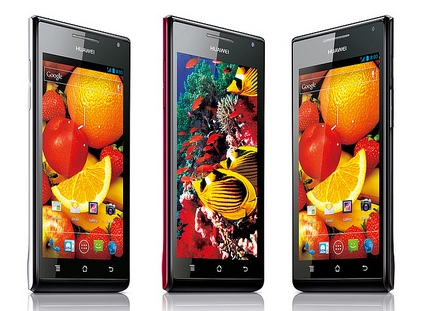
    Size zero design – Motorola was responsible for move towards size zero design with its original SLVR and RAZR feature phone designs and Apple has turned it into a must-have design feature across both smartphones and computers. It was only natural that up and coming young Turks like Huawei with their Ascend P1 smartphone should attempt to demonstrate their technical prowess and superiority with the current thinnest phone.
    Huawei-Ascend P1-smartphones
    I also found it interesting that Fast Company wrote an article pointing out the design rabbit hole that size zero design is for device manufacturers and consumers. Pretty good, and only almost two years after this blog (^.^)

    Austerity designs

    Austerity designs – a general observation from a couple of the people I knew had gone to CES 2012 was that manufacturers generally had a lower average ticket price on the items that they were displaying. In the past manufacturers would bring different ranges into different markets, for instance Sony would bring higher end hi-fi products into France and Germany that they wouldn’t bring into the UK. There was less aspirationly priced items than in previous years, probably as manufacturers look to deal with the current economic climate. CES products are not only about drumming sales for the coming year, but also setting the tone for a next few years ahead. This pricing strategy indicates that many of the manufacturers probably aren’t expecting a huge economic bounce back in the West.

    Smart everything

    Smart everything – one of the things that struck me about CES 2012 is the way that technology was been shoehorned into every facet of life  from the car, to the wall thermostat and the wall plug. The only thing is I am not convinced that the electronics will last as long as the useful life of the car or the electro-mechanical Honeywell wall thermostat that would have been used previously. This phenomenon has become its own meme: the internet of (shit) things. Secondly do you really want your home heating or your car dashboard to need rebooting every so often so that it keeps working? I have even heard of the volume disappearing on Sony TVs until they they were updated

  • Innovation starvation + more news

    Innovation starvation

    Innovation Starvation | World Policy Institute – in his article Innovation Starvation author Neal Stephenson talks about the decay of innovation in the west. Innovation starvation is about an inability to get big things done – I worry that our inability to match the achievements of the 1960s space program might be symptomatic of a general failure of our society to get big things done. My parents and grandparents witnessed the creation of the airplane, the automobile, nuclear energy, and the computer to name only a few. Scientists and engineers who came of age during the first half of the 20th century could look forward to building things that would solve age-old problems, transform the landscape, build the economy, and provide jobs for the burgeoning middle class that was the basis for our stable democracy. Innovation starvation has multiple causes from a research mythical man month type problem due to increasing specialisation, lawyers, search engines, pressure groups and activists have a lot to answer for

    Economics

    More Conflict Seen Between Rich and Poor, Survey Finds – NYTimes.com

    Hong Kong

    China denounces ‘Hong Konger’ trend – The Washington Post

    How to

    Use the Ten Second Rule to Cut Impulse Purchases

    Innovation

    New details surface on the UPU: A next-generation CPU architecture | ExtremeTech

    [CES] Sony Develops Self-luminous ‘Crystal LED Display’ — Tech-On!

    Japan

    What’s happening in Japan right now?: Social Games in Japan – interesting that this is part of mobile gaming

    The Myth of Japan’s Failure – NYTimes.com

    Korea

    Samsung Merging Its Bada OS With Intel-Backed Tizen Project – Forbes

    Luxury

    What Luxury Brands Should Learn From Dolce & Gabbana’s Hong Kong PR Disaster – Forbes

    Media

    Microsoft hits pause on web TV service because shows cost too much – SplatF

    TVShack Admin Fights Extradition To U.S. On Movie Piracy Charges | TorrentFreak

    CES: Survey Finds Traditional TV Viewing Is Collapsing – Forbes – this is more about more personal, less social (within the family) media consumption and also consumers are exhausted by TV innovations that don’t matter. I still rock a Sony Trinitron from the late 1990s

    Online

    Snapshot: Viaweb, June 1998 – Paul Graham on what the web used to look like when I first started off in agency life. The site looks curiously mobile friendly!

    Security

    Under voter pressure, members of Congress backpedal (hard) on SOPA

    Cars: The Next Victims of Cyberattacks – IEEE Spectrum – if this doesn’t scare the bejeezus out of you, it should

    Wireless

    Apple Suspends iPhone 4S Sales in Mainland China Stores – NYTimes.com

    CES 2012: Mr. Elop makes bold statements about Nokia in the Windows Phone space | ZDNet – ok what is important here is what Elop isn’t saying. No real reasons around Android and they seem to be having a problem building an on ramp that gets their ecosystem to support them

    Groklaw – Nokia Moves To Quash Barnes & Noble’s Letter of Request the ITC Sent to Finland Re Discovery ~pj – oh dear, sounds like Nokia and Microsoft have been caught looking a bit shady. Even if there is nothing here, it feels like there is which isn’t good from a reputational point-of-view

    Microsoft, Defying Image, Has a Design Gem in Windows Phone – NYTimes.com – this looks like a classic bit of PR-led storytelling – where you give the journalist the bread crumbs that lead him to the story you want to write. The most interesting bit of this is Microsoft  (whom I presume was the client) was willing to throw its other partners such as HTC and Samsung under the reputational bus to big up Nokia. Yet a lot of the hardware issues are due to Microsoft dictating specs to the hardware manufacturers.