Blog

  • Workampers

    The Wall Street Journal had an article that introduced me to the idea of workampers. The article was on the seasonal workers that Amazon.com uses in the US to help it with the surge in demand in the run up to Christmas.

    Who were these elves to Amazon’s Santa Claus?

    The article describes them as workampers. Older retired people who live a transient lifestyle by choice in an RV (recreational vehicle) for at least part of the year.
    CIMG1091
    Their motivations were diverse in nature. Some of the workers are similar to their ancestors during the Great Depression, who moved across the country following work were it was available.

    For others the reasons are diverse, from money to help with expenses to camaraderie with similarly nomadic peers or proving to themselves that they could still hack a task. A mix of forced earlier retirement and improvements in health mean that many seniors still have decades of potential work still in them that they want to take advantage of.

    A mix of ageism and globalisation have meant that there is a growing body of workampers. Future workampers might be in a worse financial state due to less generous pensions and health insurance, higher personal debt and automation. The move to a lower carbon economy will also impact the ability of a workampers to live out of an RV and transverse large distances at a reasonable cost.

    Workamper futures

    With an aging population and the decimation of working class communities due to the opioid epidemic we are likely to see more demographics like workampers as companies adapt to tap into an older work pool. With Amazon in particular, one has to wonder if more of their warehouse and logistics work can be automated and how it will be affected by a low carbon future.

    More explanations of of jargon terms can be found here.

    More information

    Seasonal Amazon ‘Workampers’ Flock to Remote Towns for Temporary Gigs – WSJ.com (paywall)

  • Consumer interest in iOS etc.

    If you’re like me you read far more journalist analysis of the wireless phone market than is good for you. I thought that it would be instructive to have a look at what consumers are looking for instead and look for any patterns. After sales availability and visibility consumer interest is probably the biggest determinator of success. My weapon of choice was Google Insights for Search. My research was based on a few assumptions about consumer interest in the wireless space and some limitations in the tool that I was using:

    • Consumers know what type of smartphone that they want
    • Consumers decisions aren’t carrier loyal
    • Consumers used Roman script to search for the brand
    • Search is a good proxy for consumer interest – it hasn’t been disrupted by Facebook in this regard yet despite what others may tell you
    • China despite being the world’s largest market isn’t going to be providing meaningful data because Google Insights for Search doesn’t cover that market
    • The Russia sample is indicative of overall consumer sentiment in Russia (Yandex is a big search player in Russia)

    Consumer Interest in platforms
    Some of the biggest interest in handset brands is in the developing world. In many respects this is their PC revolution. In developed Asian markets like Hong Kong and Singapore there is a much higher interest than EU countries – partly because of on-the-go lifestyles and partly because of the economic cataclysm that the western world is facing. The iPhone still attracts the most interest, but what is interesting is the acceleration that Android seems to have in terms of increasing interest. Microsoft’s efforts, whilst lauded by critics haven’t yet turned into consumer interest.  Research In Motion’s Blackberry platform seems to be down but not out yet in the consumer stakes.

    Nokia

    I took a snapshot of consumer interest in Nokia over the past three months to try and see what effect the global launch campaign for Nokia’s Windows phones are doing to consumer interest in the brand.

    I deliberately didn’t compare them to the iPhone because Nokia themselves acknowledge that they are competing against Android handset makers like HTC and Samsung. Nokia launched the Lumia phones with their biggest marketing campaign ever and had a lot of column inches written about the brand alongside a gamut of marketing commnications tactics from experiential events and advertising to point of purchase.


    Whilst Nokia’s new range of Lumia phones have had a substantial marketing budget put in place, but it doesn’t seem to have significantly affected search interest: it’s not quite living up the Amazing Everyday billing yet. This is also the case for Windows Phone with interest remaining consistently low in comparison to the Nokia brand. I think that the stubborn consumer disinterest in Windows Phone is a big challenge.

    More wireless related content can be found here.

  • Lean web development + more

    This is more of a wish list of what changes I’d like to see in technology and related areas in the next 12 months. This is based around a number of concepts, a few of which are lean web development, security, SSD pricing, better product design and service breakouts.

    Lean Web Development

    Lean web development. This have gotten ridiculous when the average size of a web page is now 1MB. It adversely affects page load times and assumes that bandwidth for the end audience is limitless, which is a fallacy when you have mobile broadband caps and telecoms providers looking to meter broadband use moving forwards. Lean web development recognises that wireless and wired networks don’t provide the kind of limitless low latency broadband technologists assume exists. It might be about turning the approach to web development on its head and developing for mobile devices first and then adding on content or features depending on the device rather than trying to hyper-mile existing web technologies.

    Security

    A more secure web. At the base level an increased awareness of security: why do companies store credit card details or personal information in unencrypted files? At an architectural level:

    • Re-secured DNS and SSL certificates
    • Secure VPNs over IP v.6 networks
    • Effective IP address and system configuration masking to protect from privacy intrusions and badly executed behavioural advertising

    SSD price decrease

    The price of solid state drives (SSDs) to fall so that they can be used on my MacBook Pro as the primary storage drive for my life. At the moment whilst devices like the MacBook Air are attractive. they don’t have enough storage capacity and act as an adjunct or special purpose personal computing device. At the present time that just isn’t possible. Cloud is interesting as an idea, but the reality of networks doesn’t make it as practical as people seem to think.

    Design

    An increased appreciation of ergonomics in device design. In the mid-90s I had an Apple PowerBook which came with legs that flipped around to angle the keyboard at an optimal angle for typing. My current MacBook Pro doesn’t have any kind of similar feature. My iPhone feels too wide in my hand as a phone and my iPad is awkward to hold. And I haven’t even started into a rant over the pictures under class interface and soft keyboard of the device with no haptic feedback.  Part of this is down to a size-zero aesthetic design obsession and interface designers per-occupation with the Tom Cruise film Minority Report – but its making designs that are not particularly human-friendly and leading to poorer product performance.

    A move away from general purpose technology hardware and smartphones to focused designs. Convergence has been a watchword in hardware and software design. A less positive spin on this is bloatware. In hardware that has meant personal computers and smartphones. The personal computer is currently being challenged for dominance by tablet devices which only use a fraction of the computing power available. Why is it that Microsoft Word only allows me to write as fast in the latest version for the Mac as Word 5.1 which was released two decades ago? It is ironic that smartphones like the Apple iPhone can do a range of great and trivial tasks, but are quite poor at being a phone. Dropped calls, poor call-quality and a form factor that still feels a bit too wide in my hand as I hold it to my ear – it is a great example of being a jack-of-all-trades but master of none. Whilst a Swiss army knife or Leatherman tool is useful at a pinch, you are still better off doing the job with the right tools if available. With software or digital services space and weight aren’t an issue, yet we have products that have overloaded awkward functionality that leads to a poor user experience. By all means get different things to talk to each other: iftt provides a great template for how that should look; but don’t try and do all of those things on the one user space. 37Signals ethos to become the norm, rather than the exception.

    Service break out

    One of the Chinese services like Sina.com’s Weibo crossing over and giving Twitter a run for its money. Sina.com have kept innovating with their product getting ahead of Twitter and innovating in terms of the user experience. A side benefit of compliance with Chinese government legislation has meant that they seem to do a good job on spam as well.

    Wireless choice

    A clear idea of what on earth is happening with Research in Motion | Intel | Sony in the mobile space and excellent differentiated products to bring some choice back into the wireless world rather than more of the same. The wireless device industry is starting to exhibit some of the dynamics of the PC industry: with ARM and Android being the Intel X86 and Microsoft Windows of the handset world, with Apple doing their own things. Costs are coming down but innovation only seems to look like what Apple does at the present time. There is a reduction on the types of form factor designs and interaction methods.

    Media

    The return of Geek Monthly. This was a US publication that I came across in Hong Kong. It’s publisher filed for Chapter 7 bankruptcy, but it got picked up by a new firm looking to get it back on the road. Hopefully they’ll succeed. This Current TV programme should give you an idea of what to expect:

  • I like: Samsung Galaxy Y DUOS

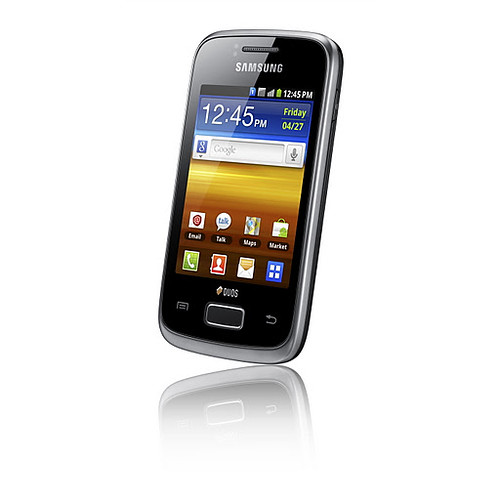
    I currently have two mobile phones, an iPhone 3GS for all that stuff that smart phones do and texting. My second phone is a Samsung B5702 DUOS phone that does my voice calls. My Samsung B5702 DUOS is a predecessor of the new Sony Galaxy Y DUOS. Its a great feature phone with a week long battery life and a space for two SIMs.
    Samsung GALAXY Y DUOS Product Image (4)
    With the Samsung Galaxy Y DUOS, it looks like I’ve been finally given a reason to upgrade. On the specifications the phone is a basic Android smartphone. And that’s fine, I wouldn’t be interested in any of its Android features. Where the Samsung Galaxy Y DUOS excels is that unlike the vast majority of dual SIM feature phones and smartphones available it supports UMTS networks.  This provides you with yet more options when you are roaming abroad on networks.

    It should be available early next year, but you will need to trawl Google and Amazon (I’d advise Amazon Germany) to find it as your mobile phone carriers won’t like it. Mobile carriers tend not to like dual SIM phones. In domestic markets they would allow you to change your call routine based on the call plans of your two times, while still receiving calls.

    So you might do calls out on one SIM to take advantage of its free evening calls, will using a cheaper SIM for daytime calls. This means that the carrier doesn’t get to maximise the revenue from you as a customer.

    Consequently, distribution of these devices in western mobile markets will be limited. However I imagine them being very popular in the likes of Hong Kong where taxi-drivers usually have a bank of phones on their dashboard to handle customer orders.

    More information on Samsung’s press room – the press release doesn’t give an exhaustive breakdown of the technical specifications and too much meaningless marketing platitudes.

    You can find more device related opinions and reviews here. And more wireless related content here.

  • STRATFOR breach

    I got an email about 40 minutes ago announcing that STRATFOR were looking into a breach of their servers and email. I’ve always found their analysis on international issues informative and insightful which has helped in my work thinking about international projects with NGOs and in my writing here on this blog. It is one of a a number of media outlets that I pay a subscription to.

    Given that Stratfor position themselves as not only domain experts in territories around the world and geopolitics, but also opsec (operational security); the data breach is a shockingly bad own goal. It will be interesting to see how their brand manages to recover. The hackers have made off with a trove of government, academic, media contacts as well as general people like me who are curious about what’s going on in the world.

    Dear Stratfor Member,

    We have learned that Stratfor’s web site was hacked by an unauthorized party. As a result of this incident the operation of Stratfor’s servers and email have been suspended.

    We have reason to believe that the names of our corporate subscribers have been posted on other web sites. We are diligently investigating the extent to which subscriber information may have been obtained.

    Stratfor and I take this incident very seriously. Stratfor’s relationship with its members and, in particular, the confidentiality of their subscriber information, are very important to Stratfor and me. We are working closely with law enforcement in their investigation and will assist them with the identification of the individual(s) who are responsible.

    Although we are still learning more and the law enforcement investigation is active and ongoing, we wanted to provide you with notice of this incident as quickly as possible. We will keep you updated regarding these matters.

    Sincerely,

    George Friedman

    Cryptonome have more details here: complete with the obligatory Pastebin links. Twitter currently has a lively discussion on the hack.

    Update (February 2023): Stratfor bought all its subscribers an Equifax monitoring package for their credentials and offered discounted subscriptions. It revamped its infrastructure and carried on. Stratfor never completely recovered from the breach. It eventually sold itself to a larger group Rane. As part of Rane the Stratfor work continues and they still sell expert consultancy.

    Rane have since embraced social media to promote its content to prospective customers. The quality is the same high standards as what it used to be under Stratfor before the data breach.