Design was something that was important to me from the start of this blog, over different incarnations of the blog, I featured interesting design related news. Design is defined as a plan or drawing produced to show the look and function or workings of a building, garment, interfaces or other object before it is made.
But none of the definition really talks about what design really is in the way that Dieter Rams principles of good design do. His principles are:
It is innovative
It makes a product useful
It is aesthetic
It makes a product understandable
It is unobtrusive
It is honest
It is long-lasting
It is thorough down to the last detail
It is environmentally-friendly – it can and must maintain its contribution towards protecting and sustaining the environment.
It is as little design as possible
Bitcoin isn’t long lasting as a network, which is why people found the need to fork the blockchain and build other cryptocurrencies.
Bitcoin uses 91 terawatts of energy annually or about the entire energy consumption of Finland.
The Bitcoin network relies on thousands of miners running energy intensive machines 24/7 to verify and add transactions to the blockchain. This system is known as “proof-of-work.” Bitcoin’s energy usage depends on how many miners are operating on its network at any given time. – So Bitcoin is environmentally unfriendly by design.
On the other hand, Apple products, which are often claimed to be also influenced by Dieter Rams also fail his principles. They aren’t necessarily environmentally friendly as some like AirPods are impossible to repair or recycle.
The value of reputation is something that various disciplines especially the public relations industry discuss ad infinitum. IPSOS have put together some interesting research and thinking that helps to quantify and shape the value of reputation. Previous discussions on reputation value that I have seen, haven’t had the same rigour behind them. The presenter calls out the assertions of former Unilever Paul Pollman as misleading.
Unlocking the value of reputation key takeaways
Shareholder value and reputation don’t necessarily correlate contrary to the assertions of Unilever’s former CEO Paul Pollman.
A better reputation means that advertising becomes more effective: more believable and more memorable.
A better reputation means that consumers are more likely to pay a premium for a product (however this is relative within category).
The value of reputation varies by region. It’s stronger in Latin America than the UK, Europe or many Asian markets, but weaker in Africa and the Middle East.
The value of reputation parleys into brand trust and brand resilience. A personal example of this for me was the wayUK consumers were much more supportive of the BP than American consumers during the Deepwater Horizon disaster.
Thanks to Stuart Bruce, I managed to get the full white paper that can be found here.
This is Financial Advice
This is Financial Advice is one of the best films that I have seen about the GameStop short squeeze.
Studio Ghibli music
While Japanese production company Studio Ghibli is recognised for its animation, the specially composed music is a key part of its ambience. It also happens to be great music for listening to while working. There’s a 120 hours of Ghibli related musical playlists here.
https://youtu.be/Cdp2qXHD96U?si=eaiL43V2J7K08Atv
Metal morphosis. Made Untamed
Toyota Australia were promoting the Toyota GR Corolla. This is the Corolla version of a GR Yaris. Same mechanicals, but five doors and a larger body shell. The Yaris was not made available in some markets such as the US and Australia, instead they got the larger car.
The creative is a mix of animation relying on precise high speed driving and a set course reminiscent of the late Ken Block’s Gymkhana series of films. The gymkhana series was in turn influenced by skate videos. Prior to being a rally driver, Block had co-founded Droors and DC Shoes prior to running his car culture brand Hoonigan and driving professionally.
Is Open AI the equivalent of Sir Hiram Stevens Maxim? Maxim invented the Maxim gun. A belt fed machine gun that helped colonial powers grab territory in the scramble for Africa. It was reputedly used by one British official to help clear game from land that was soon to be put to farming use in Kenya. Later on it was used by both sides in the Russo-Japanese war and World War 1, due to Maxim’s business associate Sir Basil Zaharoff.
Investors are betting that Open AI will have a similar role in the battle shaping out between tech giants over generative machine learning related processes.
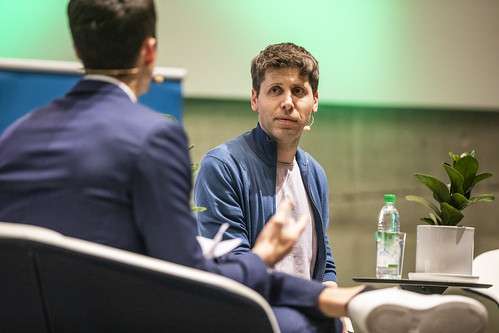
Sam Altman of Open AI
When a company that has issues with making profits can raise money at a valuation of $85bn, it becomes abundantly clear that investors in generative AI have taken leave of their senses
I can understand the argument that Richard Windsor is making with this argument. While others might point out how dominant funding drove Amazon’s present-day monopoly, there are other precedents like Netscape, General Magic, Uber and WeWork that others can point to.
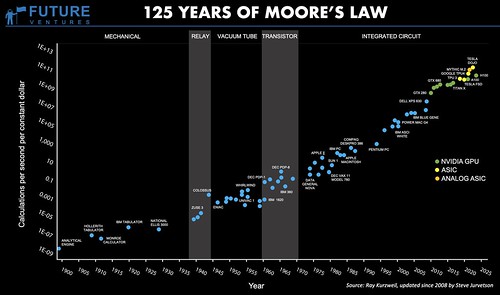
There are bigger questions about whether the LLM approach is in itself a limited model to pursue? If so, Open AI could look more like when IBM bet the farm on Josephson Junctions. The use of synthetic data implies that LLM scaling might already be at its limit. Nvidia looks like a better bet from this angle despite its own extremely high valuation.
Brand purpose has a lot of issues, but it’s worthwhile bearing in mind the kind of marketing Unilever was pushing out prior to buying fully into the concept. These efforts came to light from social sharing about the the British ‘vulgar wave’ that contextualised Russell Brand.
Unilever Heart Brands UK
While China’s ads skewed conservative compared to the UK’s vulgar wave of 1997 – 2012, this Axe (Lynx in the UK and Ireland) ad isn’t exactly on brand purpose. The spokesperson in the advert is Edison Chen. At the time Chen was a star in Hong Kong’s entertainment circles. But getting involved in street fights and a leaked hard drive full of pornographic images of girlfriends he dated meant he withdrew from the industry. Now he is better known for owning streetwear brand CLOT.
Dove Sparks Boycott Calls Over New Partnership—’Never Buy Them Again’ | Newsweek – controversial question, but have Unilever gamed out that conservatives are more likely to use Irish Spring or similar products over Dove? I suspect that there might be something in the semiotics of cleanliness in this. African Americans by contrast might have challenges like ashen skin that would benefit from soap that cleans and moisturises, hence the popularity of shea butter based products.
Hong Kong
Architect Demi Lee on Kowloon’s Walled City. The comparison with the idea of rhizome was very interesting.
Ideas
Demi Lee’s video on how elements of cyberpunk are leaking into our current reality.
Dimensions of luxury as a post came together thinking about fictional influence account Gstaad Guy, Horizon Catalyst’s New Codes of Luxury report and Sense Worldwide’s Future of Luxury report.
Dimensions of luxury breaks down into three areas which Catalyst calls:
Traditional luxury
Contemporary luxury
Personal luxury
Nowadays, most luxury brands won’t fit neatly into these classifications. For instance the Swiss watch brand Blancpain would be considered to be traditional luxury, but the Swatch x Blancpain collaboration which borrows the design language of the 50 Fathoms dive watch is very much contemporary luxury. Part of this has been driven by many brands being part of large combines:
LVMH – depending when you look at the stock price, Europe’s largest company by value run by Bernard Arnault. Related to L Catterton private equity fund which has been financed deals such as Birkenstocks.
Kering – LVMH’s rival best known for Gucci. It is currently run by François-Henri Pinault
Richemont – Swiss listed group focused more on jewellery and watches than rivals. It has a range of brands including Dunhill, Montblanc and Panerai.
Swatch Group – which owns most of Switzerland’s premier watch brands
Fosun – China-based multi-sector conglomerate which owns a hodge podge of western heritage and luxury brands including Ahava, Folli Follie, Lanvin, Sergio Rossi, Silver Cross prams and St John knitwear.
Notable independents include The Rolex Trust and Hermés.
Traditional luxury
Unsurprisingly this is the kind of luxury that most people would think of. Timeless style, heirloom designs and peerless quality are likely to be the kind of language that springs to mind. When the luxury industry talks about sustainability and the circular economy, the lives of these traditional luxury products come into focus, since they are often passed down. The influencer behind Gstaad Guy in an interview with the FT talks about his favourite item of clothing being a Loro Piana vest that was his Grandad’s.
What we think of as ‘traditional’ luxury brands came out of businesses with heritage that are known for their quality
Loro Piana and Zegna were both high end fabric manufacturers before becoming ‘luxury brands’
Rolex made high quality reliable tool watches, as did Omega and Panerai.
Louis Vuitton made high quality robust trunks for travellers.
Zero Halliburton and Rimowa made cases that were ideal for air travel and protecting sensitive instruments and camera equipment. The Halliburton in Zero Halliburton actually refers to Halliburton Company who are famous for providing oilfield services.
Contemporary luxury
Contemporary luxury is where the greatest controversies of luxury tend to lie. Horizon Catalyst tend to tie up premium brands like AirBnB and Apple together with the luxury sector. It includes values like innovation and sustainability. But it doesn’t discuss what Dana Thomas calls the massification of luxury, with traditional European brands being more often being ‘Made In China’. This has driven a drive for brands to try and ‘shortcut’ their way to success. Luxury brands have adopted the techniques of streetwear brands were scarcity and limited drops fuel the ‘hype’. What Sense Worldwide called ‘Supremification’. Chanel is opening special UHNWI only boutiques. And ‘Made In China’ allowed China to develop its own ateliers.
Personal luxury
Catalyst defines personal luxury as subjective in nature, individual to each person and having a deeper connection with personal values. It could be items that might be considered treats like having their groceries delivered. Their discussion of everyday luxury would be familiar to marketers in terms of the ‘Lipstick effect’ familiar from Juliet Schor’s work during recessions. But it’s interesting that luxury is being defined by consumers and followed by brands. The classic example of this would be brands from Nike to LVMH getting on board with NFTs, following consumers and creators.
IPSOS conducts CX research on an annual basis. They surveyed 1,000 CX (customer experience) specialists around the world about the current state of CX in their businesses. The IPSOS CX research painted a complex picture of organisations. Key take outs of the CX research:
82% of respondents believed that CX investment will provide a competitive edge, but only 52% were expecting an increase investment over the next 12 months.
28% of respondents admitted that their organisation’s CX was worse than promised and only 15% of respondents consider their organisations ‘CX leaders’.
Only 52% have CX governance policies in place.
At the present time the majority of CX leaders have data integration issues and 46% now have to integrate AI as well, adding to their business challenge.
Environmentally friendly clothing brand Patagonia gets called out about the ‘greenwashing’ design of its buffalo work boots by the Rose Anvil YouTube channel who specialise in analysing boot and shoe design.
Standard Model: The Chanel J12 Eclipse Set – LUXUO – interesting, particularly given the manufacturing problems that Rolex has had with dual colour ceramic bezels. Chanel has managed to master this and master it across the whole watch. Matching bezel and case divisions.
Interesting analysis on supercar prices.
Profile of Lacoste.
Marketing
A few days of lunch time viewing from the IPA (Institute of Practitioners in Advertising) media planning and strategy summit. Interesting mix of presentations and case studies.
Really interesting case study on McDonalds and how the brand has evolved over two decades in the UK.
The September 2023 newsletter time came around quickly. As I write this, it’s almost the end of September and it feels like no time since I curated the last edition. If you’re reading this, and it’s your first time welcome! If you read the pioneer issue; I hope that this isn’t the newsletter equivalent of the difficult second album.
If this continues to go well I will put one out each month. You can find my regular writings here and more about me here.
Things I’ve written.
Rolex Submariner 5512
Analysis on the Bucherer acquisition by Rolex – which shook up the luxury sector in the run up to the end of August.
Psychotherapy and culture. How psychotherapy has been mainstreamed via culture, and in turn influenced culture.
Digital abortion clinics. How tele-health businesses are trying to address the challenges posted by US state abortion bans and how these services should be doing a better job protecting their patients, in particular their privacy.
Books that I have read.
The Code by Margaret O’Mara. O’Mara’s work like my last month’s recommendation Chip War is a history of Silicon Valley. The key difference is that O’Mara approaches the history through the lens of the American political environment, whereas Miller’s Chip War considered it more in terms of global geostrategic politics. You can read more of my take on The Codehere.
Deluxe – how luxury lost its lustre by Dana Thomas. Thomas’ book came out in 2008, but much of it is still relevant today, particularly around what my friend Jeremy dubbed the ‘Supremification’ of the luxury sector. You can read more of my take on Deluxe here.
Things I have been inspired by.
Lately I have been listening to Kurena an album by Japanese jazz musician Kurena Ishikawa. I reviewed the album here.
The Korean Cultural Centre in London has a series of rotating art exhibitions. I got to see Audible Garden by Jinjoon Lee. Lee is a multimedia artist. The exhibition usesculptures, drawings, a wall painting, prints, videos, and directional sound installation to create an experience that blends inside and outside landscapes. If you’re involved in creating experiences you’ll want to see it. The exhibition is on until October 13, 2023.
My friend Natalie Lowe runs The Orangeblowfish with her husband in Shanghai. One of the projects that they worked on was helping media agency Mindshare rethink their office space and employee brand through the power of comics.
We talk a lot about the benefits of neurodiversity in business thinking. But a less explored area is that of cognitive diversity. While Myers-Briggs Type Indicator is an imperfect measure, this work by UCL and Sense Worldwidehighlights the benefits of cognitive diversity in envisioning new possibilities.
Swatch Group continues with its Mondelēz International -like brand mash-ups (a la Cadburys Dairy Milk x Ritz crackers), this time Swatch x Blancpain. I wonder what this does to luxury brand caché? I imagine that there will be a short burst of hype tempered by existing customers concern about paying $800,000 for a watch from a brand that also puts its name on plastic tat. Omega were a well known premium watch brand, often seen as a cheaper alternative to Rolex. Blancpain is the oldest brand in Swiss watchmaking with the longest most storied history of horology. It is a brand for die-hard watch fans, they made the first automatic self winding wrist watch and still make sophisticated complications like the 1735 Grand Complication and the highly regarded Fifty Fathoms range which pioneered modern dive watches. The company slogan has been:
Blancpain has never made a quartz watch and never will
Blancpain
It seems the resale value on these watches on secondary market platforms has dropped almost immediately after launch.
Finally Alzheimers Research put out a fantastic animated film to illustrate the impact of dementia on a life.
Things I have watched.
Moving on from the French new wave works of Jean-Pierre Melville that I viewed in August, this month I revisited works from the Hong Kong new wave. Chow Yun Fat’s performance in the John Woo-directed film The Killer blew me away when I first watched it on VHS tape and still moves me today, more on that here. I followed this up with John Woo’s second best well-known film Hard Boiled. Watching it for the first time in several years, gave me a slightly different perspective on the film – I can see obvious influence it would have had on 1990s Hollywood – in particular the Die Hard series; but the ‘new wave cinema’ elements felt like stylistic add-ons rather than a crucial part of the story.
Netflix has a couple of sleeper Japanese language series:
Sanctuary is about the journey of a young man from a broken family in the world of professional sumo.
Informa is a tale of revenge and assassination played out in modern day Japan highlighting the close links between the yakusa, local politicians, the construction industry and the media.
Useful tools
Small fridge magnets
Working with colleagues who had a fantastic whiteboard, this whiteboard was vast like the rolling door on a freight carriage. Everything was brilliant but for the fact that Post-It notes wouldn’t adhere at all to the surface for some reason. Thankfully, I’d had a run through on the room a few days before and found this out by accident. So I got some fridge magnets that were ideal for using with Post-It notes on the day. I now have three dozen of them in my loadout for in-person workshops.
Flight Delay Compensation
If like me you’ve had problems with airline delays and cancellations, Moneysavingexpert have put together:
An explanation of your rights
Links to tools that make claiming comparatively painless
Now taking bookings for strategic engagements. Contact me here.
The End.
Ok this is the end of my September 2023 newsletter, I hope to see you all back here again in a month. Be excellent to each other. Let me know what you think or if you have any recommendations to be featured in forthcoming issues.