FMCG or fast moving consumer goods sprang out of the mass industrialisation. Brands sprang up originally as a guarantee of quality. Later on as these brands needed to be promoted, we saw the foundation of the what we think of as modern marketing and advertising.
Today media and entertainment takes up an increasing amount of the household spend, as does housing, but FMCGs are a crucial part of their essential and disposable income spend.
They have nostalgia wrapped up in them, distinctive aromas, taste and packaging designs. From the smell of my Granny using so much Pledge on the TV that I was surprised it didn’t burst into flame to the taste of Cidona and texture of Boland’s Fig Roll biscuits in my mouth.
The sound of their advertising jingles was the soundtrack of my childhood. Digital advertising is largely rationale, it lacks the fluent devices that provide the centre to advertising and made FMCG advertising iconic. Fluent devices like the Peperami ‘Animal’, the M&M characters or the Cadbury Smash robots were embedded in deep marketing research. FMCG brands still sponsor the best research in marketing science.
I had the good fortune to work inhouse at Unilever and agency-side for their brands. I also managed to work on Coca-Cola and Colgate during my time in Hong Kong.
Breakin was a 1984 film which brought hip hop culture around the world. You can criticise the plot and awkward dialogue, but the break dancing and body popping was amazing. The film was a sufficiently successful commercial success that a sequel was made to the original film.
The broom sweeping scene
The broom sweeping scene in Breakin was inspirational drawing from mime, body popping and breaking sparked the imagination of people around the world. It made the dancer Michael “Turbo” Boogaloo Shrimp Chambers a global celebrity. Chambers himself credited stop motion animation of films like Ray Harryhausen’s works as being a key influence. He went on to teach Michael Jackson the ‘moonwalk’.
The broom sweeping scene from Breakin was shot at 4323 Melrose Avenue, which in turn has turned into a pilgrimage for fans. So a camera crew and Chambers went back to the site and reshot the scene over one night. The production team had wrapped the building to resemble the original in 1984.
Despite Chambers recovering from knee surgery, he still has the skills some 34 years later.
Caterham Project V
Caterham are famous in the car world for their evolution of Colin Chapman’s Lotus 7 design, which was the purest manifestation of Chapman’s design philosophy to make light, great handling cars. Caterham has been looking at making the jump from internal combustion engine powered vehicles to electric power. Like previous Caterham cars, much of the design process is about curating parts from other manufacturers parts bins with their own chassis and suspension design to come up with a perfect handling chimera.
‘Military Magic’
The role of innovation and military development has on each other is a subject that is often discussed. Our modern online world is down to cold war thinking about resilient data and telecommunications network. But Kuo’s research has found that innovation can also hurt combat effectiveness and highlights the kind of factors where this might occur. Innovation isn’t bad, but can be done badly. More on related content here.
Green Mountain Coffee Roasters
In the US, Keurig k-cup capsules are the default home brewed coffee standard, rather like Nespresso in Europe and much of Asia. Green Mountain Coffee Roasters worked with Kevin Costner to create signature roast varieties for him. The subsequent ad lampoons how brand partnerships often move from the authentic to the ridiculous.
7-Select
7-Eleven Hong Kong is a standby for workers wanting a grab-and-go breakfast, lunch or dinner at their desk. They have a range of foods called 7-Select. They promoted it online and via TV advertising this year using local celebrity Dee Gor and generative AI-based artwork.
The 7-Select range features many Hong Kong stables that merge western dishes like sandwiches in a local way that is emblematic of Hong Kong cuisine. Below is a video on the making of the advertisements including green screens and wire work – usually a staple of Hong Kong’s fantastical martial arts film industry.
China’s rule is described by the German government as guided by ideology. Germany has pulled away from its historic strategy due to China’s approach being guided by ideology. The classification of systemic rival due to China’s guided by ideology approach sets the German government against pro-China businesses including BASF, Daimler-Benz, Deutsche Telekom and Volkswagen Group.
Chinese acquisitions of German specialist companies have been guided by ideology as much as business benefit. Germany let go critical companies like Kuka – the robotics specialist to specialist construction equipment.
Sentiment in the Mittelstand industrial base of Germany has turned negative as China’s rule became increasingly guided by ideology.
Apple discriminated against US citizens in hiring, DOJ says | Ars Technica – investigation “found that Apple engaged in a pattern or practice of citizenship status discrimination in recruitment for positions it hired through PERM, and that the company’s unlawful discrimination prejudiced US citizens, US nationals, lawful permanent residents, and those granted asylum or refugee status. These less effective recruitment practices deterred protected workers from applying to positions that Apple preferred to fill instead with PERM beneficiaries.” Apple did not advertise PERM positions on its external job website like it does with other positions, the DOJ said. “It also required all PERM position applicants to mail paper applications, even though the company permitted electronic applications for other positions,” the DOJ said. – Bob Cringely had been talking about similar antics at IBM for years. I expect that you will see this across the technology sector
Alstom: the French train giant battling to stay on the rails – “If Alstom had a problem, the whole of France would find itself pretty stuck,” given the company supplies most of the country’s trains and metros, said an executive at a rival manufacturer. “It can pose a major industrial risk.”
Klick Wire | Telehealth top app type for 45+ – it all comes down to how you define telehealth and how app versus ‘system’ usage is measured. I would imagine alarm and SMS / messaging would still rank very high
Hong Kong
Hong Kong man wanted over fatal hold-up shooting arrested after 32 years on the run | South China Morning Post – its like a vintage Chow Yun Fat film, but in real life. In the years running up to recolonisation there were a lot of armed robbers perpetrated by mainlanders who would come in do the job and return. These jobs often used AK pattern weapons, apparently from China but just as likely left over from the wars that ravaged South East Asia
How Israel’s spymasters misread Hamas | FT – before Hamas launched its October 7 attack, Avi Issacharoff, co-creator of Israel’s hit television thriller Fauda, rejected a possible plotline for one episode in which Hamas fighters stormed the border fence and attacked Israel, deeming it too implausible. Israel’s security services apparently thought the same.
Old money style has been a pre-occupation behind the recent fascination with quiet luxury a la Zegna and Loro Piana.
Loro Piana advertising
The fascination with old money style isn’t new. Streetwear brands and hip-hop culture borrowed from preppy style over the years. Brands like Stüssy, A Bathing Ape, Phat Farm and Sean Jean had pieces that aped preppiness – a second old money style. Prior to Phat Farm, Ralph Lauren had trodden the same path and it inspired ‘Dad style’ in Japan.
Barbour jackets moved off the grouse moors and on to the backs of yuppies in the 1980s and 1990s UK – an urban preoccupation that is still maintained today.
Normcore is the practice of wearing great fashion basics that aren’t heavily branded. More related content can be found here and here.
Harry Farrell and Abraham Newman on the weaponisation of the global financial and trade system highlighted in their book Underground Empire. If I had one criticism it would be viewing this purely as an American trait. A classic example would be Chinese policies (cyber-sovereignty, shadow trade sanctions, coerced technology transfer), Russian food terrorism or EU sanctions on Russia.
Bill Gates feels Generative AI has plateaued, says GPT-5 will not be any better | Technology News – The Indian Express – Gates also predicted that in the next two to five years, the accuracy of AI software will witness a considerable increase along with a reduction in cost. This will lead to the creation of new and reliable applications. Interestingly, he also said that he anticipates a stagnation in development initially. The billionaire said that, with GPT-4, the company has reached a limit, and he does not feel that GPT-5 will be better than its predecessor.
Jeremy Deller is famous for examining 1980s events from the MIner’s strike to rave culture. Most notably his work Acid Brass, working with the William Fairey Brass Band on cover versions of early house and techno music. In this documentary he walks a group of sixth formers through the context that rave culture began in.
Jeremy Deller has hosted a reenactment of the Battle Of Orgreave and made an inflatable version of Stonehenge in a piece called Sacrilege.
Jacobs cream crackers
As a child, I would have eaten several cream crackers manufactured on this line. In more recent times the production of Jacobs products were moved abroad for cost cutting reasons. There is something mesmerising about watching the process of production.
Cyberpunk
Quinn’s Ideas exploration of Neuromancer pointed out some links that I hadn’t realised in the formation of cyberpunk as a genre and cultural force.
LA Noir
Why film noir happened when it did, and why it is so synonymous with the city of Los Angeles is explained in this documentary which features an interview with author James Eilroy.
EDC
Everyday Carry (EDC) – whilst having evolved as an online cultural phenomenon has been around for as along as men and boys have had pockets. My childhood friend Nigel was obsessing about Swiss Army knives and really small Leica binoculars back when I was in primary school. His Dad was a well-to-do dentist and Nigel fulfilled his EDC goals before coming a teen. It was only natural that it eventually became a thing when the internet came around. Kevin Kelly had been talking about cool tools on the the web for the past quarter of a century; Drop.com when it was founded over 12 years ago covered products that would be considered EDC today.
All of which leaves me more puzzled why EDC has sudden become the focus of media attention in the quality newspapers.
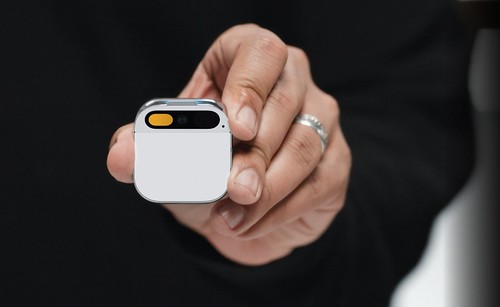
The Humane AI pin has been hyped for a while. Now it’s been launched as a product with what seems to be a small initial batch based on a waiting list and drop type distribution model. I thought I would wait a bit to post on the Humane AI pin and let the dust settle.
The Humane AI pin is an interesting take on a personal device. particularly with its ‘AI experience’ switching – picking the right smarts for the right task. This seem to fulfil the kind of vision that the likes of Kevin Kelly have outlined in the past. It also seems to access communications services like messaging services and the audio design in the product seems interesting. There is also a projected interface of sorts on the Humane AI pin. It’s an interesting alternative direction to the spatial computing vision of Apple’s Vision Pro.
The Humane AI device falls down in being such a network-centric device. Although it has onboard machine learning technology, its reliance on a relationship with T-Mobile US’ cellular network is problematic. Cellular connectivity is not ubiquitous. It is one of several device visions that have been articulated over the years, but what I still don’t understand is the ‘why?’
What’s going to be more interesting is what the Humane AI pin does next?
US law firms rethink China future amid economic woes, data crackdown | Reuters – Of the 73 largest U.S. law firms with a presence in China, 32 shrank their attorney presence in the last decade, according to a Reuters review of data from Leopard Solutions, which tracks law firm hiring. In Beijing, 26 of the 48 largest U.S. law firms drew down their presence since 2018. Worthwhile reading with: US consultancy Gallup withdraws from China | FT – market research was sensitive when I worked in China. Gallup’s business was closer to consulting than a pollster to get around these challenges. Interesting that they can no longer thread the needle in China
China’s family-run businesses face succession challenges – Nikkei Asia – more than 80% of China’s 1 billion private enterprises are family-owned, with about 29% of these businesses in traditional manufacturing. From 2017 to 2022, around three-quarters of China’s family businesses are in the midst of a generational leadership transition
Post-pandemic party’s over as Americans shun cognac | FT – Half of all cognac in the US is drunk by African Americans, a demographic that has been disproportionately affected by the cost of living crisis, according to analysis by Bernstein. The skew to African American consumers is in part due to the fact that French spirits producers ignored the segregation mandated by America’s Jim Crow laws and “cultivated the African American market segment in ways that other producers did not,” said David Crockett, professor of marketing at the University of Illinois Chicago. French spirits producers at the time marketed to Black-owned and targeted publications. As early as the 1970s the advertisements conveyed a message of upward socio-economic mobility, said Naa Oyo Kwate, a sociologist at Rutgers University
Wong wanted to enter the U.S. consulate. The diplomats told him that only the rooms in the St. John’s Building were on offer, and that the office tower did not offer the protection of a diplomatic compound. In Washington, Ngo took the matter up with one of Hawley’s policy advisers, reasoning that the ultra-Trumpian senator might have the president’s ear. Responding at 1 a.m., Hawley’s staffer promised to pass the message on to his boss, but nothing changed. On July 1, the national-security law passed. The diplomats’ positions were the same: Wong couldn’t enter the consulate and couldn’t apply for asylum from outside the United States. Wong and Ngo knew the rules. But they were asking for the same pathway to haven that had been granted to Fang and Chen…
The focus in Washington has moved on from Hong Kong to Taiwan. The island is under constant military threat from Beijing, which claims the territory as its own, even though the Chinese Communist Party has never controlled it. But for those in Taiwan who cherish their democracy, Hong Kong’s story offers a cautionary tale. The United States gave Hong Kong’s cause its vocal backing, then abandoned the city in its time of greatest need.
Asia is much more important to U.S. interests than the Middle East | Noahpinion – East Asian cities like Tokyo, Seoul, Singapore, and until recently, Hong Kong are arguably the world’s most magnificent — hyper-dense and efficient and bustling with life and creativity and personal freedom, but also extremely safe. East Asia is a wealthy region with high quality of life across the board, rivaled only by North Europe and parts of the Anglosphere. Maciej Cegłowski called them “Zeroth World”, and I think that is an apt description. – the burn for Hong Kong on this is real
Ideas
The challenges of sustainable societies and solar punk.
The one where Chandler Bing’s impenetrable job defined a generation | FT – André Spicer, Executive Dean of Bayes Business School, suggests a new category altogether: a “Chandler Bing job”, one indifferent to finding meaning, “low on existential rewards but relatively high on extrinsic rewards, like pay and promotion”. Chandler’s stoicism more broadly reflects Gen X’s tacit acceptance of their lot: the forgotten latchkey kids squished between the Baby Boomers and the Millennials. Jennifer Dunn, author of Friends: A Cultural History, says he “showed that we might not all find fulfilment in the first, or even the longest lasting job we will ever have.” Compared to today’s employers who are increasingly concerned about making their younger colleagues happy, few cared about Gen X’s work-life balance.