I have a relatively small amount of health related posts on this blog at the moment. But it’s becoming an area that’s impossible to ignore. Health and wellness is becoming central to mainstream culture.
Anxiety and loneliness have sparked what is considered by many to be a mental health epidemic and a corresponding reduction in societal resilience.
High income countries were spending as much as 14 percent of government spending on health before the COVID pandemic. The number is likely to be even higher now.
According to an article in medical journal The Lancet, poor mental health cost the global economy approximately 2.5 trillion US dollars per year and this was expected to rise to 6 trillion by 2030.
It’s an area that can’t be ignored, because of the financial burden and size of market that the sector represents.
In 2020, during the COVID-19 pandemic a UN report said the following:
Psychological distress in populations is widespread. Many people are distressed due to the immediate health impacts of the virus and the consequences of physical isolation. Many are afraid of infection, dying, and losing family members. Individuals have been physically distanced from loved ones and peers. Millions of people are facing economic turmoil having lost or being at risk of losing their income and livelihoods.
The report went on to recommend solutions such as:
Crafting communications to be not only effective but sensitive to their impact on the mental state of the populous
Community events looking at cementing social cohesion
Extending tele-medicine to include tele-counselling for frontline health-care workers and people at home with depression and anxiety.
I started to look at trends in March 2020 and there was a singularity developing around innovation and technology in the area, together with some interesting cossumer behaviour trends. Young adults made up a sizeable chunk of telemedicine non-users and as resistors to public health initiatives. Their much vaunted ‘online literacy’ saw them fall for the same tropes and older audiences considered more gullible like pensioners and retirees in Facebook groups
The August 2023 newsletter was inspired by LinkedIn’s in-built newsletter function. It’s almost the bank holiday so I thought I would spend some time to try out the newsletter function in LinkedIn.
If you’re reading this, you’re a pioneer! If this goes well I will put one out each month. You can find my regular writings here and more about me here.
LK99 & room temperature superconductors – why it was a big deal, what it would have meant if it were true and the damage likely to have been caused given it’s likely to be false.
Chip War by Chris Miller. You can read my full review here.
Things I have been inspired by.
How left wing politics inspired Prada’s clothing designs.
Encouraging empathy for people with dementia in Japan with the restaurant of mistaken orders (scoll to the end here to find out more).
Things I have watched.
Three Body Problem. Chinese adaption by Tencent Video and made available for FREE on their YouTube channel. Don’t worry it has English subtitles. This is based on the blockbuster novel The Three Body Problem by Chinese science fiction author du jour Cixin Liu. The three books in the series are all fantastic and there is soon to be a Netflix adaption as well.
The Peripheral on Amazon Prime Video. An ambitious adaption of William Gibson’s novel of the same name. Amazon Studios recently cancelled the next season of this drama, which is a real shame as its one of the stand out series amongst the content on Prime Video.
Un Flic and Le Samourai – the magical formula of French new wave director Jean-Pierre Melville and actor Alain Delon created some iconic crime films that inspired directors in Hollywood, Hong Kong and Japan.
The sales pitch.
Available for strategic engagements in the autumn. Contact me here.
The End.
Congratulations, you’re reached the end of the August 2023 newsletter. Until next month: be excellent to each other. Let me know what you think or if you have any recommendations to be featured in forthcoming issues.
What prompted me to write about Geico advertising was a stream of news from marketing services companies about the state of technology company advertising. At the time of writing Stagwell are just the latest marketing services firm after S4, IPG, Omnicom and WPP have pinned declining profits on a reduction in technology company advertising spend. Then this story broke about Geico advertising: Insurer Geico made more money after benching its famous gecko | Quartz – and my first reaction was that the wrong lessons might be taken away from this.
Geico advertising – a primer
Geico îs an unfamiliar name to most people outside of the US. If you’ve read American magazines chances are there was a print ad or two in there with their iconic Gecko spokesperson. It’s a similar case on American television.
Geico advertising and their Gecko are as familiar to Americans as the meerkats of Comparethemarket.com are to your average Brits.
The truth about technology marketers vs. Geico advertising
Having worked with technology brands on and off for the past three decades, I have enough experience to know that generally, they aren’t great marketing organisations.
Coinbase’s Super Bowl ad drove traffic to a site that fell over.
Geico reinforced brand equity in the insurance space and pointed out their 24-hour claims hotline (I imagine that this isn’t an exclusive feature, but you wouldn’t know it from the advert).
Growth mindset ≠ marketing mindset
As organisations, they have a growth mindset, but not a marketing mindset. Before the internet, this meant a powerful field sales force organisation and marketing meant a bit of branding / design work coupled with case studies for the sales people. With the internet came constant iterative ‘growth hacking’ on digital channels, that mirrors agile software development rather than the best practices of marketing science.
There is a good reason why organisations like the Ehrenberg-Bass Institute for Marketing Science are supported by FMCG manufacturers, luxury goods makers, media companies, marketing services firms and pharmaceutical companies, BUT has no technology company sponsors.
The reasons are cultural in nature:
Engineering – if I haven’t heard of it or invented it then it’s not valid and you’re just a suit. At best great product is the marketing – and that’s great if you have a clearly differentiated great product which is self evident. The engineering mindset is also why they trust adtech and marketing automation services which outsource your marketing communications approach to a black box
Sales – marketing is just support. Which is the reason why my early clients (like old school Silicon Valley royalty LSI Logic) promoted long serving secretaries and administration staff into marketing roles
Even if they had a marketer who knew about Ehrenberg-Bass they wouldn’t be able to get in buy-in from the wider organisation to participate and they’d likely be fighting other dumpster fires elsewhere
Secondly, their laser focus on data affects their outlook. To paraphrase the comedian Bill Hicks: they know the price of everything, but the value of nothing. Because they are only looking at short term data. Great marketing and advertising also has long term effects that both screws with the short term marketing data focus.
Marketing and growth hacking are considered synonymous. It would seem ridiculous for me to to claim in any large marketing orientated organisation that sales and marketing are synonymous. The differences and complementary aspects of both would be well known. Yet in technology companies, this isn’t the case.
By contrast Geico as a brand is an organisation who understood marketing. You make your car or house insurance decision at best once a year (though there is friction in making a change).
The technology sector approach would be for Geico to bid on search ads and aggregators to acquire customers and then do direct mail or email when it comes to renewal times. But Geico advertising does something different. Geico advertising builds mental framework, so that Geico means car insurance and will be one of the brands that you consider.
This achieves a few things:
You are less likely to move away from Geico, you may not love them, but searching for an alternative might be too much of a hassle.
You may be reassured that you have chosen ‘the’ car insurance
It helps new customers get over the ‘which car insurance company to choose’ decision
It helps with upsell on the products due to the reassurance of the brand
Technology companies deal with these problems in a slightly different way:
Certification of engineering staff. If you are Microsoft certified or Cisco certified, you are less likely to use open source software or Juniper Networks products respectively. It would be against your self interest and the investment in terms of time and money that you have made in your self development
Contractual lock-in – self explanatory
Technology lock-in. You can put your data or programming code into a particular system, but its much harder and more expensive to move on to another system
Owning the entire technology stack. This is the approach that Adobe Systems have taken, gradually acquiring over the years the entire marketing, workflow and creative systems used by ad agencies, media agencies and their clients
So why was Geico advertising spend cut?
This is the crux of my point about how the wrong lessons might be taken away from the Geico advertising spend cut, with no ‘apparent’ impact.
There are a number of good reasons why Geico made the cut in advertising spend:
There was a cut in insurance sector advertising overall, so that Geico maintained or even grew its relative share of voice while spending less. This should see it emerge with improved economic performance over time. Procter and Gamble became the behemoth it now is by INCREASING advertising during the great depression of the 1920s. So the idea of relative share of voice and its relationship to market share is older than I am. Further more research by the IPA has found that holding or increasing relative share of voice during a downturn has a positive impact for business performance over a five year period
Geico may have managed to make some efficiency gains, this is most likely to occur in brand activating activities
There is also a bad reason: saving money in the short term. Kraft Heinz cut marketing to the bone under the guise of zero based budgeting (ZBB) – which made a mockery of ZBB as a concept. Kraft Heinz shares massively underperformed and were down 60% in the last 5 years, compared to the S&P 500 having gone up 69%. If Geico is following this route then it bodes ill for the long term performance of the business.
Without us knowing the real reasons and focusing on the short term measure, it reinforces a growth hacking mindset.
Hard times mean no sustainability premium in North America | WARC | The Feed – every single economic recession this comes around and marketers are surprised. Time to pay attention to what the longitudinal research data says. I really like the work that Gallup have done on macro trends and the American consumer, in particular their work on attitudes to the environment.
‘Pokémon Sleep’ Review: Sleep-Tracking Game Made Me Into Snorlax – gamifying sleep. Pokemon Sleep has surged to 3.2M global downloads and an estimated $130k in daily revenue according to SensorTower data. The app ranked in the top 5 in the U.S. Games charts. It’s even more popular in Japan (the home of Pokemon), where it’s number 1 across the App Store categories
Using attention to scale creative excellence at Mars | WARC – Sales, distinctive assets, and attention to advertising are the go-to metrics to guide marketing decisions at Mars. Mars use Attention as a pre-testing tool, to inform creative choices in digital and also proxy in TV. Mars believe that an execution with a better attention score will travel across media channels better and will be a safer bet for you when you need to make a choice. Measuring Attention is a key element in helping us improve the creative hit rate. Advertisers should question how they measure consumer responses and focus on measures of real consumer behavior.
MLM or multi-level marketing is where people who need to make money buy product from a company like Avon, Amway, Herbalife, Nu-Skin or Tupperware. Usually the franchisee doesn’t buy directly but through a contact. They may be a long way down in a chain of sellers, which means you end up with a pyramid scheme. Some have described the onboarding and seller communications as a cult. (Disclosure, I did a bit of agency work on Nu-Skin when I worked in Hong Kong, I got to see products, but not how they were sold).
Financial freedom
The real product of MLM seems to be hope. Discussing the downside of MLM at this time is important. Financial freedom is going to sound particularly appealing to struggling middle class households wrestling with the cost of living crisis and rising mortgage interest rates.
These videos by Sean Munger give a really good insight into Amway.
Ponzinomics
Robert Fitzpatrick’s self-published Ponzinomics seems to be the most cited book talking about the underbelly of MLM. Here’s an interview with him.
Soviet space programme
Enough time has gone buy for us to know how innovative the Soviet space programme was. Some of the innovations were dictated to them by limitations in production campacity. I came across these films about it.
And how Russian closed cycle rocket engines surprised NASA after the cold war.
I, Claudius
Robert Graves period drama novels I, Claudius and Claudius the God were remade in 1976 as a 13 part TV series. (The first two episodes are called 1a and 1b, presumably to avoid an episode 13, given that theatre as a whole is superstitious). In 1965, the BBC had done a documentary about the unfinished 1937 film version and had found bringing their version to television difficult due to production rights still tied into the 1937 production.
I, Claudius was considered to be a high water mark from point of view of audience viewership of more high brow material and latterly critics consider it to be one of the best TV programmes ever on British TV.
Hello Hong Kong
I received post from friends in Hong Kong and the package had a large sticker highlighting the Hello Hong Kong campaign which the government has been using to paper over the cracks left by its authoritarian pivot.
Hello Hong Kong mandatory sticker.
One part of me thought that ambient media such as the sticker might be a good side hustle for mail services everywhere. As I dug into it, I found out that the staff ‘had to’ put these stickers on the packaging and at least some of them were doing so reluctantly. At least some customers were reluctant for their packages to be ‘propaganda banners’ for the Beijing backed regime. Meanwhile 7/21 alleged government backed triad actions are still fresh in the mind of locals.
YKK
You don’t think about how YKK clothes zips work effortlessly, but this Asianometry documentary gives you insight into the Japanese zip manufacturer.
Starbucks Rewards as massive bank
I used to use the Starbucks pre-payment system back when I could use it in both the UK and Hong Kong, but a rupture came in when Starbucks removed its rewards scheme from stored value cards to an app. So I found this video by ColdFusion reframing the Rewards scheme as a large bank like pool of money more akin to PayPal’s float than Avios loyalty points.
Apollo project astronauts off the record
On everything from the context of Project Apollo through to their views on climate change.
Restaurant of mistaken orders
A Japanese pop-up retail project with restaurant servers who are suffering from dementia. I was sent the link by a friend of mine from Japan – the Restaurant of Mistaken Orders really brings the impact home.
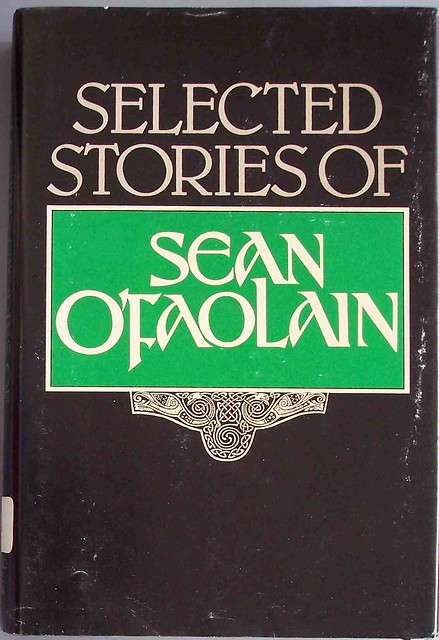
An interesting documentary from 1971 that explores the idea of ‘The Irish Race’ – it is one episode in a 10-part documentary series ‘We The Irish’. It features some of Ireland’s leading public thinkers at the time including Conor Cruise O’Brien and Seán Ó Faoláin. ‘Race’ as a term is more problematic now than back then as there were so few Irish people who weren’t white European looking as Ireland was a next exporter of people rather than welcoming inbound migrants until recent decades. Secondly, the Irish people were constantly having to establish their identity, culture, language and accomplishments in the shadow of their former colonial rulers.
Ó Faoláin an internationally famous short-story writer, a key part of the Irish arts establishment and a leading commentator and critic – a role played by the likes of Fintan O’Toole today.
The discussion about the Irish race was an essential part of decolonising the Irish identity; by emphasising Irish distinctiveness and salience rather than reinforcing racial superiority. A process that countries like Singapore and Malaysia would wrestle with in subsequent decades too.
Tracing The Irish Race
Ó Faoláin starts his discussion with the book Facts About Ireland that was published for over three decades by the Irish Government. The book itself is like a more in-depth version of the CIA World Fact Book profile on Ireland. It was available in souvenir shops up and down the country, my parents probably have my copy of the 1979 edition that I purchased from Salmon’s newsagent and post office in Portumna
O’Brien was part of the Irish elite. His father was a journalist for a Republican newspaper pre-independence and he married into the political establishment of the Irish Republic. But that shouldn’t take away from his achievements in the various facets of his career by turns was an Irish diplomat, politician, writer, historian and academic.
The series also marks a different kind of high brow factual television than we are used to seeing now.
The Case for a Hard Break With China | Foreign Affairs – U.S. theorists and policymakers ignored the potential risks of integration with an authoritarian peer. Globalization was predicated on liberal economic standards, democratic values, and U.S. cultural norms, all of which were taken for granted by economists and the foreign policy establishment – the arguments in the article are not new, what’s interesting is that they are being run in Foreign Affairs magazine and that should worry China
Tesla’s secret team to suppress thousands of driving range complaints | Reuters – Tesla years ago began exaggerating its vehicles’ potential driving distance – by rigging their range-estimating software. The company decided about a decade ago, for marketing purposes, to write algorithms for its range meter that would show drivers “rosy” projections for the distance it could travel on a full battery, according to a person familiar with an early design of the software for its in-dash readouts. Then, when the battery fell below 50% of its maximum charge, the algorithm would show drivers more realistic projections for their remaining driving range, this person said. To prevent drivers from getting stranded as their predicted range started declining more quickly, Teslas were designed with a “safety buffer,” allowing about 15 miles (24 km) of additional range even after the dash readout showed an empty battery, the source said – fundamentally dishonest
Six Bubble Tea Chains Plan IPOs in Bet on China Consumer Revival – Bloomberg – Firms with fast franchise growth not allowed to list onshore. Mixue, ChaBaiDao, GoodMe among firms weighing listings. Who is to say that these businesses won’t be like Luckin Coffee? If the Chinese government won’t allow them to list at home and they don’t want to list in Hong Kong, one has to wonder about the state of these businesses
A couple of things about this video. Major Australian TV network asked YouTuber ColdFusion to make this documentary. YouTubers are now competing against TV production houses for production briefs. Secondly, the video offers a positive take on how machine learning may impact healthcare.
JustoffJunction.co.uk – genius app for planning British motorway travel, the reason why you would care would be the inflated prices at motorway services stops
The two stand out films of the summer are Barbie and Oppenheimer . Oppenheimer is a biopic of scientist and Manhattan Project lead J. Robert Oppenheimer, based on the book American Prometheus: The Triumph and Tragedy of J. Robert Oppenheimer. Oppenheimer went on to lead the projects Los Alamos lab. Los Alamos National Laboratory has gone on to do scientific research on defence projects as well as health related projects. Casting of Cillian Murphy provides a good physical resemblance of Robert Oppenheimer.
J. Robert Oppenheimer biopic
Oppenheimer is a complex film with the story told in the form of flashbacks. It also tries to reinterpret Oppenheimer for the present day, with a sense of guilt that Oppenheimer never personally expressed. But Oppenheimer had been concerned about the nuclear arms race and weapons proliferation. He opposed the subsequent development of the hydrogen bomb. These positions along with his friendships with communist party members in the US, led to him losing his security clearance in 1954.
J. Robert Oppenheimer via the US Department of Energy
Barbie
Barbie looks to bring to life Mattel’s toy characters Barbie and Ken. Barbie was introduced in 1959 as a copy of a German fashion doll line. The fashion doll line came out of a cartoon strip in the Bild tabloid newspaper. Mattel went on to buy the German originator and shut it down. But by this time the German doll moulds were bought or copied by manufacturers in Hong Kong and Spain.
1990s vintage Barbie
The Barbie movie addresses head on the cultural and design legacy of Barbie alongside present-day culture wars
Barbie starts off in a matriarchal fantasy world; Ken is represented as a boy toy
Eventually Barbie and Ken end up in the real world. Barbie meet her owner who accuses her of setting unrealistic beauty standards
Ken learns about the male patriarchy, which means a battle of the sexes ensues when they both return to toyland
Barbeheimer
Both Barbie and Oppenheimer were released in the cinema at the same time going head-to-head with Mission Impossible: Dead Reckoning Part One. This led to cinema goers taking advantage and buying a ticket to see each film one after the other. The practice of watching Barbie and Oppenheimer as a double-bill became so common it was given its own name Barbenheimer, when then became a thing in the news, on podcasts and social media. It has been credited with listing the business performance of cinemas, while sit on the edge of a recession. In fact in the UK, for some of the weekend, both Picturehouse cinemas and Vue cinemas websites were having trouble handling customer traffic.
Google Tests A.I. Tool That Is Able to Write News Articles – The New York Times – One of the three people familiar with the product said that Google believed it could serve as a kind of personal assistant for journalists, automating some tasks to free up time for others, and that the company saw it as responsible technology that could help steer the publishing industry away from the pitfalls of generative A.I.