The online field has been one of the mainstays since I started writing online in 2003. My act of writing online was partly to understand online as a medium.
Online has changed in nature. It was first a destination and plane of travel. Early netizens saw it as virgin frontier territory, rather like the early American pioneers viewed the open vistas of the western United States. Or later travellers moving west into the newly developing cities and towns from San Francisco to Los Angeles.
America might now be fenced in and the land claimed, but there was a new boundless electronic frontier out there. As the frontier grew more people dialled up to log into it. Then there was the metaphor of web surfing. Surfing the internet as a phrase was popularised by computer programmer Mark McCahill. He saw it as a clear analogue to ‘channel surfing’ changing from station to station on a television set because nothing grabs your attention.
Web surfing tapped into the line of travel and 1990s cool. Surfing like all extreme sport at the time was cool. And the internet grabbed your attention.
Broadband access, wi-fi and mobile data changed the nature of things. It altered what was consumed and where it was consumed. The sitting room TV was connected to the internet to receive content from download and streaming services. Online radio, podcasts and playlists supplanted the transistor radio in the kitchen.
Multi-screening became a thing, tweeting along real time opinions to reality TV and live current affairs programmes. Online became a wrapper that at its worst envelopes us in a media miasma of shrill voices, vacuous content and disinformation.
Bob Hoffman has been pointing out the problems with the way online advertising has been run for years. Bob’s book Adscam is probably one of the best critical examinations of the online media eco-system and the risks inherent in programmatic advertising.
Bob Hoffman got to speak with the European Parliament. Bear with it as audio improves through the recording.
He also spoke at the Digital Marketing is Broken event.
Interesting talk on the benefits and limitations of economic sanctions with a particular focus on Iran and Russia.
Ireland
I never realised that Sony had a factory in Ireland as early as 1960; Sony globalised production of transistor radios relatively early on in their production life. Compare this to the later US technology businesses setting up shop in Ireland over the next couple of decades. This also might go someway to explain why Sony was such a respected brand in Ireland and shows how visionary and experimental the Sony management were. These comments on Irish workers in 1963 versus their Japanese counterparts are interesting. The assembly workers don’t seem to realise the intrinsic value of (the Sony Japan-made) transistors that go into the products – this might be down to education as this was likely a soldering and screwing products together assembly line.
Suzuki-san points out what he thinks are flaws with Irish workers whilst recognising that this partly down to the different social contract between employee and business. Part of the problem was that Irish workers had the opportunity of going abroad without any government restriction compared to Japan. Suzuki-san didn’t believe that Irish workers are bad workers, but rather they require more investment to encourage them to become good workers.
Interesting perspective on the Windsor Framework from an Irish and EU perspective. Tony Connelly did one of the best podcast series on the Brexit process for RTÉ
Materials
I am a big fan of the Rose Anvil account for the way they take a deep dive into materials and shoe construction. Here’s a great example of their work which shows the design principle of what you leave out is as important as what you leave in a product.
Retailing
Olivia Moore on Temu e-commerce app. Her idea of ‘invisible AI’ is actually more prevalent than Ms Moore thinks, otherwise great conversation to listen in on.
Connie Chan does a short talk on the future of e-commerce.
Armani, the eponymous luxury fashion label of Giorgio Armani posted advertisements in the Financial Times this week. The advertisements harked back to Armani’s looks of the 1980s and 1990s. But what I thought was most notable about the advertisements was their promotion of made-to-measure menswear.
Armani via the FT
Armani is clearly putting its weight behind a return to the office. Presumably Armani think that this move back to the office will also mean a move to formal business dress. This doesn’t seem to be supported by what I have been seeing and is in a stark contrast to the current approach of rival Zegna. Armani have called a lot of past trends right. They were one of the first brands setting up a retail network in China. They were early to putting their catwalk shows on the web to gain a wider audience. Armani were clever in the way they approached licensing of their brand. During the 1990s Armani expanded into sportswear, watches, eyeglasses, cosmetics and home which looked prescient in retrospect.
We’ll see if Armani’s views on a return to the office pan out, I am not so sure it will be.
SVB’s First Failure – The Wire China – SVB’s Board had asked me to found a brand-new bank: the Shanghai Pudong Development Silicon Valley Bank (SPD SVB), a joint venture between SVB and the state-owned Shanghai Pudong Development Bank. The board had committed $100 million to establishing SVB’s operations in China, and I was filled with goodwill and optimism about the endeavor. Although I thoroughly enjoyed my time in China and the many friends I met there, from today’s vantage point, I firmly believe we were (and are still) being played.
For female journalists, covering China comes at a cost — Radio Free Asia – The sheer volume of vitriol targeting reporters given China’s size and the nationalistic fervor of many of its citizens can set the abuse apart. Compounding their anxiety is a fear that the intimidation is sanctioned, if not coordinated, by the Chinese Communist Party itself. “When, for example, an American female journalist gets trolled, it’s probably coming from right-wing crazies or some fringe corner of society,” said Vicky Xu, a journalist in Australia, whose reporting on abuses against Uyghurs in Xinjiang brought a flood of death threats. “The kind of role and voice they have is very, very limited.
Opinion | Xi’s visit to Putin should worry the West – The Washington Post – If you were looking for another reason why it’s important that Ukraine succeeds against Russia, consider the photos from Moscow. “The President of Eurasia” — I fear that’s the invisible caption of the pictures of Xi that we’re seeing amid the Kremlin’s golden doors and red carpets. The idea that a vast swath of the world is dominated by a China that stands so resolutely against freedom and democracy is chilling. If this alliance succeeds, we will live in a darker world
A Campaign to Remind Us That We Love New York (City) – The New York Times – The people who came up with We ♥ NYC say it is a mark for a different time. But they see parallels to the troubled era that gave rise to I ♥ NY. “We’re hopefully going to be able to cut through divisiveness and negativity” that accompanied the pandemic, said Kathryn Wylde, the president and chief executive of the Partnership for New York City, a consortium of corporations and business executives that is leading the We ♥ NYC campaign. She said that besides rejuvenating people’s spirits, “we want to remind them they can make a difference, whether it’s on the block or in the city as a whole.” She added: “We want to remind them we don’t have to maintain these divisions that have grown up between business and labor and rich and poor.” She cited surveys her group had conducted during the pandemic. “The results we’ve gotten back are people in New York want to be part of fixing what they see as broken in the city,” – Interesting choices in this. Curious to know why they didn’t rally around the previous campaign? It was atemporal in design and a personal commitment, the NY aspect of it implying inclusion? The new one has a lot of challenges: it lacks visual symmetry & balance. Ironically the original works better in digital contexts (for instance as an app logo) than the new version. The emoji heart will date very fast. The font choice I don’t understand. And what about the exclusive nature of NYC rather than the inclusive aspect of NY – even a DE&I fail. ‘Tunnel people’ are a key part of NYC too.
IPSOS noted that global inflation likely peaked in 2022 (according to IMF), and negotiations are happening at the moment between retailers and FMCG companies. Consumers will still grapple with high prices for a good while yet. Ipsos posit that the inflation creates opportunities for growing market share via innovation, with a view to eventual revenue growth.
How Chinese Companies Are Reinventing Management – If a team splits up and some members form a new team, the leader of the new team must pay a fee to the original team for its previous training of the acquired staff. Moreover, the company’s financial system automatically transfers 10% of an acquired staffer’s bonus to the original team leader every month for one year. This system encourages each team to reorganize and generate new autonomous teams
Amazon Faces Moment of Truth on Alexa as ChatGPT Steals Its Thunder — The Information – Toyota doesn’t seem to need Alexa anymore. The automaker has dropped support for an app that allowed users to operate Alexa in their cars via smartphones in 2023 editions of several of its most popular models, including the RAV4, Prius and Corolla. And according to a person close to the automaker, Toyota plans to phase out Alexa integration from the rest of its lineup in the coming years. The automaker is now focused on improving an in-house voice assistant it launched last year and is considering integrating ChatGPT, the chatbot created by OpenAI, into it
Style
The influence of cyberpunk on tech wear and functional fashion. William Gibson’s Zero History talks explicitly about the function and tech wear nature of military clothing. They are a central part of the plot line.
Technology
Amazon Faces Moment of Truth on Alexa as ChatGPT Steals Its Thunder — The Information – Toyota doesn’t seem to need Alexa anymore. The automaker has dropped support for an app that allowed users to operate Alexa in their cars via smartphones in 2023 editions of several of its most popular models, including the RAV4, Prius and Corolla. And according to a person close to the automaker, Toyota plans to phase out Alexa integration from the rest of its lineup in the coming years. The automaker is now focused on improving an in-house voice assistant it launched last year and is considering integrating ChatGPT, the chatbot created by OpenAI, into it
Taiwan
I am currently reading Chris Miller’s book Chip War. This is a great talk by Chris about many of the areas covered in the book
I was introduced to Gordon Moore and Moore’s Law through a college class on innovation taught by my friend Neil Keegan. I have also just read Michael Malone’s The Big Score; an account written in the early 1980s that Gordon Moore featured in as one of the co-founders of Intel.
Gordon Moore taken for an OnInnovation interview he was doing circa 2008 for the Henry Ford Museum of American Innovation
Gordon Moore was a San Franciscan by birth but educated at John Hopkins University, rather than Stanford University. He worked at Shockley and at Fairchild Semiconductor prior to co-founding Intel. In many respects Gordon Moore was more low-key than other Intel founders like Bob Noyce or Andy Grove – but the ideas behind Moore’s Law echoed around the world. The law has been interpreted and misinterpreted by technologists, economists, journalists and policy makers the world over.
Moore’s Law
Gordon Moore made an observation that was published in 1965 and became an immutable forecast for the rest of the 20th century that would guide the direction of the semiconductor industry and every industry that relied upon it.
It started off with an article that Gordon Moore had published in Electronics magazine on April 19, 1965. He observed that the number of transistors were doubling every year over a 10-year period. This relationship was widely known by people working in the field. But the semiconductor field was a small community and the name Moore’s Law eventually stuck.
The complexity for minimum component costs has increased at a rate of roughly a factor of two per year. Certainly over the short term this rate can be expected to continue, if not to increase. Over the longer term, the rate of increase is a bit more uncertain, although there is no reason to believe it will not remain nearly constant for at least 10 years.
Once, that had been proven correct in 1975, Gordon Moore went on to revise his model to assume a similar effect very two years. This was presented in a speech at the IEEE International Electron Devices Meeting that year.
All of this meant that technologists like those at the Computer Science Lab at Xerox PARC could spend large amounts of money building foundational technologies and know that the ability to commercially produce these items would catch up ten years hence. Robert X. Cringely posits that much of the dot com bust was down to an industry getting too ahead of itself in terms of what it estimated Moore’s Law could achieve in the mid-to-late 1990s.
Integrated circuits started finding their way into everyday products and facilitating new product categories such as laptops, smartphones and the modern web.
China detains staff, raids office of US due diligence firm Mintz Group | Reuters – “Red alerts should be going off in all boardrooms right now about risks in China,” the source, who did not wish to be identified due to the sensitive nature of the matter, said. China has said it welcomes foreign trade and investment but stressed that security comes before development. U.S. businesses operating in China are increasingly pessimistic about their prospects in the world’s second-largest economy, according to a survey released this month by the American Chamber of Commerce in China. Two-thirds of the respondents cited rising U.S.-China tensions as the top business challenge. Western due diligence companies have got into trouble with Chinese authorities before. British corporate investigator Peter Humphrey and his American wife Yu Yingzeng, who ran risk consultancy ChinaWhys, were detained in 2013 following work they did for British pharmaceuticals group GSK. Humphrey, who spent two years in jail for allegedly acquiring personal information by illegal means, which he denied, told Reuters that providing due diligence in China was even harder now because of a “massive tightening in access to information.” – Ok a bit of context. If Gordon Moore hadn’t died this post would have been Mintz Group + more things – this is how big this is. The Mintz Group is a respected due diligence research company. If you are looking to:
Buy a business and want to know if its real, or what the states of the assets are
Want to ensure that you are not doing business with legally sanctioned entities
If you are a finance firm and want to ensure that the people you are considering to invest in are who they say they are and the business actually exists and works in the way they claim
If you are trying to find out if your supplier is conducting themselves in an honest manner with you
The more opaque China becomes, the less tenable it becomes to conduct work there, do business with Chinese companies or invest in Chinese companies and the Chinese economy. The timing is less likely to be intentionally symbolic than happenstance, but either way it isn’t good news.
Apple ‘Porn’ Filter | Techrights – a disturbing development that opens a Pandora’s box of possible censorship and authoritarian measures in the wrong hands – which its likely to fall given the global ubquity of Apple’s technology
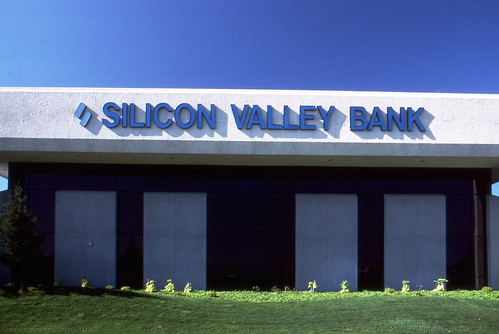
Silicon Valley Bank funded this documentary about their history from their founding in 1983 to 2003. It’s now preserved by the Computer History Museum in Mountain View – one of the towns that make up Silicon Valley.
Bloomberg have done a programme explaining about what happened with Silicon Valley Bank and how it went under so quickly. Silicon Valley Bank had problems due to raising interest rates, issues with their risk management and an abnormally high amount of customers withdrawing funds. However there was also an issue about the way Silicon Valley Bank communicated with the market, which in turn created a crisis in depositor confidence.
Health
Alphabet’s keynote and plans for the health industries. Usual nod to privacy (hahahaha), cloud computing, consumer devices and AI.
Chinese tourists unwilling to pay extra for sustainable travel options even as concern about climate change on the rise, McKinsey and Trip.com report says | South China Morning Post – Chinese travellers are increasingly concerned about climate change and are aware of their environmental footprint, but are still not ready to pay extra for sustainable travel, according to a recent report by consulting firm McKinsey & Company and Chinese travel services provider Trip.com Group. Data from McKinsey, which surveyed a total of 5,457 respondents from 13 countries including China, the United States, India and Saudi Arabia, showed that more than 60 per cent of Chinese travellers were worried about climate change and believed that commercial aviation should become carbon neutral in the future, putting China near the top among the countries surveyed. A separate survey conducted by Trip.com last year showed that almost 85 per cent of Chinese travellers rated sustainable travel as important or very important. However, compared to travellers from other countries, Chinese tourists are reluctant to pay a premium for sustainable travel. Only 20 per cent of surveyed Chinese tourists said they would pay 2 per cent extra for carbon-neutral airline tickets, ranking near the bottom among the countries surveyed – well what would you expect when you have been repeatedly told by your government and media that the west and the United States is to blame for it all anyway? Secondly, civil society like Greenpeace or the Sierra Club can’t operate in China which will also affect awareness
More on the serious issue of violent crime for luxury watches in London. I wrote recently about the ‘London Watch‘ where watch wearers have an empty wrist when going around central London. This is going to negatively impact everything from luxury sales to hospitality and tourism in the UK at a time when the economy can ill-afford to turn down business.
The YouTube algorithm can take you into odd places, so it was with me and the London Watch. The watch collecting community is a global connected bunch of super passionate and and seriously nerdy people. It’s not the kind of stuff I would generally have bothered with. Watch collectors, particularly at the premium to luxury end of the scale have have started to talk about London (and by the implication, the rest of the UK) as hive of crime.
Watch community YouTubers often do a wrist check to show what timepiece they have on. Usually you will see a luxury or cult timepiece. But I have started to notice a few videos talking about the presenters empty wrist as a London Watch. You can see it on this live stream by Paul Thorpe just after the 9-minute mark. He was doing the video from right by the Oxford Circus shopping area in Central London.
The implication being that only going watchless or wearing a plain looking Casio is the right ‘watch to wear’ in Central London.
Crime tsunami
A random walk through Google News yielded these examples:
In February 2022 Saul Murray was drugged and stabbed to death for his watch collection. East London trio convicted after man’s ‘horrific’ death | Hackney Gazette – describes how they befriended him to gain access to his home, drugged him so they could search the apartment and then stabbed him and left him to bleed out
It took seven years for YouTube celebrity Yianni to talk about having his watch taken in a violent robbery that occurred back in 2016
My list of robberies isn’t exhaustive, but the constant drip, drip, drip of this news helped drive the idea of the London Watch.
Staggering scale
In October 2022, a luxury auction house ran a public safety campaign advising watch collectors to leave their pieces at home after they were alarmed by the Metropolitan Police’s own crime numbers. This came after the police tried and failed to assure Londoners and tourists over the summer. In April and May 2022, there was a 60 percent increase in high value watch robberies just in Central London with a 100 having been reported and investigated by the Metropolitan Police.
Watch crime has been happening in European tourist spots as well such as Barcelona and Paris, but the UK seems to be particularly blighted. London based watch crime has even attracted the attention of US watch collector hobbyist site Hodinkee who featured it heavily in an article on the international view.
Between January and July 2021 there were 377 reported watch thefts, according to the Met Police compared to 621 in the same period during 2022.
Police have attempted to stop some incidentsin progress, but the scale of the problem seems to be beyond their current capability and capacity.
Possible contributing factors
Rich opportunity. London is an international city and hosts high net worth individuals from different countries all year round. Many choose to make it their home
Luxury watches get a good return for the thieves. Apparently a watch will net the thief half its face value when fenced. By comparison diamond or gold jewellery will fetch roughly 10 percent of its value. I was surprised by this as all high end watches have a traceable serial number, which would make it harder to pass on. Many are apparently stolen and shipped out of the country, though some end up for sale online
Thieves have very little chance of getting caught. The amount of incidents that are happening versus the amount of successful police investigations means that both watch and phone thefts are a low risk, lucrative option for thieves. Despite London have a large amount of CCTV systems, only a small percentage of the crimes are solved. Finally the police are under-resourced for the scale of the task they face
The high level of violence involved is troubling and reason for it isn’t immediately apparent.
Thieves seem to use social media research and spotters to find their mark. Many of these spotters work as staff in restaurants, hotels, bars and night clubs frequented by the rich.
Luxury sales will be impacted, this looks like the likely reason that auction houses are actively warning people in London about the risk and how to mitigate it through public information campaigns
Tourists are less likely to spend money in hospitality if they feel that some of the staff might be setting them up to be robbed
Tourists and business travellers are less likely to come to London, if they feel that the risk of violent crime is disproportionate
For the time being, be sensible and stay safe out there by wearing a London Watch.