Category: online | 線上 | 온라인으로 | オンライン

The online field has been one of the mainstays since I started writing online in 2003. My act of writing online was partly to understand online as a medium.

Online has changed in nature. It was first a destination and plane of travel. Early netizens saw it as virgin frontier territory, rather like the early American pioneers viewed the open vistas of the western United States. Or later travellers moving west into the newly developing cities and towns from San Francisco to Los Angeles.

America might now be fenced in and the land claimed, but there was a new boundless electronic frontier out there. As the frontier grew more people dialled up to log into it. Then there was the metaphor of web surfing. Surfing the internet as a phrase was popularised by computer programmer Mark McCahill. He saw it as a clear analogue to ‘channel surfing’ changing from station to station on a television set because nothing grabs your attention.

Web surfing tapped into the line of travel and 1990s cool. Surfing like all extreme sport at the time was cool. And the internet grabbed your attention.

Broadband access, wi-fi and mobile data changed the nature of things. It altered what was consumed and where it was consumed. The sitting room TV was connected to the internet to receive content from download and streaming services. Online radio, podcasts and playlists supplanted the transistor radio in the kitchen.

Multi-screening became a thing, tweeting along real time opinions to reality TV and live current affairs programmes. Online became a wrapper that at its worst envelopes us in a media miasma of shrill voices, vacuous content and disinformation.

  • Blazed & other things

    Blazed

    I was having an online conversation with friends in the game about our favourite advertising, and this one came up. I hadn’t seen it before. It’s a public service announcement from New Zealand: Blazed – Drug Driving in Aotearoa.

    Guinness Rutger Hauer ads

    I also managed to find all the Rutger Hauer ‘Pure Genius’ ads done for Guinness. A lot of it looks like fresh thinking but mainstream production now due to CGI and After Effects, but at the time it was like nothing else that you would have seen

    Nazira

    I have been listening to this mix by Nazira. Nazira is from Almaty, Kazakhstan and plays at Berlin’s Room 4 Resistance parties. There’s also a great interview with her on the Discwoman site

    Fieldnotes Newsletter

    First issue of Fieldnotes newsletter is out! | Chad Dickerson’s blog – I used to work at Yahoo! when Chad was there, so can vouch for the newsletter being all killer, no filler. Chad headed up Yahoo!’s incubator Brickhouse. I can also recommend a second newsletter Brain Reel by Gemma Milne.

    For A Few Dollars More

    Revisiting For A Few Dollars More – I love the pace, the way it was shot and the storytelling. It also has Lee Van Cleef and Clint Eastwood teaming up – EPIC. When I was a child I was confused the Lee Van Cleef playing two different characters in the ‘Dollars Trilogy’. In The Good, The Bad and The Ugly he plays a psychopathic gun for hire. In For A Few Dollars More he plays the honourable Colonel Mortimer looking for justice against a bandit.

    Gian Maria Volontè played both protagonists in A Fistful Of Dollars and For A Few Dollars More – and died both times. Leone didn’t intend for the films to be a trilogy, but they work quite well together. More related content here.

  • Twitter for Mac – some alternatives

    Twitter’s desktop client on the Mac has been pulled from the app store and won’t be supported any more. It is time to look for an alternative.  What you should choose depends on how you use Twitter, I’ve tried to outline what I consider are the best native Mac apps for Twitter.

    The alternative that I use is Night Owl (夜フクロウ or YoruFukurou)  which is a small lightweight client put together by a Japanese development team. I used it historically because it had a small footprint on my desktop which is handy when you a list running in the background. It allows you to use many of the same ‘short cut’ commands that used to be available when you could use Twitter via SMS – it helps in running a productive app now.  I have a breaking news list that I use, this is what it looks like.

    Night Owl

    You can download Night Owl from the Apple App Store or their website.

    Twitterific is probably the best maintained out of all the Twitter clients for the Mac, it looks similar to Night Owl and costs £7.99 on the app store.

    Echofon has a similar layout to Night Owl , but charges you £9.99 for the privilege. It has also hasn’t been updated as often as Night Owl.  Echofon comes in full price and light versions in the App store.

    If you are managing social media accounts then Tweetdeck is an obvious option. It’s multiple panels create a screen-wide dashboard so that you can handle mentions, direct messages and keep an eye on trending topics. It’s been last updated in 2015 and I’ve heard anecdotal evidence of it being buggy.

    An alternative to TweetDeck is Janetter Pro which provides a similar look and feel to TweetDeck but allows for further customisation including custom wallpapers (if you care about that kind of thing). It also supports multiple languages for the app interface including Japanese, Korean and simplified Chinese.  Janetter Pro was updated in May 2017, it costs £4.99, you can find out more on their website and in the app store. There is also a free version in the App Store. In my opinion Janetter Pro is an overlooked gem of a product if you want a comprehensive dashboard view. If I had to do Twitter community management, I’d invest in Janetter Pro.

    Tweetbot is the editors choice on the Apple App store and comes in at a premium price of £9.99, for this you get an interface that can flex between the Night Owl and Tweetdeck style interface design.

  • Authenticity is changing porn + more

    How social media and our obsession with authenticity is changing porn | Dazed – “Authenticity and amateur (fall) into traps about not acknowledging porn performance as craft, labour, and work”, Sullivan says, referencing a piece in the SF Weekly in 2014 by performer Siouxsie Q. In the article, the pornstar argues that, although authenticity is “one of feminist porn’s favourite words”, striving for an “authentic” sex scene undermines the labour that goes into creating a porn film. It erases the fact that performing is work, and not a hobby, which in turn justifies people watching free porn on the basis that it’s not worth paying for, says Sullivan. She thinks authenticity needs to be separated from the idea of actuality and redefined to mean the craft of the performance, in order to show people it is work and not fun and games. – Interesting the way it echoes wider media concerns from photographers, to journalists and influencers. The championing of authenticity in language is very now. It will we interesting to see how authenticity is changing porn continues.

    Apple’s iPhone X is the Instant Scapegoat for Samsung’s Failure to Win OLED Orders from Chinese Vendors – Patently Apple – “Other smartphone makers, who Samsung had hoped would incorporate OLED panels, have been slow to make the transition due to their expense and are sticking to liquid crystal displays.”

    I, Cringely Prediction #7 — 2018 will see the first Alexa virus – I, CringelyThere are presently more than 15,000 Alexa skills that have been officially approved by Amazon and are available for download. These skills do everything from launching programs to gathering data to setting reminders. Though relatively simple, each is still a cloud app that can connect tens of millions of Echo products to Amazon Web Services (AWS).

    Facebook plans to thwart election ad fraud with postcards | The Next Web – guessing that they haven’t heard of mail forwarding services? Also according the Mueller report Russia had operatives in-country

    News UK to advertisers: Run your Facebook ads on our sites | Digiday – and so the other shoe drops. The Murdoch family newspapers have led the way in mainstream media pointing out the flaws in Google and Facebook advertising in what looked to me like a sustained campaign. I am not saying that anything they’ve said is wrong, but now we get to see a ‘possible’ motivation

    EU-South Korean project to demonstrate 5G system at 2018 winter games | eeNews Europe – an overlooked part of the Winter Olympics. More Korea related content here.

  • The Four by Scott Galloway

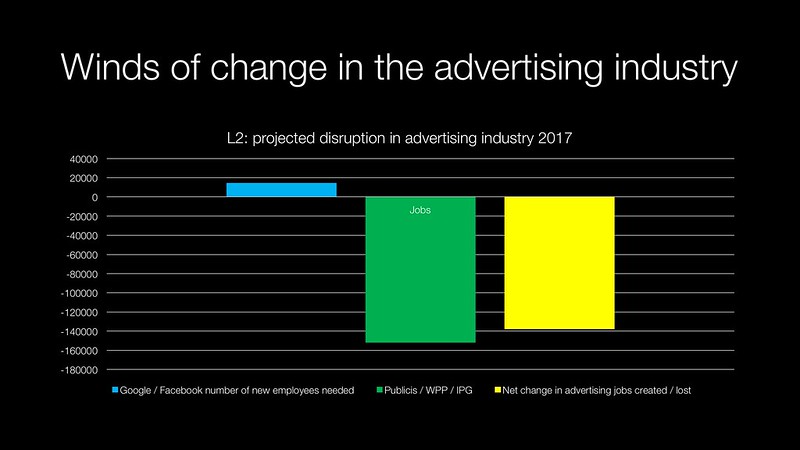
    Author of The Four; Galloway is known as the founder of L2 and as a perceptive commentator on the digital economy (well as perceptive as anyone is with a bank of researchers behind them). He admits freely in his book that his fame was due to years of effort, advertising spend, researchers, script writers, video editors and studio time.

    The Four

    The Four is Scott Galloway channelling Malcolm Gladwell; explaining for the average man:

    • How Google, Facebook, Amazon and Apple make their money?
    • How the digital economy is affecting the overall economy?
    • What are the negative aspects of their effect on the digital economy?

    Galloway does a really good job of surfing the media and policy wonk groundswell against Google, Facebook, Amazon and Apple. Despite all that Scott Galloway has been a long term shareholder in at least one of the four – Amazon. Ethics only has so much.

    As a digital marketer the book won’t tell you won’t know already know.  I found it a bit disappointing given the role that Galloway and L2 play in the industry.  Secondly, Galloway has already covered all the territory repeatedly in his media appearances and opinion editorials over the past year. He has left little unsaid that would be considered an exclusive for the book

    As a digital marketer, if you want your family and loved ones to understand what you do for the living and the major issues that are shaping your job Galloway’s book is a good option.

  • Mercedes’ China Syndrome

    China Syndrome definition: a hypothetical sequence of events following the meltdown of a nuclear reactor, in which the core melts through its containment structure and deep into the earth. A term the American’s used to imply an accident so bad that hot nuclear material burnt through the centre of the earth and out the other side (to China). It seemed an appropriate metaphor of Mercedes recent marketing debacle.

    A seemingly shallow innocuous social media post by Mercedes Benz managed to stir the passions of Chinese netizens. Many of whom broke Chinese law to jump the great firewall to complain on Instagram. A corporate meltdown ensued.

    mercedes benz

    When one looks at it from a brand marketing point-of-view two questions immediately pop up?

    1. Why were Mercedes doing filler motivational quotes in the first place?
    2. What does Chinese exceptionalism mean for brand marketers around the world?

    Motivational quotes

    Motivational quotes a tried and trusted tactic for social media marketers. But that doesn’t mean that they are any good. It really depends on what job the post is supposed to fill.

    I can’t imagine that it would have driven a lot of sharing (controversy nonwithstanding) or greatly expanded the reach of the Mercedes Instagram account.

    Motivational posts can performs really well if you are measured on engagement particularly in markets like the Philippines,Myanmar and Thailand. In the case of Myanmar, brand content serves as entertainment due to an under-developed media industry. Again I don’t know why the team would have been focusing on markets like this?

    Where they looking to tap a wider audience and position Mercedes as a brand that one would aspire to own? In developing markets where the urban middle class drive Toyota its a possibility if they were focusing on Mercedes as a luxury brand (S-class, SL-class, GT, GLS and G-class models certainly are).

    However those posts would be less likely to appeal to serious car buyers or petrol heads. Mercedes has a rich heritage in car-making and motorsport that it could have drawn upon instead.

    I imagine the problem comes down to the way goals were set for the Instagram account. They may have been lacking a clear view of who they wanted their audience to be. I don’t have any insider insight so that’s about the best that I offer.

    The Dalai Lama is a divisive figure. The Chinese view him as a ‘separatist’; whilst in the west he is respected as a religious leader and he comes across as an affable old man in media interviews. They view Tibet as an indivisible part of China.

    The quote was published within a day of American motor manufacturer Dodge being criticised for using the words of Martin Luther King in an advert. A curious social media operative should have looked at the Dodge debacle and thought ‘what does this mean for my brand’? It doesn’t seem to have occurred and that is on the social media team involved.

    Some times it is worthwhile going back to basics:

    • Treat others like you would like to be treated yourself
    • Don’t discuss politics or religion in polite conversation
    • Put three times as much effort into listening, as you do speaking

    Chinese exceptionalism

    China is an ascendancy, in the same way that a post war-era US saw the rise of US influence around the world. President Xi  echoes Chairman Mao’s China has stood up quote. His power hinges on two things:

    • The legitimacy of the party which is deeply linked to its ability lift Chinese people out of poverty.  From the Deng era onwards China has lifted over 650 million people out of poverty. It’s essentially the Chinese Dream. The ongoing crackdown on corruption in the party is linked to the legitimacy of the Chinese Dream: do what we ask and things will continue to get better in a step-wise manner. You maybe poor at the moment, but your life will continue to improve
    • Chinese nationalism: China going back out and taking its place on the world stage. Prior to the mass production of the industrial revolution; China accounted for roughly one third of the world’s total economic output. It slipped back as the industrial revolution took place in the west. Its current economic growth is seen by the party as China’s journey to regain its place

    This means that a constituency of the Chinese population and the party is extremely sensitive to perceived slights, whether they were intentional or not. Chinese sensitivity to the world accelerated since 1999 when the US air force managed to bomb the Chinese embassy in Belgrade by accident.

    I don’t think anyone believes that the Mercedes social media team thought about ways that they could offend the Chinese people – on a platform that is unavailable in China. It was negligence rather than malicious in nature.

    Timeline

    February 5: Mercedes posts a filler motivational post on Instagram with a quote from the Dalai Lama.

    Despite Instagram being blocked in China, Chinese netizens became enraged about the post.

    February 6: Mercedes apologises on its Weibo account. Chinese netizens are still angry and want the apology to also run on Instagram. Mercedes is between a rock-and-a-hard place. Pissed off Chinese netizens, or pissed off netizens from the rest of the world

    February 7:  A Chinese government spokesperson comments on the apology, with a statement that said in diplomatic language that it was prepared to get medieval on Mercedes Benz if necessary

    February 7: Senior management in Germany send a letter of apology to the Chinese ambassador in Germany.

    February 8: Second apology is reported on Xinhua. Xinhua is the Chinese government’s wire service think AFP or Reuters.

    February 9: People’s Daily – a government newspaper often considered a herald for the Party describes Mercedes as an ‘enemy of the Chinese people’

    February 13: Mercedes-Benz (China) Automotive Sales Co. will recall 1,886 imported S-class, C-class and GLC sport utility vehicles (SUVs) manufactured between July 2016 and December 2016, according to the statement. Its joint venture company Beijing Benz Automotive Co. will recall 18,893 C-class and GLC SUVs manufactured between October 2016 and February 2017. These recalls don’t seem to be mirrored in other countries, which is unusual for the 1,886 imported models – it might be a coincidence…

    The constituency

    The main critics of Mercedes seem to be particular faction of it young people with extreme nationalist tendencies called 愤青 fenqing (said fen-ching).

    They are a diverse group in terms of beliefs, but a simple view would be to think of the nationalism of Britain First supporters, but with Chinese sensibilities. They tend to come from lower tier cities and will have been less exposed to world beyond China.

    Their antics are curbed through censorship and further actions when it suits the Chinese government. It is rarely desirable to allow the fenqing enough space to run unchecked.

    When China was unhappy with South Korea; it chose not to curb protests and damage against Korean business Lotte by fenqing. Lotte owns the golf course on which the THAAD anti-ballastic missile system was placed to stop a North Korean nuclear attack on the South.  Chinese demonstrators closed Lotte stores throughout China, cause a huge amount of damage and forced Lotte to withdraw completely from the Chinese market. Those stores that weren’t picketed by protesters were closed down by Chinese local government department for (non-existent) fire code violations and fined over breached in advertising regulations. Chinese tourists boycotted Korea and Korean stores.

    They will have been supplemented by students living outside China whilst attending foreign universities.

    Context

    One has to consider Mercedes faux pas in context. It came on the back of apologies by Delta Airlines, Zara and Marriott Hotels when netizens realised that Taiwan and Hong Kong were treated as different countries on these websites.

    In Marriott’s case it was an loyalty programme research survey that caused the controversy.

    Posts like this one on Instagram have the comments section stuffed full of protests from overseas Chinese and their mainland brethren who have jumped the great firewall.

    The government forced Marriott to close its site and app in China. In addition Marriott’s social channel went dark AND the company made an apology aimed at a global audience.

    Their western social channels went dark for four days to a week depending on the channel. The implication in an article in China Daily the Chinese government ordered a shutdown GLOBALLY on Marriott’s social channels as part of the punishment.

    “To regain confidence and trust, the first thing is to admit the mistake, then fix it, and it would come back slowly as we prove we really mean what we say,” Smith told China Daily in Shanghai on Wednesday, one day before the company’s digital platforms are scheduled to be back online.

    What is conveniently forgotten is that the international websites of Chinese state-owned companies like Air China made similar mistakes.

    Why did Mercedes apologise?

    Chinese netizens weren’t going anywhere. They are angry and persistent.

    Implicit government pressure, here is a quote from a Chinese government press conference about it

    Q: According to reports, on Monday, Mercedes-Benz quoted the Dalai Lama in an English language post on Instagram. Yesterday, the company apologized and deleted the post. Was this at the behest of the Chinese authorities?

    A: I have seen relevant reports. To acknowledge your wrong and fix it is the simplest truth, universally accepted both in China and in other countries.

    I want to stress that over the forty-year course of reform and opening-up, the all-around cooperation between China and foreign enterprises has not only boosted China’s development, but also benefited the latter. As the 19th CPC Congress ushered in a new era for China’s endeavors in various causes, a China in the new era will be more open and more confident. We will continue to pursue cooperation with foreign companies, and we are also ready to share China’s development opportunities with them. However, it is needless to say that they must observe some basic rules.

    That’s diplomatic language for expect a beasting from the Chinese government and Chinese people for any perceived slights.

    Mercedes-Benz probably looked around at what its peers with major exposure to the Chinese market have done. Marriott being the most obvious analogue. Marriott’s capitulation to the Chinese government was complete and global – even at the risk of provoking the ire of Donald Trump supporting Americans. They were one Donald Trump tweet away from American First outrage over their capitulation to China, but it was a risk that they were prepared to take.

    It is worthwhile remembering that Boeing had a billion dollars wiped off its market value thanks to Donald Trump complaining on Twitter about the price of a new Air Force One plane. He has also shown an ability to mobilise his political base via social media.

    Conclusion

    The takeaway for many brand marketers in multinational firms, regardless of where in the world that they work is that they are the Chinese government’s pawn and they best get used to it. Chinese buying power has given the Chinese government the kind of exceptionalism that was previously only available to the US; then mostly because that was were many multinational companies were headquartered.

    One has to wonder how long western brands will survive by bending to the will of the Chinese government when it wants its homegrown brands to expand globally?

    Contrast Marriott and Mercedes’ behaviour with the rage-filled tone Huawei takes, particularly  in the US in the face of government criticism or negative partner actions.

    More information
    Use of Martin Luther King Jr. speech in advertisement causes controversy at Super Bowl | The Independent
    China inflicted a world of pain on South Korea in 2017 | Quartz
    China asked Marriott to shut down its website. The company complied | Washington Post
    Statement from Arne Sorenson, President and CEO, Marriott International, Inc.
    Marriott announces ‘rectification plan’ to regain trust | China Daily
    Doing business in China: Politics is still in command | HKEJ Insight
    Foreign Ministry Spokesperson Geng Shuang’s Regular Press Conference on February 7, 2018 – Chinese Ministry of Foreign Affairs
    Daimler apologizes to China for quoting Dalai Lama | Xinhua News
    Mercedes-Benz to recall 20,779 cars in China | Xinhua
    Donald Trump just took a shot at Boeing in Trump Tower | CNBC
    Huawei fed up, tells US critics ‘shut up’ | ZDNet
    The CEO of Huawei Totally Went Off Script at CES and Ripped U.S. Carriers After an AT&T Deal Fell Apart | Entrepreneur