Category: oprah time | 書評 | 서평 : 文芸批評

Welcome! I guess the first question that you have is why oprah time? Well in my last year of college I used to sit in the house that I shared with my landlord and write my essays whilst watching cable TV.

There I would be sipping tea, writing away and referencing from text books spread around me on the couch and coffee table. One of the programmes on the in the background was Oprah Winfrey. A lot of the show was just background noise. But I was fascinated by Oprah’s book club.

She’d give her take on a book, maybe interview the author. And then it would be blasted up the New York Times bestsellers list. This list appears weekly in the New York Times Book Review. Oprah’s book club was later emulated by other talk show hosts, notably the UK’s Richard Madeley and Judy Finegan.

On the high end you had Melvyn Bragg‘s South Bank Show when they profiled an author of the moment.

When I came to writing my own review of books that I’d read, I was was brought back to that time working on a sofa. Apple laptop in hand. It made sense to go with Oprah time.

You might also notice a link called bookshelf. This is a list of non-fiction books that I have kept. And the reasons why I have kept them.

If you’ve gone through my reviews and think that you’d like to send me a book to review. Feel free to contact me. Click this link, prove that you’re human and you will have my email address.

  • The Writing On The Wall China And The West In The 21st Century by Will Hutton

    Before we get into The Writing On The Wall I thought it would be best to talk about how I got into reading books like this. I didn’t start reading economics for fun until I read Will Hutton’s The State We’re In when I was in college. I was interested to find out what Hutton thought about China and the west in his new book The Writing On The Wall. China has a history of technological and legal progression going back three millenia and made an unprecedented move back to the forefront of the global economy.

    IMGP0256.JPG

    The Writing On The Wall China And The West In The 21st Century by Will Hutton writes in a narrative style that would be familar to readers of The State We’re In. Hutton covers how the teachings of Confucius led to a ‘modern society’ in China when my ancestors were building Brú na Bóinne.

    How the western colonial powers (notably the UK, France, Germany and the US) managed to embarrass and humble the celestial kingdom? The hard choices which the communist party had to make and the hard road that the country has walked to gain its present status and the challenges that the party faces in maintaining an even keel.

    Whilst Hutton is critical of some Chinese measures, he points out were the west has made similar mistakes and the lessons learned from them. Some readers may feel mis-sold as Hutton discusses the global politics of energy and protectionism by the US. However the world is connected and I feel his discussion of the intertwined fates of the US and China is a valid one. More on China here.

  • Spook Country by William Gibson

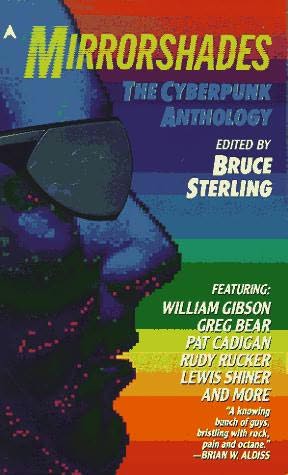
    I read Gibson’s seminal cyberpunk works a decade ago and felt it was time to visit Gibson’s more recent work. I am not reading them in order, just as they come off the shelf. Spook Country is set in a world similar to the one that we know, and closer in time to now, than his sprawl trilogy books.

    Blue Ant

    The story  revolves around branding and features a future-gazing advertising agency called Blue Ant seeking to grasp the future. In it are cutting-edge artists utilising augmented reality and where 2.0 technologies to make ‘locative art’.

    Whilst it is implied in his earlier works globalisation and container shipping also play a major role in this one.

    Web of no web

    Gibson uses the plot of Spook Country to recant the virtual reality dream of the ‘matrix’ that he painted in his earlier books. This vision feels out of place despite inspiring other cyberpunk and science fiction writers from Neal Stephenson to Earnest Cline. Instead Gibson sigues augmented and virtual reality into the more prosaic web that we have today. The augmented reality of the Wii, Sony PlayStation’s eyetoy,  geocaching, Google Maps, QRcodes and iPhone applications like Carling’s virtual pint. This is what I like to call the web of no web because in essence, the world becomes ‘the matrix’.

    Spook Country has the brand awareness that is a signature of Brett Easton Ellis’ work (particularly American Psycho) and the storytelling of John LeCarre. Gibson pulls multiple strands together weaving the story tighter and tighter together as the thriller gains momentum. You can find more book reviews here.

  • Pattern Recognition

    William Gibson’s Pattern Recognition moves his stories from a fantastical future to a world at the bleeding edge of today. A curious advertising company seeks to find out more about a series of video clips that have developed a cult following.

    The story evokes viral marketing similar to the complex story lines of games like Perplex City, The Majestic or online marketing done by industrial music band NIN and Trent Reznor. The resulting buzz in a passionate community is something that marketers aspire to create in product launches. The challenge that Gibson doesn’t fully articulate is identifying the target audience and watching it coalesce. It also reminds me of how conspiracy theories percolate online and seem to break out randomly. The Slender Man phenomenon and the obsession with number stations are classic examples of this process.

    Unlike Spook Country, Gibson only hints at a retreat from his vision of the web as an immersive experience inside virtual reality goggles. Most of the interesting locations and experiences happen in the real-world: central Tokyo, Moscow and London. Gibson’s literary obsession with Japanese culture and cities is part of the connective tissue that connects his early work to Pattern Recognition.

    These world’s are much more colourful than online. The web is now reduced to a silver screen on which the mysterious videos are projected.

    Marketing insight of the advertising agency and government intelligence operatives are seen by Gibson as two sides of the same coin. This makes sense when one thinks about the amount of data that web and mobile technology use now provides. In some respects big technology has gone beyond governments and moving towards the corporations envisaged in Neal Stephenson’s Snow Crash.

    All of this adds to the feeling that Pattern Recognition is a tale of now. More related posts here.

  • Wired Style Guide

    I was looking through my first edition copy of Wired Style guide – Principles of English Usage in the Digital Age edited by Constance Hale and it struck me that many of the sections in the book were also maxims for bloggers and those involved in social media.

    Hale isn’t a technologist or a staffer at Wired. Instead she is a journalist’s writer. She has run conferences for mid-career journalists and a writing retreat. Beyond her website I am not too sure how qualified she was to prognosticate on the digital age for the Wired Style Guide. 

    Wired Style Guide sleeve

    So I decided to convert these titles from the Wired Style Guide into the maxims I had imagined:

    • Voice is paramount – a blog is a deeply personal thing and the challenge at first is finding your ‘blog voice’. This takes time to establish. It needs to be true to yourself and have enough cojones to express your opinions
    • Be elite – In the words of Wired: “Shared knowledge connects the writer and the reader. It forms the bridge from the type on the page (or the screen) to the deeper meanings and nuances for words”. This comes down to seeking knowledge, knowing your readership and the norms of the subcultures that they belong to. Even if you don’t belong to a community act like you do
    • Transcend the technical – there is so much written about the technical aspects of the web, be prepared to get beyond that at the end of the day it is people like you that social in social media
    • Capture the colloquial – So much of what makes a community is the informal lexicon that is particular to them. Think about Twitter in the course of a couple of years we now have the Fail Whale, twitterati, twitterverse, RT (re-tweet). Capturing this colloquial language in your writing helps to put your work in the midst of your readership subculture
    • Anticipate the future – Whilst we are more likely to get predictions of the future wrong, it also makes great copy. If you are going to anticipate the future, think about the things that are unchanging in life: the need for self-expression or the need to belong being two unchanging requirements for people in general
    • Screw the rules – Rules are made to be broken and knowing when to break them. Going against rules or expectations is a great way to inspire creativity – gorillas don’t really play the drums
    • Grok the media – The style guide defines grok as “A verb meaning to scan all available information regarding a stiuation, digest it and form a distilled opinion.” Being a ferocious reader of blogs, books, papers and the mainstream media makes you a better blogger. And even if it doesn’t, you’ll at least be better informed
    • Go global – Global village used to be a cliche that would be bandied around before globalisation made middle-class people think that their future is under threat, since then an international outlook has taken on a more sinister tone. However looking at international trends: from mobile marketing in South Africa to social networking in Japan allows us to better understand how technology and culture interact and increases the likelihood of being able to anticipate the future

    More on similar books to the Wired Style Guide here.

  • Standard Operating Procedure: A War Story by Philip Gourevitch and Errol Morris

    Standard Operating Procedure: A War Story by Philip Gourevitch and Errol Morris is on one level yet another book talking about the Iraq conflict, on another level it is a classic tale of realpolitik and the malaise of bureaucracy: a lack of resources, ignorance and revenge provided the ideal conditions to produce a barbaric regime for the interrogation of prisoners at Abu Ghraib.

    Standard Operating Procedure shows how the slow descent into barbarity relies as much on good people being prepared to do nothing as much as the actions of the main protagonists. If Gourevitch has any fault in this work, it is that he fails to find anyone guilty at all, since the blame is spread widely and thinly like peanut butter in a sandwich. The real issue is that most people involved are guilty and Gourevitch is has failed to give us his opinion and point out where he thinks that the buck should stop.

    Is it the gung-ho general staff who want results? Is it the private contractor firms working with the intelligence services who are using staff with a wide variance in their range of expertise? Or is it the US Army for not giving the soldiers the skills and authority to run their jail like a jail? Maybe it’s a confluence of  all of the above.

    From a PR perspective it is interesting how photography which was taken to document the unusual as a kind of CYA (cover your ass) tactic by the soldiers involved. Instead the photography ended up being used as the stick to beat them with.

    The power of the photographs was their weakness rather than their strength. The reason for this was that we the public, were not interested in the context around the apparent stories that the pictures told. More book reviews here.