Category: out and about | 事件 | 종목 | 催し物

I have been fortunate to be living in London and Hong Kong since I have been written this blog. This has given me many opportunities to get out and about.

In this section you will find a wide range of posts:

  • Conferences – for a wider range of things. There was a time when blogging and social media had a range of conferences and events, thought these have declined as they always said the same thing and the same problems were continually highlighted.
  • Exhibitions – from traditional and popular Asian culture, to design, art and history. For a city that has been accused of having no art scene beyond auction houses it was easy for me to go out and about to see something
  • Festivals – usually food or film festivals. I am a big fan of a number of genres: science fiction, world cinema, crime and spy films. Sci-Fi London has been my favourite film festival for the past two decades. It helps that it has been hosted down the road from where I lived
  • Gigs – I usually went to music gigs as I have never really been a fan of comedy. In particular, I loved going to the Brixton academy or the 100 Club. One of my friends who is longer with us, used to come with me an annual basis to see a gig or two.
  • Museums – colonial history graced the UK with the money to build museums and the stuff to put inside them. On its own one of London’s main museums would be enough to make a city. Together Londoners are spoiled
  • The Today Club

    I have advised the founders of the Today Club in Shenzhen since January. Shenzhen has changed a lot. It is no longer just a place of industry, but also has a large financial industry. It’s stock market acts as tech oriented exchange for China.

    In addition, Shenzhen has built up a creative scene of sorts. Products are no longer made, but also designed there. This it in turn has brought in architects and artists.

    The Today Club is designed to be a private members club that brings people of disparate disciplines together. Financiers and business people can rub shoulders with artists and designers.

    The club also showcases a mix of Chinese artist works and Chinese product design. When I was there, it was showcasing high-end vacuum tube powered hi-fi amplifiers and speakers.

    The Today Club is based in the former industrial area of OCT or Overseas Chinese Town. It was here the the first Taiwanese and Hong Kong companies built factories in Shenzhen. The area that the Today Club is in has been rebranded as OCT Loft Creative Culture Park. The site was originally a television factory. The former industrial buildings have now been converted into creative office spaces, studios and retail units by local architecture firm Urbanus.

    Here is a video explaining what they do far more eloquently than I can

    More details on their website. More Shenzhen related content here.

  • Independent coffee shops

    I didn’t have time to try many of the independent coffee shops around Seoul but did try a few in Gyeongju and Ulsan. Here is a little about two of the best that I came across.

    Cafe 737
    Cafe 737

    Cafe 737 is a family-run coffee in the tourist town of Gyeongju. I loved it because of the vibe; as a third space it has a homely vibe that Starbucks can’t emulate.
    sentinel
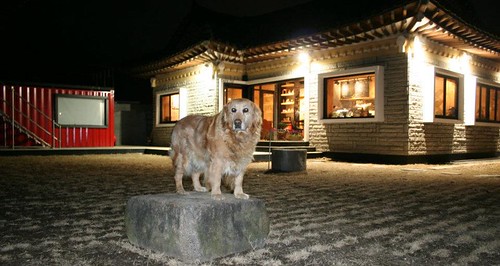
    The coffee shop greeter is an elderly golden retriever.
    Cafe 737, Gyeongju Korea
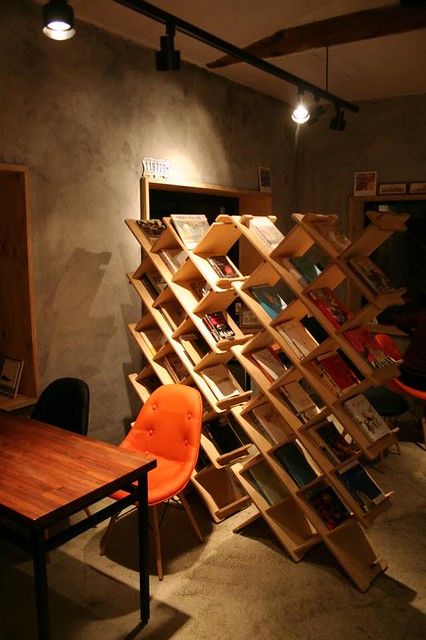
    The restaurant itself is bright and clean inside with some nice touches including bric-a-brac, both English and Korean books and a selection of pot plants.
    bric a brac
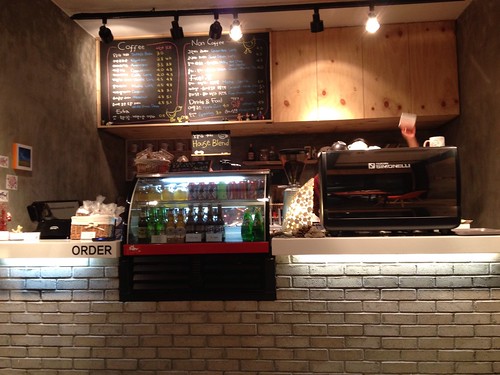
    Even by the standards of the best independent coffee shops, they make a mean cup of coffee and had great food to accompany it. I would love this coffee shop as a regular hang-out.

    They have their own page on Facebook.

    Cafe 57

    Cafe 57 is in the old town centre of industrial city Ulsan; the city has tried to spur redevelopment of the area by promoting businesses aimed at, and run by young people. This means that the area is full of restaurants, fashion shops and small coffee shops.

    Cafe 57 has a clean minimalist interior with a black ash counter area and coffee bean roasting apparatus on the floor. What made Cafe 57 unique for me was the unswerving focus on making a great cup of coffee. It is not about a third space or a lifestyle expression of the consumer – it is just about making the very best cup of coffee available.

    Watching the cup of ‘hand drip’ coffee being made by the owner was the experience of watching the craftsman at work. This was the best cup of Ethiopian coffee I have every had.

    You can find more Korea related content here.

  • Maze restaurant

    In many other countries the best restaurants are often found in a good quality hotel; in London you have a lot of restaurants out of hotels in areas like Mayfair and Soho. Gordon Ramsay’s Maze restaurant is inside the London Marriott Grosvenor Square hotel.

    Grosvenor Square is a bit out of my stomping ground, but would be ideal for shoppers on New Bond Street and the plethora of hedge fund managers based in Mayfair. I went along with my friend Tomoko on a Saturday morning, so your mileage may vary.

    Whilst the hotel is a vintage brick building, the interior design of the restaurant has a modern tip with a nod to 1960s science fiction films. We got there early and so grabbed a drink at the bar. The bartender was friendly and set a high standard of service that was matched later on when we sat down to eat.

    One of the problems with having a successful career is the inevitable spread that comes with too many corporate lunches. maze addresses this by having a menu more akin to a set of tasters rather than full-blown dishes. The food is tasty and aesthetically pleasing modern European in style.

    Whilst you eat the food, you can hold a reasonable conversation with your lunch date, given that the noise levels are lower than most Soho diners because of the acoustic panels lining the walls. In fact, the only thing that would negate me recommending maze as a business restaurant is the fact it only opens as 12h00; so there is no breakfast menu – which nukes half the business meetings I do.

    maze restaurant (in the London Marriott Grosvenor Square hotel)
    10-13 Grosvenor Square
    London W1K 6JP
    020 7495 2211
    Open Daily 12pm-2:30pm, 6pm-10:30pm

  • London through a tourist’s eyes

    My friend Tomoko was in London the other week and it was interesting seeing what excited her about London, as Tomoko’s London is very different from my own.

    Firstly ‘knowing London’ means knowing central and Northwest London rather than central and East London. Shoreditch, Clerkenwell and Soho aren’t attractive; St Johns Wood and Mayfair are – big learning curve for me here, as I have assiduously avoided anything west of Soho during my 13 or so years in London.

    Whilst we may think that London has everything to offer with contemporary clubs like Cargo and the East Village, it was Whisky Mist that Tomoko went to. With a clientele drawn from or aspiring to be in a P.G. Wodehouse adaption styled by Jack Wills; that you would only find me in under duress, but was what she wanted to do. Tradition and the class system trappings is a huge selling point for the UK – in terms of experience it beats Cool Britannia of modern UK life into a cocked hat. We had a drink and a catch-up late one evening in the Rockcliff Bar in The Trafalgar Hotel which I felt was a reasonable compromise.

    One thing that she was surprised at was how early in general London closes its bars and restaurants on a week-day; its not as swinging as the reputation would have others believe and certainly not up to the standard of Tokyo, Seoul, Shanghai or Singapore.

    Fifteen or twenty years ago, the UK had a reputation as the worst cooks in Europe. Tomoko’s trip was as much about being a gastronomic journey. She learned how to prepare a proper English afternoon tea (the rest of the world thinks that we don’t go to Pret-a-Manger and Starbucks apparently) and we had a taster menu lunch at Gordon Ramsay’s Maze restaurant (more on this in another post).

    There was an interesting take on shopping:

    • Mitsukoshi for convenience – not having to fight your way through Mayfair, along Regent Street or up Oxford Street to Selfridges
    • Jermyn Street for male family presents; Covent Garden antiques market for souvenirs and bringing presnts to female family presents
    • Old and New Bond Street were of interest for window shopping

    Which makes me think that a lot of central London retail space is looking seriously over-priced and that high footfall – long the measure of a desirable retail space can be as lethal for a shop as a branch of the Sue Ryder charity opening up next door.

    All of this made think about what what my current home city means to people around the world. I have met people within my industry where having worked in London agency life carried a lot of kudos, the popularity of modern dance music elsewhere in the world was spearheaded by the middle-aged UK DJs who were involved in the late 80s acid house scene. Modern design with a twist of irreverence from James Dyson and Paul Smith to Jonathan Ives at Apple are the product of a forward-looking country. But that doesn’t seem to have translated into a brand identity for London that is less Daniel Craig and more David Niven.

    Asian countries like Korea, Japan and China have managed to forge identities that are modern, yet are complementary to the centuries of culture and history that they have. On the other had, Egypt (at least as a tourist destination) is all about the ancient Egyptian society that flourished and declined 2,000 years ago. I would prefer to see London being able to balance a modern identity with a nod to the history rather than be trapped by it. Perhaps the best place to start would be through the creative destruction of the Central London built environment.

  • Slugger O’Toole – social & print

    The people at Taylor Bennett and Unicorn Jobs invited me along to an event which discussed social media and how it relates to the mainstream media. The panelists were Drew Benvie, Simon Nixon of Breakingviews and Mick Fealty of Slugger O’Toole and the Brassneck blog at the Daily Telegraph.

    Here is the notes that I made from the event (but I’ve cleaned up the spelling):

    Simon provided an introduction to Breakingviews which drew some parallels between internet mainstream media and social media (though social media elements like the dialogue with readership like letters to the editors and opinion pieces work just as well in print). Simon acted as a chair for the discussion.

    Mick started blogging whilst working as a researcher. He found that it was a handy way of tracking research on the net. Over six years later and, Slugger O’Toole was said to set the political agenda in Northern Ireland by the editor of the Irish News. The compelling reason for blogging is its capacity to get news issues out to the readership 12 -13 hours faster than print media.

    Slugger now run by five contributors with much less day-to-day input from Mick.

    Drew started using technology to help with his job agency-side in PR, the blog started by posting coverage so that he could read it when he got home. Over time, he gradually became aware of the community of readers that went to his blog.

    Everyone on the panel is a blogger, but are they are a journalist?

    Drew said straightaway that he is not a journalist.

    Mick said being a journalist is not whether you right for a mainstream media title, instead its about how they use the technology, does the writer have a good nose for a story? Mick is a member of UK advertising network MessageSpace, whilst there are bloggers taking a professional approach, there aren’t the revenues there yet for the majority of its members.

    How do the panelists go about agenda setting?

    Drew started off by looking at news feeds, looking at other bloggers and mainstream media, now he also tracks keywords including client names and industry topics. Drew reads some 200-plus blogs about public relations. PR has moved past press releases and is now about infiltrating the feeds of key journalist. Bloggers offer an ideal opportunity to do this.

    Mick said that all the stories in Brassneck and Slugger O’Toole are peer-to-peer stories. In terms of advice for PROs, they need to know who it is that they are reaching out to and to do it in a conversational style and keep it brief. Group emails don’t work, instead even a url to story thats interesting is fine.

    Are blogs replacing old media?

    Drew: He has received double the amount of requests from clients to get in blogs compared to even six months ago. Blogs may not be killing mainstream media but is certainly strangling it.

    Simon described blogs as being live and rough around the edges. Mainstream media is absorbing the ways and methods of online media and bloggers in order to survive. As the media has brought blog content into the papers as columns. The web has become a cheap way to run a fast-failure development process for new content.

    Mick: Things are going to change, the primary driver is disaggregation, where the consumer has become the new editor. A major challenge for mainstream media is that it is not in constant touch with audience

    Are journalists more professional than bloggers?

    Drew: Admitted that he is careful about what he writes as he doesn’t want to get sacked for anything that he says online. However he would still like to see snarky content like The World’s Leading… when it was running.

    Blogging sped up the response. Bloggers can post instantly

    Mick: bloggers and commenters can deliver a rapid response, but they need to play it straight. A recent survey by IPSOS MORI found that bloggers are more trusted than journalists by consumers. Pew Internet found that 57 percent of journalists stories had been sourced from the net.

    The editorial time-space is putting mainstream media at a disadvantage, they end up with online one chance at getting a story right. Whereas a community of bloggers can digest and discuss a story to get every element out of it.

    The power of the mainstream media brand covers journalist sins, whereas bloggers personal brands run the risk of being damaged if they write a dodgy story.

    Is blogging and social media open to misuse?

    Drew: Abuse will always happen, PROs need to be careful in their guardianship of their clients reputation, track where they can be done, media law still applies

    Mick: The nature of the bloggers peer-to-peer relationship with their audience, also puts an onus on the audience and the blogger to not be passive. A good blog is like a pub and a good blogger is like the landlord who will kick out trouble-makers before it gets to be of a serious nature. From a readers point of view they need to be aware that lower orders of knowledge are being manufactured.

    Mick: The real value in public relations is in audience insight, social networks are an ideal tool to gain audience insight. Currently one of the key mistakes that PROs have been firefighting too hard.

    Audience member Sam Bottrell of WestLB asked Simon Nixon about how practical blogging and social media really was for financial institutions. Simon pointed out that social media presents a high level of risk for financial institutions, I pointed out that the research team at Piper Jaffray provide a list of links to interesting articles each day via Google Reader.

    Justin Hayward pointed out how search had grown beyond finding information or discovery to become a reputation engine.

    Post-event I caught up with Steve Waddington, had a quick chat with Drew Benvie, Ben Matthews, Jaz Cummins and Justin Hayward. More on related content here.