Month: May 2014

  • Beats + Apple post

    Before Beats there was Mega Bass

    Before you can talk about Beats, you need to go back into the history of consumer electronics. If you had a Japanese made personal stereo in the 80s through to the early noughties the words ‘Mega Bass’ meant something. It was printed on everything from clock radios and boom boxes to personal cassette and CD players.
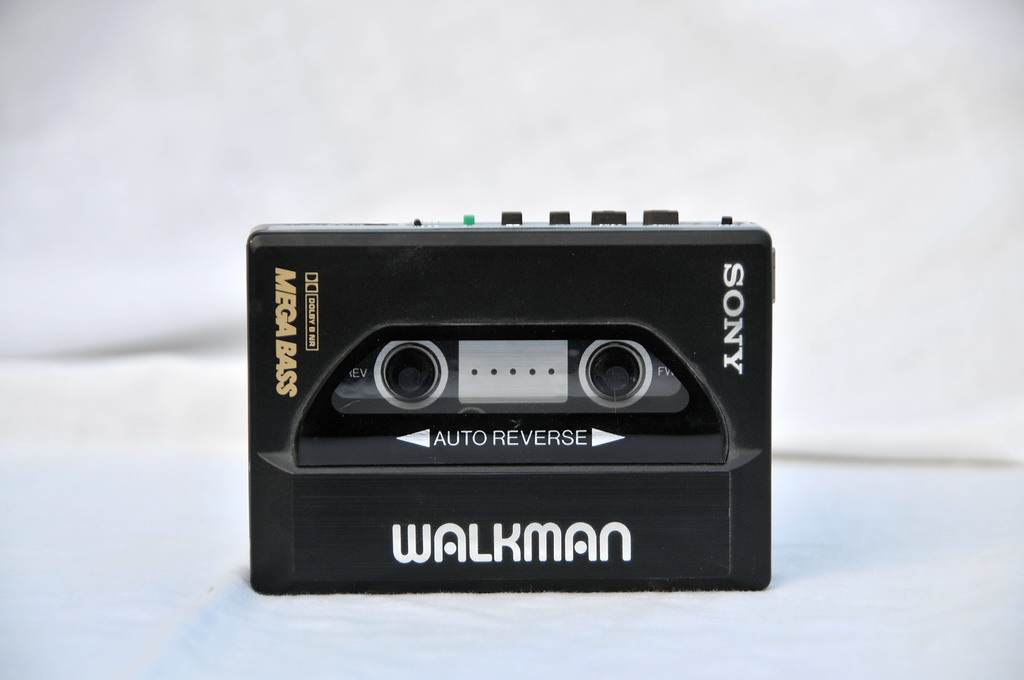
    Sony Walkman WM A602
    It was the button you pressed to give the bottom end of the music you listened to more umpf.

    Different Japanese companies had their own spin on it. I remember Hitachi luggable cassette systems having ‘3D Bass’ or a ‘3D Woofer’ label on the speaker grill to highlight their sonic capabilities. Aiwa had personal stereos with a more sophisticated bass function on them called DSL.

    Before Beats – Boodo Khan

    Sony took this experience to its logical conclusion with the Sony Boodo Khan Walkman (DD-100) and its matching headphones (DR-S100). This was designed to provide dynamic bass amplification, a function that Sony previously had developed for high-end hi-fi’s. The DD-100 used a system called DOL.
    Sony DD100 Boodo Khan reproduced from Sony's 1987 product brochure
    The Beats brand replicates the less sophisticated Mega Bass feature in the headphones rather than the smartphone or iPod to which they are attached. From a design point of view this approach makes perfect sense. However the science of personal bass amplification doesn’t seem to have moved on much from the late 1980s. Any pair of Beats that I have listened to boom on the bottom end and sound ‘muddy’ higher up. Beats headphones sound less clear to me than the original Sony Boodo Khan combo from two decades ago, despite the advantages of digital technology.

    Why Beats?

    So why would Apple care about possibly acquiring Beats?

    • Buying Beats takes the brand off the table for both PC and mobile device manufacturers. H-P  used to have Beats as a feature on some of its laptops as did HTC smartphones
    • Apple buying Beats at a premium price would raise the acquisition cost of other businesses that have a unique offering to augment the mobile experience. It’s cash mountain gives Apple cheap capital and such high acquisition costs could be a barrier to entry for the likes of Lenovo or Huawei
    • Buying Beats takes a subscription-based music platform off the table, the team could be used to strengthen a future iTunes subscription product or simply open doors in the music industry wider for Apple. Tim Cook is not the media mogul that Steve Jobs was, he doesn’t have the Pixar studio that made him the peer of other media companies
    • Beats is a premium priced brand, it has a good fit in its hardware alongside many Apple products
    • Beats gets a different demographic of music lover. EDM has put dance music back on the map commercially and is now more important to Apple
    • Beats may provide Apple with an alternative brand to go into new media and product areas that would benefit from its urban and dance music caché

    Whilst Apple has done a good job of getting a lot of dance back catalogue into its library, problems remain with regards dance and urban music consumption patterns and iTunes. It is probably no surprise, given that Apple was more comfortable having The Pixies as the soundtrack to it’s latest advertisement rather than say Skillrex.

    If one looks at the way Apple iTunes treats ‘DJ’ artists like DJ Honda or DJ Shadow and bands with ‘The’ in the name like The The or The Bar-Kays  you can see that they didn’t think about dance music in their design to the extent that they should do. All ‘The’ bands are treated alphabetically so The Beatles would go in the B-section after The Beach Boys but before Bomb The Bass. By comparison all DJ artists are grouped together.

    Other examples of the way iTunes doesn’t get dance music is that you can’t get music in the way that you would buy it in a shop:

    • You can’t sort or search by record label
    • You can’t sort or search by remix producer

    Dance music generally isn’t like other genres, the band may not be the hero. Labels have their own ‘sound’, the educated consumer knows roughly what to expect looking at the label whether it was Tamla Motown, Salsoul or Horse Meat Disco. Remix producers like Tom MoultonSasha, Tony De Vit, Todd Terje or Skillrex all had their followers looking to buy their latest work.

    Lastly and probably most importantly, dance music and urban music has been the place were many niche competitors like Bleep.com and Beatport have managed to build niche, but profitable footholds. This also indicates that there could be opportunities for direct Apple competitors. More related content here.

  • AirBnB + other news

    AirBnB

    AirBnB seems to be the goldilocks of the sharing economy. It has at least as much disruptive negative impact as Uber, yet doesn’t seem to attract the same level of vitriol. On the demand side of things, while I know people who have had negative AirBnB experiences, they still don’t seem to realise its its the platform and solely blame the host. ABC News | tweedier – The Sharing Economy – Mark Pesce on Uber and AirBnB. How Airbnb and Lyft Finally Got Americans to Trust Each Other | Wired – Wired does an in-depth piece on the supply side of the sharing economy. I think its going to be a while before people really wake up to how toxic AirBnB and the sharing economy are.

    Business

    China builds for the future | HSBC – government looks to enhance environment for small business with tax breaks

    Here’s the chart that has Chinese stock markets so depressed – Quartz – good graph of HSBC PMI numbers, it is affected by sampling issues however

    Consumer behaviour

    VOX POPULI: Job security is everything for rookie employees | The Asahi Shimbun – Japanese workers want security

    China’s Young Male Factory Workers Change the Assembly Line – Businessweek – the little emperors on the line are bolshy, harass female colleagues and get bored easily

    Economics

    Alibaba’s IPO may not be as big as everyone is expecting | Quartz – interesting breakdown on IPO values across sectors

    US oil boom checks inflation | HSBCUS oil production has far surpassed expectations in recent years and the country could overtake Saudi Arabia to become the world’s largest producer of crude oil and oil products by 2015 – how sustainable is this?

    Cautiously optimistic: Innovation and Chinese FDI | Deloitte

    FMCG

    Is Burger King’s Big Mac Clone Stealing McDonald’s Lunch Money? | BloombergBusinessweek – what will the value promotions do to the McDonald’s brand equity?

    Ideas

    CABINET // Whitewood under Siege – fascinating story of pallets

    Luxury

    A goldmine in retail? | Marketing Interactive – interesting profile of Chow Tai Fook jewellery retail chain

    Louis Vuitton still number one in awareness for Chinese: report | Luxury Daily

    Chinese Tourist Spending In UK To Rise By 84 Percent | Jing Daily – the UK needs to do more to court Chinese consumers

    Coach Responds to Falling Sales By Raising Prices | BloombergBusinessweek – interesting move that didn’t work for Mulberry that well when they tried it

    How a Korean TV Show Sparked a Jimmy Choo Craze in China | WSJ – store staff noted that customers were coming in with pictures on a smartphone. The bit that’s missing is how did they discover that the shoes were Jimmy Choo and hence knew which boutique to walk into?

    Marketing

    The Mystery of Our Social Traffic | Baekdal – really interesting read

    Media

    Thumbnails: French proposal for payment of royalties by search engines | Kluwer Copyright Blog – it reminds me of the tax that used to happen on tape and CD media to compensate for piracy

    Say Goodbye to Paid Search Terms from Google – Digital Marketing Blog by Adobe – this has more of an impact than one would consider

    Baidu Launched Dynamic Search Ads Feature — China Internet Watch – powered by website content RSS?

    The reinvention of MTV, chapter one million | Quartz – interesting alchemy of social media and broadcast media

    Online

    月球车玉兔的微博|微博-随时随地分享身边的新鲜事儿 – Jade Rabbbit lunar rover Weibo account

    Software

    Rogue Amoeba’s Paul Kafasis on Consumer Recording, Provocative Branding, & Endangered Gizmos

    What The Heck Is Machine Learning? | BusinessInsider

    Wireless

    China Telcos Propose Base Station JV | Young’s China Business – interesting that Chinese carriers are collaborating on base stations, probably less equipment sales for vendors than they’re expecting. More related content here.

    Web of now web

    Data point: Enthusiasm about wearable tech highest in Latin America, lowest in North America

  • 10 considerations of branding

    Origins of 10 considerations of branding

    10 considerations of branding goes back to a Ten years ago I used to work in an agency representing one of the pioneers of modern branding Henrion Ludlow Schmidt. I was fortunate that I got to work with the two managing partners at the time Chris Ludlow and Klaus Schmidt. Chris retired from the business and Dr. Schmidt is no longer with us, so the branding agency dissolved after he died.
    1979 Mercedes-Benz 230/280 Coupe
    I have vivid memories from the meetings I went to in their Victoria headquarters. Dr Klaus Schmidt as an exuberant personality talking about all things brand related.

    Holistic branding and the 10 considerations of branding

    Dr Schmidt was an advocate of ‘holistic branding‘ taking into account all the brand touch points rather than just slapping a logo on things.

    Holistic branding included all functions of the business, product design and experience design. It seems self-evident that a business brand is the sum of it’s stakeholder’s experiences but that concept and the design reputation of founder F.H.K. Henrion brought them clients like Mercedes-Benz , the former British Midland (bmi) airline, Krups, Barbican, London Underground, Deutsche Bank and German mobile operator E-Plus.

    Chris Ludlow and Klaus Schmidt boiled their thinking down into 10 considerations of branding which I have paraphrased here:

    1. Does the brand really need a rebuild? It is amazing how brands often get changed just for the sake of it. At the time I was working with Henrion Ludlow Schmidt the disastrous rebrand of the Post Office Group to Consignia and back was still fresh in the public memory.
    2. Can or should the brand be saved? Is economically viable to save it. Is it cheaper to develop a new one or acquire a well-respected brand instead? A classic recent example of this was where News International shut down the News Of The World and published The Sun on Sunday instead.
    3. Everything communicates: remember that every action, or lack of it, within a business communicates. Fixing the brand may fall outside ‘conventional branding’ issues to include: product design, human resources, operations, logistics and environmental policies.
    4. What does your brand really stand for? This means asking a set of hard questions: What does your brand really means to customers and other stakeholders? What is the gap between the values that the brand is supposed to have and how it is perceived by customers? Are there positive attributes attached to your brands by customers, that were not part of the brand values that you meant it to have? Are any of the values attached to the brand no longer relevant?
    5. Rebuild the brand from the bottom up, rather than imposing one from the top down. There is more than a hint of the German corporate philosophy that led to worker representation on the management board in this.
    6. Build the brand around a vision relevant to all stakeholders: it is easy to be cynical about the soft part of branding, how many of us have rolled our eyes at a new vision statement we can’t remember a week after hearing it alongside been given a new mug, mouse mat, notebook or lanyard? I even sat in a meeting with a large Chinese client and a number of sister agencies where the question ‘What is your lanyard strategy?’ came up.
    7. How is your brand taken to the customer? When looking at your brand you need to look beyond the most obvious contact points that help make up a customer’s brand experience. Are there new channels that can be exploited? Are channel partners on board and, if so, are they conducting themselves in a way which is detrimental to your brand? This aspect of presentation is the reason why BMW dealerships look so plush and why advertising agencies can charge much more for the same activities in comparison to PR agencies.
    8. A brand is a long term project: when thinking about the attributes of a brand, these need to be able to outlast customer fads or the latest business trends. A brand is a strategic consideration.
    9. Shrink the brand: many brands need a refresh due to excessive product extensions which washes out the meaning. Going back to the core can be the reset required.
    10. Evolution rather than revolution: be prepared to change your brand gradually. It is a balance between remaining relevant and keeping the goodwill and recognition built up over time.

    More information

    Consignia: Nine letters that spelled fiasco | BBC News
    Heroes – F.H.K. Henrion | Designers Journal

  • Loose lips sink ships

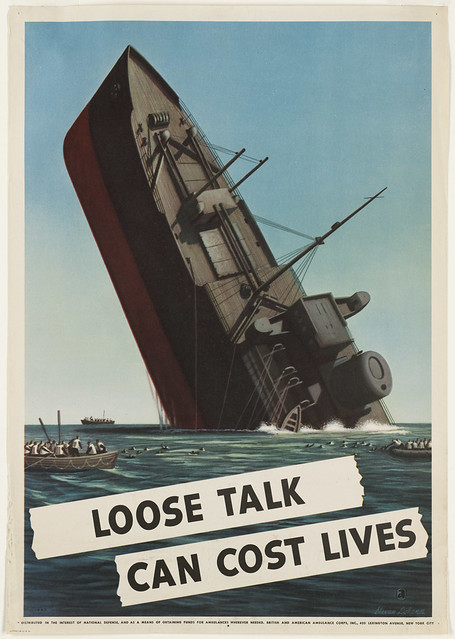
    During the second world war nations promoted a heightened state of awareness in citizens that they could be overheard through the use of propaganda materials. Including the iconic phrase loose lips sink ships.

    Loose talk can cost lives

    Loose lips sink ships is also a good maxim for modern business lives. We are now in an age when everyone can be a ‘self-facilitating media node’ as Nathan Barley put it. There is no longer any off the record. Jeremy Clarkson’s precarious position highlighted the perils of this with his apparent remarks committed to video tape. In the Financial Times this morning there is a great example of a similar unguarded comment providing rival automakers with a source of embarrassment.

    At the Frankfurt Motor Show in 2011 Volkswagen Chairman Martin Winterkorn was filmed admiring the i30 model on the Hyundai stand. In particular, he noticed the lack of noise on the adjustable steering wheel a feature that neither BMW or Volkswagen Group could match and discussed this with his chief designer.

    Hyundai has used this video clip as a proof point of their own engineering prowess ever since.

    What needs to be done?

    • Educate staff members to act as if anything they do can end up on the front of the Daily Mail
    • Off the record is never off the record
    • Everyone is a journalist
    • Be more circumspect in public discussions that can be overheard, make notes, bring them up at a safer forum back at the office

    More social related content here.

  • Big data issues

    Big data origins

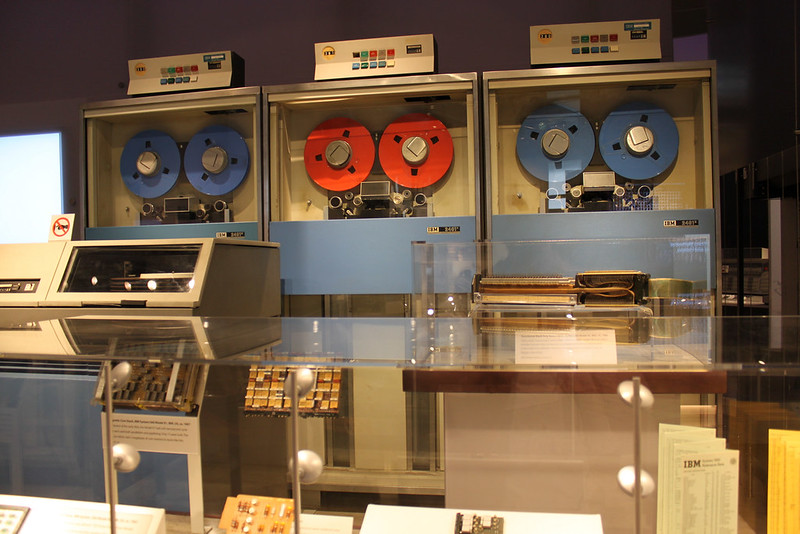
    In the past, what is now included in the envelope of big data resided with just a few organisations. The story of big data started with the US government. The government used a young company called IBM and their punch card technology to help tabulate their census data. Punch card technology started in the textile industry, where industrial revolution-era jacquard looms manufactured complex fabric patterns. Punch cards also controlled fairground organs and related instruments. It was with early tabulating machines made by IBM and others that started to change the world as we know it.
    Computer History Museum
    When the mainframe came along governments used them to manage tax collection and to run the the draft for Vietnam. It came a key part of the US anti-war protesters to destroy machine readable draft cards. (The draft card destruction didn’t affect the draft process. But burning the draft card was still an offence and some people underwent punishment.)

    Credit agencies

    Also around this time, the credit agency was coming into its own in the US. Over a period of 60 years, it had gradually accumulated records on millions of Americans and Canadians. The New York Times in 1970 described the kind of records that were held by Retail Credit (now known as Equifax):

    …may include ‘facts, statistics, inaccuracies and rumors’ … about virtually every phase of a person’s life; his marital troubles, jobs, school history, childhood, sex life, and political activities.

    These records helped to vet people for job applications, bank loans and department store consumer credit. It was like a private sector version of the J. Edgar Hoover files. Equifax moved to computerise its records. One reason was to improve the professionalisation of its business. This also had an implication on the wider availablity of credit information. Computerisation led to the Fair Credit Report Act in the US. This legislation was designed to give consumers a measure of transparency and control over their data.

    Forty years later, mainframe computers are still used to process tens of thousands of credit card transactions every second. New businesses including social networks, search engines and online advertising companies have vast amounts of data; unlike anything a credit agency ever had.

    The social, cultural & ethical dimensions of big data

    The recent The Social, Cultural & Ethical Dimensions of “Big Data” event held at New York University by the Data & Society Research Institute was important. Events like these help society understand what changes to make in the face of rapid technological change.

    Algorithmic accountability

    The Algorithmic Accountability primer from the event highlights the seemingly innocuous examples of how technology like Google’s search engine can have far reaching consequences. What the Data & Society Research Institute called ‘filter bubbles’. Personalisation of search will change that consumers see from individual to individual. This discrimination could also be applied to items like pricing. Staples has produced an algorithm that based pricing on location of the web user; better off customers were provided with better prices. One of the problems of regulating this area is first of all defining what an algorithm actually is from a policy perspective.

    Algorithmic systems are generally not static systems but are continually tweaked and refined, so represent a moving target. During my time at Yahoo! we rolled out a major change to the search algorithm every two weeks on a Wednesday evening US west coast time. I imagine that pace of change at the likes of Google and Facebook has only accelerated.

    The problem with many rules based systems now is that we no longer write the rules or teach the systems; instead we give the system access to large data sets and it starts to teach itself – the results generally work but we don’t know why. This is has been a leap forward for what would be broadly based artificial intelligence, but makes these systems intrinsically hard to regulate.
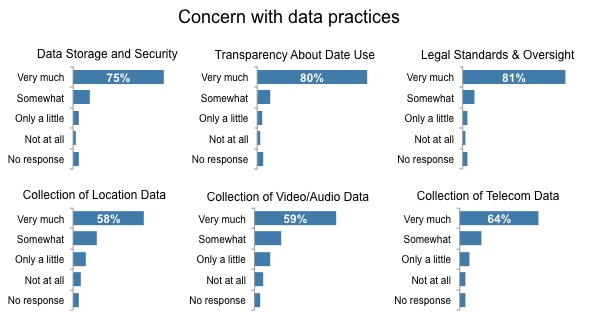
    concern with data practices
    Given all this it is hardly surprising that research carried out  on behalf of President Obama by The Whitehouse showed a high level of concern amongst US citizens. More related content here.

    More information

    Jacquard Loom – National Museums Scotland
    Separating Equifax from Fiction | Wired (Issue 3.05)
    Data & Society | Algorithmic Accountability primer
    This Landmark Study Could Reveal How The Web Discriminates Against You | Forbes
    Websites Vary Prices, Deals Based on Users’ Information | WSJ
    The 90-day review for Big Data | Whitehouse
    Data & Society | Alogrithmic Accountability Workshop Notes
    Digital Me: Will the next Cringely be from Gmail? | I, Cringely